Best Vacuums for Pet Hair on Carpets and Hard Floors
Anyone who shares a home with a shedding dog or cat knows that a standard vacuum rarely gets the job done. Fur works itself into carpet fibers, clings to upholstery, and drifts across hardwood in a way that overwhelms a machine that wasn't built with pets in mind. The right pet vacuum isn't necessarily the strongest or the most expensive one on the shelf — it's the one whose design actually matches how and where you clean.
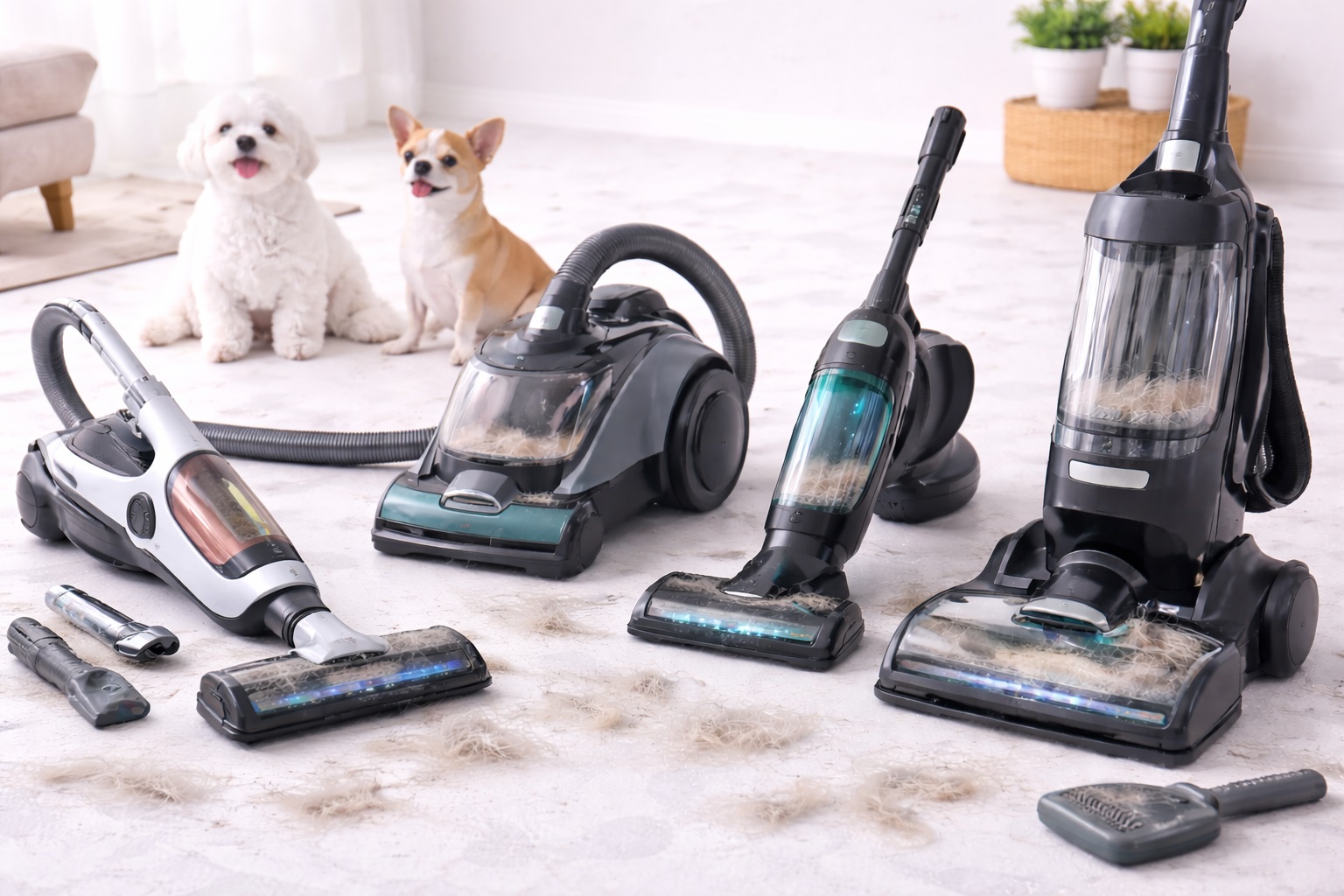
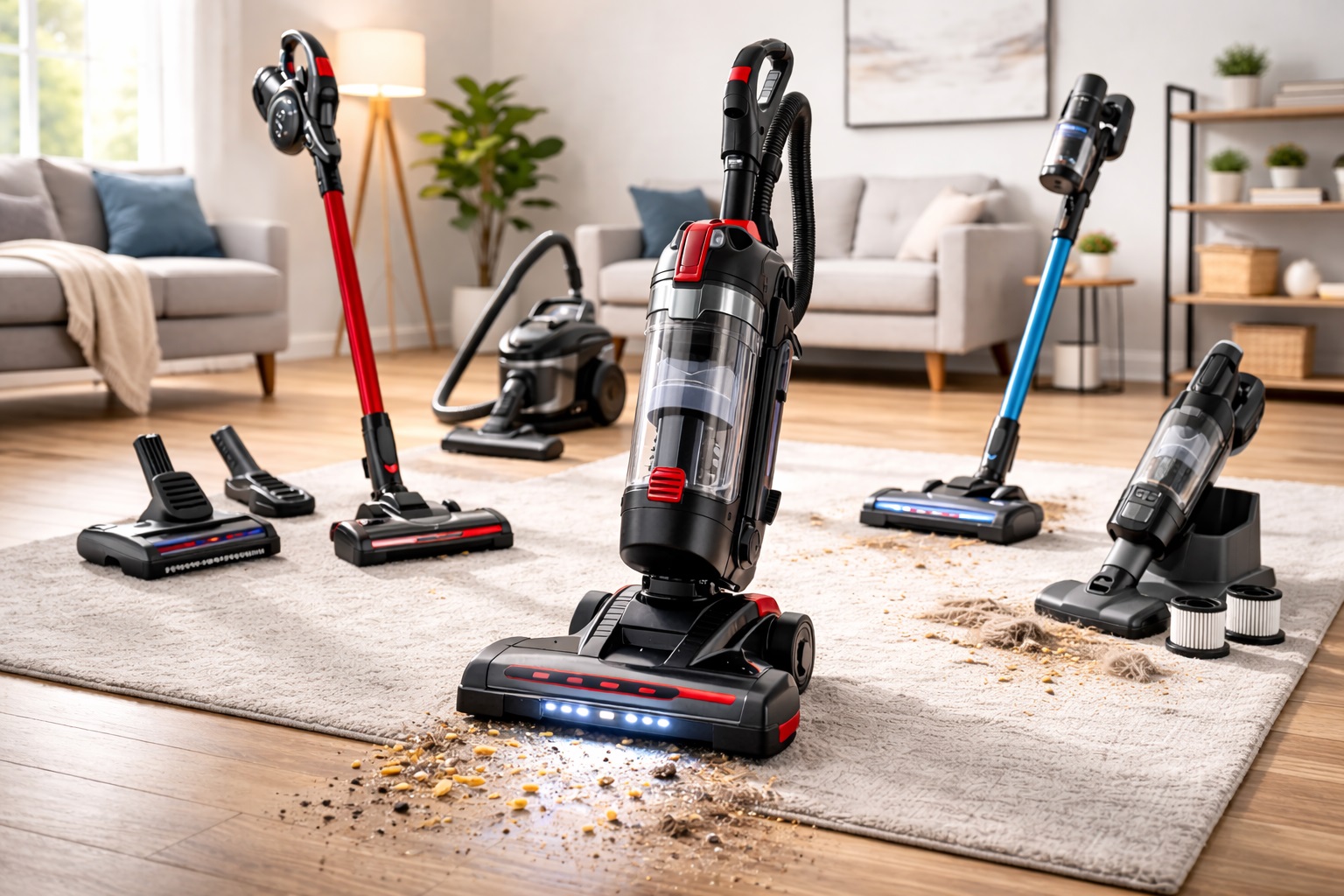
This guide breaks down six distinct categories of pet vacuum, from cordless sticks you grab for a quick pass to full-size uprights meant for households with multiple pets and heavy carpeting. Rather than treating every option as interchangeable, each entry below explains who it actually suits, what trade-offs come with it, and where it tends to fall short so you can match a category to your actual routine instead of guessing.
Because pet hair behaves differently depending on surface — it embeds in carpet pile, sticks to fabric, and skitters across tile or wood — the comparison also looks at filtration, brush roll design, and maneuverability, since these matter more for pet owners than raw suction numbers alone.
It also helps to think about your cleaning routine before your budget. Someone who vacuums daily to keep ahead of a heavy-shedding double-coated dog has very different priorities than someone with one short-haired cat and a small apartment. The categories below are organized so you can match your actual habits — quick daily passes, scheduled automated cleaning, or a thorough weekly deep clean — to the vacuum style built for that habit, rather than assuming one machine has to do everything equally well.
Throughout this guide, the goal is to be specific about trade-offs rather than presenting every option as a universal solution. A cordless stick vacuum is fantastic for grabbing quickly, but it isn't the right tool for a house with three long-haired dogs and wall-to-wall carpet in every room. Matching the category to the actual problem you're solving is the single most useful thing you can do before spending money on a new vacuum.
The sections that follow cover six practical categories, a detailed buying guide addressing the factors that genuinely affect day-to-day performance for pet owners, and answers to the questions that come up most often when shopping for a vacuum built around shedding, dander, and embedded hair.
Top Pet Vacuum Types Reviewed
1. Cordless Pet Vacuum – Best Overall for Everyday Pet Hair
A cordless stick vacuum is built around one idea: pick it up and clean without hunting for an outlet or untangling a cord. For pet owners, that convenience translates into more frequent cleaning, which matters more for hair control than any single deep-clean session. Most models in this category run on a rechargeable battery, use a motorized brush roll designed to lift embedded hair from carpet pile, and switch easily between floor types with a simple attachment swap.
The appeal here is that a cordless vacuum lowers the effort required to deal with hair the moment you notice it, rather than saving cleanup for a weekly session with a bulkier machine. That said, battery-powered suction is inherently limited by charge time, and a full-size home with several rooms of carpet may require pausing to recharge partway through. Many owners find that keeping one within easy reach — rather than stored in a closet — is what actually makes the difference between vacuuming daily and letting hair build up for a week. This category benefits shedding-prone households the most precisely because it lowers the activation energy for a quick pass — grabbing a wall-mounted stick vacuum for two minutes after noticing fur on a rug is a fundamentally different habit than hauling a corded upright out of a closet, and that difference in friction is often what determines whether hair actually gets addressed daily or allowed to accumulate.
- Pros:
- No cord to manage, so quick daily cleanups actually happen
- Lightweight enough to carry up and down stairs
- Converts easily between carpet, hardwood, and handheld use
- Cons:
- Battery runtime limits continuous use in larger homes
- Dust bin capacity is typically smaller than a corded or canister model
Best For: Pet owners who want to grab a vacuum for quick, frequent cleanups across mixed carpet and hard floors without dealing with a cord.
Why We Recommend It: The combination of portability and pet-specific brush design makes it easy to stay ahead of shedding instead of letting hair accumulate between full cleaning sessions.
2. Robot Vacuum for Pets – Best for Hands-Off Maintenance
A robot vacuum built with pet hair in mind takes a different approach entirely: instead of cleaning when you decide to, it runs on a schedule and handles the baseline maintenance automatically. These models typically pair stronger suction settings with tangle-resistant brush designs meant to reduce hair wrapping around the roller, since fur is one of the most common causes of robot vacuum jams.
The trade-off is that a robot vacuum works best as a supplement to, not a replacement for, a more thorough vacuum. It handles daily surface hair well but generally can't match the deep-carpet extraction of a full-size machine, and it still needs its bin emptied and brush cleaned regularly to keep performing well. Owners of shedding-heavy breeds often find that scheduling it to run daily, rather than a few times a week, keeps hair from ever visibly accumulating in the first place.
- Pros:
- Runs automatically, so hair doesn't accumulate between manual cleanings
- Tangle-resistant brush designs reduce maintenance versus older robot models
- Useful for households that are away during the day
- Cons:
- Less effective than upright or canister models on deep-pile carpet
- Requires a reasonably clutter-free floor to navigate effectively
Best For: Busy households that want consistent, automated upkeep between more thorough weekly vacuuming sessions.
Why We Recommend It: It removes the guesswork of remembering to vacuum, which matters most in homes where pet hair builds up daily rather than weekly.
3. Canister Vacuum for Pet Hair – Best for Multi-Surface Deep Cleaning
Canister vacuums separate the motor unit from the cleaning head, connected by a flexible hose, which gives them an edge in homes with a genuine mix of carpet, hardwood, stairs, and upholstery. Because the canister body stays on the floor while the wand and hose do the maneuvering, these vacuums tend to handle furniture, drapes, and stairs more comfortably than an upright design.
For pet owners specifically, a canister vacuum's strength is thorough, methodical cleaning rather than speed. It's not the vacuum you grab for a thirty-second touch-up, but it's typically the most capable option for a full deep-clean pass that gets hair out of upholstery seams and stair edges as well as carpet. Households that rotate furniture, wash pet bedding, or vacuum stairs regularly tend to get the most value out of this category over time.
- Pros:
- Excellent reach for stairs, upholstery, and hard-to-reach corners
- Generally strong, consistent suction throughout a cleaning session
- Well suited to homes with varied flooring types
- Cons:
- Bulkier to store than a stick or handheld vacuum
- Managing the hose and canister together takes some adjustment
Best For: Homes with a genuine mix of carpet, stairs, and upholstery that need one machine to handle all of it thoroughly.
Why We Recommend It: Its versatility across surfaces makes it a dependable choice for a full weekly clean rather than quick daily maintenance.
4. Handheld Pet Vacuum – Best for Furniture and Car Interiors
A handheld pet vacuum trades whole-room cleaning power for precision. These compact units are built to tackle the spots a full-size vacuum handles awkwardly — couch cushions, car seats, pet beds, and stairs — and they're small enough to keep in a closet or under a seat for whenever hair turns up somewhere unexpected.
Because of their size, handheld vacuums are not meant to replace a primary vacuum for carpeted rooms. Their motors and bins are scaled down, which limits both runtime and capacity, but for targeted pet hair removal on fabric surfaces, that trade-off is rarely a problem. Many pet owners keep one in the car specifically, since fur on seat fabric tends to embed just as stubbornly as it does on a couch cushion.
- Pros:
- Compact enough to store almost anywhere and grab instantly
- Ideal for upholstery, pet beds, and vehicle interiors
- Specialized attachments lift embedded hair from fabric effectively
- Cons:
- Not practical for cleaning entire rooms of carpet
- Smaller dust bins need emptying more frequently during use
Best For: Spot-cleaning furniture, car interiors, and pet beds where a full-size vacuum is impractical.
Why We Recommend It: It fills a gap that whole-home vacuums don't cover well, making it a useful companion rather than a standalone solution.
5. Upright Pet Vacuum – Best for Heavily Carpeted, Multi-Pet Homes
The upright pet vacuum remains the standard choice for households with substantial carpeted square footage and more than one shedding animal. Its single-unit design typically houses a larger motor and dust bin than cordless or handheld alternatives, and the brush roll sits directly beneath the machine for consistent contact with carpet pile across a wide cleaning path.
The trade-off for that power is weight and maneuverability — uprights are less convenient for stairs or furniture and are generally corded, meaning outlet access matters. For a home where the main battle is embedded hair in wall-to-wall carpet, though, this remains the category built specifically for that job, and it's often the machine that gets reached for when a thorough, whole-house pass is the goal rather than a quick touch-up.
- Pros:
- Larger dust bin means fewer interruptions during a cleaning session
- Wide cleaning path covers open carpeted areas efficiently
- Sustained corded power avoids battery drop-off mid-clean
- Cons:
- Heavier and less convenient for stairs and furniture
- Corded design limits range to outlet placement
Best For: Larger homes with extensive carpeting and multiple pets where sustained deep-cleaning power matters most.
Why We Recommend It: Its size and motor capacity are purpose-built for the exact challenge heavy shedding creates on wall-to-wall carpet.
6. Budget Pet Hair Vacuum – Best for Occasional or Light-Shedding Needs
Not every household needs a premium machine, and budget pet vacuums exist for a reason: they cover the basics of pet hair pickup without the added cost of specialty filtration systems, app connectivity, or premium build materials. For a single low-shedding pet, an apartment with limited square footage, or a secondary vacuum kept for quick jobs, these models can handle the workload adequately.
The compromise tends to show up in filtration quality, motor longevity, and how well the brush roll resists hair wrap over time. For light, occasional use, that's rarely a dealbreaker — but households with heavy shedding or multiple pets will likely outgrow a budget model faster, and it's worth being realistic about that before purchasing purely on price. The buyers who get the most out of this category are typically those replacing a broken vacuum on short notice or furnishing a first apartment, where a modest machine that handles the basics competently is more sensible than paying a premium for filtration and durability features that a light-shedding household won't fully exercise anyway. The honest caveat is that a budget vacuum's brush roll and motor are usually the first components to show wear, so keeping expectations realistic about lifespan is part of getting good value from this tier.
- Pros:
- Lower upfront cost makes it accessible as a primary or backup vacuum
- Covers basic pet hair pickup for light-shedding situations
- Simple design with fewer parts to maintain or replace
- Cons:
- Filtration and suction typically lag behind premium categories
- May struggle with heavy shedding or larger multi-pet households
Best For: Single-pet households, apartments, or anyone who wants dependable basic pickup without a premium price tag.
Why We Recommend It: It delivers acceptable performance for lighter shedding situations at a price point that makes sense for occasional use.
Buying Guide: How to Choose the Best Pet Vacuum
Before settling on a category, it helps to understand which factors actually change your day-to-day experience with a pet vacuum versus which ones are mostly marketing. These ten considerations cover the practical differences that matter most.
1. Suction Power
Suction determines how effectively a vacuum lifts hair that's worked its way into carpet fibers rather than just sitting on the surface. Homes with deep-pile carpet and heavy shedding benefit from stronger, sustained suction, while hard-floor-dominant homes can often get by with less. Keep in mind that suction alone doesn't tell the whole story — a vacuum with strong suction but a poor seal around the brush head can still leave hair behind, so it's worth weighing suction alongside how well the nozzle actually stays flush against the floor during use.
2. HEPA Filtration
A true HEPA filter captures the fine dander and allergens that come packaged with pet hair, not just the visible fur itself. This matters most for households with allergy concerns or anyone sensitive to airborne pet dander during and after vacuuming. It's also worth checking whether the filter is washable and reusable or requires periodic replacement, since that affects both ongoing cost and how consistently the filtration performs over the vacuum's lifespan.
3. Brush Roll Design for Pet Hair
A standard brush roll can quickly become wrapped in long fur, reducing both suction and lifespan. Look for tangle-resistant designs — often featuring rubberized fins or anti-wrap channels — specifically engineered around pet hair rather than general debris. Some models also include a dedicated hair-removal tool or self-cleaning mechanism built into the brush housing, which can save a meaningful amount of maintenance time for households with heavy shedding.
4. Cordless vs. Corded Power
Cordless models offer freedom of movement and quick accessibility but are bound by battery runtime. Corded machines sacrifice some convenience for uninterrupted power, which matters more in larger homes with continuous cleaning sessions. If you're leaning cordless, pay attention to stated runtime on the highest suction setting specifically, since many cordless vacuums lose a significant portion of their advertised runtime once boosted for embedded pet hair.
5. Weight and Maneuverability
A vacuum that's difficult to carry up stairs or push under furniture tends to get used less often, regardless of how powerful it is. Consider your home's layout — stairs, tight corners, furniture height — when weighing this factor. A swivel head or low-profile design can make a meaningful difference in homes with a lot of furniture to navigate around.
6. Dust Bin Capacity and Emptying
Pet hair fills a dust bin faster than typical household dust, especially during seasonal shedding. A larger bin means fewer interruptions, but it also usually means a bulkier, heavier machine to store and maneuver. Bagless models also vary in how easily the bin empties without hair sticking to the sides, which is worth considering if hygiene during emptying is a priority for you.
7. Attachment Variety
Crevice tools, upholstery brushes, and motorized mini-brushes extend a vacuum's usefulness well beyond open floor space. For pet owners, an upholstery-specific attachment is particularly valuable given how often hair embeds in couches and pet beds. A dedicated pet-hair upholstery tool, often with a rubberized surface, tends to lift embedded fur far more effectively than a standard brush attachment.
8. Noise Level
Vacuums with strong motors are often louder, which matters if you have anxious pets or plan to run a robot vacuum while animals are home alone. If this is a concern, checking for a stated noise level or reading owner feedback on this point is worthwhile, particularly for robot vacuums that may run on a schedule while pets are resting nearby.
9. Maintenance and Filter Replacement
Every filtration system requires periodic cleaning or replacement to keep performing at its rated level. Factor in the ongoing cost and effort of filter maintenance, not just the upfront purchase price, when comparing categories. A vacuum that seems affordable upfront can end up costing more over time if replacement filters or brush rolls are expensive or hard to find.
10. Warranty and Brand Support
A longer warranty period is generally a signal of manufacturer confidence in a product's durability. For a vacuum that will see near-daily use in a pet-heavy household, warranty coverage can meaningfully affect long-term cost of ownership. It's also worth checking whether customer support is easy to reach, since replacement parts and troubleshooting help matter more for a machine used this frequently.
11. Odor Control and Pet-Specific Cleaning Features
Pet hair often carries associated odor, and some vacuums include a dedicated deodorizing filter stage or a compartment for odor-absorbing tablets alongside standard filtration. This isn't essential for every household, but it's a genuinely useful extra for anyone managing multiple pets or a home where pet smell tends to linger despite regular cleaning.
12. Multi-Floor and Stair Cleaning Convenience
Homes with more than one level benefit from a vacuum that's genuinely easy to carry between floors, since a machine left permanently on one level effectively goes unused elsewhere. Lighter cordless or handheld options tend to see far more consistent stair and multi-floor use than a heavier upright that's tempting to leave in a single room.
Frequently Asked Questions
1. What type of vacuum is best for a home with both dogs and cats?
A canister or upright vacuum with strong suction and a tangle-resistant brush roll generally handles mixed shedding best, since it can tackle both embedded carpet hair and larger surface debris. A cordless model works well as a secondary vacuum for quick daily touch-ups between deeper cleaning sessions, and many multi-pet households end up owning both a primary deep-cleaning vacuum and a lighter secondary one for convenience.
2. Do I really need HEPA filtration if no one in my home has allergies?
HEPA filtration isn't only about allergies — it also reduces the amount of fine dander recirculated into the air during vacuuming, which many pet owners simply prefer for overall air quality, even without diagnosed sensitivities. Over time, that difference can also mean less dust settling back onto furniture shortly after cleaning.
3. How often should I empty the dust bin on a pet vacuum?
Emptying after every session, or at minimum every other use, is a reasonable habit for pet owners. Hair and dander compact differently than regular dust and can reduce suction faster if left to accumulate, and a full bin can also strain the motor if you continue running the vacuum without emptying it.
4. Will a robot vacuum handle pet hair on its own without a backup vacuum?
A robot vacuum manages daily surface maintenance well but typically can't match the deep-carpet extraction of an upright or canister vacuum. Most pet owners get the best results pairing a robot vacuum with a weekly deeper clean using a more powerful machine, particularly along baseboards and under furniture where a robot's navigation may miss spots.
5. What's the biggest difference between a budget pet vacuum and a premium one?
The gap usually shows up in filtration quality, brush roll durability, and how well the motor sustains suction over time — not necessarily in basic pickup ability for light shedding situations. Premium models also tend to include more thoughtful attachments and longer warranty coverage.
6. Can a handheld vacuum replace a full-size vacuum for pet hair?
Not for whole rooms of carpet. Handheld vacuums excel at targeted spots like furniture, car seats, and pet beds, but their smaller motors and bins aren't designed for large-scale floor cleaning, so most owners keep one as a supplement rather than a primary vacuum.
7. Does brush roll design really matter that much for pet hair?
Yes. A standard brush roll can become wrapped in long fur within a few uses, reducing suction and eventually damaging the motor. Tangle-resistant designs are one of the most meaningful upgrades specifically for pet owners, and checking owner feedback on this specific point is often more useful than comparing suction ratings alone.
8. How long should a pet vacuum reasonably last?
With proper filter maintenance and brush roll cleaning, a well-built pet vacuum from an established brand can typically perform reliably for several years. Warranty length is often a useful indicator of expected durability, and keeping the brush roll clear of wrapped hair extends motor life considerably.
9. Is it worth paying more for a cordless vacuum specifically for pet hair?
If frequent, low-effort cleanup is your priority, the convenience of a cordless design often justifies the added cost, since it encourages more consistent use than a bulkier corded machine that gets left in the closet. Consistency matters more for hair control than any single powerful cleaning session.
10. Should I buy online or test a vacuum in person first?
Online retailers typically offer a wider selection and better pricing, while testing weight and noise level in person can be useful if those factors are a major concern. Many buyers research online, then check return policies carefully before committing, particularly since a vacuum's real-world weight and balance are hard to judge from photos alone.
11. How much of a difference does a pet-specific model make over a general-purpose vacuum?
General-purpose vacuums can pick up pet hair, but they often lack the tangle-resistant brush design and specialized filtration that keep performance consistent over time. Pet-specific models tend to hold up better against the unique wear that fur causes on standard brush rolls.
12. Should I choose a bagged or bagless pet vacuum?
Bagless models save on ongoing bag costs but require more hands-on emptying, which can expose you to more dust and dander in the process. Bagged models cost a little more to maintain but tend to keep allergens more contained during disposal.
13. Do pet hair vacuums need special bags or is bagless standard?
Both formats exist across every category described here, and neither is inherently better for pet hair specifically — the choice comes down to whether you prefer the lower ongoing cost of bagless emptying or the more contained, less dusty disposal that bagged models generally offer.
14. Can vacuuming too frequently damage carpet fibers?
Normal daily or near-daily vacuuming with a well-maintained brush roll is not harmful to typical carpet and is generally recommended for shedding households specifically because it keeps hair from working deeper into the pile over time. Excessive wear is far more commonly caused by a damaged or overly aggressive brush roll than by cleaning frequency itself.
Final Verdict
There isn't a single best pet vacuum — there's a best pet vacuum for your specific combination of flooring, pet count, and cleaning habits. A household drowning in shedding across several carpeted rooms needs different features than an apartment dweller with one low-shedding cat, and the honest answer for most multi-pet homes is that a single vacuum rarely covers every need on its own.
- Best Overall: Cordless pet vacuum, for its balance of convenience and pet-specific design.
- Best for Hands-Off Maintenance: Robot vacuum for pets, for consistent automated upkeep.
- Best for Deep Cleaning: Canister vacuum for pet hair, for thorough multi-surface performance.
- Best for Heavy Shedding: Upright pet vacuum, for sustained power across large carpeted areas.
- Best for Spot Cleaning: Handheld pet vacuum, for furniture, car seats, and pet beds.
- Best Budget Pick: Budget pet hair vacuum, for light-shedding or occasional use.
Whichever category fits your situation, prioritize the factors that affect your actual routine — filtration, brush design, and maneuverability — over specs that sound impressive but rarely change the day-to-day experience of living with a shedding pet. For many households, the most realistic setup pairs a primary vacuum suited to the main flooring type with a lightweight secondary option for the spots the primary machine handles less conveniently. Thinking in terms of routine rather than a single ideal purchase tends to produce a setup that actually gets used consistently, which in the end matters more than any individual spec on a features list.