Best Grooming Kits for Puppies: Building Lifelong Good Habits
The first grooming experiences a puppy has shape how that dog responds to brushing, nail trims, and general handling for the rest of its life in ways that are often underappreciated by owners focused on the immediate, visible tasks of the puppy stage. A puppy introduced gently and positively to grooming tools during its early weeks typically grows into an adult dog that tolerates, and often actively enjoys, regular coat maintenance, while a puppy whose early experiences were rushed, uncomfortable, or genuinely frightening can carry that resistance well into adulthood, making even the most routine and ordinary grooming tasks a genuine struggle for the dog, and for its owner, for years afterward.
This guide focuses specifically and deliberately on tools appropriate for a puppy's genuinely smaller size, more sensitive and delicate skin, and still-developing tolerance for handling and restraint, rather than treating puppy grooming as simply a matter of using scaled-down versions of ordinary adult dog equipment. A puppy's coat is often softer and finer than the adult coat it will eventually grow, and a puppy's temperament is still actively forming, both of which genuinely call for a gentler, slower, and considerably more deliberate approach than would be needed for grooming an already-established, temperamentally settled adult dog with a fully formed coat.
The goal during the entire puppy stage is considerably less about achieving any kind of perfectly groomed coat in the moment and much more about building comfortable, genuinely positive associations with every single tool and handling type the dog will realistically need to tolerate throughout the rest of its life — routine brushing, regular nail trims, ear checks, and eventually professional grooming appointments if the specific breed in question requires them. Getting this specific foundation right during the puppy months pays off measurably for years and years afterward, often quite quietly and without much conscious notice from the owner along the way, in the form of a dog that simply never develops the visible resistance, stress, and dread around grooming that a great many adult dogs display, largely because they were never given a genuine chance to build considerably better associations during their own early, formative puppy months.
It genuinely helps to think of most puppy grooming tools less as pure coat-care equipment in the traditional sense and considerably more as socialization aids that simply happen to groom the coat somewhat as a secondary side effect along the way. The actual, measurable grooming benefit accomplished during these early months is genuinely quite modest in practical terms, since a young puppy's coat very rarely needs anything approaching intensive attention at this stage of its life, but the behavioral groundwork quietly being laid with every single gentle, positive session is considerably more significant, in the long run, than the visible coat outcome from any one particular session might otherwise suggest to an owner focused mainly on appearance.
Top Picks Reviewed
The three picks below map onto the natural progression most new puppy owners actually follow: a gentle brush for the very first introduction to being groomed at all, a safe clipper for the specific task most likely to go wrong if handled poorly, and a coordinated starter set for owners who would rather have every piece covered from day one than research each tool individually.
1. Soft-Bristle Puppy Brush – Best for Gentle First Introductions
A brush built with very soft, closely spaced bristles rather than the noticeably stiffer metal pins found on a typical adult slicker brush lets a young puppy experience the general sensation of being brushed without the genuine discomfort a firmer, less forgiving tool might otherwise cause on its considerably more delicate skin. Because a young puppy's coat typically has minimal matting or tangling to work through, the soft bristle design does not need to be particularly aggressive to be effective at this early stage — its primary job is building comfort with the sensation itself rather than accomplishing any meaningful deep coat maintenance during these earliest weeks of a puppy's life.
- Pros:
- Very gentle sensation suited to a puppy's typically more delicate skin
- Builds comfortable tolerance for brushing before more thorough tools become necessary
- Rarely causes the kind of discomfort that creates early negative associations
- Simple, lightweight design that is easy for a puppy to accept quickly
- Cons:
- Not effective on a denser adult coat once the puppy fully matures
- Provides limited actual deshedding benefit even during the puppy coat stage
Best For: The very first weeks of introducing any puppy to the concept and sensation of being brushed, regardless of eventual adult coat type.
Why We Recommend It: Starting with the gentlest possible tool minimizes the risk of an uncomfortable first experience that could color the puppy's attitude toward brushing for years, making it the safest possible starting point available before gradually transitioning to more capable tools as the puppy grows physically and its adult coat begins to develop underneath the softer puppy fur.
2. Small-Guillotine Puppy Nail Clippers With Safety Guard – Best for Safe Early Nail Trims
Sized specifically for a small puppy nail and fitted with a safety guard that limits how much nail can be cut in a single motion, this clipper design reduces the risk of a painful over-cut that could create lasting fear around nail trims specifically. Puppy nails tend to grow quite quickly during this period and often need trimming as frequently as every one to two weeks throughout the early rapid growth phase, making a genuinely safe, confidence-building tool especially important given just how frequently this particular task recurs during a puppy's fastest period of physical growth.
- Pros:
- Safety guard meaningfully limits the risk of cutting into the sensitive quick
- Small opening suited to genuinely tiny puppy nails rather than adult-size equivalents
- Frequent early use with a safe tool builds routine tolerance faster than infrequent use with a riskier one
- Reduces the single most common cause of lasting grooming-related fear in young dogs
- Cons:
- Puppy will outgrow the smallest clipper size within several months
- Safety guard requires eventual removal or adjustment as the nail and quick grow larger
Best For: Establishing a frequent, low-risk nail-trimming routine during the puppy's fastest-growing early months.
Why We Recommend It: Nail trims are consistently the grooming task most likely to create lasting anxiety after a single bad experience, and starting with a genuinely safer, purpose-built tool during the frequent early trims of puppyhood meaningfully reduces that specific risk during exactly the period when the underlying habit and lifelong association are actively being formed and reinforced.
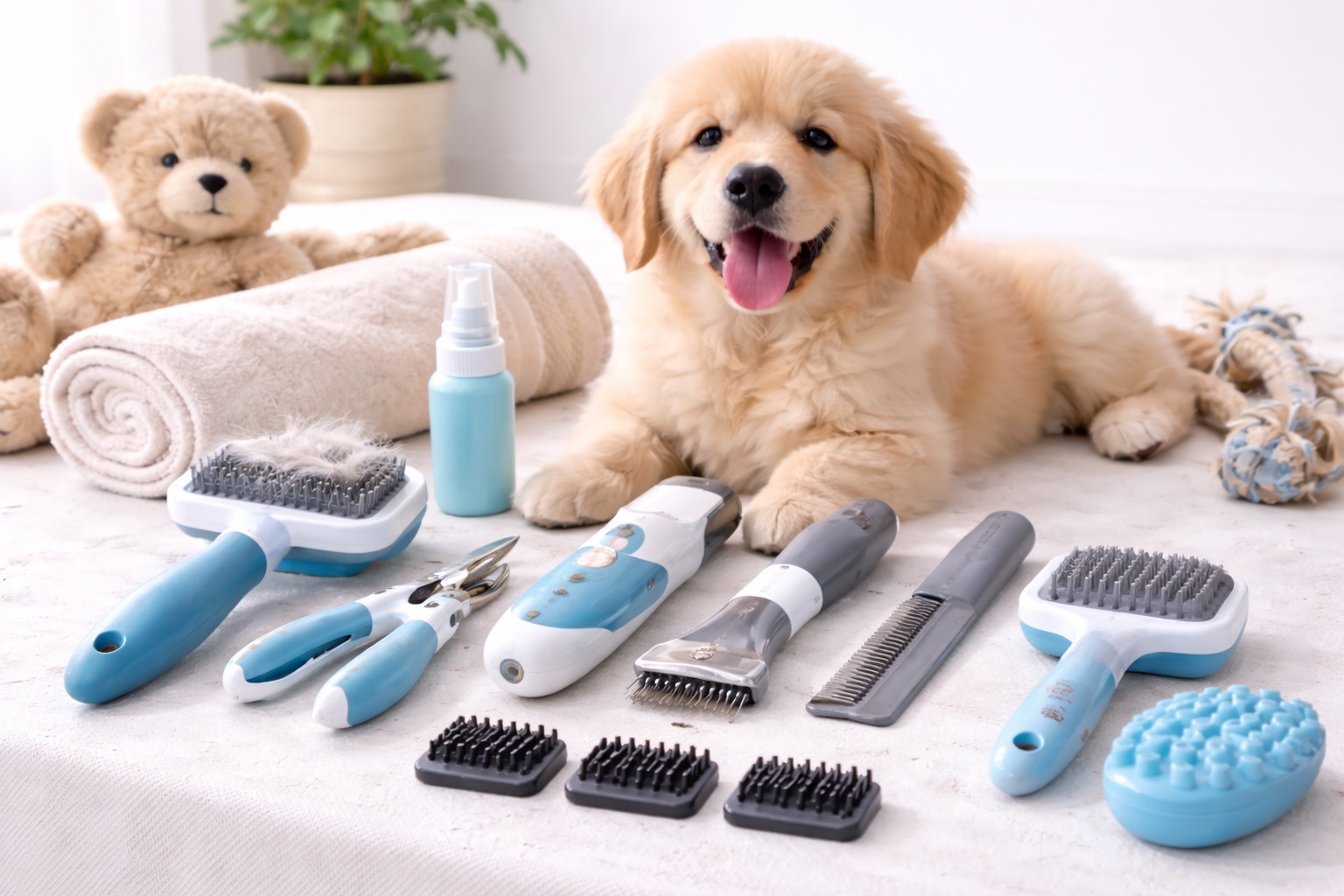
3. Complete Gentle Puppy Grooming Starter Kit – Best All-in-One Introduction
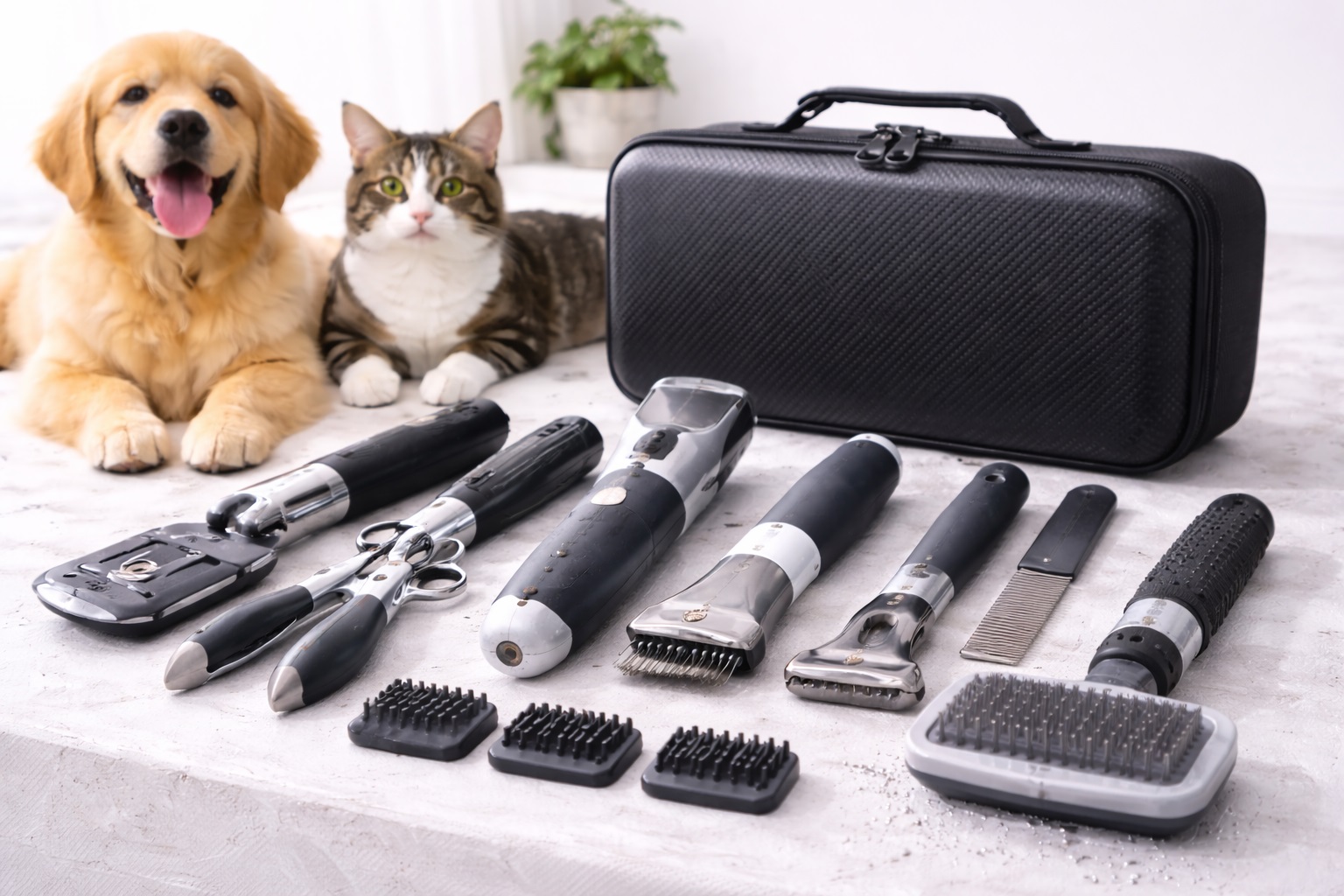
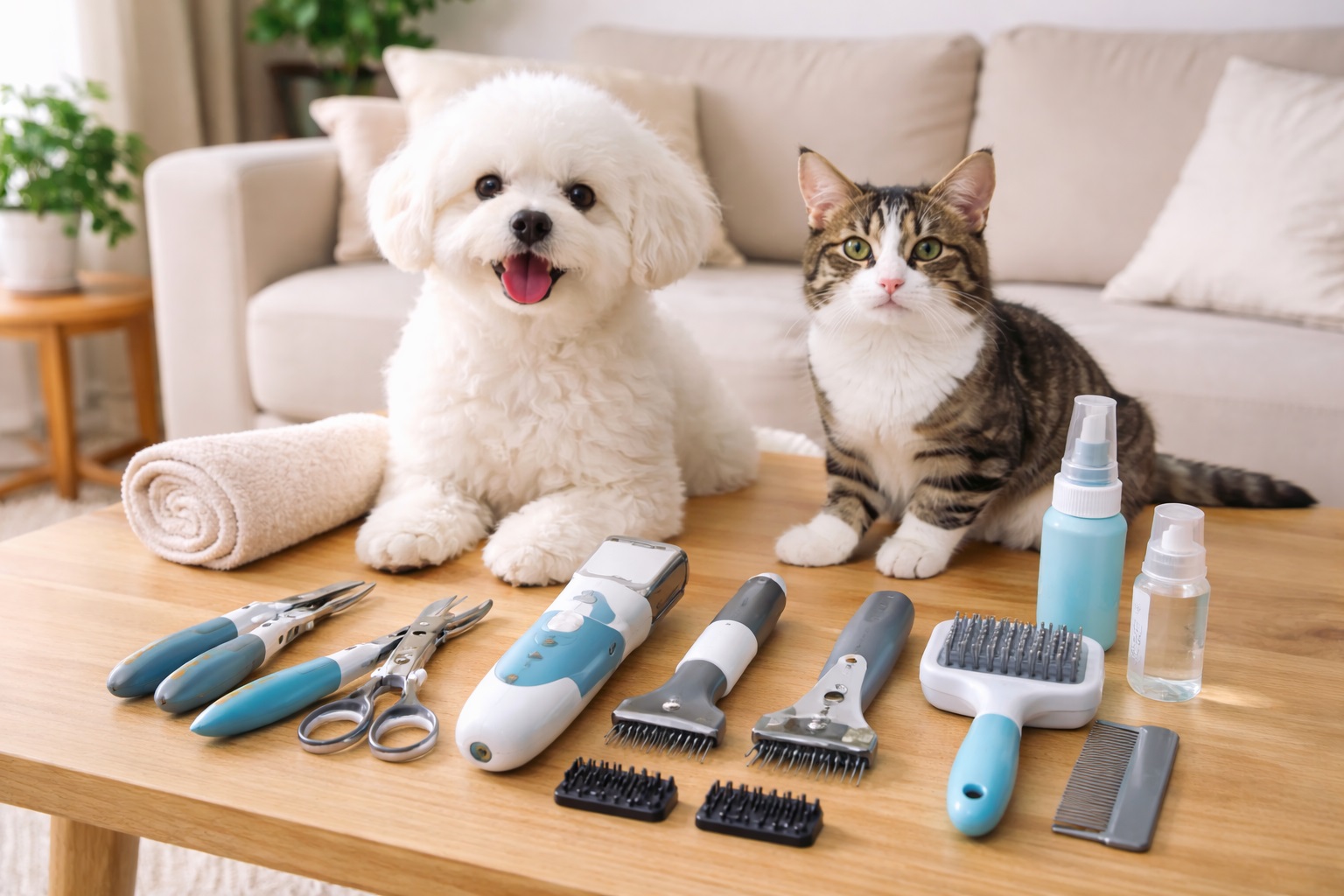
A bundled kit combining a soft brush, a fine comb, safety-guarded nail clippers, and often a soft grooming mitt gives new puppy owners every tool genuinely needed to begin a full, well-rounded grooming routine without spending considerable time researching individually verified gentle-enough options across many separate, potentially conflicting product listings. Consistency across the set in handle size and overall gentleness removes a significant amount of guesswork for an owner who may well be building their very first grooming routine alongside their very first puppy, with no prior frame of reference for what gentle enough actually looks like in practice.
- Pros:
- Covers every essential early grooming task in one coordinated, appropriately gentle purchase
- Removes the research burden of verifying gentleness across individually sourced tools
- Consistent design across tools eases the learning curve for first-time puppy owners
- Often includes a storage case, keeping small components organized during a busy puppy stage
- Cons:
- Individual tool quality is rarely best-in-class compared with specialist alternatives
- Puppy will outgrow several components within the first year regardless of quality
Best For: First-time puppy owners who want a complete, coordinated starting point without individually researching every tool.
Why We Recommend It: For an owner already managing the many new demands of a young puppy, a coordinated starter kit removes one significant source of research and decision fatigue while still reliably delivering appropriately gentle, well-matched tools across every essential early grooming task a new puppy actually needs during these first formative months.
Buying Guide: How to Choose the Best Grooming Kit for Puppies
Puppy grooming is fundamentally about building lifelong habits and positive associations at least as much as it is about the coat maintenance itself, and the factors below reflect that dual priority throughout, moving from the broad philosophy of gentle, patient introduction through to the more specific practical details of managing growth, transition, and eventual professional care as the puppy matures into an adult dog.
1. Prioritizing Gentleness Over Thoroughness Early On
A puppy's coat rarely needs intensive grooming, so err toward gentler tools even if they accomplish less in a single session. The goal during this stage is building comfortable tolerance, not achieving maximum coat results, and a tool that is somewhat less effective at raw coat maintenance but considerably more comfortable for the puppy serves the actual underlying goal of this life stage far better than the reverse.
2. Starting Introductions as Early as Possible
Begin introducing grooming tools as soon as a puppy comes home, even before any real grooming need exists, since early positive exposure during the socialization window shapes lifelong tolerance considerably more effectively than introductions attempted later on, once habits and instinctive reactions to handling are already more firmly established and correspondingly harder to shift.
3. Keeping Early Sessions Extremely Short
A few seconds to a minute is entirely sufficient for an early session — the goal is a positive, low-stakes experience rather than completing any specific grooming task. Gradually extend session length only once the puppy has shown consistent, repeated comfort with the current duration across several separate sessions rather than after just one apparently successful attempt.
4. Pairing Every Session With Positive Reinforcement
Treats and calm praise during and immediately after each session build the association that grooming means something pleasant is happening, an association that becomes increasingly valuable and important as progressively more demanding grooming tasks are gradually introduced later throughout the dog's life.
5. Introducing Nail Trims With Extra Care
Because nail trims carry the highest risk of a genuinely painful mistake, introduce the clipper itself well before the first actual trim — letting the puppy see and sniff it, touching it gently to the paw without cutting, and building genuine familiarity and comfort with the tool's presence well before it is ever actually used to make a real cut on a real nail.
6. Handling the Transition to Adult Coat and Tools
As the puppy coat gives way to the adult coat, typically over the first six to twelve months depending on breed, grooming needs and appropriate tools change accordingly. Plan for this transition well in advance rather than being caught off guard one day when the soft puppy tools that worked fine for months suddenly stop being sufficient for a rapidly maturing adult coat.
7. Socialization Beyond Just the Immediate Owner
Having a puppy tolerate handling from multiple different people, not just the primary owner, during this early window makes future veterinary visits, professional grooming appointments, and boarding or kenneling situations considerably less stressful for the dog throughout its entire life, not just during the puppy stage itself.
8. Recognizing Breed-Specific Future Grooming Needs
Some breeds will grow up needing considerably more ongoing grooming attention as adults than others — continuously growing coats, dense insulating double coats, or coarse wire-textured coats all carry meaningfully different long-term maintenance needs and challenges. Genuinely understanding your specific puppy's likely future adult grooming requirements, based on its known or expected breed characteristics, helps you thoughtfully introduce the relevant tools, textures, and sensations gradually over an extended period of time rather than confronting the dog with all of them at once much later in its life when tolerance is harder to build.
9. Building Tolerance for Full-Body Handling
Beyond just the coat itself, gently and quite briefly handling paws, ears, mouth, and tail on a regular basis throughout puppyhood builds broader, more generalized tolerance for the full range of examination and grooming touches a dog will genuinely need to accept throughout the rest of its life, including the more invasive veterinary exams and procedures that go considerably further than routine coat brushing ever does.
10. Avoiding Common Early Mistakes
Forcing a session to continue past the very first point of visible discomfort, moving too quickly from a gentle introduction straight into actual full grooming, and inconsistent handling techniques between multiple different household members are all common, easy-to-make mistakes that quietly undermine the positive-association goal this entire early grooming stage is fundamentally built around achieving.
11. When to Introduce Professional Grooming
For breeds that will eventually need regular professional grooming as adults, arranging an early positive visit or two during the puppy months themselves, even well before it is strictly and practically necessary, helps build genuine tolerance for an unfamiliar environment, unfamiliar equipment, and an unfamiliar handler well before that tolerance actually becomes essential once regular professional appointments begin in earnest.
12. Budgeting for Rapid Growth and Replacement
Puppy-specific tools, particularly nail clippers and any sized components, will need replacing as the puppy grows within the first year. Budget for this expected, entirely normal progression rather than viewing an early replacement need as a sign that the original purchase was somehow a poor or mistaken one.
Frequently Asked Questions
The questions below reflect the concerns that come up most consistently from new puppy owners navigating grooming for the first time, from basic timing and tool questions through to the specific behavioral situations that arise once an actual routine is underway.
1. When should I start grooming my puppy?
As soon as the puppy comes home, ideally within the first few weeks, even before any real grooming need exists. Early positive exposure during this critical socialization window matters considerably more for long-term outcomes than whether any specific grooming task is actually accomplished well in those first sessions.
2. How long should puppy grooming sessions be?
Start with just a few seconds to a minute, gradually extending only as the puppy shows consistent comfort. Rushing toward longer sessions before the puppy has genuinely demonstrated readiness risks undermining the entire positive association you are patiently trying to build in the first place.
3. My puppy bites at the brush — is this normal?
Common, especially with a puppy still exploring the world through its mouth. Redirect gently to a chew toy, keep sessions brief and calm, and avoid punishing the behavior outright, since punishment during a grooming session can easily create broader negative associations with grooming and handling generally rather than just discouraging the specific biting.
4. When should I start trimming my puppy's nails?
As soon as nails are long enough to need it, often within the first few weeks, introducing the clipper itself well before any actual cutting begins helps build genuine familiarity and comfort ahead of the first real trim, reducing the odds of a startled reaction on that first attempt.
5. Do puppies need different brushes than adult dogs?
Generally yes, at least initially. A softer, gentler brush suited to a puppy's finer coat and more sensitive skin reduces the risk of a genuinely uncomfortable early experience compared with using a stiffer, firmer adult-oriented tool not designed with a puppy's more delicate skin in mind.
6. How often should I groom my puppy?
Short, frequent sessions — several times a week — build tolerance faster than infrequent longer ones. Actual coat maintenance needs during puppyhood are usually quite minimal regardless of how frequently sessions happen, so frequency here is mainly about habit-building rather than genuine coat necessity.
7. Will my puppy's coat change as it grows?
Yes, most puppies transition from a soft puppy coat to a different-textured adult coat over the first six to twelve months, often requiring genuinely different tools and techniques once that gradual transition is fully underway and the softer puppy coat has largely given way.
8. Is it too late to start positive grooming habits with an older puppy?
No, though it may take more patience than starting with a very young puppy. The same gradual, positive-reinforcement approach still works reliably in most cases, just potentially requiring a somewhat longer and more patient introduction period than it would with a very young puppy.
9. Should multiple family members handle grooming, or just one person?
Having multiple people involved, once basic tolerance is established, helps the puppy genuinely generalize its comfort with handling more broadly, rather than narrowly tolerating grooming only from one single specific familiar person.
10. What is the biggest mistake new puppy owners make with grooming?
Moving too quickly from introduction to full grooming sessions, or pushing through visible discomfort to finish a planned task, both of which risk creating precisely the kind of lasting resistance that a gentle, gradual, patient approach is specifically designed to prevent from ever developing in the first place.
11. How do I know if my puppy's grooming kit needs upgrading?
Once the puppy coat begins transitioning to an adult coat, typically noticeable by increased density or texture change, existing soft puppy tools quite often stop being fully effective at that point and genuinely warrant a fresh reassessment against the dog's new, more mature coat.
12. Can I use the same nail clippers for my puppy's entire life?
Not usually. Puppy-specific clippers are sized specifically for small, thin nails and typically need replacing with properly adult-appropriate clippers as the dog's overall size and nail thickness both grow considerably larger over roughly the first year of life.
Final Verdict
- Best for Gentle First Introductions: Soft-Bristle Puppy Brush — the safest possible available starting point for building comfortable, lasting tolerance with any puppy regardless of eventual breed.
- Best for Safe Early Nail Trims: Small-Guillotine Puppy Nail Clippers With Safety Guard — directly and specifically addresses the single grooming task most likely to create lasting fear if it is ever handled poorly.
- Best All-in-One Introduction: Complete Gentle Puppy Grooming Starter Kit — the most practical, coordinated starting point for first-time puppy owners building an entire grooming routine completely from scratch.
The tools chosen for a puppy's early grooming matter less than the patience and consistency behind how they are introduced. A gentle tool used carefully, paired with positive reinforcement and short sessions building gradually over weeks and months, sets up a foundation of tolerance that pays off for the entire life of the dog.
Owners weighing several similarly gentle options against each other in a store or online listing should not spend excessive time and energy agonizing over which specific soft brush or which particular safety-guarded clipper is marginally superior to another on paper, since the practical differences between reasonably well-designed gentle tools at this early stage are considerably smaller in real-world impact than the difference between using any of them patiently and consistently versus rushing the introduction process even with the objectively gentlest tool available on the market. Effort and attention spent on the actual introduction process itself, in other words, yields considerably more meaningful long-term benefit than effort spent optimizing the specific product choice within this already fairly narrow and forgiving gentle-tool category to begin with.
It is worth remembering that the investment made during these early months rarely feels significant in the moment — a few extra minutes of patient introduction here, a slightly gentler tool chosen there — but compounds enormously over a dog's lifetime. An adult dog that calmly accepts brushing, nail trims, ear checks, and handling from unfamiliar groomers or veterinarians spares its owner years of struggle that an adult dog with poor early associations often continues to experience despite an owner's best later efforts to correct it. Few investments in a young puppy's routine pay off as reliably or as broadly as the time spent getting this specific foundation right from the very beginning.
This is particularly worth emphasizing because the payoff is so easy to underestimate in the moment. A frazzled new owner juggling housebreaking, basic obedience, socialization outings, and the general chaos of early puppyhood can understandably deprioritize a few minutes of gentle brush introduction in favor of more urgent-seeming tasks. But grooming tolerance, unlike some other puppy skills, becomes measurably harder to build the longer it is delayed, since the same developmental window that makes early introduction so effective also means opportunities missed during these months are not simply available again later on the same easy terms. Treating early grooming introduction as a genuine priority alongside the more obviously urgent puppy tasks, rather than an optional extra to get to eventually, reflects an accurate understanding of how much harder the alternative path tends to be.
Finally, expect some inconsistency along the way rather than a perfectly smooth progression. Puppies go through developmental phases, including fear periods where a previously tolerated experience suddenly provokes more caution than expected, and a session that goes poorly during one of these phases is not necessarily a sign of lasting damage to the routine. Staying patient, reverting temporarily to an easier step if needed, and resuming gradual progress once the phase passes keeps the overall trajectory positive even when any single week does not go entirely according to plan.
It is also worth keeping a rough mental record, even an informal one, of how your specific puppy has responded to each new tool and task introduced so far. Some puppies sail through nail trims but need much more patience around brushing near the tail or belly; others show the opposite pattern entirely. Building a personalized sense of your own puppy's specific sensitivities lets you allocate patience and gentle introduction time where it is actually needed most, rather than treating every task as equally likely to need extra care, which wastes effort on tasks the puppy already handles comfortably while under-preparing for the ones that genuinely require more attention.
Owners occasionally worry that a single difficult session has permanently set back months of careful, patient work, but resilience during puppyhood is generally higher than that fear suggests, provided the overall pattern of experiences remains predominantly positive. One awkward nail trim or one session where the puppy was simply not in the mood rarely undoes weeks of consistently good associations built beforehand. What matters far more than any single session's outcome is the overall ratio of positive to negative experiences accumulated over the following weeks and months, which is well within an attentive owner's control even when any individual session does not go exactly as planned.