Best Pet Carrier for Small Dogs: Top Picks for 2026
Small dogs have different carrier needs than a general-purpose pet carrier suggests. A carrier sized for a mid-size cat often leaves a small dog with awkward proportions — too shallow for a longer breed, too wide for a compact one, or lacking the structure needed for a dog that paces or scratches at the walls during a car ride. Getting the size and structure right matters more for daily comfort than most owners expect when they first shop for one.
This guide compares the carrier styles that work well specifically for small dog breeds, from toy breeds under 10 pounds to slightly larger companions up to around 20 pounds, and explains what separates a carrier that gets used weekly from one that ends up in the closet after the first uncomfortable trip.
Price is not the most reliable signal of quality here. A mid-range soft-sided carrier with the right ventilation and a secure latch will often serve a small dog better than an expensive carrier that is the wrong shape for that particular breed. The comparisons below focus on structural and functional differences rather than brand prestige, since those are the details that actually affect whether your dog is calm or stressed during transport. A carrier that costs more simply because of a designer print or trend-driven color rarely performs any better on the factors that actually matter to a small dog riding inside it.
Safety and comfort go hand in hand for small dogs specifically, since their smaller frames are more sensitive to an unstable ride, poor ventilation, or a carrier that shifts during braking. Confirming a stable base, adequate airflow, and a weight rating with margin above your dog's actual weight prevents most of the common problems before they start.
Top 7 Pet Carriers for Small Dogs (Detailed Reviews)
1. Soft-Sided Top and Front Load Carrier – Best for Ease of Pet Access
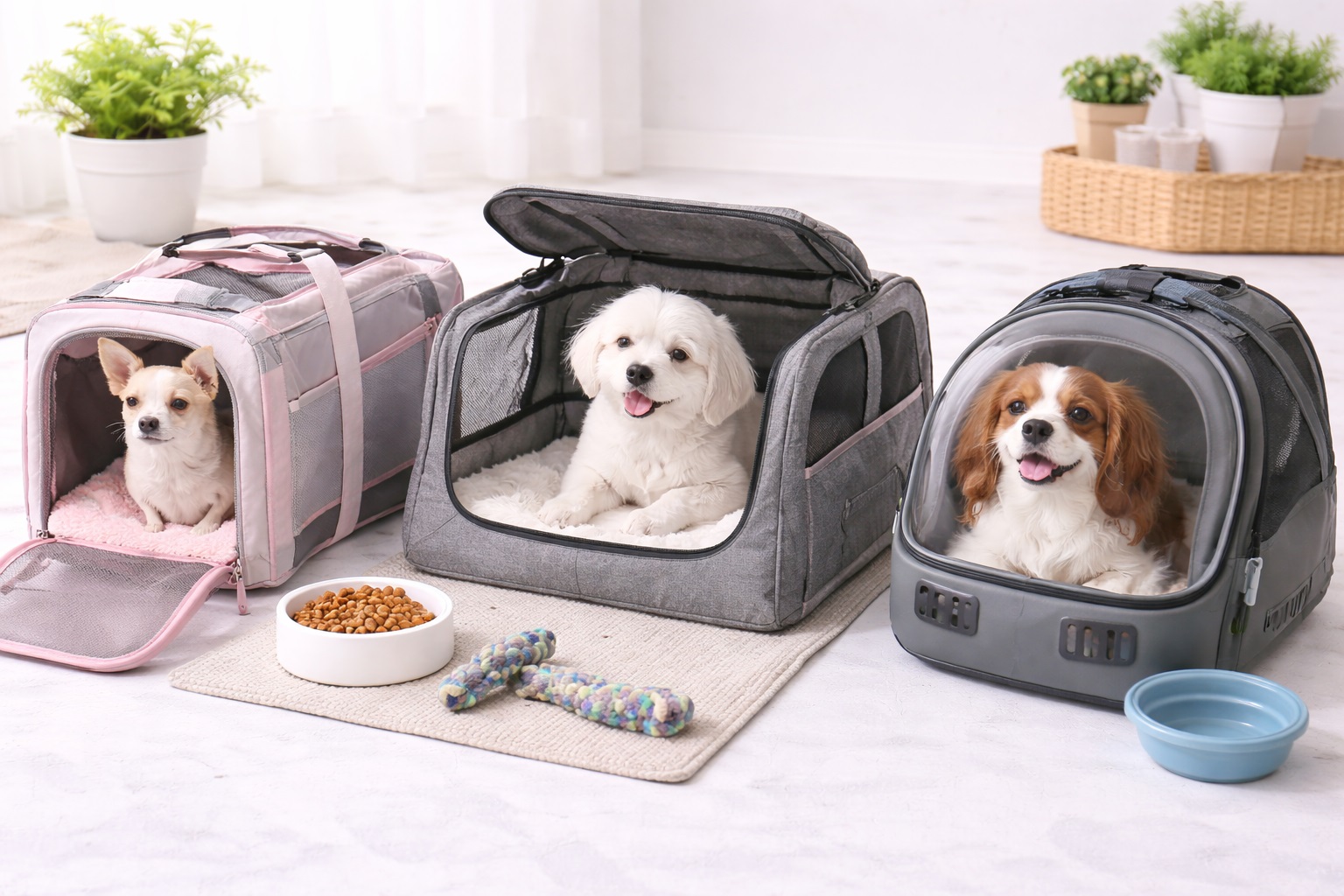
A soft-sided carrier with both a top-loading and front-loading door is the most practical design for getting a small dog in and out at vet visits and during everyday transport. Top-loading allows the dog to be placed from above rather than coaxed through a front opening, which matters for dogs that resist walking into an enclosed space voluntarily. Mesh ventilation panels on multiple sides keep airflow steady during longer trips, and the soft structure folds flat for storage between uses.
- Pros:
- Top and front entry gives maximum loading flexibility
- Mesh ventilation on multiple sides improves airflow
- Soft sides reduce impact stress compared to rigid carriers
- Common design accepted for airline cabin travel
- Cons:
- Less structural protection than a hard-sided alternative
- Collapsible sides can feel unstable to some dogs initially
Best For: Small dog owners who want the most flexible loading design for routine vet visits and cabin air travel.
Why We Recommend It: The dual-entry design is the most practical feature for real-world daily use — being able to load a reluctant dog from above removes the physical struggle that front-loading-only carriers often create.
2. Hard-Sided Carrier – Best for Security and Protection
A hard-sided carrier offers rigid structural protection that soft-sided designs cannot match. For small dogs that are anxious and prone to pushing or scratching at the walls, the rigid structure provides clear physical boundaries that reduce escape attempts. Hard-sided carriers are also the format most commonly accepted for airline cargo or checked travel when cabin space isn't an option.
- Pros:
- Rigid structure offers maximum physical protection
- Secure latching door resists accidental opening
- Accepted for airline cargo and checked travel
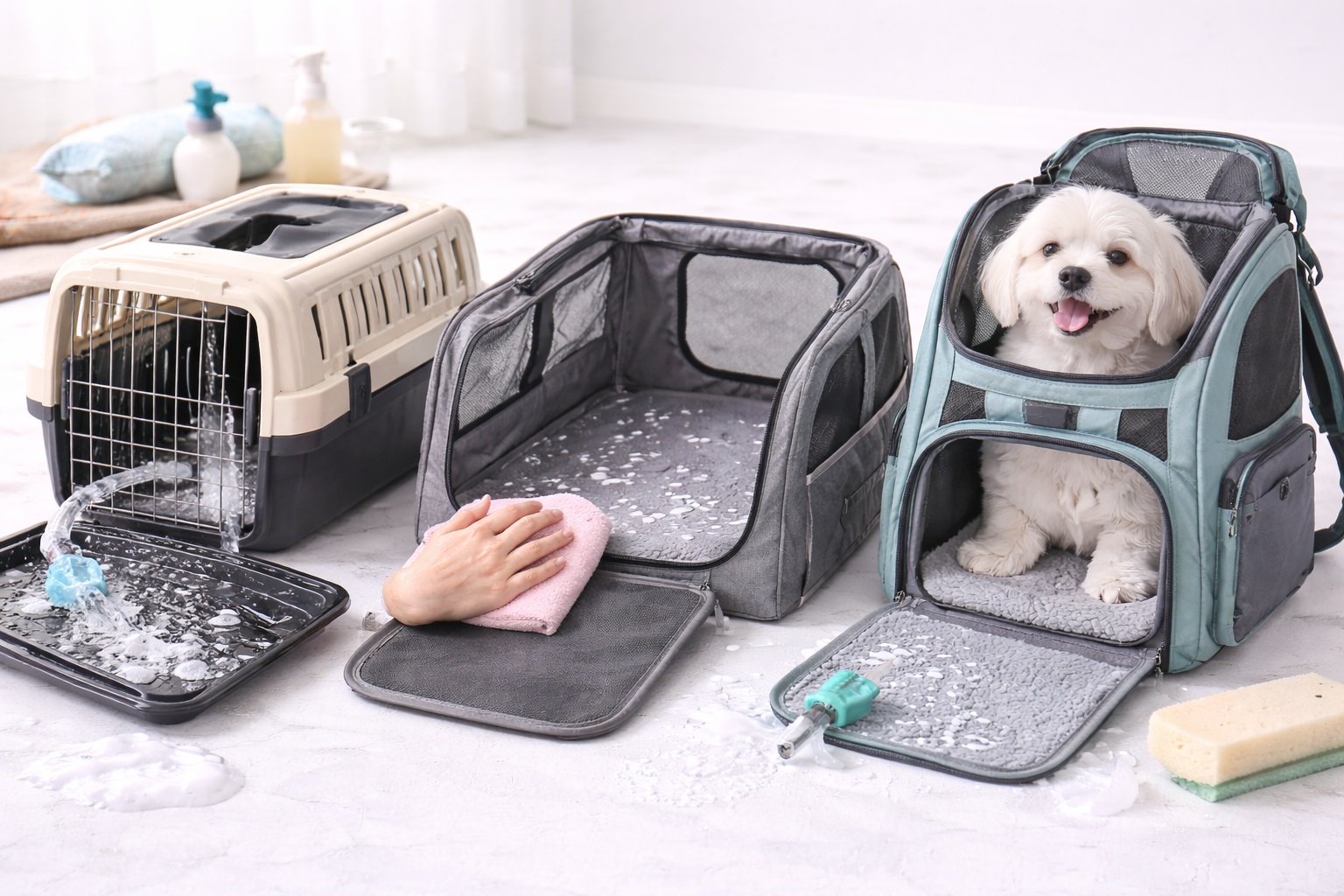
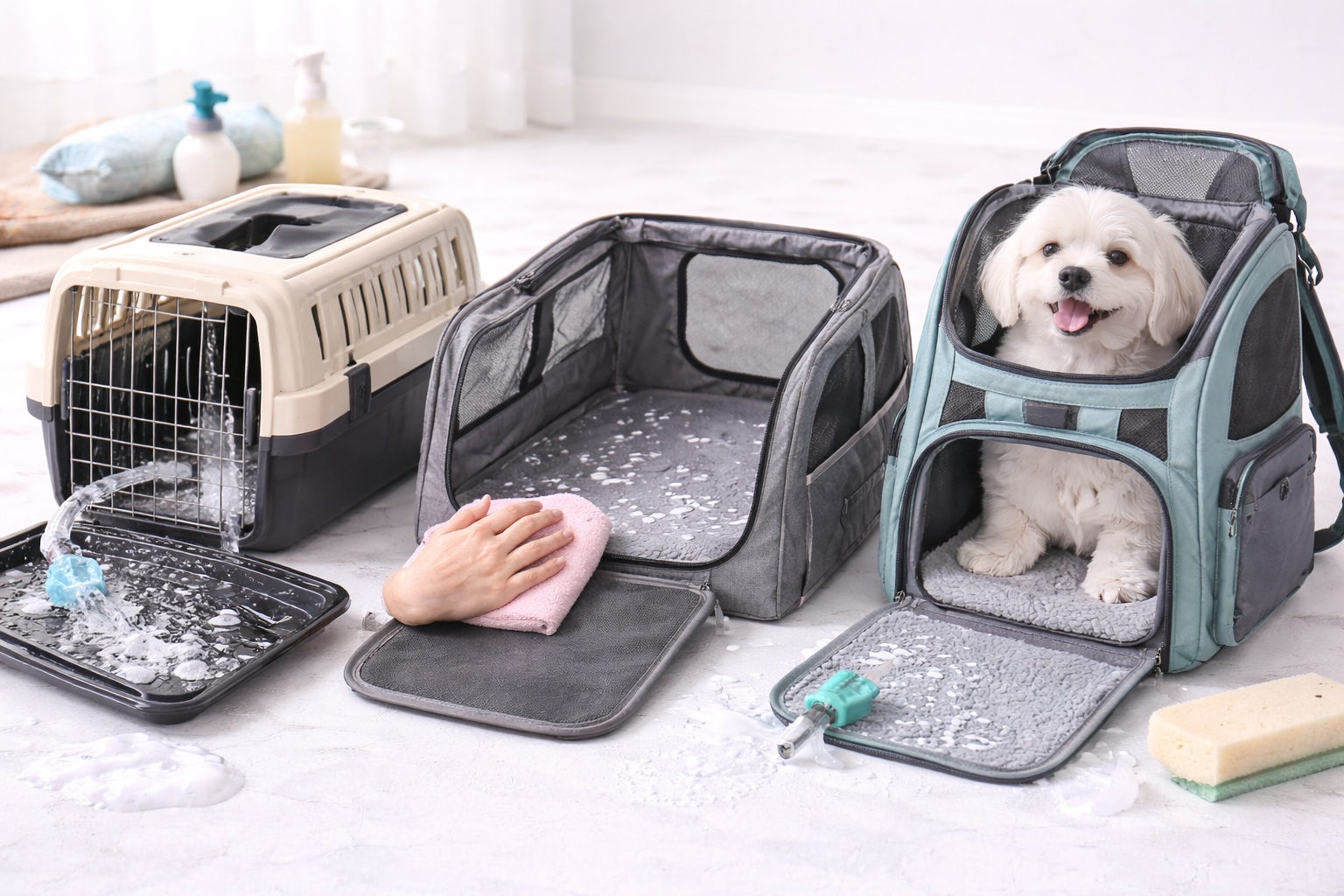
- Wipes clean more easily than fabric alternatives
- Cons:
- Heavier than soft-sided alternatives of similar size
- Less comfortable for extended one-handed carrying
Best For: Owners prioritizing structural security, particularly for anxious small dogs or airline cargo travel.
Why We Recommend It: For a dog that scratches or pushes against the sides of a carrier, the hard-sided structure's clear boundaries reduce the anxiety-driven behavior that soft sides can actually reinforce through visible give.
3. Backpack Pet Carrier – Best for Active Owners
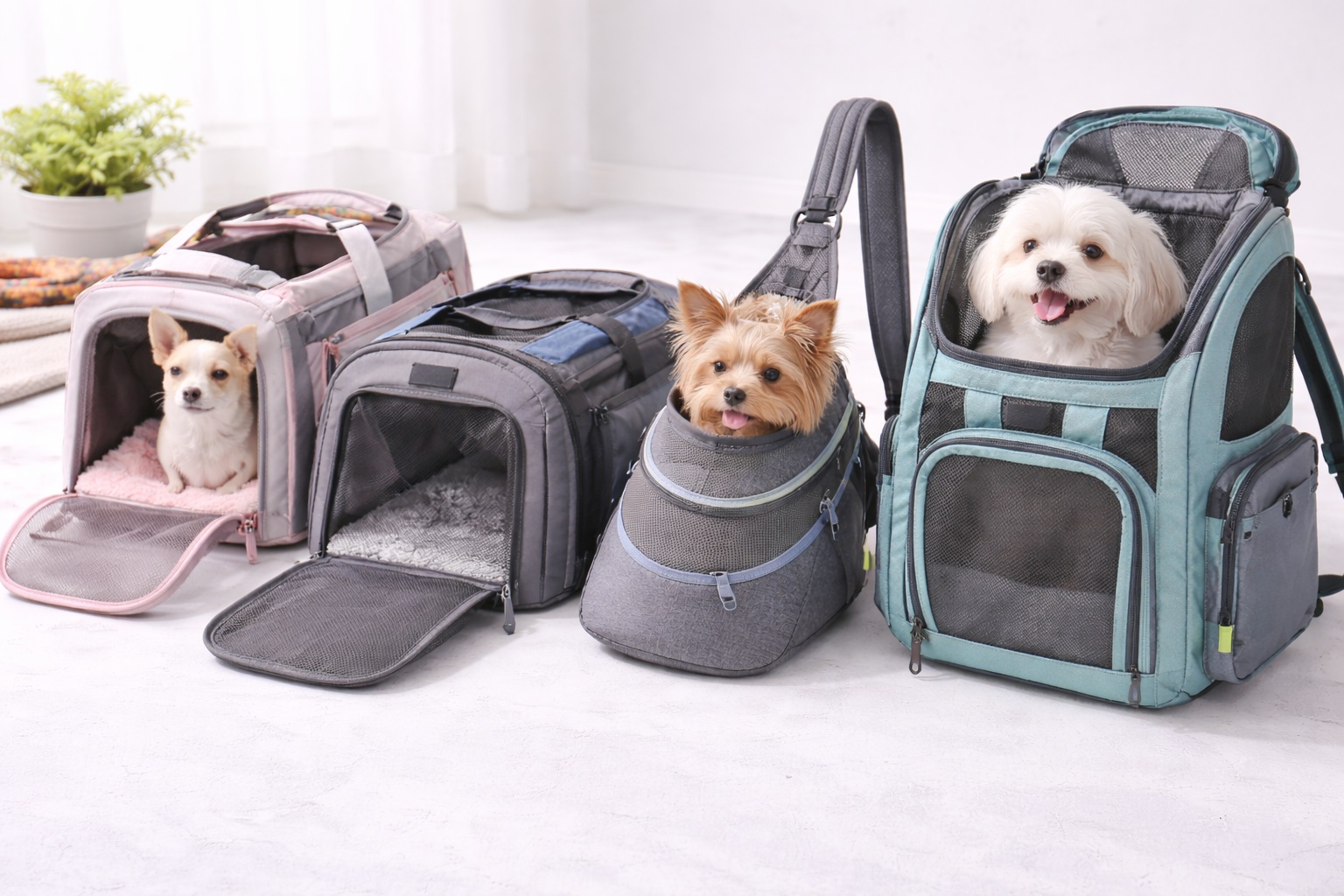
A backpack-style carrier distributes a small dog's weight across both shoulders, which is noticeably more comfortable for extended carrying than a single-handle design. Ventilated versions include mesh side panels and a bubble window so the dog can see out while remaining secure. Most backpack carriers suit dogs up to about 15 pounds, making them a strong fit for toy and small breed owners who want to bring their dog along on hikes or city outings.
- Pros:
- Both-shoulder carry reduces fatigue on longer outings
- Hands-free design suits active, mobile owners
- Bubble window gives the dog visibility and airflow
- Padded base adds comfort for the dog inside
- Cons:
- Heavier overall carry weight than a hand-held bag
- Not ideal for dogs uncomfortable with height or enclosure
Best For: Active owners who want to include a small dog in hikes, city walking, or longer outings without one-handed carrying fatigue.
Why We Recommend It: For owners covering real distance with their dog, shoulder-distributed weight is dramatically less tiring than a hand-held carrier over any meaningful length of time.
4. Rolling Pet Carrier with Retractable Handle – Best for Airport and Long-Distance Travel
A rolling carrier combines wheels and a retractable handle with the interior comfort of a standard soft-sided design, making it the most practical option for airport terminals, train stations, or any situation involving extended walking with luggage. The wheeled base removes the physical strain of carrying a dog's full weight over long distances, while still converting to a shoulder or hand carry when needed for security checks or stairs.
- Pros:
- Wheels eliminate carrying strain over long distances
- Retractable handle adjusts to different heights
- Converts to hand or shoulder carry when needed
- Often sized to meet airline cabin dimension limits
- Cons:
- Heavier overall than a non-wheeled soft-sided carrier
- Wheels add bulk that can be awkward on stairs or uneven ground
Best For: Frequent flyers and owners who regularly navigate long terminal walks or extended travel days with a small dog.
Why We Recommend It: For travel days involving long walks between gates or stations, the wheeled design meaningfully reduces physical strain compared to carrying a dog's full weight for an extended period.
5. Sling-Style Carrier – Best for Toy Breeds Needing Constant Contact
A sling carrier holds a toy breed close against the owner's body in a single shoulder pouch, which suits dogs that settle better with constant physical contact and gentle motion rather than being enclosed in a structured bag. It works well for very small dogs under about 8 pounds during short outings, brief store visits, or situations where the dog needs to feel physically secure against the owner rather than contained in a box-like structure.
- Pros:
- Close body contact can calm anxious toy breeds
- Extremely lightweight and easy to carry
- Quick to put on and take off for short errands
- Comfortable for brief store or appointment visits
- Cons:
- Limited structural protection compared to a bag-style carrier
- Not suitable for dogs over roughly 8 to 10 pounds
Best For: Toy breed owners running short errands where the dog benefits from close physical contact rather than full enclosure.
Why We Recommend It: For dogs that settle better against a warm body than inside a structured bag, the sling carrier directly addresses that comfort need in a way box-style carriers cannot replicate.
6. Car Seat Style Carrier – Best for Frequent Car Travel
A car seat style carrier combines a padded, bolstered bed with a seat belt attachment system, keeping a small dog secure and stable during regular car trips rather than sliding across the seat during turns or braking. Raised sides give the dog a sense of security while still allowing a view out the window, and the base typically detaches for cleaning after accidents or shedding.
- Pros:
- Seat belt attachment keeps the carrier stable during driving
- Raised bolstered sides add a sense of security
- Detachable base simplifies cleaning
- Comfortable enough for regular, frequent car trips
- Cons:
- Not designed for airline travel or extended carrying outside the car
- Bulkier than a compact travel bag for occasional use
Best For: Owners who drive with their small dog regularly and want a stable, comfortable in-car solution rather than a general-purpose travel bag.
Why We Recommend It: For dogs that ride in the car often, a stable, belted carrier prevents the sliding and jostling that a standard tote-style carrier does little to control during normal driving.
7. Expandable Soft Carrier – Best for Growing or Multi-Size Households
An expandable soft carrier includes zip-out side panels that increase interior space once the dog is settled inside a parked car, at a vet's office, or during a longer wait, giving a small dog more room to stretch out than the base dimensions allow. This suits households with a young dog still growing, or multiple small dogs of slightly different sizes sharing carrier duty over time.
- Pros:
- Expandable panels add usable space when stationary
- Adapts as a young dog grows into a larger size
- Flexible enough to suit more than one small dog in the household
- Compresses back down for transport and airline compliance
- Cons:
- Expanded panels should stay closed during actual movement
- More moving parts than a fixed-size carrier
Best For: Households with a growing puppy or more than one small dog that need one carrier to reasonably fit more than a single fixed size.
Why We Recommend It: The ability to add space when parked or stationary, then compress for actual transport, gives one carrier more practical flexibility across a dog's growth or a household with multiple small dogs.
Buying Guide: How to Choose the Best Pet Carrier for Small Dogs
Use these factors to match a carrier to your specific dog's size, temperament, and how you actually plan to use it. Small dogs vary enormously in shape even within a similar weight range, so measuring your specific dog matters more than trusting a generic size label. Working through these in roughly the order listed, from fit and safety through to convenience features, tends to produce a better match than starting with whichever detail happens to catch your eye first.
1. Correct Size for Your Dog
The carrier should let your dog stand, turn around, and lie down comfortably. Too large increases sliding and anxiety during transport; too small causes real discomfort. Measure your dog from nose to tail base and from the floor to the top of the head or ears before comparing interior dimensions.
2. Ventilation Quality
Adequate airflow prevents overheating, particularly during summer travel or in a warm car. Confirm the carrier has mesh ventilation on multiple sides rather than just the door — side and top mesh panels provide meaningfully more airflow than a single ventilated face.
3. Airline Cabin Policy Compatibility
If air travel is part of the plan, verify the carrier fits under the seat of your specific airline, since maximum dimensions vary by carrier. Soft-sided designs compress slightly to fit tighter spaces; hard-sided carriers must fit the stated dimensions exactly.
4. Stability During Transport
A carrier that slides or wobbles during car travel adds stress for the dog inside. A non-slip base and a compatible seat belt loop keep the carrier stable on a car seat, which matters more the more frequently your dog rides along.
5. Loading and Unloading Ease
Top-loading carriers are generally easier for reluctant or anxious dogs. Front-loading-only designs require the dog to walk in horizontally, which is more physically demanding for both handler and dog. Dual-entry carriers provide the most flexibility across different situations.
6. Cleaning Accessibility
Accidents happen in carriers more often than owners expect, especially with anxious dogs. Removable, washable padding and a waterproof interior liner are the features that matter most for easy cleanup. Hard-sided carriers wipe clean more completely than fabric alternatives after an accident.
7. Weight Limit vs. Actual Dog Weight
Confirm the carrier's stated weight limit exceeds your dog's actual body weight with a reasonable margin. A carrier rated for exactly your dog's weight leaves no buffer for the dynamic forces of movement during transport — aim for a carrier rated at least 10 to 15 percent above your dog's weight.
8. Familiar Scent Introduction
Leaving a new carrier out for several days before first use lets the dog investigate and become familiar with it on their own terms. Adding familiar bedding inside accelerates comfort. Dogs that know the carrier before travel show noticeably less stress during the actual trip.
9. Security Latch Quality
The carrier door must not open accidentally during transport. Test the latch mechanism for security before the first real trip — a carrier that opens unexpectedly in a vehicle or public space is a genuine safety incident, not a minor inconvenience.
10. Intended Use Frequency
For weekly vet visits, a practical mid-range carrier is entirely sufficient. For frequent air travel, airline compliance and structural durability matter considerably more. For occasional use, a basic functional design without premium features is a reasonable choice.
11. Handle and Strap Comfort
A padded handle or adjustable, padded shoulder strap makes a meaningful difference over any carrying distance beyond a few steps. Bare nylon straps can dig into the shoulder or hand during longer carries, which matters more the more often you use the carrier.
12. Foldability and Storage
Soft-sided carriers that fold flat store easily between uses, which matters in smaller homes or apartments. Hard-sided carriers generally don't collapse, so consider available storage space as part of the decision if the carrier won't be used daily.
13. Zipper and Stitching Quality
On soft-sided carriers, the zippers and seams take the most ongoing stress, especially around the door where a dog pushes to look out or attempt an exit. Double-stitched seams and heavy-duty zipper pulls hold up considerably longer under regular use than lighter-gauge hardware, and a failed zipper mid-trip is a genuine security lapse rather than a cosmetic issue.
14. Interior Leash Clip for Extra Security
Many carriers include a small interior clip or D-ring to attach a harness lead inside the bag, adding a second layer of security if the main latch or zipper is ever compromised. This is a small feature but a meaningful one for vet waiting rooms or car trunk loading, where a brief opening of the carrier carries the highest real risk of an unplanned escape.
15. Whether One Carrier Can Really Cover Every Use Case
Owners who both fly regularly and drive to the vet weekly often find that one carrier optimized for airline compliance isn't the most comfortable option for daily car rides, and vice versa. Rather than compromising on a single carrier that does everything adequately, it's often more practical to own one carrier suited to routine use and a second reserved specifically for travel days.
Common Mistakes to Avoid
The most common mistake is buying based on a dog's current weight without accounting for growth, especially with puppies that will add several pounds within months. A second common mistake is choosing a carrier based on appearance rather than interior dimensions, which leaves an uncomfortably cramped dog inside a carrier that looks appropriately sized from the outside. A third is skipping the familiarization period entirely and only introducing the carrier on the day of first use — dogs that encounter a brand-new enclosed space for the first time during a stressful trip, like a vet visit, associate the carrier itself with that stress rather than treating it as a neutral, safe space.
Frequently Asked Questions
1. What size carrier do I need for my small dog?
The carrier should allow standing, turning around, and lying down in a natural position. For most dogs up to 10 pounds, an interior of roughly 16 by 10 by 10 inches is the minimum comfortable size. Measure your dog directly and compare against interior dimensions, not exterior measurements.
2. Are soft or hard carriers better for small dogs?
Soft carriers are lighter, more comfortable to carry, and generally better suited to cabin air travel. Hard carriers offer stronger structural protection and work better for dogs that push or scratch at the walls, and are often preferred for cargo travel. Many owners use a soft carrier for routine trips and reserve a hard-sided one for air travel.
3. How do I get my small dog comfortable with a carrier?
Leave the carrier open at home for one to two weeks before any planned travel. Place familiar bedding and treats inside, and let the dog investigate and enter voluntarily. Avoid using the carrier exclusively for stressful trips like vet visits — occasional short, pleasant outings help the dog build a neutral or positive association instead.
4. Is the most expensive pet carrier for small dogs always the best?
Not necessarily. Price often reflects materials and finishing details, but many mid-range carriers perform just as well for everyday needs. Match the carrier to your dog's actual size and your real use case rather than the highest price point available.
5. How long should a quality small dog carrier last?
A well-built carrier from a reputable manufacturer typically lasts two to five years with reasonable care and regular use. Warranty length is often a reasonable indicator of how confident the manufacturer is in the product's durability.
6. Can I return a pet carrier if it doesn't suit my dog?
Most retailers offer a 15 to 30 day return window. Keep the original packaging until you've confirmed the fit and your dog's comfort level, since sizing surprises are common with first-time carrier purchases.
7. What should I prioritize when buying a small dog carrier?
Start with your specific use case — whether that's routine vet visits, air travel, active outings, or daily car rides — since that determines which structural features matter most before price or appearance become relevant.
8. Does brand name matter for pet carriers?
Established brands tend to offer more consistent sizing and stronger warranty support. Newer or smaller brands can still offer good value, so reading verified purchase reviews focused on durability and fit is worthwhile before committing either way.
9. Can two small dogs share one carrier?
Only if the carrier is explicitly sized and rated for two dogs and both dogs are genuinely comfortable sharing an enclosed space. Forcing two dogs into a single-dog carrier creates real discomfort and stress for both animals during transport.
10. How do I know if a carrier is truly airline compliant?
Check the specific airline's published pet carrier dimensions before purchasing, since requirements vary by airline and even by aircraft type. A carrier labeled generically as airline approved does not guarantee compliance with every individual airline's specific policy.
11. What's the best carrier for a small dog with anxiety?
Anxious dogs often do better in a hard-sided or fully enclosed soft carrier with a calming cover, rather than an open-mesh design that exposes them to unfamiliar sights and sounds. A gradual introduction period and familiar bedding also meaningfully reduce anxiety during actual use.
12. Should I feed my dog before or after a carrier trip?
A light meal several hours before travel, rather than immediately beforehand, generally reduces the chance of motion-related stomach upset. Always provide access to water once settled, and avoid a large meal right before any car or air travel.
13. How often should I clean my dog's carrier?
Wipe down or wash the interior after any accident immediately, and do a full cleaning at least monthly with regular use to manage dander, odor, and shedding buildup, more frequently if the carrier sees daily use.
14. Can a puppy use the same carrier as it grows?
Only briefly. Puppies grow quickly, and a carrier sized correctly at eight weeks is often too small within a few months. An expandable carrier or a plan to size up as the puppy grows is more practical than trying to make one carrier last through an entire growth period.
15. Is a backpack carrier safe for car travel?
Backpack carriers are designed for walking and hands-free carrying rather than securing a dog during a car ride. For car travel specifically, a seat belt compatible or car seat style carrier provides far better stability and safety than a backpack design.
16. Can I wash the entire carrier, not just the removable padding?
Most soft-sided carriers can be spot-cleaned or wiped down on the exterior, but full machine washing depends on the specific materials and hardware used, so check the manufacturer's care instructions first. Removable, washable interior padding covers most routine cleaning needs without risking the structural fabric or zippers.
17. What's the best way to acclimate a rescue dog to a new carrier?
Rescue dogs with an unknown or difficult history often need a slower, more patient introduction than a puppy raised with the carrier from the start. Leave it open in a calm space for at least a week, avoid any forced entry, and pair voluntary exploration with treats and praise rather than setting a deadline for the dog to feel comfortable.
18. Do I need a health certificate to travel with my dog in a carrier?
Requirements vary by airline and destination, but many require a veterinary health certificate issued within a set number of days before travel. This is separate from the carrier itself, so check both the carrier's airline compliance and the airline's health documentation requirements well before a planned trip.
Final Verdict
- Best for Ease of Pet Access: Soft-Sided Top and Front Load Carrier — the most flexible everyday option for loading and unloading.
- Best for Security and Protection: Hard-Sided Carrier — the strongest structural protection for anxious dogs and cargo travel.
- Best for Active Owners: Backpack Pet Carrier — the most comfortable option for hands-free, distance-covering outings.
- Best for Airport Travel: Rolling Pet Carrier with Retractable Handle — the least tiring option for long terminal walks.
- Best for Toy Breeds: Sling-Style Carrier — the most comforting option for dogs needing close body contact.
- Best for Car Travel: Car Seat Style Carrier — the most stable option for frequent driving with a small dog.
- Best for Growing Dogs: Expandable Soft Carrier — the most adaptable option for a household with a growing puppy.
The right pet carrier for a small dog depends less on price and more on matching interior dimensions, structural support, and ventilation to your dog's actual size and your real travel patterns. A carrier that fits perfectly for a ten pound toy breed will feel cramped for a fifteen pound companion, and a carrier built for airline cabins may not be the most comfortable choice for daily car rides. Use the reviews and buying guide above to narrow down the style that matches how you'll actually use it, and give your dog time to get comfortable with it before the first real trip.