Best Pet Carrier for Cats: Low-Stress Picks for 2026
Cats respond to carriers differently than dogs do, and a lot of generic pet carrier advice misses that distinction entirely. A cat that hides at the sight of a carrier isn't being difficult — carriers are strongly associated with vet visits, which are themselves associated with restraint and unfamiliar handling, and that association builds fast if the carrier only ever appears for stressful trips.
This guide focuses specifically on carrier features that reduce feline stress rather than general pet carrier features borrowed from dog-focused gear. Top access, den-like enclosure, and the ability to remove the top half entirely for an exam all matter far more for cats than they do for most dogs, and they're the details that separate a carrier a cat merely tolerates from one that genuinely doesn't add extra distress to an already stressful trip.
None of this requires an elaborate setup. The right carrier combined with some basic familiarization at home solves most of the stress most owners associate with cat transport. The comparisons below focus on the structural choices that make the biggest practical difference for feline comfort specifically.
Veterinary staff frequently recommend carriers that open from the top or split apart entirely, since a cat can often stay inside the bottom half for an exam rather than being pulled out through a single front opening. That single design detail does more to reduce visit-related stress than almost any other carrier feature.
Top 8 Pet Carriers for Cats (Detailed Reviews)
1. Top-Load Hard-Sided Carrier – Best for Reducing Handling Stress
A top-load hard-sided carrier lets a cat be lowered in from above rather than coaxed or pushed through a front opening, which avoids the physical struggle that triggers stress in cats that already associate carriers with unwanted handling. The rigid structure also holds its shape reliably, so the opening stays consistently accessible rather than collapsing inward the way some soft-sided tops can. Many top-load models also include a front door in addition to the top opening, giving owners the flexibility to use whichever access point causes less resistance on a given day, which matters because a cat's tolerance for handling can vary noticeably between visits.
- Pros:
- Top access avoids the struggle of front-only loading
- Rigid structure keeps the opening reliably accessible
- Reduces handling-related stress during loading
- Sturdy enough for a cat pushing against the sides
- Cons:
- Heavier than a soft-sided equivalent
- Doesn't fold flat for storage
Best For: Cats that resist front-loading or become distressed during the physical process of being placed inside a carrier.
Why We Recommend It: Removing the physical wrestling match from loading addresses one of the most common sources of pre-trip stress for both cat and owner, and a rigid top-load design does this more reliably than a soft-sided alternative.
2. Split-Shell Carrier with Removable Top – Best for Vet Exams
A split-shell carrier separates into a top and bottom half secured by simple clips or screws, allowing a cat to remain in the familiar bottom half during an actual veterinary exam rather than being lifted out entirely into an unfamiliar exam table. Many veterinary clinics specifically recommend this design because it measurably reduces exam-related stress and struggling.
- Pros:
- Cat can stay in the familiar bottom half during an exam
- Frequently recommended directly by veterinary staff
- Reduces struggling and stress during handling at appointments
- Top and bottom separate easily for full interior cleaning
- Cons:
- Slightly bulkier than a single-piece carrier
- Requires occasionally checking that clips or screws stay secure
Best For: Owners who want to minimize stress specifically during the veterinary exam portion of a trip, not just the transport itself.
Why We Recommend It: This is the design most consistently recommended by veterinary professionals because it directly reduces the handling stress that occurs at the appointment itself, not just during travel to and from it.
3. Den-Style Enclosed Carrier – Best for Naturally Anxious Cats
A den-style carrier with mostly solid sides and a small, covered entry mimics the enclosed, hidden spaces cats naturally seek out when stressed, rather than exposing them to open mesh views of unfamiliar surroundings. For cats that visibly calm down when hiding under furniture or in a closet, this enclosed design translates that same instinct into a portable, secure space.
- Pros:
- Enclosed structure mimics a cat's natural hiding instinct
- Limits visual exposure to stressful unfamiliar surroundings
- Suits cats that specifically seek out small, hidden spaces
- Often includes a removable cover for additional darkness
- Cons:
- Reduced ventilation compared to a fully mesh design
- Owner has less visibility to check on the cat during transport
Best For: Naturally anxious cats that visibly seek out small, enclosed hiding spots when stressed at home.
Why We Recommend It: Working with a cat's natural instinct to hide rather than against it produces a calmer transport experience than an open, highly visible carrier design for cats with this specific temperament.
4. Soft-Sided Carrier with Calming Cover – Best for Blocking Visual Stimulation
A soft-sided carrier paired with a fitted cover blocks visual stimulation from unfamiliar environments — a busy waiting room, passing traffic, other animals — while still allowing airflow through underlying mesh panels. This combination addresses cats that aren't necessarily distressed by handling itself, but by the sensory overload of an unfamiliar, busy environment.
- Pros:
- Cover blocks stressful visual stimulation from surroundings
- Mesh underneath maintains adequate airflow
- Lightweight and simple to carry
- Cover can be removed once in a calmer environment
- Cons:
- Less structural protection than a hard-sided design
- Cover needs to be secured properly to avoid slipping
Best For: Cats that handle physical restraint reasonably well but become distressed by visual exposure to busy or unfamiliar environments.
Why We Recommend It: For cats whose stress comes primarily from sensory overload rather than handling itself, blocking visual stimulation directly addresses the actual trigger rather than a secondary factor.
5. Carrier with Built-In Bed Function – Best for Building Long-Term Positive Association
A carrier designed to double comfortably as an everyday bed, with soft padding and an inviting open structure when not being used for transport, helps a cat build a neutral or positive long-term association with the carrier itself rather than treating it as an object that only appears before something unpleasant happens.
- Pros:
- Doubles as a comfortable everyday bed between trips
- Builds positive association through regular, non-stressful use
- Reduces the shock of encountering an unfamiliar object before travel
- Comfortable padding suits both resting and short trips
- Cons:
- Requires consistent placement in an accessible area to work as intended
- Less structurally protective than a dedicated hard-sided carrier
Best For: Households willing to leave a carrier out permanently as part of a cat's everyday environment rather than storing it away between trips.
Why We Recommend It: The single most effective long-term stress reducer for cat carriers is familiarity, and a carrier that lives as a bed rather than appearing only for vet trips builds that familiarity automatically over time.
6. Lightweight Mesh Dome Carrier – Best for Short, Low-Stress Trips
A lightweight mesh dome carrier offers a fully ventilated, semi-transparent structure that suits calm cats or very short trips where the primary goal is simple, comfortable containment rather than stress-reduction features like full enclosure. Its light weight and collapsible design also make it easy to keep on hand without taking up much storage space. Because the shell has almost no rigid structure, these carriers work best paired with a secondary strap or seatbelt attachment when traveling by car, since the dome alone won't hold its shape reliably during hard braking or sudden turns.
- Pros:
- Very lightweight and easy to carry
- Full mesh construction provides maximum ventilation
- Collapses for minimal storage space
- Simple to wipe clean between uses
- Cons:
- Open visibility can add stress for anxious cats
- Less structural rigidity than a hard-sided or framed design
Best For: Naturally calm cats or short, simple trips where full enclosure isn't necessary for a comfortable experience.
Why We Recommend It: For a cat that isn't particularly anxious about carriers, this lightweight option provides adequate function without the added weight and structure of stress-focused features that aren't actually needed.
7. Wheeled Cat Carrier with Stable Base – Best for Senior or Larger Cats
A wheeled carrier with a stable, wide base reduces the physical strain of transporting a heavier or senior cat over any real distance, while the low-set wheels keep the ride smooth enough not to jostle a cat with joint sensitivity or arthritis. The stable base also resists tipping better than a narrower design when rolled over uneven ground like a parking lot. Retractable handles and telescoping poles let the owner adjust carrying height, which reduces strain on the back and shoulders during longer walks between a parking area and a clinic entrance.
- Pros:
- Wheels reduce physical strain for heavier or senior cats
- Wide, stable base resists tipping on uneven surfaces
- Smooth ride reduces jostling for cats with joint sensitivity
- Converts to hand carry when needed for stairs or curbs
- Cons:
- Bulkier and heavier overall than a non-wheeled carrier
- Wheels add cost compared to a basic equivalent design
Best For: Senior cats, larger cats, or any situation where carrying full weight over distance isn't practical for the owner.
Why We Recommend It: For a cat where weight or joint sensitivity make traditional carrying impractical or uncomfortable, the wheeled design solves a genuine physical limitation rather than just a convenience preference.
8. Two-Cat Divided Carrier – Best for Multi-Cat Households Traveling Together
A two-cat divided carrier includes a mesh or solid partition separating two compartments within one larger structure, allowing bonded cats to travel together within sight or scent of each other while still maintaining separate, individually sized spaces. This suits closely bonded cats that become more distressed when separated during travel than when sharing a larger but divided carrier. Some divided models also allow the partition to slide rather than lift out completely, giving owners a middle option where cats can see and smell each other through a mesh divider without full physical contact during the trip.
- Pros:
- Allows bonded cats to travel within sight or scent of each other
- Reduces separation-related stress for closely bonded pairs
- More space-efficient than two full separate carriers
- Partition can typically be removed if not needed
- Cons:
- Bulkier and heavier than a single-cat carrier
- Not appropriate for cats that don't get along well together
Best For: Multi-cat households with closely bonded cats that experience more stress when separated than when sharing a divided space.
Why We Recommend It: For genuinely bonded cats, separation itself can be more stressful than travel, and this design solves that specific problem without forcing full physical contact that could create its own issues during a stressful trip.
Buying Guide: How to Choose the Best Pet Carrier for Cats
Use these factors to match a carrier to your specific cat's temperament and the type of trips you take most often, since feline stress responses vary significantly between individual cats.
1. Identify Your Cat's Specific Stress Trigger
Some cats stress most over handling, others over visual exposure to unfamiliar environments, and others over separation from a bonded companion. Identifying the actual trigger points toward the most relevant carrier features rather than guessing.
2. Top or Split Access for Handling-Sensitive Cats
If your cat resists front-loading or becomes distressed during vet exams specifically, prioritize top-load or split-shell designs, since these directly address handling-related stress at both loading and examination.
3. Enclosure Level for Visually Sensitive Cats
Cats stressed by visual stimulation benefit from den-style or covered designs. Cats that seem unbothered by their surroundings don't need this feature and may actually prefer more open visibility.
4. Size for Comfortable Turning and Lying Down
The carrier should allow your cat to stand, turn around, and lie down naturally. A carrier that's too small adds physical discomfort on top of any psychological stress already present.
5. Familiarization Time Before First Use
Regardless of which carrier you choose, allowing a cat to investigate it at home before any real trip meaningfully reduces stress compared to first encountering an unfamiliar carrier on the actual day of travel.
6. Weight and Portability for Your Specific Cat
Larger or senior cats may benefit from a wheeled design, while smaller or younger cats are comfortably served by lighter, hand-carried options without the added bulk of wheels.
7. Ventilation Balanced Against Enclosure
Fully enclosed designs reduce visual stress but can limit airflow. Look for enclosed designs that still include adequate mesh ventilation panels rather than fully solid construction.
8. Multi-Cat Considerations
For households with more than one cat, decide whether bonded cats benefit from traveling together in a divided carrier or whether separate carriers better suit cats that don't get along closely.
9. Cleaning and Odor Management
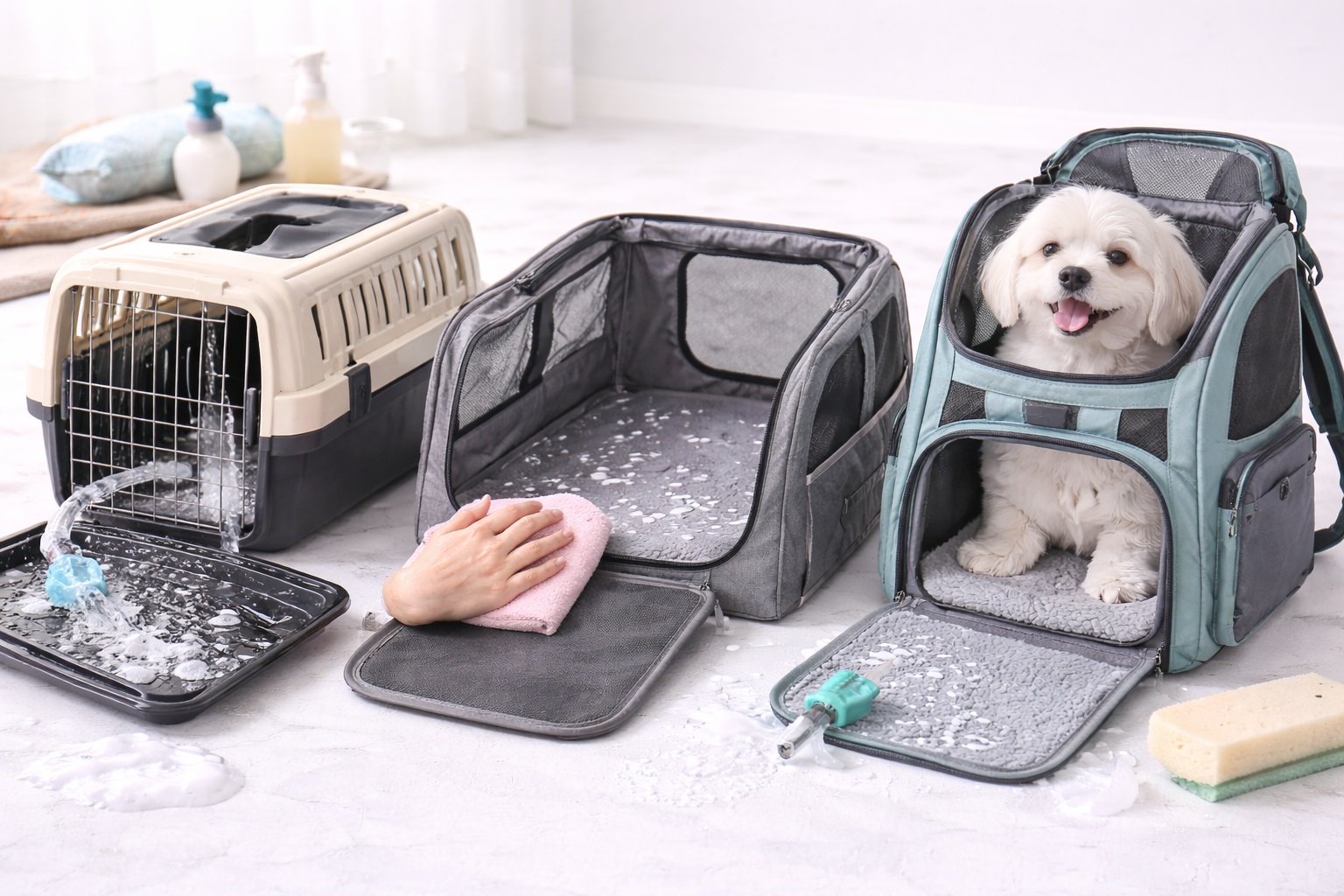
Stressed cats have a higher likelihood of accidents during transport. A carrier with removable, washable components handles this more gracefully than one requiring extensive spot cleaning.
10. Latch Security for a Struggling Cat
A distressed cat can push against a carrier door with surprising force. Confirm the latch mechanism holds securely under real pressure, not just casual testing.
11. Everyday Presence to Build Familiarity
Where practical, leaving a carrier accessible as part of a cat's everyday environment, rather than stored away between uses, builds the kind of long-term familiarity that meaningfully reduces trip-related stress.
12. Veterinary Staff Recommendations
Ask your veterinarian's office directly which carrier designs they see work best for reducing exam-related stress — clinic staff handle a wide range of carrier types daily and often have practical, specific insight worth factoring into the decision.
13. Material Durability for Long-Term Use
Hard-sided carriers made from molded ABS plastic tend to resist scratching, chewing, and general wear better than soft-sided alternatives, holding their shape reliably even after years of regular use. Soft-sided nylon carriers are lighter and easier to store flat, but stress points like zipper pulls, handle seams, and corner stitching are the first areas to show wear, particularly if the carrier travels by car often or gets tossed in and out of a trunk. If you expect to use the carrier for many years across a cat's lifetime, weigh the added weight of a hard-sided design against the longer service life it typically offers.
14. Airline and Travel Compliance for Cats
If air travel is a realistic possibility even occasionally, check the specific carrier dimension and construction requirements published directly by the airline you'd use well before booking, since these rules are typically stricter and more detailed than general vet-visit carrier guidance and vary meaningfully from one airline to another. A carrier that comfortably meets general size guidance for everyday trips may still fall short of a specific airline's under-seat dimension limit, so confirm compliance directly rather than assuming any well-reviewed carrier will automatically qualify.
15. Introducing a New Carrier in a Multi-Cat Household
When bringing a new carrier into a household with more than one cat, let every resident cat investigate it individually over a few days before assigning it to any specific trip, and wipe down any strong new-product smell first. Unfamiliar scents on a shared household object can occasionally create tension between cats that otherwise get along fine, so a brief neutral introduction period helps the carrier settle in as just another piece of furniture rather than something worth guarding or avoiding.
Common Mistakes to Avoid
A common mistake is buying a carrier based on how it looks rather than how it addresses a cat's actual stress response, ending up with an attractive but ill-suited design for a cat that specifically needs top access or full enclosure. A second common mistake is only bringing the carrier out immediately before a stressful trip, which reinforces the exact association owners are trying to avoid — a carrier that appears rarely and only before something unpleasant will always carry more negative weight than one that's simply part of the everyday environment. A third is assuming a cat's stress response is fixed rather than something that can genuinely improve with the right carrier design and consistent, patient familiarization over time.
Frequently Asked Questions
1. Why does my cat hide when it sees the carrier?
Most cats associate the carrier specifically with stressful trips, particularly vet visits. This association builds when the carrier only appears immediately before something unpleasant happens. Leaving the carrier out as a familiar, everyday object helps break that pattern over time.
2. What carrier design do vets recommend most for cats?
Split-shell carriers that separate into top and bottom halves are frequently recommended, since a cat can remain in the familiar bottom half during an exam rather than being fully removed onto an unfamiliar exam table.
3. How do I get my cat comfortable with a new carrier?
Leave the carrier out and open in a familiar space for at least one to two weeks before any planned trip. Add familiar bedding and treats inside, and let the cat investigate entirely on its own terms without forcing entry.
4. Is the most expensive cat carrier always the best?
Not necessarily. Price often reflects materials and cosmetic finishing rather than the specific stress-reduction features — like top access or den-style enclosure — that matter most for a given cat's temperament.
5. How long should a quality cat carrier last?
A well-built carrier from a reputable manufacturer typically lasts two to five years with reasonable care, and proper cleaning after any stress-related accidents helps preserve both function and the carrier's positive association.
6. Can I return a cat carrier if my cat doesn't adjust to it?
Most retailers offer a 15 to 30 day return window. Give a genuine familiarization period within that window before concluding a specific design isn't a good fit for your cat.
7. What should I prioritize when buying a carrier for an anxious cat?
Identify your cat's specific stress trigger first — handling, visual exposure, or separation — and prioritize the carrier feature that directly addresses that trigger rather than assuming every anxious cat needs the same solution.
8. Does brand name matter for cat carriers?
Less than the specific structural features. Focus on top or split access, enclosure level, and size rather than brand reputation alone when addressing a cat's specific stress response.
9. Should I cover my cat's carrier during transport?
For cats stressed by visual stimulation, a light cover that still allows airflow can meaningfully reduce stress. For cats that seem unbothered by their surroundings, a cover isn't necessary and may not add any benefit.
10. Can two cats share one carrier safely?
Closely bonded cats can often travel well together in a divided carrier designed for two, but cats that don't get along should always travel separately to avoid added stress or potential conflict during an already tense trip.
11. How do I calm my cat during an actual vet visit?
Using a split-shell carrier that lets the cat remain partially enclosed during the exam, combined with a calming cover and minimizing time in the waiting room when possible, all meaningfully reduce visit-related stress.
12. Is it normal for a cat to vocalize loudly in a carrier?
Vocalizing is a common stress response and doesn't necessarily indicate pain or a serious problem, though persistent distress across multiple trips is worth mentioning to your veterinarian to rule out an underlying issue.
13. Should senior cats use a different carrier than younger cats?
Senior cats with joint sensitivity or reduced mobility often do better with a wheeled or low-entry design that minimizes lifting and jostling compared to a standard hand-carried option.
14. How often should I let my cat explore the carrier at home?
Regular, brief exposure — even just leaving it accessible during normal daily activity — is more effective than occasional forced sessions. The goal is making the carrier a boring, familiar object rather than a novel one.
15. Can carrier-related stress affect my cat's health?
Chronic stress around vet visits can make cats less likely to receive timely veterinary care if owners avoid trips due to the difficulty involved. Addressing carrier stress directly supports better long-term healthcare access for the cat.
16. What's the real difference between hard-sided and soft-sided carriers for reducing stress?
Hard-sided carriers offer more structural rigidity and typically better top or split access, which matters most for handling-sensitive cats and for vet visits where an exam happens inside the carrier itself. Soft-sided carriers are lighter, fold flat for storage, and are easier to carry over longer distances, which can matter more for owners who transport their cat frequently for short trips. Neither option is universally better — the right choice depends on which specific stress trigger matters most for your cat.
17. Should I feed my cat before a carrier trip?
A light meal several hours before travel is generally fine for most cats, but feeding a full meal immediately before a trip can increase the likelihood of an upset stomach or motion-related nausea once the carrier starts moving. Many veterinarians suggest a modest gap between the last meal and departure when the schedule allows it, particularly for cats that have shown any history of carsickness during past trips.
18. How do I clean a carrier after a stress-related accident?
Remove any washable padding, liners, or covers and clean them according to the manufacturer's care instructions, then wipe down hard interior surfaces with a pet-safe cleaner rather than a harsh household chemical. Allow the carrier to fully air dry before the next use, since lingering odor can itself become a new source of carrier-avoidance for a cat that already associates the object with a stressful experience.
Final Verdict
- Best for Reducing Handling Stress: Top-Load Hard-Sided Carrier — the most reliable option for avoiding loading struggles.
- Best for Vet Exams: Split-Shell Carrier with Removable Top — widely recommended for reducing exam-related distress.
- Best for Naturally Anxious Cats: Den-Style Enclosed Carrier — works with a cat's instinct to seek hidden spaces.
- Best for Visual Sensitivity: Soft-Sided Carrier with Calming Cover — blocks stressful visual stimulation directly.
- Best for Long-Term Association: Carrier with Built-In Bed Function — builds familiarity through everyday use.
- Best for Calm Cats and Short Trips: Lightweight Mesh Dome Carrier — simple, functional containment without excess bulk.
- Best for Senior or Larger Cats: Wheeled Cat Carrier with Stable Base — reduces physical strain during transport.
- Best for Bonded Pairs: Two-Cat Divided Carrier — keeps closely bonded cats together during travel.
The right pet carrier for a cat comes down to understanding what actually triggers that specific cat's stress response, rather than assuming every anxious cat needs the same solution. A cat stressed by handling needs a different design than one stressed by visual exposure or separation from a companion, and matching the carrier to the actual trigger makes a meaningfully bigger difference than any single premium feature. Combine the right structural choice with genuine familiarization time before the first real trip, and most cats can travel with noticeably less distress than owners initially expect.