Best Pet Carrier for Home Use: Vet Visits & Recovery
Not every pet carrier needs to survive an airport terminal or a cross-country road trip. Many households only use a carrier a handful of times a year — for a vet appointment, a brief recovery period after a procedure, or moving a pet safely between rooms during a home repair or a visitor's stay. For that kind of use, the priorities are different from a travel-focused carrier: quick access, easy storage between uses, and a design that doesn't fight you when your pet is already stressed or physically limited.
This guide focuses on carriers suited to that around-home role rather than frequent travel, comparing designs by how easily a pet can be loaded and unloaded, how much space they take up when not in use, and how comfortable they are for short trips where the goal is simply getting a pet from the living room to the car, or from the car to the exam table, with as little added stress as possible.
For occasional or recovery-focused use, spending on premium travel features rarely pays off. A carrier that opens easily, cleans quickly, and stores flat in a closet will serve a household better than an expensive travel bag with airline compliance features that never get used. The reviews below focus on that everyday practicality, weighing each design specifically against how a typical household actually uses a carrier a handful of times a year rather than how it would hold up under weekly travel.
Post-surgical and recovery situations deserve particular care. A pet recovering from a procedure may have limited mobility, sensitive incision sites, or sedation lingering from a recent appointment, and the carrier used during that window should minimize handling and jostling rather than prioritizing portability or style. Having the right carrier ready before the procedure, rather than scrambling to find one on the day of discharge, makes the entire recovery window noticeably smoother for both pet and owner.
Top 7 Pet Carriers for Home Use (Detailed Reviews)
1. Top-Load Basket Carrier – Best for Easiest Loading
A top-load basket carrier opens fully from above, letting an owner lower a pet straight down rather than coaxing them through a narrow front opening. This matters most for pets that resist entering an enclosed space voluntarily, or for handling situations where lifting from above is simply easier than maneuvering a squirming animal horizontally. The open-top design also makes it simple to check on the pet without fully opening the carrier.
- Pros:
- Fastest, least stressful loading method for reluctant pets
- Easy to check on the pet without a full re-entry
- Reduces physical struggle during loading
- Suits pets uncomfortable walking into an enclosed space
- Cons:
- Less enclosed feel than a fully covered carrier
- Not ideal for pets that try to jump or climb out from above
Best For: Households loading a reluctant or resistant pet for a quick vet trip without a prolonged struggle.
Why We Recommend It: For a pet that actively resists carriers, top loading removes the physical wrestling match that front-loading-only designs create, which reduces stress for both pet and owner in an already tense moment.
2. Front-Load Soft Carrier with Fleece Bed – Best for Everyday Comfort
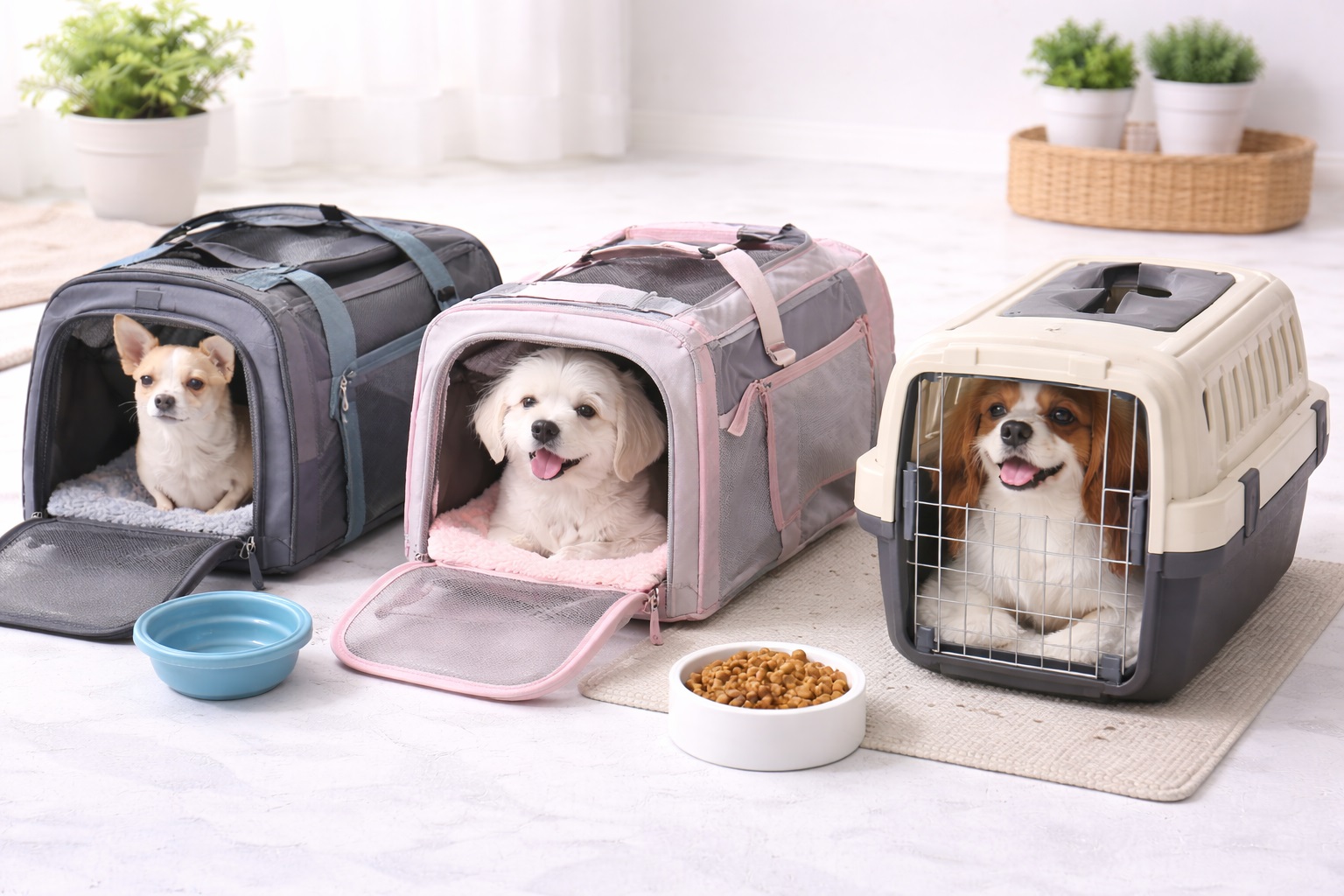
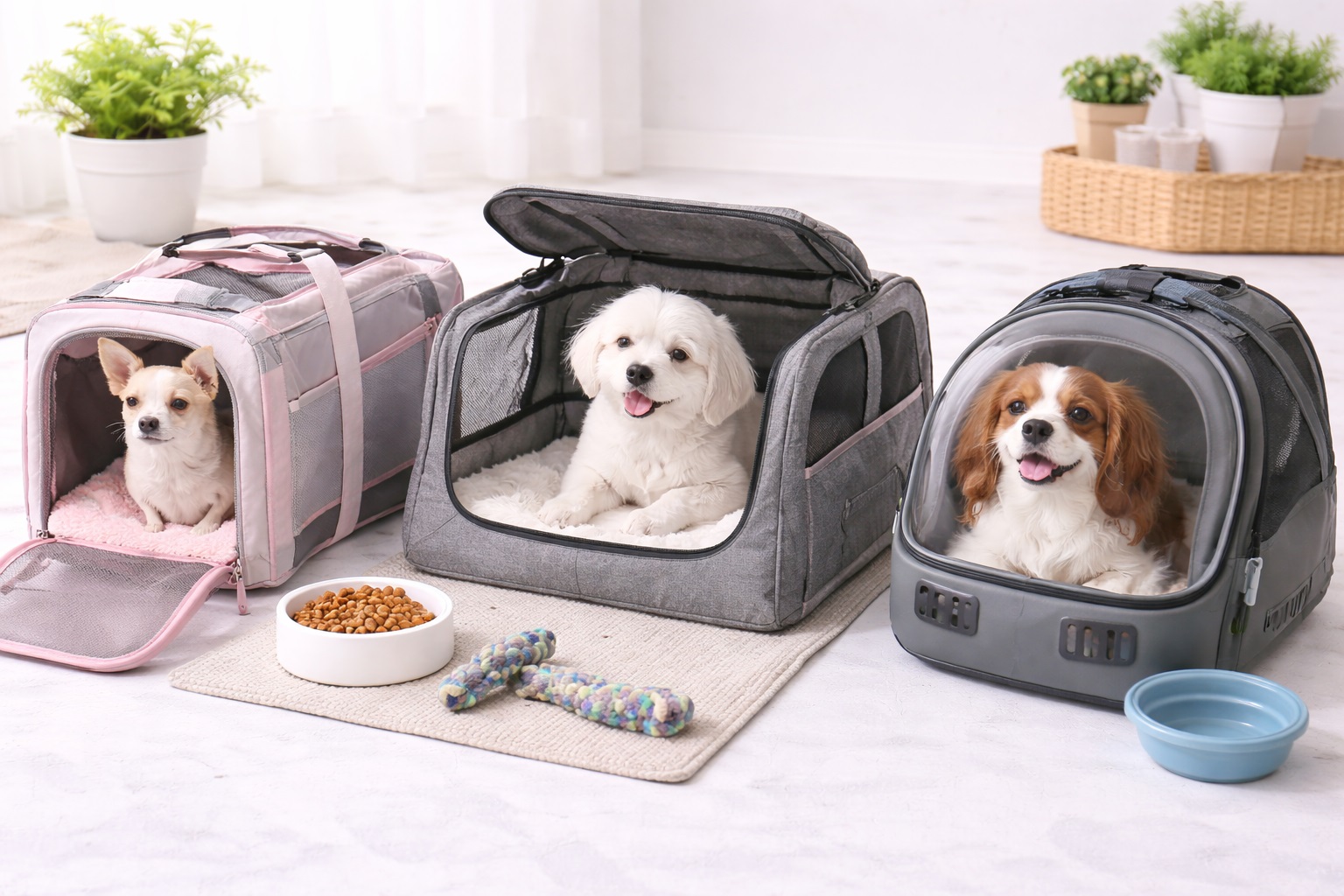
A front-load soft carrier with a built-in fleece bed provides a familiar, comfortable resting spot that can double as a bed at home between uses, so the carrier itself becomes a neutral or even positive object rather than something only associated with stressful trips. The soft structure and padded base suit short trips where comfort matters more than rigid protection.
- Pros:
- Fleece bed adds comfort and familiar scent over time
- Can double as a resting spot at home between uses
- Lightweight and simple to carry for short distances
- Builds positive association through everyday use
- Cons:
- Less structural protection than a hard-sided option
- Fleece bedding requires regular washing to stay fresh
Best For: Households that want a carrier to double as a familiar resting spot rather than sitting unused in a closet between vet trips.
Why We Recommend It: A carrier that's part of daily life rather than reserved for stressful trips builds a much better long-term association, which makes the rare stressful trip easier on the pet when it does happen.
3. Two-Door Combo Carrier – Best for Flexible Around-Home Handling
A two-door combo carrier offers both top and front access in one compact structure, giving the flexibility to load however suits the moment — top access for a resistant pet, front access for one that walks in willingly. This flexibility matters more for occasional home use than for frequent travelers, since the ideal loading method can vary trip to trip depending on the pet's mood and the reason for the trip.
- Pros:
- Two loading options cover more situations than a single-door design
- Adapts to a pet's mood or stress level on a given day
- Reasonably compact for closet or under-bed storage
- Works for multiple pets in the household with different temperaments
- Cons:
- Slightly more complex latch system than a single-door carrier
- Marginally heavier than a basic single-entry design
Best For: Multi-pet households or any household where the ideal loading method varies from one trip to the next.
Why We Recommend It: Occasional-use carriers benefit from flexibility more than travel-focused ones do, since there's no single predictable loading routine to optimize around — this design covers the most scenarios with one purchase.
4. Post-Surgery Recovery Carrier with Padded Base – Best for Recovery Periods
A recovery-focused carrier prioritizes a firm, evenly padded base and a low, wide entry that minimizes the need to lift or maneuver a pet with limited mobility. Extra headroom prevents pressure on a healing area, and a removable, washable liner handles the higher likelihood of accidents during a recovery period. This style is worth having on hand specifically for the days immediately following a procedure, even if it's not the household's everyday carrier.
- Pros:
- Low, wide entry reduces handling needed for limited-mobility pets
- Firm, even padding supports a healing body without pressure points
- Removable washable liner simplifies recovery-period cleanup
- Extra interior headroom avoids contact with sensitive areas
- Cons:
- Bulkier than a standard everyday carrier
- Overkill for a household without an upcoming procedure or recovery need
Best For: Pets recovering from surgery, injury, or a procedure that limits normal mobility and requires gentle handling.
Why We Recommend It: During a recovery window, minimizing handling and pressure on a healing area matters more than any other carrier feature, and this design is built specifically around that priority.
5. Collapsible Wire Carrier – Best for Compact Home Storage
A collapsible wire carrier folds flat in seconds for storage, which suits households that use a carrier rarely and don't want a bulky item taking up permanent space in a closet or under a bed. The open wire structure provides excellent visibility and airflow, and the rigid frame still offers real structural protection despite folding flat when not needed.
- Pros:
- Folds flat for minimal storage footprint
- Excellent visibility and airflow through the open wire structure
- Rigid frame despite a collapsible design
- Simple to wipe down and clean between uses
- Cons:
- Less insulated than a solid-sided carrier in cold conditions
- Open wire structure offers less privacy for an anxious pet
Best For: Households with limited storage space that need a carrier only a few times a year.
Why We Recommend It: For infrequent use, the ability to fold completely flat solves the practical problem of where to keep a carrier that would otherwise sit bulky and in the way for months between uses.
6. Mesh Pop-Up Carrier – Best for Quick, Spontaneous Trips
A mesh pop-up carrier springs open into shape instantly and packs back down into a flat disc, making it the fastest option to deploy for an unplanned or urgent trip. It's lightweight enough to keep in a car or near the door without taking up meaningful space, ready for the moments when a pet needs to go to the vet on short notice rather than a planned appointment.
- Pros:
- Springs open instantly with no assembly required
- Packs into a flat disc for minimal storage space
- Lightweight enough to keep on hand for emergencies
- Mesh construction provides good ventilation
- Cons:
- Less structural rigidity than a framed carrier
- Not intended for regular daily use or heavier pets
Best For: Households that want a backup carrier ready for an unexpected or urgent vet visit.
Why We Recommend It: Emergencies don't wait for a carrier to be dug out of storage, and a pop-up design removes the setup delay entirely when a pet needs to travel on short notice.
7. Wipeable Hard-Sided Carrier – Best for Multi-Pet Households
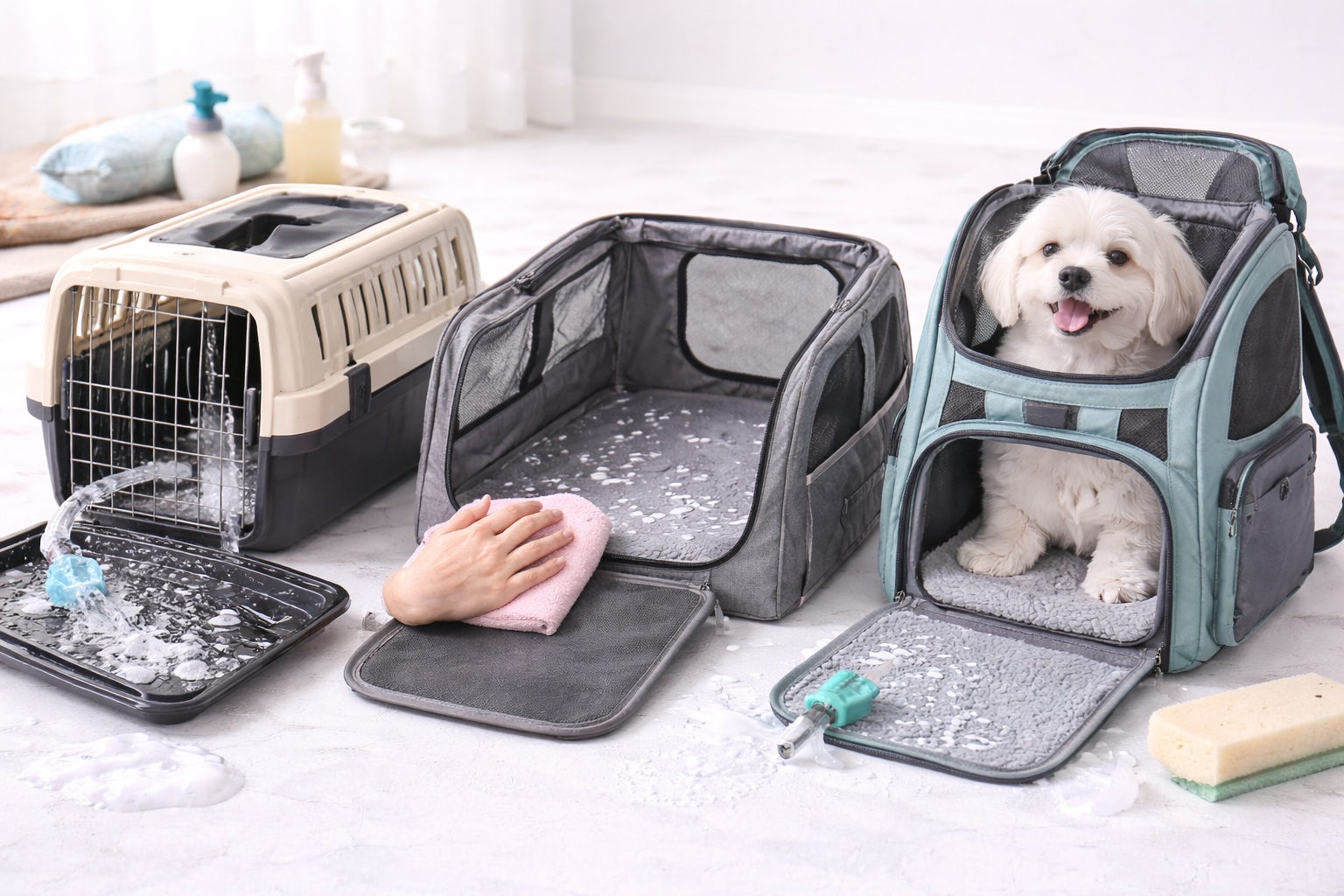
A wipeable hard-sided carrier with a smooth, non-porous interior handles the higher cleaning demands of a household rotating multiple pets through the same carrier for different appointments. Unlike fabric carriers that absorb odor and require washing, a hard-sided design wipes clean in moments between uses, which matters when the same carrier might see three different pets in a single week.
- Pros:
- Wipes clean quickly between different pets' use
- Doesn't absorb odor the way fabric interiors do
- Durable enough for frequent, repeated use across pets
- Easy to disinfect thoroughly when needed
- Cons:
- Heavier than a soft-sided equivalent
- Doesn't fold flat for storage
Best For: Multi-pet households sharing one carrier across several animals for different appointments.
Why We Recommend It: For a carrier used by more than one pet, the ability to fully clean and disinfect between uses matters more than portability or folding convenience.
Buying Guide: How to Choose the Best Pet Carrier for Home Use
Use these factors to match a carrier to occasional, around-home needs rather than frequent travel requirements, since the priorities genuinely differ between the two use cases.
1. Loading Ease Over Travel Features
For home-focused use, prioritize how easily your specific pet can be loaded over airline compliance or travel durability. A carrier that fights you during loading defeats its purpose regardless of how well it would perform on a plane.
2. Storage Footprint
If the carrier will spend most of its life in a closet, its folded or collapsed size matters as much as its open dimensions. Collapsible wire and pop-up mesh designs solve this directly; hard-sided carriers do not fold at all.
3. Cleaning Requirements for Your Household
Single-pet households can prioritize comfort features like fleece bedding. Multi-pet households sharing a carrier should prioritize wipeable, non-porous surfaces that can be fully disinfected between different animals' use.
4. Mobility and Recovery Considerations
If the carrier may see use during a pet's recovery from a procedure, a low, wide entry and firm, even padding matter more than any other feature. Confirm the carrier accommodates limited mobility before an actual recovery period arrives.
5. Ventilation for Short Trips
Even short trips benefit from good airflow, particularly in a warm car or on a hot day. Mesh panels on multiple sides, or an open wire structure, provide better ventilation than a solid-sided design with a single vented door.
6. Weight Limit vs. Actual Pet Weight
Confirm the stated weight limit exceeds your pet's actual weight with a reasonable margin, particularly if more than one pet in the household will use the same carrier at different times.
7. Latch and Closure Security
Even for short trips, a secure latch matters — an anxious or startled pet can push against a carrier door with more force than expected. Test the closure mechanism before relying on it for a real trip.
8. Familiarity and Positive Association
A carrier that only appears during stressful trips becomes a stress trigger itself. Where possible, choose a design comfortable enough to leave out occasionally as a resting spot, which helps a pet form a neutral or even positive association with it over time.
9. Cost Relative to Actual Use Frequency
A carrier used a handful of times per year doesn't need premium travel features. Redirect that budget toward comfort and cleaning ease instead, which matter more for infrequent, home-focused use.
10. Speed of Deployment
For households that want a carrier ready for unplanned trips, a pop-up or quick-assembly design removes setup delay. For planned appointments, this matters less than comfort and loading ease.
11. Visibility and Reassurance
Mesh or wire designs let a pet see out and let an owner check in without opening the carrier, which can reduce anxiety for pets that find full enclosure distressing. Fully covered designs suit pets that prefer not to see unfamiliar surroundings.
12. Compatibility with Multiple Pets
If more than one pet in the household might use the same carrier, choose a size and weight rating that comfortably accommodates the largest pet who will use it, and prioritize cleaning ease given the carrier will see more varied use.
13. Odor Control Between Uses
A carrier stored in a closet for months between uses can develop a musty smell even without an accident, simply from being sealed up in fabric form. Airing the carrier out periodically, and choosing a design with removable, washable components, prevents that stale odor from becoming part of the pet's first impression the next time the carrier comes out.
14. Carrier Placement During Car Rides
For home-focused use, the carrier usually only needs to survive a short car ride to the vet, but placement still matters — securing it on the floor behind a seat or belted onto a seat is safer than leaving it loose on a seat where it can slide during a turn or sudden stop. A stable ride reduces stress for a pet who may already be anxious about the destination.
15. A Trial Run Before an Actual Appointment
For a pet with little carrier experience, a short practice trip — a five-minute drive around the block with no destination — can reveal whether the carrier and pet are a good match before the stakes of an actual vet appointment. This is a low-cost way to catch a poor fit or an unexpectedly stressed reaction while there's still time to try a different carrier.
16. Balancing Budget Between Comfort and Durability
For occasional, home-focused use, it's reasonable to spend less on rugged, travel-grade durability and put more of the budget toward comfort features like padded bedding, since the carrier won't face the wear of frequent travel. Households anticipating a recovery period, however, should weigh comfort even more heavily than durability when making that trade-off.
Common Mistakes to Avoid
A common mistake is buying a travel-focused carrier with airline compliance and rugged materials for a household that only needs occasional vet trips, paying for features that never get used while overlooking loading ease and storage convenience that actually matter day to day. Another is failing to plan ahead for a recovery period — many owners only realize their existing carrier is a poor fit for a limited-mobility pet after a procedure has already happened, when a more accommodating option would have made the recovery period noticeably easier. A third is neglecting regular cleaning between uses, particularly in multi-pet households, which allows odor and dander to build up in ways that make the carrier itself an added source of stress.
Frequently Asked Questions
1. Do I need a different carrier for vet visits versus travel?
Not necessarily, but the ideal features differ. A travel carrier prioritizes durability and airline compliance, while a home-use carrier prioritizes easy loading, storage, and cleaning. Many households find a simpler, home-focused carrier serves their actual needs better than an over-built travel option.
2. What's the best carrier for a pet recovering from surgery?
A carrier with a low, wide entry and a firm, evenly padded base minimizes handling and pressure on a healing area. Avoid carriers requiring significant lifting or maneuvering during a recovery period when the pet has limited mobility.
3. How do I get my pet used to a carrier they rarely see?
Leave it out and accessible for a few days before a planned trip rather than introducing it only at the moment of use. Familiar bedding and occasional treats placed inside help build a neutral or positive association even with infrequent use.
4. Is the most expensive pet carrier for home use always the best?
Not necessarily. Price often reflects travel-oriented features that a home-focused household may never use. Match the carrier to how you'll actually use it rather than the highest price point available.
5. How long should a quality home-use pet carrier last?
A well-built carrier from a reputable manufacturer typically lasts several years even with infrequent use, since it experiences less wear than a travel carrier used weekly. Warranty length remains a reasonable indicator of build quality.
6. Can I return a pet carrier if it doesn't suit my pet?
Most retailers offer a 15 to 30 day return window. Keep the original packaging until you've confirmed loading ease and your pet's comfort level with the design.
7. What should I prioritize when buying a carrier for occasional use?
Loading ease and storage footprint typically matter more than travel durability for occasional, home-focused use. Identify how often and for what purpose you'll actually use the carrier before comparing specific models.
8. Does brand name matter for a home-use pet carrier?
Less than it does for frequent travel use. For occasional use, a reasonably well-reviewed mid-range option from any established retailer typically performs adequately without needing a premium travel brand.
9. Should I keep a carrier on hand even if I rarely travel with my pet?
Yes. Emergencies and unplanned vet visits happen regardless of travel frequency, and having an appropriately sized carrier ready avoids a stressful last-minute scramble when a pet needs to go somewhere unexpectedly.
10. How do I clean a fabric carrier after an accident?
Remove and wash any liner or bedding according to its care label, and wipe down the fabric shell with a pet-safe cleaner. Allow the carrier to fully dry before storing it to prevent odor or mildew buildup.
11. What size carrier works best for a multi-pet household?
Size the carrier to comfortably fit the largest pet who will regularly use it, rather than the average size across all pets, and prioritize a wipeable interior to manage cleaning between different animals' use.
12. Can a collapsible carrier hold up over years of occasional use?
Generally yes, particularly for infrequent use where the folding mechanism sees limited wear. Check the frame joints periodically for looseness, especially before a real trip, since collapsible designs rely on those joints for structural integrity.
13. Is a pop-up carrier safe for car travel?
Pop-up mesh carriers are best suited for short trips and emergencies rather than regular car travel, since they offer less structural rigidity than a framed carrier. For frequent car trips, a more structured option is a better fit.
14. How do I introduce a new carrier to a pet with past negative carrier experiences?
Start slowly with the carrier simply present and open in a familiar space, without any expectation of entry. Use treats and calm praise for voluntary investigation, and avoid forcing entry, which can reinforce the negative association rather than resolve it.
15. What should I keep inside a carrier used for recovery periods?
Soft, washable bedding and, if approved by your veterinarian, a familiar-smelling item from home can help. Avoid anything that could shift or press against a healing area, and follow any specific post-procedure guidance your vet provides.
16. Is a disposable cardboard carrier acceptable in an emergency?
A cardboard carrier from a shelter or vet's office can work for a single short emergency trip, but it isn't a reliable long-term solution since it weakens quickly if it gets wet or if the pet scratches at it. It's reasonable as a stopgap while you shop for a proper carrier, not as a permanent replacement.
17. Should I line the carrier with a towel or the included pad?
Either works, though a familiar towel from home can add a comforting, recognizable scent that a brand-new included pad won't have yet. For recovery periods specifically, prioritize a soft, evenly padded surface over anything with bunched fabric that could press unevenly against a healing area.
18. How do I calm a pet who is already anxious inside the carrier?
A calm, quiet voice, a light cover over part of the carrier to reduce visual stimulation, and avoiding unnecessary jostling all help. Covering a wire or mesh carrier partially, while leaving some visibility, often reduces stress more effectively than either fully open or fully blacked-out designs.
19. Is it normal for a pet to vocalize the entire trip?
Yes, particularly for pets with limited carrier experience or a history of stressful trips. This usually improves with more frequent, low-stakes exposure to the carrier, as described earlier in this guide, rather than being a sign the carrier itself is the wrong choice.
Final Verdict
- Best for Easiest Loading: Top-Load Basket Carrier — the least stressful option for reluctant or resistant pets.
- Best for Everyday Comfort: Front-Load Soft Carrier with Fleece Bed — the best option for building positive associations over time.
- Best for Flexible Handling: Two-Door Combo Carrier — the most adaptable choice for varying moods and multi-pet households.
- Best for Recovery Periods: Post-Surgery Recovery Carrier with Padded Base — the gentlest option for limited-mobility pets.
- Best for Compact Storage: Collapsible Wire Carrier — the most space-efficient choice for infrequent use.
- Best for Quick Trips: Mesh Pop-Up Carrier — the fastest option to deploy for unplanned visits.
- Best for Multi-Pet Households: Wipeable Hard-Sided Carrier — the easiest to fully clean between different pets.
The right pet carrier for home use depends far more on how easily it fits your household's routine than on travel-oriented durability or airline compliance most households will never test. A carrier that loads easily, stores conveniently, and cleans up quickly will get used consistently, while an over-built travel carrier that's awkward for daily reality often ends up avoided in favor of an improvised solution. Consider how often you'll actually reach for it, and whether a recovery-focused option deserves a place in the closet even before you need one, then choose accordingly.