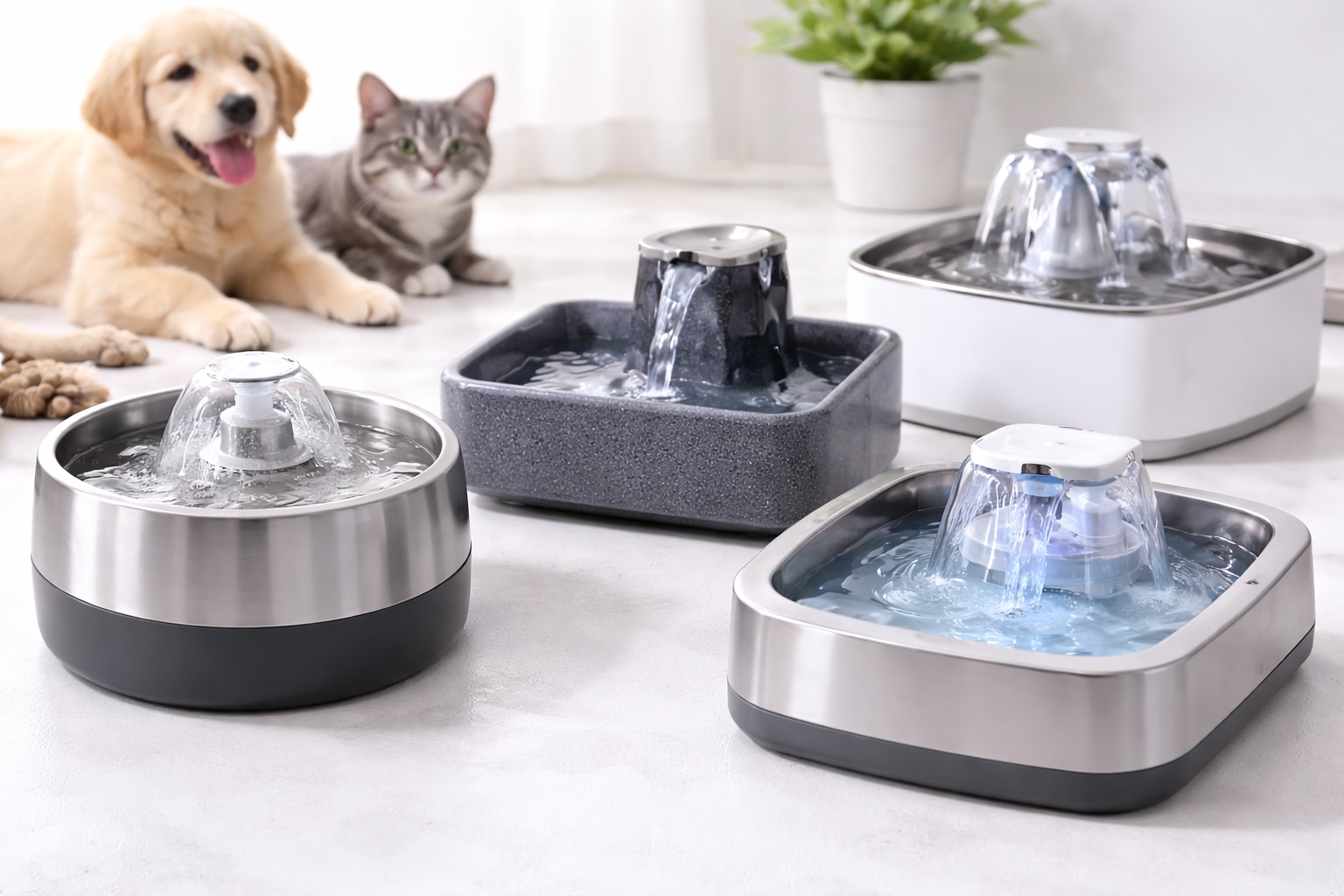
Best Durable Pet Water Fountains That Last for Years
Most pet water fountains fail the same way: the pump wears out, the plastic housing scratches and clouds, or a seam starts leaking after a year of daily use. In a single-pet household running the fountain occasionally, that timeline might stretch a bit longer. In a multi-pet household where the fountain runs continuously, gets bumped, chewed, and refilled multiple times a day, cheap build quality shows up fast — often within months rather than years.
This guide is written for households where durability isn't a nice-to-have but the deciding factor: multiple cats or dogs sharing one water source, active households where the fountain sits in a high-traffic area, or owners who are tired of replacing a fountain every year and want to understand what actually determines whether a unit lasts. We look specifically at the build factors that separate a fountain that survives heavy daily use from one that quietly degrades until it stops working.
It's worth being clear up front about what "durable" actually means in this context. It isn't a single number on a spec sheet, and it isn't the same thing as expensive. Durability is the combined result of pump quality, housing material, how many parts can fail, and whether the design tolerates the kind of daily wear that a busy multi-pet household puts on a water source. A fountain that's technically well built but poorly matched to your pet count will still fail early, just for a different reason than a poorly built one. Keep that distinction in mind as you read through the reviews and buying guide below — the goal isn't simply to find the toughest materials on the market, but to match construction quality to how the fountain will actually be used in your home.
Below is a side-by-side comparison, in-depth reviews of the construction types that hold up best under sustained use, a ten-point buying guide focused entirely on longevity and maintenance cost, and answers to the questions households ask most when trying to avoid another short-lived fountain purchase.
Top Durable Pet Water Fountains (Detailed Reviews)
1. Stainless Steel Filtered Fountain – Best for Long-Term Surface Durability
Surface degradation is the most common reason a fountain starts looking and performing worse over time, and stainless steel resists it better than any other common material. Where plastic develops fine scratches from cleaning brushes and daily handling — scratches that trap bacteria and eventually cloud the surface — stainless steel keeps its finish essentially indefinitely with normal care. This matters more in heavy-use households, where the fountain gets washed and refilled far more often than in a single-pet home.
The metal body also resists the physical wear that comes with constant handling: repeated disassembly for cleaning, being moved for floor mopping, or simply getting bumped in a busy kitchen. None of that visibly ages a stainless steel unit the way it would a plastic one.
Over a multi-year ownership period, this durability advantage tends to compound rather than stay flat. A stainless steel unit cleaned weekly for three years still looks and functions close to new, while a plastic unit subjected to the same routine typically shows cloudiness, minor cracking around stress points, and a duller overall appearance well before that mark.
- Pros:
- Surface resists scratching and clouding through years of regular cleaning
- Withstands frequent handling and disassembly without wearing down
- Dishwasher safe, which supports the frequent cleaning heavy use requires
- Non-porous surface keeps hygiene consistent even after years of use
- Cons:
- Higher upfront cost than plastic alternatives
- Replacement parts, when needed, can cost more than for plastic models
Best For: Households running a fountain continuously for multiple pets, where the unit will be cleaned frequently and needs to hold up to years of that routine.
Why We Recommend It: Material durability compounds over time. A plastic fountain's early scratches seem cosmetic in month one, but by year two they're a genuine hygiene liability. Stainless steel simply doesn't accumulate that kind of wear, which makes it the more economical choice over a multi-year ownership period despite the higher initial price.
2. Ceramic Filtered Fountain – Best for Structural Stability Under Heavy Use
In a multi-pet household, a fountain gets bumped, leaned on, and occasionally knocked by more than one animal a day. A lightweight fountain shifts or tips under that pressure, and repeated tipping is one of the more common ways pumps get damaged — water drains away from the intake, the pump runs dry, and the motor burns out prematurely. Ceramic's weight keeps the unit anchored through this kind of daily traffic in a way lighter materials can't match.
Beyond stability, ceramic shares stainless steel's resistance to surface wear, so the two materials are often the deciding factor for buyers choosing between build-quality-first options. The main trade-off is fragility if the unit is ever dropped, but that risk is different from — and generally lower than — the risk of ongoing wear that affects lighter materials daily.
Households with dogs that drink enthusiastically, or with multiple cats that tend to gather around the same water source at once, benefit from this stability in a way that's easy to underestimate until you've dealt with a tipped, leaking fountain firsthand. A heavy base essentially removes an entire category of preventable failure from the equation.
- Pros:
- Heavy, stable base resists tipping in multi-pet or high-traffic settings
- Non-porous surface resists long-term wear as well as stainless steel
- Reduces pump strain caused by tipping-related dry-running
- Dishwasher safe for removable components
- Cons:
- Cracks or chips if dropped, unlike more impact-resistant materials
- Generally priced above plastic and comparable to premium stainless models
Best For: Multi-pet households where accidental bumping and tipping is a realistic daily occurrence rather than an occasional risk.
Why We Recommend It: Pump failure from dry-running after a tip-over is a preventable cause of fountain replacement, and it happens more often in busy multi-pet homes than most owners expect. Ceramic's stability directly addresses this failure mode rather than just improving surface durability.
3. Multi-Tier Plastic Filtered Fountain – Best Value for Moderate Multi-Pet Use
Not every heavy-use household needs the maximum durability that stainless steel or ceramic provides, and a well-built multi-tier plastic fountain with BPA-free construction can hold up reasonably well for moderate multi-pet use at a considerably lower price. The larger capacity also reduces how often the unit needs refilling, which matters in households where multiple pets are drawing down the reservoir throughout the day.
The honest trade-off is that plastic will show wear faster than metal or ceramic under the same conditions, and a household running this design continuously for several pets should expect to replace it somewhat sooner. For households where budget is the primary constraint, this is still a reasonable way to get functional multi-pet capacity without the upfront cost of premium materials.
The gap between plastic and premium materials narrows somewhat in lighter-use households — two pets sharing a fountain that's cleaned regularly will get noticeably more life out of a plastic unit than three or four pets running it around the clock. Matching this option to a realistic assessment of your household's actual usage intensity matters more here than with the more universally durable stainless steel and ceramic options.
- Pros:
- Larger capacity suits multiple pets drawing water throughout the day
- Multiple tiers reduce competition at the water source
- Lower upfront cost than stainless steel or ceramic options
- BPA-free construction is safe for long-term use
- Cons:
- Plastic surface wears and scratches faster than metal or ceramic under heavy use
- More likely to need full replacement within two to three years of continuous multi-pet use
Best For: Budget-conscious multi-pet households that need higher capacity now and are comfortable planning for an earlier replacement cycle than premium materials would require.
Why We Recommend It: Durability is relative to cost, and a plastic fountain that lasts two to three years at a third of the price of a stainless steel unit can still be the more sensible choice for some households, particularly if replacement parts remain easy to source.
Buying Guide: How to Choose the Most Durable Pet Water Fountain
Longevity in a pet fountain comes down to a handful of concrete factors rather than brand reputation alone. These ten points cover what actually determines whether a fountain survives years of heavy use or needs replacing within a single year.
1. Pump Motor Type
The pump is the single most likely point of failure in any fountain, since it's the only component with moving parts running continuously. Brushless motors generally outlast brush-type motors by a significant margin and are worth prioritizing in any fountain expected to run daily for years.
Product listings don't always specify motor type clearly, so it's worth checking user reviews specifically for mentions of pump lifespan, since real-world reports over twelve to twenty-four months of use are a more reliable signal than manufacturer claims alone.
2. Availability of Replacement Pumps
Even a well-built pump eventually wears out, and a fountain design with readily available replacement pumps effectively extends the life of the whole unit far beyond the pump's own lifespan. Check whether the manufacturer sells standalone replacement pumps before purchasing, since this single factor can determine whether a fountain lasts two years or five.
A fountain without an available replacement pump effectively has its lifespan capped at the pump's own working life, no matter how durable the housing material is. This is an easy detail to overlook at purchase time but a significant one once the original pump eventually fails.
3. Housing Material and Surface Wear Resistance
Surface wear compounds over years of cleaning and handling. Stainless steel and ceramic resist scratching and clouding far longer than plastic, which develops microscopic surface damage that affects both appearance and hygiene as it accumulates.
This wear is often gradual enough that owners don't notice it happening in real time, only recognizing the difference when comparing an older unit side by side with a new one. Choosing a wear-resistant material upfront avoids this slow decline altogether rather than requiring you to notice and address it later.
4. Number of Parts and Disassembly Complexity
A fountain with fewer, simpler parts generally survives repeated disassembly and reassembly better than a complex design with many small pieces prone to loosening, cracking, or getting lost over years of regular cleaning. Simpler mechanical designs also tend to have fewer points of failure overall.
Households cleaning a fountain weekly or more will disassemble and reassemble it dozens of times a year, and small plastic tabs or clips are the components most likely to fatigue and break under that repetition. Favoring designs with fewer such components pays off cumulatively over time.
5. Capacity Relative to Pet Count and Fill Frequency
An undersized fountain for a multi-pet household runs dry more often, which strains the pump and shortens its working life. Matching capacity generously to your actual pet count reduces how often the reservoir runs low and protects the pump from the dry-running that causes premature motor failure.
As a rough guide, each additional pet sharing a fountain increases daily draw meaningfully, so a capacity that felt generous for one pet can run low daily once a second or third pet is added. Reassessing capacity whenever your pet count changes helps avoid this stress on the pump.
6. Tip-Over and Stability Under Daily Traffic
A fountain that gets bumped or tipped regularly experiences the same pump strain as one that's simply undersized, since tipping interrupts water flow to the intake. Heavier, wider-based designs resist this in busy, high-traffic, or multi-pet households far better than lightweight designs.
Placement plays a role here too — a fountain positioned in a narrow hallway or a spot pets pass through frequently is more likely to get bumped than one placed in a quieter corner, regardless of how stable the base itself is.
7. Warranty Length and What It Covers
Warranty length is one of the more reliable signals of how confident a manufacturer is in their own build quality. Check specifically whether the warranty covers the pump — the component most likely to fail — rather than only the housing, since pump coverage is the more meaningful protection over a multi-year ownership period.
A one-year warranty covering only cosmetic housing defects offers little practical protection, since housing rarely fails outright the way a pump does. Prioritize warranty terms that name the pump specifically over vague general coverage language. It's also worth checking whether the warranty requires proof of purchase or product registration, since missing that step at purchase time can void coverage exactly when you'd want to use it.
8. Filter System Cost and Replacement Interval
Ongoing filter replacement is a real cost of long-term ownership, typically $8–$20 per set every two to four weeks. Over several years, this recurring cost can meaningfully exceed the fountain's original purchase price, so it's worth factoring into any comparison between models with different filter systems.
Some manufacturers use proprietary filter shapes that only fit their own replacement cartridges, which can mean paying a premium indefinitely. Fountains that accept universal or generic filter sizes generally cost less to maintain over a multi-year ownership period.
9. Cord and Electrical Component Quality
In households where a fountain runs continuously for years, the power cord and electrical connections experience more cumulative wear than in occasional-use settings. Look for reinforced cord construction and secure connection points, since a failing cord is a less obvious but real cause of premature fountain replacement.
Cord damage is also a safety concern in households with pets that chew, so reinforced or braided cord covering serves a dual purpose of extending the cord's working life and reducing an easily overlooked hazard.
10. Realistic Cleaning Routine for Sustained Use
A fountain's actual lifespan depends heavily on whether it gets cleaned as often as heavy use requires, not just on the materials it's built from. In multi-pet households, plan for basin cleaning every three to four days and full pump disassembly and cleaning every one to two weeks, since skipping this schedule shortens the effective life of even a well-built fountain.
Mineral buildup from tap water is one of the more common causes of gradual pump strain, and a brief soak in diluted vinegar every few weeks during regular cleaning helps prevent this buildup from shortening pump life prematurely.
Comparing Long-Term Cost, Not Just Purchase Price
A fountain's sticker price only tells part of the cost story. Filter replacements, occasional part replacements, and the eventual need to replace the entire unit all factor into what a fountain actually costs a household over several years of use. The table below breaks down how the three main construction types typically compare once these ongoing costs are considered rather than just the upfront purchase price.
| Construction Type | Typical Lifespan | Main Ongoing Cost | Best Suited To |
|---|---|---|---|
| Stainless Steel | 4–6+ years with routine care | Filters; occasional pump replacement | Continuous multi-pet use, heavy daily cleaning |
| Ceramic | 4–6+ years with routine care | Filters; occasional pump replacement | Households with frequent bumping or foot traffic near the unit |
| Multi-Tier Plastic | 2–3 years under heavy use | Filters; earlier full-unit replacement | Budget-conscious multi-pet households |
None of these figures are guarantees — actual lifespan depends heavily on cleaning routine, water quality, and how many pets are drawing on the unit daily. They're a reasonable starting point for weighing upfront price against the realistic cost of ownership over several years rather than judging purchase price alone. A household running two fountains — say, one on each floor of a home — should apply this same math separately to each unit, since usage intensity and traffic can differ meaningfully between locations even within the same house.
Signs Your Current Fountain Needs Replacing
Even a durable fountain eventually reaches the end of its working life, and recognizing the early signs helps avoid a sudden, inconvenient failure. A pump that sounds noticeably louder or runs less smoothly than when new is often the first indicator that internal wear is progressing, even before flow rate visibly drops.
Persistent cloudiness or a rough texture on a plastic housing that no longer comes clean with normal washing signals that surface wear has reached the point where hygiene is genuinely compromised, not just cosmetically affected. At that stage, replacement is generally more sensible than continuing to clean around the problem.
Finally, if replacement filters or pump parts have become difficult to source for a discontinued model, it's often more practical to replace the whole unit than to keep searching for parts, particularly once the original purchase price has already been recovered in value through several years of use.
One additional sign worth watching for is a change in how your pets interact with the fountain itself. A pet that previously drank readily from a fountain but starts avoiding it or drinking noticeably less may be responding to a subtle change in flow, noise, or water taste caused by an aging pump or a worn filter housing, even before the wear is obvious to you.
Frequently Asked Questions
1. What is the single biggest factor in how long a pet fountain lasts?
Pump quality is typically the deciding factor, since it's the only continuously moving mechanical component. A durable housing material extends the life of the unit overall, but a weak pump will still fail well before a quality housing shows meaningful wear.
2. How many pets can one durable fountain reasonably support?
This depends more on capacity and refill frequency than on the fountain's durability rating specifically. A 2–3 liter capacity fountain generally supports two to three pets comfortably between refills, though households with more pets should prioritize higher-capacity models to avoid straining the pump with frequent dry-running.
3. Is stainless steel always more durable than ceramic?
The two materials perform similarly well against surface wear and bacterial resistance. The meaningful difference is impact resistance — stainless steel dents rather than shatters if dropped, while ceramic can crack, which matters more in households where accidental knocks are common. Neither material is meaningfully better than the other for everyday wear resistance, so the choice usually comes down to which specific risk — dropping versus dents — is more relevant to your household.
4. How often should the pump be replaced in a heavy-use fountain?
This varies by motor quality and usage intensity, but a brushless motor in a continuously running multi-pet household commonly lasts one to two years before replacement becomes worthwhile, longer with lighter use. Checking pump performance periodically for reduced flow is a practical way to catch wear before full failure.
5. Does a longer warranty actually mean a more durable product?
It's a reasonable signal, since manufacturers generally price warranty length against their own expected failure rates. It isn't a guarantee, but a fountain backed by a multi-year warranty that specifically covers the pump is a meaningfully stronger signal than one covering only the housing for a shorter period.
6. Can I extend a plastic fountain's lifespan with careful use?
Gentle cleaning with a soft brush rather than abrasive scrubbers slows the surface scratching that shortens plastic's effective lifespan, and keeping the unit in a lower-traffic spot reduces accidental bumping. These steps help but won't close the durability gap with metal or ceramic entirely under heavy multi-pet use. If the plastic housing starts showing tooth marks or stress cracks despite careful handling, that's generally a sign it's time to consider a more durable material rather than continuing to nurse the current unit along.
7. Is a more expensive fountain always the more durable one?
Generally price correlates with build quality within a given brand's lineup, but it isn't a universal rule across brands. Checking pump type, warranty coverage, and replacement part availability tells you more about actual durability than price alone.
8. What's the most common reason a durable-marketed fountain still fails early?
Inadequate cleaning is the most common cause, since even a well-built pump degrades faster when mineral buildup or debris isn't cleared regularly. The second most common cause is running the pump dry after the reservoir empties, often from an undersized unit for the household's pet count.
9. Are ceramic fountains too heavy to be practical for regular cleaning?
They're heavier than plastic, but most quality designs separate into a lighter top basin and a base, so the entire unit doesn't need to be lifted at once for routine cleaning. The added weight is generally a stability benefit that outweighs the minor inconvenience during cleaning, and most owners report adjusting to the routine within the first few cleanings.
10. Should I buy a slightly larger fountain than I currently need for durability reasons?
Yes, within reason. A fountain sized generously for your current pet count reduces how often it runs low and strains the pump, which is one of the more controllable factors in extending a fountain's working life. It's also worth accounting for the possibility of adding another pet to the household down the line, since resizing later means replacing a unit that may otherwise still have years of useful life left.
Final Verdict
- Best for Long-Term Surface Durability: Stainless Steel Filtered Fountain — resists years of cleaning and handling without visible wear.
- Best for Structural Stability Under Heavy Use: Ceramic Filtered Fountain — heavy, stable base that protects the pump from tipping-related failure.
- Best Value for Moderate Multi-Pet Use: Multi-Tier Plastic Filtered Fountain — reasonable durability at a lower price for budget-conscious households.
Durability in a pet fountain isn't a single spec you can read off a product page — it's the sum of pump quality, housing material, replacement part availability, and how consistently the unit gets cleaned. Households with multiple pets or heavy daily use get the clearest long-term value from stainless steel or ceramic construction, while a well-built plastic option remains a reasonable choice for households prioritizing upfront cost over maximum lifespan. Whichever you choose, following the cleaning routine and capacity guidance above will do more to extend its working life than any single feature on the spec sheet, and revisiting that routine as your household's pet count changes is the simplest way to get the full lifespan a well-built fountain is capable of.