Best Easy-to-Clean Pet Grooming Tools for Fast Daily Upkeep
Every grooming tool eventually needs to be cleaned, but how much effort that cleaning takes varies enormously between designs that can look nearly identical to each other on the surface, in a product photo, or even sitting side by side on a store shelf before either has actually been put to use. A slicker brush with densely packed pins can trap fur so thoroughly that clearing it by hand after every single session becomes its own small chore, done multiple times a week, that quietly adds up over months and years of regular use. A tool built specifically and deliberately around fast, low-effort cleaning removes that recurring friction almost entirely from the routine, and that single difference is very often what separates a grooming habit that genuinely sticks over months and years from one that gradually gets skipped, postponed, and eventually abandoned simply because the cleanup step afterward starts to feel like more trouble than the actual brushing itself is worth to a busy owner.
This guide focuses specifically on the cleaning step itself — how quickly and easily a tool can be returned to a ready-to-use state after fur, dander, and debris have accumulated on it — rather than on grooming effectiveness in isolation. A tool that grooms brilliantly on paper but takes five long, frustrating minutes of hand-picking fur out from between the bristles to clean afterward very often ends up getting used considerably less often in actual practice than a slightly less thorough tool that clears completely in a matter of seconds, and genuine real-world consistency over time matters far more for a pet's actual long-term coat and skin health than any single session's theoretical, best-case thoroughness ever really does.
The three distinct approaches compared in detail below tackle the underlying cleaning problem in genuinely different ways from one another: mechanical retraction that physically ejects accumulated fur at the simple press of a button, a rinse-and-go design that sheds debris cleanly under running water with virtually no manual effort required, and a wipe-clean surface that resists fur adhesion at the material level in the first place rather than trapping loose fur deeply and then needing a separate mechanism to release it again. Each suits a slightly different grooming style and pet coat type, and understanding those differences upfront makes the comparison below considerably more useful than treating all three as interchangeable options that simply differ in price.
It is worth separating two things that often get conflated when people talk about a tool being "easy to clean": how quickly visible fur can be cleared after a session, and how genuinely hygienic the tool remains over weeks and months of repeated use. A tool can excel at the first without fully addressing the second, since skin oils, dander, and bacterial residue can still build up on a surface even after every visible strand of fur has been removed. The three specific picks below were each selected primarily for how well they handle the first, more immediately visible and noticeable problem of clearing fur quickly, with the buying guide section following the reviews addressing the second, less visible hygiene question in more detail separately and specifically.
Top Picks Reviewed
The three tools below were chosen specifically because each addresses the cleaning problem through a genuinely different mechanism rather than through minor variations on the same basic approach, giving a clearer sense of the real tradeoffs available across this category as a whole rather than three near-identical options at different price points.
1. Push-Button Retractable Slicker Brush – Best for Instant Fur Release
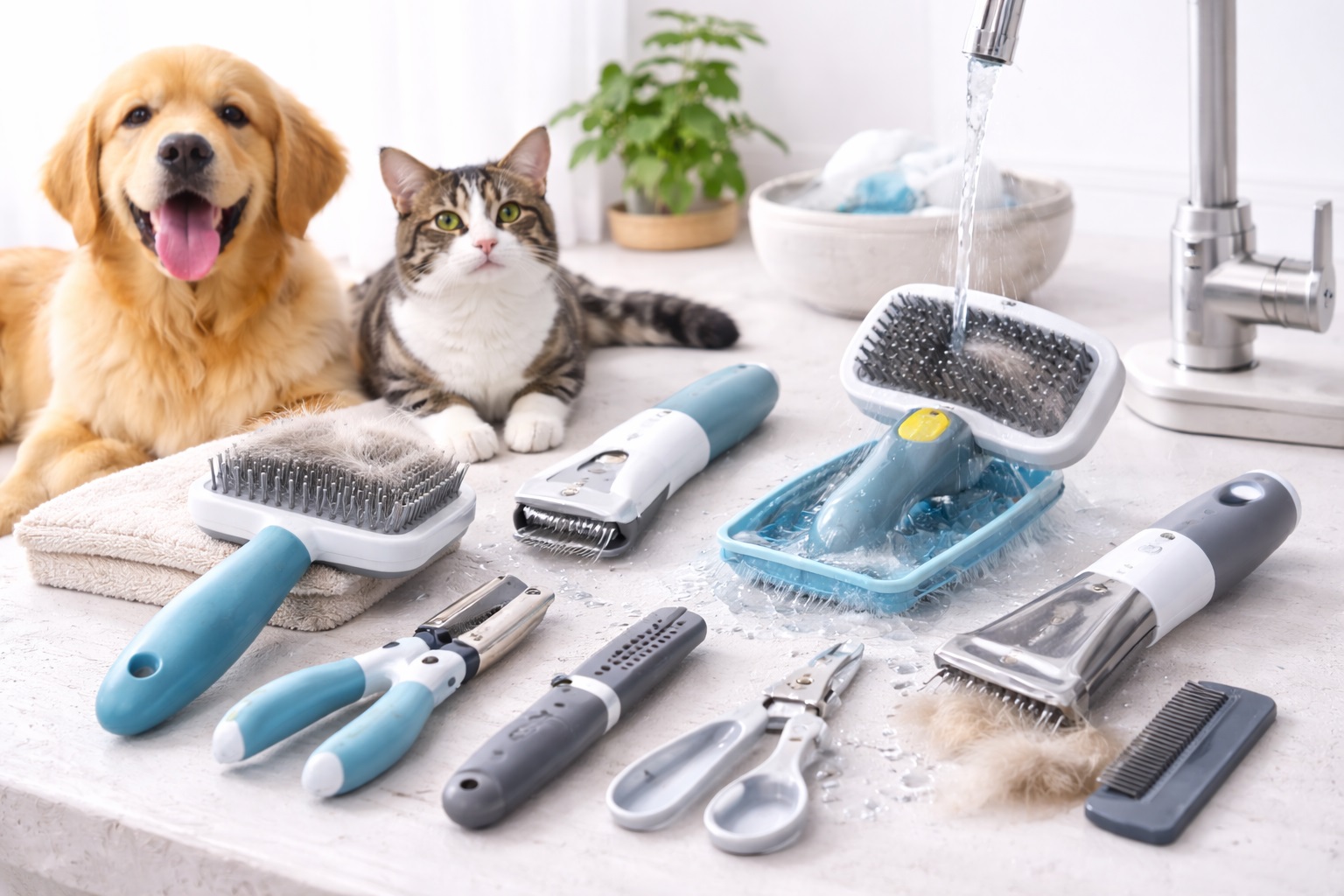
A retractable slicker brush pulls its entire row of bristles inward into the brush head at the simple push of a button, releasing whatever fur has accumulated directly into a trash bin in one clean, quick motion rather than requiring an owner to pick individual clumps of tangled fur out from between closely packed pins by hand. This single mechanical feature is responsible for most of what makes the tool genuinely fast to clean, and it works consistently across repeated uses within a single grooming session, not just once at the very end. Owners managing genuinely heavy-shedding pets often find themselves clearing the brush several separate times during one longer, more thorough session, and each of those individual clearings takes only a brief moment rather than compounding together into a genuinely tedious, repeated interruption of the actual grooming work itself.
- Pros:
- Clears fully in seconds with a single button press rather than minutes of hand-picking
- Works repeatedly within one session, not only at the very end of grooming
- Reduces hand contact with accumulated fur and dander during cleanup considerably
- Effective across short, medium, and long coat types without modification
- Cons:
- Retraction mechanism is a moving part that can eventually wear out with heavy use
- Somewhat bulkier and more expensive than an equivalent fixed-bristle brush
Best For: Owners who groom frequently enough that repeated manual brush-clearing throughout a single session becomes a genuinely noticeable time cost.
Why We Recommend It: No other common design clears accumulated fur as quickly or as completely as the push-button retraction mechanism, and for owners grooming daily or managing a heavy-shedding pet, that speed compounds into a meaningful amount of time and effort saved across a full week or month of regular sessions. Multiply even a modest per-session saving by the number of sessions in a year, and the total time recovered becomes genuinely substantial rather than a marginal convenience.
2. Rinse-Clean Rubber Grooming Brush – Best for Simple Water-Based Cleaning
Made from a single molded piece of flexible rubber with soft nubs rather than metal pins woven through a base, this brush design has no gaps, seams, or bristle rows for fur to become truly lodged within. A quick rinse under running water, sometimes with a light hand-rub to loosen any remaining debris, restores it to a fully clean, ready-to-use state without any disassembly, button mechanism, or careful bristle-by-bristle inspection required. Because there is genuinely nothing at all to operate, adjust, or maintain beyond the simple rinse itself, this particular design tends to appeal most strongly to owners who simply want the entire cleaning step to disappear from conscious thought and effort almost completely.
- Pros:
- Single-piece molded construction leaves nowhere for fur to become deeply trapped
- Cleans fully under running water in moments with no mechanism to operate
- No moving parts at all, meaning nothing mechanical to eventually wear out or fail
- Gentle rubber texture doubles comfortably as a massage tool during bathing
- Cons:
- Less effective than a true slicker brush at working through significant matting or tangles
- Requires access to a sink or tap for the quickest, most thorough cleaning method
Best For: Owners with light-to-moderate shedding pets who want the absolute simplest possible cleaning routine with no mechanism to learn or maintain.
Why We Recommend It: By eliminating gaps and seams entirely rather than trying to manage them with a retraction mechanism, this design sidesteps the trapped-fur problem at its structural root, and the complete absence of moving parts means there is nothing to eventually break down after months of regular use. It is also one of the least expensive options in this entire category, making it an easy low-risk choice for owners simply curious whether an easy-clean tool changes their grooming habits for the better.
3. Non-Stick Coated Grooming Glove – Best for Wipe-Clean Convenience
A grooming glove finished with a smooth, low-friction coating on its textured palm allows accumulated fur to be wiped or shaken off far more readily than fur clinging to an uncoated rubber or fabric surface typically does. Because the glove already functions more like an extension of the hand than a separate tool, minimizing its own cleaning burden keeps the entire grooming experience feeling closer to simple petting than to operating and maintaining a piece of equipment. For a pet still warming up to any kind of grooming tool at all, that low-friction, low-intimidation quality often matters more than raw grooming power.
- Pros:
- Coating allows fur to be wiped or shaken free rather than requiring active peeling
- Doubles as a gentle bonding tool, encouraging frequent, low-stress use
- No mechanism, seams, or embedded pins to clean around or maintain over time
- Comfortable and unintimidating for pets that resist a standard brush
- Cons:
- Considerably less effective on heavy-shedding double coats than a dedicated deshedding tool
- Coating can wear thin over extended use, gradually reducing its non-stick benefit
Best For: Owners of light shedders, or anxious pets, who want the easiest possible tool to both use and clean on a very frequent basis.
Why We Recommend It: For a tool intended for frequent, almost daily use on a pet that may still be building tolerance for grooming generally, minimizing every point of friction — including the cleaning step specifically — measurably increases how consistently the tool actually gets picked up and used session after session rather than left in a drawer once the initial enthusiasm for a new grooming routine fades.
Buying Guide: How to Choose the Best Easy-to-Clean Pet Grooming Tools
Ease of cleaning is ultimately a consistency multiplier rather than a grooming-effectiveness feature in its own right, and the following factors focus specifically on how that consistency benefit plays out across different tools, coat types, and household routines. Work through them roughly in order, since the earlier factors narrow down the broad category that fits your situation while the later ones address smaller habits and maintenance details that extend whatever benefit the right category already delivers.
1. Matching Cleaning Method to Your Available Setup
A rinse-clean design assumes reasonably convenient access to a sink or tap at the location where grooming actually happens, while a push-button retraction mechanism or a wipe-clean glove can be cleared anywhere without needing running water at all. Consider where you actually groom your pet, not just which mechanism sounds most appealing in the abstract, before choosing between these approaches. A rinse-clean brush bought for a household that grooms exclusively in a carpeted living room, far from any sink, quickly becomes a source of frustration rather than convenience.
2. Coat Type and How Fur Actually Gets Trapped
Long or dense coats generate more fur volume per session and benefit most from a mechanism specifically built to clear large amounts quickly, such as push-button retraction. Short, sleek coats generate comparatively less trapped fur overall, making a simpler rinse-clean or wipe-clean design perfectly sufficient without needing more elaborate mechanical assistance to keep up with the coat's actual shedding volume.
3. Frequency of Grooming Sessions
The time saved by an easy-to-clean design scales directly with how often you actually groom. A tool used daily benefits enormously from fast cleaning, while a tool used only occasionally may not justify the added cost of a more mechanically sophisticated design regardless of how appealing the feature sounds on paper at the point of purchase.
4. Moving Parts Versus Long-Term Reliability
Mechanisms that make cleaning faster, like push-button retraction, inherently add a moving part that can eventually wear out, while single-piece rubber or coated designs have no such mechanism to fail at all. Weigh the convenience gained against this small but real long-term reliability tradeoff when comparing across categories, particularly if you tend to keep grooming tools for many years rather than replacing them frequently regardless of condition.
5. Hygiene Beyond Visible Fur Removal
Clearing visible fur is only part of genuine hygiene — bacterial residue and skin oils can still accumulate on a tool's surface even after fur is removed. Periodically disinfecting any grooming tool with a mild solution, regardless of how easy it is to clear of visible fur day to day, keeps it genuinely clean rather than merely fur-free, which matters more than it might initially seem for a tool that regularly contacts your pet's skin directly.
6. Introducing a New Tool Without Disrupting an Existing Routine
If switching from a familiar tool to a new easy-to-clean design, introduce it gradually alongside the old one rather than replacing it outright, since an unfamiliar texture or sensation can temporarily reduce a pet's tolerance even when the new tool is objectively easier for the owner to manage afterward once the pet has adjusted to it.
7. Storage Considerations for Cleaned Tools
A tool that cleans quickly still needs somewhere dry to sit afterward — leaving a rinsed rubber brush in a damp, poorly ventilated spot can encourage mildew over time, undoing some of the hygiene benefit that fast cleaning was meant to provide in the first place. A simple hook or ventilated tray dedicated to grooming tools solves this problem cheaply and permanently.
8. Durability of the Cleaning Mechanism Itself
A retraction button used multiple times daily experiences considerably more mechanical cycling than one used only weekly, and cheaper mechanisms may degrade faster under that heavier use pattern. Check for reviews specifically addressing long-term mechanism reliability rather than assuming all retractable designs perform identically over time, since manufacturing quality varies more in mechanical components than in simple molded or coated surfaces.
9. Balancing Ease of Cleaning With Grooming Thoroughness
The very easiest tools to clean, like a wipe-clean glove, are generally also the gentlest and least thorough at deep coat maintenance. Pairing an easy-to-clean daily tool with a more thorough, if slightly more labor-intensive, weekly tool often balances overall convenience with actual coat health more effectively than either extreme alone, giving you fast daily upkeep without sacrificing the deeper maintenance a coat genuinely needs periodically.
10. Cost Differences Across Easy-Clean Designs
Push-button retraction mechanisms typically add meaningfully to a tool's price compared with simpler rinse-clean or wipe-clean designs offering less dramatic time savings. Weigh that added cost specifically against your actual grooming frequency rather than purchasing the most feature-rich option by default simply because it appears to be the most complete or impressive choice available.
11. Household Habits That Reduce Cleaning Burden Further
Grooming over a designated mat or in a spot with hard flooring reduces how much fur ends up needing separate cleanup beyond the tool itself, compounding the benefit of an already easy-to-clean tool rather than working against it by scattering fur across carpet and upholstery that then needs separate attention regardless of the brush itself.
12. Recognizing When a Tool No Longer Cleans Effectively
A retraction mechanism that jams, a rubber surface that has become permanently discolored and rough, or a glove coating that has worn through to bare fabric are all signs the tool's easy-clean benefit has genuinely degraded and replacement is a reasonable, sensible next step rather than continuing to fight a tool that no longer performs its core function well.
Frequently Asked Questions
The questions below address the most common concerns owners raise once they start comparing easy-to-clean grooming tools seriously, from basic effectiveness questions through to more specific situational and maintenance concerns that surface only after a tool is already in regular use.
1. Are retractable slicker brushes actually easier to clean than regular ones?
Yes, substantially so for most users. The push-button release clears accumulated fur in seconds rather than the several minutes of hand-picking a standard fixed-bristle slicker brush typically requires after a thorough session. Over a year of regular use, that difference adds up to real, noticeable time saved rather than a purely marginal convenience.
2. Do rubber grooming brushes work as well as slicker brushes?
For light-to-moderate shedding and general coat maintenance, generally yes, though they are less effective than a true slicker brush at working through significant tangles or matting in longer or denser coats, where the metal pins reach and separate fur in ways a soft rubber nub simply cannot.
3. How often should I deep-clean a grooming tool beyond just clearing visible fur?
A monthly disinfecting clean with a mild solution is a reasonable general schedule, in addition to clearing visible fur after every single use, to address bacterial residue that fur removal alone does not fully eliminate from the surface of the tool.
4. Will a retraction mechanism eventually break?
With heavy daily use over years, most mechanical parts do eventually show wear, though quality varies meaningfully between manufacturers. Reading reviews that specifically address long-term mechanism durability helps set realistic expectations before buying, since a brand's first-impression build quality does not always predict how the mechanism holds up after a year of daily cycling.
5. Is an easy-to-clean tool worth it for a pet that barely sheds?
For minimal shedders, the time savings are naturally smaller, and a simpler, less expensive tool may be entirely sufficient without needing the added convenience of a more elaborate cleaning mechanism that a light shedder's coat will rarely put to its full test anyway.
6. Can I clean a grooming glove in the washing machine?
Check the specific manufacturer's care instructions first, since not all glove materials and coatings tolerate machine washing well. A hand rinse or wipe-down is generally the safer default cleaning method absent explicit guidance otherwise, since machine washing can degrade certain coatings or adhesives faster than the manufacturer intended.
7. What is the fastest grooming tool to clean overall?
Push-button retractable brushes generally clear the fastest for tools that trap significant fur volume, while a wipe-clean glove is fastest for lighter, more occasional use where minimal fur accumulates in the first place and there is simply less to clear away after each session.
8. Do easy-to-clean tools cost more than standard ones?
Generally yes, particularly for mechanisms like push-button retraction, though the added cost is often justified for frequent groomers by the cumulative time saved across many sessions over the life of the tool, particularly for households managing a heavy-shedding pet where every session generates significant fur volume.
9. How do I know if my current brush is too hard to clean?
If clearing fur after each session regularly takes several minutes of hand-picking, or if you find yourself skipping brushing sessions specifically because of the cleanup involved, it is a reasonable sign an easier-to-clean alternative is worth considering, since that skipped session represents a real, if small, gap in your pet's ongoing coat care.
10. Are single-piece rubber brushes more hygienic than pin-based brushes?
They can be, since there are no gaps between pins for bacterial residue and trapped debris to accumulate in over time, though both designs still benefit from periodic disinfecting beyond routine fur clearing alone, since neither design eliminates the need for that separate hygiene step entirely.
11. Can I use an easy-to-clean tool on multiple pets?
Yes, provided you clean it thoroughly between different animals to avoid cross-contaminating skin conditions or parasites, which matters somewhat more with multiple pets than with a single-pet household using the same tool repeatedly on the same animal each time.
12. Should I choose a tool based on ease of cleaning or grooming effectiveness first?
Start with effectiveness for your specific pet's coat type, then choose the easiest-to-clean option within that effective category, rather than prioritizing cleaning convenience over whether the tool actually grooms your pet's coat well in the first place, since an easy-to-clean tool that does not suit your pet's coat type solves the wrong problem entirely.
Final Verdict
- Best for Instant Fur Release: Push-Button Retractable Slicker Brush — the fastest, most complete cleaning solution available for frequent groomers genuinely managing real, ongoing fur volume.
- Best for Simple Water-Based Cleaning: Rinse-Clean Rubber Grooming Brush — the lowest-maintenance option overall, with no mechanism whatsoever to learn, operate, or eventually need to repair.
- Best for Wipe-Clean Convenience: Non-Stick Coated Grooming Glove — the gentlest, simplest available choice for light shedders and for pets still gradually building tolerance for grooming generally.
An easy-to-clean grooming tool earns its keep not through any single dramatic feature but through the quiet, cumulative effect of removing friction from a routine that needs to happen consistently, week after week, to actually benefit a pet's coat and skin over the long run. Choose the cleaning method that genuinely fits how and where you actually groom your pet in practice, rather than which one sounds most impressive in a product description, and the resulting habit will very likely outlast one built around a tool that works reasonably well in the moment but leaves cleanup as an ongoing, unresolved chore every single time it is used.
It is also worth acknowledging that the value of easy cleaning compounds over a longer time horizon in a way that is easy to underestimate when comparing tools side by side in a single moment at the point of purchase. A brush that saves even two or three minutes of hand-picking after each session may not sound significant in isolation, but multiplied across several sessions a week for years of a pet's life, that saved time and reduced friction adds up to meaningfully more consistent grooming overall, and consistency is ultimately what determines coat and skin health far more than any single session's thoroughness ever could on its own.
If you find yourself choosing between several genuinely appealing options and still feel uncertain which direction to go, it can help considerably to think back honestly to your own actual past grooming habits and behavior rather than your hopeful intentions going forward from today. Have you previously abandoned a promising grooming routine, or repeatedly let sessions slip for weeks or even months at a time, specifically because the cleanup step afterward felt like disproportionately more effort relative to the actual brushing itself? If that particular pattern sounds at all familiar based on your own experience, weighting your final decision more heavily toward whichever specific tool minimizes that exact friction point — even accepting some modest cost to raw grooming thoroughness or a slightly higher purchase price — is genuinely likely to produce noticeably better real-world outcomes for your pet over time than choosing based purely on specifications and feature lists alone. A moderately effective tool used consistently and reliably every single week will, in almost every real case, outperform a genuinely highly effective tool that only gets used sporadically once the initial novelty and enthusiasm of a new purchase inevitably wears off over time.
Finally, do not treat your first choice as necessarily final. Grooming habits, available free time, and even a pet's own coat texture and shedding pattern all genuinely change over the course of several years, and a tool that was clearly the right fit when you first built your routine may well eventually be worth revisiting once your circumstances have meaningfully shifted. Reassessing your setup periodically, rather than simply assuming the original purchase remains perfectly ideal indefinitely without ever revisiting that assumption, keeps the actual underlying goal clearly in view — a genuine grooming habit that sticks for years — rather than treating any single tool as a permanent, unchangeable fixture in your routine regardless of whether it continues to actually serve you and your pet well as circumstances change.