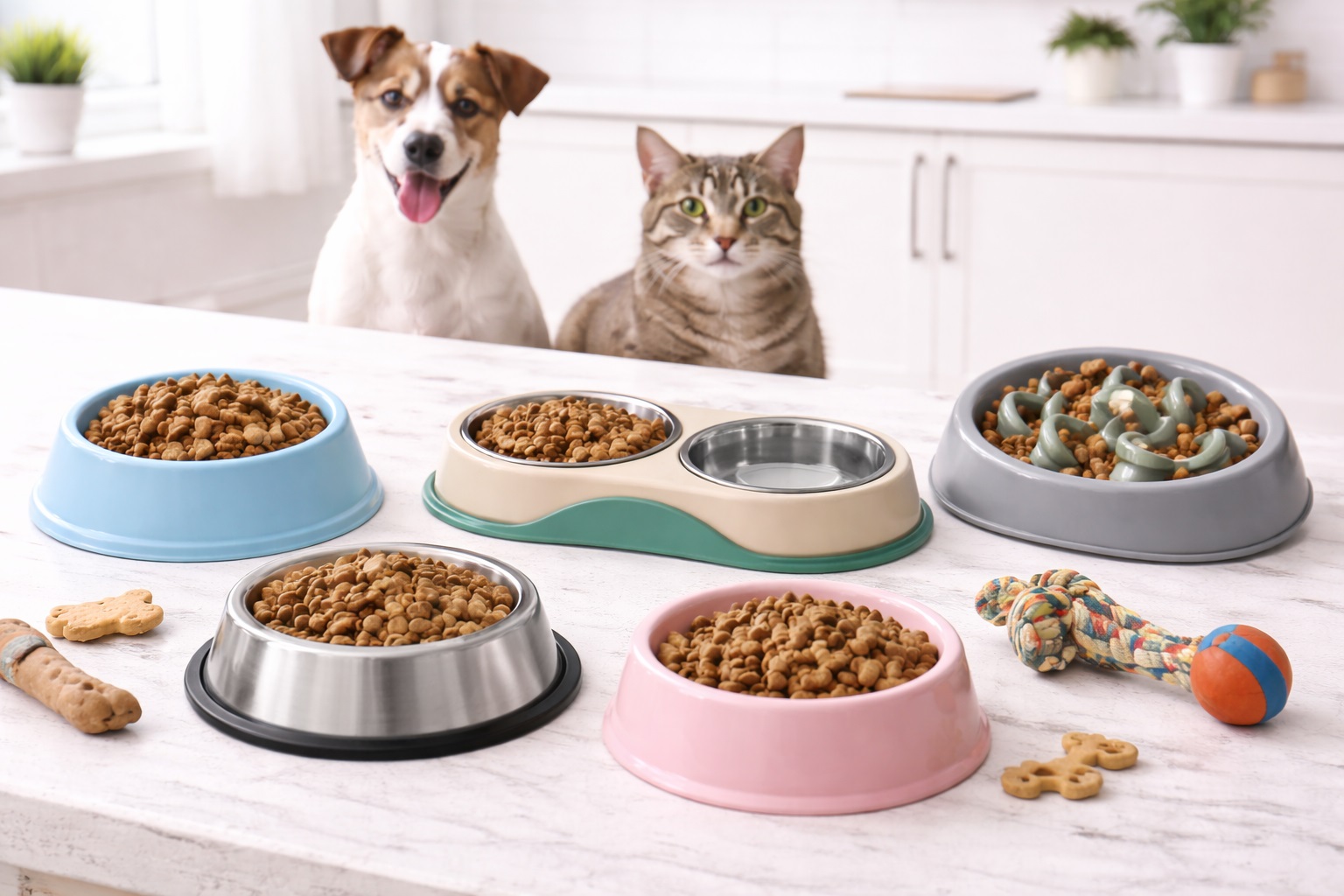
Best Budget Pet Food Bowls: Safe, Affordable Feeding
Spending less on a pet food bowl does not have to mean compromising on safety or basic function. A feeding bowl is one of the simplest pieces of pet equipment to buy well without a large budget, since the core requirements — a non-toxic, cleanable surface and a shape that suits your pet's proportions — are achievable at a low price point without needing premium materials or elaborate design features.
This guide focuses on genuinely functional budget options rather than the cheapest possible product available, since there is a meaningful difference between the two. Some very low-cost bowls cut corners in ways that matter, such as unstable bases, materials prone to rapid scratching, or thin construction that cracks quickly, while other affordable options deliver solid, safe performance at a fraction of the cost of premium branded alternatives.
We evaluated each option here specifically on the balance between cost and genuine functionality: hygiene, stability during feeding, and reasonable durability over at least a year or two of regular use. A bowl that needs replacing every few months due to cracking or excessive wear is not actually a good value regardless of its low upfront price, so long-term cost per year of use matters as much as the sticker price at checkout.
It is also worth noting that budget-friendly does not have to mean visually unappealing or embarrassing to have out in a shared living space. Several of the styles below combine a low price with a clean, simple appearance that fits reasonably into most homes without drawing unwanted attention. Use the comparison tools and detailed reviews below to find an affordable bowl that performs its core job well.
It helps to separate two different kinds of savings when shopping in this category. One kind comes from choosing an inherently affordable material or design that still performs its function fully, such as basic stainless steel over a decorative branded version of the same material. The other kind comes from cutting a corner that genuinely compromises function, such as an unstable base or a material prone to rapid degradation. The goal throughout this guide is to steer toward the first kind of saving and away from the second, since only one of these approaches actually protects your pet's daily comfort and hygiene.
Multi-pet households in particular benefit from careful budget planning in this category, since feeding equipment costs multiply directly with the number of animals in the home. A strategy built around a small number of genuinely durable, easily replicated bowl types — rather than a different specialty product for each pet — tends to keep both cost and maintenance complexity manageable over the years of ownership ahead.
Top Picks Reviewed
1. Basic Stainless Steel Bowl – Best Overall Value for Hygiene and Durability
A simple, unadorned stainless steel bowl without an elevated stand, decorative pattern, or specialty feature typically represents the strongest value in the entire budget category, since stainless steel is inherently durable and hygienic regardless of how basic the design is otherwise. There is little practical difference in daily function between a premium branded stainless bowl and a basic unbranded one, since the material itself does the heavy lifting.
- Pros:
- Non-porous surface resists bacterial growth regardless of price point
- Dishwasher safe for complete sterilization
- Durable — resists chipping, cracking, and scratching for years
- Available at a genuinely low price without sacrificing core function
- Cons:
- Basic models may lack a non-slip base, requiring a separate mat
- No insulation or specialty features beyond core functionality
Best For: Budget-conscious owners who want maximum hygiene and durability without paying for unnecessary extras.
Why We Recommend It: Stainless steel's core hygiene and durability benefits do not require a premium price tag to deliver, making a basic stainless bowl the strongest pound-for-pound value in pet feeding equipment.
2. Basic Plastic Bowl, BPA-Free – Best for Lowest Upfront Cost
A simple BPA-free plastic bowl represents the lowest upfront cost option while still meeting basic safety standards for short to medium-term use. While plastic is not the ideal long-term hygiene choice compared to stainless steel or ceramic, a BPA-free option replaced on a reasonable schedule remains a genuinely safe, functional, and extremely affordable choice, particularly for households managing multiple pets or a tight budget.
- Pros:
- Lowest upfront cost of any common bowl material
- BPA-free formulations meet basic safety standards
- Lightweight and simple to replace on a regular schedule
- Available in a wide range of sizes at minimal cost
- Cons:
- Develops bacteria-harboring surface scratches faster than steel or ceramic
- Should be replaced more frequently than more durable materials
Best For: Households needing multiple bowls at minimal cost, or those replacing bowls on a regular planned schedule.
Why We Recommend It: For owners who replace bowls proactively before scratching becomes a hygiene concern, a basic plastic bowl delivers genuinely safe function at the lowest possible price point in the category.
3. Basic Ceramic Bowl – Best for Stability Without a Stand
A simple, unglazed-pattern ceramic bowl offers meaningful weight and stability at a modest cost, resisting the tipping and sliding that lightweight plastic and thin stainless bowls can experience during enthusiastic eating. Ceramic is also dishwasher safe and fully non-porous once properly glazed, delivering hygiene comparable to stainless steel at a similarly accessible price point.
- Pros:
- Weighted material resists tipping without needing a separate stand
- Non-porous glazed surface offers strong hygiene at low cost
- Dishwasher safe for easy routine cleaning
- Widely available at accessible price points
- Cons:
- Can chip or crack if dropped on hard flooring
- Heavier than plastic, less convenient for travel or frequent moving
Best For: Budget shoppers wanting bowl stability without the added cost of a dedicated elevated stand or weighted base attachment.
Why We Recommend It: Ceramic's natural weight solves the tipping problem that affects many lightweight budget bowls, delivering a practical stability benefit without requiring any additional purchase.
4. Two-Pack Stainless Bowl Set – Best Value for Multi-Pet Households
Buying stainless bowls in a two-pack typically reduces the per-bowl cost compared to purchasing individually, which matters directly for budget-conscious households managing more than one pet's feeding needs. Since stainless steel bowls are functionally identical regardless of individual purchase versus set purchase, a two-pack delivers the same hygiene and durability benefits at a meaningfully lower total cost.
- Pros:
- Lower per-bowl cost than buying stainless bowls individually
- Full hygiene and durability benefits of stainless steel
- Practical for multi-pet households needing more than one bowl
- Dishwasher safe like any standard stainless bowl
- Cons:
- Requires buying two at once even if only one is immediately needed
- Basic sets may lack non-slip bases found on premium versions
Best For: Multi-pet households seeking the best possible per-unit value on genuinely hygienic stainless steel bowls.
Why We Recommend It: Buying in a set directly reduces the cost of outfitting a multi-pet household with quality stainless bowls, without any compromise on the material's core hygiene and durability benefits.
5. Budget Slow Feeder Bowl – Best for Fast Eaters on a Tight Budget
An affordable slow feeder bowl with a simplified maze pattern delivers the same core eating-rate reduction as a premium specialty slow feeder, since the underlying mechanism — obstacles the pet must eat around — does not require expensive materials or elaborate design to function effectively. This makes addressing fast eating and associated bloat risk accessible even on a tight budget.
- Pros:
- Slows eating rate effectively despite the lower price point
- Reduces bloat and vomiting risk associated with rapid eating
- Available at a fraction of the cost of premium specialty feeders
- Most versions remain dishwasher safe
- Cons:
- Simpler maze pattern than premium versions, though still functional
- Often made from basic plastic, requiring periodic replacement
Best For: Budget-conscious owners whose pets show signs of eating too quickly and need an affordable intervention.
Why We Recommend It: The core benefit of slow feeding does not require an expensive product, and a budget slow feeder bowl delivers meaningful behavioral change at a price accessible to nearly any household.
6. Silicone Collapsible Bowl – Best Budget Travel Option
A basic collapsible silicone bowl offers genuine portability at a low price, folding flat for storage and popping into shape when needed for travel, walks, or car trips. Silicone is food-safe and simple to rinse clean, and the low cost makes it reasonable to keep multiple bowls on hand for different bags, vehicles, or locations without a significant additional expense. Clipping one to a leash or bag with an attached carabiner also means it's rarely forgotten before a walk or trip, unlike a rigid bowl that has to be deliberately packed each time.
- Pros:
- Very low cost makes owning multiples practical
- Food-safe silicone material is simple to rinse clean
- Folds flat for compact storage and travel
- Lightweight and easy to carry in a bag or pocket
- Cons:
- Less stable than a rigid bowl on uneven outdoor ground
- Not intended as a primary daily home feeding bowl
Best For: Budget-conscious travel and outdoor use, or as a backup option kept in a car or bag.
Why We Recommend It: The low cost and genuine portability combination makes it practical to keep several of these on hand, solving the travel feeding problem without a significant investment.
7. Weighted Anti-Tip Bowl, Budget Ceramic – Best for Preventing Mess Without Extra Cost
A basic weighted ceramic bowl with a wider base resists tipping during energetic eating without the added cost of a stand or non-slip accessory, delivering the stability benefit of premium anti-tip designs through the material's inherent weight alone. This makes it a genuinely practical choice for households dealing with enthusiastic eaters who scatter food from lighter bowls.
- Pros:
- Wide, weighted base resists tipping without additional cost
- Ceramic material is dishwasher safe and hygienic
- Reduces mealtime mess compared to lightweight alternatives
- Available at prices comparable to basic unweighted ceramic bowls
- Cons:
- Heavier than plastic, less convenient to move frequently
- Can chip if dropped on hard flooring
Best For: Households with enthusiastic or clumsy eaters who need stability without paying for a dedicated stand.
Why We Recommend It: This solves a common everyday frustration through the bowl's own inherent weight rather than an added accessory, keeping the total cost low while still delivering genuine mess reduction.
8. Basic Elevated Bowl Set, Budget Stand – Best Affordable Ergonomic Option
A simple elevated stand paired with basic stainless or plastic bowls delivers the ergonomic benefit of raised feeding at a fraction of the cost of premium furniture-style elevated sets. The stand itself is typically a simple, unadorned frame, but it performs the same core function of reducing neck strain during feeding as far more expensive versions. Many budget stands also accept standard-size replacement bowls, so a cracked or worn insert can be swapped out without needing to replace the entire stand assembly.
- Pros:
- Delivers the ergonomic benefit of elevation at a low price
- Compatible with either stainless or basic plastic bowl inserts
- Simple frame construction keeps manufacturing cost low
- Suitable for pets with mild mobility or neck sensitivity needs
- Cons:
- Less aesthetically refined than premium furniture-style stands
- Elevation still requires veterinary confirmation for bloat-prone breeds
Best For: Budget-conscious owners whose pets would benefit from elevated feeding without the cost of a premium furniture-style set.
Why We Recommend It: The ergonomic benefit of raised feeding comes from the height itself rather than the stand's material or design refinement, making a basic version just as functionally effective as an expensive one.
9. Double Bowl Budget Tray Set – Best Combined Value for Food and Water
A simple plastic or basic stainless tray holding two bowls covers both food and water needs in a single affordable purchase, avoiding the need to buy separate individual bowls at potentially higher combined cost. The tray also helps contain minor spills, adding a small mess-reduction benefit on top of the core cost savings from buying a combined set.
- Pros:
- Covers both food and water needs in one affordable purchase
- Tray helps contain minor spills around the bowls
- Lower combined cost than buying two bowls separately
- Simple to clean as a single combined unit
- Cons:
- Fixed bowl spacing may not suit every pet's preference
- Basic materials may need replacement sooner than premium equivalents
Best For: Budget-conscious owners wanting a complete, affordable feeding solution in a single purchase.
Why We Recommend It: Combining food and water into one affordable set reduces both the total cost and the shopping effort involved in outfitting a basic, functional feeding station from scratch.
10. Secondhand or Discount-Bin Stainless Bowl – Best for Maximum Savings on Premium Material
A gently used or discount-bin stainless steel bowl, once thoroughly sanitized in a dishwasher or with hot soapy water, delivers the full hygiene and durability benefits of new stainless steel at a substantially reduced cost. Because stainless steel does not degrade or retain odor the way plastic can, a secondhand bowl in good physical condition performs identically to a brand-new one after proper cleaning, making this the single most economical way to access premium-material hygiene.
- Pros:
- Lowest possible cost for genuine stainless steel hygiene
- Sanitizes completely with a standard dishwasher cycle
- No functional difference from new stainless steel once cleaned
- Reduces waste by reusing durable existing material
- Cons:
- Requires checking for dents or damage before purchase
- Availability depends on local secondhand or discount sources
Best For: Extremely budget-conscious households willing to source a secondhand or discounted bowl and sanitize it thoroughly before use.
Why We Recommend It: Stainless steel's durability means a well-maintained secondhand bowl carries essentially no functional downside compared to new, making this the most economical path to premium-material hygiene for households prioritizing savings above all else.
Looking across these ten options together, a clear pattern emerges: the single biggest lever for saving money in this category is material choice rather than brand, design complexity, or where the bowl is purchased. Stainless steel and basic ceramic consistently outperform novelty or decorative products on a cost-per-year-of-use basis, and the extra features found on premium products, such as elaborate stands or built-in electronics, add cost without changing the fundamental hygiene and stability outcomes that matter most for daily pet health.
Buying Guide: How to Choose the Best Budget Pet Food Bowl
Use these factors to find genuinely functional, safe bowls without overspending. Budget shopping in this category rewards focusing on core material safety and stability rather than premium features that add cost without meaningfully improving daily function. Reviewing each factor against your specific household's needs, rather than assuming every consideration applies equally, helps direct limited budget toward the choices that matter most for your particular pet.
1. Prioritize Material Safety Over Brand Name
A basic stainless steel or BPA-free plastic bowl from a lesser-known brand typically performs identically to an expensive branded equivalent, since the material itself, not the label, determines core safety and hygiene.
2. Calculate Cost Per Year of Use, Not Just Upfront Price
A slightly more expensive stainless bowl that lasts many years often costs less over time than repeatedly replacing a very cheap plastic bowl that cracks or scratches within months. Dividing the price by expected years of use gives a more honest comparison than looking at the sticker price alone.
3. Buy in Sets for Multi-Pet Households
Purchasing bowls in pairs or larger sets typically reduces the per-unit cost meaningfully compared to buying individually, particularly for stainless steel options.
4. Choose Weighted Materials to Avoid Buying a Separate Stand
A basic ceramic bowl's natural weight resists tipping without the added cost of a dedicated stand or non-slip base accessory.
5. Replace Plastic Bowls on a Proactive Schedule
Budget plastic bowls remain safe when replaced before visible scratching becomes significant, typically every year or so with daily use.
6. Watch for Seasonal and Clearance Sales
Pet supply retailers frequently discount basic feeding bowls during seasonal sales, making it possible to buy quality stainless or ceramic options at prices close to basic plastic alternatives. Timing a purchase around these sales periods can meaningfully improve the material quality available within the same budget.
7. Avoid Unnecessary Specialty Features Unless Genuinely Needed
Elevated stands, automatic dispensers, and decorative patterns all add cost. Skip these unless your pet has a specific need, such as mobility limitations or a documented fast-eating issue.
8. Consider Secondhand or Multi-Pack Deals
Gently used stainless steel bowls, which sanitize completely in a dishwasher, and bulk multi-packs both offer meaningful savings without any compromise on function.
9. Verify BPA-Free Labeling on Budget Plastic Options
Not all inexpensive plastic bowls carry this certification. Confirming BPA-free labeling ensures a low-cost plastic bowl still meets basic safety standards before it enters regular daily use.
10. Choose Simple Designs Over Elaborate Ones
A plain stainless or ceramic bowl typically costs less than the same material in a decorative or branded pattern, without any difference in core function or hygiene.
11. Budget for Occasional Replacement Regardless of Material
Even durable materials eventually show wear. Planning for occasional replacement, rather than expecting any single budget bowl to last indefinitely, keeps expectations realistic.
12. Don't Sacrifice Basic Stability for Savings
An extremely cheap, lightweight bowl that slides constantly during feeding creates ongoing mess and frustration that outweighs the modest savings compared to a slightly pricier, more stable option. This is one of the few areas where the very lowest price is genuinely not worth pursuing.
13. Check for Manufacturing Defects Before First Use
Even inexpensive bowls should be inspected on arrival for sharp mold seams, uneven rims, or a wobbly base before being put into regular use. A quick visual and touch check catches the rare defective unit before it becomes a daily annoyance or a minor safety concern.
14. Weigh Several Cheap Bowls Against One Mid-Range Bowl
For households debating between multiple very cheap bowls or a single better-made mid-range option, consider how often the bowl will actually be used and by how many pets. A single durable stainless bowl used daily by one pet often makes more sense than several very low-cost bowls that each need replacing within a year.
Frequently Asked Questions
1. Are cheap pet bowls safe to use?
Yes, provided they are made from BPA-free plastic, stainless steel, or properly glazed ceramic. Low price does not automatically indicate an unsafe product, and checking material certification matters more than the price tag itself.
2. What is the cheapest genuinely safe bowl material?
BPA-free plastic typically offers the lowest upfront cost while still meeting basic safety standards, provided it is replaced on a reasonable schedule.
3. Is a basic stainless steel bowl really as good as an expensive one?
In most cases, yes. Stainless steel's core hygiene and durability benefits come from the material itself rather than the price point or brand name, so extra spending mostly buys design extras rather than better function.
4. How often should budget plastic bowls be replaced?
Roughly every year with daily use, or sooner if visible scratching or discoloration becomes noticeable on the surface.
5. Are budget slow feeder bowls as effective as premium ones?
Generally yes, since the core mechanism of eating around obstacles works regardless of price point or maze complexity.
6. Do I need to buy an elevated stand for my pet's bowl?
Only if your pet has specific mobility needs or a veterinarian recommends elevated feeding. Otherwise, a standard floor-level bowl is entirely sufficient.
7. How can I save money on pet bowls for multiple pets?
Buying stainless steel bowls in multi-packs typically offers the best per-unit value while maintaining full hygiene and durability standards across every animal in the household.
8. Is ceramic a good budget option?
Yes, basic ceramic bowls offer strong hygiene and natural stability at accessible prices, though they carry some risk of chipping if dropped.
9. What should I avoid when buying a budget pet bowl?
Avoid bowls that lack any BPA-free certification if plastic, and avoid extremely lightweight, unstable designs that slide during feeding regardless of material.
10. Can I find dishwasher-safe bowls at a low price?
Yes, both basic stainless steel and glazed ceramic bowls are typically dishwasher safe even at the lowest price points within those material categories.
11. Is it worth spending more on a bowl if money is tight?
A modest step up to stainless steel over the cheapest plastic option often pays for itself over a year or two through avoided replacement costs.
12. Do budget bowls work well for puppies and kittens?
Yes, provided the size is appropriate. Budget stainless or ceramic bowls work just as well for young pets as premium options during this stage, and there is little reason to spend more before growth has stabilized.
13. Is it fine to mix and match budget bowls from different brands in one household?
Yes, there's no functional downside to combining brands, since material and construction quality matter far more than brand consistency. Many budget-conscious households end up with a practical mix built up over time rather than a single matched set.
14. Is it safe to buy pet bowls from discount or dollar stores?
Generally yes, provided the item carries clear material labeling, such as BPA-free plastic or food-grade stainless steel, and shows no visible defects on inspection. Absence of labeling is a reasonable reason to choose a different, clearly labeled option instead.
Final Verdict
- Best Overall Value for Hygiene and Durability: Basic Stainless Steel Bowl — full material benefits at minimal cost.
- Best for Lowest Upfront Cost: Basic Plastic Bowl, BPA-Free — genuinely safe when replaced on schedule.
- Best for Stability Without a Stand: Basic Ceramic Bowl — natural weight resists tipping.
- Best Value for Multi-Pet Households: Two-Pack Stainless Bowl Set — reduced per-bowl cost with full hygiene benefits.
- Best for Fast Eaters on a Tight Budget: Budget Slow Feeder Bowl — effective eating-rate reduction at low cost.
- Best Budget Travel Option: Silicone Collapsible Bowl — genuine portability at minimal expense.
- Best for Preventing Mess Without Extra Cost: Weighted Anti-Tip Bowl, Budget Ceramic — stability through material weight alone.
- Best Affordable Ergonomic Option: Basic Elevated Bowl Set, Budget Stand — raised feeding at a fraction of premium cost.
- Best Combined Value for Food and Water: Double Bowl Budget Tray Set — a complete feeding solution in one purchase.
- Best for Maximum Savings on Premium Material: Secondhand or Discount-Bin Stainless Bowl — full stainless hygiene at the lowest possible cost.
The right budget pet food bowl comes down to prioritizing material safety and basic stability over brand name or unnecessary specialty features, since the core function of a feeding bowl does not require a premium price to deliver reliably. Use the comparisons and detailed reviews above to feed your pet safely and hygienically without overspending on features you don't actually need, and remember that the most affordable genuinely safe option is often only a modest step away from the very cheapest one on the shelf.