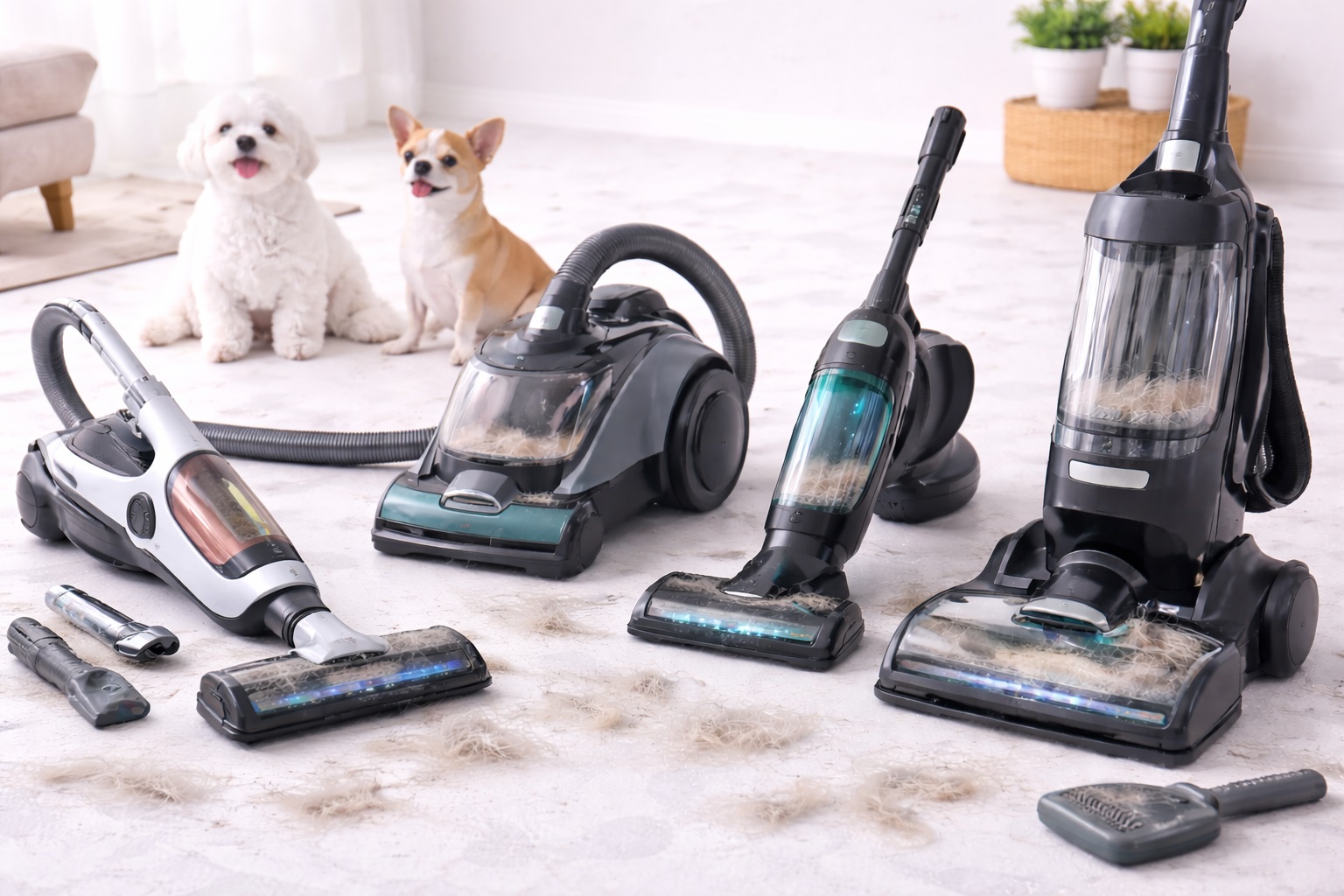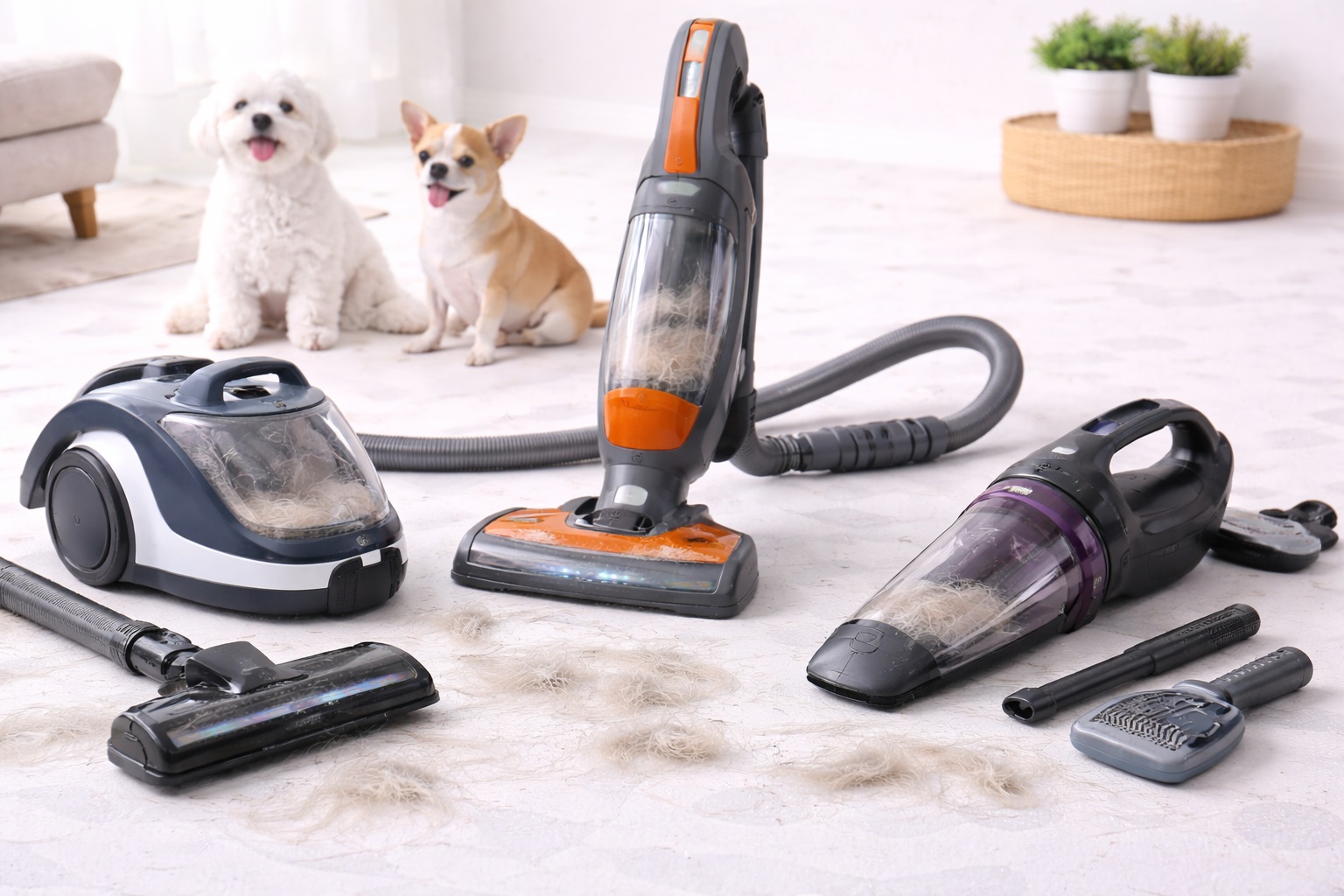
Best Budget Pet Vacuums: Effective Pet Hair Removal at a Low Price
Premium pet vacuums can run several hundred dollars, and for many households that price tag simply is not necessary to keep floors clear of fur. A budget pet vacuum, chosen carefully, can handle the same daily reality of shedding cats and dogs as a flagship model — it just requires knowing which features actually matter for pet hair and which ones are mostly there to justify a higher price bracket. The good news is that tangle-resistant brush rolls, reasonable suction, and washable filters have all become common even at lower price points over the past several years.
The challenge with budget shopping is separating genuine value from corners cut in the wrong places. A cheap vacuum with a flimsy brush roll that jams constantly, or a dustbin so small it needs emptying every few minutes, ends up costing more in frustration and lost time than a slightly pricier model built with pet hair specifically in mind. The goal of this guide is to help you spend your budget where it actually improves the experience of vacuuming a home with pets, rather than on features that sound good in a listing but rarely get used.
Below we walk through three practical categories of budget-friendly pet vacuum, the specific factors worth prioritizing when money is limited, and the questions that come up most often from owners trying to get real pet hair performance without a premium price.
Top 3 Budget Pet Vacuums (Detailed Reviews)
1. Budget Corded Upright Vacuum – Best for Affordable Deep Cleaning
A corded upright vacuum remains one of the most cost-effective ways to get strong, sustained suction without paying for cordless battery technology. Because the motor draws directly from a wall outlet rather than a battery, budget corded uprights can often out-perform much pricier cordless machines on raw carpet cleaning power, even if they lack the polish and lightweight design of premium models. Many budget uprights aimed at pet owners now include a basic tangle-resistant brush roll and a simple foam or washable filter, covering the core needs of pet hair removal without the cost of app connectivity or advanced sensors.
- Pros:
- Strong, consistent suction for the price point
- No battery to degrade or eventually replace
- Larger dustbin than most budget cordless alternatives
- Simple design means fewer parts that can fail
- Cons:
- Cord limits reach and requires outlet planning between rooms
- Heavier and less maneuverable than premium lightweight models
Best For: Budget-conscious pet owners with carpet-heavy homes who prioritize raw cleaning power over cordless convenience.
Why We Recommend It: For the price, a corded upright consistently delivers the strongest actual pet hair removal from carpet fiber of any budget category. It sacrifices some convenience for performance, which is usually the right trade when the primary goal is effective cleaning on a limited budget.
Owners who mainly need one thorough weekly cleaning pass, rather than several quick daily touch-ups, tend to get the most value from this category. The extra minute spent moving the cord between outlets is a small cost compared to the suction and capacity gained, especially in homes with multiple rooms of carpet and a heavy-shedding dog or cat.
Because these models tend to be simpler mechanically, they are also generally easier and cheaper to have repaired if something eventually breaks, compared to the more complex electronics found in premium cordless or robotic alternatives.
2. Budget Cordless Stick Vacuum – Best for Affordable Daily Pickup
Entry-level cordless stick vacuums have improved substantially in recent years, and many now include a basic pet hair attachment even at lower price points. While battery runtime and suction generally trail premium cordless models, a budget stick vacuum still covers the most common daily task for pet owners — quick pickups of loose surface hair before it accumulates. The lighter weight and cord-free design make it an easy tool to grab for a fast pass through high-traffic areas.
- Pros:
- Affordable entry point into cordless convenience
- Lightweight enough for quick daily use
- Often converts to a basic handheld for furniture
- Fast to store and retrieve for spot cleaning
- Cons:
- Shorter battery runtime than premium cordless models, often 15–25 minutes
- Smaller dustbin requires more frequent emptying with heavy shedders
Best For: Pet owners who want an affordable, always-ready tool for frequent light cleanups between more thorough sessions with a larger vacuum.
Why We Recommend It: A budget stick vacuum fills the daily-maintenance gap without a large investment, keeping visible surface hair under control between deeper cleaning sessions with a corded upright. It is not meant to replace a deep clean, but it meaningfully reduces how dirty floors get between them.
Because runtime is limited on entry-level models, the most effective approach is treating it as a quick-response tool rather than a whole-house solution — a fast pass over the living room rug rather than an attempt to clean an entire multi-room home on a single charge.
3. Budget Bagless Canister Vacuum – Best for Affordable Multi-Surface Cleaning
A basic bagless canister vacuum offers a middle ground between upright power and stick vacuum convenience, often at a lower price than either premium alternative. The canister's separate motor unit and hose allow it to reach under furniture and up stairs more easily than a bulky upright, while still running on continuous wall power rather than a limited battery. Budget canister models aimed at pet owners typically include a basic pet hair floor tool and a simple filter that, while not always true HEPA, still captures the bulk of visible pet hair and coarser dander.
- Pros:
- Versatile reach for furniture, stairs, and tight spaces
- Continuous power without battery limitations
- Generally lower price than equivalent upright or cordless models
- Bagless design keeps ongoing costs low
- Cons:
- Hose and canister combination can feel less intuitive to maneuver at first
- Filtration is typically more basic than premium HEPA-equipped models
Best For: Budget shoppers who need one versatile vacuum to cover floors, stairs, and furniture without buying multiple specialized tools.
Why We Recommend It: The budget canister vacuum's combination of continuous power and physical reach makes it one of the most flexible low-cost options for homes with mixed cleaning needs — carpets, stairs, and upholstery — without requiring separate purchases for each.
Its main advantage over a stick vacuum is simply not being tied to a battery clock, which matters in larger homes or for owners who tend to get distracted mid-cleaning session and want a machine that keeps running regardless.
The hose-and-wand format also makes it comparatively easy to reach high corners, curtain rails, and the tops of cabinets where pet hair and dust tend to settle unnoticed, extending the vacuum's usefulness beyond the floor-level cleaning most budget shoppers picture first.
Buying Guide: How to Choose the Best Budget Pet Vacuum
A limited budget does not mean settling for poor pet hair performance — it means being selective about which features are worth paying for.
1. Tangle-Resistant Brush Roll at Any Price
This single feature matters more than almost any other spec for pet owners on a budget. A standard bristle brush roll wraps with hair quickly regardless of price, while even basic tangle-resistant designs cut down significantly on maintenance time.
Before buying, search specifically for owner reviews mentioning pet hair and brush roll tangling, since manufacturer descriptions do not always make clear whether a low-cost model actually includes this design or only a standard bristle roll.
Even where a tangle-resistant design is present, it is worth checking how the brush roll housing opens for the occasional manual clean, since a design that requires tools to access can turn a rare maintenance task into a genuine hassle.
2. Realistic Suction Expectations
Budget vacuums generally cannot match premium suction figures, but many still perform adequately on typical carpet and hard floor pet hair loads. Focus on whether the suction is sufficient for your actual flooring rather than comparing raw numbers against far more expensive machines.
Hard floors and low-pile carpet are more forgiving of modest suction than thick, high-pile carpet, so match your expectations to your actual flooring type rather than assuming every budget vacuum needs top-tier pulling power.
A quick test during the return window — running the vacuum over your most heavily shed-on rug or carpet area — gives a far more reliable answer than any published suction figure, since real carpet pile and hair type vary so much between households.
3. Filter Quality Versus Filter Marketing
Not every budget vacuum needs true HEPA filtration, but a reasonably fine filter still matters for keeping dust and dander from blowing back into the room. Check whether the filter is washable, since that alone significantly reduces long-term running costs.
Be cautious of listings that use the word HEPA loosely without specifying a genuine efficiency rating, since some budget filters marketed this way fall short of true HEPA-standard filtration.
For households without specific allergy concerns, a basic multi-layer filter is often perfectly adequate, and the money saved by skipping true HEPA certification can be better spent on brush roll quality or dustbin capacity instead.
4. Dustbin Size Relative to Shedding Level
A smaller dustbin is one of the most common budget compromises. For light shedders this is rarely a problem, but multi-pet or heavy-shedding households should prioritize dustbin capacity over other secondary features when comparing low-cost models.
Emptying a small bin more frequently is a minor inconvenience compared to a vacuum that clogs mid-session because the bin filled up before the room was finished.
Multi-pet households in particular should weigh dustbin capacity heavily, since the time saved by not stopping mid-clean to empty a bin adds up meaningfully across weeks and months of regular vacuuming.
5. Cord Length and Reach on Corded Models
Budget corded vacuums sometimes ship with shorter cords than premium equivalents to cut manufacturing cost. A cord under 20 feet can mean switching outlets multiple times in a mid-sized home, which adds real time to every cleaning session.
Combining cord length with the length of the hose or wand gives a more accurate sense of total usable reach than the cord length figure alone.
Walking through your home mentally and counting outlet locations relative to the rooms you clean most often is a quick way to check whether a shorter cord will actually cause practical problems before you buy.
6. Battery Runtime on Budget Cordless Models
Entry-level cordless vacuums typically offer shorter runtimes than premium versions, often in the 15 to 25 minute range on a full charge. Confirm this figure covers your typical cleaning area before assuming a budget cordless model can handle a whole-home session.
Some budget models also take considerably longer to recharge than premium equivalents, which is worth checking if you tend to need the vacuum multiple times in the same day.
A removable, swappable battery is a useful feature to look for even at budget price points, since it allows a spare to be charged in advance for households that regularly need more than one short cleaning session per day.
7. Build Quality Signals
Plastic quality, how solidly attachments click into place, and whether the dustbin release feels sturdy are all rough indicators of how well a budget vacuum will hold up over time. Reading reviews after several months of ownership, not just initial impressions, gives a better sense of durability.
A vacuum that feels slightly heavier for its size is not necessarily a downside — it can indicate more substantial internal components rather than the thinnest possible plastic shell.
Checking whether replacement latches, wheels, or hose connectors are commonly reported as failure points in existing reviews for a specific model gives a more concrete sense of build quality than a general impression from photos alone.
8. Included Attachments Versus Add-On Costs
Budget vacuums sometimes ship with a bare-minimum attachment set to keep the sticker price low. Check whether a pet hair tool, crevice tool, and upholstery brush are included, since buying these separately later can erase much of the initial savings.
Compare the full package price, attachments included, against a slightly pricier model that bundles everything from the start rather than judging purely on the base unit's listed price.
A pet hair upholstery tool in particular is worth confirming as included, since furniture and stairs accumulate hair just as readily as floors and a bare floor-only kit leaves that part of the cleaning job unaddressed.
9. Warranty Length as a Value Indicator
Warranty length often correlates with how confident a manufacturer is in a budget model's durability. A one-year warranty is common at low price points, while two years or more suggests a manufacturer expecting the unit to hold up over meaningfully longer use.
Register the warranty promptly after purchase and keep the receipt, since budget brands are sometimes less consistent about warranty claims processing than established premium manufacturers.
A short warranty is not automatically disqualifying if the price is low enough that replacing the unit outright after a couple of years still represents good overall value, but it is worth factoring into your total cost comparison against pricier alternatives.
10. Noise Level on Lower-Cost Motors
Budget motors are not always engineered for quiet operation the way premium models increasingly are. If a sensitive pet is part of the household, check noise-related reviews specifically rather than assuming a lower price means a quieter, simpler machine.
A slightly louder budget vacuum used consistently is still more useful than a quieter premium one bought but rarely used because of cost hesitation, so weigh noise against your actual tolerance rather than treating it as an automatic dealbreaker.
If noise is a real concern, scheduling vacuuming for times when a sensitive pet is naturally out of the room, such as during a walk or a nap in another part of the house, can offset a budget motor's louder operation without requiring a pricier purchase.
11. Replacement Part Cost Over Time
Some budget vacuums save money upfront but charge disproportionately for replacement filters or brush rolls later. Check replacement part pricing before buying, since a cheap vacuum with expensive consumables can cost more over two or three years than a pricier model with cheap parts.
Generic, off-brand replacement filters are sometimes available for popular budget models and can reduce this ongoing cost further, provided they still fit and seal properly.
Adding up the projected cost of filters and brush rolls over a two-year period, rather than only comparing sticker prices, occasionally reveals that a slightly pricier vacuum with cheaper consumables actually wins out on total cost of ownership.
12. Return Policy Before Committing
Budget models purchased online sometimes come with shorter or more restrictive return windows than premium retail purchases. Confirm the specific return policy before buying, and test the vacuum on your actual pet hair situation within that window.
Keeping original packaging until you are confident in the purchase avoids losing return eligibility over a minor storage decision.
It is also worth checking whether the seller charges a restocking fee or requires the buyer to cover return shipping, since these hidden costs can quietly erase the savings of a budget purchase if the first model turns out to be a poor fit.
Frequently Asked Questions
1. Can a budget vacuum actually handle pet hair well?
Yes, provided it includes a tangle-resistant brush roll and adequate suction for your flooring type. The core features that matter most for pet hair have become common even at lower price points, so a budget model is not automatically a compromise on pet hair performance specifically. The gap that remains between budget and premium tends to show up more in convenience features, noise level, and long-term durability than in the core ability to pick up hair on a typical cleaning day.
2. What is the single most important feature on a budget pet vacuum?
The brush roll design matters most. A standard bristle brush roll that tangles constantly with pet hair causes more frustration than any other single shortcoming on a budget model, so prioritize this feature over secondary conveniences. If a listing does not explicitly mention tangle resistance, it is worth searching separately for owner feedback confirming whether the brush roll behaves well specifically with pet hair rather than assuming it does.
3. How much should I expect to spend on a decent budget pet vacuum?
Effective budget options typically sit in the lower-to-mid price tier compared to premium pet-specific vacuums, though the exact range varies by retailer and category. Focus on comparing included features rather than price alone across similarly priced listings, since two vacuums at nearly the same price point can differ meaningfully in brush roll quality, dustbin size, and filter type.
4. Will a budget vacuum wear out faster than a premium one?
Often somewhat, yes, particularly under heavy daily pet hair loads, but many budget models still deliver several years of reliable service with reasonable care and regular filter maintenance. Consistent upkeep, especially clearing the brush roll and cleaning or replacing the filter on schedule, narrows much of the durability gap between budget and premium machines in everyday use.
5. Is the most expensive budget pet vacuum in a lineup always the best?
Not necessarily. Within the budget category itself, price differences often reflect small feature additions rather than a major performance jump, so compare specific included features rather than assuming the priciest budget option is automatically superior. Read what specifically changes between the lower and higher priced versions of a similar model before assuming the extra cost is worthwhile for your situation.
6. How long should a quality budget pet vacuum last?
With reasonable care, a well-chosen budget pet vacuum typically lasts one to three years of regular use before major components need replacing, somewhat shorter than premium equivalents but often perfectly adequate for the price paid. Households with lighter shedding pets or less frequent vacuuming needs often see budget models last considerably longer than this typical range.
7. Can I return a budget pet vacuum if it doesn't suit me?
Most retailers offer a return window, though it may be shorter for lower-cost or online-only purchases. Confirm the specific policy and test the vacuum on your pet hair situation promptly after purchase, rather than letting it sit unopened until the return window has already closed.
8. What should I prioritize when buying a budget pet vacuum?
Prioritize the brush roll design and dustbin capacity for your shedding level first, then compare suction and filtration within models that already meet those two baseline needs. Trying to optimize every specification at once at a low price point usually leads to a worse overall choice than focusing on the two or three factors that matter most for your household.
9. Does brand name matter for a budget pet vacuum?
Somewhat. Established brands even at budget price points tend to offer more consistent quality control and clearer warranty support, though lesser-known brands can still offer solid value if reviews confirm reliable performance. Checking how long a brand has offered budget-tier products, rather than only their premium line, gives a useful signal about their commitment to that segment.
10. Are bagless budget vacuums better than bagged ones?
Bagless designs reduce ongoing costs since there are no bags to repurchase, which is generally an advantage for budget shoppers, though bagged models can offer slightly better dust containment during emptying. For most pet owners on a budget, the ongoing savings of a bagless design outweigh the modest convenience difference at emptying time.
11. Can a budget vacuum handle multiple pets in the same household?
It can, but dustbin capacity becomes more important in multi-pet homes, so prioritize models with larger bins or plan for more frequent emptying during cleaning sessions. Splitting one large cleaning session into two shorter ones with a mid-session emptying can also help a smaller-bin budget vacuum keep pace with heavier multi-pet shedding.
12. Is it worth waiting for a sale on a premium vacuum instead of buying budget?
This depends on how urgently you need a working vacuum. A discounted premium model can offer better long-term value if the sale is substantial, but a solid budget model bought now still solves the immediate pet hair problem without an open-ended wait, and it can always serve as a useful secondary vacuum even after a premium model is eventually purchased.
Final Verdict
- Best for Affordable Deep Cleaning: Budget Corded Upright Vacuum — the strongest raw suction for the price on carpet-heavy floors.
- Best for Affordable Daily Pickup: Budget Cordless Stick Vacuum — the easiest low-cost tool for frequent quick cleanups.
- Best for Affordable Multi-Surface Cleaning: Budget Bagless Canister Vacuum — the most versatile reach across floors, stairs, and furniture at a low price.
A limited budget still allows for genuinely effective pet hair control, provided the money goes toward the features that matter most — a tangle-resistant brush roll, adequate suction for your flooring, and a dustbin sized to your pet's shedding level. Use the comparisons and buying factors above to find a model that fits your budget without leaving you disappointed in daily use.
Ultimately, the difference between a satisfying budget purchase and a regretted one usually comes down to matching the vacuum to your specific pet situation rather than chasing the lowest possible price. A slightly higher spend on the right brush roll design or dustbin size tends to pay for itself many times over in reduced frustration during the months of ownership that follow.
It is also worth remembering that a budget vacuum does not need to be a permanent, one-time decision. Many pet owners start with an affordable model to solve the immediate problem, then upgrade specific pieces of their cleaning routine — adding a robot vacuum for daily maintenance, or a more powerful upright for deep cleaning — as budget allows. Approaching the purchase this way removes the pressure to find one perfect low-cost machine that does everything, and instead treats the budget vacuum as the first solid piece of a cleaning system that can grow over time.