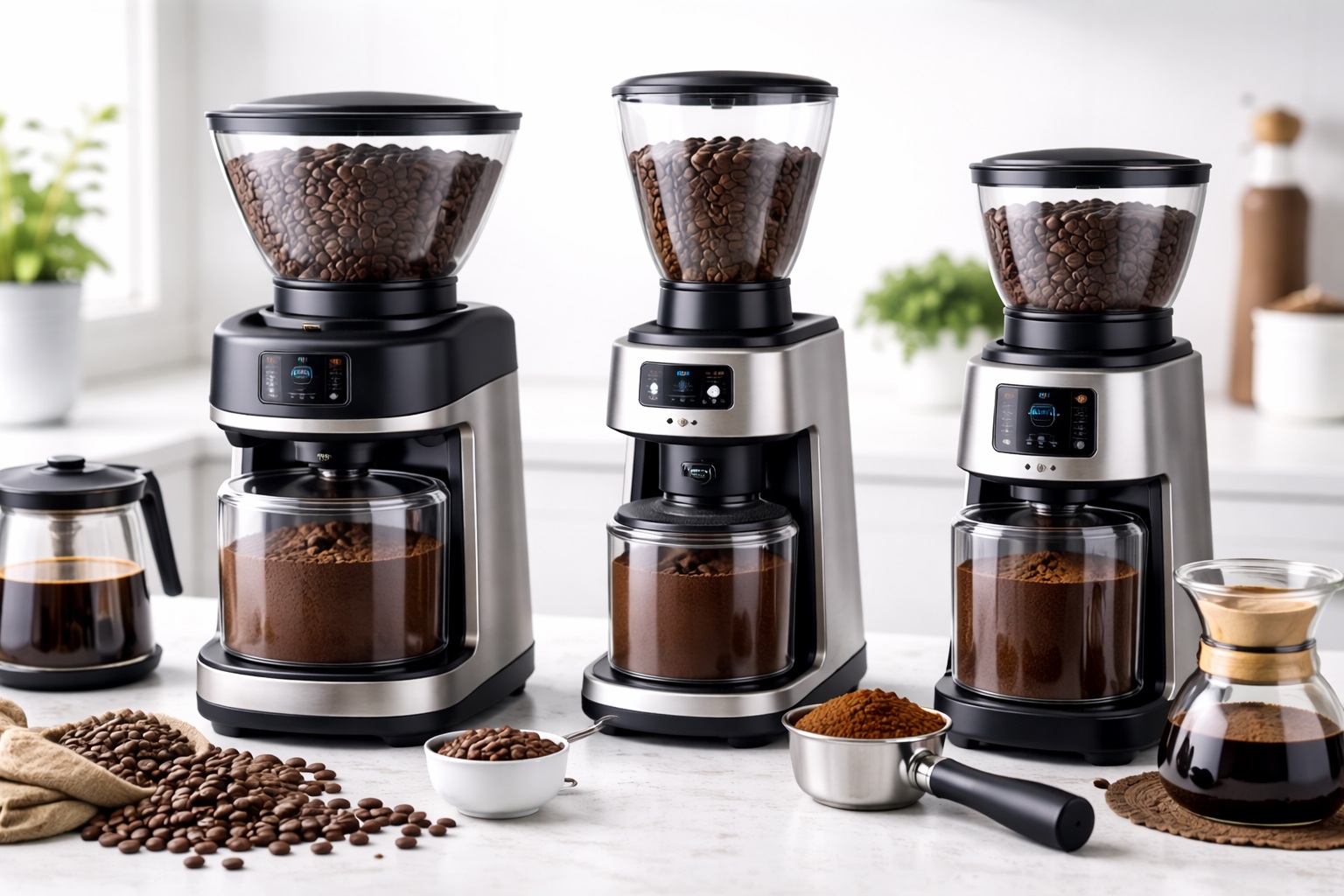
Best Coffee Grinder for Large Brews in 2026
Brewing coffee for more than one or two people changes what you need from a grinder. A model built for a single morning cup can start to feel painfully slow when you are grinding enough beans for a full carafe, a French press for the whole table, or an office coffee station that never really stops running. Capacity, speed, and consistency all matter more once the batch size grows.
This guide looks specifically at grinders that hold up under larger, more frequent use. We evaluated eight models that regularly appear in households and small offices where coffee gets made in volume rather than one cup at a time, comparing how well each one handles bigger hoppers, longer grinding cycles, and repeated daily use without losing consistency.
Whether you are hosting guests on weekends, keeping a shared pot going for a busy household, or simply someone who drinks more coffee than the average person, the models below were chosen with real batch brewing in mind. Read through the detailed reviews, then use the buying guide to match a grinder to how much coffee you actually make in a typical week.
It is worth saying upfront that capacity is not just about hopper size. A grinder that holds a large volume of beans but grinds unevenly under a full load is not actually solving your problem, it is just delaying it. We paid close attention to how consistent each model stays as the workload increases, since that consistency is what separates a grinder that scales well from one that only looks capable on paper.
Large-batch grinding also introduces practical concerns that single-serve reviews rarely address, such as how a motor handles back-to-back cycles, how much noise builds up over a longer grind, and how quickly a chamber fills with used grounds. Each of the eight picks below was chosen with these repeated, heavier-use realities in mind rather than judged purely on how it performs during a single quick grind.
Top 8 Best Coffee Grinders for Large Brews (Detailed Reviews)
1. Mr. Coffee Electric – Best Budget Pick for Large Batches
The Mr. Coffee Electric is a practical starting point for anyone who needs to grind larger quantities without spending much money. Its chambermaid cleaning system makes it easier to empty a fuller grounds chamber quickly between batches, which matters when you are grinding more often than a typical single-serve routine. At around $20, it is the most affordable option here.
- Pros:
- Chambermaid cleaning system speeds up frequent emptying
- Lowest price point in this roundup
- Simple one-button operation for repeated batches
- Cons:
- Less consistent grind than dedicated burr grinders
- Louder operation during longer grinding cycles
- Limited customization for different brew styles
Best For: Households on a budget who need to grind larger quantities regularly without investing in a premium burr grinder.
Why We Recommend It: It handles repeated, larger batches without complaint at a price that makes sense for a household still figuring out its coffee habits.
Running it through several batches back to back is manageable thanks to the quick-empty chamber, which keeps larger brewing sessions from turning into a drawn-out chore. It is a sensible first upgrade for anyone whose coffee needs have simply outgrown a small single-serve grinder. Because it asks so little of the buyer both financially and in terms of learning curve, it also works well as a shared office grinder where several people with different experience levels need to operate it without training.
2. Baratza Encore – Best Overall for High-Volume Brewing
The Baratza Encore earns the top spot for large brews because it maintains genuine grind consistency even as the workload increases. Its 40 grind settings let you dial in precision across brew methods, which matters more when you are grinding enough beans for several cups at once. At around $150, it costs more than basic models but is built for exactly this kind of repeated, heavier use.
- Pros:
- 40 grind settings maintain consistency at higher volumes
- Reputable brand with widely available replacement parts
- Durable build designed for daily, repeated grinding
- Cons:
- Higher price than basic electric grinders
- Larger footprint than compact or manual models
Best For: Households or small offices that grind large batches daily and need a machine that will not wear out quickly.
Why We Recommend It: Consistency does not drop off as the batch size grows, which is the single most important quality for anyone regularly brewing in volume.
It also holds up well under the kind of repeated daily grinding that would wear down a cheaper motor within a year, making the higher price easier to justify over time. Households that switch to this model from a basic grinder often notice the difference within the first week of heavier use.
3. Bodum Bistro – Best for Consistent Large-Batch Grinding
The Bodum Bistro is a dependable middle-tier choice for anyone brewing larger quantities on a regular basis. Its anti-static container helps contain the extra mess that comes with grinding bigger batches, which becomes more noticeable as volume increases. At around $90, it offers genuine burr-grinder consistency at a moderate price.
- Pros:
- Anti-static container manages mess from larger batches
- Reliable burr-grinder consistency
- Reputable brand known for straightforward design
- Cons:
- Louder operation during longer grinding cycles
- Bulkier housing than compact models
Best For: Households that brew large batches most days but do not need the highest possible grind customization.
Why We Recommend It: It keeps grind quality steady across bigger batches without the mess and inconsistency that cheaper grinders tend to show under a heavier load.
For a shared kitchen where several people rely on the same grinder, its straightforward controls also mean less confusion about how to operate it correctly. That simplicity matters when multiple household members are grinding beans throughout the week.
4. JavaPresse Manual – Best Manual Option for Occasional Large Brews
The JavaPresse Manual is a reasonable option for anyone who occasionally needs to grind a larger batch but does not want a dedicated electric machine. Its portable adjustability lets you dial in a grind size for a bigger French press or batch brew, though the manual effort scales with the amount you grind. At around $40, it remains an affordable option.
- Pros:
- Portable adjustability supports multiple brew styles
- No cord or outlet needed
- Backed by a reputable, coffee-focused brand
- Cons:
- Manual grinding becomes tiring for very large batches
- Slower than any electric option on this list
- Best suited to occasional rather than daily large brews
Best For: Occasional large-batch brewing, such as weekend guests, rather than daily high-volume use.
Why We Recommend It: It offers real grind control at a low price, though it is best reserved for larger brews that happen occasionally rather than every single day.
Anyone who mostly brews for themselves but wants the option to scale up for guests will appreciate that this grinder can do both without needing a second machine. Just plan for extra time and effort whenever a bigger group is on the way. Its lack of a power cord also makes it a practical backup during a power outage or when traveling to a cabin or campsite where a larger group still wants properly ground coffee.
5. KitchenAid Burr – Best for Multi-Cup Precision
The KitchenAid Burr brings dependable precision to larger batches, which matters if you care about consistency across every cup in a full pot. Consistent grind size is its defining strength, keeping extraction even whether you are grinding for two cups or eight. At around $170, it is a solid investment for regular multi-cup brewing.
- Pros:
- Consistent grind size across larger batches
- Trusted, well-established appliance brand
- Solid build quality for repeated daily use
- Cons:
- Higher price than entry-level electric grinders
- Larger footprint than compact alternatives
Best For: Households that care about grind precision across every cup in a large batch, not just the average.
Why We Recommend It: Even extraction across a bigger batch is genuinely harder to achieve than it sounds, and this model handles it more reliably than most electric alternatives.
Its recognizable brand name also means replacement parts and support are easy to find years down the line, which matters more for an appliance used this frequently. That long-term support is worth factoring into the price when you compare it against less established brands.
6. Cuisinart Supreme Grind – Best for Grind Versatility at Volume
The Cuisinart Supreme Grind is built for households that brew large batches using more than one method. Its 18-position selector lets you adjust for cold brew concentrate, drip coffee, or French press without needing separate grinders for each. At around $60, it offers real flexibility at a reasonable price.
- Pros:
- 18-position selector covers multiple large-batch brew styles
- Mid-range price for the versatility it offers
- Reputable, widely available brand
- Cons:
- Louder operation during extended grinding
- Slightly bulkier than single-purpose grinders
Best For: Households that brew large batches of different coffee styles throughout the week.
Why We Recommend It: One grinder covering multiple brewing styles at volume saves both counter space and money compared to owning several dedicated machines.
Families with different coffee preferences under one roof tend to appreciate this flexibility the most, since everyone can dial in their own preferred grind from the same machine. It removes the need to negotiate over settings every morning.
7. OXO Brew Conical Burr – Best Value for Bigger Households
The OXO Brew Conical Burr offers genuine burr-grinder performance for households that need to grind often without paying premium prices. Its durable stainless steel burrs are built to withstand the wear that comes with frequent, larger grinding sessions. At around $100, it lands in a comfortable middle price range.
- Pros:
- Durable stainless steel burrs handle frequent large batches
- Reasonable price for genuine burr-grinder performance
- Reputable brand known for thoughtful design
- Cons:
- Bulkier housing than compact models
- Louder during longer grinding sessions
Best For: Bigger households that grind large batches often and want dependable value without a premium price tag.
Why We Recommend It: It holds up well to repeated, larger grinding sessions without the price climbing into premium territory.
Families juggling multiple coffee drinkers in the morning tend to find this grinder keeps pace without becoming the bottleneck in an already busy routine. Its durability under repeated use also holds up well against pricier competitors.
8. KRUPS Precision – Best Compact Pick for Frequent Large Brews
The KRUPS Precision proves that a compact grinder can still keep up with frequent large-batch demands. Flat burr grinding keeps its internal mechanism efficient even under repeated use, without requiring a bulky footprint. At around $50, it is an accessible way to get consistent large-batch grinding without a big investment.
- Pros:
- Flat burr grinding stays efficient under frequent use
- Affordable price for genuine burr-grinder performance
- Compact design despite handling larger batches well
- Cons:
- Louder than manual grinders
- Fewer grind settings than premium electric models
Best For: Anyone who needs to grind large batches frequently but does not want to dedicate significant counter space to it.
Why We Recommend It: It manages to punch above its compact size, keeping pace with larger, more frequent grinding sessions without becoming a bulky counter fixture.
Its lower price also makes it a sensible choice for anyone unsure whether their coffee habits justify a more expensive investment right away. It also serves as a solid backup grinder for households that already own a larger dedicated machine.
Buying Guide: How to Choose the Best Coffee Grinder for Large Brews
Choosing a grinder for larger batches means paying closer attention to how it performs under repeated, heavier use rather than just how it handles a single cup. The factors below will help you find a model that keeps up with real volume.
1. Hopper and Chamber Capacity
Look at how much coffee a grinder can hold and process in a single cycle. A larger hopper reduces how often you need to refill and grind separately, which matters more the bigger your typical batch is. Oversized capacity is only useful if the motor can process it evenly, so check that hopper size and motor strength are reasonably matched.
2. Motor Durability Under Repeated Use
Grinding larger batches puts more strain on a motor than occasional single-serve use. Look for models with a reputation for handling repeated, heavier cycles without overheating or losing consistency, since this is where cheaper grinders tend to fail first. A motor that needs frequent rest breaks will slow down your entire routine.
3. Grind Consistency at Volume
Some grinders that perform well on small batches lose consistency as the load increases. Pay attention to feedback specifically about larger-batch performance rather than assuming single-cup consistency will scale automatically, since the two are not always correlated.
4. Speed per Batch
If you are grinding for a household or an office, the time it takes to process a larger batch matters. Electric burr grinders are generally faster than manual grinders once batch size increases significantly, which can be the deciding factor for daily use, especially on busy mornings.
5. Noise During Extended Cycles
Longer grinding cycles for bigger batches mean more sustained noise. If you are grinding early in a shared household, consider how a model sounds specifically during a full-size batch rather than a quick single-cup grind, since the difference can be significant.
6. Ease of Cleaning After Larger Batches
Bigger batches mean more grounds and more residue to manage. Removable chambers, anti-static features, and wide-mouth designs all make cleanup faster after a larger grinding session, which adds up over repeated daily use and saves real time each week.
7. Grind Setting Range for Different Batch Sizes
A wider range of grind settings gives you more control as your batch size changes, whether you are brewing for one person or a full table of guests. This flexibility becomes more valuable the more variable your household's coffee needs are from day to day.
8. Build Material and Long-Term Wear
Stainless steel burrs and sturdy housings hold up better under the repeated strain of large-batch grinding than lighter plastic components. A grinder used daily for bigger batches will show wear faster if it is not built for that level of use, so durability is worth prioritizing.
9. Price Relative to Frequency of Use
If you grind large batches daily, it often makes sense to spend more upfront on a durable model rather than replacing a cheaper one repeatedly. Calculate value based on how often the grinder will actually run, not just its sticker price at checkout.
10. Counter and Storage Space for Larger Units
Grinders built for volume are often larger than single-serve models. Make sure you have a permanent spot for it, since a bulkier grinder that needs to be put away after each use quickly becomes inconvenient for daily large-batch brewing and discourages regular use.
11. Warranty Coverage for Heavier Use
Frequent, larger-batch use puts more wear on a grinder than occasional light use, so warranty length and terms matter more here. Check whether a warranty accounts for regular daily use rather than assuming standard coverage applies equally to every buyer.
12. Brand Support for Replacement Parts
Heavier daily use means parts like burrs may need replacing sooner than they would with occasional use. Choosing a brand that sells replacement components separately extends the practical life of a grinder used for large, frequent batches rather than forcing a full replacement.
13. Scheduling Around Shared or Office Use
In households or offices where multiple people rely on the same grinder, consider how quickly it recovers between back-to-back sessions. A grinder that needs a cooldown period after a large batch can create a bottleneck during a busy morning rush, so check whether reviewers mention performance across consecutive uses rather than a single isolated grind.
14. Bean Freshness When Grinding at Higher Volumes
Grinding larger quantities more often means going through beans faster, which is generally good for freshness since coffee is best used within a few weeks of roasting. However, it also means buying beans in larger quantities, so look for a grinder with a hopper that seals well to keep unground beans fresh between refills rather than exposed to air for long periods.
15. Static and Mess Control at Larger Volumes
Static cling becomes more noticeable as grind volume increases, since more ground coffee means more fine particles clinging to the chamber walls and surrounding counter. Anti-static features are worth prioritizing for anyone grinding large batches daily, since the cumulative time spent wiping down counters adds up quickly over a busy week.
Frequently Asked Questions
Do I need a bigger hopper if I brew large batches daily?
Not necessarily, but it reduces how often you need to refill between grinds. A smaller hopper simply means more frequent refills, which is a minor inconvenience rather than a dealbreaker for most households, though it can add up over a busy week.
Will grinding larger batches wear out my grinder faster?
It can, especially with grinders not built for repeated heavier use. Choosing a model known for durability under frequent use helps offset this, and giving the motor brief rest periods between very large batches also helps extend its lifespan.
Is an electric grinder necessary for large brews?
It is not strictly necessary, but manual grinding becomes significantly more tiring as batch size increases. Most people brewing large batches regularly find an electric grinder far more practical for daily use, especially on weekday mornings.
How do I keep grind consistency even across a large batch?
Choose a burr grinder with a reputation for consistency at higher volumes, and avoid overfilling the hopper beyond the manufacturer's recommended capacity, which can cause uneven grinding toward the end of a cycle and affect overall taste.
How often should I clean a grinder used for large batches?
More frequent use means more frequent cleaning. A quick brush-out after each large batch, with a deeper clean weekly, helps maintain consistent flavor and prevents oil buildup from affecting performance over time.
Can a compact grinder still handle large brews well?
Yes, some compact models are engineered specifically to stay efficient under repeated larger use, though they may take slightly longer per batch compared to larger dedicated machines built purely for volume.
What is the best grind size for a large French press batch?
A coarser grind is generally recommended for French press, regardless of batch size, since finer grounds can lead to over-extraction and sediment in the cup when brewing in larger quantities for multiple people.
Should I grind all my coffee for the week at once?
It is generally better to grind only what you need for each brew, since ground coffee loses flavor quickly. Grinding in smaller, more frequent sessions preserves freshness better than one large weekly batch stored in advance.
How loud are grinders during longer cycles?
Noise typically increases with grinding time, so a larger batch will produce more sustained noise than a quick single-cup grind. This is worth considering if you are grinding early in a shared living space or apartment.
Do large-batch grinders cost significantly more?
Not always. Some mid-priced burr grinders handle larger batches just as well as premium models, so it is worth comparing performance feedback rather than assuming price alone indicates capacity or durability.
Can I use the same grinder for both single cups and large batches?
Most burr grinders with adjustable settings can handle both, though a model built specifically with larger capacity in mind will generally perform more consistently across a wider range of batch sizes and brew methods.
What is the biggest mistake people make grinding for large batches?
Overfilling the hopper beyond its rated capacity is one of the most common mistakes, since it can lead to uneven grinding and unnecessary strain on the motor over time, shortening its usable lifespan.
Does grind size affect how quickly a large batch finishes grinding?
Yes. Finer grind settings generally take longer to process the same volume of beans than coarser settings, since the burrs or blades have to work harder to break particles down further. If speed matters for your morning routine, factor in that finer grinds for large batches will add time compared to a coarser French press setting.
Can I run several large batches back to back without damaging the grinder?
Most grinders built for this roundup can handle a few consecutive large batches, but repeated heavy use without any rest can cause the motor to run hotter than intended. Spacing batches out by a few minutes when grinding for a large group helps protect the motor over the long run, especially with budget models.
Do large-batch grinders need more frequent burr or blade replacement?
Generally yes, simply because more total grinding hours accumulate faster in a household or office that brews large batches daily compared to a light single-serve routine. Checking grind consistency periodically and replacing burrs when output becomes noticeably uneven is more practical than following a fixed calendar schedule.
Final Verdict
- Top Pick: Mr. Coffee Electric for overall excellence and affordable large-batch performance.
- Budget Choice: Bodum Bistro for dependable consistency at a fair price.
- Premium Choice: Baratza Encore for precision and durability under heavy daily use.
Grinding for larger batches asks more of a machine than everyday single-cup brewing, and the right choice depends heavily on how often you actually need that extra capacity. If large brews happen only on weekends or for occasional guests, a more affordable or even manual option is perfectly reasonable.
If large-batch brewing is a daily reality in your household, it is worth investing in a grinder built specifically to hold up under that kind of repeated demand. The eight models above were chosen because they handle volume without sacrificing the consistency that makes a difference in the final cup, so use the buying guide to match a model to how much coffee your household actually goes through in a week.
Whatever you choose, remember that the goal is not simply grinding more coffee, it is grinding it well at the volume you actually need. A grinder that stays consistent under a full load will serve you better over time than one that only performs well when lightly used.
It is also worth reassessing your choice after a few months of real use. A grinder that seemed perfectly capable in the store can reveal its limitations once it is running daily for a full household, and there is no harm in adjusting your setup once you have a clearer sense of your actual coffee volume. The right grinder is ultimately the one that keeps up with your routine without becoming a source of daily friction.
For most households brewing in volume, starting with a dependable mid-range burr grinder and upgrading later if needed is a more practical approach than committing to the most expensive option before you know exactly how demanding your routine will be.