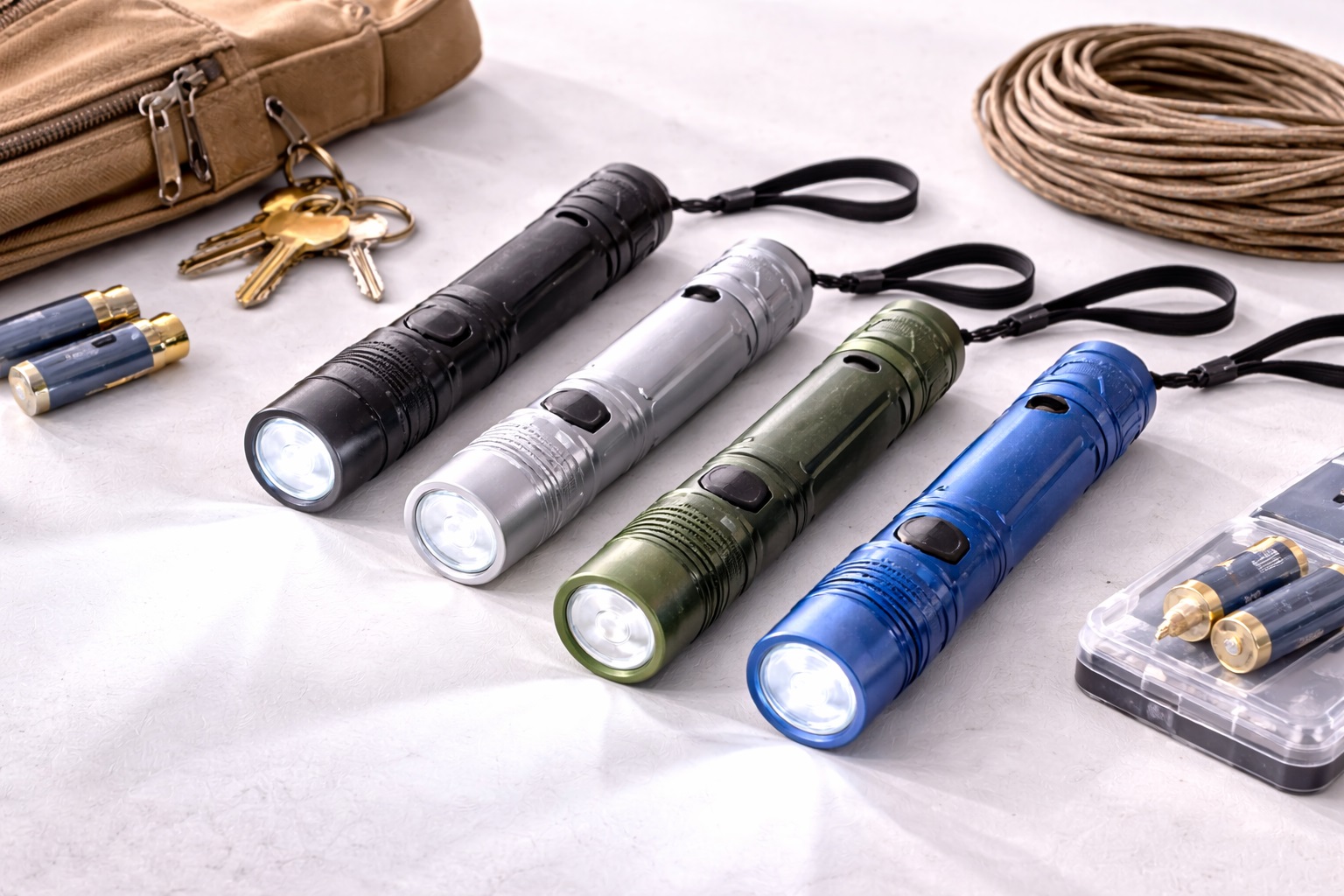
Best Budget Flashlight in 2026
"Budget" does not have to mean "disposable." A genuinely good budget flashlight gives you dependable brightness, a body that survives being dropped or rained on, and battery logistics that do not cost more than the flashlight itself over time. The trap most shoppers fall into is buying the cheapest light on the shelf, only to replace it twice a year because the switch fails or the beam dims within weeks. The smarter approach is thinking about value rather than sticker price alone, since a slightly higher upfront cost can easily pay for itself if it means years of reliable use instead of months. Value, in other words, is a calculation that plays out over the entire life of the product, not just at checkout.
This guide looks at eight widely available flashlights through that value-first lens. Some are genuinely inexpensive up front; others cost more initially but earn their place through durability, rechargeable savings, or output that outperforms cheaper alternatives by a wide margin. We broke down where each one delivers the strongest return for the money, whether you are outfitting a household on a tight budget or simply looking to avoid buying the same flashlight three times in three years. We also noted where a slightly higher price genuinely earns its keep versus where it does not.
Below you will find detailed reviews of each pick, a buying guide focused on getting real value out of a flashlight purchase, and answers to the questions shoppers most often ask when trying to balance price against performance. Use it as a framework for making a confident decision rather than guessing based on price alone.
Top 8 Best Budget Flashlights (Detailed Reviews)
1. Streamlight ProTac HL – Best For Long-Term Value Despite a Higher Upfront Cost
Streamlight is a name professionals reach for, and while the ProTac HL is priced higher than most of the other lights on this list at around $80, its value case is built on longevity rather than a low sticker price. Its multi-fuel capability means it can run on more than one type of battery, which reduces the odds you are ever stuck buying a specialty battery at a premium price from a convenience store. That flexibility alone can save money compared to a light locked into one proprietary cell type. Built to withstand rough handling, it is the kind of flashlight that can realistically outlast several cheaper models bought in succession, which is where its real value proposition lies for buyers thinking beyond the initial purchase price. Households that have already replaced a cheaper flashlight once or twice often find themselves gravitating toward this kind of longer-term thinking.
- Pros:
- Premier build quality built to professional standards
- Multi-fuel capability adds flexibility for battery sourcing
- Reputable brand trusted across professional use cases
- Cons:
- Higher price point than most compact budget lights
- Limited color options compared to consumer-focused brands
Best For: Buyers who are willing to spend more upfront in exchange for a flashlight built to last significantly longer, and who use a flashlight often enough to justify that investment.
Why We Recommend It: True value is not always about the lowest price tag; a durable light you buy once often costs less over several years than replacing a cheaper one repeatedly, and it saves you the hassle of shopping again.
2. Anker Bolder LC90 – Best For High Lumens Per Dollar
Anker built its reputation on efficient, well-engineered electronics, and the Bolder LC90 applies that same philosophy to lighting. At around $30, its 900 lumens of brightness delivers strong output relative to its price, making it one of the better options here if raw brightness per dollar is your priority. That kind of output would often cost significantly more from a boutique flashlight brand, especially once you factor in the premium branding many niche manufacturers charge for similar performance, and Anker's broader reputation for reliable electronics adds confidence that the light will perform consistently rather than dimming or failing prematurely. For buyers comparing lumens-per-dollar across the entire lineup, this model is consistently one of the stronger performers.
- Pros:
- Premier build quality from a brand known for reliable electronics
- 900 lumens brightness stands out relative to its price point
- Reputable brand with strong customer support infrastructure
- Cons:
- Higher price point than the most basic keychain lights
- Limited color options compared to lifestyle-focused brands
Best For: Budget-conscious buyers who want the most brightness they can get without stepping up to a premium-priced flashlight, especially for outdoor or wide-area lighting needs.
Why We Recommend It: Getting genuinely strong output at a moderate price is exactly the kind of value equation budget-minded shoppers are looking for, without the compromises that often come with the cheapest lights.
3. Maglite LED Flashlight – Best For Budget-Friendly Classic Reliability
Maglite has spent decades building trust around dependable, no-nonsense performance, and its LED Flashlight brings that same reliability to a budget-friendly price of around $25. Its beam focus adjustment lets you switch between a wide flood and a tighter spot beam, giving you two tools in one without paying for two separate lights, which is a meaningful savings compared to buying a dedicated flood light and a dedicated spotlight separately. For buyers who remember older Maglite models still working years after purchase, the brand's reputation for longevity is itself a form of value, since a light that keeps working means you are not back at the store buying a replacement every few months. That reputation was built over generations of everyday users, not marketing claims.
- Pros:
- Premier build quality from a long-trusted brand
- Beam focus adjustment adds real everyday versatility
- Reputable brand with decades of consumer trust
- Cons:
- Higher price point than the most basic keychain lights
- Limited color options relative to newer competitors
Best For: Buyers who want a genuinely affordable flashlight from a brand with a long track record of durability behind its name.
Why We Recommend It: A budget price paired with a reputation for actually lasting is a rare and valuable combination in this category, and one that pays off the longer you own it.
4. GearLight LED Tactical – Best For Rock-Bottom Entry Price
GearLight built the LED Tactical specifically around affordability, and at around $20 it is the least expensive option on this list, making it easy to buy multiples without a significant financial commitment. Its five selectable light modes mean you are not sacrificing versatility for the low price, covering everything from a battery-conserving glow to a bright, attention-grabbing strobe, all accessible through a straightforward button sequence that does not take long to learn. For shoppers who want to outfit a household with several flashlights, or simply want a low-risk way to try a new brand, this is the most accessible entry point in the lineup. Even at this price, it does not feel like a compromise compared to the pricier options on this list.
- Pros:
- Premier build quality relative to its price point
- Five distinct light modes cover most everyday scenarios
- Reputable brand with a large, established user base
- Cons:
- Higher price point than true bargain-bin disposable lights
- Limited color and finish options compared to rivals
Best For: Shoppers who want the lowest possible entry price without dropping down to genuinely disposable-quality lights that rarely survive more than a few uses.
Why We Recommend It: Five modes packed into the most affordable light here means you are not paying extra for versatility that pricier models charge a premium for, which is a genuinely good deal.
5. Fenix PD35 V3.0 – Best For Value Through Long-Term Durability
Fenix built the PD35 V3.0 with a tough aluminum body designed to handle drops and rough handling, and while its roughly $90 price makes it the most expensive light on this list, its value case rests on how long it is likely to last compared to cheaper alternatives. A flashlight that survives years of regular use, including drops and outdoor exposure, can end up costing less per year of ownership than a budget light replaced annually, once you account for every replacement purchase along the way. For buyers who think in terms of cost-per-year rather than sticker price, this is worth serious consideration. Its aluminum construction also means it holds up to the kind of accidental drops that would crack a cheaper plastic-bodied light.
- Pros:
- Premier build quality with a genuinely rugged aluminum housing
- Tough aluminum body resists everyday wear and impact
- Reputable brand trusted by outdoor and tactical communities
- Cons:
- Higher price point than most compact budget lights
- Limited color options compared to consumer-focused competitors
Best For: Buyers who calculate value in terms of cost per year of ownership rather than the initial purchase price alone, and who use their flashlight in demanding conditions.
Why We Recommend It: Durability that spans years, rather than months, is one of the most overlooked forms of value in the flashlight category, and it is exactly what this model delivers.
6. Olight S2R Baton II – Best For Long-Term Battery Savings
Olight's S2R Baton II uses magnetic USB charging instead of disposable batteries, and while its roughly $70 price is higher than several other options here, the ongoing savings from not buying replacement batteries can add up meaningfully over time, particularly for anyone who currently burns through several sets of batteries a year. For households that use a flashlight frequently, the cost of disposable batteries alone can approach the price difference between this light and a cheaper battery-powered alternative within a year or two. Its compact, rechargeable design also reduces battery waste, which some budget-conscious buyers factor into their overall value calculation. Fewer trips to buy replacement batteries also means fewer chances to forget and end up with a dead flashlight when you need it.
- Pros:
- Premier build quality with a refined, pocket-friendly shape
- Magnetic charging removes the ongoing cost of disposable batteries
- Reputable brand known for rechargeable EDC innovation
- Cons:
- Higher price point than disposable-battery alternatives upfront
- Limited color options across the lineup
Best For: Frequent flashlight users who want to avoid the recurring cost of disposable batteries over time and prefer a predictable charging routine.
Why We Recommend It: For heavy users, the math on a rechargeable light often works out favorably once you account for battery costs avoided over a year or more of regular use.
7. ThruNite Archer 2A – Best For Balanced Price-to-Feature Ratio
ThruNite priced the Archer 2A at around $35, positioning it as a middle-ground option that balances cost against genuinely useful features. Its dual switch design, with both a tail switch and a side switch, is the kind of thoughtful detail that is often missing from cheaper lights, while its AA battery compatibility keeps ongoing costs low and replacements easy to find, so you are never stuck searching for an obscure battery size at the worst possible time. For buyers who do not want to go as cheap as possible but also do not want to spend on a premium model, this sits in a sensible middle tier. It is a solid choice for buyers who have outgrown the cheapest options but are not ready to spend on a premium light.
- Pros:
- Premier build quality with a refined dual-switch layout
- Dual switch design supports quick, intuitive one-handed use
- Reputable brand respected within the flashlight enthusiast community
- Cons:
- Higher price point than basic single-switch lights
- Limited color options outside of standard finishes
Best For: Buyers who want thoughtful design features without paying premium prices for them, especially fans of intuitive, well-placed switches.
Why We Recommend It: A dual-switch layout and AA compatibility deliver a noticeably better experience than the cheapest lights, without the price tag of the priciest ones, striking a fair middle ground.
8. Coast PX1 LED – Best For Mid-Range Value Seekers
Coast's PX1 LED sits at around $40, and its value comes primarily from beam quality rather than headline brightness numbers. Its pure beam optics produce a clean, well-focused circle of light, which means you often get more usable illumination from this light than from a cheaper model boasting a higher lumen count but a poorly controlled, scattered beam that wastes much of its output. For buyers who have been burned by budget lights that looked good on paper but performed poorly in practice, the PX1 LED's focus on optical quality is a meaningful differentiator. It is a reminder that beam engineering deserves as much attention as the number printed on the box.
- Pros:
- Premier build quality with attention to optical clarity
- Pure beam optics reduce glare and improve usable light
- Reputable brand known for consistent quality control
- Cons:
- Higher price point than basic single-mode lights
- Limited color options compared to some competitors
Best For: Buyers who have learned that raw lumen counts do not always translate to real-world usable light and now prioritize beam quality instead.
Why We Recommend It: Beam quality is an underrated form of value; a well-focused light can outperform a "brighter" but poorly designed competitor in actual use, especially at night.
Buying Guide: How to Choose the Best Budget Flashlight
Shopping on a budget does not mean ignoring quality; it means being deliberate about where your money goes. The following considerations are built specifically around getting real, lasting value from a flashlight purchase rather than simply chasing the lowest price tag on the shelf. Walking through each factor before you buy takes only a few minutes and can save you from a frustrating early replacement.
1. Total Cost of Ownership, Not Just Purchase Price
A cheap flashlight that needs replacing every few months can end up costing more over a year or two than a slightly pricier model that lasts. Consider battery costs, expected lifespan, and warranty coverage together rather than looking at the sticker price alone. Adding up these hidden costs often changes which option looks like the better deal, sometimes dramatically so once you extend the comparison out several years.
2. Battery Type and Ongoing Expense
Disposable batteries add up over time, especially for frequent users, while rechargeable models carry a higher upfront cost but lower ongoing expense. Calculate roughly how often you will use the light to estimate which approach saves more money over a year. Occasional users may never recoup a rechargeable model's higher starting price, so honest usage estimates matter more than assumptions.
3. Build Quality Versus Headline Specifications
A flashlight advertising an impressively high lumen count is not automatically a good value if the switch fails after a few weeks or the body cracks after a minor drop. Prioritize construction quality alongside brightness claims, since a broken flashlight offers zero lumens regardless of what the packaging promised. Reading reviews that specifically mention long-term durability can help separate marketing from reality.
4. Brand Track Record for Durability
Brands with a long history in the flashlight category have generally earned that longevity through consistent product quality. A slightly higher price from an established brand often reflects real durability rather than just marketing, and that history is often visible in customer reviews spanning many years. Newer brands can still be excellent, but they carry more uncertainty.
5. Number of Modes Relative to Price
Some budget flashlights pack in multiple brightness levels and special modes at a low price, effectively giving you more functionality per dollar than a single-mode competitor at a similar cost. That extra functionality can replace the need for a second, specialized light entirely, which itself represents real savings.
6. Warranty and Return Policy
A warranty is a meaningful part of a budget flashlight's real value, since it protects your purchase against early failure. Compare warranty length and terms across brands before assuming the cheapest option is the best deal, since a short or unclear warranty can be a red flag. A lifetime or multi-year warranty often signals genuine manufacturer confidence.
7. Beam Quality Versus Raw Lumen Count
A well-focused beam often provides more usable light than a higher lumen count with poor optics. Do not assume the flashlight with the biggest brightness number on the packaging is automatically the better value, since beam control matters just as much as raw output. Reviews and demonstration videos can reveal beam quality far better than a spec sheet ever will.
8. Expected Frequency of Use
A flashlight used daily justifies a higher budget than one kept for rare emergencies. Match your spending to how much genuine use you expect to get out of the light over its lifetime, rather than buying based on features you may rarely touch. Being honest with yourself here prevents both overspending and underspending.
9. Availability of Replacement Parts or Batteries
A budget flashlight that uses common, widely available batteries or parts tends to be cheaper to maintain over time than one requiring a specialty battery that is harder to find or more expensive. This convenience is easy to overlook until you actually need a replacement, often at an inconvenient moment.
10. Resale or Long-Term Usefulness
A well-built flashlight from a reputable brand tends to retain more practical usefulness over time, whether that means it is still functioning years later or remains a light you would feel comfortable passing along to a family member. That kind of longevity is difficult to put a price on.
11. Bulk or Multi-Pack Buying Opportunities
Some budget-friendly brands offer multi-packs at a lower per-unit cost, which can be a smart way to outfit an entire household with flashlights without paying full individual retail price for each one, especially for larger families.
12. Balancing Price Against Genuine Necessity
Not every buyer needs the most fully-featured flashlight available. Consider honestly which features you will actually use before paying extra for capabilities that sound appealing but rarely get used in practice, since unused features add cost without adding value.
13. Reading Beyond the Price Tag
Comparing reviews, warranty terms, and brand reputation alongside price gives a fuller picture of value than price comparison alone. The cheapest option upfront is not always the cheapest option over the life of the product, so take the extra few minutes to compare before deciding.
Frequently Asked Questions
Is a premium flashlight ever worth it over a cheaper one?
Yes, in many cases. Higher-end models often offer better durability, more consistent output, and superior materials compared to budget alternatives, which can translate to genuine long-term savings if it means avoiding repeated replacements. The right choice ultimately depends on how often you plan to use the light.
How do I maintain a budget flashlight to make it last longer?
Keep it clean and dry, check battery connections periodically for corrosion, and avoid leaving batteries in the light for extended periods of disuse, since this is one of the most common causes of early failure in budget models. A quick wipe-down after outdoor use also helps.
Are rechargeable flashlights actually cheaper in the long run?
For frequent users, often yes. While the upfront cost is higher, the savings from not buying disposable batteries repeatedly can offset that difference within a year or two of regular use. Infrequent users may not see the same payoff.
What is a reasonable price range for a good budget flashlight?
Many capable, well-reviewed flashlights fall between roughly $20 and $40, offering solid brightness, multiple modes, and decent build quality without stepping into premium territory. Prices above that range typically buy added durability or convenience features.
Do cheaper flashlights sacrifice brightness?
Not necessarily. Many affordable flashlights now offer strong output thanks to efficient LED technology, though build quality and beam focus can vary more at lower price points than brightness alone. It pays to read reviews focused on real-world performance rather than specs alone.
Should I buy multiple cheap flashlights or one expensive one?
This depends on your needs. Multiple affordable lights offer redundancy across different locations, while a single higher-quality light may serve better as a primary, frequently used tool. Many households find a mix of both works best.
How can I tell if a budget flashlight is good quality before buying?
Look at brand reputation, warranty terms, and construction details like body material and switch design, since these factors often predict durability better than price or advertised lumen count alone. Customer reviews mentioning long-term use are especially telling.
Do budget flashlights come with warranties?
Many do, though coverage varies significantly by brand. Checking warranty length and terms before purchasing is a simple way to gauge how confident a manufacturer is in its own product, and it can save money if something fails early.
Is it worth paying more for a metal body over plastic?
For most buyers, yes, since metal bodies tend to be more durable and better at dissipating heat, which can extend the effective lifespan of the flashlight compared to a plastic housing. The added weight is usually a minor trade-off.
How many lumens should I expect from a budget flashlight?
Many budget and mid-range flashlights offer several hundred lumens or more on their brightest setting, which is plenty for most everyday and emergency uses without needing a premium model. Higher lumen counts matter more for outdoor or long-distance use.
What is the biggest mistake people make when buying a budget flashlight?
Focusing exclusively on the lowest price or the highest advertised lumen count, while ignoring build quality, battery type, and brand reputation, which are often better predictors of long-term value than either number alone.
Can a budget flashlight still be genuinely durable?
Yes. Several budget-friendly brands have built strong reputations for durability at accessible prices, proving that low cost and reliability are not mutually exclusive when you choose carefully and pay attention to reviews.
How do I know when it's time to replace a budget flashlight?
Signs include dimming output that does not improve with fresh batteries, a switch that no longer responds reliably, or visible cracks in the housing that could let in moisture or dust. Any of these is a reasonable signal to start shopping for a replacement.
Final Verdict
- Top Pick: Streamlight ProTac HL for overall excellence.
- Budget Choice: Maglite LED Flashlight for great value.
- Premium Choice: Anker Bolder LC90 for high-end features.
Each of these three picks approaches value from a different angle, from long-term durability to lumens-per-dollar to sheer affordability, so the right choice ultimately comes down to how you weigh those trade-offs against your own budget and usage habits.
The best budget flashlight is not always the cheapest one on the shelf; it is the one that delivers the most reliable performance for what you actually pay over the life of the product. Whether that means a low-cost, multi-mode light for casual use or a slightly pricier model built to outlast several cheaper replacements, thinking in terms of long-term value rather than sticker price alone will get you a far better result. Take a few minutes to weigh battery costs, build quality, and brand reputation together, and you will end up with a flashlight that earns its price rather than one you regret within the year.