Best Pocket-Size Multi-tool in 2026
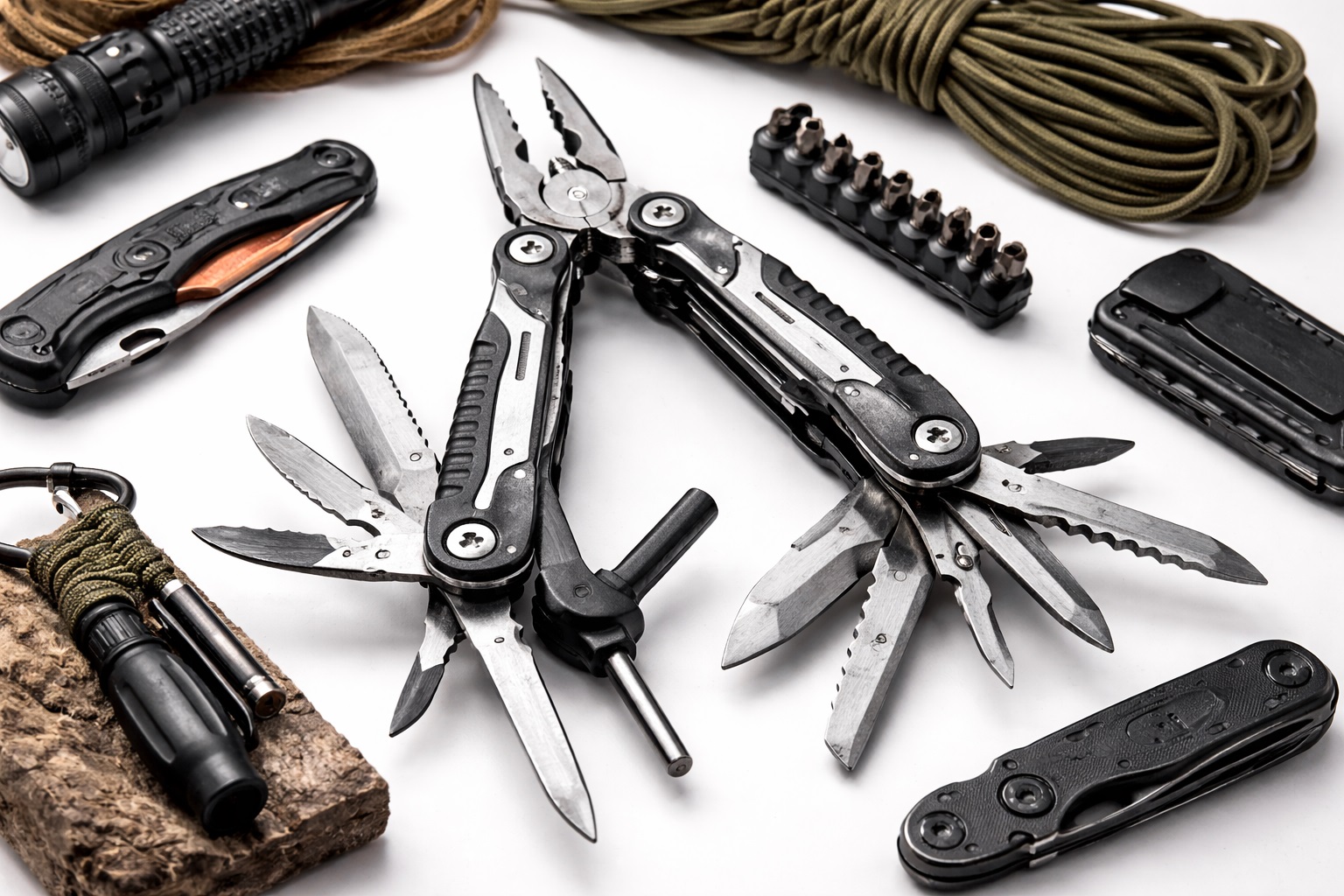
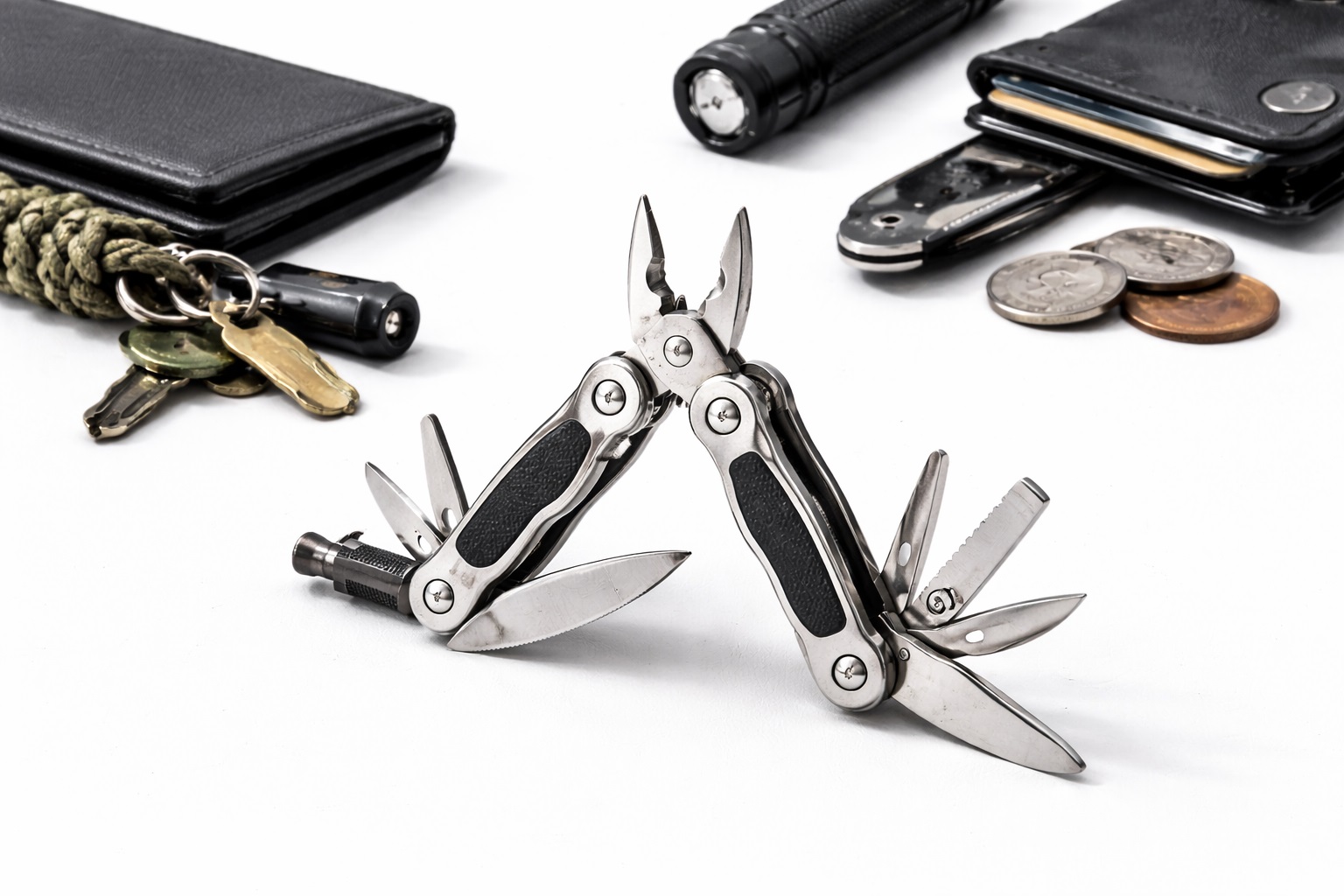
A multi-tool meant for travel has to clear a different bar than one that mostly stays in a garage drawer or a glovebox. It needs to fold down small enough to disappear into a daypack side pocket or a jacket without printing through the fabric, survive the bumps of checked luggage, and still deliver enough real function, cutting, gripping, driving a screw, to handle the small emergencies that come up on the road: a broken zipper pull, a loose eyeglass screw, a stubborn package seal at a hostel. In 2026, the pocket-size category spans genuinely tiny minimalist tools up to compact full-featured designs that manage to stay travel-friendly despite a longer tool list.
This guide compares eight widely available multi-tools from Leatherman, Victorinox, Gerber, and SOG, evaluated specifically for compact travel: how small each one folds, how it holds up to the wear of being packed and unpacked repeatedly, and how it fits into the realities of modern travel, including airport security rules on blades and the practical limits of packing light. Not every capable multi-tool is a good travel companion, and we call out where a model's strengths lie elsewhere instead of pretending otherwise.
Pocket size, tool count, and price all pull in different directions here, so the right pick depends heavily on how and where you travel. Below you will find detailed reviews of all eight models with honest size and travel-context notes, a buying guide covering the decisions that matter most for compact travel use, and answers to the questions travelers ask most often before choosing a multi-tool for their next trip.
One point worth addressing directly before the reviews: any multi-tool with a knife blade is subject to airport security restrictions in most countries and generally must travel in checked luggage rather than a carry-on. That single fact shapes how useful "pocket-size" really is for air travel specifically, versus road trips, train travel, or once you have already arrived at your destination. Keep your actual travel style in mind as you read through the reviews below.
Top 8 Best Pocket-Size Multi-tool Picks (Detailed Reviews)
1. Leatherman Wave Plus – Best For All-Around Travel Utility
The Wave Plus is not the smallest tool in this lineup, but its 17-in-1 functionality, pliers, wire cutters, a saw, scissors, multiple blades, and a full driver set, means it rarely leaves a traveler needing a second tool for whatever comes up on the road. At around $120, it costs more than the entry-level picks here, and it does fold to a moderately larger size than the true pocket tools in this roundup. For travelers who prioritize having the right tool over squeezing into the absolute smallest pocket footprint, particularly on road trips or checked-bag travel where blade restrictions matter less, it remains a strong all-around choice.
- Pros:
- Broad 17-in-1 tool selection covers most travel mishaps
- Long track record and wide accessory support
- Reputable brand with premier build quality
- Cons:
- Larger folded size than dedicated pocket tools
- Two-handed plier opening
Best For: Travelers who want one capable tool that covers nearly any small repair, even if it is not the most compact option.
Why We Recommend It: Few tools pack this much genuine functionality into one frame, useful when you cannot easily buy a replacement tool on the road.
2. Victorinox Swiss Army Champ – Best For Tool Variety on the Road
The Swiss Army Champ packs 33 tools into a still-compact folding frame, which suits travelers who are not sure exactly what small task will come up during a trip, screwdrivers, scissors, a magnifier, a pen, a saw, and more. At around $100, it sits mid-pack on price. Its higher tool count does mean a thicker folded profile than the more minimalist options here, worth weighing against how many of those 33 implements you would actually use during a typical trip versus how much pocket space you have to spare in your travel bag.
- Pros:
- 33 tools cover an unusually wide range of travel tasks
- Compact folding profile relative to its tool count
- Reputable, well-established brand
- Cons:
- Thicker profile than minimalist tools
- Higher price than the most basic options
Best For: Travelers who want maximum tool variety on hand for unpredictable situations abroad.
Why We Recommend It: Few tools in this class offer this much functional variety in a single folding frame small enough to pack easily.
3. Gerber Center-Drive – Best For Travelers Handling Gear Repairs
The Center-Drive's defining feature is its full-size driver axis, which keeps standard bits in-line with the handle for real torque, useful for travelers repairing a loose bike rack bolt, a broken suitcase wheel bracket, or camping gear picked up along the way. At around $110, it sits in the middle of this lineup on price, though it is also one of the bulkier tools here, better suited to checked luggage or a larger travel bag than a tight jacket pocket. For travelers who specifically deal with gear and hardware repairs on the road, the driver performance is a real advantage worth the added size.
- Pros:
- Full-size, in-line driver axis for real torque
- Premier build quality
- Reputable brand backing
- Cons:
- Bulkier profile than pocket-focused tools
- Higher price than entry-level tools
Best For: Travelers who regularly need to drive screws into gear, luggage hardware, or bike and outdoor equipment repairs.
Why We Recommend It: The in-line driver axis solves a real limitation of most multi-tool bit drivers, worth the added bulk for the right traveler.
4. Leatherman Free P4 – Best For Compact One-Hand Access While Traveling
The Free P4's magnetic opening system lets every tool, not just the pliers, be accessed and locked with one hand, which is genuinely convenient while traveling when your other hand is often full with a bag, a phone, or a ticket. At around $150, it is the most expensive tool in this lineup, but it folds to a relatively slim, snag-free profile for how much it packs in. Leatherman's reputation for durable, made-to-last hardware is well established, making it a reasonable investment for frequent travelers who will use the tool often enough to justify the price.
- Pros:
- Magnetic one-hand access to every tool
- Slim, flush-folding profile for its tool count
- Premier build quality from a reputable brand
- Cons:
- Highest price point in this lineup
- Limited color options
Best For: Frequent travelers who want fast one-hand access to a full toolset and are willing to pay for it.
Why We Recommend It: No other tool here matches its one-hand access to the full toolset in such a compact folded package.
5. Gerber Suspension-NXT – Best For Budget Travel Companion
The Suspension-NXT gives travelers a genuine one-hand-opening plier tool at the lowest price in this lineup, around $40, without the bulk of the full-size options here. The spring-loaded pliers snap open with a flick of the wrist, useful when you are managing luggage or a map with your other hand, and the compact frame fits easily into a daypack side pocket or jacket. The stainless construction holds up reasonably well for the price, and a nylon sheath is included for belt or bag-strap carry.
- Pros:
- Spring-loaded, one-hand pliers deployment
- Lowest price point in this lineup
- Compact enough for a daypack side pocket
- Backed by a well-known brand
- Cons:
- Fewer specialty bits than the pricier models here
- Handle scales feel plainer than the premium tools
Best For: Budget-conscious travelers who want a compact, dependable tool without a large outlay.
Why We Recommend It: One-hand pliers deployment at this price point is hard to match elsewhere in this lineup.
6. SOG PowerPint – Best For Small Footprint, Strong Grip
The PowerPint pairs a genuinely small, travel-friendly footprint with SOG's compound leverage technology, which uses a gearing effect in the plier jaws to multiply hand force well beyond what its compact size suggests. At around $50, it is one of the more affordable options here, making it an easy tool to toss into a travel bag without a second thought. The driver bit selection is smaller than the full-size tools, but for travelers who mostly need strong pliers for the odd repair, it delivers real capability in a small package.
- Pros:
- Compact, lightweight frame ideal for packing
- Compound leverage pliers add real gripping force
- Affordable price relative to its capability
- Cons:
- Smaller bit selection than full-size rivals
- Limited color options
Best For: Travelers who want strong pliers in a genuinely small package without paying premium prices.
Why We Recommend It: The compound leverage mechanism gives it a grip strength advantage that punches above its compact size and price point.
7. Victorinox SwissTool Spirit – Best For Premium Compact Comfort
Victorinox, the Swiss company best known for its classic Swiss Army pocket knives, extends that same design philosophy into the SwissTool Spirit, which folds all its implements internally for a clean, snag-free profile well suited to travel bags and jacket pockets. Its ergonomic stainless steel handle is comfortable to hold during the occasional longer repair session on the road, and the stainless body resists the corrosion that humid destinations and coastal travel can cause over time. At around $135, it sits toward the premium end of this lineup, reflecting the Swiss-made fit and finish the brand is known for.
- Pros:
- Clean, snag-free folded profile for travel bags
- Swiss-made build and finish quality
- Corrosion-resistant construction for humid destinations
- Cons:
- Higher price point
- Limited color options
Best For: Travelers who want a comfortable, well-finished tool for occasional use during trips.
Why We Recommend It: The ergonomic handle and corrosion resistance make it a dependable choice for travel to humid or coastal destinations.
8. Leatherman Skeletool – Best For The Smallest, Lightest Travel Pick
The Skeletool strips a multi-tool down to essentials, pliers, wire cutters, a knife blade, a bottle opener, and a bit driver, using a minimalist lightweight design with skeletonized handles that shed weight and bulk. For travelers packing light, that translates directly into one of the smallest, most pocket-friendly profiles in this entire lineup, without giving up the core functions that matter most on the road: cutting, gripping, and driving a screw. At around $75, it costs less than the full-featured Wave Plus and Free P4, reflecting its more focused tool set rather than any drop in build quality.
- Pros:
- Smallest, most pocket-friendly profile in this lineup
- Covers the core functions travelers actually use
- Premier build quality from a reputable brand
- Cons:
- Fewer total tools than full-size competitors
- Higher price than the most basic budget option
Best For: Travelers who want the smallest possible footprint without losing core cutting and gripping functions.
Why We Recommend It: It delivers the core travel-relevant functions in one of the smallest, lightest packages available.
Buying Guide: How to Choose the Best Pocket-Size Multi-tool for Travel
Choosing a travel multi-tool means balancing genuine compactness against enough real function to be worth packing at all. The sections below walk through the factors that matter most once you take a tool out of the store and onto the road, where you cannot easily swap it for something else if it turns out to be the wrong fit.
1. Airport Security and Blade Restrictions
Any multi-tool with a knife blade generally must travel in checked luggage rather than a carry-on under current airport security rules in most countries. If you travel primarily by air with only a carry-on, factor this into how useful the tool will actually be during your trip.
2. Folded Size vs. Marketing Claims
"Compact" and "pocket-size" are used loosely in marketing. Check actual folded dimensions rather than relying on category labels, since some tools marketed as pocket-friendly are still noticeably bulkier than others in this same review.
3. Material and Build Durability
Look for stainless steel construction and solid pivot points. Travel exposes a tool to more handling, temperature changes, and occasional rough treatment in luggage than a tool that mostly stays at home.
4. Weight for Packing Light
Every gram matters more when you are also carrying clothes, electronics, and other travel gear. A lighter tool like the Skeletool is easier to justify packing than a heavier full-size tool if you are already watching your total luggage weight.
5. One-Hand Opening for Quick Access on the Go
Tools like the Free P4 and Suspension-NXT let you deploy the pliers or other implements with one hand, useful when your other hand is occupied with luggage, a ticket, or a map while traveling.
6. Local and International Blade Laws
Blade length and locking mechanism rules vary by country and even by region within some countries. It is worth researching local regulations at your destination before packing a multi-tool with a knife blade for international travel.
7. Number of Tools vs. Luggage Space
A 33-tool design sounds appealing for unpredictable situations, but it is worth asking how many of those implements you would actually use during a typical trip versus how much space and weight you can spare in your bag.
8. Sheath, Clip, and Case Options for Travel
A slim nylon sheath or pocket clip packs more efficiently than a bulky case. If minimizing packed volume matters to you, check what carry option ships with the tool before buying.
9. Corrosion Resistance for Humid Destinations
Stainless steel resists rust better than coated carbon steel, which matters if your travels take you to humid, tropical, or coastal destinations. Prioritize corrosion-resistant hardware if that describes your typical trip.
10. Ergonomics for Occasional Use While Traveling
A travel tool is often used in short bursts rather than continuously, so comfort matters less than for daily carry, but a handle that is painful to grip firmly can still make an occasional repair harder than it needs to be.
11. Brand Warranty and Repairability
Established multi-tool brands typically back their products with warranties covering manufacturing defects. This matters if you plan to keep and travel with the same tool for years rather than replace it after one trip.
12. Price vs. Long-Term Travel Value
A tool you will use on every trip for years justifies a higher price more easily than one you might use only occasionally. Consider how often you actually travel and how demanding your repairs typically are before deciding how much to spend.
13. Packing Strategy: Carry-On vs. Checked Bag
If you travel with only a carry-on, a bladed multi-tool will need to go in checked luggage or be left at home, which may shift your priorities toward a tool's other features if you rarely check a bag. Travelers who regularly check luggage have more flexibility to choose based on capability alone, and it is worth deciding on this strategy before you buy rather than discovering the restriction at a security checkpoint.
Frequently Asked Questions
Can I bring a pocket-size multi-tool on a flight?
Multi-tools with a knife blade generally must go in checked luggage rather than a carry-on, since airport security rules restrict bladed tools in the cabin in most countries. Check current airline and destination-country guidance before you travel with one.
How do I pack a multi-tool for international travel?
Pack it in checked luggage if it has a blade, and research the destination country's specific rules on carrying knives or multi-tools, since regulations vary significantly and some countries restrict certain blade types or lengths entirely.
Is a premium multi-tool worth it for travel?
If you travel often and rely on the tool for real repairs, yes. Higher-end models typically offer stronger materials, smoother mechanisms, and longer-lasting hardware than budget alternatives, which pays off over many trips.
How do I maintain my multi-tool while traveling?
Wipe it down and make sure it is dry before repacking it, especially after exposure to humidity, rain, or salt air near the coast. Check the pivot points occasionally and add a drop of lubricant if the mechanism feels stiff.
What is the difference between a multi-tool and a travel pocket knife?
A pocket knife is built primarily around a folding blade, while a multi-tool combines pliers, drivers, and other implements alongside a blade, making it more versatile for travel repairs but usually bulkier than a simple knife.
How many tools do I actually need while traveling?
Most travelers get the most use out of pliers, a knife blade, a couple of screwdriver bits, and scissors. Additional implements can help on longer or more remote trips, but the core functions cover most everyday travel mishaps.
Are one-hand-opening pliers necessary for travel?
They are not strictly necessary, but they are convenient when your other hand is occupied with luggage or documents. Two-handed designs still work fine; one-hand opening is a comfort feature rather than a requirement.
Do multi-tools rust in humid travel climates?
Carbon steel components can rust if exposed to humidity or salt air repeatedly, while stainless steel is far more resistant, though not fully immune to corrosion over years of exposure. Drying the tool after use helps regardless of the material.
What is the average lifespan of a travel multi-tool?
A well-made multi-tool from an established brand can last many years of travel use, provided it is kept reasonably clean and dry. Cheaper, poorly finished tools tend to develop loose pivots or dull blades much sooner.
Should I choose stainless steel or a coated finish for travel?
Stainless steel generally resists corrosion better over the long run, especially for travelers visiting humid or coastal destinations, while coated finishes can wear through with heavy handling and expose the base metal to moisture.
Do multi-tool brands offer warranties that apply internationally?
Many established brands back their multi-tools with warranties covering manufacturing defects, though coverage and service options can vary by country. It is worth checking the specific terms before relying on warranty service while abroad.
Is a heavier multi-tool always more durable for travel?
Not necessarily. Weight often comes from a larger tool count rather than stronger core components. A lighter tool with quality steel in its pliers and blade can be just as durable as a heavier one for typical travel repairs.
Can a multi-tool replace hostel or hotel tools?
For minor fixes, yes, a good multi-tool covers cutting, gripping, and basic driving tasks well. For anything requiring specialized equipment, local hardware stores or hotel maintenance staff remain the more reliable option.
How do I sharpen the knife blade while traveling?
A small sharpening stone or pocket sharpener designed for short blades packs easily and works well on the road. Maintain the existing edge angle and clean the blade afterward to remove any metal filings before repacking it.
What should I look for in the pliers specifically for a travel tool?
Check that the jaws close flush with no visible gap, since a gap usually means weaker gripping force. Wire cutter inserts should be replaceable on higher-end tools, extending the tool's useful life across many trips.
Is it better to pack one full-featured tool or two smaller ones while traveling?
For most travelers, one well-chosen tool is simpler to manage and pack than splitting functions across two smaller tools. A backup only makes sense for remote or extended trips where losing your primary tool would be a real problem.
Do I need a multi-tool if I already carry a travel knife?
A pocket knife covers cutting tasks well, but a multi-tool adds pliers, drivers, and often scissors that a knife cannot replicate, making it more useful for the varied small repairs that come up while traveling.
What is the best way to store a multi-tool between trips?
Store it dry, lightly oiled at the pivots, and folded closed in its sheath or a drawer away from moisture. Avoid leaving it packed in a damp travel bag for long stretches between trips, since trapped humidity is a common cause of rust.
Can beginners carry a full-featured multi-tool safely while traveling?
Yes, though it helps to open and test each implement at home before your first trip so you are familiar with how the locks and folding mechanisms work before relying on it in an unfamiliar place.
Will a pocket-size multi-tool set off metal detectors at other checkpoints?
Yes, a steel multi-tool will typically trigger a metal detector at courthouses, government buildings, and some tourist attractions, not just airports. It is worth planning ahead and knowing where you can safely stash it before visiting a security-screened location.
Does travel insurance cover a lost or confiscated multi-tool?
Some travel insurance policies cover lost or stolen personal items, though a confiscated item, taken because it violated a security rule you were aware of or should have checked, is typically excluded. Review your specific policy terms if this matters to you.
Should I buy a cheaper backup multi-tool for trips where confiscation is a risk?
If you are traveling somewhere with unclear or strict rules on bladed tools, bringing a lower-cost tool you would not mind losing to confiscation can be a reasonable way to hedge against that risk, rather than risking a premium tool.
Do multi-tool cases add meaningful bulk when packing for a trip?
A slim nylon sheath adds minimal bulk, while a rigid leather case can noticeably increase the packed volume. If you are optimizing for a small travel footprint, check the included case before assuming the tool itself represents the full packed size.
Final Verdict
- Top Pick: Leatherman Skeletool, for the best balance of a small travel footprint and genuine core functionality.
- Budget Choice: Gerber Suspension-NXT, the most affordable tool here that still fits easily into a daypack or jacket pocket.
- Premium Choice: Leatherman Free P4, the priciest option, justified by its compact, one-hand-accessible full toolset.
There is no single "best" pocket-size multi-tool for every trip, but matching the tool to how you actually travel, air travel with only a carry-on, road trips, or extended international travel with checked luggage, will get you closer to the right pick than chasing the smallest folded size alone. Whichever model you choose from this lineup, remember that a multi-tool with a knife blade generally needs to travel in checked luggage on flights, so plan your packing accordingly. For most travelers, a compact tool with solid pliers and a couple of reliable driver bits, like the Skeletool or Suspension-NXT, will handle the vast majority of small repairs that come up on the road without weighing down your bag. Frequent flyers who mostly carry on their luggage may find that the practical usefulness of any bladed multi-tool is limited to the destination end of a trip, in which case a tool's overall capability may matter more than its exact folded size, since it will spend most of the flight itself packed away rather than in a pocket.