Best Silk Eye Mask in 2026
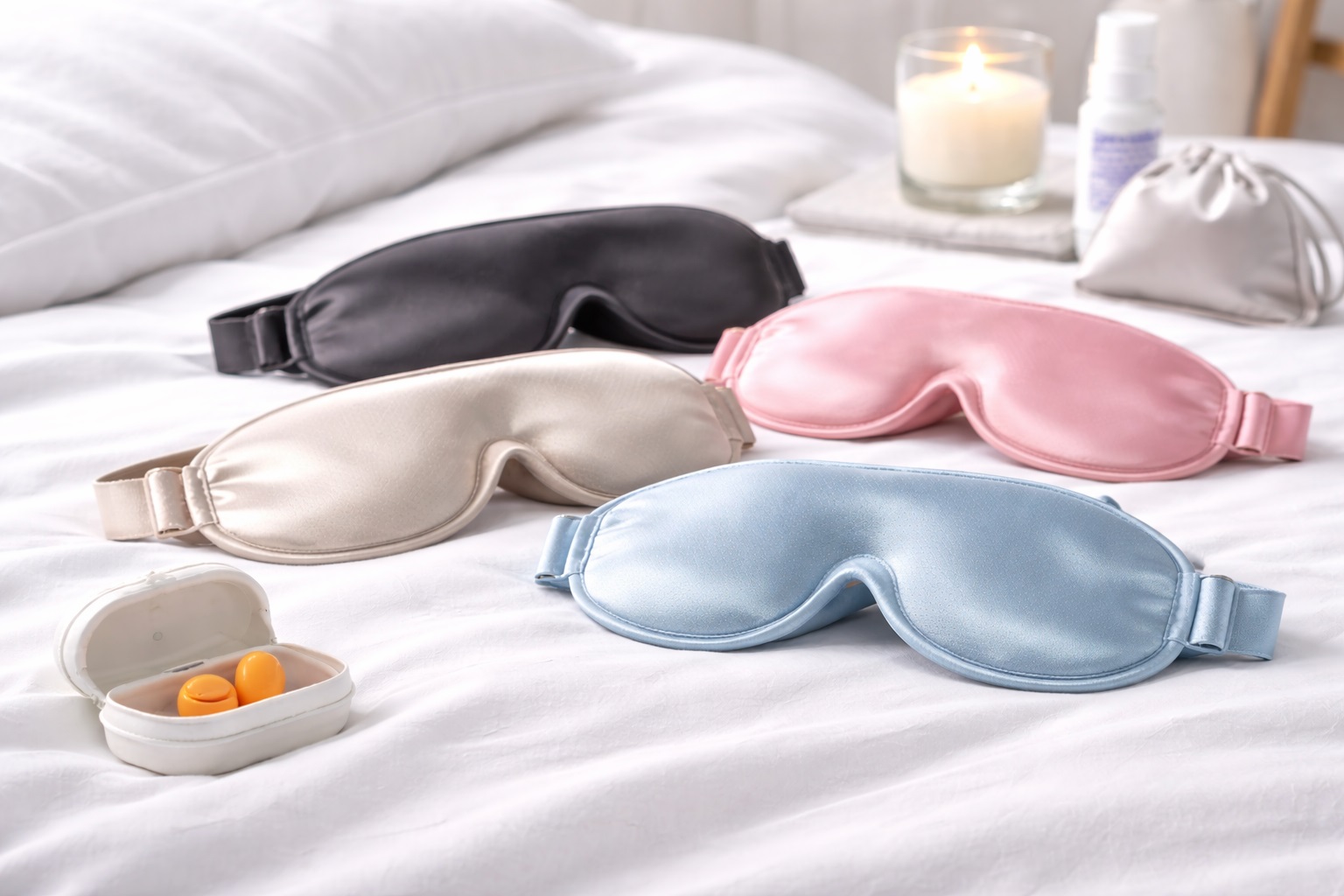
A good night's sleep starts with total darkness, and for a growing number of sleepers that means reaching for a silk eye mask rather than the stiff foam versions sold in airport kiosks. Silk has a natural cooling touch, glides over skin without tugging at eyelashes, and holds up to nightly wear far better than synthetic blends that pill and flatten within weeks. But "silk eye mask" has become something of a catch-all category, and the market now blends genuine mulberry silk designs with foam-contoured and cotton-lined masks that chase the same goal: a weightless, pressure-free barrier against light.
In this guide we look at eight of the most talked-about sleep masks on the market in 2026, comparing true silk options against the foam and cotton alternatives that compete for the same shelf space. Each one is judged on how it delivers that all-important premium feel — the sensation of a mask that disappears once it's on, rather than one you're constantly readjusting at 2 a.m. We'll flag which picks are genuine silk, which use other premium materials, and who each one suits best, so you can match the fabric and fit to the way you actually sleep.
Price, breathability, and strap adjustability all factor into the premium feel equation as much as the outer fabric does. A mask that costs more but bunches against your nose or slips off during the night isn't actually delivering luxury, no matter what it's made from. With that in mind, here's how the eight leading contenders stack up.
It's also worth thinking about how a mask fits into your broader nighttime routine before you commit to one. Someone who reads in bed with a clip-on light, travels frequently for work, or shares a bed with a partner who keeps different hours has different priorities than someone shopping purely for at-home comfort. The eight products below span a wide range of price points and materials specifically so that whichever situation applies to you, there's a reasonable match somewhere in the list rather than a single mask trying to be everything to everyone.
Top 8 Best eye mask Picks (Detailed Reviews)
1. Bucky 40 Blinks – Best For Pressure-Free Comfort
Bucky built its reputation on travel accessories, and the 40 Blinks brings that same practical engineering to the bedroom. The defining feature here is its pressure-free eye space: a molded contour that keeps the mask's fabric from resting directly on closed eyelids, which many silk-mask newcomers find is the single biggest comfort difference between an average mask and a genuinely premium one. It's made from a soft synthetic blend rather than natural silk, but the surface finish and the seam-free interior give it a smoothness that punches above its roughly $12 price point.
- Pros:
- Contoured eye cavity avoids lash and lid pressure entirely
- Very light, so it doesn't feel bulky against the face
- Backed by a well-known, long-established travel brand
- Cons:
- Not genuine silk, so it lacks that natural cool-to-the-touch feel
- Strap is a simple elastic band rather than a fully adjustable design
Best For: Side and back sleepers who want zero pressure on their eyes without paying silk prices.
Why We Recommend It: Few masks in this price range solve the "squished eyelash" problem as effectively, making it a smart entry point for anyone new to sleep masks. It's also a sensible choice if you're not fully sold on the idea of paying a premium for silk and want to test whether a well-engineered contour design solves your comfort complaints before spending more.
2. Lunya Washable Silk – Best For Luxurious Silk Feel
Lunya has built a loungewear brand around the idea that sleepwear should feel as good as it looks, and the Washable Silk mask carries that philosophy through. This is genuine mulberry silk on both the outer shell and the lining, giving it the temperature-regulating, breathable quality that natural silk is known for. At around $48 it sits at the top of this lineup price-wise, but the fabric quality and finishing — French seams, a fully adjustable strap, and a silk-covered elastic — explain the premium.
- Pros:
- True mulberry silk construction on both sides
- Machine washable despite being real silk, unlike many competitors
- Refined stitching and packaging that feels genuinely upscale
- Cons:
- The highest price point in this roundup
- Limited colorway selection compared to mass-market brands
Best For: Shoppers who specifically want authentic silk and are willing to pay for it.
Why We Recommend It: If "silk eye mask" is a literal requirement rather than a general category, this is the most straightforwardly authentic option on the list. The combination of real mulberry silk and machine-washable convenience is a rare pairing, since many silk products trade one for the other, and Lunya manages to hold onto both without cutting corners on either.
3. Mavogel Cotton Mask – Best For Total Blackout on a Budget
Mavogel takes a different material approach entirely, using a soft cotton shell over a padded interior, but the standout feature is a built-in nose wire that molds to your face and blocks stray light from creeping in underneath. For anyone who has fought with a mask that lets in a sliver of light from a hallway lamp or an alarm clock, that detail matters more than fabric pedigree. At roughly $10, it is also the most accessible price point in this group.
- Pros:
- Adjustable nose wire creates a genuine blackout seal
- Breathable cotton is gentle on sensitive skin
- Very low price relative to the rest of the field
- Cons:
- Cotton doesn't offer the same cooling sensation as silk
- Lacks the plush, luxury feel of the pricier picks
Best For: Budget-conscious sleepers whose main priority is blocking every trace of light.
Why We Recommend It: The nose wire alone solves a complaint that plagues even some of the pricier masks on this list. When total blackout matters more to you than fabric prestige, a simple, well-fitted seal around the nose bridge often outperforms a more expensive mask that was designed primarily around how it feels rather than how completely it blocks light.
4. Manta Sleep Mask – Best For Customizable Fit
Manta's design philosophy is built around adjustability rather than fabric alone. Its signature adjustable eye cups let each eye's cavity be positioned independently, so the mask can be tuned to fit different face shapes, nose bridges, and sleeping positions. It uses a padded exterior rather than silk, and at around $35 it's a mid-range option, but the fit customization is something none of the pure-fabric masks in this lineup can match.
- Pros:
- Independently adjustable eye cups fit a wide range of face shapes
- Completely opaque, with no light leakage around the eyes
- Straps and cups are largely replaceable if they wear out
- Cons:
- Bulkier profile than flat silk or cotton masks
- Takes a few nights to find the ideal cup position
Best For: Stomach and side sleepers who need a mask that won't shift out of position.
Why We Recommend It: The adjustable cups solve fit problems that no amount of silk quality can fix on a one-size mask. Anyone who has bought a beautiful, expensive mask only to find it slides off their face by 3 a.m. will appreciate how much of a difference a properly engineered, adjustable fit makes compared to a fixed flat design.
5. Tempur-Pedic Sleep Mask – Best For Memory Foam Cushioning
Tempur-Pedic brought its signature memory foam technology from mattresses and pillows into a sleep mask, and the result is a mask that molds gradually to the contours of your face rather than resting flat against it. That cloud-like support is the headline feature here, and it delivers a genuinely different sensation from either silk or cotton — softer, denser, and slower to spring back. Priced around $30, it's a mid-tier choice for anyone chasing that mattress-brand comfort in a smaller package.
- Pros:
- Memory foam conforms closely to facial contours over time
- Trusted mattress brand known for material quality
- Comfortable for back sleepers who like a denser cushion
- Cons:
- Foam retains more warmth than silk, which some sleepers dislike
- Not machine washable in the way fabric masks typically are
Best For: Sleepers who already love memory foam pillows and want that same feel over their eyes.
Why We Recommend It: It's the closest thing on this list to bringing premium mattress-grade materials to a sleep mask. If you already sleep on a memory foam mattress or pillow and love that slow-conforming sensation, this mask essentially extends that same feeling to your eyes rather than introducing an unfamiliar fabric texture.
6. Alaska Bear Natural Silk – Best For Sensitive Skin
Alaska Bear has quietly become one of the most recommended silk masks for people with sensitive skin or mild allergies, largely thanks to its hypoallergenic mulberry silk construction. Natural silk proteins resist dust mites and don't trap moisture the way synthetic fabrics can, which makes this a common recommendation for sleepers who deal with irritation from rougher materials. At around $15, it also happens to be one of the most affordable genuine-silk options in this comparison.
- Pros:
- Genuine mulberry silk that's naturally hypoallergenic
- Very affordable for an authentic silk product
- Lightweight enough to feel almost weightless overnight
- Cons:
- Strap adjustability is more basic than pricier competitors
- Less structured than foam-based masks, so it can shift slightly
Best For: Sleepers with sensitive skin or allergies who still want an authentic silk feel.
Why We Recommend It: It offers real silk's skin benefits at a price that undercuts nearly every other genuine-silk mask on the market. For anyone who has been priced out of silk sleepwear or bedding in the past, this is a low-risk way to experience what the material actually feels like before committing to pricier silk products elsewhere.
7. Nidra Dreams – Best For Everyday Value
Nidra has built a loyal following among people who just want a dependable mask without overthinking it, and the Dreams model reflects that straightforward approach. Its comfortable elastic strap is designed to stay put through a full night of tossing and turning, and the simple, no-frills construction keeps the price around $18. It won't win points for luxury fabric, but as a dependable everyday option it consistently earns repeat purchases.
- Pros:
- Elastic strap holds position well through the night
- Straightforward, no-fuss design with minimal learning curve
- Reasonably priced for the reliability it offers
- Cons:
- Fabric quality is average rather than premium
- Doesn't offer the cooling sensation of true silk
Best For: Anyone who wants a reliable, no-drama mask without paying for extras they won't use.
Why We Recommend It: It's the definition of a dependable middle-of-the-road pick when premium fabric isn't the top priority. Not every buyer wants to think hard about fabric composition or adjustable cup mechanisms — some just want something that works consistently night after night, and that's exactly the gap Nidra fills.
8. MZOO Sleep Mask – Best For Side Sleepers
MZOO's 3D contoured design specifically targets a complaint that plagues flat masks: pressure buildup when sleeping on your side. The molded foam cups create a cavity that keeps fabric away from the eyelids even when your face is pressed into a pillow, which makes it a favorite among side sleepers who've given up on traditional flat masks entirely. At around $20, it delivers a specialized fit at a moderate price.
- Pros:
- 3D contour keeps pressure off eyes even on your side
- Blocks light effectively thanks to the molded shape
- Reasonably priced for a contoured, side-sleeper-focused design
- Cons:
- Bulkier than flat silk masks, less ideal for travel packing
- Foam exterior isn't as breathable as natural silk
Best For: Committed side sleepers who've struggled with flat masks pressing into their eyes.
Why We Recommend It: It directly addresses the most common complaint side sleepers have with traditional eye masks. If flat masks have consistently left you readjusting through the night because fabric bunches against your cheek or eye socket, a 3D contour is often a more effective fix than simply switching to a softer fabric.
Buying Guide: How to Choose the Best Silk Eye Mask
Choosing between these eight picks comes down to matching material, fit, and strap design to how you actually sleep. Here's what to weigh before you buy.
1. Real Silk vs. Silk-Style Alternatives
Genuine mulberry silk is prized for its natural temperature regulation and gentle texture, but not every mask marketed toward a premium feel actually uses it. Cotton, foam, and synthetic satin blends can deliver comparable comfort at a lower price, so check the material listing rather than assuming from the product name alone. Reading the fabric composition on the product page, rather than relying on marketing language like "silky" or "silk-like," is the surest way to know exactly what you're buying.
2. Strap Adjustability
A mask that can't be tightened or loosened will eventually feel either too tight around the temples or loose enough to slip during the night. Look for adjustable buckles or Velcro closures over simple stretch elastic if you tend to move a lot in your sleep. A strap that adjusts in small increments gives you more control than one with only two or three fixed settings.
3. Light-Blocking Design
Total blackout depends less on fabric thickness and more on how well the mask seals around the nose and temples. Contoured or molded designs, and masks with a built-in nose wire, generally block more ambient light than flat fabric versions. Even a well-made silk mask can let in a thin sliver of light from the sides if the strap isn't positioned correctly, so fit matters as much as the fabric itself.
4. Pressure on Eyes and Lashes
Flat masks that rest directly on the eyelids can flatten lashes and create an uncomfortable pressing sensation, especially for contact lens wearers or those with longer lashes. Contoured cup designs solve this but add bulk. If you regularly wake up with lash imprints or a mild ache around your eyes, this is usually the first thing worth changing about your current mask.
5. Breathability and Temperature
Silk and lightweight cotton breathe well and won't trap heat, while foam and padded synthetic masks tend to run warmer. If you sleep hot, prioritize natural, breathable fabrics. This becomes especially noticeable in warmer months or in bedrooms without air conditioning, where a heavier foam mask can feel noticeably stuffier against the skin.
6. Washability
Not every premium mask can go in the washing machine. Some silk models are hand-wash only, while others are treated for machine washing. Check the care instructions if hygiene and easy maintenance matter to you, since a mask that touches your face nightly benefits from more frequent cleaning than most other sleep accessories.
7. Skin Sensitivity
Natural silk is naturally hypoallergenic and resists dust mites, making it a solid choice for sensitive skin. Synthetic blends can occasionally cause irritation with prolonged nightly contact, so patch-test if you have known sensitivities. People who already gravitate toward silk pillowcases for skincare reasons often find the same logic applies well to eye masks.
8. Travel Friendliness
Flat silk and cotton masks pack down small and weigh almost nothing, while contoured foam designs take up more suitcase space. If you travel often, factor packability into your decision, and consider whether a mask that also includes ear plugs or a small drawstring pouch would better suit your on-the-go routine.
9. Price vs. Fabric Quality
Genuine silk masks command a premium, but that premium isn't always proportional to comfort. Some of the best-reviewed masks in this category use non-silk materials and cost a fraction of the price while still delivering excellent comfort. Treat price as one data point among several rather than a stand-in for overall quality.
10. Strap Placement and Hair Friendliness
Masks with straps that sit low on the back of the head tend to be more comfortable for people with ponytails, braids, or thicker hair, since they avoid pressing directly against a hair tie or bun. A split strap design, which separates into two bands, can also help distribute pressure more evenly around a bun or braid.
11. Durability Over Repeated Washing
Silk can degrade with harsh detergents or frequent machine washing, while sturdier cotton and synthetic blends often hold their shape and color longer. If you wash your mask weekly, this is worth considering, and a gentle, fragrance-free detergent will generally extend the life of any fabric mask regardless of material.
12. Ear and Temple Comfort for Side Sleepers
Bulkier, contoured masks can sometimes press uncomfortably against the temples or ears when lying on your side. Slimmer profile masks tend to be more forgiving in this position, even if they offer less total blackout. If you wear earbuds or headphones to sleep, this trade-off is worth testing before committing to a bulkier design.
13. Matching the Mask to Your Sleep Position
Back sleepers generally have the most flexibility and can wear almost any style comfortably. Side sleepers benefit most from contoured or 3D designs, while stomach sleepers often prefer the thinnest, flattest options available. If you switch positions throughout the night, a mid-weight fabric mask with a snug but adjustable strap tends to be the most forgiving all-around choice.
Frequently Asked Questions
Is a genuine silk eye mask actually better than synthetic alternatives?
Genuine silk offers superior breathability and a naturally cool touch that synthetic fabrics struggle to replicate, but well-made synthetic and cotton masks can still deliver excellent comfort and blackout performance at a lower price.
How do I clean a silk eye mask without damaging it?
Check the care label first. Some silk masks are treated for gentle machine washing on a delicate cycle, while others should be hand-washed in cool water with a mild detergent and air-dried away from direct sunlight.
Will a silk eye mask actually help me fall asleep faster?
Blocking ambient light supports your body's natural melatonin production, which can make falling asleep easier in a room that isn't fully dark. The mask itself is a tool for consistency rather than a guaranteed fix on its own.
Are contoured masks better than flat silk masks?
Contoured masks generally block more light and avoid pressure on the eyelids, but they're bulkier and less packable. Flat silk masks are more travel-friendly but may allow slight light leakage around the edges.
Can silk eye masks help with skin issues like dryness or breakouts?
Silk's smooth surface creates less friction against skin than rougher fabrics, which some people find reduces irritation around the eye area, though results vary by individual skin type.
What should I look for if I have sensitive skin?
Prioritize natural, hypoallergenic materials like mulberry silk over synthetic blends, and avoid masks with rough seams or embellishments near the eye area.
Do adjustable strap masks fit better than elastic ones?
Adjustable buckle or Velcro straps generally offer a more secure, customizable fit than simple stretch elastic, especially for people with smaller or larger head sizes than average.
Is it worth paying more for a premium eye mask?
If you use a mask nightly, the material quality, durability, and comfort improvements from a premium option often justify the higher cost over time compared to replacing cheaper masks repeatedly.
Can I sleep on my side comfortably with a flat silk mask?
Many side sleepers find flat masks comfortable, though some experience mild pressure against the eyes. Contoured designs are specifically built to solve this if flat masks bother you.
How often should I replace my eye mask?
This depends on material and usage frequency, but most fabric masks show signs of wear, thinning, or reduced elasticity after regular use over one to two years and can be replaced when comfort declines.
Do eye masks work well for travel and jet lag?
Yes, lightweight and packable masks are popular for flights and unfamiliar sleeping environments, since they help maintain a consistent dark environment regardless of ambient cabin or hotel lighting.
Are nose wire designs uncomfortable to sleep in?
Most nose wires are soft and flexible enough to mold comfortably to your face without pressing hard, though preference varies and some sleepers prefer masks without any wire component.
Can eye masks cause headaches from being too tight?
A mask that's too tight around the head can occasionally contribute to tension, which is why adjustable straps are worth prioritizing over fixed elastic if you're prone to headaches.
Do I need a different mask for summer versus winter?
Breathable silk or cotton tends to feel more comfortable in warmer months, while a denser foam or padded mask can feel cozier during colder seasons, so some sleepers keep two masks on rotation depending on the temperature of their bedroom.
Can children safely use adult sleep masks?
Most adult masks are sized for larger heads and may not fit securely on a child, so it's worth looking for a specifically sized or adjustable option rather than assuming a standard mask will fit comfortably.
Will an eye mask smudge my nighttime skincare products?
Lightweight, smooth fabrics like silk are generally gentler on freshly applied skincare than thicker or textured materials, though allowing a few minutes for products to absorb before putting on any mask helps regardless of fabric choice.
Final Verdict
- Top Pick: Lunya Washable Silk for the most authentic, luxurious silk experience in this lineup.
- Budget Choice: Mavogel Cotton Mask for reliable total blackout at the lowest price point.
- Best for Sensitive Skin: Alaska Bear Natural Silk for genuine silk comfort at an accessible price.
There's no single "best" fabric for every sleeper, and that's really the takeaway from comparing these eight masks side by side. If authentic silk is non-negotiable, Lunya and Alaska Bear both deliver it convincingly at very different price points. If your priority is total darkness above all else, Mavogel's nose wire and Manta's adjustable cups solve that problem more directly than fabric choice ever could. Whichever you choose, the real test happens after a few nights of actual use, when you can tell whether the mask disappears from your awareness or keeps pulling you out of sleep.
It's also reasonable to own more than one mask for different situations — a packable silk option for travel and a more structured contoured mask for regular use at home, for instance. Sleep accessories are inexpensive enough relative to their nightly impact that experimenting with two or three options before settling on a long-term favorite is a perfectly practical approach, especially if your sleep position or bedroom environment changes seasonally.