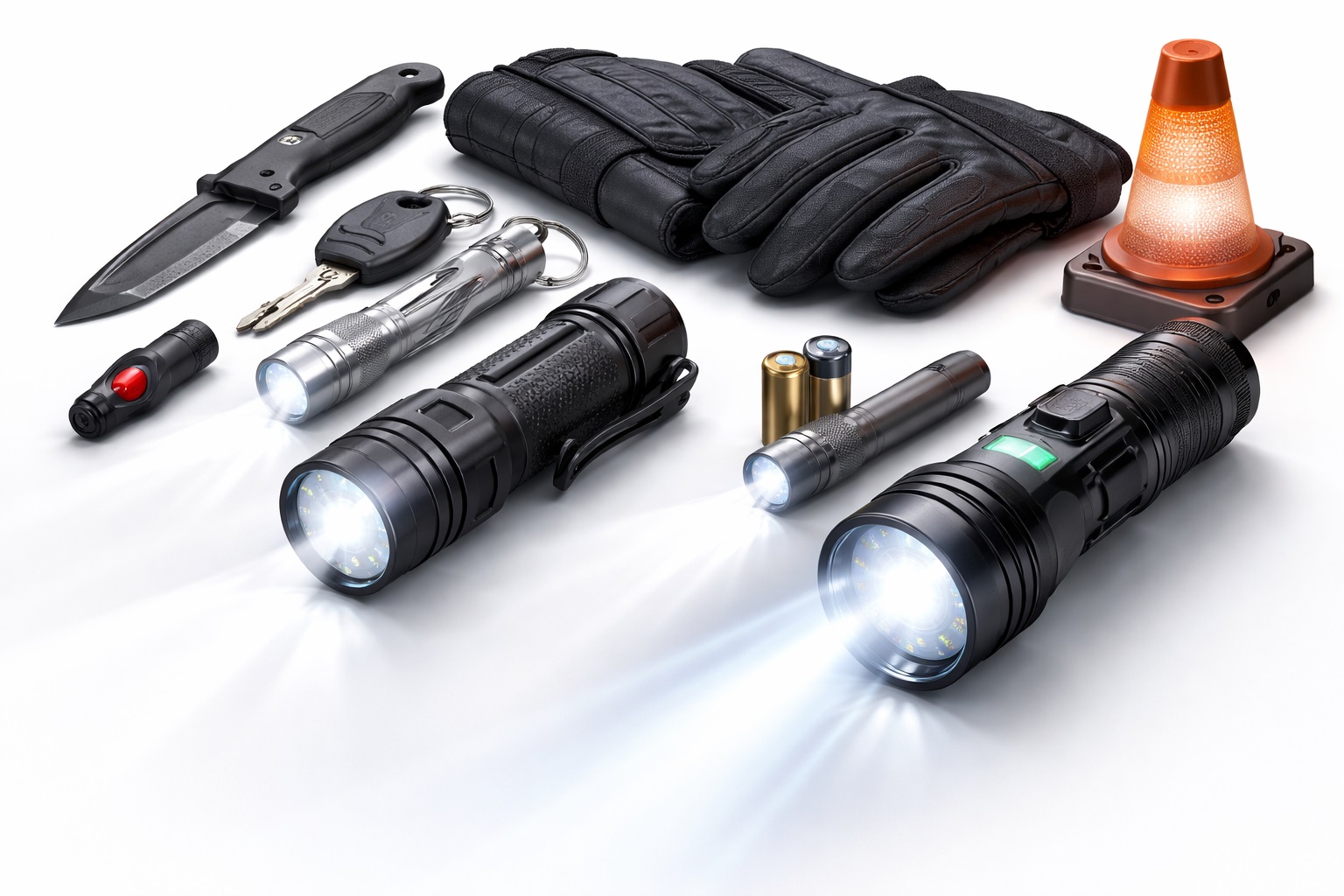
Best Flashlight for Camping in 2026
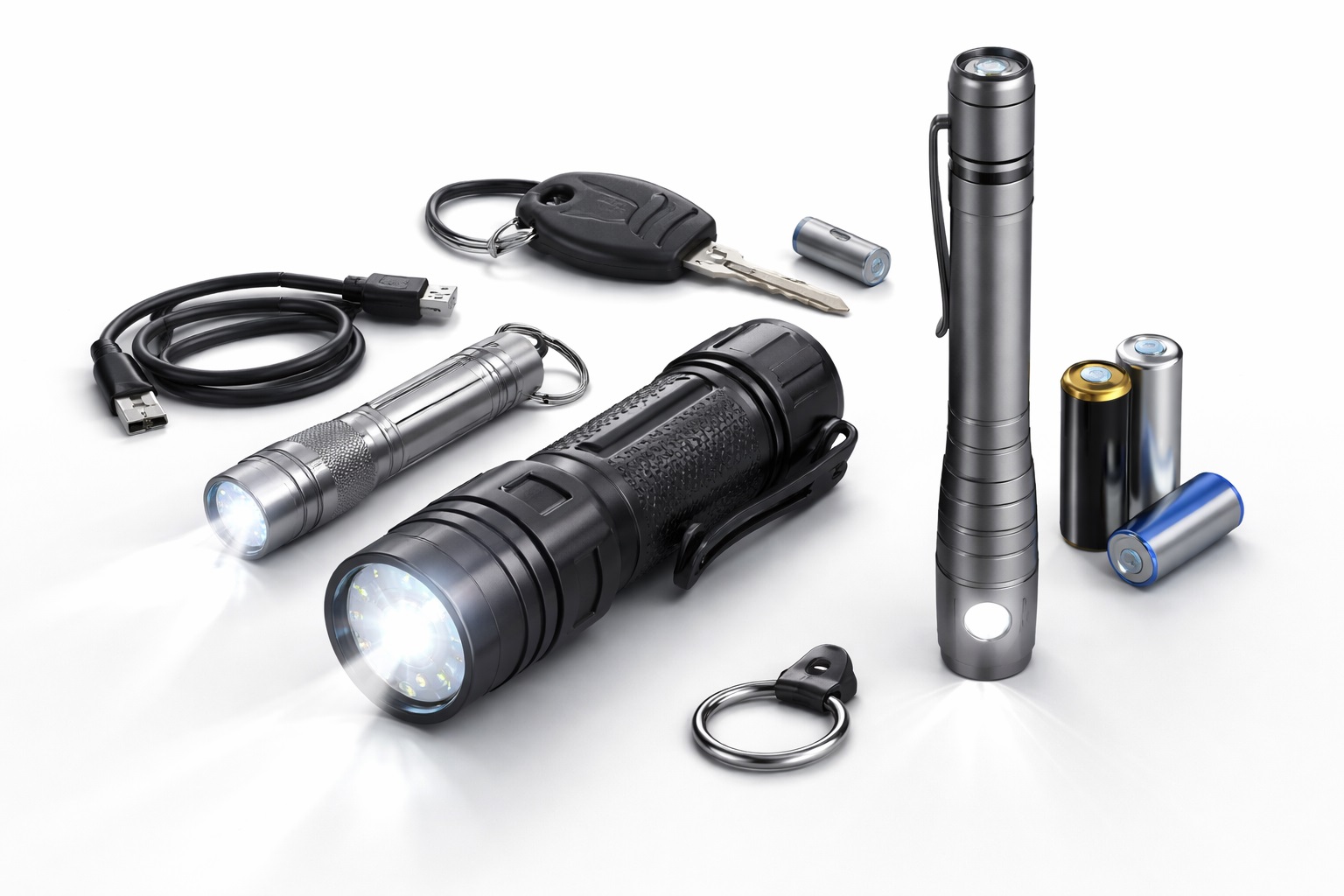
A campsite after dark has a way of exposing weak gear fast. The flashlight that felt bright enough in your living room can suddenly seem dim against a moonless sky, and a light that runs on the wrong batteries becomes useless the moment you realize you packed the wrong size. Choosing a flashlight for outdoor adventure means thinking beyond the beam itself — runtime, water resistance, and how the light holds up to being tossed in a pack or dropped on a rocky trail all matter just as much as brightness.
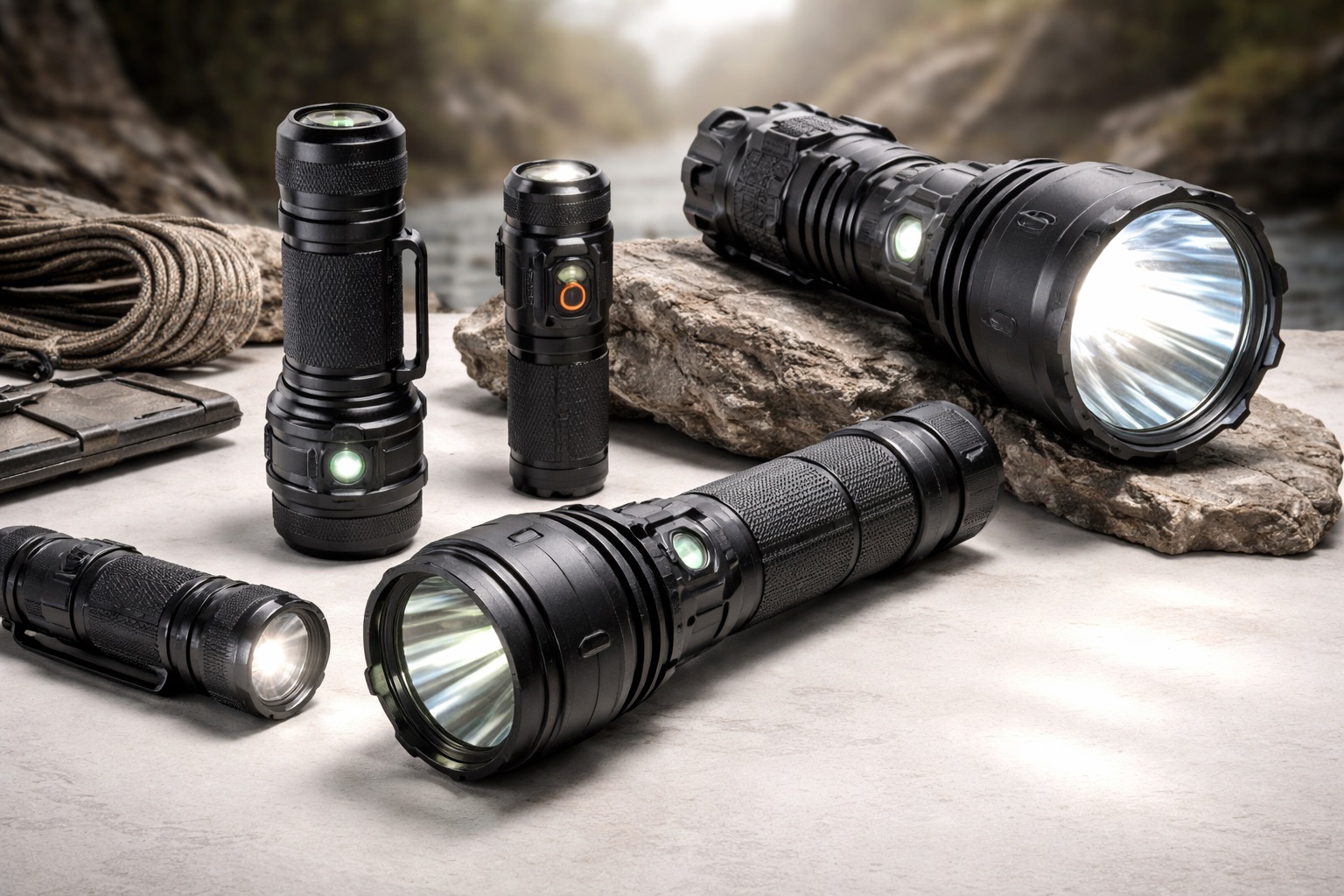
We've put together this guide around eight flashlights that regularly come up as strong choices for camping and outdoor use, ranging from budget-friendly backups to rugged, rechargeable options built for repeated trips. Each review below covers what the light does well, where it's likely to disappoint, and which type of camper or outdoor user it suits best, so you can compare them against your own trips rather than a generic checklist.
Past the individual reviews, you'll find a full buying guide walking through the features that matter most for outdoor adventure — brightness, battery type, durability, and more — along with a set of frequently asked questions covering the practical side of choosing and caring for a camping flashlight.
Keep in mind that "camping" covers a wide range of trips, from car camping a few steps from the trunk to multi-day backpacking where every ounce matters. The right flashlight for one style of trip isn't always the right one for another, so as you read through the reviews and buying guide, keep your own typical trip in mind rather than just chasing the highest lumen count.
It's also worth thinking about how a flashlight fits into the rest of your camping kit. Some campers pair a bright handheld light with a lantern for the campsite itself, reserving the flashlight for walking to the bathroom, checking on noises, or navigating after the fire dies down. Others prefer a single do-it-all light. Neither approach is wrong, but knowing which role the flashlight will play in your setup makes it much easier to pick the right one from the list below, rather than trying to find one product that does everything perfectly.
Top 8 Flashlights for Camping (Detailed Reviews)
Olight S2R Baton II – Best For Rechargeable Trips
The Olight S2R Baton II is built around magnetic charging, letting you snap it onto a charging cable rather than fumbling to swap batteries in the dark at a campsite. At around $70, it sits toward the premium end of this list, but for anyone who camps near a car, a power bank, or a solar charger, never needing to pack spare disposable batteries is a genuine convenience. It's a light built for people who camp often enough to want a permanent piece of gear rather than a disposable one. Between trips, it can sit charged and ready in a gear closet, which suits campers who like to pack quickly without digging through a pile of spare batteries.
- Pros:
- Magnetic charging simplifies topping off power between trips
- Premium fit and finish
- No disposable batteries to pack or run out of
- Cons:
- Requires a charging source, which isn't always available on longer trips
- Costs more upfront than disposable-battery lights
Best For: Frequent campers who want a rechargeable light they can top off at home or in the car and count on trip after trip, without stocking a drawer full of spare batteries.
Why We Recommend It: Magnetic charging removes one of the most common camping annoyances — realizing your spare batteries are the wrong size — as long as you can charge it beforehand. For campers who make regular trips throughout the season, the convenience adds up quickly.
Anker Bolder LC90 – Best For Bright, Affordable Output
Anker's Bolder LC90 leads with a rated 900 lumens of brightness, which is plenty to light up a campsite, a trail junction, or the inside of a tent without straining. At roughly $30, it's one of the more affordable ways to get genuinely strong output, making it an easy pick for anyone who wants a bright light without paying premium prices for it. That combination of price and brightness has made it a popular choice among casual and frequent campers alike, and it's an easy light to recommend to someone buying camping gear for the first time without wanting to overspend.
- Pros:
- 900 lumens of brightness at a budget-friendly price
- Trusted brand with wide availability
- Simple, straightforward operation
- Cons:
- Housing feels less rugged than premium outdoor brands
- Fewer accessory and mounting options
Best For: Campers who want strong, reliable brightness for setting up camp or navigating trails after dark, without a premium price tag eating into the rest of their gear budget.
Why We Recommend It: Few lights on this list match its brightness-to-price ratio, making it an easy recommendation for budget-conscious outdoor trips where you'd rather spend on other gear.
Fenix PD35 V3.0 – Best For Rugged Trail Use
The Fenix PD35 V3.0 is built around a tough aluminum body designed to handle the bumps, drops, and rough treatment that come with regular trail use. At about $90, it's the most expensive light in this lineup, positioned as an investment for campers and hikers who put their gear through real wear and tear season after season. Fenix has built a strong reputation specifically among outdoor enthusiasts for this kind of durability, and that track record is a big part of why it's a common recommendation for anyone who camps in rugged, unpredictable terrain.
- Pros:
- Tough aluminum housing built for rough outdoor handling
- Strong reputation among hikers and campers
- Consistent, dependable performance on the trail
- Cons:
- Highest price point among the flashlights reviewed here
- Heavier than compact, minimalist backpacking lights
Best For: Frequent hikers and campers who need a flashlight tough enough to survive being dropped on rocks or bounced around in a pack for miles at a time.
Why We Recommend It: Durability matters more outdoors than almost anywhere else, and the PD35's rugged build is designed specifically for that kind of abuse, so it holds up trip after trip rather than needing replacement after one rough season.
Maglite LED Flashlight – Best For Adjustable Campsite Lighting
The Maglite LED keeps the brand's signature beam focus adjustment, letting you twist between a wide flood for lighting up a picnic table or campsite and a tighter spot for scanning the treeline or trail ahead. At around $25, it's one of the more affordable options here, appealing to campers who want a dependable, familiar design without extra electronic features they may not use on a trip. It's the kind of flashlight many people grew up using on family camping trips, and that simplicity still holds up well today.
- Pros:
- Adjustable beam focus covers both flood and spot needs
- Trusted, long-standing brand name
- Affordable price point
- Cons:
- Bulkier than compact modern backpacking lights
- Fewer advanced features than newer tactical designs
Best For: Campers who want one adjustable light that can handle both close-range campsite tasks and longer-distance trail scanning without carrying two separate flashlights.
Why We Recommend It: A twist-to-focus beam is genuinely versatile at a campsite, where you need both wide light for cooking and setup and a tighter beam for the walk to the bathroom or car.
Streamlight ProTac HL – Best For Serious Backcountry Trips
Streamlight built its reputation supplying professional and outdoor-grade lights, and the ProTac HL reflects that with multi-fuel capability, letting it run on more than one battery configuration depending on what's available. At about $80, it's priced for campers who treat their flashlight as essential safety equipment on longer or more remote trips, where flexibility around battery type can genuinely matter. That professional pedigree shows in the build quality, which feels noticeably more rugged than most consumer-grade lights.
- Pros:
- Multi-fuel flexibility for different battery situations in the backcountry
- Professional-grade build quality
- Trusted by outdoor and security professionals alike
- Cons:
- One of the pricier options on this list
- Utilitarian look with limited cosmetic variety
Best For: Backcountry campers and hikers who want a dependable, professional-grade light for longer or more remote trips where a failure isn't an option.
Why We Recommend It: Its fuel flexibility reduces the risk of being stuck without power far from a store, which is exactly the situation a backcountry light needs to handle well, and that peace of mind is worth the added cost for serious trips.
Coast PX1 LED – Best For Focused Beam Precision
The Coast PX1 LED is built around pure beam optics designed to reduce the dark rings and uneven spots that cheaper reflectors often produce, giving campers a cleaner, more usable beam for reading maps, setting up tents, or scanning for trail markers. At around $40, it's a mid-range option for campers who want noticeably better beam quality without paying premium prices. Anyone who has tried to read a topographic map by the light of a cheap, uneven beam will appreciate the difference a well-engineered optic makes.
- Pros:
- Clean, even beam pattern useful for navigation and campsite tasks
- Reputable, established flashlight brand
- Comfortable size for regular outdoor carry
- Cons:
- Costs more than basic budget lights
- Limited color and finish choices
Best For: Campers who read trail maps or signage at night and want a beam that shows detail clearly rather than glare bouncing back off the page.
Why We Recommend It: Beam quality is easy to overlook until you're squinting at a blurry, uneven patch of light on a dark trail — the PX1's optics avoid that problem and make nighttime tasks noticeably less tiring on the eyes.
GearLight LED Tactical – Best For Budget Backup Lighting
The GearLight LED Tactical packs 5 light modes into a genuinely affordable package, giving campers options like high, low, and strobe without paying tactical-brand prices. At about $20, it's the least expensive light on this list, making it an easy pick for a backup light, a light for each member of a camping group, or simply a low-risk way to add extra lighting to your kit. Buying a couple of these to hand out to kids or less experienced campers in a group costs less than a single premium light.
- Pros:
- 5 selectable modes for different camp tasks
- Very accessible price point
- Compact and easy to pack
- Cons:
- Build quality trails premium outdoor brands
- Not intended as a sole light for serious backcountry trips
Best For: Group campers who want an affordable backup light for each person in the tent or car without a big spend on the overall group's gear list.
Why We Recommend It: A cheap, capable backup is genuinely valuable at a campsite, where losing or dropping a flashlight in the dark is a common and frustrating problem, and having a spare on hand turns that annoyance into a minor inconvenience.
ThruNite Archer 2A – Best For Simple, Fumble-Free Use
The ThruNite Archer 2A uses a dual switch design that separates power from mode selection, so you're less likely to accidentally cycle through brightness levels when all you want is the light on. At around $35, it's a mid-priced option for campers who value predictable, easy operation, which matters when you're fumbling with a flashlight outside a tent in the cold. It's a small design detail that pays off repeatedly across a multi-night trip.
- Pros:
- Dual switch layout prevents accidental mode changes
- Dependable build from an established brand
- Easy, intuitive operation even with cold hands
- Cons:
- Costs more than basic single-switch lights
- Fewer finish options than some competitors
Best For: Campers who want a light that turns on correctly every time, without needing to think about which button does what while standing outside a tent in the dark.
Why We Recommend It: A confusing switch layout is a real annoyance on a cold, dark trip — the Archer 2A's dedicated switches keep things simple when it counts, which is exactly when you have the least patience for troubleshooting gear.
Buying Guide: How to Choose the Best Flashlight for Camping
Camping puts different demands on a flashlight than everyday household use. Between exposure to weather, distance from stores or outlets, and the need to conserve battery life over multiple days, the priorities below are worth weighing carefully before you commit to a light for your next trip. Working through them in order can help you avoid buying a flashlight that looks great on a store shelf but falls short once you're actually out on the trail.
1. Lumen Output and Brightness
Most campsite and trail flashlights fall somewhere between a couple hundred and several hundred lumens, with some models pushing higher for search or wide-area lighting. For general campsite tasks, moderate brightness is usually more comfortable than the highest number available, since a very bright beam can be overwhelming in close quarters like a tent. Save the highest setting for moments when you genuinely need maximum visibility, such as searching for a dropped item or scanning a dark trail.
2. Beam Distance and Throw
Brightness alone doesn't determine how far a beam reaches. A flashlight with a tightly focused reflector can throw usable light much farther than a wider, floodier beam with the same lumen rating, which matters if you need to spot a trail marker or a landmark across a clearing at night. If your camping trips regularly involve navigating unfamiliar terrain after dark, prioritize throw distance over sheer brightness numbers.
3. Runtime and Battery Life
Runtime is one of the most important factors for camping, since you may not have access to power for several days. Lower and medium brightness settings typically stretch much longer than the highest mode, so it's worth planning around the runtime you'll get at the setting you'll actually use most on a typical night, rather than the maximum figure listed in a product description.
4. Battery Type: Disposable vs. Rechargeable
Disposable AA or AAA batteries are convenient because you can buy replacements almost anywhere, including small stores near trailheads. Rechargeable lithium-ion flashlights save money over time and are easy to top off before a trip, but they're less forgiving if you forget to charge in advance or run out of power without an outlet nearby. A car charger or portable power bank can bridge that gap on trips where you'll have occasional access to a vehicle, letting you enjoy the convenience of rechargeable power without fully losing the reliability of a backup option.
5. Build Material and Durability
Outdoor use is hard on gear. Aircraft-grade aluminum and reinforced polycarbonate housings tend to hold up best against drops, scrapes, and general rough handling that comes with tossing a flashlight in a pack or leaving it clipped to a belt loop on the trail. A light that feels flimsy in a store rarely improves after a few trips of real outdoor use.
6. Water and Weather Resistance
An IP or IPX water-resistance rating tells you how well a flashlight handles rain, splashes, or accidental dunking in a stream or puddle. For camping specifically, a higher-rated light offers real peace of mind, since weather is rarely fully predictable once you're away from shelter and a forecast can change quickly in the backcountry.
7. Size, Weight, and Portability
For backpacking especially, every ounce counts, and a bulky flashlight can be an easy item to leave behind or bury at the bottom of a pack. Car campers have more flexibility to bring a larger, heavier light, but backpackers usually benefit from something compact enough to keep within easy reach, ideally something that fits in a hip belt pocket rather than buried deep in the main compartment.
8. Switch Design and Ease of Use
Fumbling with a flashlight switch outside a tent at night, possibly with cold or wet hands, is a common camping frustration. Dual-switch designs that separate power from mode selection tend to be easier to operate reliably than single-button lights that cycle through several modes, especially when you're tired at the end of a long day of hiking.
9. Light Modes and Strobe Function
Multiple brightness levels help conserve battery over a multi-day trip, letting you use low or medium power for routine tasks and save the brightest setting for when you really need it. A strobe mode can also double as a signaling tool if you ever need to attract attention, which is a small but genuinely useful safety feature to have available.
10. Beam Focus: Flood vs. Spot vs. Adjustable
A flood beam works well for close-range campsite tasks like cooking or setting up a tent, while a spot beam throws light farther for trail navigation or scanning a dark area. An adjustable-focus light that switches between the two offers useful flexibility for a trip where your needs will change throughout the evening.
11. Grip and Ergonomics
A flashlight that's easy to grip securely matters more outdoors, where cold, wet, or gloved hands make it easier to drop gear. Textured grips, pocket clips, and lanyard loops all help keep the light secure and accessible when you need it most, and a lanyard in particular is worth using near water or on uneven terrain.
12. Price vs. Performance
Camping flashlights in this category typically range from around $20 for a capable budget option up to $90 or more for premium, rugged, rechargeable models. Spending more generally buys better materials and added convenience, but a well-reviewed budget light can still handle most car-camping and casual trail needs perfectly well without stretching your gear budget.
13. Matching the Flashlight to Your Camping Style
Car campers, backpackers, and casual weekend campers all have different priorities. Someone camping a few steps from their vehicle can prioritize brightness and convenience features, while a backpacker several miles from the trailhead should weigh weight, runtime, and durability more heavily before choosing a flashlight for the trip. There's no universal right answer, only the one that fits how and where you actually camp, and it's worth being honest with yourself about which category you fall into before you buy.
Frequently Asked Questions
What is a good lumen output for a camping flashlight?
A light in the low hundreds of lumens is usually enough for typical campsite tasks, while brighter options like the Anker Bolder LC90's 900 lumens are useful if you want extra range for scanning a dark trail or wide clearing. Very high output is rarely necessary unless you're searching a large open area.
How long do camping flashlight batteries typically last?
Runtime varies significantly by brightness setting. Lower and medium modes can run for many hours across a multi-day trip, while the brightest setting on a high-output light may only last a few hours before needing fresh or recharged batteries. Planning your usage around the lower settings can stretch a single set of batteries across an entire weekend.
Should I bring a rechargeable or disposable-battery flashlight camping?
It depends on your trip. Rechargeable lights are convenient if you'll have access to a car charger, power bank, or outlet, while disposable-battery lights are more forgiving on longer or more remote trips where recharging isn't an option. Some campers bring both types to cover every scenario.
What does an IPX water-resistance rating mean for camping gear?
IPX ratings indicate how well a device resists water intrusion, with higher numbers meaning stronger protection against rain, splashing, or brief submersion. A higher rating is a real advantage for camping, where weather exposure is common and forecasts aren't always reliable once you're on the trail.
Can I use a flashlight safely in the rain while camping?
Many flashlights handle light rain and splashes without issue, but it's worth checking a model's specific water-resistance rating before relying on it during a genuine storm or extended wet-weather trip. A light rated only for splash resistance may struggle in sustained heavy rain.
Should I pack a flood beam or a spot beam for camping?
Both have a place at a campsite. Flood beams work well for cooking, setting up camp, and general tasks nearby, while spot beams help with navigation and spotting distant landmarks. An adjustable-focus light offers the most flexibility for a single trip, which is why several models on this list include an adjustable-focus feature rather than a single fixed beam pattern.
How many flashlights should I bring on a camping trip?
Many experienced campers bring at least one primary light and a smaller backup, since a lost or dead flashlight after dark is a common and avoidable problem, especially on group trips where multiple people need light at once.
Do I need a headlamp instead of a handheld flashlight for camping?
Not necessarily — both work well for camping, and many campers bring one of each. A handheld flashlight offers a stronger, more directional beam, while a headlamp frees up your hands for setup, cooking, or hiking in the dark.
Does a heavier flashlight mean better durability for outdoor use?
Not always. Durability comes largely from housing material and construction rather than weight alone, so a well-built aluminum light can be both reasonably light and highly durable for trail use, without the extra bulk of a heavier design.
What features matter most for backcountry or backpacking trips?
Weight, runtime, and durability tend to matter most for backpacking, since you're carrying the light for miles and may not have access to spare batteries or a charger for several days at a time.
Do more expensive camping flashlights actually perform better?
Higher-priced lights often deliver more consistent brightness, tougher materials, and added convenience like rechargeability, but a well-chosen budget model can still handle most casual camping trips effectively without a significant compromise.
How do I maintain a flashlight for reliable camping use?
Keep battery contacts clean, store spare batteries properly, and test your light before each trip so you're not discovering a dead flashlight after you've already set up camp for the night. A quick check before packing takes only a minute.
Can one flashlight handle both camping and everyday use?
Yes, in most cases. A mid-range flashlight with solid water resistance and adjustable brightness, such as several models on this list, can comfortably cover both weekend camping trips and everyday household needs without needing a second dedicated light.
Final Verdict
- Top Pick: Olight S2R Baton II for overall excellence.
- Budget Choice: Fenix PD35 V3.0 for great value.
- Premium Choice: Anker Bolder LC90 for high-end features.
Every camper has a slightly different idea of what a "best" flashlight looks like, and the eight options above cover a wide enough range to fit most trips, from a quick weekend at a car-camping site to a longer backcountry hike. Think honestly about how far from civilization you'll be, how many nights you need the light to last, and how much weight and bulk you're willing to carry, and you'll be able to match one of these picks to your next trip with confidence. And whichever one you choose, test it at home before you leave — the campsite, after dark, is not the place to discover your flashlight doesn't work the way you expected.