Best Wireless Mouse for Laptop Users: Comfort & Control
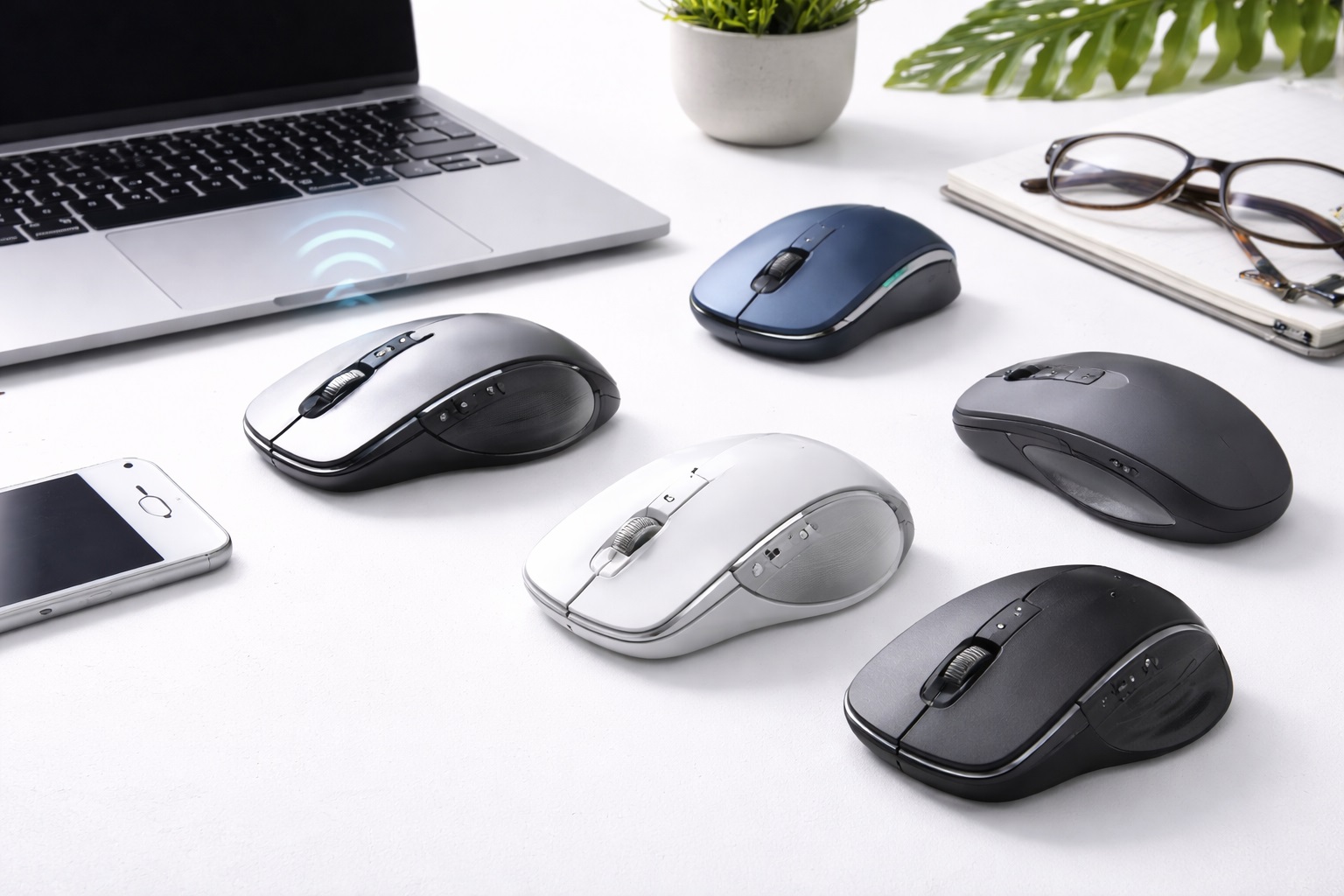
A laptop's built-in trackpad works fine for scrolling through email, but it rarely holds up once you're editing spreadsheets, working in design software, or spending a full day at a coffee shop table. A wireless mouse solves that problem, yet the category is broader than most people expect. Some models are built to disappear into a laptop bag, others are shaped to reduce wrist strain during long sessions, and a few are designed specifically to jump between a laptop, a tablet, and a phone without re-pairing each time.
What makes this decision harder than it should be is that most of these mice look similar in product photos. The differences that actually matter — sensor consistency on different surfaces, how quickly the receiver reconnects after your laptop wakes up, how the click feels after the hundredth use of the day — only show up with real use. This guide breaks the category down by the situations laptop owners actually run into: working from a home desk, working from a cafe, switching between two or three devices, and needing something quiet enough for a shared office.
Below you'll find a side-by-side comparison, followed by detailed notes on six common types of laptop mice, a buying guide that walks through the factors worth weighing before you spend money, and answers to the questions laptop users ask most often when shopping in this category.
It's worth noting upfront that no single mouse in this comparison is objectively "the best" in every sense — each type trades one strength for another. A mouse compact enough to disappear into a bag rarely offers the same wrist comfort as a larger ergonomic shape, and a model built for silent clicking in a shared office isn't solving the same problem as one built to switch instantly between three paired devices. Reading through the categories with your own daily routine in mind, rather than looking for a universal winner, will get you to the right answer faster.
Top 6 Wireless Mice for Laptop Users (Detailed Reviews)
1. Compact Travel Mouse – Best Overall
The compact travel mouse is built around a single priority: taking up as little space as possible without making the mouse uncomfortable to use for a normal workday. These models typically use a shortened body and a low profile so they slide into a laptop sleeve pocket or the front compartment of a backpack. Most rely on a small USB receiver that can stay plugged into the laptop permanently, which removes the step of pairing over Bluetooth every time you sit down. Because the shape is compact rather than full-size, it suits people with smaller hands more naturally than it suits people who prefer to rest their whole palm across the mouse. Many models in this category also skip extra buttons and adjustable sensitivity in favor of keeping the body as slim as possible, which is a reasonable trade-off for anyone whose main requirement is that the mouse simply gets out of the way when it's packed and works reliably when it's out.
- Pros:
- Small enough to travel in a laptop bag's front pocket without adding noticeable weight
- USB receiver pairing tends to be more consistent than Bluetooth in crowded wireless environments
- Works well on a tray table, a cafe counter, or any surface with limited space
- Cons:
- The smaller body can feel cramped during multi-hour sessions for users with larger hands
- A dedicated USB receiver uses up a port on laptops that already have few of them
Best For: People who move between locations often and want a mouse that packs away easily without complicating setup.
Why We Recommend It: It solves the actual problem laptop travelers have — a mouse that is genuinely portable rather than just marketed as portable — while keeping the connection reliable enough for daily work.
2. Ergonomic Wireless Mouse – Best for Long Work Sessions
Ergonomic wireless mice are shaped to keep the wrist in a more neutral position than a flat, traditional mouse allows. Instead of resting the hand flat with the palm rotated downward, these designs angle the body so the hand sits in a more natural, handshake-like position. They're aimed at people who spend several hours a day at a laptop and have noticed wrist or forearm discomfort from extended use. The trade-off is size: to achieve the ergonomic angle, these mice are usually larger and less pocketable than a compact travel model.
- Pros:
- Reduces wrist rotation during long stretches of continuous use
- Larger body gives the whole hand more surface area to rest on
- Often includes a thumb rest or textured grip for added stability
- Cons:
- Bulkier shape makes it a poor fit for travel or tight desk spaces
- The angled design takes an adjustment period for anyone used to a standard mouse
Best For: Laptop users who work long hours at a fixed desk and want to reduce strain rather than prioritize portability.
Why We Recommend It: Comfort during extended use is a real, cumulative benefit that a flat mouse simply can't offer, and this category is built specifically around that need.
3. Multi-Device Bluetooth Mouse – Best for Switching Between Devices
This type of mouse is built around one specific feature: the ability to pair with more than one device and switch between them, usually with a physical button or a quick key combination, rather than re-pairing through a settings menu. That makes it useful for anyone who regularly moves between a laptop, a tablet, and a phone, or who uses a personal laptop alongside a work laptop. Because these mice rely on Bluetooth rather than a dedicated USB receiver, they don't use up a laptop port, which matters more on lightweight ultrabooks with limited connectivity.
- Pros:
- Switches between multiple paired devices without a lengthy re-pairing process
- Frees up a USB port since it connects over Bluetooth rather than a receiver
- Convenient for anyone managing more than one computer or device day to day
- Cons:
- Bluetooth pairing can be less consistent than a USB receiver in busy wireless environments
- Initial setup across multiple devices takes longer than a single-device mouse
Best For: People who regularly switch between a laptop and other Bluetooth-enabled devices throughout the day.
Why We Recommend It: For a very specific but common workflow — juggling more than one device — this is the only category built to make the transition seamless rather than an afterthought.
4. Budget Laptop Mouse – Best Budget Pick
The budget category covers mice that focus on the fundamentals — reliable tracking, basic left and right clicks, and a scroll wheel — without additional features like customizable buttons or premium finishes. These are a sensible option for anyone who mainly needs a functional replacement for the trackpad and doesn't want to pay for features they won't use. Build quality varies more in this category than in premium tiers, so it's worth checking that a specific model has consistent, positive feedback before buying rather than assuming all inexpensive mice perform the same.
- Pros:
- Lower upfront cost makes it accessible for casual or occasional use
- Covers the core functions most people actually use day to day
- A reasonable option as a spare or backup mouse
- Cons:
- Build quality and long-term durability can be inconsistent between models
- Lacks extras like adjustable sensitivity or programmable buttons
Best For: Buyers who want a straightforward, no-frills mouse without paying for features they won't use.
Why We Recommend It: It covers the basic job a mouse needs to do at a price that makes sense for light or infrequent use.
5. Silent Click Wireless Mouse – Best for Shared Spaces
Silent click mice use a modified switch under the left and right buttons to significantly reduce the clicking sound compared to a standard mouse. This matters more than it might sound for anyone working in a shared office, a library, a quiet coffee shop, or a home where other people are sleeping nearby. The trade-off some users report is a slightly softer, less tactile click, since the mechanism that reduces sound also changes the feel of the press somewhat compared to a traditional audible click.
- Pros:
- Noticeably quieter clicking, useful in shared or noise-sensitive environments
- Functionally identical to a standard mouse in terms of tracking and scrolling
- Reduces distraction for people working nearby
- Cons:
- The click can feel softer or less tactile than a traditional audible switch
- Not a meaningful benefit for anyone who already works alone or in a private space
Best For: Laptop users working in open offices, libraries, or other spaces where a loud click would be disruptive.
Why We Recommend It: It solves a specific, everyday annoyance — the clatter of clicking in a quiet room — without giving up standard mouse functionality.
6. Vertical Ergonomic Mouse – Best for Wrist Strain Relief
Vertical mice take the ergonomic concept further than an angled traditional mouse by orienting the entire body so the hand rests in a handshake position, with the thumb on top rather than the side. This design is aimed specifically at people who have experienced discomfort or early strain symptoms and want a more significant change to their hand posture, rather than a modest adjustment. It has the steepest learning curve of any mouse type in this list, and tracking accuracy can take some getting used to since the hand's relationship to the sensor is different from a standard mouse. It's generally not the first mouse worth trying if you haven't experienced any discomfort yet, since the adjustment period is real, but for anyone already dealing with wrist fatigue it's often the category people wish they had tried sooner.
- Pros:
- Keeps the forearm in a more neutral position than any other mouse style covered here
- Can meaningfully reduce strain for users who already experience wrist discomfort
- Available in wireless versions that pair the same way as standard mice
- Cons:
- Requires an adjustment period that can take days or weeks depending on the user
- Less precise for fine cursor control tasks like detailed photo editing
Best For: Users who need a more deliberate ergonomic change due to existing wrist or forearm discomfort.
Why We Recommend It: When a standard or angled ergonomic mouse isn't enough, this is the category built to address strain at a more fundamental level.
Buying Guide: How to Choose the Best Wireless Mouse for Laptop Users
With the categories above in mind, here are the specific factors worth checking before you commit to a purchase. None of these require expert knowledge — they're the practical details that determine whether a mouse works well for your actual routine or ends up back in a drawer.
1. Tracking Sensor Consistency
The sensor is what translates hand movement into cursor movement, and its quality determines how reliably the cursor follows your hand across different surfaces. A mouse that tracks well on a hard desk but skips or jumps on a fabric surface or a glass table will be frustrating in daily use, especially for anyone who works from more than one location. If you frequently work from cafes or shared desks, it's worth checking whether a model is specifically noted as working well on uneven or reflective surfaces, since not every sensor performs consistently outside a dedicated mousepad.
2. Bluetooth vs. USB Receiver Connections
USB receivers tend to offer a more stable, lower-latency connection and don't require pairing through your laptop's settings each time, but they occupy a port that some laptops can't spare. Bluetooth connections free up ports and support multi-device switching but can be more sensitive to interference in crowded wireless environments like open offices. If your laptop already has limited ports for chargers, external drives, and monitors, that alone may tip the decision toward Bluetooth despite its occasional connection quirks.
3. Battery Life and Charging Method
Battery life varies significantly between models, from a few weeks on a single charge to several months. Also check whether the mouse uses replaceable batteries or a rechargeable built-in battery — rechargeable models avoid ongoing battery purchases but need to be plugged in periodically, which matters if you travel frequently. A mouse that can be used while charging through a cable is worth prioritizing if you tend to notice low battery only after it's already inconvenient.
4. Size and Portability
If the mouse is going to travel with your laptop regularly, its physical footprint matters as much as its features. A compact shape that fits easily into a laptop sleeve is a different priority than a larger ergonomic shape meant to stay at a single desk. Weigh how often the mouse will actually leave your desk before choosing a shape purely because it looks appealing in photos.
5. Multi-Device Pairing Support
If you regularly switch between a laptop, tablet, or phone, look specifically for a mouse that supports quick switching between paired devices rather than one that only supports a single pairing at a time. Confirm how many devices can be stored simultaneously, since some models only remember two paired devices while others support three or more.
6. Hand Size and Grip Style
People grip a mouse differently — some rest their whole palm on top, others grip mainly with fingertips. A mouse shape that doesn't match your natural grip style will feel awkward regardless of how good its specifications look on paper. If possible, try a similar shape in person before buying online, since photos rarely convey how a curve or angle will actually sit in your hand.
7. Click Feel and Noise Level
If you work in a shared space, a quiet click matters more than it might seem. If you prefer clear tactile feedback when you click, a standard audible switch may suit you better than a silent one, even in a shared space. Some users also find that silent switches require slightly more deliberate pressure, which is worth considering if you do a lot of rapid clicking in your daily work.
8. Scroll Wheel Quality
Scroll wheels differ in resistance and precision. Some offer a smooth, free-spinning scroll for moving through long documents quickly, while others use notched, discrete steps that make precise line-by-line scrolling easier — the right choice depends on the kind of work you do most. Anyone who works heavily in spreadsheets or code editors may prefer the more controlled, notched feel over a fast free-spin scroll.
9. Build Quality and Long-Term Durability
A mouse that feels solid out of the box should also hold up to daily use over months or years. Loose buttons, a wobbly scroll wheel, or a receiver that disconnects intermittently are signs of weaker build quality that tend to show up with sustained use rather than at first impression. Reading reviews from buyers who have owned the product for several months, rather than only first-impression reviews, gives a more realistic picture of long-term durability.
10. Price Relative to Actual Needs
It's easy to overspend on features you won't use, like adjustable sensitivity levels or programmable side buttons, if your actual workflow only requires reliable basic tracking and clicking. Match the price to the features you'll genuinely use rather than the longest feature list. Listing out the two or three features that actually matter to your routine before browsing can prevent paying extra for capability that sits unused.
11. Compatibility With Your Operating System
Most wireless mice work across major operating systems, but some multi-device switching features or companion software are limited to specific platforms. If you rely on a particular feature, confirm it's supported on your laptop's operating system before buying. This is especially worth double-checking if you split time between a work laptop and a personal laptop running different systems.
12. Warranty and Return Policy
A reasonable warranty period is a useful signal of how confident a manufacturer is in their product's durability. Since issues like receiver disconnects or click reliability sometimes only appear after weeks of use, a return window that extends beyond the first few days gives you a fairer chance to evaluate the mouse properly. Keep the original packaging until you're confident in the purchase, since many return policies require it.
Frequently Asked Questions
Do I need a wireless mouse if my laptop already has a trackpad?
A trackpad is fine for basic navigation, but a mouse generally offers faster, more precise cursor control for tasks like detailed editing, spreadsheet work, or extended browsing sessions. Whether it's worth adding depends on how much of your day is spent on tasks where precision and speed matter.
Is Bluetooth or a USB receiver better for a laptop mouse?
USB receivers tend to offer more consistent, lower-latency performance and don't require re-pairing, but they use up a port. Bluetooth frees up ports and supports switching between multiple devices, though it can be more susceptible to interference in crowded wireless environments.
How long do wireless mouse batteries typically last?
This varies by model, ranging from a few weeks to several months on a single charge or set of batteries. Checking the specific battery life listed for a model before buying is more reliable than assuming based on the mouse's category.
Are ergonomic mice actually more comfortable, or is that mostly marketing?
For people who spend extended hours at a laptop, the angled or vertical grip position of ergonomic mice can genuinely reduce wrist strain compared to a flat, traditional shape. The benefit is most noticeable for longer sessions rather than brief, occasional use.
Can one mouse really switch between my laptop, tablet, and phone?
Multi-device Bluetooth mice are specifically designed for this, usually through a button or key combination that switches the active connection among devices that are already paired. It's a genuinely useful feature for anyone managing more than one device throughout the day.
Do silent click mice track and scroll the same as regular mice?
Yes — the quieter click comes from a modified switch mechanism under the buttons, while the sensor and scroll wheel function the same as they would in a standard mouse of the same category.
Is a compact travel mouse too small for daily desk use?
It depends on hand size and personal preference. Some users find compact mice perfectly comfortable for all-day use, while others with larger hands prefer a full-size or ergonomic shape for extended sessions and reserve the compact model for travel.
What's the adjustment period like for a vertical ergonomic mouse?
Most users need anywhere from a few days to a couple of weeks to adjust to the different hand position and sensor orientation. Precision for detailed tasks may feel slightly off at first before your hand adapts to the new grip.
Do budget mice sacrifice reliability, or just extra features?
Budget mice typically skip extras like programmable buttons or adjustable sensitivity, but reliability varies more by specific model and manufacturer than by price tier alone. Checking verified reviews for a particular model is more useful than assuming based on price.
How do I know if a mouse will work well on my desk surface?
Optical and laser sensors perform differently on glass, glossy, or highly reflective surfaces compared to matte desks or mousepads. If you work on an unusual surface, checking a model's compatibility with that surface type before buying can prevent tracking issues later.
Should I prioritize battery life or rechargeable convenience?
If you travel often and can't always plug in a charging cable, longer battery life on standard batteries can be more practical. If you're usually near a charging cable, a rechargeable model reduces ongoing battery costs and waste.
Is it worth paying more for a premium wireless mouse?
It depends on whether the premium features — like adjustable sensitivity, additional programmable buttons, or a more refined build — match tasks you actually perform. For straightforward laptop use, a mid-range or budget option often covers the essentials just as well.
Will a wireless mouse add noticeable lag compared to a wired one?
For everyday tasks like browsing, document editing, and general navigation, a quality wireless mouse with a stable connection performs indistinguishably from a wired one. Latency becomes more relevant for fast-paced gaming, which isn't the primary use case for most laptop-focused mice in this comparison.
How often should I expect to replace a laptop mouse?
With reasonable care, a well-built wireless mouse can last several years of regular use. Signs that replacement is approaching typically include inconsistent tracking, a receiver that disconnects more frequently than it used to, or buttons that no longer register clicks reliably.
Final Verdict
- Best Overall: The compact travel mouse balances portability and reliable everyday performance for most laptop users.
- Best for Long Sessions: The ergonomic wireless mouse reduces strain during extended desk-based work.
- Best for Multiple Devices: The multi-device Bluetooth mouse simplifies switching between a laptop, tablet, and phone.
- Best Budget Pick: The budget laptop mouse covers core functionality without unnecessary extras.
There isn't a single wireless mouse that suits every laptop user equally well, and that's the main point worth taking from this comparison. The right pick depends on where you actually work, how long your typical session runs, and whether you're juggling more than one device throughout the day. Match the category to your actual routine rather than the longest feature list, and you'll end up with a mouse that earns its place in your bag or on your desk.
If you're still unsure after reading through the comparisons, start by ruling out what you don't need rather than trying to find the perfect match immediately. Someone who works from a single desk and rarely travels can skip the compact travel category entirely and focus on comfort. Someone who splits time between a laptop and a tablet gains far more from multi-device pairing than from a slightly more premium sensor. Narrowing the field this way tends to produce a more satisfying purchase than comparing every option against every other option at once.