Best Rechargeable Flashlight in 2026
Every disposable battery you buy for a flashlight is a small, recurring cost, and over a few years those costs quietly add up to more than most people expect. A rechargeable flashlight setup flips that equation: instead of restocking batteries every few months, you top off a cell overnight and get years of use out of the same investment. For anyone tired of discovering dead batteries at the exact moment they need light, moving to a rechargeable system is one of the simplest upgrades you can make to your everyday gear. It is also one of the more satisfying changes to make, since the payoff shows up almost every time you reach for the light.
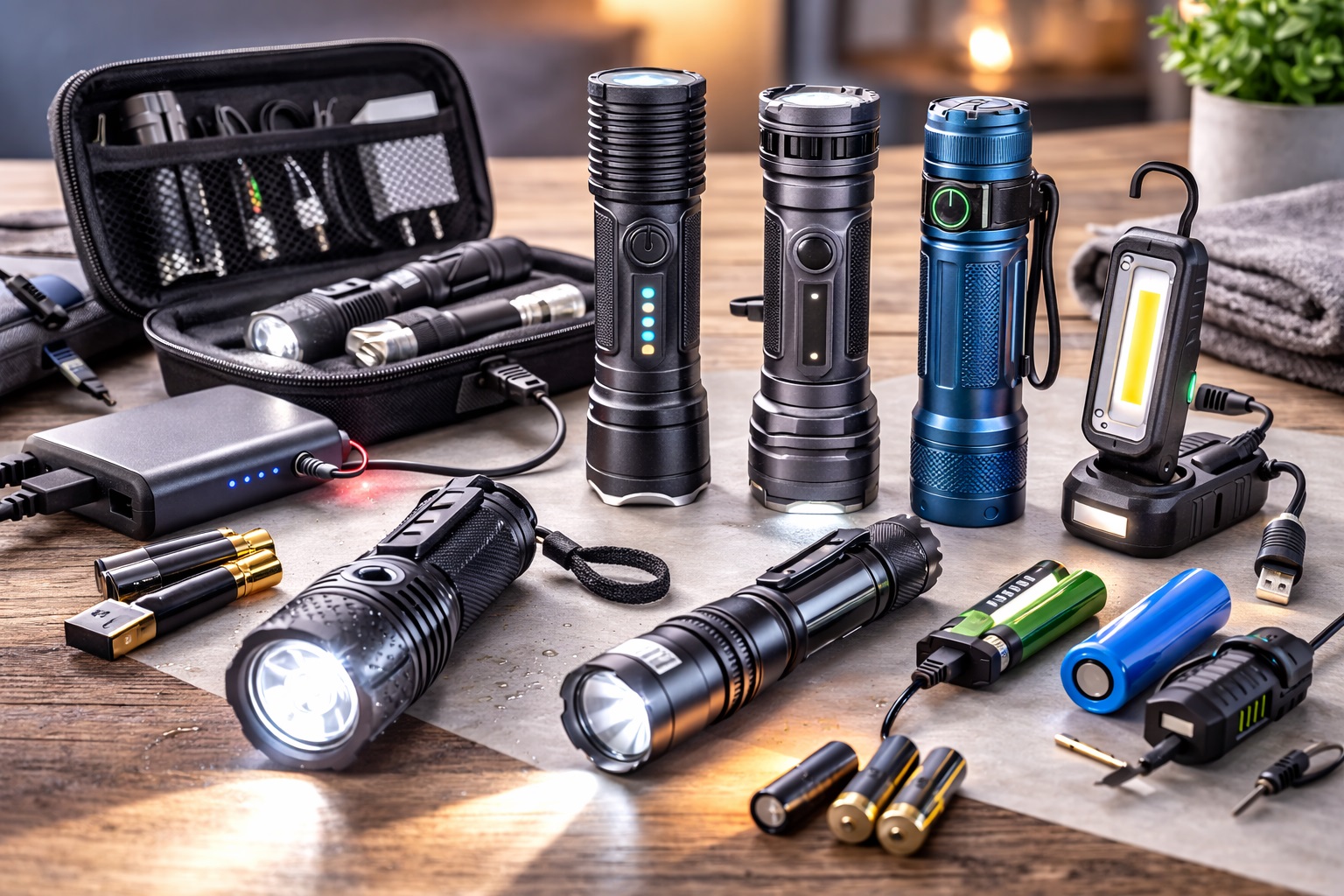
"Rechargeable" covers more ground than it might first appear. Some flashlights, like the Olight S2R Baton II featured below, build charging directly into the light with a magnetic USB cable. Others run on standard AA or AAA batteries, which means you can pair them with rechargeable NiMH cells to get most of the same convenience and cost savings without paying for built-in charging circuitry. We looked at eight widely available flashlights with this lens in mind, weighing how each one fits into a genuinely low-maintenance, rechargeable-friendly lighting routine. Some lean toward fully built-in convenience, while others prioritize flexibility and a lower entry price, so there is a reasonable option no matter which trade-off matters more to you.
Below you will find detailed reviews of each pick, a buying guide focused on getting the most out of a rechargeable setup, and answers to the questions we hear most often from shoppers making the switch away from disposable batteries. Consider it a practical starting point for building a lighting routine you will not have to think twice about.
Top 8 Best Rechargeable Flashlights (Detailed Reviews)
1. Anker Bolder LC90 – Best For High Output With Rechargeable AA Cells
Anker built the Bolder LC90 around efficient power delivery, and its 900 lumens of brightness makes it one of the strongest performers on this list. It runs on standard AA batteries, which means you can load it with rechargeable NiMH cells and get essentially the same convenience as a built-in rechargeable light, minus the higher upfront cost of dedicated charging hardware. This makes it an easy entry point for anyone curious about rechargeable use without a large financial leap. At around $30, pairing it with a set of quality rechargeable AAs is one of the more budget-friendly ways to build a low-maintenance lighting setup, and Anker's broader reputation for reliable electronics adds confidence in its long-term performance. Buyers who already own a set of rechargeable AAs from other devices can put this light into service immediately.
- Pros:
- Premier build quality from a brand known for reliable electronics
- 900 lumens brightness stands out for a rechargeable-compatible light
- Reputable brand with strong customer support infrastructure
- Cons:
- Higher price point than the most basic keychain lights
- Limited color options compared to lifestyle-focused brands
Best For: Buyers who want strong brightness paired with the flexibility of using their own rechargeable AA batteries, especially those already invested in a NiMH charging setup.
Why We Recommend It: Strong output combined with rechargeable-battery compatibility gives you most of the benefits of a dedicated rechargeable light at a lower entry price, which is hard to beat for the value.
2. Streamlight ProTac HL – Best For Flexible Rechargeable and Disposable Support
Streamlight built the ProTac HL with multi-fuel capability, meaning it can run on more than one type of battery, including rechargeable options depending on how you configure it. That flexibility is valuable for a low-maintenance routine, since it means you are not locked into a single battery ecosystem and can choose rechargeable cells when convenient or disposable batteries when traveling somewhere without reliable power access. Priced around $80, it reflects the durability and consistent output that professional users depend on, and its build quality means it holds up well to the frequent handling that comes with regular rechargeable-battery swaps. That resilience is part of why it remains a favorite among buyers who use their flashlight hard.
- Pros:
- Premier build quality built to professional standards
- Multi-fuel capability adds flexibility for rechargeable or disposable batteries
- Reputable brand trusted across professional use cases
- Cons:
- Higher price point than most compact rechargeable-compatible lights
- Limited color options compared to consumer-focused brands
Best For: Buyers who want the flexibility to switch between rechargeable and disposable batteries depending on the situation, particularly for demanding or professional use.
Why We Recommend It: Multi-fuel flexibility means you are never stuck choosing a battery ecosystem you cannot easily replace or recharge on short notice, which suits unpredictable schedules well.
3. Coast PX1 LED – Best For Rechargeable Compatibility With Precision Optics
Coast built the PX1 LED around pure beam optics, producing a clean, well-focused circle of light with minimal spill. It runs on standard batteries that can be swapped for rechargeable equivalents, giving you the beam quality Coast is known for without committing you to buying disposable batteries indefinitely, which is exactly the balance many buyers are hoping to strike. At around $40, it sits in the mid-range for buyers who want both a low-maintenance battery routine and a beam that performs consistently every time you switch it on, rather than dimming unpredictably as batteries age. That reliability is a big part of why the PX1 LED has earned a loyal following among detail-focused buyers.
- Pros:
- Premier build quality with attention to optical clarity
- Pure beam optics reduce glare and improve usable light
- Reputable brand known for consistent quality control
- Cons:
- Higher price point than basic single-mode lights
- Limited color options compared to some competitors
Best For: Buyers who want a precisely focused beam alongside the option to run on rechargeable batteries without compromising on optical clarity.
Why We Recommend It: Combining strong beam quality with rechargeable-battery flexibility means you are not sacrificing performance for the sake of a lower-maintenance routine, which is a fair trade most buyers appreciate.
4. ThruNite Archer 2A – Best For NiMH Rechargeable AA Convenience
ThruNite built the Archer 2A around AA battery compatibility, which pairs naturally with rechargeable NiMH cells, one of the most widely available and affordable rechargeable battery formats on the market, sold at essentially every general retailer. Its dual switch design, with both a tail switch and a side switch, makes it easy to operate one-handed, whether you are running it on a freshly charged set of rechargeables or a disposable backup. Priced around $35, it is a sensible pick for buyers building a rechargeable-battery routine around a common, easy-to-replace format rather than a specialty proprietary cell. That accessibility means you are never far from a replacement, whether at home or on the road.
- Pros:
- Premier build quality with a refined dual-switch layout
- Dual switch design supports quick, intuitive one-handed use
- Reputable brand respected within the flashlight enthusiast community
- Cons:
- Higher price point than basic single-switch lights
- Limited color options outside of standard finishes
Best For: Buyers who want to build a rechargeable routine around widely available AA-format NiMH batteries rather than a proprietary cell.
Why We Recommend It: AA compatibility keeps you within one of the most common, affordable rechargeable battery formats, so replacements and charging equipment are easy to find nearly anywhere.
5. Fenix PD35 V3.0 – Best For Rugged Rechargeable Cell Compatibility
Fenix built the PD35 V3.0 with a tough aluminum body designed to handle drops and rough handling, and it is compatible with rechargeable lithium-ion cells, a format favored by enthusiasts for its high capacity relative to size, which supports strong output without excessive bulk. That combination of ruggedness and rechargeable-battery compatibility makes it a strong pick for buyers who use their flashlight outdoors or in demanding conditions and want to avoid the ongoing cost and waste of disposable batteries. At around $90, it is the most premium pick on this list, reflecting the materials and engineering behind its construction. For buyers who spend real time outdoors, that investment tends to pay off across years of dependable service.
- Pros:
- Premier build quality with a genuinely rugged aluminum housing
- Tough aluminum body resists everyday wear and impact
- Reputable brand trusted by outdoor and tactical communities
- Cons:
- Higher price point than most compact rechargeable-compatible lights
- Limited color options compared to consumer-focused competitors
Best For: Outdoor-focused buyers who want rugged durability alongside compatibility with high-capacity rechargeable cells for demanding trips.
Why We Recommend It: Pairing a genuinely tough body with rechargeable-battery compatibility means fewer trips to buy disposable batteries after a long day outdoors, and less to think about mid-adventure.
6. Olight S2R Baton II – Best For Built-In Magnetic USB Recharging
Olight helped popularize magnetic USB charging in the compact flashlight category, and the S2R Baton II remains one of the clearest examples of what a fully built-in rechargeable system looks like in practice. Instead of removing batteries at all, you simply attach the included magnetic cable and top it off, which is about as low-maintenance as flashlight charging gets, and it shows in how effortless the daily routine becomes. Its compact, rounded body was designed with this charging routine in mind, and at around $70 it reflects the engineering that goes into a dependable, genuinely rechargeable-first design rather than one merely compatible with rechargeable cells. For buyers who want the absolute simplest possible routine, this remains the benchmark to compare against.
- Pros:
- Premier build quality with a refined, pocket-friendly shape
- Magnetic charging removes the need for spare batteries entirely
- Reputable brand known for rechargeable EDC innovation
- Cons:
- Higher price point than disposable-battery alternatives
- Limited color options across the lineup
Best For: Buyers who want a flashlight built from the ground up around rechargeable convenience, not just compatible with it, and who value simplicity above all else.
Why We Recommend It: A built-in magnetic charging system is the most genuinely low-maintenance rechargeable setup on this list, requiring no separate battery purchases at all, ever.
7. GearLight LED Tactical – Best For Budget-Friendly Rechargeable Battery Pairing
GearLight built the LED Tactical around affordability and five selectable light modes, and it runs on standard batteries that pair easily with rechargeable equivalents, keeping the whole setup simple and inexpensive. At around $20, it is one of the most accessible ways to start building a rechargeable-battery routine without a significant upfront investment in the flashlight itself. For buyers who want to test whether a rechargeable-battery habit fits their lifestyle before committing to a pricier, built-in rechargeable model, this is a low-risk starting point. Even if you eventually upgrade to a built-in charging model, this light remains useful as a backup.
- Pros:
- Premier build quality relative to its price point
- Five distinct light modes cover most everyday scenarios
- Reputable brand with a large, established user base
- Cons:
- Higher price point than true bargain-bin disposable lights
- Limited color and finish options compared to rivals
Best For: Budget-conscious buyers who want to try a rechargeable-battery routine without a large upfront commitment or financial risk.
Why We Recommend It: A low entry price makes this an easy way to start pairing rechargeable batteries with a capable, mode-flexible flashlight without much financial risk.
8. Maglite LED Flashlight – Best For Classic Reliability With Rechargeable Cells
Maglite has built decades of trust around dependable performance, and its LED Flashlight, with a beam focus adjustment for switching between flood and spot beams, runs on standard batteries that work well with rechargeable equivalents, so nothing about the classic design has to change to gain the benefit. For buyers who appreciate the brand's long track record but still want the cost savings of a rechargeable routine, this pairing offers a familiar, trusted light without locking you into disposable batteries. It is priced around $25, making it an accessible way to combine classic reliability with a lower-maintenance battery habit. Generations of Maglite owners have come to expect exactly this kind of dependable, no-surprises performance.
- Pros:
- Premier build quality from a long-trusted brand
- Beam focus adjustment adds real everyday versatility
- Reputable brand with decades of consumer trust
- Cons:
- Higher price point than the most basic keychain lights
- Limited color options relative to newer competitors
Best For: Buyers who want a trusted, adjustable-beam flashlight that also works comfortably with rechargeable batteries without feeling experimental.
Why We Recommend It: Decades of brand trust paired with rechargeable-battery compatibility gives you the best of both a familiar design and a modern, lower-maintenance routine, without asking you to learn anything new.
Buying Guide: How to Choose the Best Rechargeable Flashlight
Moving to a rechargeable flashlight setup is less about finding one perfect model and more about understanding the trade-offs between built-in charging systems and rechargeable-battery-compatible lights. The considerations below will help you figure out which approach fits your habits, budget, and how often you actually reach for a flashlight. Read through them with your own routine in mind rather than assuming one universally correct answer exists.
1. Built-In Charging Versus Rechargeable-Battery Compatibility
Some flashlights include built-in charging circuitry and a fixed cell, like magnetic USB systems, while others simply accept standard battery formats that can be swapped for rechargeable versions. Built-in systems are typically more convenient; battery-compatible designs are usually more flexible and often less expensive upfront. Neither approach is universally better, so the right fit depends on how hands-on you want to be with your own charging routine. Many households end up owning at least one of each type.
2. Battery Chemistry and Capacity
Rechargeable batteries come in several chemistries, including NiMH for standard AA and AAA formats and lithium-ion for higher-capacity cells used in more powerful lights. Higher-capacity cells generally cost more but can extend runtime between charges. Understanding which chemistry your flashlight uses also helps you buy the correct charger and avoid mismatched equipment, which can otherwise damage batteries over time.
3. Charging Method and Convenience
Consider whether a flashlight charges via a magnetic cable, a standard USB port, or requires removing batteries entirely to charge them in a separate device. Each method has different implications for how quickly and easily you can top off your light. A built-in USB port is often the simplest option for daily use since it avoids extra accessories, and it is easy to top off alongside your other electronics.
4. Upfront Cost Versus Long-Term Battery Savings
Rechargeable systems typically cost more initially, whether that is a higher-priced flashlight or the cost of quality rechargeable batteries and a charger. Weigh that upfront cost against how much you currently spend on disposable batteries over a year to estimate your break-even point. For many regular users, that break-even point arrives sooner than expected, sometimes within the first several months of ownership.
5. Runtime Per Charge
Runtime on a full charge varies significantly by brightness setting and battery capacity. Consider how long you realistically need a light to run between charges, especially if you use it frequently or for extended periods. A light with a longer runtime on lower settings can be more practical than one optimized purely for peak brightness, particularly for extended outdoor trips.
6. Battery Life Cycle and Replacement
Rechargeable batteries have a finite number of charge cycles before their capacity noticeably declines. Understanding roughly how long a battery is expected to perform well helps you plan for eventual replacement rather than being caught off guard. Most quality rechargeable cells still offer years of reliable service before that decline becomes noticeable, especially with reasonable care.
7. Charger Portability and Availability
Some rechargeable flashlights charge via a widely available USB cable, making it easy to top off using a laptop, power bank, or wall adapter you already own, while others require a dedicated charging dock that adds another item to keep track of. A universal charging cable is generally more convenient for travel, since you likely already carry one for other devices.
8. Backup Power Options While Traveling
If you travel frequently or spend time away from reliable power, consider whether your rechargeable flashlight can also accept disposable batteries as a backup, or whether you will need to plan around charging access. A hybrid-compatible light offers more peace of mind in unpredictable situations, especially on multi-day trips away from an outlet.
9. Build Quality and Water Resistance
Rechargeable flashlights often include charging ports or contacts that need to be protected from moisture and dust. Look for weather-sealed designs, particularly if you plan to use the light outdoors regularly, since a compromised charging port can shorten a flashlight's usable life considerably and lead to an expensive early replacement.
10. Brightness Output Relative to Rechargeable Battery Type
Higher-output flashlights typically draw more power, which can affect runtime between charges depending on the battery type used. Balance your desired brightness against how often you are willing to recharge the light, since the brightest setting is rarely the one you will use most often.
11. Environmental Impact of Reducing Disposable Batteries
Switching to a rechargeable setup reduces the number of disposable batteries you send to landfills over time, which is a meaningful consideration for buyers who want to minimize battery waste alongside saving money. Over several years, this adds up to a noticeably smaller environmental footprint.
12. Brand Reputation for Rechargeable Technology
Some brands have built strong reputations specifically around rechargeable EDC lighting, while others are better known for battery-powered designs that happen to be rechargeable-compatible. Consider which track record matters more for your use case, since a brand's core specialty often shows in the details of the charging experience.
13. Realistic Maintenance Habits
A rechargeable flashlight only saves you hassle if you actually remember to charge it. Be honest about your own habits when deciding between a built-in charging system, which is harder to forget, and a battery-swap approach that requires more active management. Choosing the system that matches your actual habits matters more than choosing the one with the most features. A simple reminder tied to another weekly task can help either approach stick.
Frequently Asked Questions
Is a premium rechargeable flashlight worth it?
Yes, in many cases. Higher-end models often offer better durability, more consistent charging performance, and superior materials compared to budget alternatives, which matters for a system you expect to rely on daily or weekly. A budget rechargeable option can still be perfectly adequate for casual, occasional use.
How do I maintain a rechargeable flashlight?
Keep charging contacts or ports clean and dry, avoid letting the battery sit fully depleted for long stretches, and periodically check that the charging cable and connection points are free of dust or corrosion. A simple monthly glance is usually enough to catch small issues early.
Are built-in rechargeable flashlights better than battery-compatible ones?
It depends on your priorities. Built-in systems are generally more convenient and require less thought, while battery-compatible lights offer more flexibility, including the option to use disposable batteries when charging is not available. Neither is objectively superior across every use case.
How long do rechargeable batteries typically last before needing replacement?
This varies by chemistry and usage, but many rechargeable batteries maintain good performance through hundreds of charge cycles before capacity noticeably declines, which can translate to years of regular use. Storing batteries at moderate temperatures also helps extend their working life.
Can I use disposable batteries in a rechargeable-compatible flashlight?
In most cases, yes, if the flashlight is designed for standard battery formats like AA or AAA rather than a fixed built-in cell. This flexibility is one of the main advantages of battery-compatible designs over built-in charging systems, especially in a pinch.
Will switching to rechargeable batteries actually save me money?
For frequent flashlight users, yes, typically within a year or two once you account for the cost of disposable batteries avoided. Occasional users may take longer to see the same savings, but the convenience alone is often worth it.
What is the difference between NiMH and lithium-ion rechargeable batteries?
NiMH batteries are common in standard AA and AAA formats and are widely available, while lithium-ion cells generally offer higher capacity in a smaller size but are more often used in dedicated rechargeable-format flashlights. Each has its own charger requirements, so check compatibility before buying.
How often should I charge a rechargeable flashlight?
This depends on usage frequency, but a general habit of topping off the battery after significant use, rather than waiting until it is completely dead, tends to support better long-term battery health. Building this into an existing routine, like charging your phone, makes it easier to remember.
Do rechargeable flashlights lose brightness as the battery drains?
Many modern flashlights maintain consistent brightness for most of the discharge cycle before dimming noticeably near the end, though this can vary by model and battery chemistry. Some higher-end models include a low-battery warning to help you plan ahead.
Is it safe to leave a rechargeable flashlight plugged in overnight?
Most modern rechargeable flashlights include circuitry designed to stop charging once the battery is full, making overnight charging generally safe, though it is still good practice to use the charging cable and port as intended by the manufacturer rather than substituting an unrelated cable.
What should I look for in a rechargeable flashlight's charging port?
A sealed or weather-resistant charging port helps prevent moisture and dust from causing corrosion over time, which is especially important if you use the flashlight outdoors or in humid conditions where exposure is more frequent.
Can I travel with a rechargeable flashlight?
Yes, most rechargeable flashlights travel well, especially those that charge via standard USB cables, which are easy to pack alongside other electronics you are already bringing, reducing the number of separate items in your bag.
How do I know when it's time to replace a rechargeable battery?
Signs include noticeably shorter runtime between charges, a battery that no longer holds a charge overnight, or a charging indicator that behaves inconsistently compared to when the light was new. Any of these signals is worth addressing before the battery fails completely.
Final Verdict
- Top Pick: Anker Bolder LC90 for overall excellence.
- Budget Choice: Coast PX1 LED for great value.
- Premium Choice: Streamlight ProTac HL for high-end features.
Whether you choose a flashlight with fully built-in rechargeable charging or one that simply pairs well with rechargeable batteries you already own, the underlying goal is the same: less time spent buying and swapping disposable batteries, and more confidence that your light will be ready when you reach for it. The right choice ultimately comes down to how much convenience you want built directly into the flashlight versus how much flexibility you want to retain. Whichever direction you lean, building the habit of keeping it charged is what will make the switch genuinely worthwhile over the years ahead.