Best Budget Multi-tool in 2026
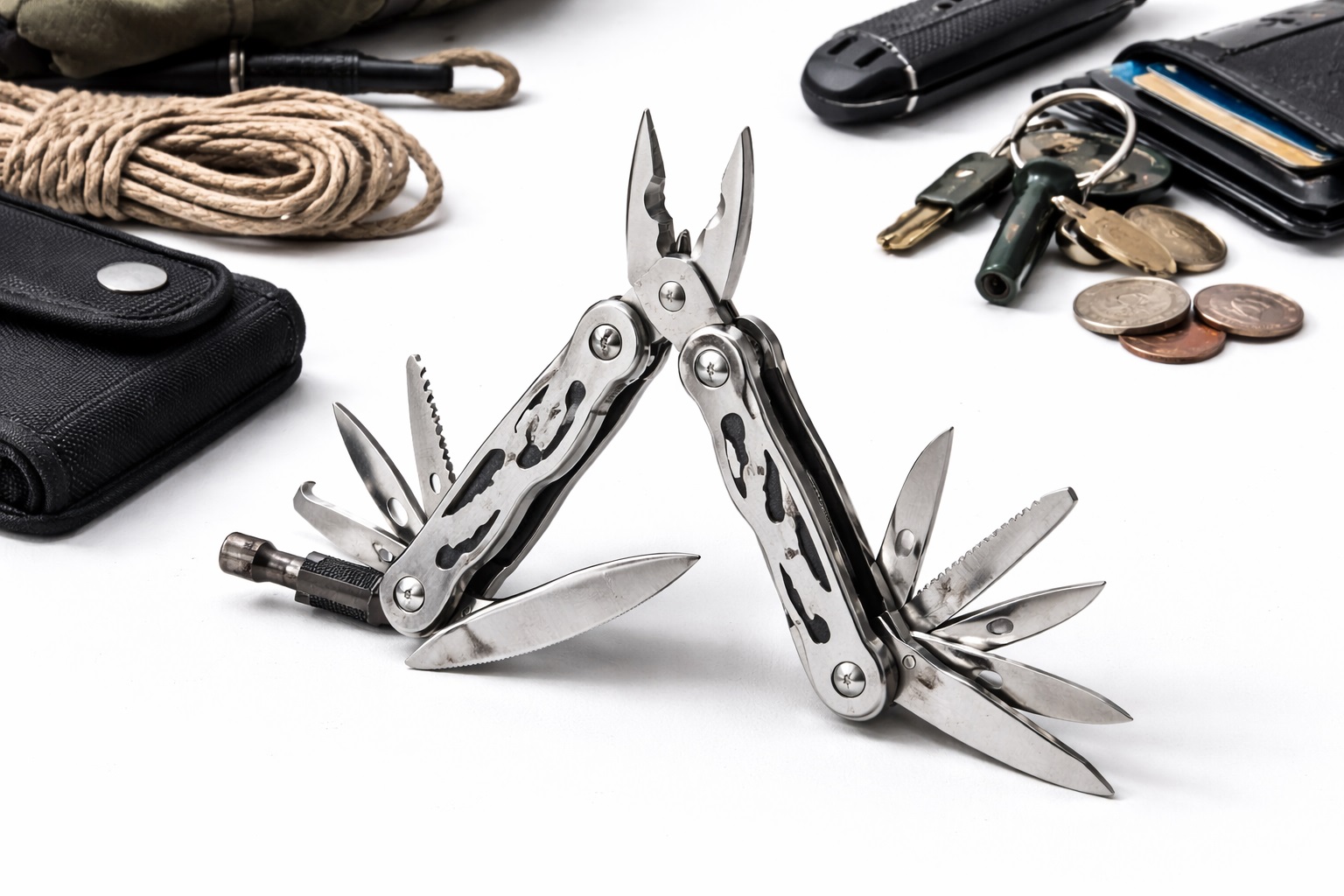
Finding a genuinely useful multi-tool without overspending means looking past marketing and focusing on which features actually matter for the price. A budget-minded shopper does not necessarily want the cheapest tool on the shelf, they want the one that delivers the most real functionality, durability, and daily usefulness for every dollar spent. In 2026, that value can show up at very different price points, from a $40 entry-level pick to a mid-priced tool whose sheer breadth of tools justifies a slightly higher spend.
This guide compares eight widely available multi-tools from Leatherman, Victorinox, Gerber, and SOG, evaluating each one specifically on value: what you get in return for the price, how the build quality holds up over time, and whether the included tools match what most people actually use. We look at options across the full price range in this lineup so you can see clearly where the real value sits, rather than assuming the lowest sticker price is automatically the smartest buy.
Some of the tools reviewed below cost noticeably more than others, and we say so plainly. A higher-priced tool can still represent good value if its extra tools or build quality genuinely offset the cost, while a low-priced tool is only a bargain if it holds up and does what you need. Below you will find detailed reviews of all eight models with honest pricing context, a buying guide focused on getting the most for your money, and answers to the questions shoppers ask most often when trying to buy smart rather than simply buy cheap.
To be direct about where the real budget picks sit in this lineup: the Gerber Suspension-NXT and SOG PowerPint are the two most affordable tools reviewed here, at around $40 and $50 respectively, while the Leatherman Free P4 and Victorinox SwissTool Spirit sit at the premium end, around $150 and $135. Everything else falls in between. Keep that spread in mind as you read through the individual reviews.
It also helps to think about value in terms of what you will actually use rather than what looks impressive on paper. A tool with three times the advertised tool count is not automatically three times more valuable if most of those extra implements sit unused. Throughout this guide, we call out where a higher price is genuinely justified by real-world usefulness, and where it mostly reflects finish quality or brand premium rather than added function.
Top 8 Best Multi-tool for Value Picks (Detailed Reviews)
1. Leatherman Wave Plus – Best For Maximum Functionality Per Dollar
The Wave Plus costs around $120, which puts it well above the cheapest options in this lineup, but its 17-in-1 functionality is the reason it still earns a value recommendation. Pliers, wire cutters, a saw, scissors, multiple blades, and a full driver set mean you are unlikely to need a second tool for most repairs, which is where the real value argument comes in: paying more once for a tool that covers nearly everything can work out cheaper than buying two or three cheaper, more limited tools over time. The pliers open with a standard two-handed spring mechanism rather than a one-hand system, a minor trade-off for the breadth on offer.
- Pros:
- Broad 17-in-1 tool selection reduces the need for other tools
- Long track record and wide accessory support
- Reputable brand with premier build quality
- Cons:
- Costs more than entry-level options
- Two-handed plier opening
Best For: Buyers who want to spend once on a tool that genuinely replaces several smaller ones.
Why We Recommend It: Its tool breadth means you are less likely to need a second purchase later, which is where its value case is strongest.
2. Victorinox Swiss Army Champ – Best For Tool Variety at a Mid-Range Price
At around $100, the Swiss Army Champ sits squarely in the middle of this lineup on price, and it backs that up with 33 tools packed into one compact folding frame. For buyers who are not sure exactly what task will come up, having that many implements on hand, screwdrivers, scissors, a magnifier, a saw, and more, can mean you already own the right tool rather than needing to buy a specialty item later. The trade-off is a thicker folded profile than more streamlined designs, worth weighing against how many of those 33 tools you would genuinely use.
- Pros:
- 33 tools cover an unusually wide range of tasks
- Mid-range price relative to its tool count
- Reputable, well-established brand
- Cons:
- Thicker profile than minimalist tools
- Higher price than the truly budget options here
Best For: Buyers who want the widest tool variety without paying premium prices.
Why We Recommend It: Few tools at this price point offer this much functional variety in a single frame.
3. Gerber Center-Drive – Best For Driver-Heavy Repairs on a Mid-Range Budget
The Center-Drive's defining feature is its full-size driver axis, which keeps standard bits in-line with the handle for real torque, something many cheaper multi-tool drivers struggle with because of awkward bit angles. At around $110, it costs more than the entry-level picks here, but for anyone who regularly drives screws into furniture, gear, or hardware repairs, that added torque can be worth the extra spend rather than fighting with a cheaper tool's weaker driver geometry. Gerber backs it with the same durable stainless construction found across its range.
- Pros:
- Full-size, in-line driver axis for real torque
- Premier build quality
- Reputable brand backing
- Cons:
- Costs more than entry-level tools
- Bulkier profile than minimalist designs
Best For: Buyers who specifically need reliable screw-driving performance and are willing to pay a bit more for it.
Why We Recommend It: The in-line driver axis solves a real limitation that cheaper tools often have, making the added cost worthwhile for driver-heavy use.
4. Leatherman Free P4 – Best For Buyers Willing to Splurge
At around $150, the Free P4 is the most expensive tool in this lineup, and it is worth being upfront that it is not a budget pick by any reasonable definition. Its magnetic opening system, which lets every tool be accessed and locked with one hand, even gloved, is a genuinely useful feature, and Leatherman's build quality is excellent. But buyers focused specifically on value for money will generally find better returns from the mid-priced or entry-level tools in this lineup unless one-hand access to the full toolset is a feature you specifically need and will use often.
- Pros:
- Magnetic one-hand access to every tool, even gloved
- Full driver bit and blade selection
- Premier build quality from a reputable brand
- Cons:
- Highest price point in this lineup by a wide margin
- Limited color options
Best For: Buyers who specifically want magnetic one-hand access and are comfortable paying the highest price here for it.
Why We Recommend It: It remains the most capable single tool in this lineup, even though it is not the value pick.
5. SOG PowerPint – Best For True Budget Grip Strength
At around $50, the PowerPint is one of the two most affordable tools in this entire lineup, and it does not feel like a compromise on its core function: gripping. SOG's compound leverage technology uses a gearing effect in the plier jaws to multiply hand force, giving you meaningfully stronger pliers than a basic spring-loaded design at a fraction of the cost of the premium options here. The bit selection is smaller than the full-size tools, but it covers the basics most budget-focused buyers actually need.
- Pros:
- Compound leverage pliers add real gripping force
- One of the two most affordable tools in this lineup
- Compact, lightweight frame
- Cons:
- Smaller bit selection than full-size rivals
- Limited color options
Best For: Budget-conscious buyers who specifically need strong pliers without paying for a full-size tool.
Why We Recommend It: It delivers a genuine grip-strength advantage at one of the lowest prices in this lineup.
6. Victorinox SwissTool Spirit – Best For Premium Comfort If Budget Allows
At around $135, the SwissTool Spirit is one of the pricier tools reviewed here, and like the Free P4, it is worth being honest that it competes on comfort and finish rather than on value for money. Its ergonomic stainless steel handle is shaped for comfortable extended use, and the Swiss-made construction resists corrosion well. If your budget stretches this far and hand comfort during longer jobs matters to you, it is a strong pick, but buyers focused purely on getting the most tool for the least money will find better options elsewhere in this lineup.
- Pros:
- Ergonomic, comfortable stainless steel handle
- Swiss-made build and finish quality
- Corrosion-resistant construction
- Cons:
- One of the highest price points in this lineup
- Limited color options
Best For: Buyers who prioritize hand comfort and finish quality over squeezing the most value from every dollar.
Why We Recommend It: Its comfort and build quality are genuinely excellent, even though it sits at the premium end of this lineup on price.
7. Gerber Suspension-NXT – Best For The Tightest Budget
At around $40, the Suspension-NXT is the single most affordable tool in this entire lineup, and it still manages to include a genuine one-hand-opening plier mechanism, a feature some pricier tools here do not even offer. The spring-loaded pliers snap open with a flick of the wrist, and the stainless construction holds up reasonably well for the price. It will not match the tool count or bit selection of pricier options, but for shoppers whose primary concern is spending as little as possible while still getting a real, usable multi-tool, this is the strongest candidate reviewed here.
- Pros:
- Lowest price point in this entire lineup
- Spring-loaded, one-hand pliers deployment
- Backed by a well-known brand
- Cons:
- Fewer specialty bits than the pricier models here
- Handle scales feel plainer than the premium tools
Best For: Shoppers who want the lowest possible price while still getting a functional, one-hand multi-tool.
Why We Recommend It: It is difficult to find a genuinely usable multi-tool priced lower than this one in the current market.
8. Leatherman Skeletool – Best For Budget-Friendly Lightweight Carry
At around $75, the Skeletool sits below the mid-point of this lineup on price while still carrying Leatherman's reputation for durable, made-to-last hardware. Its minimalist lightweight design strips the tool down to pliers, wire cutters, a knife blade, a bottle opener, and a bit driver, covering the core functions most people actually use without paying for a long list of rarely used extras. For buyers who want a namebrand tool at a moderate price rather than the cheapest option available, it is a sensible middle-ground pick.
- Pros:
- Moderate price for a namebrand tool
- Skeletonized design cuts carried weight
- Premier build quality from a reputable brand
- Cons:
- Fewer total tools than full-size competitors
- Costs more than the single cheapest option here
Best For: Buyers who want a trusted brand name at a moderate price without paying for a full-size tool.
Why We Recommend It: It balances brand reputation and core functionality at a price below the lineup's mid-point.
Buying Guide: How to Choose the Best Budget Multi-tool
Buying a budget multi-tool well means separating "cheap" from "good value." The cheapest tool on the shelf is not automatically the smartest buy if it fails after a few months, while a slightly pricier tool that lasts for years and covers your actual needs can work out far cheaper over time. The sections below walk through how to evaluate value rather than just price.
1. Price Per Tool, Not Just Sticker Price
Divide the price by the number of genuinely useful tools included, rather than the total advertised tool count, since some listed "tools" on high-count designs are rarely used variations of the same basic implement. Two multi-tools priced ten dollars apart can have very different real-world value once you account for which of their implements you would actually reach for.
2. Material and Build Durability
Look for stainless steel construction and solid pivot points even on a budget pick. A cheap tool that falls apart after a few months is worse value than a slightly pricier one that lasts for years.
3. Core Functions vs. Extra Features
Prioritize pliers, a knife blade, and a couple of screwdriver bits over a long list of rarely used extras. A tool that nails the basics at a lower price is often better value than one padded with implements you will not use.
4. One-Hand Opening Isn't Always Worth Paying For
One-hand plier deployment is convenient, but it is not essential. If budget is your primary concern, a two-handed tool that is otherwise well-built is not a meaningful downgrade in practical terms.
5. Warranty Coverage on Lower-Priced Tools
Check whether a budget-priced tool still carries a manufacturer's warranty covering defects. A lower price with solid warranty backing is a stronger value proposition than a similarly priced tool with no coverage at all.
6. Resisting Tool-Count Marketing
Multi-tools advertised with very high tool counts are not automatically the best value, since a thick, tool-packed design can be less convenient to carry and open than a simpler tool that covers the basics well.
7. Corrosion Resistance Matters Even on a Budget
Stainless steel resists rust better than coated carbon steel. Paying slightly more for corrosion-resistant hardware upfront is usually cheaper than replacing a rusted budget tool within a year or two.
8. Sheath and Carry Options Included in the Price
Check whether a sheath, pocket clip, or case is included at the listed price, since some budget tools require an additional purchase for basic carry accessories that pricier tools include from the start.
9. Comparing Cost Per Year of Expected Use
A $40 tool you replace every year costs more over five years than a $100 tool that lasts the full five years without issue. Thinking in terms of cost per year of use, rather than upfront price alone, gives a clearer picture of real value, and it is a useful mental exercise before dismissing a mid-priced option purely on sticker price.
10. Brand Reputation and Long-Term Support
Established brands are more likely to offer replacement parts and repair support down the line, which extends the useful life of even a budget-priced tool and improves its long-term value.
11. Avoiding the Temptation to Overspend on Extras
It is easy to talk yourself into paying for premium finish or a long feature list you will rarely use. Stay focused on the tools you will actually reach for regularly, and let that guide how much you spend.
12. Replacement Parts and Long-Term Ownership
Wire cutter inserts, pocket clips, and sheaths wear out well before the core tool does. Brands that sell these parts separately let you keep a budget-friendly tool in service for years instead of replacing the whole unit over a single worn component.
13. When Paying More Actually Saves Money
If a specific feature, like an in-line driver axis or one-hand pliers, will genuinely get regular use, paying more for a tool that includes it well can save money compared to buying a cheaper tool now and a better one later.
14. Timing Your Purchase Around Sales
Multi-tool prices fluctuate around seasonal sales events, and a mid-priced or premium tool bought on sale can end up cheaper than a budget tool at full price. If your purchase is not urgent, watching for a discount can meaningfully improve the value equation.
15. Reading Reviews for Real-World Durability, Not Just Specs
Specification sheets rarely tell you how a tool holds up after a year of regular use. Looking at how owners describe wear on pivots, blade edges, and locking mechanisms over time gives a more honest picture of long-term value than the listed features alone.
Frequently Asked Questions
Is the cheapest multi-tool always the best value?
Not necessarily. A cheap tool that fails within a year can cost more over time than a moderately priced tool that lasts for years. Value depends on durability and how well the tool matches your actual needs, not just the upfront price.
How do I maintain a budget multi-tool to make it last longer?
Keep it clean and dry, and check the pivot points periodically, adding a drop of lubricant if the mechanism feels stiff. Budget tools benefit from basic maintenance just as much as premium ones, and it is the cheapest way to extend their lifespan.
Do cheaper multi-tools use lower quality steel?
Often, yes, though not always dramatically so. It is worth checking whether a budget tool uses stainless steel at all, since that single factor affects corrosion resistance and edge retention more than most other specifications.
What is the difference between a multi-tool and a pocket knife?
A pocket knife is built primarily around a folding blade, while a multi-tool combines pliers, drivers, and other implements alongside a blade in one frame, generally at a higher price than a comparable simple knife.
How many tools do I really need on a budget pick?
Most people get the most use out of pliers, a knife blade, and a couple of screwdriver bits. Paying extra for a high tool count is only good value if you will genuinely use the additional implements.
Are one-hand-opening pliers worth paying extra for?
They add convenience but are not essential. If keeping cost down is your priority, a two-handed tool that is otherwise well-built is a reasonable trade-off rather than a meaningful downgrade.
Do budget multi-tools rust faster than premium ones?
They can, particularly if they use coated carbon steel rather than stainless steel. Checking the material before buying is one of the simplest ways to avoid an early rust problem on a budget tool.
What is the average lifespan of a budget multi-tool?
A well-made budget tool from an established brand can still last several years with reasonable care, while a poorly finished one may develop loose pivots or a dull blade within a matter of months.
Should I choose stainless steel even on a tight budget?
Generally, yes. Stainless steel resists corrosion significantly better than coated carbon steel, and the difference in upfront cost between the two is often smaller than the cost of replacing a rusted tool early.
Do budget-friendly multi-tool brands offer warranties?
Many do. Warranty coverage varies by brand and model, so it is worth checking the specific terms before buying, since a warranty adds real value to an otherwise inexpensive purchase.
Is a heavier multi-tool always the better value?
Not necessarily. Extra weight often comes from a higher tool count rather than stronger core components. A lighter, well-built tool with quality steel in its pliers and blade can be just as good a value as a heavier one.
Can a budget multi-tool replace a full toolkit?
For minor repairs, yes, a good budget multi-tool covers cutting, gripping, and basic driving tasks well. For serious mechanical work, a dedicated toolkit remains the more reliable and cost-effective option.
How do I sharpen the blade on a budget multi-tool?
A small sharpening stone or pocket sharpener designed for short blades works well regardless of the tool's price. Maintaining the blade yourself is one of the simplest ways to extend a budget tool's useful life.
What should I check on the pliers of a budget-priced tool?
Confirm the jaws close flush with no visible gap, since a gap usually means weaker gripping force. Also check whether wire cutter inserts are replaceable, which extends the tool's life significantly.
Is it smarter to buy one mid-priced tool or two cheap ones?
Generally, one well-built mid-priced tool that covers your core needs is a better value than two cheaper tools that each cover only part of what you need and may fail sooner.
Do multi-tool brands run sales worth waiting for?
Retailers and brands both regularly discount multi-tools around major shopping seasons, so if a tool on your shortlist is not urgently needed, it is often worth waiting for a sale rather than paying full retail price, especially on mid-priced and premium models.
Is buying a used or refurbished multi-tool a good way to save money?
It can be, provided you inspect the pliers and blade closely for wear and confirm the locking mechanisms still function properly. A well-cared-for used tool from a reputable brand can be a genuine bargain compared to buying new.
Should I buy a budget multi-tool as a gift?
A budget-friendly, well-reviewed multi-tool makes a practical and low-risk gift, since even an entry-level model from an established brand tends to be reliable and genuinely useful for everyday tasks.
Does buying direct from the brand save money over a retailer?
Not always. Retailers frequently run promotions that undercut brand-direct pricing, so it is worth comparing both before assuming one is automatically cheaper than the other.
Are extended warranties worth paying extra for on a budget tool?
Usually not, for lower-priced tools, since the standard manufacturer's warranty typically covers manufacturing defects already, and a budget tool's low replacement cost makes an extended warranty less valuable than it might be on a premium purchase.
What is the biggest mistake people make buying a budget multi-tool?
Choosing based on the highest advertised tool count rather than checking whether the core tools, pliers, blade, and drivers, are genuinely well made. A tool with fewer, better-executed implements is usually the smarter budget buy.
Can I upgrade a budget multi-tool with aftermarket parts later?
Some brands sell replacement bit kits, sheaths, and pocket clips separately, which lets you improve a budget tool's carry comfort or capability over time without buying an entirely new tool. Checking parts availability before buying is a useful step for anyone planning to keep a tool long-term.
Does a longer warranty always mean a better product?
Not necessarily, though it can be a helpful signal of the manufacturer's confidence in the build. It is still worth checking independent reviews and real-world durability feedback rather than relying on warranty length alone.
Final Verdict
- Best Overall Value: Gerber Suspension-NXT, the lowest price in this lineup while still offering genuine one-hand plier deployment.
- Runner-Up Value Pick: SOG PowerPint, only slightly pricier but with meaningfully stronger compound leverage pliers.
- Worth the Extra Spend: Leatherman Skeletool, a moderate step up in price for trusted brand durability and a lighter carry.
When shopping on a budget, the smartest move is rarely picking the single cheapest tool on the shelf without checking what you are giving up. The Gerber Suspension-NXT and SOG PowerPint both prove that a genuinely useful, one-hand-capable multi-tool does not have to cost much, while the Leatherman Skeletool shows that a modest step up in price can buy real durability and brand reputation. Save the pricier tools in this lineup, the Leatherman Free P4 and Victorinox SwissTool Spirit, for buyers who specifically need their premium features rather than treating them as the default choice. And if your needs sit somewhere in the middle, the Leatherman Wave Plus, Victorinox Swiss Army Champ, and Gerber Center-Drive all make a reasonable case for spending a bit more in exchange for genuinely useful added capability, rather than paying for premium finish alone.