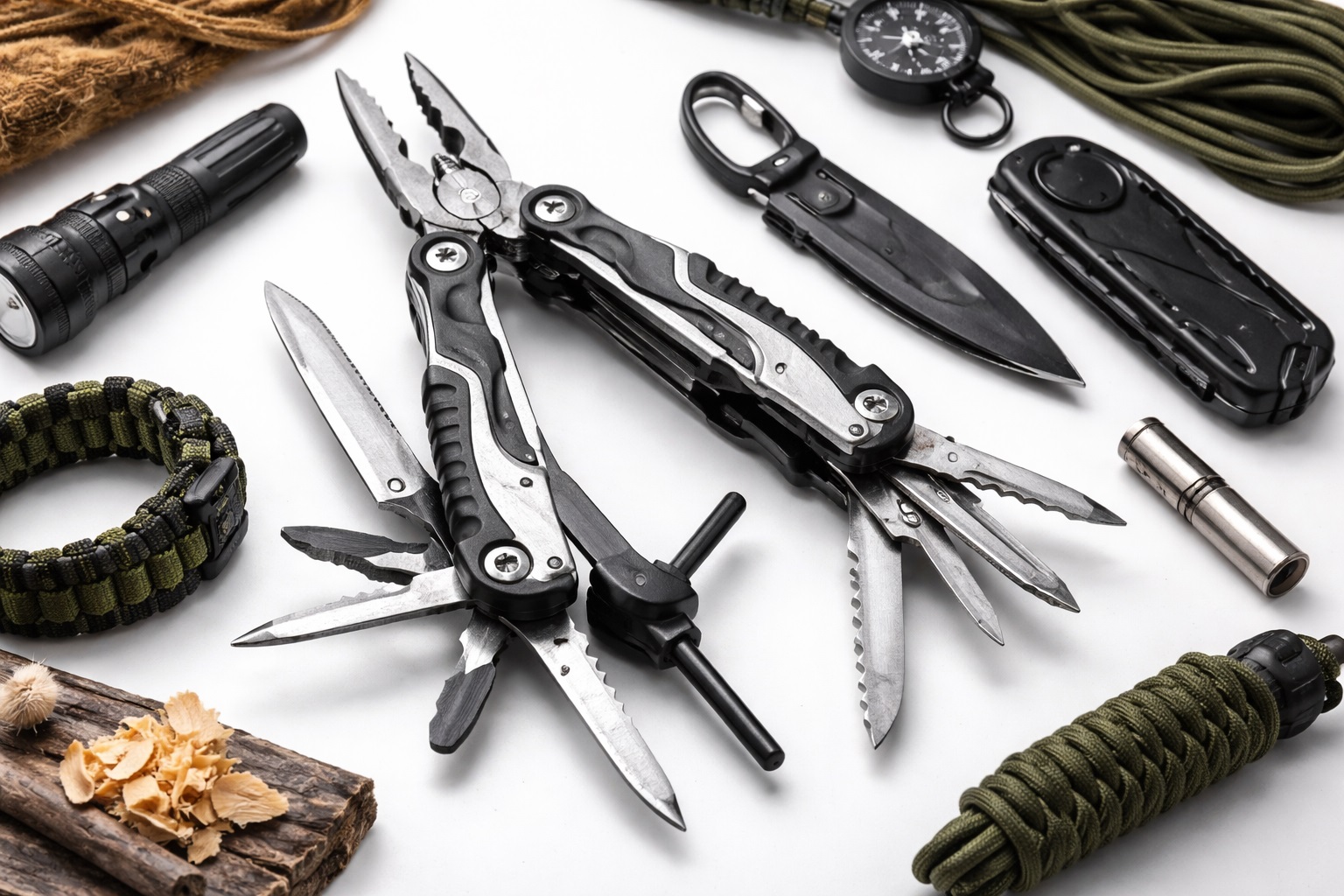
Best Survival Multi-Tool in 2026
When an emergency situation unfolds, the gear you're carrying either helps you adapt or gets in the way, and a well-chosen multi-tool tends to fall firmly into the first category. A survival multi-tool needs to combine cutting, gripping, and fastening functions in a single package that stays reliable after being stored for months in a bag, jostled in a vehicle, or used in cold, wet, or dusty conditions. This guide compares the top multi-tools suited to emergency preparedness in 2026, focusing on models with a track record for holding up when conditions are far from ideal.
Below, you will find detailed reviews of eight multi-tools that consistently show up in emergency kits, bug-out bags, and vehicle glove boxes, followed by a practical buying guide covering the features that matter most when a tool needs to work the first time, every time. Each entry highlights how the tool performs for emergency-specific priorities such as one-handed operation, compactness, and long-term storage stability, rather than judging purely on how many functions are packed into the frame. A tool that looks impressive on a spec sheet but binds up after a season of storage in a garage, basement, or vehicle is a liability, not an asset, when an actual emergency arrives, so long-term reliability gets equal weight alongside raw capability throughout these reviews, and price is treated as one input among several rather than the deciding factor on its own.
This guide also answers common questions about building a multi-tool into an emergency plan, from how many tools a household actually needs to how to keep a stored tool ready to use after sitting untouched for a long stretch of time. The goal is a clear, practical sense of which model fits your specific preparedness needs, your budget, and how you expect to use it if a real emergency arises. None of this requires guesswork about specific ratings or lab results; it simply means thinking honestly about your own likely scenarios and matching gear to them accordingly, whether that's a regional storm season, a long commute, or simply wanting peace of mind at home.
Top 8 Best Multi-Tool Picks (Detailed Reviews)
Leatherman Wave Plus – Best For Bug-Out Bag Versatility
The Leatherman Wave Plus earns its place at the top of an emergency preparedness list because of its 17-in-1 functionality, which covers nearly every task a household might face during a power outage, storm cleanup, or unplanned repair. At around $120, it strikes a strong balance between capability and price, and the pliers are large and strong enough to handle real leverage tasks like bending wire or gripping stuck hardware. It's the kind of tool that can plausibly replace several smaller items in a bug-out bag, which matters when every ounce of pack weight counts. The pliers heads also close firmly enough to hold small parts steady while you work with the other hand, which is a small detail that pays off during an actual repair.
- Pros:
- 17-in-1 functionality covers most emergency repair tasks
- Strong, reliable pliers for demanding jobs
- Reputable brand with widely available replacement parts
- Cons:
- Bulkier than minimalist emergency-carry designs
- Limited color options
Best For: Households or individuals who want one dependable tool that covers the widest range of emergency repair scenarios.
Why We Recommend It: Few multi-tools balance tool count, strength, and price as well as the Wave Plus, and its long track record in real-world use makes it a sensible default choice for an emergency kit, especially for a household that only wants to buy one tool and trust it completely.
Leatherman Free P4 – Best For Fast One-Handed Access
The Leatherman Free P4's magnetic opening system means every tool can be deployed and closed one-handed, which is a genuine advantage when your other hand is occupied holding a flashlight, steadying an injured limb, or securing a rope. At around $150, it's the most expensive tool in this lineup, but the fit, finish, and mechanism smoothness reflect that investment, and the tool feels dependable even after sitting unused in a kit for extended periods. The tight tolerances throughout the mechanism also mean it doesn't develop the wobble or looseness that cheaper tools sometimes show after a year in storage.
- Pros:
- Magnetic opening system enables fast one-handed use
- Premium fit and finish that holds up over time
- Backed by Leatherman's reputation for durability
- Cons:
- Highest price point in this roundup
- Limited color and finish choices
Best For: Emergency situations where quick, one-handed tool access genuinely matters.
Why We Recommend It: The magnetic opening mechanism solves a real problem in high-stress situations, where fumbling to open a stiff tool with cold or gloved hands wastes precious time, and that speed advantage rarely shows up on a spec sheet but matters enormously in practice.
Gerber Suspension-NXT – Best For Budget Emergency Kits
The Gerber Suspension-NXT uses spring-loaded pliers to speed up one of the most common emergency repair actions, and at roughly $40 it is the most affordable option in this lineup. For anyone building multiple emergency kits, such as one for the home, one for each vehicle, and one for a bug-out bag, the lower price makes it realistic to outfit every kit without a large financial outlay. It's compact enough to tuck into a first-aid box, a glove compartment, or a small pouch without noticeably adding to overall kit weight.
- Pros:
- Spring-loaded pliers speed up repetitive tasks
- The lowest price point in this lineup
- Lightweight and compact for easy storage
- Cons:
- Fewer premium materials than higher-priced models
- Smaller overall tool selection
Best For: Building out multiple affordable emergency kits without compromising on basic reliability.
Why We Recommend It: The spring-assisted pliers add real convenience, and the low price makes it practical to stash one in every kit, bag, and vehicle you own, without feeling like you're compromising on basic quality to do so.
Gerber Center-Drive – Best For Field Repairs and Fastening
The Gerber Center-Drive's full-size driver axis sits in line with the handle, giving far better torque and control than tools where the bit driver is offset to one side. At about $110, it's a strong choice for anyone whose emergency scenarios are likely to involve fastening, tightening, or securing gear rather than just cutting or gripping, such as boarding up a window or repairing a fence after a storm. The bit set typically included alongside it also covers a wide range of screw types, which reduces the odds of being stuck without the right driver when it counts.
- Pros:
- In-line driver axis improves torque and control
- Accepts standard bit sets for added versatility
- Reputable Gerber build quality
- Cons:
- Pliers play a secondary role to the driver
- Mid-range price for a fairly specialized tool
Best For: Emergency scenarios centered on repairs, fastening, or securing structures and gear.
Why We Recommend It: The in-line driver design provides noticeably more control than typical offset drivers, which matters when a repair has to be done right the first time, since redoing a stripped fastener wastes both time and materials you may not be able to replace easily.
Victorinox SwissTool Spirit – Best For Comfort During Extended Use
The Victorinox SwissTool Spirit's ergonomic stainless steel construction is genuinely more comfortable to grip during long stretches of repetitive work, which matters in a drawn-out emergency where a tool might be used for hours across several days. At around $135, it's a premium option, but the corrosion resistance of the stainless construction also means it's well suited to being stored in a kit for long periods without seizing up. Even after months in a bag exposed to temperature swings, the pivots tend to move as smoothly as the day it was packed.
- Pros:
- Ergonomic stainless steel resists corrosion in storage
- Comfortable grip during extended use
- Reputable Victorinox engineering
- Cons:
- Premium price relative to similar tool counts
- Limited color options
Best For: Longer emergency situations where the tool may see extended, repetitive use.
Why We Recommend It: The comfortable grip and corrosion-resistant construction mean it stays pleasant to use and ready to work even after being stored for a long stretch, which is a quiet but meaningful advantage over cheaper tools that can seize up unexpectedly.
Victorinox Swiss Army Champ – Best For Maximum Tool Redundancy
The Victorinox Swiss Army Champ packs 33 tools into one compact frame, which is a genuine advantage in an emergency where you cannot predict exactly what task you'll face next. At around $100, it offers strong value for the sheer range of functions included, from scissors to a magnifying tool, even though some of those functions will only see occasional use. The trade-off is a slightly thicker profile, but for a tool meant to sit in a kit rather than a pocket, that extra bulk is rarely a real drawback.
- Pros:
- 33 tools cover an unusually wide range of unpredictable needs
- Compact for the number of functions included
- Reputable Victorinox construction
- Cons:
- Some tools see only rare use
- Thicker profile than simpler designs
Best For: Buyers who want maximum tool redundancy for unpredictable emergency scenarios.
Why We Recommend It: When you genuinely don't know what a situation will demand, having more legitimate tool options on hand is a real advantage rather than unnecessary bulk, particularly for a kit meant to sit in one place and cover a wide range of possible needs.
Leatherman Skeletool – Best For Lightweight Survival Carry
The Leatherman Skeletool strips a multi-tool down to a minimalist lightweight design that focuses on the functions people actually reach for most: pliers, a blade, and a bit driver. At around $75, it's an easy choice for anyone who wants a multi-tool light enough to carry on their person at all times rather than leaving it in a bag, which matters most in a sudden emergency where you may not have time to grab a kit. Its low profile also means it rides comfortably on a belt or in a pocket all day without becoming a nuisance, which is exactly why people actually keep wearing it.
- Pros:
- Minimalist design keeps weight and bulk low
- Focuses on the tools used most often in a crisis
- Comfortable for constant, everyday carry
- Cons:
- Fewer specialized tools than full-size models
- Not ideal for users who want maximum tool variety
Best For: Constant on-body carry so the tool is available the moment an emergency starts.
Why We Recommend It: A tool you actually have with you when disaster strikes is more valuable than a more capable tool left behind in a bag or a drawer.
SOG PowerPint – Best For Entry-Level Preparedness
The SOG PowerPint's compound leverage technology boosts cutting and gripping strength well beyond what its compact size and roughly $50 price suggest, making it an accessible entry point for anyone just starting to build out an emergency kit. It's compact enough to store easily in a car, a desk drawer, or a small bag without taking up much space. It's a sensible first purchase for anyone who wants to start building preparedness habits without committing to a premium price tag right away.
- Pros:
- Compound leverage adds real cutting and gripping power
- Very accessible price point for stocking multiple kits
- Compact enough for glove boxes and small bags
- Cons:
- Fewer premium materials than higher-end options
- Smaller tool selection than full-size models
Best For: First-time preparedness buyers who want solid basic capability without a large investment.
Why We Recommend It: The leverage system delivers genuine cutting and gripping power at a price that makes it easy to justify buying several for different bags and vehicles.
Buying Guide: How to Choose the Best Survival Multi-Tool
Choosing a multi-tool for emergency preparedness is different from choosing one for daily convenience, since reliability, storage stability, and one-handed usability move to the top of the priority list, ahead of secondary conveniences that matter more for casual, everyday use. The sections below cover the factors most relevant to a tool that needs to work correctly the moment it's actually needed.
1. Reliability When It Matters Most
A survival multi-tool is only as good as its ability to function correctly after sitting unused for months. Favor models with a strong reputation for consistent quality control, since an emergency is the worst possible time to discover a manufacturing defect. Reading reviews focused specifically on long-term ownership, rather than first impressions, gives a better sense of how a tool actually holds up.
2. Blade Steel and Cutting Performance
The knife blade needs to cut cleanly through rope, fabric, or packaging without requiring constant resharpening. Higher-grade stainless steels resist corrosion better during long-term storage and hold an edge longer between uses, which matters for a tool that may sit untouched for a year or more. A dull, corroded blade is one of the most common reasons a stored multi-tool fails to perform when it's finally needed.
3. One-Handed Deployment Under Stress
In a genuine emergency, hands are often occupied, cold, wet, or gloved, so a tool that deploys smoothly with one hand offers a real advantage. Magnetic opening systems and assisted pliers are worth prioritizing over tools that require two hands and a firm grip to open. Practicing opening and closing a new tool a few times before you actually need it also builds useful muscle memory.
4. Tool Count Versus Pack Weight
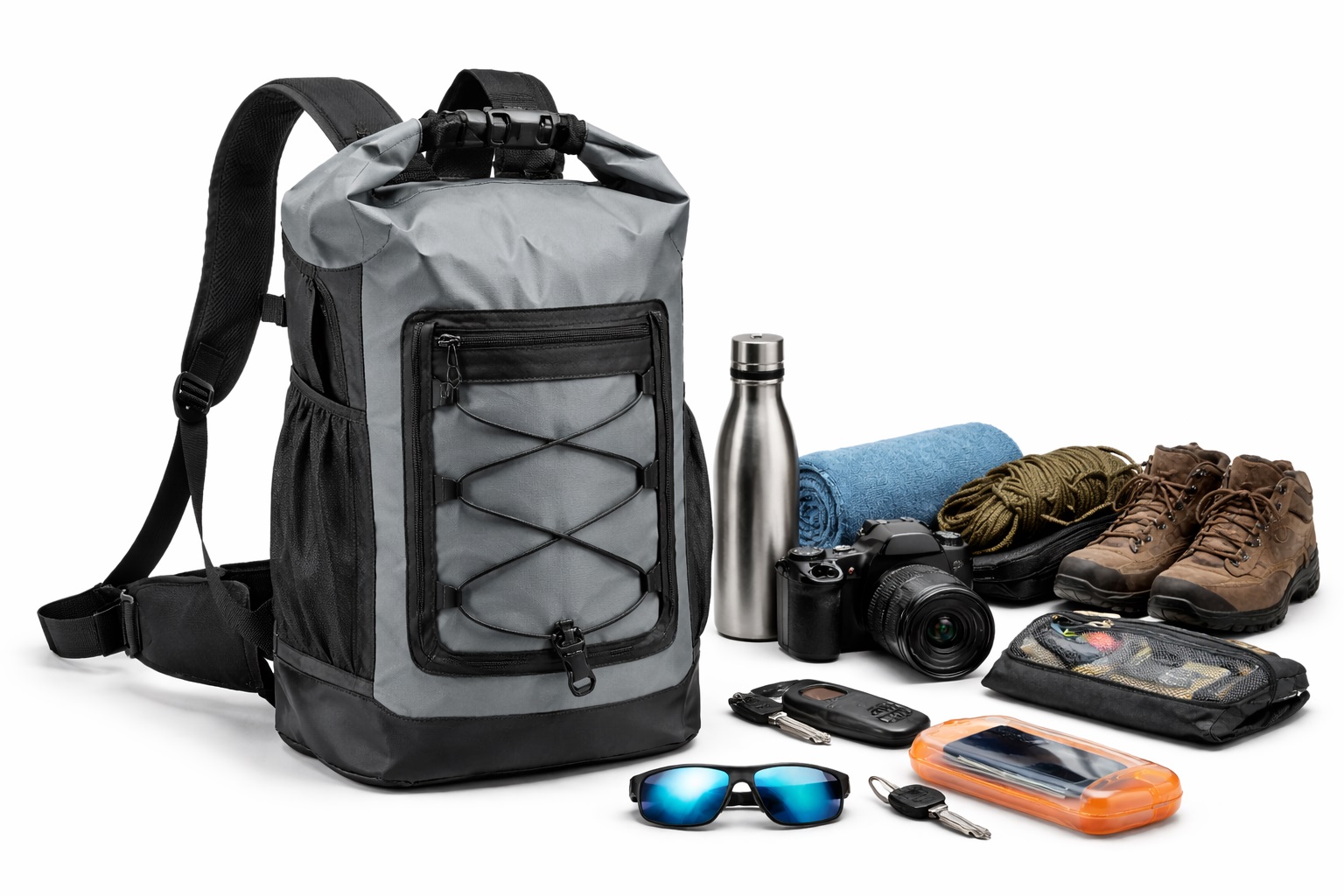
A bug-out bag has limited space and weight capacity, so a multi-tool with a wide but genuinely useful range of functions is often smarter than one with dozens of rarely used tools. Balance versatility against how much extra weight you're willing to carry, since a tool left behind because it felt too heavy provides no value at all.
5. Pliers Strength for Field Repairs
Emergency repairs often involve bending wire, gripping stuck fasteners, or pulling on stubborn materials, so strong, well-aligned pliers matter more in a crisis than in casual daily use. Spring-loaded or compound-leverage designs reduce fatigue during repetitive gripping tasks, which can matter a great deal during a long day of unplanned repairs.
6. Corrosion and Weather Resistance
A tool stored in a bag, vehicle, or basement kit needs to resist humidity, temperature swings, and occasional water exposure without seizing up. Stainless steel components and sealed housings hold up far better in long-term storage than tools prone to surface rust, especially in basements, vehicles, or coastal climates.
7. Compact Size for Bug-Out Bags
A tool that's too bulky often gets left behind when packing light, which defeats its purpose entirely. Compact, lightweight designs are easier to justify carrying at all times, which is exactly when you need the tool available. A tool sitting in a drawer at home does nothing for you if the emergency happens somewhere else entirely.
8. Locking Mechanisms and Safety
A secure lock on the blade and other sharp implements prevents accidental closure during use, which is especially important when working under stress, in poor light, or with cold hands. A tool that folds unexpectedly can cause real injury during an already difficult situation, so it's worth testing the lock's firmness before relying on the tool in the field.
9. Compatibility with Other Gear
Some multi-tools accept standard bit sets or attach to existing sheaths and packs, which adds flexibility without requiring you to buy entirely new accessories. Check compatibility with gear you already own before committing to a specific system, since it can save you from buying duplicate accessories down the line.
10. Durability for Long-Term Storage in Kits
A tool destined for a rarely opened emergency kit needs components that won't degrade, bind, or corrode after months of inactivity. Periodically checking stored tools, even briefly, helps catch problems before an actual emergency reveals them. A quick quarterly check is a small habit that pays off enormously the one time it actually matters.
11. Cost Versus Redundancy
Because emergencies are unpredictable, many households choose to stock more than one multi-tool across different bags, vehicles, and rooms rather than relying on a single unit. Lower-cost, reliable models make this kind of redundancy far more affordable, and having a backup tool nearby reduces the impact if one goes missing or gets damaged.
12. Ease of Maintenance in the Field
A tool that's easy to clean and lubricate with minimal supplies is more practical during an extended emergency when normal maintenance routines and tools may not be available. Simple, exposed mechanisms are generally easier to service than deeply enclosed designs, which matters if you're cleaning gear by flashlight rather than at a workbench.
13. Matching the Tool to Your Emergency Scenario
A household preparing for regional storms has different priorities than someone building a compact bug-out bag for a fast evacuation. Think through your most likely scenarios first, then choose a tool whose strengths actually line up with those situations rather than a generic best-overall pick. A little honest planning up front makes the eventual purchase decision far easier and far more useful.
Frequently Asked Questions
Why should I carry a multi-tool for emergencies?
A multi-tool combines several essential functions such as cutting, gripping, and fastening into one compact item, reducing how much separate gear you need to store, carry, or remember during a stressful situation. It also simplifies packing, since one well-chosen tool can replace a small drawer's worth of individual hand tools.
What's the most useful multi-tool feature in a crisis?
Most users find the pliers and knife blade to be the most frequently used functions during an emergency, since cutting cordage and gripping stuck or bent materials come up more often than specialized tools. Screwdrivers come in a close third, particularly for securing loose fixtures or battery compartments.
How should I store a multi-tool in an emergency kit?
Store it in a dry pouch or sheath, away from direct moisture, and check it periodically to make sure the pivots haven't seized and the blade hasn't developed surface rust. A small silica gel packet in the same pouch can help control moisture in particularly humid storage areas.
Can a multi-tool replace a full toolkit during a disaster?
Not entirely, but it covers a surprising range of basic repair and cutting tasks, which makes it a strong supplement to, rather than a full replacement for, a proper toolkit at home. For larger repairs, a dedicated toolbox still has clear advantages in leverage and specialization.
Should I keep a multi-tool in my car for emergencies?
Yes, a compact multi-tool in a vehicle is useful for everything from cutting a seatbelt to tightening a loose part, and it takes up very little glovebox space.
How many multi-tools should a household emergency kit include?
Many households keep one per vehicle, one in a home emergency kit, and one in each adult's bug-out bag, which spreads redundancy across the places it's most likely to be needed. Labeling each one and checking it during a seasonal gear review keeps everything ready without much ongoing effort.
What's the difference between a survival knife and a multi-tool?
A survival knife is typically a single fixed blade optimized purely for cutting tasks, while a multi-tool trades some cutting performance for the added versatility of pliers, drivers, and other implements. Many preparedness plans include both, since each covers gaps the other leaves open.
Do multi-tools work well in cold weather?
Most hold up fine in cold conditions, though stiffer springs and thicker gloves can make manual opening harder, which is where assisted or one-handed opening designs offer a real advantage. Keeping the pivots lightly lubricated also prevents them from stiffening further in freezing temperatures.
Can a multi-tool help with basic first aid tasks?
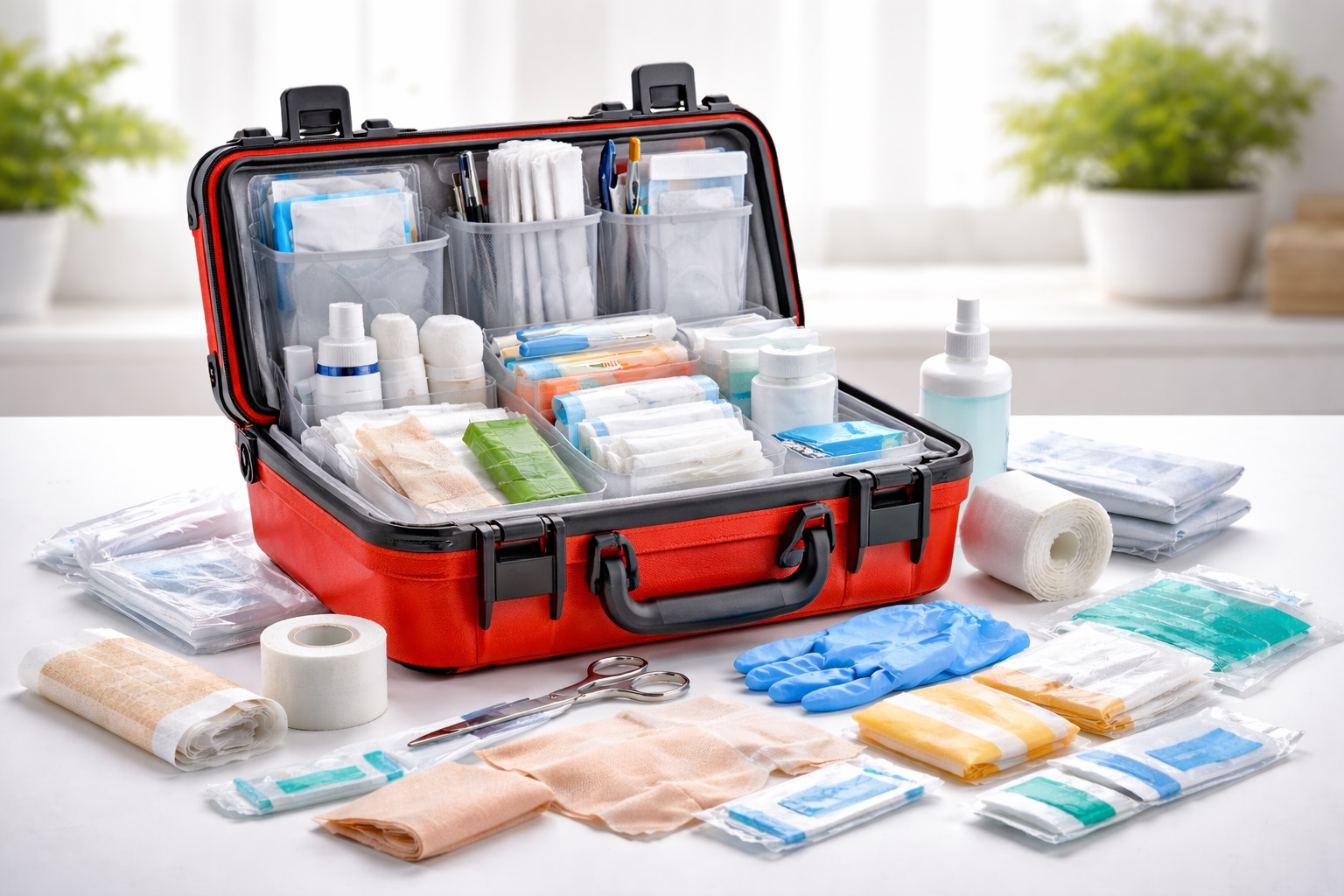
Some models include scissors or a fine blade useful for cutting clothing or bandages, though a multi-tool should supplement, not replace, a proper first aid kit. Keep the blade used for this purpose as clean as reasonably possible.
How do I maintain a multi-tool stored long-term in a bag?
Check it every few months, wipe down the blade, and add a light drop of lubricant to the pivots to prevent the mechanism from binding up when you finally need it. Set a recurring reminder if you tend to forget routine gear checks otherwise.
Is a locking blade important for emergency use?
Yes, a secure lock prevents the blade from folding unexpectedly during use, which is especially important when working quickly or under stress in an emergency situation. Test the lock periodically to confirm it still engages with confidence.
What price range makes sense for an emergency multi-tool?
Reliable, well-reviewed options exist across a wide range, from roughly $40 to $150, and since many households benefit from stocking several tools across different locations, a mix of budget and premium models often makes more sense than one expensive tool alone. Spreading the budget across several locations, such as a car, a bag, and a home kit, often provides more real-world coverage than concentrating the entire budget in a single high-end tool that may not be nearby when it's actually needed.
Should I choose a lightweight or full-size tool for a bug-out bag?
Lightweight models are easier to carry for long distances and are more likely to actually be packed, while full-size tools offer more leverage and a wider tool set for more involved repairs. Some people solve this by carrying a small tool daily and keeping a full-size option in the main bag as backup.
Final Verdict
- Top Pick: Leatherman Wave Plus for its balance of tool count, strength, and price for general emergency preparedness.
- Budget Choice: Gerber Suspension-NXT for dependable performance at the lowest price, making it easy to stock multiple kits.
- Premium Choice: Leatherman Free P4 for its magnetic one-handed opening system and premium overall build quality.
When preparing for emergencies, the right multi-tool is less about chasing the highest tool count and more about picking something reliable enough to trust without a second thought. The Leatherman Wave Plus remains the strongest general-purpose pick for most households, the Gerber Suspension-NXT makes it realistic to outfit every bag and vehicle without a large expense, and the Leatherman Free P4 is worth the premium for anyone who wants the fastest, most confident one-handed operation when conditions are less than ideal. Buyers who want maximum built-in redundancy without stepping up to the top price tier should also give the Victorinox Swiss Army Champ a close look for its sheer breadth of included tools. Whichever model you choose, periodically checking and maintaining it is just as important as the initial purchase, since a tool that seizes up in storage does you no good when an actual emergency arrives. Treat the multi-tool as one part of a broader preparedness habit rather than a single purchase you can forget about once it's tucked away, and revisit your kit every so often as your household's needs change.