Best Backpack Style Dry Bag for Hiking Comfort in 2026
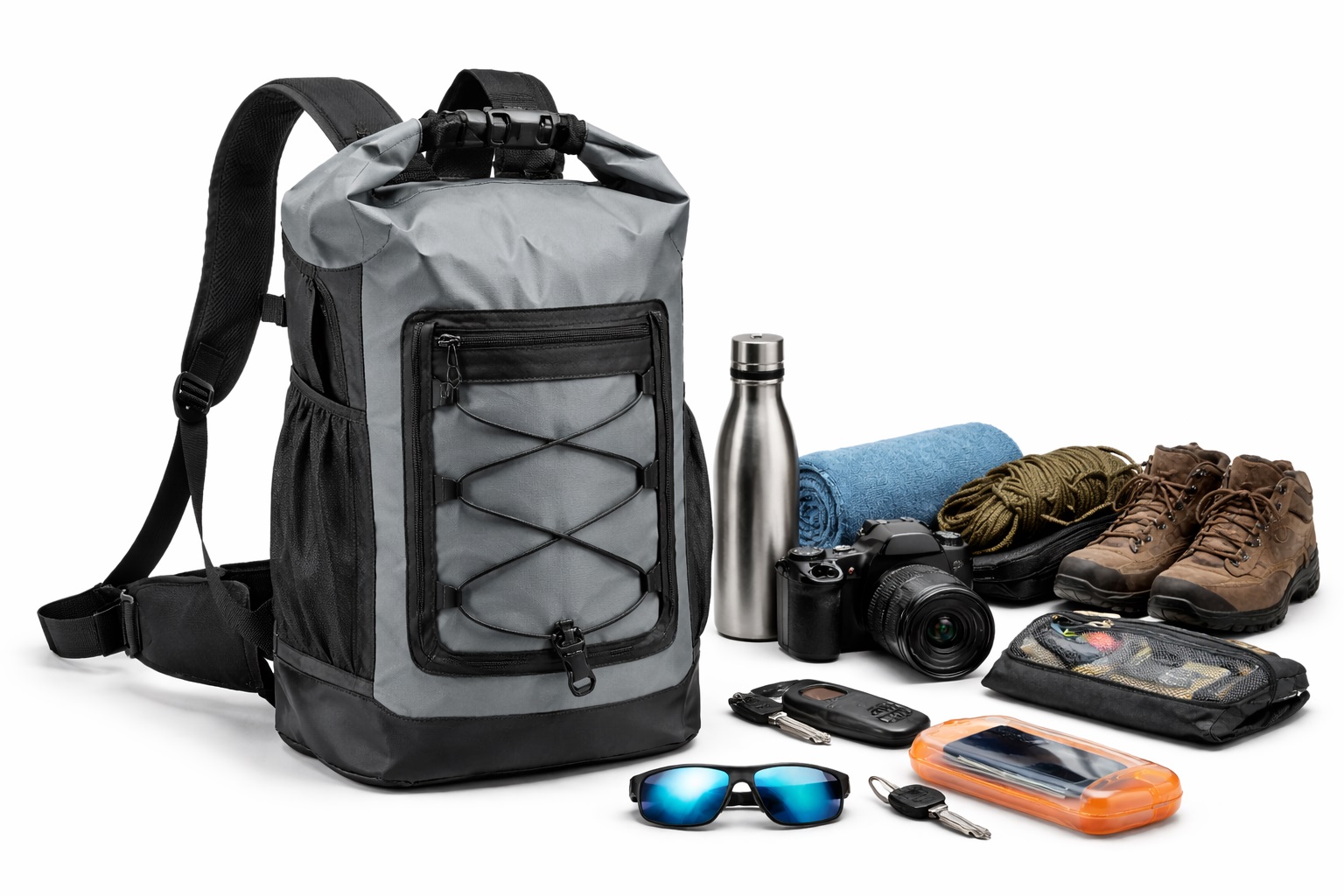
A backpack style dry bag solves a problem that a plain roll-top sack never quite fixes: how to actually carry a waterproof load in hiking comfort across miles of trail, a river crossing, or a scramble over wet rocks. Rather than gripping a floating sack by a loop handle, you get padded shoulder straps and a wearable frame that puts the weight where your body can handle it. This guide compares the top backpack style dry bags on the market so you can match strap comfort, fabric strength, and closure design to the way you actually hike in 2026.
Not every model reviewed here is built the same way; some are dedicated backpack style packs, while others are simple sacks that can be paired with a harness or carried by hand. Comfort over distance depends on more than just the roll-top seal, so strap padding, back panel design, and overall weight all matter once you are covering real trail miles rather than just floating gear alongside a kayak. Below are detailed reviews of eight well-known dry bag models, followed by a complete buying guide and answers to the questions hikers ask most often about staying comfortable while keeping their gear dry.
Price differences in this category often track directly with how much of a true backpack experience a bag delivers. A simple roll-top sack without straps can cost as little as $18, while a fully strapped, padded pack style bag can run past $60. The right choice depends on how far you plan to hike with the bag on your back rather than simply how much water protection it offers.
Top 8 Best dry bag Picks (Detailed Reviews)
1. COR Surf Waterproof Pack – Best For True Backpack-Style Carrying
COR Surf's Waterproof Pack is the closest thing on this list to an actual backpack rather than a sack with a shoulder loop. The ergonomic padded shoulder straps distribute weight across both shoulders, which is the single biggest factor in hiking comfort over a long trail. At roughly $65, it is the most expensive option reviewed here, but it is also the only one built from the ground up as a wearable pack rather than a sealed pouch with an add-on strap.
- Pros:
- Ergonomic padded shoulder straps distribute weight for genuine hiking comfort
- Premier build quality suited to repeated trail and water sports use
- Functions as a real daypack, not just a waterproof sack
- Cons:
- Highest price point among the options reviewed here
- Padded straps add bulk and weight compared to a simple sack
Best For: Hikers who need to cover real trail distance with a waterproof load on their back rather than just floating gear alongside a boat.
Why We Recommend It: It is the only bag on this list designed primarily around wearable comfort rather than water protection alone, which matters most for anyone hiking rather than paddling. The added weight and price are easy to justify once you have carried a loaded floating sack for more than an hour by hand.
2. Sea to Summit Big River – Best For Rugged Hardware Attachment
The Sea to Summit Big River earns its place on this list through its hardware, not just its fabric. The Hypalon lash loops sewn into the seams let you clip the bag to a pack frame, a belt, or a carabiner, which is a genuine advantage for hikers who want to secure a load externally rather than carry it as a standalone backpack. At roughly $45, it costs more than most entries here, reflecting the heavier-duty material and hardware.
- Pros:
- Hypalon lash loops allow secure clip-in attachment to an existing pack
- Heavier fabric weight than most dry bags in this category
- Reputable outdoor brand with a long track record in water sports gear
- Cons:
- Higher price point than most competitors on this list
- No built-in shoulder straps of its own, so it relies on external attachment
Best For: Hikers who already carry a frame pack and want to lash a dry bag externally rather than wear a second standalone pack.
Why We Recommend It: Few dry bags offer genuine attachment hardware, making this the obvious choice when you want to integrate waterproof storage into gear you already carry. The higher price reflects real material and hardware upgrades that hold up to repeated trail abrasion.
3. Piscifun Dry Bag – Best For Buyers Who Want Size Options
Piscifun sells its dry bags across a wide range of sizes, and the multi-sized selection means you can match capacity to a day hike or a multi-day trek rather than settling for a one-size-fits-all pack. At around $22, it undercuts most of the mid-tier competition while still using a coated fabric that holds up to regular trail use.
- Pros:
- Multi-sized selection lets you dial in capacity for your specific hike
- Competitive pricing relative to build quality
- Simple roll-top design with minimal extra hardware to fail
- Cons:
- No dedicated padded straps for true backpack-style comfort
- Fewer premium touches like reinforced lash points
Best For: Hikers who already know their exact gear list and want to size their dry bag precisely instead of guessing.
Why We Recommend It: The size range removes the guesswork that usually comes with picking a dry bag for a specific hike length. Buying within a matched product family also makes it easier to add a second size later for a different type of trip.
4. Osprey Dry Sack – Best For Everyday Trail Reliability
Osprey built its reputation on load-bearing pack hardware, and that engineering mindset carries over into the Osprey Dry Sack. The siliconized nylon protection used on the shell resists abrasion and repels water at the surface before it ever reaches the roll-top seal, which matters when a bag rides inside or clipped to a hiking pack across rough trail. At a price point of around $20, it sits comfortably in the budget-friendly range while still carrying a recognizable brand name that most hikers already trust.
- Pros:
- Siliconized nylon shell resists abrasion and light water exposure
- Lightweight enough to add to a hiking pack without much weight penalty
- Backed by a well-known outdoor brand with wide retail availability
- Cons:
- No standalone shoulder strap system for true backpack-style carrying
- Roll-top closure needs three full rolls for a reliable seal
Best For: Hikers who want a trusted name-brand dry bag to pair with an existing pack rather than a standalone waterproof backpack.
Why We Recommend It: The combination of a durable shell and a recognizable warranty policy makes this a low-risk pick for anyone new to trail-ready dry bags. It is the kind of bag you can hand off to a hiking partner without worrying they will misuse it.
5. Earth Pak Waterproof Bag – Best For Heavy-Duty Fabric Strength
Earth Pak leans on heavy duty 500D PVC fabric, a denier rating well above what many dry bags use, to give this bag serious resistance to punctures and abrasion. At around $25, it undercuts most of the tougher competition while still offering fabric strength that suits rough trail conditions where a bag gets dragged over rocks or scraped against tree bark.
- Pros:
- Heavy duty 500D PVC resists punctures better than lighter fabrics
- Reasonable price for the fabric weight offered
- Reputable brand with a growing following among outdoor shoppers
- Cons:
- Heavier fabric adds a bit more weight than ultralight alternatives
- No dedicated padded strap system for extended hiking comfort
Best For: Hikers who cover rough terrain and want a dry bag that can take a beating without a dedicated backpack harness.
Why We Recommend It: Heavier-denier fabric is one of the simplest ways to extend the working life of a bag that gets dropped, dragged, or crushed on the trail. It is a sensible middle ground between an ultralight sack and a fully armored expedition bag.
6. KastKing Dry Bag – Best For Seam Reliability
KastKing entered the dry bag market through fishing gear, and its fusion-welded seams reflect that background: fewer stitch holes mean fewer potential leak points on a bag carried across wet trail conditions. At about $28, it lands in the middle of the pricing range, offering seam-level durability without the premium cost of the hardware-heavy options further up this list.
- Pros:
- Fusion-welded seams eliminate needle holes as a leak risk
- Mid-range price keeps it accessible for casual hikers
- Durable enough for repeated fishing, paddling, and hiking use
- Cons:
- No built-in shoulder strap system for backpack-style comfort
- Limited color options compared to lifestyle-focused brands
Best For: Hikers and anglers who want welded-seam reliability without paying for a dedicated backpack harness they may not need.
Why We Recommend It: Welded seams are one of the most meaningful durability upgrades available at this price point, especially on a bag that gets bounced around on the trail. For anyone who has dealt with a leaking stitched seam before, the peace of mind is worth the modest premium.
7. SealLine Discovery Deck – Best For Compression on the Move
The SealLine Discovery Deck stands out for its PurgeAir valve for easy compression, which lets you squeeze excess air out after rolling the top closed. For a hiker carrying a dry bag alongside other gear, that means a flatter, more compact load that rides more comfortably against the back. At around $55, it is one of the pricier options here, but the compression feature is genuinely useful when the bag needs to sit close to your body.
- Pros:
- PurgeAir valve compresses the bag flatter for a more comfortable carry
- Premier build quality typical of SealLine's paddling-focused lineup
- Reputable brand with a long history in whitewater gear
- Cons:
- Higher price point than simpler roll-top-only designs
- No dedicated shoulder strap system of its own
Best For: Hikers who want a flatter, more compact dry bag profile to pair with an existing pack rather than a bulky standalone sack.
Why We Recommend It: The purge valve solves a real annoyance for trail use: excess trapped air that makes a dry bag bulky and uncomfortable against your back. That extra flatness matters more than it sounds like once you have been wearing a pack for several hours.
8. Unigear Dry Bag – Best For Budget-Conscious Hikers
Unigear keeps things simple with a floating waterproof design and a price point of around $18, making it the most affordable option on this list. The floating construction means that if the bag ever ends up in a stream crossing or a lake, it stays on the surface instead of sinking, a reassuring feature for hikers navigating water crossings.
- Pros:
- Lowest price point among all eight models reviewed
- Floating waterproof design adds peace of mind near stream crossings
- Simple roll-top design that is easy for first-time hikers to master
- Cons:
- No dedicated padded straps for true backpack-style comfort
- Fewer premium touches like welded seams or lash hardware
Best For: Budget-conscious hikers who want reliable protection for their gear without paying for a dedicated wearable pack system.
Why We Recommend It: It proves that a genuinely useful dry bag doesn't have to carry a premium price tag, even for hikers on a budget. For occasional day hikes near water, this is more than enough bag for the job.
Buying Guide: How to Choose the Best Backpack Style Dry Bag
A backpack style dry bag is judged on more than waterproofing alone; how it actually feels on your back over hours of trail time matters just as much. The sections below break down the specific factors that separate a comfortable wearable pack from a simple sack with a strap bolted on.
1. Shoulder Strap Padding and Design
Padded, contoured straps distribute weight across the shoulders far better than a thin webbing strap. Look for adjustable length and, ideally, a sternum strap to keep the load stable while you hike over uneven ground.
Straps that are too thin can dig into the shoulders on longer hikes, even if the bag itself is otherwise well made, so try to assess strap width and padding thickness before buying.
2. Back Panel Ventilation
A waterproof back panel can trap heat and moisture against your body during a long hike. Some backpack style dry bags add a mesh or channeled back panel to improve airflow without compromising the seal.
If a model lacks back ventilation, consider pairing it with a moisture-wicking base layer to reduce discomfort on warmer trail days.
3. Roll-Top Closure Quality
The roll-top closure is the single most important feature on any dry bag. Look for a wide, stiffened opening that folds over on itself at least three times, since fewer rolls dramatically increase the odds of water finding its way in through the seal.
A closure that is easy to open and reseal with one hand is a genuine convenience on the trail, especially when you need quick access during a short break.
4. Fabric Weight and Denier Rating
Denier ratings describe the thickness and toughness of the fabric threads. Heavier ratings like 500D resist punctures and abrasion better, which matters when a bag rubs against rock faces or brushes past branches on narrow trails.
Lighter fabrics keep overall pack weight down, which is worth prioritizing on longer through-hikes where every extra ounce is felt by the end of the day.
5. Seam Construction
Fusion-welded seams eliminate the needle holes that stitched seams leave behind, which removes a common failure point. If a bag uses stitched seams instead, check whether the manufacturer applies interior seam tape for added protection.
Seam quality matters more on a bag that flexes constantly against your back and shoulders during movement rather than sitting still in a boat hull.
6. Capacity for Hiking Needs
Backpack style dry bags come in a range of capacities, and the right size depends on whether you are packing for a day hike or a multi-day trek. Overpacking a small bag makes the straps work harder than they are designed for.
Consider whether you need room for layers, food, and a sleeping system, or whether the bag is meant purely to protect electronics and clothing inside a larger pack.
7. Attachment Hardware
Lash loops, D-rings, and carabiner clips let you attach a dry bag externally to an existing hiking pack frame, which is useful if the bag itself lacks dedicated shoulder straps. This hardware effectively turns a simple sack into a pack accessory.
Hikers who already own a frame pack often prefer this route over buying a fully separate wearable dry bag.
8. Weight of the Empty Bag
A dedicated backpack style dry bag with padding and a frame weighs more empty than a simple roll-top sack. Weigh that trade-off against how much the added comfort matters for the distance you typically hike.
Ultralight hikers may prefer a lighter sack paired with external attachment hardware rather than carrying the extra weight of a full harness system.
9. Waterproof Rating Versus Water-Resistant Claims
Not every bag labeled "waterproof" is fully submersible. Roll-top dry bags with welded seams generally handle stream crossings and heavy rain better than zippered water-resistant packs, which are only rated for splashes.
Read product descriptions carefully for the difference between "waterproof," "water-resistant," and "splashproof," since hiking in wet conditions deserves the stronger rating whenever possible.
10. Color and Visibility
Bright colors make a dry bag easier to spot if it is set down at a rest stop or dropped during a stream crossing. Muted or dark colors look sleeker but blend into the trail environment more easily.
A high-visibility color also helps hiking partners keep track of each other's gear when packs look similar at a glance.
11. Brand Reputation and Warranty
Established outdoor brands typically back their dry bags with clear warranty policies and replacement parts, which matters if a strap, valve, or seam ever fails mid-trip. Lesser-known brands can still perform well, but the after-sale support is usually thinner.
Reading recent buyer feedback on strap durability and seam longevity is often more useful than relying on brand name alone when comparing two similarly priced options.
12. Price Versus Feature Set
Compare what each price tier actually buys you. Entry-level bags cover basic roll-top protection, mid-range bags add welded seams or heavier fabric, and premium bags introduce padded straps, valves, or a full wearable harness.
Buying the cheapest option is not automatically a mistake, but understand exactly which comfort features you are giving up so the trade-off is a deliberate choice rather than a surprise on trail day.
13. Maintenance and Longevity
Rinse dirt, sweat, and sand off the exterior and straps after a hike, and let the bag dry fully with the top open before storing it. UV exposure and folding creases are the most common causes of premature material fatigue.
Check strap stitching and buckle hardware periodically for wear, since these components see more repeated stress on a backpack style bag than on a simple sack. A quick inspection before a longer trip can catch a fraying strap or a stiff valve before it becomes a problem on the trail.
Frequently Asked Questions
What makes a dry bag "backpack style" instead of just a sack?
A backpack style dry bag includes padded shoulder straps, and sometimes a back panel or frame, built specifically for wearable comfort rather than being carried by a single top handle or loop.
Is a backpack style dry bag comfortable for long hikes?
Models with genuinely padded, contoured straps and some back ventilation can be comfortable for several hours on the trail, though they generally will not match a dedicated hiking backpack's fit adjustment range.
Can I attach a regular dry bag to my existing hiking pack instead?
Yes, if the dry bag includes lash loops, D-rings, or another attachment point, you can secure it externally to a pack frame rather than buying a fully separate wearable dry bag.
How do I properly seal a roll-top dry bag before a hike?
Squeeze out excess air, fold the top down flat at least three times, and snap or buckle the ends together. Skipping a fold or two is one of the most common causes of a leak during a stream crossing.
Do backpack style dry bags float during a water crossing?
Many dry bags, especially those with a floating waterproof design, trap enough air when properly sealed to stay on the surface if dropped in water. Not every model is designed with flotation specifically in mind, so check the listing if that matters for your route.
What is the difference between PVC and nylon dry bag fabric for hiking?
PVC is typically heavier and more puncture-resistant, making it a good fit for rough trail conditions, while coated nylon is lighter and packs down smaller, which suits long-distance hiking more than short outings.
Are welded seams better than stitched seams on a hiking dry bag?
Fusion-welded seams generally outperform stitched seams because they remove the needle holes that can eventually let water through, which matters on a bag that flexes constantly against your back. Stitched seams can still perform well when combined with interior seam tape.
Is a premium backpack style dry bag worth it for occasional hikers?
Yes, for anyone who hikes near water crossings or in wet climates regularly, but occasional hikers in dry conditions may get by fine with a simpler, lighter roll-top sack instead.
How often should I replace a backpack style dry bag?
Most dry bags last several years with regular use if rinsed and dried properly. Replace it sooner if you notice cracking fabric, worn strap stitching, or a roll-top seam that no longer holds a tight seal.
Do compression valves help with hiking comfort?
Yes, a purge valve that removes trapped air lets the bag sit flatter and closer to your back, which reduces the bulk and shifting weight that can make a load feel awkward on the trail.
What colors are best for a hiking dry bag?
Bright colors like orange, yellow, or red make the bag easier to spot at a rest stop or during a water crossing, while darker colors are more common on lifestyle-oriented models.
Can I use a backpack style dry bag for everyday commuting?
Yes, the padded straps that make these bags comfortable on the trail work just as well for a bike commute or a rainy walk to work, though the capacity may be more than most commuters need.
Should I choose a frameless dry bag or one with a rigid back panel?
A rigid or semi-rigid back panel helps a loaded bag hold its shape and transfers weight more evenly to the hips on longer hikes, while a frameless design stays lighter and packs down smaller for shorter outings.
How much should a backpack style dry bag weigh empty?
Weight varies by capacity and construction, but a lighter empty bag generally means less padding and a simpler harness, while a heavier one usually reflects a more supportive strap and back panel system.
Do I need a hip belt on a backpack style dry bag?
A hip belt helps transfer weight off the shoulders on longer hikes with a fuller load, but for shorter trips or lighter loads, shoulder straps alone are usually enough to stay comfortable.
Can a backpack style dry bag replace a regular hiking backpack?
For water-focused trips it can work well, but a dedicated hiking backpack typically offers better organization, more pockets, and a more refined fit adjustment system for long-distance trekking.
Final Verdict
- Top Pick: COR Surf Waterproof Pack for genuine padded shoulder straps and the most comfortable true backpack-style carry.
- Budget Choice: Unigear Dry Bag for the lowest price point without sacrificing basic floating waterproof protection.
- Premium Choice: Sea to Summit Big River for rugged hardware and heavier fabric suited to serious trail and water use.
Choosing the right backpack style dry bag comes down to matching strap comfort, fabric strength, and attachment hardware to how far and how often you actually hike. Any of the eight models above will keep your gear dry; the differences show up in how each one feels on your shoulders after a few hours on the trail.
Think through the terrain and distance of your typical hikes, whether that means short day trips near a lake or longer treks with stream crossings, before deciding which of these eight options fits your routine best. A backpack style dry bag is a meaningful investment in comfort as well as protection, so it rarely pays to choose based on price alone if you plan to wear it for hours at a time.
If you already own a capable hiking pack, a simpler dry bag with solid attachment hardware may serve you better than paying extra for a second full harness system you will rarely use on its own. On the other hand, hikers who regularly cross streams or hike in consistently wet climates will get real, repeated value from a dedicated backpack style option with padded straps built specifically for that job.