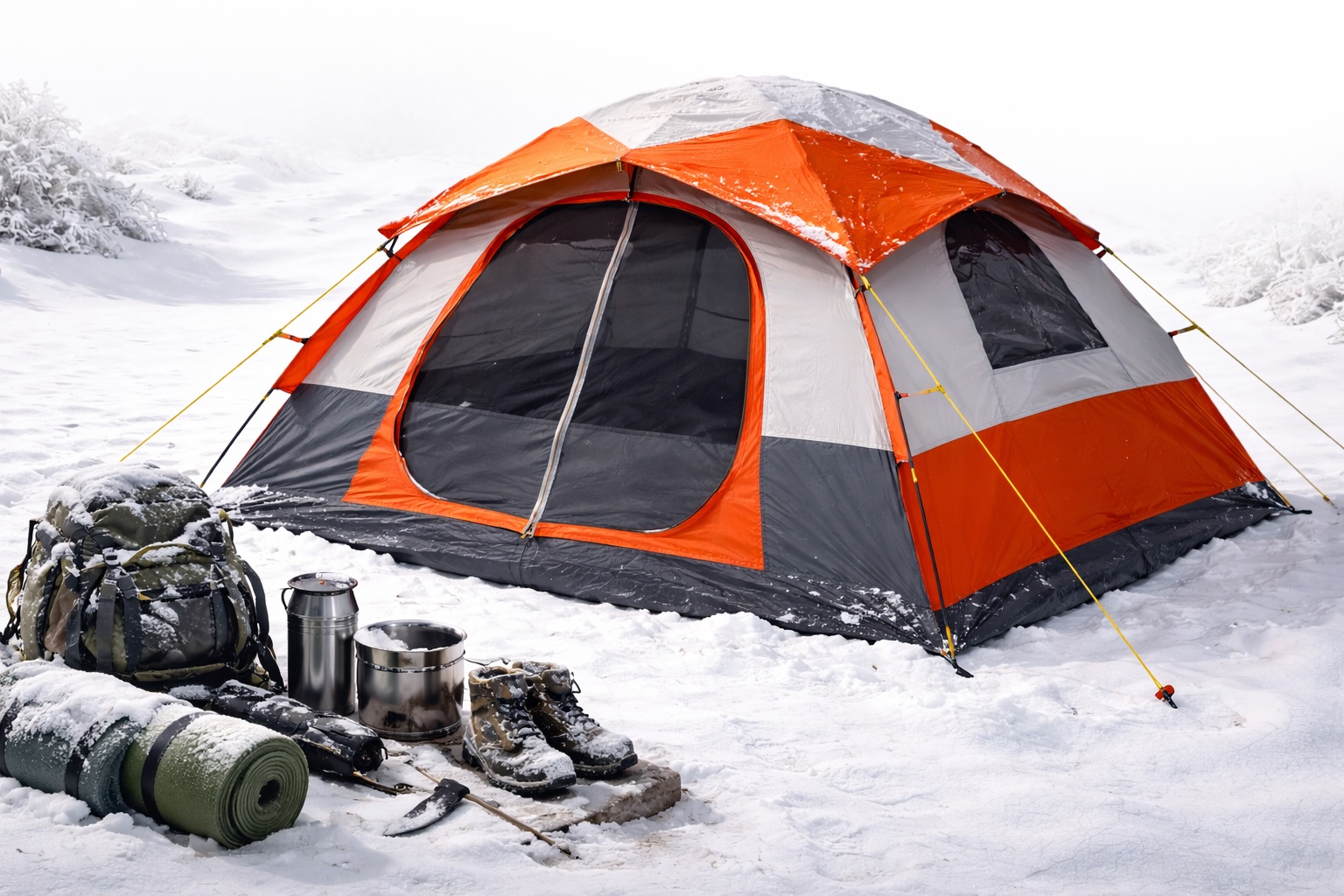
Best 4-Season Camping Tent in 2026
Shopping for a camping tent that can handle more than one season is a different exercise than picking a basic summer shelter. A true year-round tent needs to shrug off a late-spring squall, keep you dry through a humid summer thunderstorm, and still hold its shape when an early snow catches your trip off guard. That range of demands is exactly why this guide exists: to help you sort tents that are genuinely built for changing conditions from those that only look the part on a store shelf.
Below we break down eight well-known camping tents that campers and backpackers regularly turn to for extended-season use, from lightweight backpacking shelters to heavier canvas basecamp tents. Each one has a different personality: some prioritize weight savings for long treks, others prioritize livable space for families who camp through the fall and into early winter. None of them are marketed as extreme mountaineering shelters, and it is worth saying plainly that a dedicated expedition four-season tent, built to shed heavy snow loads on exposed ridgelines, is a different category of gear entirely. What follows are the tents that make the most sense for campers who want one shelter that performs well across three or four seasons of ordinary outdoor use.
After the reviews, our buying guide walks through the specific features that separate a tent that merely survives changing weather from one that keeps you comfortable in it, along with an FAQ section addressing the questions we hear most often from readers weighing a year-round purchase. Whether you camp a handful of weekends a year or chase good weather across every season, the goal here is to help you buy once and buy the right tent for how you actually use it.
Top 8 Best camping tent Picks (Detailed Reviews)
1. REI Co-op Half Dome – Best Overall for Year-Round Versatility
The REI Co-op Half Dome has been a fixture in the backpacking and car-camping world for years, and its reputation rests on a simple formula: a roomy interior, a freestanding dome design, and construction that holds up trip after trip. At a price point of around $330, it sits in the middle of the market, positioned as a step up from entry-level tents without reaching into premium expedition territory. Its spacious interior makes it easy to live in during longer stays, whether that means waiting out a rainy afternoon or laying out gear for an early winter morning start. For campers who want one tent that can reasonably handle spring, summer, and fall trips with occasional cold-weather use, the Half Dome is a dependable starting point.
- Pros:
- Premier build quality from a well-established outdoor brand
- Spacious interior that feels livable during extended stays
- Reputable brand with wide parts and accessory support
- Cons:
- Higher price point than basic three-season tents
- Limited color options compared to newer releases
- Not rated for sustained heavy snow loads
Best For: Campers and backpackers who want one versatile tent to cover most of the calendar year without stepping up to expedition-grade gear.
Why We Recommend It: The Half Dome balances livable space, manageable weight, and a track record of durability, making it an easy default recommendation for anyone who camps often enough that a single quality tent needs to earn its keep across seasons.
2. The North Face Wawona – Best for Family Basecamping in Shoulder Seasons
The North Face Wawona takes a different approach than backpacking-style tents by leaning into space. Built around a large vestibule, it gives families and groups a covered area to store boots, packs, and cooking gear without tracking mud into the sleeping area. At around $400, it costs more than compact backpacking tents, but the trade-off is a noticeably larger footprint that suits basecamp-style trips more than long-distance carries. For shoulder-season camping, when mornings are cold and gear needs somewhere dry to sit, that extra vestibule space becomes genuinely useful rather than a nice-to-have.
- Pros:
- Premier build quality with reinforced high-traffic areas
- Large vestibule that adds real usable storage space
- Reputable brand known for durable outdoor fabrics
- Cons:
- Higher price point relative to its backpacking-focused peers
- Limited color options across recent production runs
- Bulkier pack size makes it a poor fit for long treks
Best For: Families and groups doing basecamp-style trips through the shoulder seasons who value covered storage over minimal weight.
Why We Recommend It: Few tents in this price range give you as much usable, protected space, which matters when a trip stretches across unpredictable spring or fall weather.
3. MSR Hubba Hubba NX – Best for Backpacking Through Changing Weather
MSR built its reputation on backpacking tents that are easy to trust when conditions turn, and the Hubba Hubba NX continues that tradition with an easy-to-pitch design that rewards campers who need to set up quickly as weather rolls in. At around $450, it sits toward the premium end of backpacking tents, but the color-coded pole system and freestanding structure mean you are not fumbling with instructions during a downpour. It packs light enough for multi-day trips while still holding up when a shoulder-season trip brings an unexpected cold front.
- Pros:
- Premier build quality using proven backpacking-grade materials
- Easy-to-pitch design that speeds up setup in poor weather
- Reputable brand trusted across the backpacking community
- Cons:
- Higher price point than most car-camping tents
- Limited color options in current lineups
- Interior space is tighter than family-oriented tents
Best For: Backpackers who need a light, quick-pitching tent that still performs when the forecast changes mid-trip.
Why We Recommend It: The combination of low weight and fast, reliable setup makes it one of the more versatile backpacking tents for campers who cover ground across multiple seasons.
4. Kelty Discovery Basecamp – Best Budget Pick for Frequent Campers
The Kelty Discovery Basecamp is aimed squarely at campers who want to camp often without spending premium-tent money every trip. Its no-see-um mesh keeps bugs out during warm months while still allowing airflow, which helps manage condensation during cooler nights. At around $120, it is one of the more accessible options on this list, and while it will not match pricier tents on weight or ultralight materials, it delivers dependable shelter for the price. It suits campers who camp across most of the year but are not chasing extreme conditions.
- Pros:
- Premier build quality relative to its accessible price point
- No-see-um mesh that supports ventilation and bug protection
- Reputable brand with a long history in family camping gear
- Cons:
- Heavier and bulkier than backpacking-focused tents
- Limited color options across current stock
- Rainfly coverage is more basic than premium models
Best For: Frequent campers who want a reliable, budget-conscious tent for car camping across spring, summer, and fall.
Why We Recommend It: It offers a sensible balance of price and dependability for campers who prioritize value without giving up basic weather protection.
5. ALPS Mountaineering Lynx – Best Lightweight Value Option
The ALPS Mountaineering Lynx has built a loyal following among backpackers who want a freestanding tent without paying flagship prices. Its free-standing design makes setup and takedown straightforward, which matters when you are pitching camp after a long day on the trail. At around $100, it undercuts most name-brand backpacking tents while still offering a livable interior and dependable rain protection for three-season use, with enough resilience to handle occasional cold snaps.
- Pros:
- Premier build quality that punches above its price bracket
- Free-standing design for quick setup on uneven ground
- Reputable brand known for value-focused backpacking gear
- Cons:
- Higher price point once accessories are added, relative to budget tents
- Limited color options compared to larger competitors
- Not designed for sustained harsh winter conditions
Best For: Budget-conscious backpackers who still want a freestanding, dependable tent for most of the camping calendar.
Why We Recommend It: It delivers a lot of the setup convenience and weather protection of pricier tents at a fraction of the cost.
6. Coleman Sundome – Best Entry-Level Tent for Casual Use
The Coleman Sundome remains one of the most widely recognized entry-level tents on the market, largely because it does the basics well without overcomplicating things. Its WeatherTec system focuses on keeping the floor and seams dry during typical rain, which covers the majority of casual camping scenarios. At around $70, it is the most accessible tent on this list, making it a sensible pick for occasional campers who want reliable shelter without a large investment.
- Pros:
- Premier build quality for its highly accessible price bracket
- WeatherTec system that helps manage everyday rain exposure
- Reputable brand widely available with easy replacement parts
- Cons:
- Higher price point once you add footprint and accessories
- Limited color options across current retail versions
- Not built for sustained cold-weather or heavy-snow use
Best For: Casual and occasional campers who want a simple, budget-friendly tent for fair-weather trips with light shoulder-season use.
Why We Recommend It: Its low price and straightforward design make it an easy entry point for anyone testing out how often they will actually camp.
7. Kodiak Canvas Flex-Bow – Best for Serious Four-Season Basecamping
Of every tent on this list, the Kodiak Canvas Flex-Bow leans closest to genuine year-round durability, thanks to its heavyweight Hydra-Shield canvas construction. At around $600, it is the most expensive option here, but that cost reflects a fundamentally different build than the lighter nylon and polyester tents above it. The flex-bow frame gives it a more rigid structure that stands up to wind and cold better than typical backpacking fabrics, making it a strong choice for hunters, basecamp campers, and anyone who spends extended stretches in one spot through changing weather.
- Pros:
- Premier build quality with heavyweight canvas construction
- Hydra-Shield canvas that holds up to sustained rough weather
- Reputable brand specializing in rugged basecamp shelters
- Cons:
- Higher price point than every other tent on this list
- Limited color options, typically offered in a single canvas tone
- Significant weight makes it unsuitable for backpacking
Best For: Hunters, anglers, and basecamp campers who stay in one location and need a tent built for extended, rugged seasonal use.
Why We Recommend It: Its canvas construction and heavier frame make it the most convincing year-round option on this list for campers who are not carrying it on their backs.
8. Big Agnes Copper Spur – Best Ultralight Pick for Year-Round Backpackers
The Big Agnes Copper Spur takes the opposite approach from the Kodiak, prioritizing ultralight weight above nearly everything else. At around $550, it commands a premium price for its weight savings, appealing to backpackers who count every ounce across long trips that span multiple seasons. Its lightweight materials mean it is not built to withstand the same abuse as a canvas basecamp tent, but for campers covering serious mileage across spring, summer, and fall, the weight savings often outweigh that trade-off.
- Pros:
- Premier build quality using advanced ultralight fabrics
- Ultralight weight that makes long-distance backpacking easier
- Reputable brand respected among thru-hikers and backpackers
- Cons:
- Higher price point tied directly to its weight savings
- Limited color options across current production
- Lighter materials require more careful handling over time
Best For: Distance backpackers who prioritize minimal pack weight across multi-season trips and are willing to pay for it.
Why We Recommend It: Few tents balance low weight and livable space as well as the Copper Spur, which matters most when every extra ounce is carried for days at a time.
Buying Guide: How to Choose the Best Camping Tent
Choosing a camping tent for year-round or multi-season use comes down to matching the tent's design to how and where you actually camp. The sections below walk through the specific factors that make the biggest difference once you are out in changing weather.
1. Understanding Seasonal Ratings
Tents are typically described as two-season, three-season, or four-season, and the terminology matters. Three-season tents, which make up most of this list, are built for spring, summer, and fall use with reasonable wind and rain resistance. True four-season tents are built with sturdier poles and less mesh specifically to handle sustained snow loads and high winds, and they usually run heavier and pricier as a result. Knowing which category you actually need prevents overspending or, worse, under-preparing for a trip. If your camping calendar leans toward shoulder-season trips rather than winter expeditions, a well-made three-season tent with good weather resistance is usually the more practical and more comfortable choice.
2. Tent Capacity and Livable Floor Space
Manufacturer capacity ratings tend to be optimistic. A "two-person" tent is often snug for two adults with gear, so consider sizing up if you value comfort or plan to store bags inside during bad weather rather than in a vestibule. Floor dimensions and peak height matter just as much as the stated capacity number, since a tent with a low ceiling can feel cramped even when the floor area is technically generous.
3. Pole Materials and Structural Strength
Aluminum poles generally outperform fiberglass in both weight and durability, particularly in wind. A tent that needs to handle multiple seasons benefits from a pole structure that will not warp or crack under repeated setup and breakdown. Look at how many poles cross at the top of the tent, since additional crossing points typically add stability during gusty conditions without dramatically increasing overall weight.
4. Rainfly Coverage and Waterproofing
A full-coverage rainfly that extends close to the ground offers meaningfully better protection than a partial fly, especially during driving rain or wind-blown precipitation. Check seam sealing and denier ratings if you plan to camp through wetter shoulder seasons. A higher denier fabric on the floor and fly generally resists abrasion and punctures better, which matters on rockier or root-covered campsites.
5. Ventilation and Condensation Control
Mesh panels and adjustable vents help manage the condensation that builds up from body heat and breath overnight, which becomes more noticeable in cooler weather. A tent with too little ventilation can feel damp even when it is not raining outside. Cross-ventilation, where air can move from one side of the tent to the other, tends to work better than a single vent placed on just one wall.
6. Vestibule Size and Gear Storage
A generous vestibule keeps muddy boots, wet packs, and cooking gear out of the sleeping area, which matters more as trips stretch into colder or wetter conditions where gear needs to dry somewhere covered. Two smaller vestibules on either side of the tent can be more practical than one large one when multiple people need separate gear storage.
7. Packed Weight and Size for Transport
If you are backpacking, weight and packed size directly affect how far and how comfortably you can travel. Car campers have more flexibility here and can prioritize space and features over ounces. It helps to weigh the full setup, including stakes, guy lines, and any included footprint, rather than relying only on the advertised trail weight of the tent body and poles.
8. Ease of Setup and Practice at Home
Even an easy-to-pitch tent benefits from a practice run before your first real trip. Learning the pole sequence and rainfly attachment at home means you are not troubleshooting in the dark or in bad weather. Color-coded poles and clips, rather than sleeves, tend to speed up setup considerably once you know the pattern.
9. Doors, Zippers, and Everyday Livability
Multiple doors reduce the need to climb over tent-mates, and quality zippers matter more than they seem to until one fails mid-trip. Check zipper quality and door placement against how you actually plan to use the tent. Zippers with larger teeth and reinforced pulls tend to hold up better to repeated use and are easier to operate with cold or wet hands.
10. Footprint Compatibility and Ground Protection
A footprint or groundsheet protects the tent floor from abrasion and moisture, extending its lifespan considerably. Some tents include a compatible footprint as an accessory; others require a generic tarp cut to size. Trimming a footprint slightly smaller than the tent floor also helps prevent rainwater from pooling underneath during a heavy storm.
11. Guy Lines, Stakes, and Wind Stability
Guy-out points and sturdy stakes make a real difference in wind, particularly for tents pitched in exposed or elevated terrain. Reflective guy lines also help prevent late-night trips and falls around camp. Upgrading the stock stakes to sturdier ones for rocky or sandy ground is a small investment that meaningfully improves stability in changing weather.
12. Price Range and Long-Term Value
A higher price does not always mean a better fit for your needs. Weigh how often you will actually camp across seasons against the cost, and consider that a mid-range tent used often may outperform a premium tent that sits in a closet. Factor in accessories like a footprint, repair kit, and stake upgrades when comparing total cost across models.
13. Brand Reputation, Warranty, and Support
Established outdoor brands typically offer better warranty support, replacement parts, and repair services, which matters if you plan to keep a tent in rotation for years of multi-season use. Reading how a brand handles warranty claims, not just its marketing copy, can be a useful signal of how it will treat you after the sale.
Frequently Asked Questions
Is a premium camping tent worth it?
For frequent campers, yes. Higher-end models often use stronger materials, better waterproofing, and more durable poles than budget alternatives, which pays off over repeated trips across different seasons. If you only camp once or twice a year, though, a mid-range tent may deliver most of the same comfort without the added cost of premium fabrics and hardware you will rarely stress-test.
How do I maintain my camping tent?
Keep it clean and completely dry before storage to prevent mold and mildew. Periodically check seam seals, zippers, and pole connections, and reapply waterproofing treatment to the rainfly as needed. Storing the tent loosely in a breathable bag rather than tightly compressed for long periods also helps preserve the fabric's coatings and elasticity over time.
What is the difference between a three-season and four-season tent?
Three-season tents are designed for spring, summer, and fall, with more mesh for ventilation. Four-season tents use sturdier poles and less mesh to handle heavier wind and snow loads in winter conditions. The trade-off is that four-season tents tend to run warmer and heavier, which is less comfortable during mild-weather trips than a purpose-built three-season shelter.
Can I use a three-season tent in light snow?
Most three-season tents can handle a light, brief snowfall if you clear accumulation from the rainfly periodically, but they are not designed for sustained heavy snow loads the way dedicated four-season tents are. If snow camping is a regular part of your plans rather than an occasional surprise, it is worth budgeting for a tent built specifically for that purpose.
How much should I spend on a camping tent?
It depends on how often you camp and in what conditions. Occasional casual campers can do well with budget options, while frequent campers or those facing variable weather often get better long-term value from a mid-range or premium tent. Think of it as cost per trip rather than sticker price alone; a durable tent used dozens of times a year often works out cheaper in the long run than replacing a budget tent every season or two.
Do I need a footprint for my tent?
A footprint is not strictly required, but it does protect the tent floor from wear and add a layer against ground moisture, which can extend the life of the tent considerably. It is a relatively small upfront cost compared to repairing or replacing a punctured tent floor down the line.
How many people can actually sleep comfortably in a "2-person" tent?
Two adults with minimal gear can usually fit, but it will feel snug. If comfort matters or you plan to store gear inside, consider sizing up to a three-person tent for two occupants, especially for multi-night trips where you will be spending more waking time inside the tent itself.
What causes condensation inside a tent?
Condensation forms when warm, moist air from breathing and body heat meets the cooler tent walls. Good ventilation, adjustable vents, and avoiding fully sealing the tent in mild weather all help reduce it. Pitching in a spot with some airflow, rather than a fully enclosed hollow, can also reduce how much moisture collects overnight.
Are heavier canvas tents better for year-round use?
Canvas tents are generally more durable and better at handling sustained rough weather, but that durability comes with significant added weight, making them better suited to basecamp use than backpacking. For car camping or hunting basecamps where the tent stays in one spot, that trade-off is usually well worth it.
How long does a quality camping tent typically last?
With proper care, storage, and occasional reproofing, a well-made tent can last many years of regular use. Lifespan depends heavily on UV exposure, storage conditions, and how often it is used in harsh weather. Minimizing unnecessary sun exposure by pitching in shade when possible can meaningfully slow fabric degradation over time.
Should I buy a tent with more doors?
Multiple doors add convenience, especially for two or more occupants, since nobody has to climb over anyone else. The trade-off is usually a small increase in weight and price, which is often a reasonable exchange for the added livability on longer trips.
Is aluminum or fiberglass better for tent poles?
Aluminum poles are generally lighter, stronger, and more resistant to wind stress than fiberglass, which is why most higher-quality backpacking and multi-season tents use aluminum. Fiberglass poles are more common on budget tents and tend to become brittle with age and cold exposure.
What should I check before every camping trip?
Inspect the rainfly for wear, test zippers, confirm all poles and stakes are included, and check the weather forecast against your tent's seasonal rating before heading out. A quick setup at home before a big trip can also catch a missing part or a small repair need before it becomes a problem at the campsite.
Final Verdict
- Top Pick: REI Co-op Half Dome for overall excellence.
- Budget Choice: MSR Hubba Hubba NX for great value.
- Premium Choice: The North Face Wawona for high-end features.
There is no single tent on this list that suits every camper in every situation, and that is the point of shopping with a clear sense of how you actually camp. Backpackers covering long distances across multiple seasons will get the most out of a lighter design like the MSR Hubba Hubba NX or Big Agnes Copper Spur, while families and basecamp campers who value space and covered storage will lean toward the North Face Wawona or Kelty Discovery Basecamp. If your trips regularly push into genuinely rough, extended-season conditions and weight is not a concern, the Kodiak Canvas Flex-Bow stands apart from the rest of the field. Whichever direction you go, matching the tent's seasonal rating and build to your actual trips, rather than the most extreme conditions you can imagine, will serve you better than chasing specs you may never use.