Best Non-Stick Camping Cookware in 2026
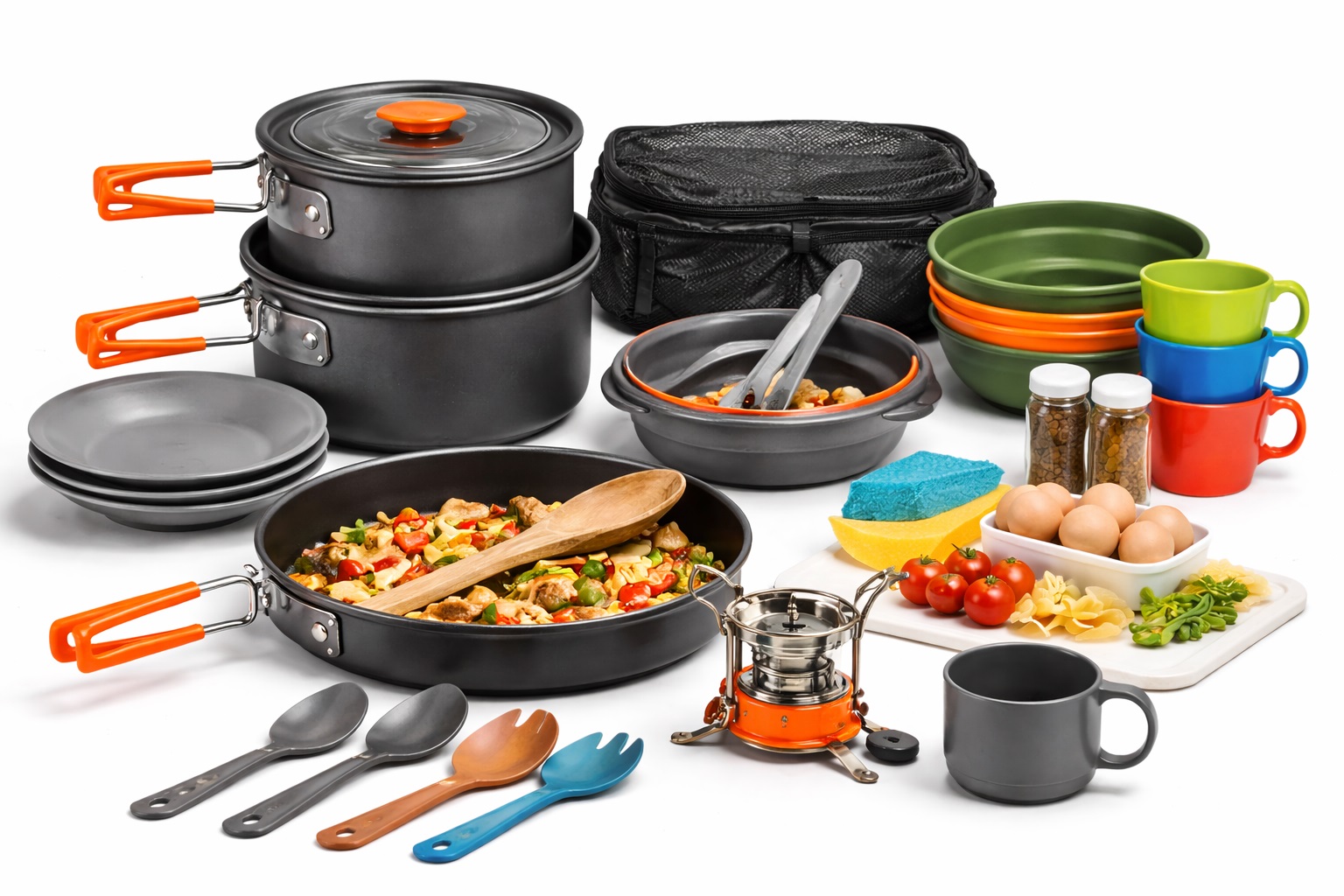
Nobody wants to spend their evening at camp scraping burnt rice off the bottom of a pot. This guide compares the top camping cookware options available in 2026 for campers who prioritize easy cleaning above almost everything else, whether that comes from an actual non-stick coating, a naturally smooth material, or simply a design that doesn't trap food and grime in hard-to-reach corners.
It's worth being upfront about a distinction that matters here: not every product below has a true non-stick coating. Some rely on genuinely coated surfaces, like Teflon-style non-stick layers, while others clean up easily because of smooth, non-porous materials such as titanium or polished stainless steel rather than any added coating at all. The reviews below call out which is which, so you know exactly what you're getting rather than assuming every "easy clean" pick works the same way. This distinction matters more than it might seem, since a coated pan and a naturally smooth pot solve the same problem in genuinely different ways, with different tradeoffs in cost, weight, and how the surface holds up over years of use.
Cleanup speed matters more than people expect once they're actually camping. After a long day outdoors, few things feel worse than scrubbing a scorched pot by headlamp with cold water. The products below are ranked with that real-world frustration in mind, starting with the option that solves it most directly and working toward alternatives that trade some non-stick convenience for other strengths like durability or weight. By the end of the list, you should have a clear sense of which approach, an actual coating or a naturally smooth material, fits your own cooking habits best.
Keep in mind that even genuine non-stick coatings aren't indestructible, and every material below responds differently to heat, oil, and the utensils you use. Understanding those differences up front will help you get more life out of whichever option you choose, coated or not.
Top 8 Easy-Clean Camping Cookware Picks (Detailed Reviews)
1. GSI Outdoors Pinnacle – Best For True Non-Stick Performance
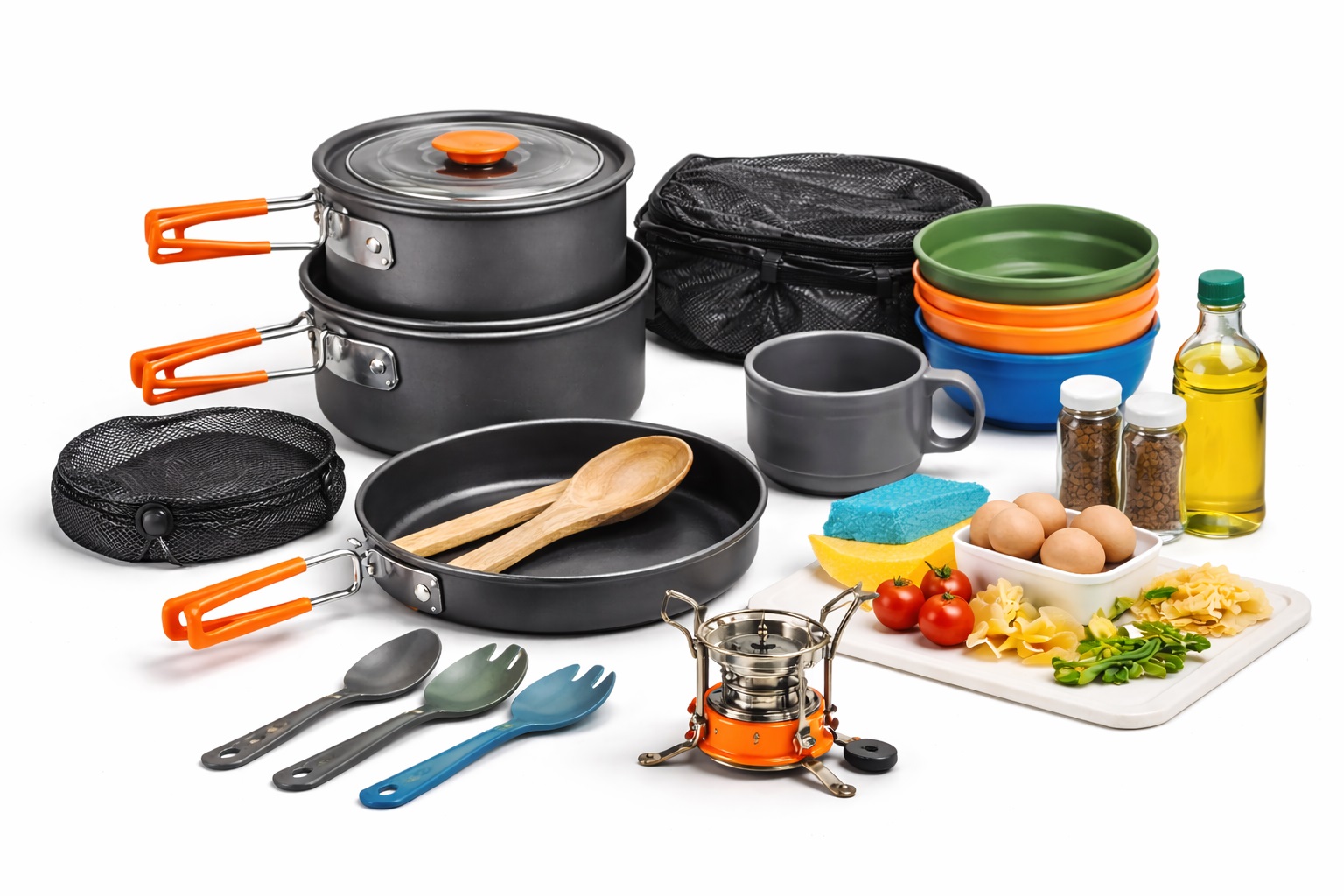
The GSI Outdoors Pinnacle is the clearest non-stick pick on this list, built around a Teflon-style coating that genuinely reduces how much food clings to the pan. That coating turns cleanup into a quick wipe in most cases, rather than a scrub-and-soak session. At around $100, it's the priciest option here, but for campers who prioritize easy cleaning above all else, the coating delivers exactly what the price promises, particularly after a meal that would otherwise leave a stubborn residue on bare metal.
- Pros:
- Genuine non-stick coating, not just a smooth material
- Multiple nesting pieces for varied meals
- Reputable, well-established outdoor cooking brand
- Cons:
- Highest price point among the picks reviewed here
- Coating requires gentler utensils to avoid scratches
- Limited color and finish options
Best For: Campers who want an actual non-stick coating rather than relying on a naturally smoother material, especially those cooking eggs, pancakes, or other foods prone to sticking.
Why We Recommend It: It's the only pick here with a genuine non-stick surface, making it the most direct solution to the cleanup problem this guide is built around, especially for campers cooking foods that would otherwise cling stubbornly to bare metal.
2. Snow Peak Trek 1400 – Best For Coating-Free Easy Cleaning
The Snow Peak Trek 1400 has no non-stick coating, but its titanium surface is naturally smooth and non-porous, which means food doesn't bond to it the way it can with rougher, uncoated aluminum. At around $70, it costs more than basic aluminum kits, but it rewards that spending with a surface that wipes clean easily once properly preheated and used with a bit of oil or water, and that ease never fades the way a coating eventually can.
- Pros:
- Naturally smooth titanium surface resists sticking
- Durable enough to last many camping seasons
- Lightweight compared to stainless steel alternatives
- Cons:
- No actual coating, so technique still matters for food release
- Pricier than basic aluminum options
- Single-pot design limits capacity
Best For: Campers who want easier cleanup without an added coating that could eventually wear off, and who plan to keep this pot for many years.
Why We Recommend It: Titanium's smoothness offers a genuine cleanup advantage over untreated aluminum, without the long-term coating maintenance concerns some non-stick surfaces carry, so the cleanup benefit never wears down season after season.
3. Toaks Titanium 750ml – Best For Minimalist Easy-Clean Solo Cooking
Like its Snow Peak counterpart, the Toaks Titanium 750ml relies on titanium's natural smoothness rather than any coating. Its single-pot, minimalist design also means there are fewer nooks, seams, or extra pieces for food residue to hide in. At around $35, it's a genuinely affordable way to get an easy-to-wipe-down pot without paying for a full multi-piece set, which keeps both the cost and the cleanup routine refreshingly simple.
- Pros:
- Simple single-pot shape with few places for residue to collect
- Naturally smooth titanium surface
- Affordable and ultralight
- Cons:
- No coating, so proper heat management still matters
- Small capacity limits it to solo meals
- Can develop hot spots if not watched carefully
Best For: Solo campers who want a simple, easy-to-wipe pot without paying for a full coated set they don't actually need.
Why We Recommend It: Fewer pieces and a smooth surface add up to less overall cleanup, even without a dedicated non-stick coating, which suits campers who'd rather spend their evening relaxing than scrubbing several pieces.
4. Sea to Summit X-Pot – Best For Wipeable Silicone Convenience
The Sea to Summit X-Pot's collapsible silicone body has a naturally smooth, non-porous surface that wipes down easily, similar in spirit to a silicone baking mat at home. Its solid metal base still needs the same care as other bare-metal cookware, but the silicone sides rarely hold onto grease or food residue the way rougher materials can. At around $55, it's a mid-range pick that adds real cleanup convenience along with its space-saving design, a combination that's hard to find elsewhere on this list.
- Pros:
- Smooth silicone body wipes clean easily
- Collapsible design also saves pack and storage space
- Solid base works on most standard heat sources
- Cons:
- Base still requires normal metal-cookware cleaning care
- Costs more than a comparable rigid aluminum pot
- Less impact-resistant than fully rigid metal cookware
Best For: Campers who want an easy-to-wipe cooking surface along with a smaller packed size, particularly those short on room in their pack or storage bin.
Why We Recommend It: The silicone body offers a genuinely different, low-effort cleaning experience compared to bare metal cookware, and it packs down small enough to disappear into a corner of your bag.
5. MSR Alpine 2 Pot Set – Best For Easy-Clean Two-Pot Cooking
The MSR Alpine 2 Pot Set uses hard-anodized aluminum, a treatment that makes the surface less porous and somewhat easier to clean than untreated aluminum, even without a dedicated non-stick coating. Its two-pot nesting design also means each piece stays simpler and easier to scrub than a single, larger multi-purpose pot. At around $80, it's priced for campers who want two working pots with a cleanup advantage over basic aluminum, without the ongoing maintenance concerns that come with a true non-stick coating.
- Pros:
- Hard-anodized surface resists staining and buildup
- Two nesting pots for parallel cooking
- Even heat distribution reduces scorching
- Cons:
- Not a true non-stick coating
- Pricier than single-pot alternatives
- Bulkier to pack than a single pot
Best For: Campers cooking for two who want a cleanup advantage over standard aluminum without paying for a full coated set that includes pieces they won't use.
Why We Recommend It: Hard-anodizing genuinely reduces how much food bonds to the surface compared to raw aluminum, which adds up over repeated meals across a longer trip.
6. Stanley Adventure Camp – Best For Scrub-Resistant Durability
The Stanley Adventure Camp's stainless steel construction doesn't stick less than other bare metals, but it resists staining, pitting, and lingering odors better than aluminum, which keeps it looking and feeling clean over years of use even without a coating. At around $60, it's a solid middle-of-the-road choice for campers who prioritize long-term cleanliness over minimizing scrub time on any single meal, since it never develops the pitting or discoloration that can make aluminum look grimy over time.
- Pros:
- Resists staining and lingering odors over time
- Extremely durable stainless steel construction
- Safe for direct use over an open flame
- Cons:
- No non-stick coating, so food can cling without oil
- Heavier than aluminum or titanium alternatives
- Takes slightly longer to heat than thinner metals
Best For: Campers who care more about long-term cleanliness and durability than minimizing scrubbing on any given night, especially those who camp often enough that gear longevity matters.
Why We Recommend It: Stainless steel ages far more gracefully than aluminum, staying easier to get properly clean season after season, even after years of regular campfire use.
7. Odoland Camping Cookware – Best For a Complete Set With Simple Cleanup Habits
The Odoland Camping Cookware set doesn't include a non-stick coating, but its simple, thin-walled aluminum pieces are straightforward to scrub by hand, without the complex shapes or seams that make some cookware harder to clean thoroughly. At around $40, it offers a genuinely complete 10-piece set for campers who don't mind a bit of extra scrubbing in exchange for full capability, which is a fair trade for anyone equipping a whole trip on a modest budget.
- Pros:
- Simple piece shapes are easy to scrub by hand
- Complete 10-piece set at an affordable price
- Nesting design keeps everything organized
- Cons:
- No coating, so more scrubbing is needed than coated options
- Thinner material than dedicated cookware
- Limited color options
Best For: Campers who want a complete, affordable set and don't mind trading a non-stick coating for simple, honest scrubbing after each meal.
Why We Recommend It: Straightforward shapes without complicated seams or ridges make manual cleaning faster, even without a coating to help, keeping the whole kit approachable for beginners too.
8. Coleman Aluminum Mess Kit – Best For Simple Wipe-and-Go Basics
The Coleman Aluminum Mess Kit has no non-stick coating and, being uncoated aluminum, needs a bit of oil and attentive heat management to avoid sticking. Still, its minimal, two-piece design means there's very little surface area to clean after a meal, and its low price makes it an easy entry point for campers not ready to invest in coated or titanium cookware. At around $25, it's the most affordable option on this list, and it remains a workable choice for anyone comfortable putting in a little extra effort at the wash station.
- Pros:
- Minimal design means less surface area to scrub
- Very affordable
- Lightweight and quick to heat
- Cons:
- No non-stick coating; food can cling without oil
- Thin walls can scorch food if heat isn't managed
- Needs more attentive cooking to avoid sticking than coated options
Best For: Budget-focused campers willing to use a bit of oil and careful heat control in exchange for the lowest price on this list, especially those just starting out.
Why We Recommend It: Its simple shape keeps cleanup manageable even without a coating, and the low price makes it easy to pair with a separate non-stick pan if needed, without overspending on a full set from the start.
Buying Guide: How to Choose the Best Non-Stick Camping Cookware
Not all "easy clean" claims mean the same thing, so it helps to understand exactly what makes a piece of cookware genuinely easier to maintain before you buy. The sections below break down the real factors behind cleanup speed and long-term cleanliness, covering everything from the surface material itself to the small habits that determine how long any easy-clean benefit actually lasts.
| Approach | How It Helps Cleanup | Longevity of the Benefit |
|---|---|---|
| Teflon-style coating | Prevents food from bonding to the surface | Wears with heavy scrubbing over years |
| Titanium | Naturally smooth, non-porous surface | Permanent, doesn't wear off |
| Hard-anodized aluminum | Less porous than raw aluminum | Very durable, gradual wear |
| Stainless steel | Resists staining and odors | Permanent, doesn't wear off |
1. Coated Versus Naturally Smooth Surfaces
A true non-stick coating, like Teflon, actively prevents food from bonding to the pan. Naturally smooth materials like titanium and stainless steel don't have that active layer, but their non-porous surfaces still resist sticking better than rough, untreated aluminum. Knowing which category a product falls into helps set realistic expectations before you buy, so you aren't disappointed expecting coating-level performance from an uncoated pot.
2. How Long Non-Stick Coatings Actually Last
Coatings wear down over time, especially if scraped with metal utensils or scrubbed aggressively. Using silicone or wooden utensils and gentle cleaning tools extends a coating's useful life considerably compared to careless handling, sometimes by several years of regular use.
3. Piece Count and Cleanup Time
More pieces mean more surfaces to wash. A simple single-pot setup, even without a coating, can sometimes mean less total cleanup time than a coated multi-piece set with several bowls, lids, and utensils, simply because there's less total surface area involved. Counting actual pieces, not just reading "complete set" on a label, gives a clearer sense of the real cleanup workload.
4. Design Complexity and Hidden Grime
Simple, smooth shapes without deep ridges, tight corners, or complicated handles are generally easier to clean thoroughly than cookware with more intricate designs, regardless of whether a coating is present. Seams and folding joints in particular tend to trap residue that's easy to miss.
5. Water Availability in the Field
Non-stick coatings shine most when water is scarce, since food releases with minimal scrubbing or rinsing. Uncoated materials generally need a bit more water and effort to get properly clean, which matters most on trips where water access is limited or requires filtering.
6. Preheating and Oil Use With Uncoated Cookware
Bare titanium, stainless steel, and aluminum all benefit from proper preheating and a light coating of oil before cooking, which reduces sticking significantly even without any manufactured non-stick layer. Skipping this step is the most common reason uncoated cookware seems to stick more than expected.
7. Long-Term Maintenance of Coated Surfaces
Non-stick coatings eventually need to be treated carefully to preserve their performance, including avoiding high, dry heat and harsh abrasive cleaners that can degrade the surface faster than normal use. A coating treated gently from day one will typically outlast one that's scrubbed aggressively from the start.
8. Odor and Stain Resistance Over Time
Stainless steel and titanium resist absorbing odors and stains better than aluminum over years of repeated use, which matters for campers who care about long-term cleanliness rather than just single-meal cleanup speed. Aluminum, in particular, can develop a dull, stained look after enough seasons of hard use.
9. Weight Tradeoffs of Easy-Clean Materials
Coated multi-piece sets and hard-anodized aluminum tend to weigh more than minimalist titanium pots, so campers need to balance cleanup convenience against how much weight they're willing to carry, especially if any hiking is involved in the trip rather than cooking entirely at a drive-up campsite.
10. Cost of Easy-Clean Features
Non-stick coatings and premium materials like titanium generally add to the price compared to basic uncoated aluminum. Deciding how much cleanup convenience is worth to you helps narrow the field quickly rather than comparing every option on price alone, especially once you factor in how many trips you expect to get out of the purchase.
11. Cleaning Tools That Protect Non-Stick Surfaces
Soft sponges, silicone scrubbers, and wooden or silicone utensils all help preserve a non-stick coating's lifespan, while metal scouring pads and sharp utensils accelerate wear considerably. Packing the right tools is just as important as choosing the right cookware in the first place.
12. When a Coating Isn't Worth the Extra Cost
If your typical meals are simple boiled or rehydrated dishes, a non-stick coating may add less real value than it would for someone regularly frying or sautéing food that's prone to sticking. Matching the feature to your actual menu avoids paying for convenience you won't use, and it's worth reviewing a week of typical camp meals before deciding either way.
13. Replacing Cookware When Cleanup Gets Harder
If a piece of cookware is taking noticeably longer to clean than it used to, whether from a worn coating or years of buildup on bare metal, it may be more efficient to replace it than to keep fighting the residue trip after trip. A quick visual check for scratches, discoloration, or a dull, sticky feel can help you decide when that point has arrived.
14. Combining Coated and Uncoated Pieces in One Kit
Many campers end up with a mixed kit: an uncoated pot for boiling water and simple one-pot meals, paired with a single coated pan reserved for foods that are genuinely prone to sticking. This approach often balances cost, weight, and cleanup convenience better than committing entirely to one material or the other, letting each piece do the job it's best suited for.
Frequently Asked Questions
Is non-stick coated camping cookware actually worth the extra cost?
For campers who value fast cleanup and cook foods prone to sticking, like eggs or pancakes, the extra cost is often worth it. Campers who mostly boil simple meals may get less practical benefit from the coating, since boiling doesn't really test a surface's ability to release food.
How long does a non-stick coating typically last?
With careful use and gentle cleaning tools, a non-stick coating can last for years of regular camping trips, though aggressive scrubbing or metal utensils will shorten its lifespan noticeably, sometimes cutting years off its useful life.
Does titanium cookware count as non-stick?
Not technically. Titanium doesn't have an added non-stick coating, but its naturally smooth, non-porous surface does resist sticking better than rough, untreated aluminum, especially with proper preheating and a bit of oil before food goes in.
Is stainless steel easy to clean without a coating?
Stainless steel resists staining and lingering odors well over time, though it doesn't prevent food from sticking during cooking the way an actual non-stick coating does, so a bit of oil still helps during cooking.
Can I use metal utensils on non-stick camping cookware?
It's best to avoid them. Metal utensils can scratch and gradually wear down non-stick coatings, so silicone, wood, or plastic utensils are the safer choice for extending a coating's lifespan considerably.
What's the easiest camping cookware to clean with limited water?
Non-stick coated cookware generally requires the least water and effort to get clean, since food releases from the surface with minimal scrubbing compared to bare metal, which can be a real advantage on dry camping trips.
Do hard-anodized aluminum pots really clean up easier than regular aluminum?
Yes, the anodizing process makes the surface less porous, which reduces how much food and residue bond to it compared to standard untreated aluminum, without adding the maintenance concerns of a true coating.
How do I prevent food from sticking to uncoated cookware?
Preheat the pot before adding food, use a light coating of oil, and avoid excessively high heat, all of which significantly reduce sticking even without a dedicated non-stick coating on the surface.
Are non-stick coatings safe for regular outdoor cooking use?
Generally yes, when used within normal cooking temperatures and cleaned with gentle tools. Avoiding extremely high, dry heat helps preserve both the coating and its safety over time, which is easy to manage with a controlled camp stove flame.
Is it worth buying a separate non-stick pan instead of a coated full set?
It can be a cost-effective approach, letting you pair an inexpensive basic pot for boiling with a single dedicated non-stick pan for foods that are more prone to sticking, without paying for a coating on pieces you rarely fry in.
Do collapsible silicone pots need special cleaning?
Not especially. Their smooth silicone surfaces generally wipe clean easily, though the solid metal base still benefits from the same basic care as other bare-metal cookware, including a quick rinse after each use.
What's the biggest mistake people make with non-stick camping cookware?
Using metal utensils or abrasive scrubbers is the most common mistake, since both accelerate coating wear far faster than gentle cleaning tools and proper heat management would over normal use.
Can a worn non-stick coating be repaired?
Generally no. Once a non-stick coating is significantly scratched or worn, it typically can't be restored, which is why gentle care from the start matters more than trying to fix damage later on.
Is it better to buy uncoated cookware if I plan to use metal utensils?
Yes, if you know you'll want to use metal utensils regularly, an uncoated titanium or stainless steel pot avoids the coating-wear problem entirely, since there's no coating to scratch in the first place, letting you cook without worrying about which utensil is in your hand.
How do I know if a listing's "easy clean" claim means an actual coating?
Check the product description for specific coating terms like Teflon, ceramic, or ceramic-reinforced non-stick. If the listing only mentions the base material, like aluminum or titanium, it likely relies on the material's natural properties rather than an added coating.
Is ceramic coating better than Teflon-style coating for camping cookware?
Both reduce sticking effectively when new, though they can wear differently over time depending on how they're cared for. The bigger factor for most campers is simply how gently the coating is treated, regardless of which specific type it is.
Does cooking at high altitude make cleanup harder?
Not directly, though longer cooking times at altitude can sometimes mean more opportunity for food to scorch onto a pot if it isn't watched closely, which makes a non-stick or naturally smooth surface even more useful in that setting.
Final Verdict
- Top Pick: GSI Outdoors Pinnacle for genuine non-stick performance and the fastest overall cleanup.
- Budget Choice: Toaks Titanium 750ml for an affordable, naturally smooth, easy-to-wipe alternative.
- Premium Choice: Snow Peak Trek 1400 for coating-free titanium cleanliness that lasts for years.
Easy cleanup in camping cookware comes from two different places: an actual non-stick coating or a naturally smooth, non-porous material like titanium or polished stainless steel. Both approaches genuinely reduce scrubbing time, though they come with different tradeoffs in price, weight, and long-term durability. Deciding which approach matters more to you, quick cleanup now or a surface that never needs replacing, is the clearest way to choose between the options above. Many campers eventually land on a mixed kit, pairing one coated piece for trickier meals with an uncoated pot for everyday boiling, and that combination tends to age well without asking you to compromise on either front. Whichever direction you choose, a little care with utensils and cleaning tools will keep any of these picks performing well for years of trips to come.