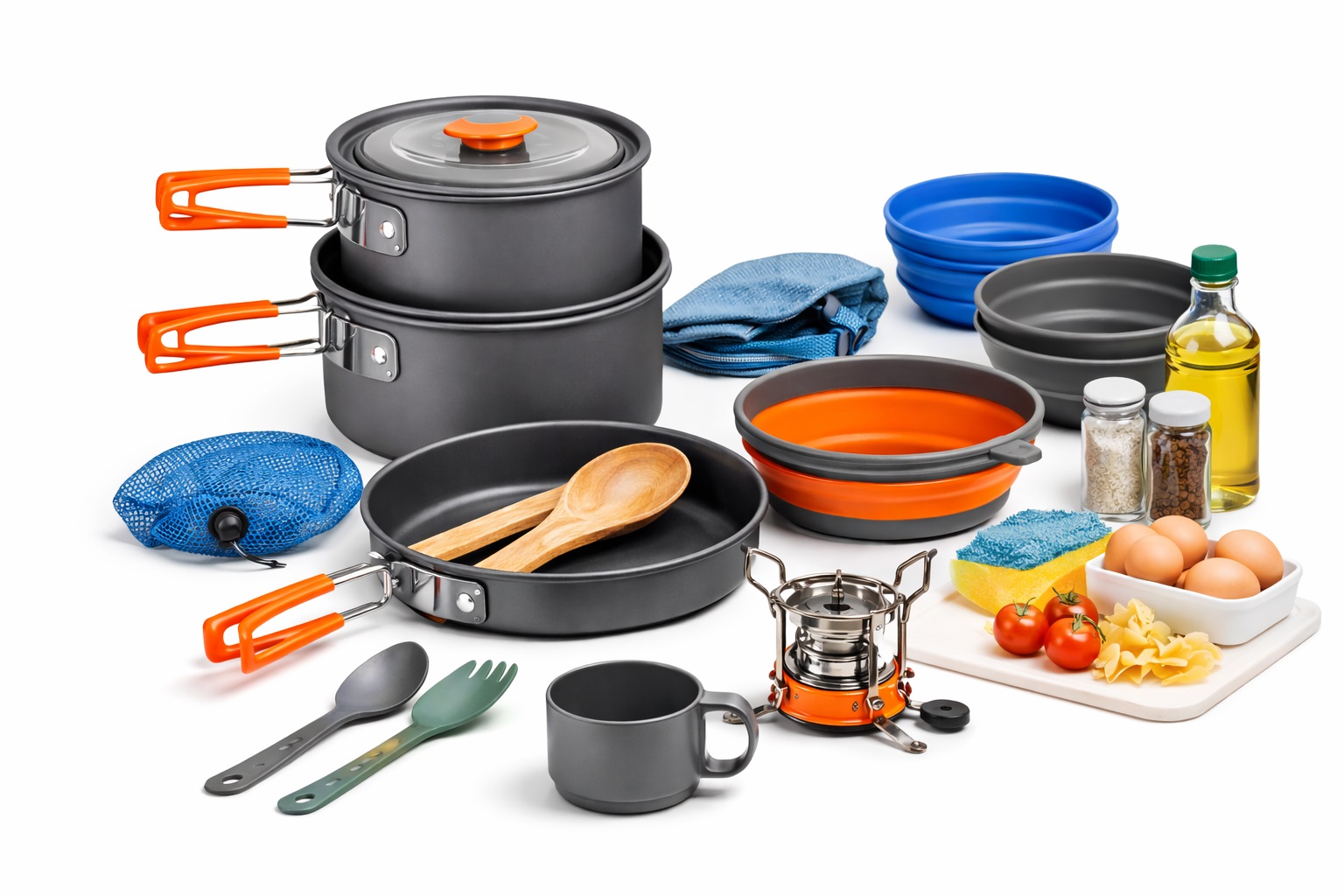
Best Lightweight Camping Cookware in 2026
Every extra ounce matters once you're carrying your kitchen on your back. Choosing the right camping cookware for backpacking means balancing weight against capacity, durability, and how easily a piece packs down alongside the rest of your gear. This guide compares the top lightweight options available in 2026, focusing on titanium, thin-wall aluminum, and collapsible designs built specifically to shave grams without leaving you without a functional way to cook on the trail.
Not every "lightweight" claim means the same thing in practice. Some products save weight through material choice, like titanium instead of steel, while others save pack space through clever engineering, like a collapsible silicone body. A few options below aren't the absolute lightest on paper but earn a spot for offering a better overall balance of weight, durability, and price for backpackers who don't need to shave the very last gram. Understanding which type of "light" actually matters to your own trips makes the comparisons below far more useful than looking at weight figures in isolation.
It's also worth thinking honestly about your trip length and style before chasing the lowest possible weight. A solo thru-hiker counting every gram has very different priorities than someone doing occasional weekend backpacking trips with a partner. The reviews below call out which situations each product suits best, so you can match your choice to your actual hiking plans rather than to a spec sheet alone. Weight-weenie culture can make it tempting to over-optimize for a single number, but the most satisfied backpackers are usually the ones who picked gear that matched their real trips rather than a theoretical ideal.
A quick note on how these picks are ordered: they run roughly from lightest and most trail-focused to heaviest and most feature-focused, so you can scan from top to bottom and stop wherever your own priorities start to shift from weight savings toward other conveniences like durability or non-stick cleanup.
Top 8 Lightweight Camping Cookware Picks (Detailed Reviews)
1. Toaks Titanium 750ml – Best For Solo Ultralight Backpackers
The Toaks Titanium 750ml is about as close to purpose-built ultralight cookware as this list gets. Its titanium construction keeps the pot remarkably light for its size, and its simple, single-piece design avoids the extra ounces that come with lids, handles, or bundled accessories you may never use. At around $35, it's also one of the more affordable ways to get into genuine titanium backpacking gear, without paying for capacity or accessories a solo hiker rarely needs.
- Pros:
- Ultralight titanium construction built for the trail
- Affordable relative to other titanium options
- Compact, minimalist single-pot design
- Cons:
- No non-stick coating
- Small capacity limits it to solo meals
- Titanium can develop hot spots if heat isn't managed carefully
Best For: Solo backpackers who want to keep their cook kit as light as possible without paying a premium for extra features they'd never actually use on the trail.
Why We Recommend It: It represents one of the best weight-to-price ratios available for anyone building a genuinely minimalist backpacking kitchen, and it rarely needs replacing once you own it.
2. Snow Peak Trek 1400 – Best For Backpackers Wanting Slightly More Capacity
The Snow Peak Trek 1400 steps up from single-serving titanium pots to a 1400ml capacity while still keeping weight impressively low thanks to its titanium build. That extra volume makes it a better fit for backpackers who want to cook slightly larger meals or share cooking duties on a two-person trip. At around $70, it costs more than smaller titanium pots, but the added capacity and Snow Peak's reputation for quality justify the price for many backpackers who cook more than a single dehydrated meal at a time.
- Pros:
- Larger capacity than typical solo titanium pots
- Still very lightweight thanks to titanium construction
- Durable enough for years of trail use
- Cons:
- Pricier than smaller single-serving titanium options
- No non-stick coating included
- Single-pot design still limits parallel cooking
Best For: Backpackers who want more cooking capacity than a minimalist solo pot without giving up titanium's weight advantage, especially those cooking meals that need a bit more room to simmer.
Why We Recommend It: It's a rare product that manages to add real capacity without meaningfully sacrificing the weight savings backpackers are chasing in the first place, making it a smart long-term investment.
3. Sea to Summit X-Pot – Best For Saving Pack Space Over Raw Weight
The Sea to Summit X-Pot approaches the lightweight category from a different angle: rather than focusing purely on gram count, its collapsible silicone body dramatically reduces packed volume. For backpackers whose pack space is a bigger constraint than raw ounces, that tradeoff can matter more than shaving off a few extra grams elsewhere. At around $55, it sits in the middle of this list price-wise, a reasonable cost for solving a packing problem that raw weight numbers alone don't capture.
- Pros:
- Collapsible design dramatically reduces packed size
- Solid base allows direct use on most stoves
- Lighter than a rigid pot of similar capacity
- Cons:
- Silicone sides are less puncture-resistant than solid metal
- Costs more than some rigid aluminum alternatives
- Requires more careful packing around sharp gear
Best For: Backpackers using smaller packs who need to prioritize packed volume as much as overall weight, especially on multi-day trips where every liter of pack space is already spoken for.
Why We Recommend It: It solves a real backpacking problem that pure gram-counting doesn't always address: how much space your gear actually takes up inside the pack, which matters just as much as weight for many hikers.
4. MSR Alpine 2 Pot Set – Best For Two-Person Backpacking Teams
The MSR Alpine 2 Pot Set trades some of the weight savings of titanium for the practicality of a nesting two-pot system built from hard-anodized aluminum. For two people splitting cooking gear on a shared trip, dividing this set between two packs often results in a lighter overall load per person than each person carrying a separate solo pot. At around $80, it's a pricier option, but the shared-weight math can work in its favor once you actually divide the pieces and compare the total against two separate solo setups.
- Pros:
- Two nesting pots can be split between two hikers
- Hard-anodized coating resists scratches on the trail
- Even heat distribution for reliable cooking results
- Cons:
- Heavier overall than a single titanium pot
- More expensive than most solo-focused options
- Less useful for solo backpackers who don't need two pots
Best For: Backpacking pairs who want to split cooking gear efficiently between two packs rather than each carrying separate solo kits, particularly on trips where both people are cooking real meals rather than just boiling water.
Why We Recommend It: Shared gear, divided sensibly, often beats two individual lightweight setups when you calculate total weight per person, and it also simplifies group meal planning on the trail.
5. Coleman Aluminum Mess Kit – Best For Budget-Minded Lightweight Beginners
The Coleman Aluminum Mess Kit isn't built specifically for ultralight backpacking, but its thin aluminum construction still keeps it reasonably light compared to heavier stainless steel options. At around $25, it's an accessible way for newer backpackers to try lighter-weight cooking without committing to pricier titanium gear right away, letting you test whether backpacking is a hobby worth investing further in.
- Pros:
- Lighter than stainless steel alternatives
- Very affordable entry point
- Simple, easy-to-use nesting design
- Cons:
- Heavier than dedicated titanium backpacking pots
- No non-stick coating
- Thin walls can scorch food if not watched closely
Best For: Backpackers just starting out who want to keep costs low while still avoiding the heaviest cookware options, without spending on titanium before they know how often they'll actually use it.
Why We Recommend It: It's a sensible, low-cost stepping stone toward lighter gear for anyone not ready to invest in titanium yet, letting you build backpacking experience before spending more.
6. Stanley Adventure Camp – Best For Backpackers Who Prioritize Toughness Over Grams
The Stanley Adventure Camp is the heaviest option on this list, but its stainless steel construction offers a level of durability that titanium and thin aluminum simply can't match. For backpackers on shorter trips who value toughness over shaving every possible gram, that tradeoff can be worth accepting. At around $60, it costs more than basic aluminum kits despite adding weight rather than removing it, a tradeoff some backpackers happily accept in exchange for one less thing to worry about breaking.
- Pros:
- Extremely durable stainless steel construction
- Safe for direct use over an open flame
- Backed by a long-standing, reputable brand
- Cons:
- Heaviest option among the picks reviewed here
- Not ideal for long-distance or thru-hiking use
- Takes longer to heat than thinner metals
Best For: Shorter backpacking trips where durability matters more than shaving off the last few ounces of pack weight, or for hikers who are simply hard on their gear.
Why We Recommend It: Not every backpacker needs the absolute lightest gear, and this set rewards those who value ruggedness instead, especially on trips involving rougher terrain or unpredictable weather.
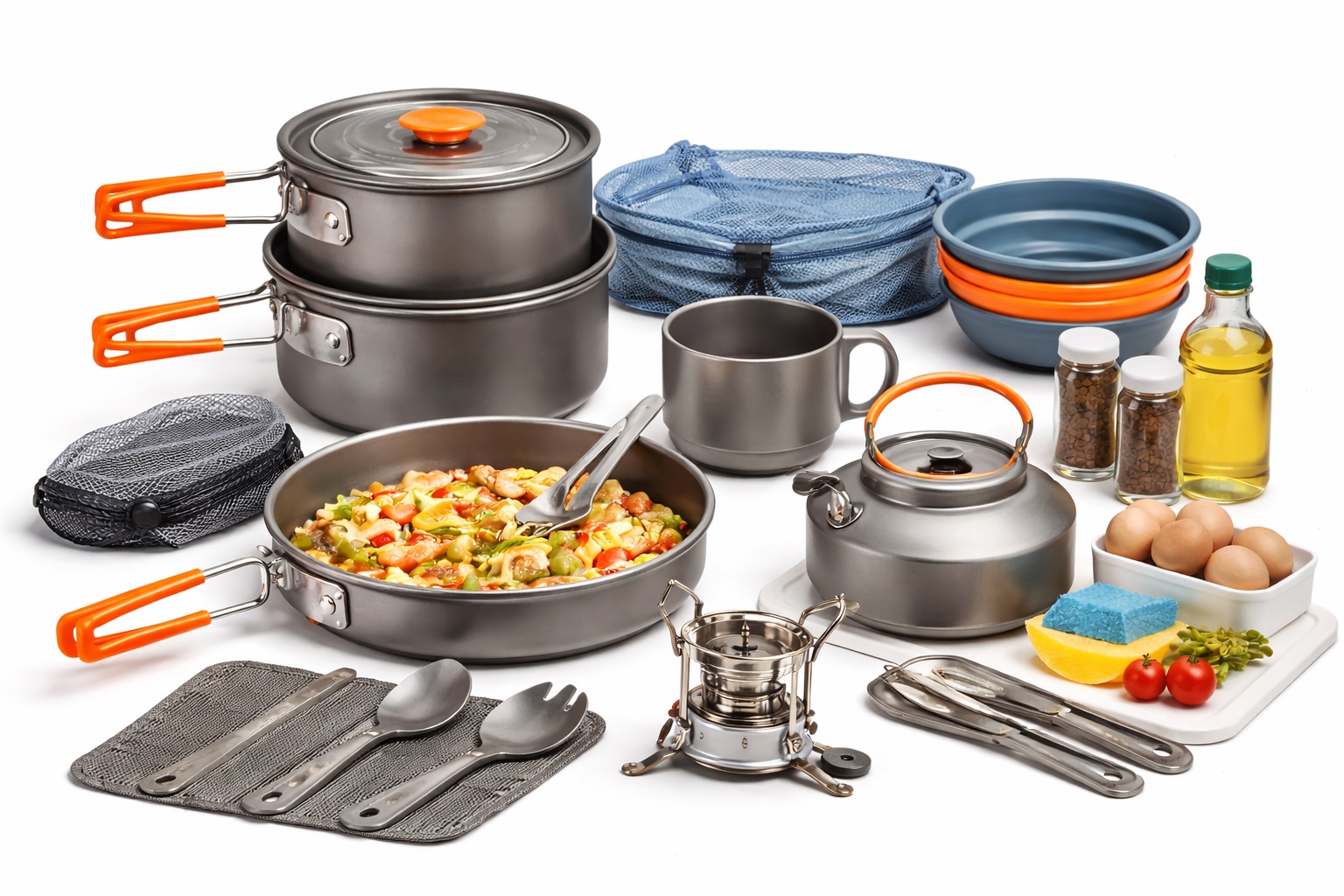
7. Odoland Camping Cookware – Best For Basecamp Trips Combining Car and Trail
The Odoland Camping Cookware set is built more for car camping than pure backpacking, but its complete 10-piece kit can work well for basecamp-style trips where you drive in and then take shorter day hikes without carrying the full set. At around $40, it offers a lot of capability, just not in the lightest possible package for full-distance backpacking, which is worth keeping in mind if your trip mixes driving in with only short hikes out.
- Pros:
- Complete set covers a wide range of cooking needs
- Affordable given how much is included
- Nesting design keeps pieces organized at basecamp
- Cons:
- Too bulky and heavy for full backpacking use
- Individual pieces are thinner than dedicated cookware
- Not built with weight savings as a priority
Best For: Backpackers doing basecamp-style trips who need a fuller kitchen setup at the vehicle before heading out on lighter day hikes, without carrying the entire kit on foot.
Why We Recommend It: It fills a specific niche for hybrid trips that mix car camping convenience with shorter, lighter hikes, giving you full capability at basecamp without paying for full trail-weight optimization.
8. GSI Outdoors Pinnacle – Best For Backpackers Who Won't Compromise on Non-Stick Cooking
The GSI Outdoors Pinnacle isn't the lightest option here, but its Teflon-style coating offers a cooking experience that's hard to replicate with bare titanium or aluminum. For backpackers who are willing to carry a bit more weight in exchange for easier cleanup and better food release, this set remains a reasonable choice despite the tradeoff. At around $100, it's the priciest option on this list, reflecting both the coating and the additional pieces included in the nesting set.
- Pros:
- Non-stick coating simplifies cleanup on the trail
- Multiple nesting pieces for varied meals
- Reputable, well-established outdoor brand
- Cons:
- Heavier than titanium-focused options on this list
- Highest price point among the picks reviewed
- Coating requires gentler utensils
Best For: Backpackers who prioritize easy cleanup and cooking versatility over shaving the absolute maximum weight from their pack, particularly those who cook more elaborate trail meals.
Why We Recommend It: Not every lightweight trip requires the absolute minimum weight, and this set rewards backpackers who value cooking convenience just as highly as shaving grams off their base weight.
Buying Guide: How to Choose the Best Lightweight Camping Cookware
Choosing lightweight cookware involves more nuance than simply picking the lowest number on a spec sheet. The sections below cover the tradeoffs that actually matter once you're carrying your gear over real trail miles, from material choice down to smaller details like handle design and cleaning routines that shape how enjoyable your cooking setup actually feels on a trip.
| Material | Typical Weight | Durability | Best Use Case |
|---|---|---|---|
| Titanium | Lightest | Very good, prone to hot spots | Solo ultralight trips |
| Thin Aluminum | Light | Moderate | Budget-conscious backpacking |
| Hard-Anodized Aluminum | Moderate | Good | Two-person trips |
| Stainless Steel | Heaviest | Excellent | Short, rugged trips |
1. Material and Weight Savings
Titanium offers the best strength-to-weight ratio of any common cookware material, making it the default choice for backpackers who count every gram. Thin-wall aluminum saves weight too, though usually at a lower cost than titanium, while stainless steel remains the heaviest, most durable option. Most backpackers end up choosing based on how much they're willing to pay per gram saved rather than chasing the single lightest material available.
2. Capacity Versus Weight Tradeoffs
Larger pots naturally weigh more, so backpackers need to decide how much capacity is genuinely necessary. A single 750ml pot may be perfectly sufficient for one person's meals, while a shared trip might justify the extra weight of a larger pot. Overestimating capacity is one of the more common ways backpackers end up carrying more weight than they actually need, so it helps to base the decision on your typical meal, not the largest one you might occasionally cook.
3. Packed Volume, Not Just Weight
Weight and packed size aren't the same thing. Collapsible designs can reduce how much space a pot takes up in your pack even if they don't save the most weight on a scale, which matters for backpackers using smaller packs where every liter of internal space counts.
4. Solo Versus Group Backpacking Needs
Solo hikers can generally go as minimal as a single small pot, while groups need to decide whether to split a larger shared set between multiple packs or each carry individual lightweight pieces. Both approaches can work well depending on how the group typically organizes meals.
5. Heat Management With Lightweight Materials
Titanium and thin aluminum both heat quickly, but they can also develop hot spots more easily than thicker materials. Learning to manage flame size and stir frequently helps prevent scorched food with these lighter options, and it's a skill most backpackers pick up quickly after a meal or two.
6. Durability Expectations for Trail Use
Lightweight materials generally trade some durability for weight savings. Titanium holds up well to years of use despite being thin, while ultra-thin aluminum can dent more easily under rough handling on the trail, particularly if it gets tossed loosely into a pack alongside heavier gear. A simple padded stuff sack or dedicated pocket goes a long way toward protecting lighter cookware between uses.
7. Stove Compatibility
Most lightweight cookware is designed around canister or liquid fuel backpacking stoves rather than open campfires. Check that your pot's base and material are appropriate for the specific heat source you plan to use most, since some ultralight designs are not rated for direct flame contact and can warp or discolor if used that way regardless.
8. Handle and Lid Design
Folding or removable handles save weight and prevent snagging inside a pack, while well-fitted lids improve fuel efficiency by helping water boil faster and heat retain better during simmering. A tight-fitting lid can meaningfully reduce how much fuel you need to carry over a multi-day trip.
9. Non-Stick Coatings on the Trail
Non-stick coatings add convenience but also add a small amount of weight and cost. Backpackers cooking mostly boiled or rehydrated meals may not need this feature as much as those who fry or sauté regularly, since boiling water doesn't rely on a non-stick surface to work well. Anyone planning more ambitious trail meals, like eggs or pancakes, will likely appreciate the coating far more than someone sticking to simple one-pot dinners.
10. Cost Per Gram Saved
Ultralight gear often costs more per gram of weight saved, especially at the very lightest end of the spectrum. Decide how much you're willing to pay for incremental weight savings versus accepting a slightly heavier, less expensive option, since the price curve tends to steepen sharply near the lightest available products. Beyond a certain point, the extra cost buys diminishing returns that many backpackers choose to skip.
11. Group Splitting Strategies
For group trips, splitting a shared cook set's pieces between multiple hikers' packs can lower the weight burden on any single person compared to everyone carrying their own complete solo kit. Agreeing on this division before the trip avoids confusion once you're already on the trail, and it's worth revisiting the split if someone drops out or joins partway through planning.
12. Trip Length Considerations
Short weekend trips can tolerate slightly heavier, more durable gear without much downside, while multi-day or thru-hiking trips benefit more meaningfully from every gram saved across the whole kit, since the cumulative fatigue from extra weight compounds over more miles. A gear choice that feels fine for two nights can feel very different by the end of a week on the trail.
13. Cleaning Lightweight Cookware in the Field
Bare titanium and aluminum can usually be cleaned with just water and a scrub pad, avoiding the need to carry extra soap. Non-stick coated pieces may need a bit more care to avoid scratching the surface with trail utensils, particularly anything sharp-edged like a folding knife or fork.
14. Balancing Weight Savings With Everyday Usability
The absolute lightest gear isn't always the most pleasant to actually cook with day after day. Slightly larger handles, a bit more capacity, or a coating that makes cleanup easier can be worth a small weight penalty if it makes the overall backpacking experience more enjoyable. It's worth trying a setup at home before a trip to see how it actually feels to cook and clean with, rather than judging purely from a spec sheet.
Frequently Asked Questions
What's the lightest material for backpacking cookware?
Titanium generally offers the best strength-to-weight ratio available in common camping cookware, making it the default choice for backpackers focused on minimizing pack weight above almost anything else.
Is titanium cookware worth the extra cost for backpacking?
For frequent or long-distance backpackers, the weight savings often justify the price. Occasional weekend backpackers may find that a lighter aluminum option offers a better balance of cost and weight for their needs, since the price difference is harder to justify over just a few trips a year.
How much does camping cookware typically weigh?
A minimalist titanium pot can weigh just a few ounces, while a complete stainless steel or multi-piece aluminum set can weigh well over a pound, depending on capacity and included pieces. Knowing roughly where your gear falls on that range helps set realistic expectations before you buy.
Can I use a lightweight pot directly over a campfire?
Some lightweight materials handle direct flame reasonably well, but thinner metals and collapsible designs are generally better suited to a controlled backpacking stove rather than an open, unpredictable fire that can scorch or warp thinner materials.
Do collapsible pots actually save weight, or just space?
Collapsible pots primarily save packed volume rather than dramatic amounts of weight compared to rigid aluminum. Their main advantage is fitting into a smaller space inside your pack, which matters more for hikers using compact packs than for those with plenty of room to spare.
What size pot is right for solo backpacking?
A pot in the 550ml to 900ml range is generally sufficient for one person's meals, covering everything from boiling water for a dehydrated dinner to making a hot drink in the morning.
Is a non-stick coating necessary for backpacking cookware?
It's not strictly necessary, especially for boiled or rehydrated meals, but it does make cleanup easier for anyone cooking foods that are prone to sticking, like eggs or pasta with sauce, particularly when water for washing is limited on the trail.
How do I avoid hot spots when cooking with titanium?
Use a lower, steadier flame and stir more frequently than you might with heavier materials, since titanium's thin walls can develop uneven heat pockets more easily than stainless steel, especially with thicker foods that don't move around on their own.
Should two backpackers share one pot or each carry their own?
Sharing a single larger pot, split between two packs if it's a multi-piece set, is usually lighter overall than each person carrying a separate individual pot, assuming both hikers are comfortable coordinating meal timing together.
How do I clean lightweight cookware without carrying extra gear?
A small amount of water and a bandana or dedicated scrub pad is often enough for bare titanium or aluminum. Biodegradable soap is useful for greasier meals but isn't always necessary for simple boiled dishes like rice or pasta.
Is stainless steel ever a good choice for backpacking?
It can be for shorter trips where weight is less of a concern than durability, though it's generally not the first choice for long-distance or thru-hiking use due to its added weight over many miles.
What's the best way to test if lightweight cookware fits my pack?
Compare the pot's collapsed or nested dimensions against the empty space in your existing pack setup before buying, rather than relying on weight alone to judge how well it will fit alongside your other gear.
Do lightweight pots hold heat as well as heavier ones?
Generally, thinner and lighter materials lose heat a bit faster than thicker, heavier ones, which is why a well-fitted lid matters more for lightweight cookware than it might for a heavier stainless steel pot that retains heat naturally.
How do I decide between a solo pot and a shared multi-pot system?
Think about whether you usually hike alone or with a partner and how you split gear on shared trips. Solo hikers rarely benefit from a multi-pot system, while regular hiking pairs often find splitting a shared set more efficient than each carrying their own.
Does altitude affect how lightweight cookware performs?
Water boils at a lower temperature at higher altitudes, which can mean slightly longer simmer times regardless of your pot's material. This isn't unique to lightweight cookware, but it's worth planning extra fuel for high-altitude trips.
How do I know when it's time to upgrade my backpacking cookware?
Signs include a dented or warped pot that no longer sits flat on a stove, a lid that no longer seals well, or simply realizing your current setup is meaningfully heavier or bulkier than newer options you've researched for your typical trips.
Final Verdict
- Top Pick: Toaks Titanium 750ml for the best overall balance of weight, price, and simplicity for solo trips.
- Budget Choice: Coleman Aluminum Mess Kit for a lighter, affordable entry point into backpacking cookware for newer hikers.
- Premium Choice: Snow Peak Trek 1400 for added capacity without sacrificing titanium's weight advantage on longer routes.
Lightweight cookware is ultimately about matching material and design to how far and how often you actually hike. A minimalist titanium pot serves most solo backpackers extremely well, while collapsible and multi-pot options make more sense for specific situations like tight pack space or shared group cooking. Whichever option you choose, weigh the tradeoffs honestly against your real trips rather than chasing the single lightest spec on a shelf. Over time, most backpackers settle on a setup that balances weight against comfort and reliability, rather than continuing to chase diminishing returns on the last few grams.