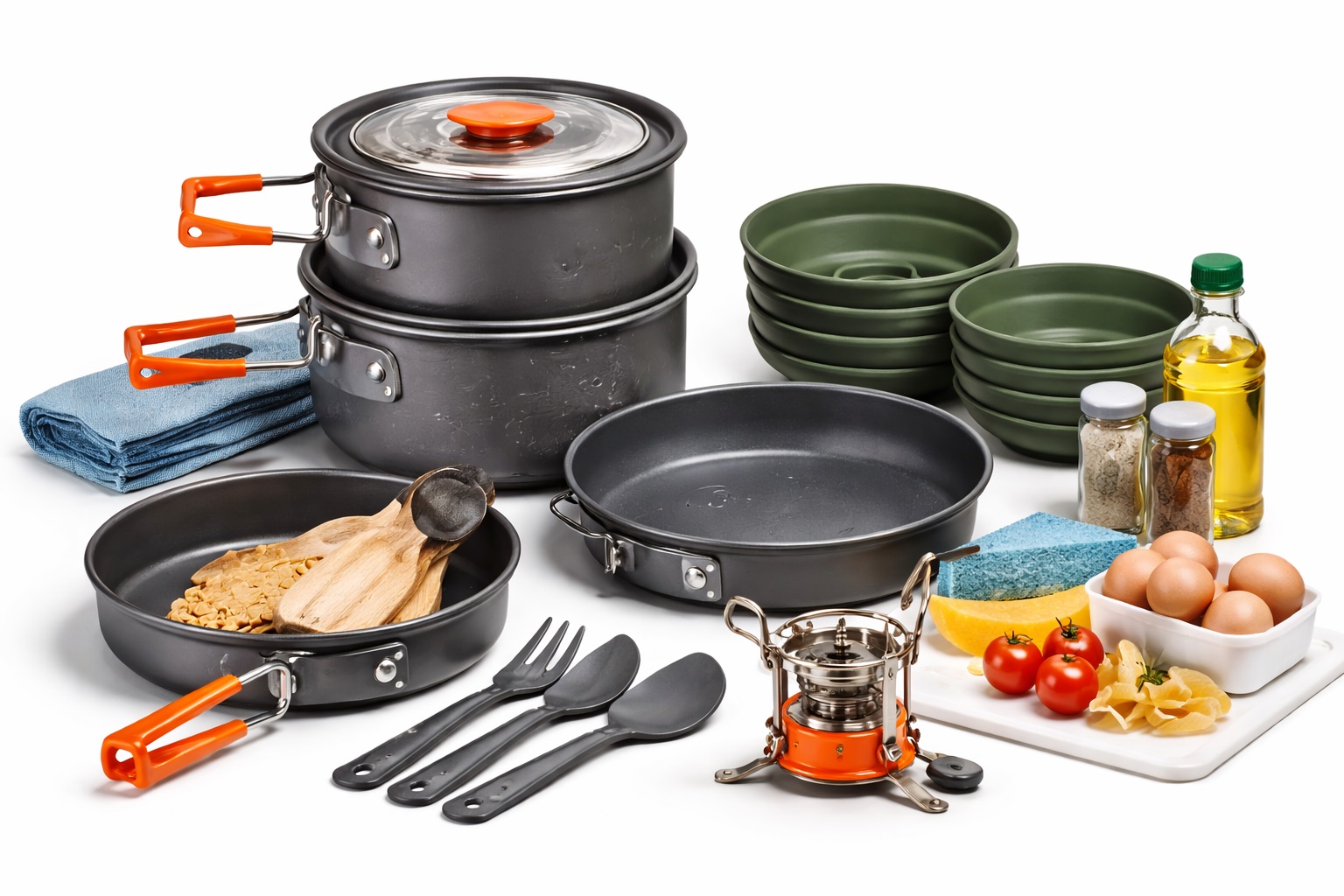
Best Camping Cookware for Beginners in 2026
Choosing your first set of camping cookware can feel more complicated than it should be. Between aluminum, stainless steel, and titanium options, nesting sets, and single-pot minimalist kits, new campers are often unsure which direction actually fits how they plan to cook outdoors. This guide compares the top models available in 2026 with a focus on what matters most when you are starting out: simple operation, forgiving durability, and a price that doesn't punish you for still figuring out your camping style.
None of the picks below require special skills to use. Each one is built around straightforward nesting designs, common pot and pan shapes, and materials that hold up to the occasional beginner mistake, like leaving a pot on the heat a little too long or packing gear a bit roughly. Whether you're planning weekend car camping trips or your very first overnight hike, the sets featured here are widely available, easy to clean, and simple to maintain season after season.
It also helps to think about beginner cookware as a starting point rather than a lifetime purchase. Most new campers don't yet know whether they'll gravitate toward car camping, backpacking, or something in between, and gear preferences tend to shift once you've spent a season or two outdoors. Buying a reasonably priced, dependable set now lets you learn what you actually value in cookware, whether that's low weight, easy cleanup, or sheer toughness, before committing to pricier specialized gear later on.
It's also worth remembering that no single set is universally "the best." A large family car camping at a state park has very different priorities than a solo hiker heading out on a first overnight trip, and the two setups below reflect that range. Some entries favor low cost and simplicity, others prioritize weight savings, and a couple sit somewhere in between as reasonable all-purpose choices. Reading through the pros and cons for each one should make it fairly clear which category best matches your own plans.
Top 8 Camping Cookware Sets for Beginners (Detailed Reviews)
1. Coleman Aluminum Mess Kit – Best For First-Time Campers
The Coleman Aluminum Mess Kit is the set most new campers reach for first, and for good reason. Its simple, reliable design strips away anything that could complicate a first trip: a nesting pot, a pan that doubles as a lid, and lightweight aluminum construction that heats quickly over a camp stove or fire grate. At roughly $25, it removes the financial pressure that can make beginners hesitate before committing to the hobby. Because it's inexpensive and easy to find, it's also a practical choice for households outfitting more than one person at once, such as a family trying camping together for the first time.
- Pros:
- Very affordable entry point for new campers
- Lightweight aluminum heats up fast
- Simple nesting design with almost no learning curve
- Backed by a long-established, reputable brand
- Cons:
- No non-stick coating, so food can cling without oil
- Thin aluminum walls can scorch food if heat isn't managed
- Limited to smaller portion sizes
Best For: Campers buying their very first cookware set who want an affordable, no-fuss introduction to outdoor cooking.
Why We Recommend It: It covers the basics without overwhelming a new camper with extra pieces, coatings, or maintenance routines to learn, and the low price makes it easy to upgrade later without regret.
2. GSI Outdoors Pinnacle – Best For Beginners Who Want Non-Stick Convenience
GSI Outdoors built the Pinnacle around a Teflon-style coating that takes a lot of the guesswork out of camp cooking. For someone still learning how much oil or heat a given meal needs, a non-stick surface forgives mistakes that would otherwise mean scrubbing burnt eggs off bare aluminum. At around $100, it sits at the top of this list price-wise, reflecting its multi-piece nesting set and added coating. For beginners who dread cleanup more than they dread cost, that price often ends up feeling justified after just a few meals in the field.
- Pros:
- Non-stick coating makes cleanup dramatically easier
- Well-built nesting set with multiple usable pieces
- Reputable outdoor cooking brand with wide retail support
- Cons:
- Highest price point among beginner-friendly options here
- Coating requires gentler utensils to avoid scratching
- Limited color and finish options
Best For: New campers who want to skip the learning curve of cleaning bare metal and are willing to spend more for convenience.
Why We Recommend It: Cleanup is consistently the biggest complaint from first-time campers, and this set solves that problem directly out of the box.
3. Stanley Adventure Camp – Best For Durability Beginners Can Rely On
Stanley's reputation for rugged gear carries over into the Adventure Camp set, which uses stainless steel to shrug off the dings and drops that are almost inevitable during a first few seasons of camping. Priced around $60, it lands in the middle of the pack, trading some weight savings for a material that tolerates rough handling far better than aluminum. Beginners often underestimate how much gear gets knocked around in the back of a car or tossed into a storage bin, and stainless steel is far more forgiving of that reality than lighter alternatives.
- Pros:
- Stainless steel resists dents, scratches, and warping
- Safe to use directly over an open campfire
- Backed by Stanley's long-standing durability reputation
- Cons:
- Heavier than aluminum or titanium alternatives
- Costs more than basic aluminum mess kits
- Takes slightly longer to heat than thinner metals
Best For: Beginners who know they'll be a little rough on their gear and want cookware that can take a beating.
Why We Recommend It: New campers drop things, pack carelessly, and forget gear near open flames; stainless steel forgives all of that without denting or corroding.
4. Snow Peak Trek 1400 – Best For Beginners Ready to Invest in Quality
The Snow Peak Trek 1400 introduces titanium to campers who want a taste of premium gear without committing to a full ultralight setup. Its titanium build keeps the 1400ml pot notably light while still standing up to years of regular use. At around $70, it costs more than basic aluminum kits, but the material quality and Snow Peak's reputation justify the step up for beginners planning to stick with the hobby. It's a set that grows with you, staying just as useful on a weekend car camping trip as it will on a future backpacking route.
- Pros:
- Titanium construction keeps weight low
- Durable enough to last many camping seasons
- Reputable brand known for long-term quality
- Cons:
- Pricier than most beginner-focused sets
- Single-pot design offers less capacity than full sets
- No non-stick coating included
Best For: New campers who are confident they'll keep camping and want gear that won't need replacing in a year or two.
Why We Recommend It: It's a smart middle ground between disposable-feeling starter kits and full expedition-grade titanium systems.
5. Odoland Camping Cookware – Best For Beginners Who Want Everything Included
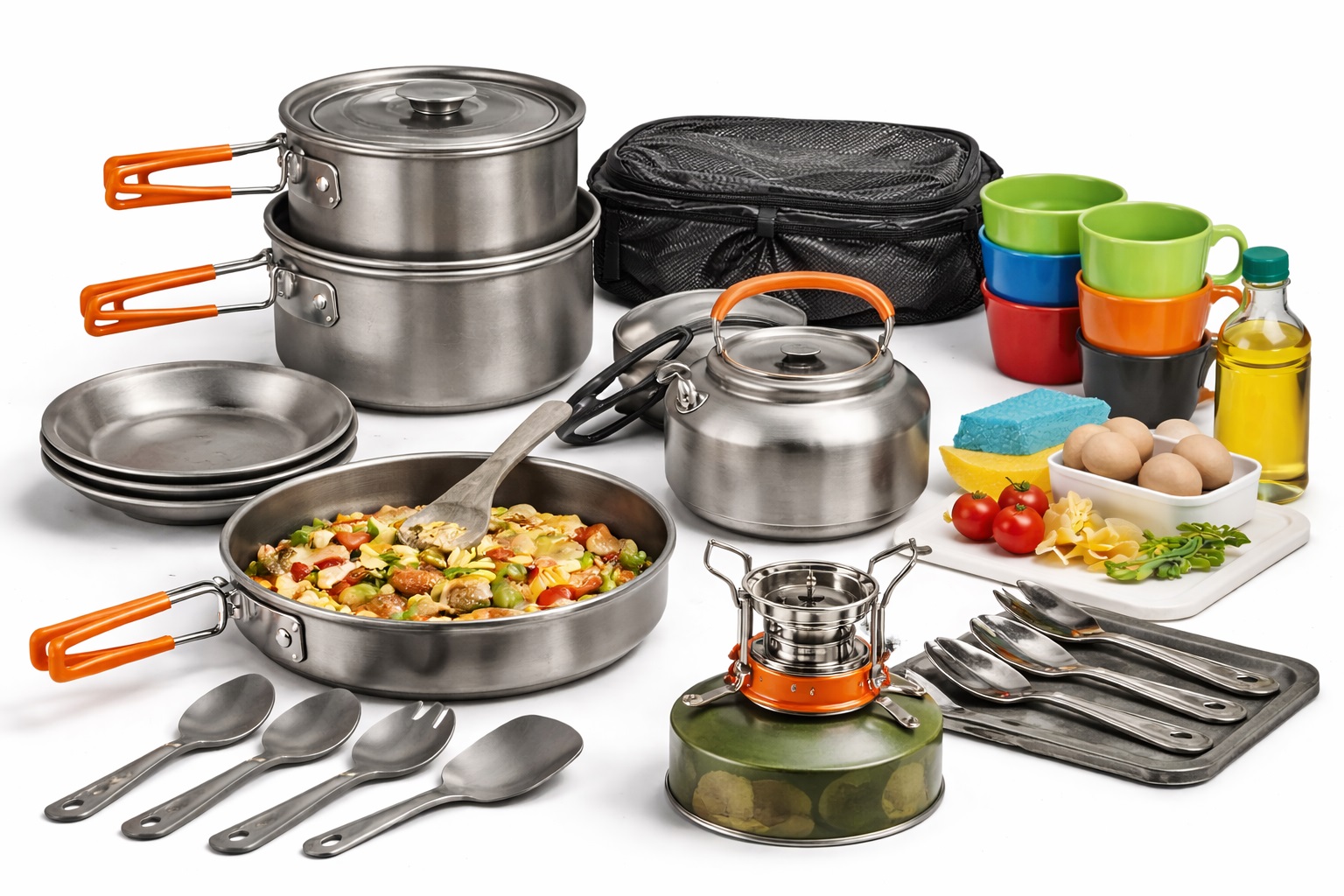
Odoland's set answers a common beginner question: what else do I actually need? Its complete 10-piece set bundles pots, a pan, plates, cups, and utensils into one package, so first-time campers aren't left guessing about missing accessories. At around $40, it remains affordable while covering far more of a beginner's shopping list than a basic mess kit. For someone outfitting an entire trip from scratch, that completeness can save several separate shopping trips and a fair amount of second-guessing.
- Pros:
- Complete 10-piece set reduces separate purchases
- Affordable given how much is included
- Nesting design keeps everything organized in one bag
- Cons:
- Bulkier to pack than minimalist single-pot options
- Individual pieces are thinner than dedicated cookware
- Limited color options
Best For: Beginners who would rather buy one complete set than piece together individual items.
Why We Recommend It: It removes the guesswork of assembling a beginner kit item by item and keeps everything organized in a single carry bag.
6. Sea to Summit X-Pot – Best For Beginners Short on Storage Space
The Sea to Summit X-Pot uses a collapsible silicone body around a solid base, letting it flatten down for storage when it isn't in use. That's a meaningful advantage for beginners without a garage full of camping gear, since it tucks into a drawer or small closet between trips. At around $55, it's a mid-range option built around packed size rather than raw toughness, which makes sense for someone renting an apartment or living in a smaller home while still wanting proper cooking capability outdoors.
- Pros:
- Collapsible design saves significant storage and pack space
- Solid base allows direct contact with heat sources
- Lightweight compared to rigid metal pots
- Cons:
- Silicone sides are less impact-resistant than solid metal
- Higher price than a comparable rigid aluminum pot
- Requires a bit more care when packing sharp utensils
Best For: Apartment dwellers and beginners with limited gear storage who still want a proper cooking pot.
Why We Recommend It: It solves a real problem for new campers who don't yet have dedicated gear storage space at home.
7. MSR Alpine 2 Pot Set – Best For Beginners Cooking for Two
The MSR Alpine 2 Pot Set is built around hard-anodized aluminum, giving it better scratch resistance and more even heat distribution than untreated aluminum kits. Designed as a nesting two-pot system, it suits beginners who are usually cooking for themselves plus one other person. At around $80, it costs more than single-pot beginner kits but includes enough capacity to avoid needing a second purchase down the line, which can make it a better long-term value for couples or close friends who camp together regularly.
- Pros:
- Hard-anodized coating resists scratching better than plain aluminum
- Even heat distribution reduces hot spots
- Two-pot nesting design suits small groups
- Cons:
- More expensive than basic single-person kits
- Bulkier than solo-focused sets
- Overkill for someone who only ever cooks alone
Best For: Beginners who camp as a pair or small team and want one cohesive set instead of two separate solo kits.
Why We Recommend It: It scales beginner cooking up to two people without the compromises of doubling up on individual mess kits.
8. Toaks Titanium 750ml – Best For Beginners Who Prioritize Weight
Toaks' 750ml titanium pot is a minimalist's introduction to backpacking-grade cookware. Its ultralight titanium construction appeals to beginners who already know they want to hike further than the car camping crowd. At around $35, it's an affordable way to try titanium without committing to a full expedition setup, and its small footprint makes it just as easy to toss into a daypack for a quick overnight as it is to bring on a longer weekend trip.
- Pros:
- Ultralight titanium construction ideal for hiking in
- Affordable introduction to titanium cookware
- Compact single-pot design
- Cons:
- No non-stick coating, so food can stick if not watched closely
- Small capacity limits it to solo meals
- Titanium can develop hot spots if heat isn't managed carefully
Best For: Beginners planning to backpack rather than car camp, who want to keep their pack weight low from day one.
Why We Recommend It: It lets new backpackers start with genuinely lightweight gear instead of buying a heavier starter kit they'll replace within a year.
Buying Guide: How to Choose the Best Camping Cookware for Beginners
Picking a first cookware set is less about finding the "best" product on paper and more about matching a set to how you actually plan to camp. The sections below walk through the factors that matter most for someone just starting out, so you can avoid overspending on features you won't use or underspending on durability you'll wish you had later on. Take a few minutes to think through your typical trip before you shop, since the answer to "what's the best beginner cookware" really does change depending on whether you're driving to a campground or walking in on foot.
A quick side-by-side of the three common materials can make the tradeoffs easier to visualize before you commit to a set.
| Material | Weight | Durability | Typical Price |
|---|---|---|---|
| Aluminum | Light | Moderate, prone to dents | Lowest |
| Stainless Steel | Heaviest | Excellent, very rugged | Mid-range |
| Titanium | Lightest | Very good, but can develop hot spots | Highest |
1. Material and Construction
Aluminum, stainless steel, and titanium each behave differently in the field. Aluminum heats quickly and keeps costs low, making it a natural starting material for anyone unsure how much they'll actually use their gear. Stainless steel is heavier but shrugs off rough handling, which matters when you're still learning how to pack and store gear carefully. Titanium sits at the premium end, offering excellent strength-to-weight ratios for campers who already know they'll be hiking with their cookware rather than driving it to a campsite.
2. Weight and Pack Size
If you're car camping, weight matters far less than it does for backpacking, since your vehicle does the heavy lifting instead of your shoulders. Beginners heading out with a vehicle nearby can prioritize larger, sturdier sets, while those planning to carry gear on their back should lean toward lighter aluminum or titanium options, even if it means a smaller set with fewer pieces.
3. Set Size and Piece Count
Complete sets with plates, cups, and utensils reduce the number of separate purchases you need to make before your first trip, but they also add bulk and weight to your pack or storage bin. A single pot with a lid may be all you truly need if your meals are simple, one-pot affairs like pasta, rice, or rehydrated backpacking meals.
4. Non-Stick Coatings and Cleanup
Non-stick coatings genuinely make life easier for beginners still learning how much oil or water a recipe needs. The tradeoff is a higher price and the need for gentler utensils, since metal spatulas and forks can scratch the coating over time and shorten its useful life considerably.
5. Heat Distribution and Cooking Performance
Thin, inexpensive metal can develop hot spots that scorch food in one area while leaving the rest undercooked, which is a frustrating experience for someone still learning to gauge camp stove heat. Hard-anodized aluminum and thicker stainless steel tend to distribute heat more evenly, which is a forgiving quality for anyone still getting a feel for how their stove behaves.
6. Stove and Heat Source Compatibility
Not every pot is meant for direct flame contact. Stainless steel and hard-anodized aluminum generally tolerate open campfires better than lighter or coated materials, so check whether your set is rated for the heat source you plan to use most often, whether that's a canister stove, a fire grate, or an open flame.
7. Nesting Design and Storage Efficiency
Nesting sets, where smaller pieces fit inside larger ones, save meaningful space in a pack or storage bin. This is especially useful for beginners who don't yet have dedicated camping gear storage and need everything to fit into one manageable bag they can grab on their way out the door.
8. Handles, Lids, and Safety Features
Folding or insulated handles reduce the risk of burns when moving a hot pot off the heat, which is a common beginner mistake. Well-fitted lids also help meals cook faster and more evenly, saving fuel in the process and shortening how long you're standing over a hot stove.
9. Included Accessories
Some sets include cups, plates, and basic utensils, while others expect you to buy those separately. Beginners on a tight budget should factor in these extras before assuming a bare pot-and-pan combo covers everything they need for a full camp meal from start to finish.
10. Group Size and Serving Capacity
Think honestly about who you'll usually be cooking for. A single-person pot is fine for solo trips, but if you regularly camp with a partner, friend, or family, a larger set or a second pot will save you from constantly cooking in shifts and eating cold food while you wait your turn.
11. Budget and Long-Term Value
It's tempting to buy the cheapest option available, but durability matters even for beginners. A slightly higher upfront cost on a set that survives years of seasonal use is often better value than replacing a flimsy kit every year or two, especially once you factor in the hassle of reordering and re-learning a new set of gear.
12. Care, Cleaning, and Maintenance
Simple habits extend the life of any cookware: rinse promptly after use, avoid abrasive scouring pads on non-stick surfaces, and dry pieces fully before packing them away to prevent rust or lingering odors from developing inside a sealed storage bag.
13. Weather and Field Durability
Cookware left in a damp tent vestibule or exposed to rain needs materials that won't corrode. Stainless steel and titanium handle moisture exposure better than untreated aluminum, which is worth considering if you camp in wetter climates or store your gear in a humid garage between trips.
14. Warranty and Manufacturer Support
Established outdoor brands typically back their cookware with some form of warranty against manufacturing defects, which is worth checking before you buy. For beginners still learning how to care for their gear properly, having a manufacturer to fall back on if a handle loosens or a coating fails prematurely adds a bit of peace of mind that a no-name off-brand set may not offer.
Frequently Asked Questions
Is a premium camping cookware set worth it for a beginner?
It can be, especially if you already know you'll keep camping regularly. Higher-end sets tend to use better materials and coatings that last longer, though a basic set is perfectly reasonable for testing out the hobby first before spending more. If you're still unsure how often you'll actually use the gear, it's generally safer to start modest and reinvest the savings into a nicer set once your camping habits are clearer.
How do I clean camping cookware in the backcountry?
A small amount of biodegradable soap, water, and a soft sponge or scrub pad is usually enough. For non-stick surfaces, avoid abrasive scrubbers, and always dispose of wastewater well away from streams or lakes to protect the environment around your campsite.
What's the difference between titanium, aluminum, and stainless steel cookware?
Aluminum is lightweight and heats quickly but dents more easily. Stainless steel is heavier but extremely durable and handles rough treatment well. Titanium offers the best strength-to-weight ratio but usually costs more and can develop hot spots if not heated carefully.
How many pieces do I actually need as a beginner?
Most beginners can get by with one pot, a lid or pan, and a cup. Additional plates and utensils are convenient but not strictly necessary for simple one-pot meals like pasta, soup, or rehydrated dinners.
Can I put camping cookware directly on a campfire?
Some materials, like stainless steel and hard-anodized aluminum, tolerate direct flame well. Coated non-stick surfaces and thin aluminum are better suited to a controlled camp stove flame rather than an open, unpredictable fire.
Is non-stick coating durable enough for regular outdoor use?
Non-stick coatings can last for years with proper care, but they wear faster if scraped with metal utensils or scoured aggressively. Using silicone or wooden utensils extends their lifespan considerably and keeps the coating performing well trip after trip.
What pot size works best for one or two people?
A pot in the 700ml to 1000ml range is generally enough for one person, while two people cooking together usually benefit from something closer to 1.4 to 2 liters so both portions cook at the same time.
Do beginners really need a separate frying pan?
Not always. Many one-pot meals like pasta, rice, or rehydrated dinners don't require a pan at all. A pan becomes more useful once you start cooking eggs, pancakes, or foods that benefit from a flat surface and direct contact with heat.
Are collapsible pots reliable for regular use?
Collapsible pots with a solid metal base are generally reliable for boiling and simmering, though their silicone sides are less resistant to punctures or sharp impacts than fully rigid metal cookware, so they need a bit more careful packing.
How much should a beginner budget for a first cookware set?
A capable beginner set typically falls somewhere between $25 and $70, depending on materials and how many pieces are included. Spending more usually buys you a non-stick coating, extra accessories, or lighter materials rather than a fundamentally better pot. Sets priced closer to $100 tend to bundle in premium coatings and additional pieces rather than dramatically outperforming mid-range options at everyday cooking tasks.
Can camping cookware go in a dishwasher at home?
It depends on the material and coating. Many manufacturers recommend hand-washing to protect non-stick coatings and anodized finishes, even if the metal itself would technically survive a dishwasher cycle without visible damage.
What material boils water the fastest?
Thin aluminum and titanium generally heat up fastest due to their lower mass, while thicker stainless steel takes a bit longer but distributes heat more evenly once it's up to temperature.
How should I store cookware between camping trips?
Make sure everything is completely dry before storing it to avoid rust, mildew, or lingering odors, and keep nesting sets together in their bag so you don't misplace smaller pieces between trips or seasons.
Should a beginner buy a full set or individual pieces?
A full set is usually easier for a first purchase since it removes the guesswork of figuring out what you still need. Buying pieces individually can work too, but it often takes an extra trip or two before your kit actually feels complete.
Does brand reputation actually matter for beginner cookware?
Established outdoor brands tend to have more consistent quality control and easier access to replacement parts or warranty support, which can matter more than it seems once a lid goes missing or a handle loosens after regular use. Lesser-known brands can still perform well, but you may have a harder time sourcing a replacement piece or getting a clear answer if something fails early.
What's the biggest mistake beginners make when buying camping cookware?
The most common mistake is buying based on how a set looks in photos rather than how it matches actual trip plans. A beautifully finished, feature-packed set is wasted money if it's too heavy for the backpacking trips you actually take, or too minimal for the group meals you actually cook.
Final Verdict
- Top Pick: Stanley Adventure Camp for its rugged, beginner-forgiving durability.
- Budget Choice: Coleman Aluminum Mess Kit for the lowest-cost way to get started.
- Premium Choice: GSI Outdoors Pinnacle for non-stick convenience and a well-rounded feature set.
There isn't a single "correct" first cookware set, but there is a right approach: match the gear to how you actually plan to camp rather than how you imagine camping might look someday. Start with something affordable and durable enough to survive a learning curve, pay attention to which features you actually end up using on your first few trips, and let that real-world experience guide any upgrades from there rather than guessing in advance. Most beginners find that their second cookware purchase, made after a season of real trips, is far more targeted and satisfying than their first, simply because they now know what actually matters to their own style of camping. Treat this first set as a practical stepping stone rather than a permanent decision, and you're unlikely to feel like you wasted money no matter which option you choose.