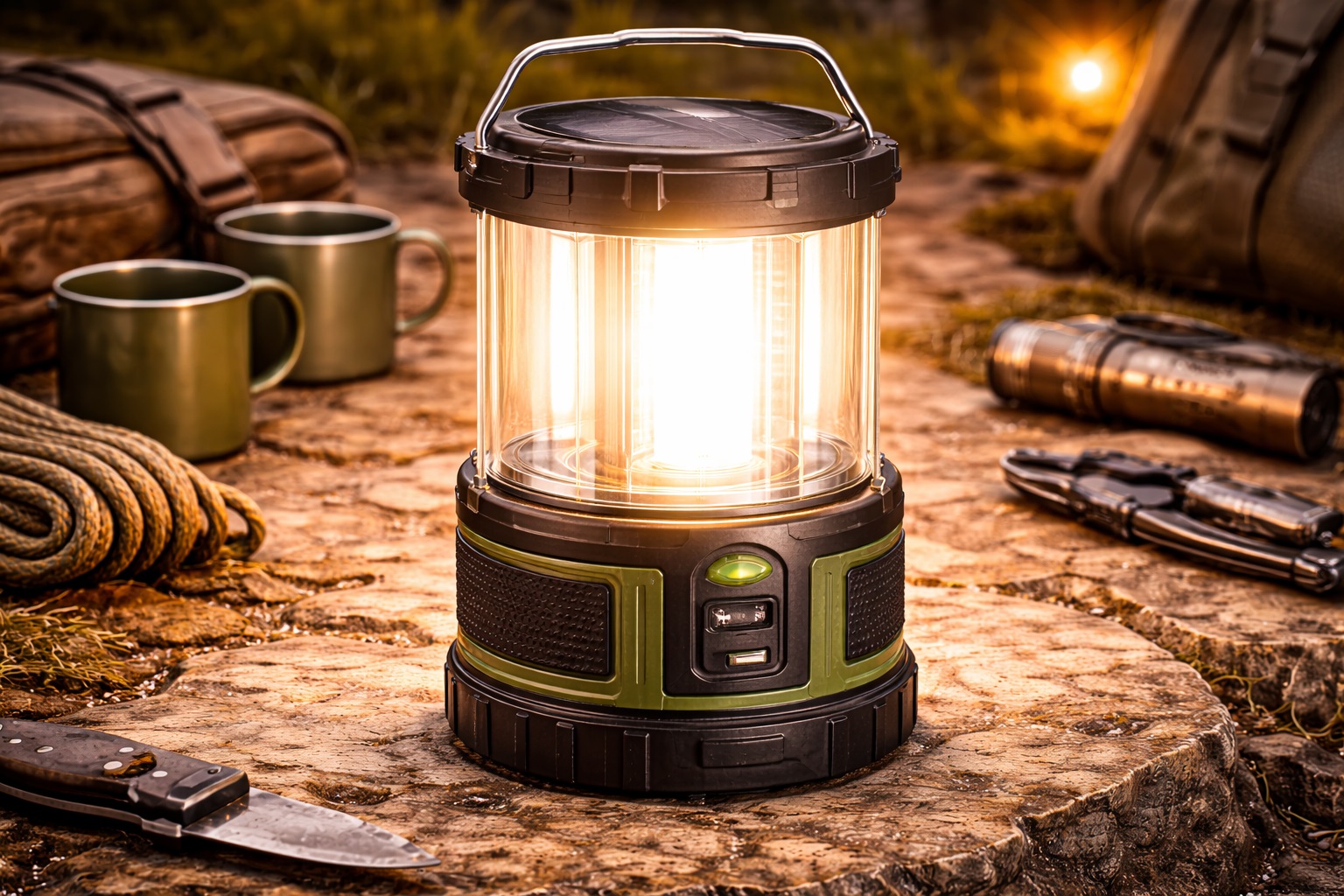
Best High Lumen Camping Lantern in 2026: Brightest Picks
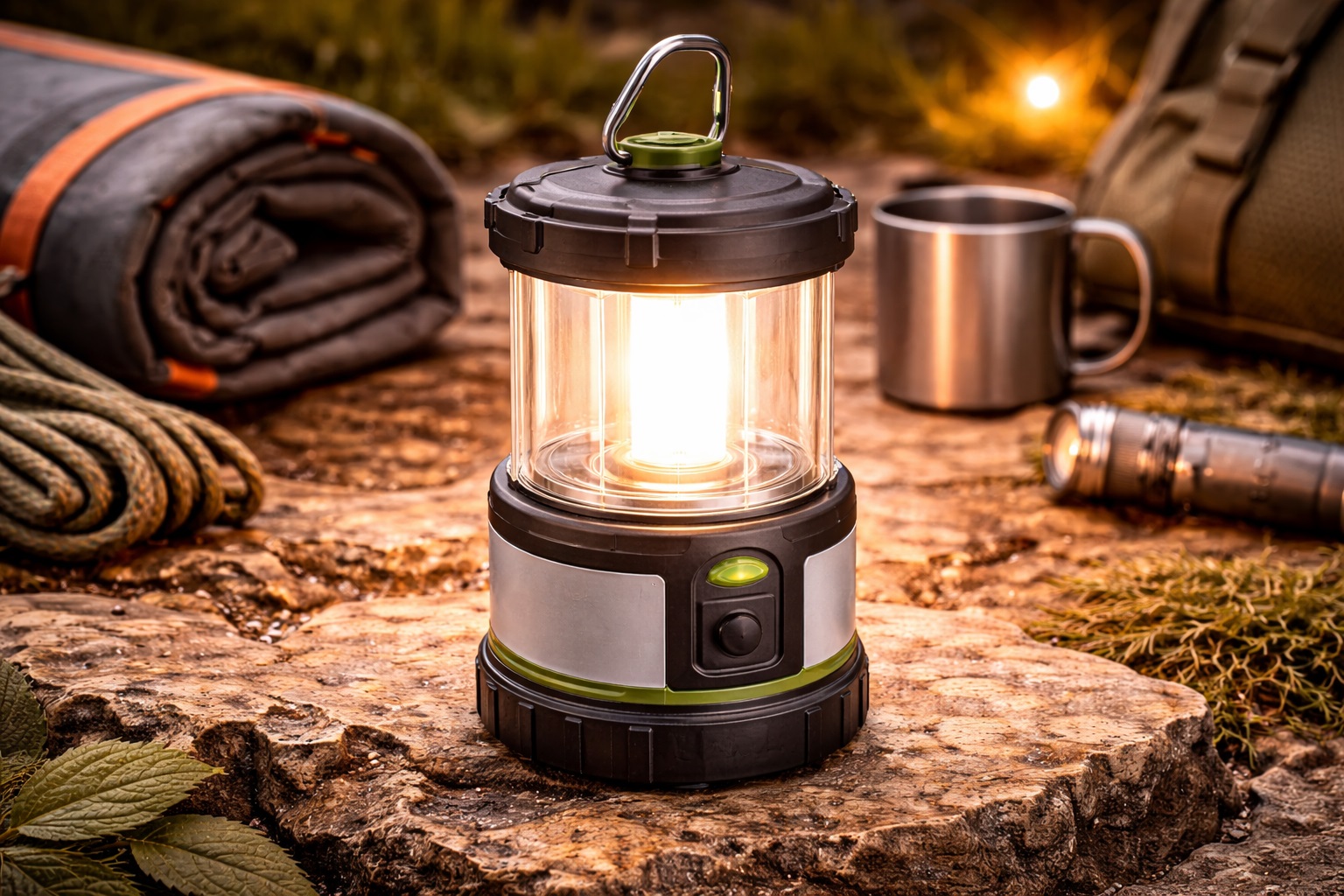
When a small campsite lantern just is not cutting it, stepping up to a high lumen camping lantern can transform how usable your camp feels after dark. This guide compares eight camping lanterns considered for maximum brightness, weighing lumen output, beam quality, and runtime so you can light up a larger tent site, a group gathering, or a family basecamp without squinting.
Not every lantern on this list is a pure brightness champion, and that is intentional. Several models here compete on other strengths, like ambiance, efficiency, or charging convenience, and including them helps illustrate exactly how much of a difference dedicated high-output models make when raw lumens are the priority. Seeing the gap side by side makes the trade-offs easier to weigh, and knowing exactly what you are giving up by choosing a lower-output model can prevent buyer's remorse once you are actually out at camp.
Whether you need enough light to illuminate an entire group campsite, a rugged base camp for photography, or simply hate squinting at a dim glow while cooking dinner, the reviews and buying guide below will help you find a lantern that actually delivers on brightness claims.
It is worth noting that lumens are not the only factor in how bright a lantern feels in practice. Beam spread, diffusion quality, and color temperature all affect how usable that brightness actually is once you are standing in front of it at camp.
It also helps to think about brightness in terms of your specific use case rather than chasing the biggest number available. A solo hiker reading in a tent needs a completely different lighting solution than a family hosting a group cookout, even though both might describe their need as wanting a "bright" lantern. Keeping your actual situation in mind while reading the reviews below will help you land on the pick that suits you rather than simply the one with the highest spec sheet number.
Top 8 Best camping lantern Picks (Detailed Reviews)
1. MPOWERD Luci Outdoor 2.0 – Best For Supplemental Ambient Light
The MPOWERD Luci Outdoor 2.0 is included here as a useful point of comparison rather than a brightness leader, since its inflatable, solar-powered design prioritizes efficiency and packability over raw lumen output. At around $25, it is the most affordable lantern in this lineup, and it still earns a place as a secondary or backup light source even on a high-brightness-focused trip. Pairing it with a genuinely bright primary lantern gives you both maximum output and a low-power option for late-night trips to the bathroom or tent, without needing to run your brightest light source for a task that does not require it.
- Pros:
- Lowest price point in this lineup
- Solar charging means no batteries to carry
- Useful as a secondary, low-power light source
- Packs down to almost nothing for storage
- Cons:
- Light output is modest and not suited to large campsite lighting
- Relies on sunlight for charging, which limits reliability on demand
Best For: Campers who want a low-power backup light to complement a brighter primary lantern rather than serve as the main light source.
Why We Recommend It: Even brightness-focused campers benefit from a dim, efficient secondary light for late-night tasks, and the Luci Outdoor 2.0 fills that role well at a low price.
2. Fenix CL30R – Best For Maximum Lumens Overall
Fenix built the CL30R around genuine brightness, rating it at 650 lumens, the highest explicit output figure in this entire lineup. Combined with micro-USB charging, it delivers enough light to fully illuminate a large tent site or group gathering area without needing a second lantern. At around $110, it is the priciest option here, but for campers whose top priority is raw brightness, it is hard to find a more direct match for that need, and the rechargeable design means you are not stuck buying disposable batteries to sustain that output.
- Pros:
- 650-lumen output is the highest rated brightness in this lineup
- Micro-USB charging means no disposable batteries
- Well-regarded brand with a long track record in portable lighting
- Bright enough to serve as the sole light source for larger groups
- Rechargeable design keeps ongoing costs low despite frequent high-output use
- Cons:
- Costs noticeably more than most lanterns in this roundup
- Full brightness will drain the battery faster than lower-output modes
- Fewer color or finish options compared to some rivals
Best For: Campers and group leaders who need the single brightest lantern available and are willing to pay for it.
Why We Recommend It: When maximum lumens is the deciding factor, the CL30R's rated output leads this entire lineup, making it the clear pick for brightness-first buyers.
3. Black Diamond Apollo – Best For Solid Mid-Range Brightness
Black Diamond's Apollo delivers a rated 250 lumens, a respectable middle-tier output that covers most typical campsite tasks without reaching the ceiling of the brightest models here. At roughly $60, it offers a reasonable brightness-to-price ratio for campers who want noticeably more light than entry-level lanterns without paying premium prices. The built-in power hub adds useful device-charging flexibility on top of its lighting performance, rounding out a genuinely well-balanced package for campers who do not need the very top lumen tier.
- Pros:
- 250 lumens covers most campsite tasks comfortably
- Power hub adds device-charging flexibility
- Backed by a reputable outdoor gear company
- Cons:
- Not as bright as the top lumen leaders in this lineup
- Mid-range price compared to the cheapest picks
Best For: Campers who want a meaningful brightness upgrade over basic lanterns without paying for the absolute highest lumen count.
Why We Recommend It: The Apollo offers a sensible middle ground for campers who want solidly bright light without the premium price tag of the true output leaders.
4. BioLite AlpenGlow 500 – Best For Natural-Toned Bright Lighting
BioLite's AlpenGlow 500 uses ChromaReal LED technology designed to render natural light and skin tones more accurately, which makes its brightness feel more pleasant and less harsh than a simple high-lumen bulb. At around $80, it costs more than several other picks here, but campers who want bright light that still feels comfortable for extended evening use often find it worth the premium. Its focus on light quality rather than pure lumens sets it apart from the raw brightness leaders, appealing to campers who care as much about how light feels as how much of it there is.
- Pros:
- ChromaReal LED tech produces brighter light that still feels natural
- Well suited to social camping settings, not just utility lighting
- Distinctive design compared to typical high-output lanterns
- Cons:
- Priced higher than several purely functional alternatives
- Not rated for the absolute highest lumen output in this lineup
Best For: Campers who want strong brightness that still feels comfortable and natural rather than harsh or clinical.
Why We Recommend It: The AlpenGlow 500 proves that brightness and comfort are not mutually exclusive, delivering strong light output with noticeably better color quality than typical high-lumen alternatives.
5. Ledlenser ML6 – Best For Glare-Free High-Output Beam Quality
Ledlenser's ML6 uses micro-prism technology to spread light evenly across a wide area, reducing the glare and hot spots that can make even a bright lantern uncomfortable to be near. At around $100, it is one of the pricier lanterns here, but its refined optics mean its brightness is more usable in practice than raw lumen figures alone suggest. For campers who read, cook, or work near the lantern for extended periods, this comfort factor is a genuine advantage that becomes more noticeable the longer you spend near the light source each evening.
- Pros:
- Micro-prism tech reduces glare while maintaining strong output
- Precision optical engineering from a specialist brand
- Comfortable for extended close-range use at high brightness
- Beam quality that feels brighter than the raw lumen number alone suggests
- Cons:
- Among the more expensive options here
- Not the single highest rated lumen figure in this lineup
Best For: Campers who want high-quality, glare-free brightness rather than the single highest raw lumen number available.
Why We Recommend It: The ML6's engineering makes its brightness genuinely more comfortable and usable over long evenings, which matters as much as the lumen rating itself.
6. Coleman Northstar LED – Best For High-Power Family Camping
Coleman's Northstar LED is built around high-power output paired with a rugged base designed for repeated outdoor use. At around $80, it is priced for campers who want dependable, strong brightness for family or group car camping trips rather than a specialty or ultralight design. Its widespread availability and trusted brand name make it an easy, low-risk choice for anyone prioritizing brightness and reliability together over specialty features or ultra-compact size.
- Pros:
- High-power output suits larger family campsites
- Rugged base built to handle repeated outdoor use
- Trusted, widely available brand
- Cons:
- Bulkier than more compact competitors
- Not the single brightest lantern in this lineup
Best For: Families and car campers who want strong, dependable brightness without needing the absolute top lumen figure.
Why We Recommend It: The Northstar LED's combination of strong output, rugged build, and brand trust makes it a safe choice for campers who want reliable brightness trip after trip.
7. Goal Zero Lighthouse 600 – Best For Bright, Dual-Direction Coverage
The Goal Zero Lighthouse 600 spreads light in two directions at once, which can make a mid-range lumen rating feel brighter in practice by covering more of a tent site or picnic area evenly. At around $70, it lands in the middle of this lineup on price while adding a genuine power bank function for charging small devices. For campers who value even coverage over a single, narrow beam of maximum brightness, this design has real practical benefits, particularly around a shared table where several people need usable light at once.
- Pros:
- Dual-direction lighting spreads brightness more evenly around camp
- Doubles as a power bank for small devices
- Mid-range price for a genuinely dual-purpose tool
- Cons:
- Not rated for the single highest lumen output here
- Higher price than pure lighting-only competitors
Best For: Campers who want brightness spread evenly across a wider area rather than concentrated in one direction.
Why We Recommend It: Even coverage from two directions can make a campsite feel better lit than a single brighter but more directional lantern, especially for shared spaces.
8. Nitecore LR60 – Best For Budget-Friendly Brightness Modes
Nitecore's LR60 offers triple output modes, letting campers choose a brighter setting when needed and a dimmer one to conserve battery, all in a lantern priced around $55. For campers who want flexible access to a brighter mode without paying the premium price of the top lumen leaders, this versatility offers real value. Its built-in battery charger adds further usefulness for multi-day trips, letting it pull double duty as both a lighting tool and a small charging hub.
- Pros:
- Triple output modes let you choose brightness on demand
- Doubles as a battery charger for other devices
- Competitively priced for the features included
- Cons:
- Multiple modes can take a moment to learn
- Not the brightest single setting available in this lineup
Best For: Budget-conscious campers who want a brighter mode available without paying premium prices for peak lumens.
Why We Recommend It: The LR60 offers a smart, affordable way to access stronger brightness when you need it, while still preserving battery life on lower settings the rest of the time.
Buying Guide: How to Choose the Best High Lumen Camping Lantern
Choosing a high lumen camping lantern is not as simple as picking the highest number on a spec sheet. The considerations below will help you understand what actually makes a bright lantern useful in practice, rather than just impressive on paper.
1. Understand What a Lumen Rating Actually Measures
Lumens measure total light output, but they do not capture beam spread, diffusion, or color quality, all of which affect how bright a lantern actually feels once you are standing near it. Use lumens as a starting comparison point, not the final word, and weigh it alongside the other factors covered below.
2. Match Brightness to Your Typical Campsite Size
A small two-person tent site rarely needs the same brightness as a large family basecamp or group gathering area. Buying more lumens than you actually need adds cost and battery drain without a meaningful benefit, so be realistic about your usual group size.
3. Consider Beam Spread and Diffusion Quality
Lanterns with better diffusion technology spread the same lumen output more evenly and comfortably than lanterns that concentrate light into harsh hot spots. This affects how usable a given brightness level feels in real-world use far more than the raw number alone.
4. Check for Multiple Brightness Modes
A high lumen lantern with multiple output settings gives you the option to run at maximum brightness when needed and switch to a lower setting to conserve battery once the campsite is set up for the night, extending your usable time between charges.
5. Weigh Runtime Against Peak Brightness
Running any lantern at its highest lumen setting drains the battery significantly faster than a lower mode. Check the manufacturer's runtime estimate specifically at high brightness rather than assuming the advertised runtime applies at full output, since many published figures reflect the lowest setting.
6. Consider Color Temperature for Comfort
Cooler, bluer light can feel harsher at high brightness levels, while warmer-toned LEDs often feel more comfortable for extended evening use even at similar lumen output. Personal preference plays a real role here, so consider trying before committing if possible.
7. Factor In Charging Method for High-Drain Use
Bright lanterns run through battery power faster, so a rechargeable model with quick charging or a reliable battery-charging feature can matter more here than with lower-output lanterns that sip power more slowly.
8. Think About Whether You Need One Bright Lantern or Two Moderate Ones
Two moderately bright lanterns positioned around a campsite can sometimes provide more even coverage than a single very bright unit in one spot, depending on your site's layout and how spread out your group tends to be.
9. Check Build Quality for Frequent High-Output Use
Lanterns run frequently at maximum brightness generate more heat and battery cycling stress, so a more rugged build can pay off for campers who regularly push their lantern to its limits on back-to-back trips.
10. Consider Weather Resistance for Outdoor Exposure
A bright lantern left running outside a tent for extended periods benefits from solid weather resistance. Check for an IP rating before assuming any lantern can handle rain or heavy dew unprotected, since higher-output electronics can be more sensitive to moisture.
11. Read Buyer Reviews for Real-World Brightness Impressions
Lumen ratings on spec sheets do not always match subjective brightness impressions from real buyers. Reviews often describe how a lantern actually performs compared to its rated output in practical camping situations, including how it compares to lanterns you may already own.
12. Balance Price Against How Often You Need Maximum Brightness
If you only occasionally need a very bright lantern, a mid-range option with a boost mode may serve you better than paying a premium for a dedicated high-lumen model used only occasionally throughout the year.
13. Consider Device-Charging Capability as a Bonus Feature
Several bright lanterns also double as power banks, which is a useful bonus for keeping devices charged during longer trips, especially if brightness needs mean the lantern already draws significant power from a shared battery system.
14. Think About How Brightness Needs Change Across a Trip
Early evening tasks like cooking and setup often call for maximum brightness, while later hours spent relaxing or heading to sleep need much less. A lantern with a wide brightness range serves both ends of that spectrum better than a single-output design.
Frequently Asked Questions
Is a premium camping lantern worth it?
Not always. Higher-end models often offer better performance, longer warranties, and more durable materials compared to budget alternatives, but occasional campers may not need the absolute highest lumen count available.
How do I maintain my camping lantern?
Keep it clean and dry, and check battery contacts or charging ports periodically to ensure they are free of dirt and corrosion, especially if the lantern is used frequently at high brightness.
How many lumens do I need to light up a large campsite?
For larger group areas, look toward the 500-plus lumen range, while smaller two-person tent sites are often well served by 200 to 300 lumens.
Does a higher lumen rating always mean a brighter-feeling lantern?
Not necessarily. Beam spread and diffusion quality affect how bright a lantern feels in practice, so two lanterns with similar lumen ratings can feel noticeably different depending on their optical design.
Do high lumen lanterns drain batteries faster?
Yes, running a lantern at its highest brightness setting draws significantly more power than a lower mode, which is why multiple brightness settings are valuable for managing battery life over a trip.
Are high lumen lanterns more expensive than standard ones?
Generally yes, since achieving higher rated brightness typically requires more advanced components and better heat management, both of which add to manufacturing cost.
Can a high lumen lantern be too bright for a small tent?
Yes, running a high-output lantern at maximum brightness inside a small enclosed tent can feel overwhelming and uncomfortable, so a lower mode is usually more appropriate for close-range use.
What is the difference between lumens and brightness perception?
Lumens measure total light output, but perceived brightness also depends on factors like beam spread, color temperature, and the surrounding environment's ambient light level.
Should I buy the highest lumen lantern I can afford?
Not necessarily. Matching the lumen output to your actual campsite size and typical group size usually delivers better real-world value than simply maximizing the number on the spec sheet.
How long do high lumen lanterns typically run at full brightness?
Runtime at maximum brightness varies widely by model, but expect noticeably shorter runtime at full output compared to the same lantern's lower or ambient settings.
Do bright lanterns generate more heat?
Higher-output LEDs do generate more heat than lower-output ones, which is why well-designed high lumen lanterns typically include some form of heat management in their housing.
Is it better to buy one bright lantern or several smaller ones?
It depends on your campsite layout. A single bright lantern works well for a compact area, while several smaller lanterns spread around a larger site can sometimes provide more even, comfortable coverage.
Can a high lumen lantern damage my eyes if I look directly at it?
Looking directly into any bright light source can cause temporary discomfort, similar to staring at a car's headlights. It is not typically dangerous for brief exposure, but avoiding direct eye contact with a lantern at full brightness is simply good practice.
Do high lumen lanterns cost more to run over time?
If a lantern relies on disposable batteries, running it frequently at high brightness will increase battery replacement costs over time. Rechargeable models avoid this ongoing expense, though they draw down their charge faster at higher settings.
What is considered a genuinely high lumen output for a camping lantern?
Ratings above 500 lumens are generally considered high output for a camping lantern, with anything in the 600-plus range representing some of the brightest consumer options currently available.
Should I look for a lantern with an adjustable beam angle?
An adjustable or dual-direction beam can make a high lumen lantern more versatile, letting you direct light where it is needed most rather than illuminating an entire 360-degree area at full brightness at all times.
Can I use a high lumen lantern for outdoor work projects, not just camping?
Yes, many high-output camping lanterns work well for general outdoor tasks like vehicle repairs, yard work after dark, or power outages at home, since the same bright, portable design applies to those situations as well.
How do I compare brightness between two lanterns with different lumen ratings?
Comparing the raw lumen numbers is a reasonable starting point, but reading buyer reviews that describe real-world brightness impressions, and checking beam angle specifications when available, gives a more complete picture than the number alone.
Do high lumen lanterns need special ventilation or heat management?
Well-designed high-output lanterns typically include built-in heat dissipation in their housing, so no special ventilation is needed on your part beyond avoiding covering the lantern with fabric or leaving it in an enclosed hot space for extended periods.
Is a high lumen lantern overkill for casual weekend camping?
For most casual weekend trips, a mid-range brightness lantern is usually sufficient, and a top-tier high lumen model may be more capability than you actually need unless you regularly host larger groups or need extended visibility for a specific reason.
Are high lumen lanterns useful for emergency preparedness at home?
Yes, a bright, rechargeable lantern is a popular addition to home emergency kits for power outages, since it can light an entire room far more effectively than a small flashlight or candle while still being portable enough to move between spaces.
Does a high lumen lantern need a special power bank to recharge in the field?
Most rechargeable high-output lanterns use standard USB charging, so any reasonably sized power bank or portable solar panel with sufficient output can recharge them, though larger batteries will naturally take longer to fully charge than smaller ones.
What is the fastest way to tell if a lantern is genuinely bright in stores?
If you can see the lantern in person before buying, comparing it directly against a known reference light in similar lighting conditions gives a more honest impression than reading the lumen number alone, since store lighting and packaging can be misleading.
Final Verdict
- Top Pick: Fenix CL30R for the highest rated brightness in this entire lineup.
- Budget Choice: Nitecore LR60 for flexible brightness modes at an affordable price.
- Premium Choice: Ledlenser ML6 for the most comfortable, glare-free high-output beam quality.
Choosing the right high lumen camping lantern comes down to deciding whether you want the single highest rated brightness available, a more balanced mix of output and comfort, or flexible brightness modes at a lower price. The Fenix CL30R leads on raw lumens, the Ledlenser ML6 delivers a more refined and comfortable bright-light experience, and the Nitecore LR60 offers a smart, affordable way to access stronger brightness when you actually need it. Whichever you choose, remember that beam quality and diffusion matter just as much as the number printed on the box when it comes to how genuinely usable that brightness feels at camp. Take an honest look at your typical group size and campsite layout before deciding how much raw output you actually need, since the brightest lantern on paper is not always the most satisfying one to actually use night after night.