Best Non-Slip Grip Trekking Poles in 2026
A secure, non-slip grip is one of the most overlooked details in a trekking pole, yet it is often the difference between a confident stride and a nervous slip on wet rock or loose scree. This guide compares the top non-slip grip trekking poles of 2026, looking closely at grip material, shaft construction, locking mechanisms, and overall value so hikers of every level can find a pole that stays planted in their hand from the trailhead to the summit.
Whether you hike in humid summer heat, cold alpine mist, or dusty desert trails, the way a pole handle responds to moisture and friction changes everything about your grip confidence. Cork, foam, and rubber each behave differently once your palms start to sweat or the weather turns, and the poles below represent a range of approaches to solving that problem. Below you will find detailed reviews, a full buying guide, and answers to the most common questions hikers ask before choosing a set of poles.
This guide focuses specifically on the handle and how it performs under real trail conditions, rather than treating grip as an afterthought to shaft weight or price. We look at how each brand approaches moisture management, hand shape, and locking security, since those three factors together determine whether a pole still feels planted in your hand ten miles into a hike. Comparing these details side by side should make it easier to match a pole to your own climate, pace, and typical terrain.
Top 8 Best trekking poles Picks (Detailed Reviews)
1. Black Diamond Trail Back – Best For All-Around Non-Slip Grip
The Black Diamond Trail Back pairs an ergonomic foam grip with a dependable aluminum shaft, landing at around $90. Foam grips like this one are prized for wicking moisture away from the palm rather than letting it pool the way some rubber handles do, which keeps hands from sliding during long uphill pushes. Black Diamond has a long track record in the trekking pole category, and this model reflects that experience in its balanced swing weight and predictable lever action at the strap. The strap itself is padded and adjustable, which helps distribute load away from the fingers so the grip does not have to do all the work on long climbs. For hikers who transition between shaded forest trails and exposed sunny ridgelines in a single day, a foam grip like this one tends to feel consistent across that range of conditions.
- Pros:
- Ergonomic foam grip resists moisture buildup during sweaty climbs
- Solid aluminum build tolerates hard trail use without flexing excessively
- Backed by a well-established outdoor brand with wide retailer support
- Cons:
- Sits at a higher price than entry-level aluminum poles
- Foam grips can compress and need replacement sooner than cork
Best For: Hikers who sweat heavily on climbs and want a grip that stays dry and secure without upgrading to cork.
Why We Recommend It: It strikes a dependable balance between grip security, everyday durability, and price, making it an easy recommendation for most three-season hikers.
2. Cascade Mountain Tech Aluminum – Best For Budget-Friendly Stability
At roughly $30, the Cascade Mountain Tech Aluminum is one of the most affordable ways to add a non-slip grip pole to your kit. Its quick lock stability system is designed to hold length adjustments firmly once tightened, which matters as much for grip confidence as the handle material itself, since a pole that slips in length can undermine even the best hand grip. The aluminum shaft adds a small weight penalty compared to carbon options but offers useful resilience against bending. For first-time buyers unsure whether they will stick with trekking poles long term, this is a sensible way to find out without committing to premium pricing before knowing your preferred grip style.
- Pros:
- Very accessible price point for hikers testing out poles for the first time
- Quick lock stability keeps length settings from creeping during use
- Aluminum shafts resist snapping better than brittle carbon under lateral stress
- Cons:
- Grip material is more basic than the cork or foam options higher in this list
- Slightly heavier swing weight than premium carbon fiber alternatives
Best For: Budget-conscious hikers and beginners who want dependable stability without a large upfront investment.
Why We Recommend It: Few poles at this price deliver such a secure locking mechanism, making it a smart low-risk entry point into trekking poles.
3. Komperdell Ridgehiker – Best For Cork Grip Comfort in Wet Conditions
The Komperdell Ridgehiker is built around cork grip comfort and is priced near $100. Cork is widely regarded as one of the best natural materials for wet-weather grip because it absorbs moisture rather than becoming slick, and it gradually molds to the shape of your hand over repeated use. That combination makes this pole a strong choice for hikers who frequently encounter rain, humidity, or heavy trail sweat. Many hikers who switch from foam or rubber to cork describe a noticeable difference specifically on humid days, when other grip materials tend to feel greasy by midday.
- Pros:
- Cork grip comfort improves traction as it wears in over time
- Naturally moisture-wicking material stays tacky even when damp
- Reputable brand known specifically for grip-focused pole design
- Cons:
- Cork surfaces can eventually crumble at the edges after years of heavy use
- Costs more upfront than basic foam or rubber grip alternatives
Best For: Hikers in humid or rainy climates who prioritize a grip that improves rather than degrades with moisture.
Why We Recommend It: Its wet-weather grip performance is difficult to match, and the comfort improves the more miles you put on it.
4. REI Co-op Traverse – Best For Fast, Secure Length Adjustments
Priced around $110, the REI Co-op Traverse features FlickLock adjustment, a lever-based locking system that clamps the shaft firmly without the twisting motion that some hikers find awkward with wet or gloved hands. Because a pole that slips in length can throw off your entire grip angle, a dependable lock is part of what keeps your hands feeling secure through changing terrain. This becomes especially noticeable on trips that mix flat approach trails with steeper alpine sections, where hikers frequently need to reset pole length several times per day.
- Pros:
- FlickLock adjustment is fast to operate even with gloves on
- Lever-based system rarely slips once properly tightened
- Backed by REI's well-known co-op support and return policy
- Cons:
- Levers add a small amount of bulk to the shaft profile
- Higher price point than simple twist-lock competitors
Best For: Hikers who frequently adjust pole length mid-hike and want a locking system that holds firm every time.
Why We Recommend It: The FlickLock mechanism removes one of the most common causes of grip frustration on the trail: poles that quietly slip shorter under load.
5. Leki Makalu Lite – Best For Long-Distance Grip Comfort
The Leki Makalu Lite, priced near $140, uses an Aergon Air grip designed to reduce hand fatigue over long days. This foam-based grip is shaped to encourage a more natural hand position, which can reduce the repetitive gripping and re-gripping that leads to blisters and slipping fingers on extended treks. Leki has built a strong reputation among long-distance hikers for exactly this kind of ergonomic detail. Hikers who have dealt with blisters or hot spots from lower-quality grips on past trips often notice the difference in the first day or two of use, particularly on multi-day itineraries with heavy pack loads. The grip also tapers slightly toward the top, which gives hikers a natural upper hand position for choking up on steep climbs without losing contact with the primary grip zone.
- Pros:
- Aergon Air grip shape reduces fatigue-related hand slippage on long days
- Lightweight construction for a premium-tier trekking pole
- Strong reputation among thru-hikers and multi-day trekkers
- Cons:
- Premium pricing puts it out of reach for casual users
- Replacement parts can be harder to source than mainstream brands
Best For: Multi-day trekkers who need a grip that remains comfortable and secure across long mileage.
Why We Recommend It: Its ergonomic grip shape is specifically engineered to prevent the kind of fatigue-driven slipping that shows up late in a long trekking day.
6. Kelty Upslope – Best For Casual Day Hikers
At about $45, the Kelty Upslope offers reliable telescoping adjustment for hikers who want straightforward functionality without a steep price tag. It is a practical option for shorter day hikes where absolute grip performance in extreme wet conditions is less of a concern than simple, dependable operation. Many hikers looking for a second or backup pair, or gear for a family member just starting out, find this level of simplicity easier to recommend than a feature-heavy premium pole.
- Pros:
- Reliable telescoping mechanism is simple to operate for newcomers
- Affordable price makes it accessible for occasional hikers
- Lightweight enough for casual outings without added bulk
- Cons:
- Grip material is less specialized than dedicated non-slip options
- Not the first choice for extended wet-weather trekking
Best For: Casual day hikers who want dependable poles for occasional weekend trips.
Why We Recommend It: It covers the fundamentals well at a friendly price, without asking hikers to pay for features they may not need.
7. Black Diamond Alpine Carbon – Best For Lightweight Carbon Performance
The Black Diamond Alpine Carbon uses 100% carbon fiber shafts and sits at the premium end of this list at around $200. Carbon fiber transmits less trail vibration into the hand than aluminum, which can indirectly support grip comfort over long descents, though it typically pairs with a firmer, less forgiving swing feel than aluminum options. Hikers coming from heavier aluminum poles often describe the switch as noticeably less tiring on the forearms by the end of a long descent, even before accounting for grip material, and that reduced arm fatigue in turn makes it easier to keep a light, relaxed hold on the grip rather than a tense, white-knuckle one.
- Pros:
- 100% carbon fiber shafts significantly reduce overall pole weight
- Less vibration transferred to the hand on rocky descents
- Premium build quality consistent with Black Diamond's flagship line
- Cons:
- Carbon fiber is more prone to snapping under sideways impact than aluminum
- Highest price point among the poles reviewed here
Best For: Weight-conscious hikers willing to pay a premium for reduced vibration and lighter swing weight.
Why We Recommend It: For hikers who log serious mileage, the reduced fatigue from a lighter shaft can translate into a steadier, more confident grip late in the day.
8. Foxelli Carbon Fiber – Best For Shock Absorption on Rocky Trails
Priced around $60, the Foxelli Carbon Fiber pole includes shock-absorbing technology intended to soften the jolt of each plant on hard or rocky ground. Less impact shock means less involuntary hand tensing, which can help maintain a relaxed, secure grip over the course of a long rocky descent. This can matter as much on well-maintained rocky switchbacks as on unmarked scramble routes, where every plant of the pole absorbs a jolt that would otherwise travel straight into the wrist.
- Pros:
- Shock-absorbing technology reduces jarring impact through the hand
- Competitive pricing for a carbon fiber build
- Comfortable for rocky, technical terrain
- Cons:
- Less established brand history than Black Diamond or Leki
- Carbon construction still carries some risk of cracking under abuse
Best For: Hikers tackling rocky or technical trails who want cushioned impact absorption at a moderate price.
Why We Recommend It: The shock-absorbing design directly supports grip security by reducing the involuntary hand fatigue that comes from repeated hard impacts.
Buying Guide: How to Choose the Best Non-Slip Grip Trekking Poles
1. Grip Material: Cork vs Foam vs Rubber
Cork molds to your hand over time and performs well in humid or wet conditions since it absorbs moisture rather than becoming slick. Foam is lighter and wicks sweat effectively, making it a strong choice for hot-weather hikers. Rubber grips insulate well in cold weather but tend to become slippery once your palms start to sweat, so consider your typical climate before choosing. If you regularly hike across more than one season, it can be worth testing a grip material in warm and cool conditions before settling on a favorite.
2. Shaft Material: Aluminum vs Carbon Fiber
Aluminum shafts are heavier but more forgiving under lateral stress, often bending rather than snapping. Carbon fiber is lighter and dampens vibration better, which can support a more relaxed grip, but it is more prone to catastrophic failure if wedged or struck sideways against a rock. Hikers who regularly scramble over boulder fields or uneven talus may prefer the added margin of safety that aluminum provides, even at the cost of a slightly heavier swing.
3. Locking Mechanism: Flip-Lock vs Twist-Lock
Flip-lock (lever) systems tend to hold firm under load and are easier to operate with gloves, while twist-lock systems are lighter and simpler but can loosen in cold or wet conditions if not tightened properly. A locking mechanism that slips undermines grip confidence just as much as a poor handle material. Before buying, it is worth checking how the lock performs with gloves on, since cold-weather hikers often find twist-lock designs harder to grip and tighten securely.
4. Pole Tips and Traction on Wet or Loose Terrain
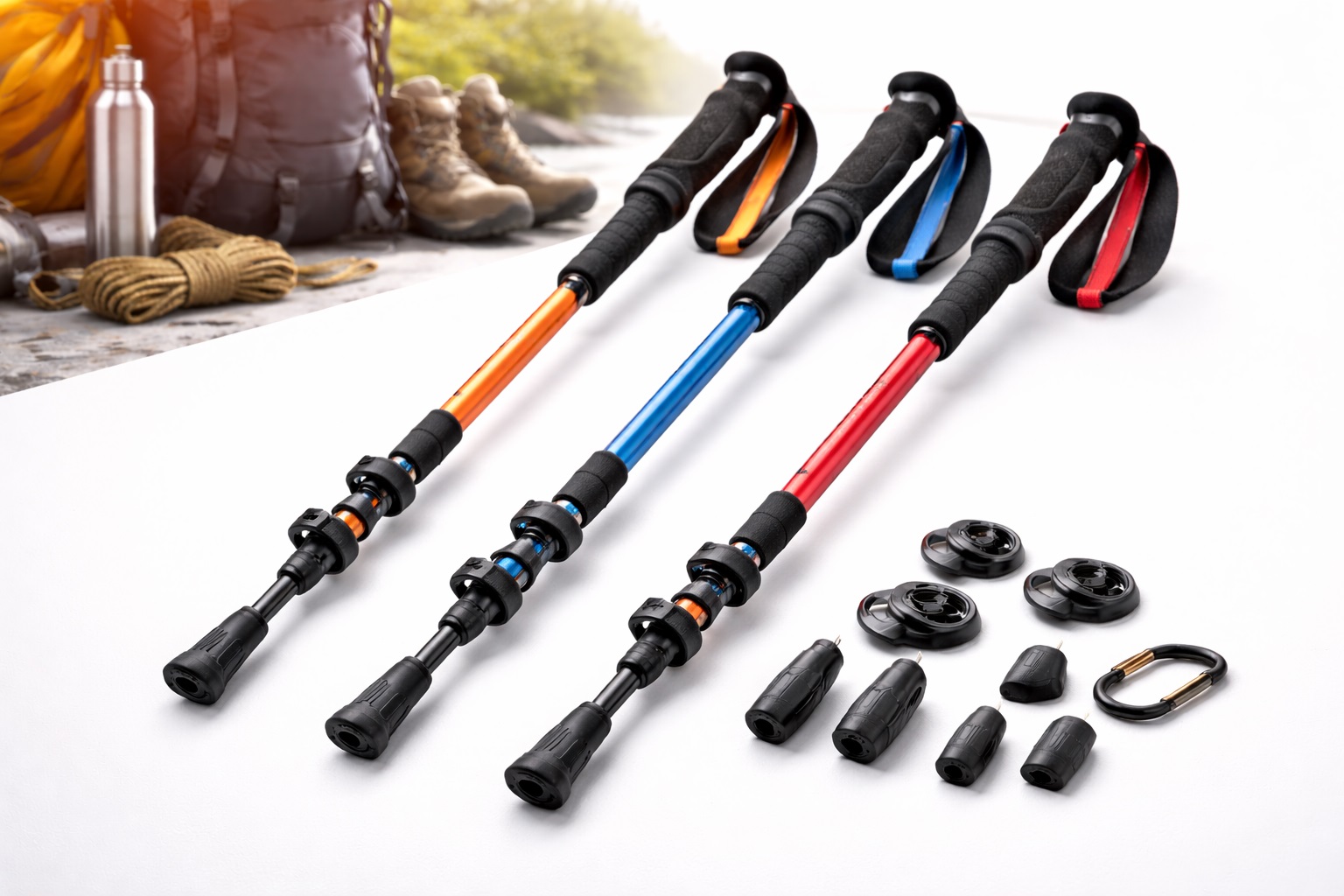
Carbide tips bite into rock and hardpack far better than rubber or plastic tips, which matters most on wet stone or loose scree where a slipping tip can transmit a jolt straight up into your hand. Rubber tip protectors are useful for pavement and delicate trail sections, and swapping between the two depending on terrain is a simple way to preserve traction without buying an entirely new pole.
5. Wrist Strap Fit and Hand Security
A properly adjusted wrist strap lets you relax your grip on the handle itself, since the strap bears some of the load rather than your fingers alone. Padded, adjustable straps reduce the friction that leads to blisters and, indirectly, to a slipping grip, while thin or unpadded straps tend to dig into the wrist on longer days and force hikers to over-grip the handle to compensate.
6. Length Adjustability for Uphill and Downhill Stability
Shortening poles slightly for climbs and lengthening them for descents keeps your arm angle in a stronger, more stable position. A pole that adjusts smoothly and locks reliably at your preferred lengths supports a more consistent, secure grip throughout varied terrain, and many experienced hikers develop a habit of adjusting length at the start of any significant climb or descent rather than mid-slope.
7. Weight and Fatigue Over Long Distances
Lighter poles reduce the cumulative fatigue that builds over many hours of swinging and planting, and tired hands are more prone to losing grip precision. If you hike long mileage regularly, weight savings can matter as much as grip material, since even a small reduction in swing weight per pole adds up considerably across thousands of repeated plants over a full day.
8. Shock Absorption and Joint Protection
Poles with internal spring or elastomer dampening reduce the jolt transmitted through the shaft into your hand and wrist with every step, which can help maintain a relaxed, controlled grip on rocky or steep descents, and this feature is often most appreciated on long descents where repetitive impact would otherwise accumulate into noticeable hand and wrist fatigue.
9. Basket Compatibility for Snow, Mud, and Sand
Interchangeable baskets prevent the tip from sinking too deep into soft snow, mud, or sand, keeping the pole angle predictable so your hand does not have to compensate with extra grip force to maintain control. Swapping baskets seasonally, from wide snow baskets in winter to smaller trekking baskets in summer, is a quick way to keep this consistent year-round.
10. Durability and Long-Term Grip Wear
Grip materials wear differently over time: cork can eventually flake at high-friction points, foam can compress and lose its tackiness, and rubber can harden and crack in cold storage. Consider how the grip is expected to age before committing to a pair for years of use, and check whether the manufacturer sells replacement grips, since this can extend the useful life of an otherwise solid pole considerably.
11. Price vs Performance Trade-Offs
Budget aluminum poles can still offer excellent grip security if the handle material is well chosen, while premium carbon poles add weight savings and vibration dampening rather than necessarily improving raw traction. Match your spending to the features that matter most for your hiking style, and remember that a well-chosen grip on a budget shaft will often outperform a premium shaft paired with a grip that does not suit your climate.
12. Matching Poles to Your Hiking Style
Fast-paced day hikers may prioritize light weight and quick-adjust locks, while multi-day trekkers may value ergonomic grip shaping that reduces fatigue over back-to-back long days. Identify your typical trip length and terrain before narrowing your choice, since the right pole for a weekend section hike is not always the right pole for a week-long backcountry traverse.
13. Storage, Packability, and Travel Considerations
Telescoping poles are generally simpler and more affordable, while folding designs pack down smaller for travel or storage in a daypack. If you frequently fly or need to stow poles compactly, factor packed length into your decision alongside grip performance, since a pole that folds down small is only useful if the grip and lock quality hold up once reassembled.
Frequently Asked Questions
What actually makes a trekking pole grip non-slip?
Non-slip performance comes from a combination of surface texture and moisture management. Materials like cork and foam absorb sweat and rain rather than letting it sit on the surface, which keeps friction high even when your hands are damp. Surface texture also plays a role, since a slightly ridged or contoured grip gives your fingers more to hold onto than a perfectly smooth handle.
Is cork or foam better for sweaty hands?
Both wick moisture effectively, but foam tends to feel softer and lighter initially, while cork often improves its grip over time as it molds to your hand shape. Many long-distance hikers prefer cork specifically for this reason, though it can take a few outings before the material fully conforms to your grip.
Do rubber grips wear out faster than cork or foam?
Rubber can crack or harden after repeated exposure to sun and cold storage, whereas cork and foam typically degrade more gradually. Rubber's main weakness is that it becomes noticeably slicker once your palms start sweating, which is why it is more commonly found on budget poles designed for occasional, fair-weather use.
How tight should my wrist strap be?
A wrist strap should be snug enough that you can relax your fingers around the grip while the strap supports some of the pole's load, but loose enough that you can quickly release your hand if needed, which matters in situations like a fall or a sudden slip where you want to be able to let go of the pole immediately.
Can I use non-slip trekking poles in the rain?
Yes, and this is exactly where non-slip grip materials matter most. Cork and foam both continue to perform well when wet, while basic rubber grips are the most likely to become slippery in rainy conditions, so hikers who frequently encounter rain should weigh grip material heavily in their decision.
Are twist-lock poles less secure than flip-lock poles?
Twist-lock systems can be just as secure when properly tightened, but they are more prone to loosening gradually during a hike, especially in cold or wet weather. Flip-lock systems tend to hold their setting more consistently, which is why many guided trekking groups favor them for clients who may not check their lock tension as often as experienced hikers would.
How do I know what pole height is right for me?
A general starting point is setting the pole so your elbow forms roughly a 90-degree angle when the tip touches the ground and you are standing upright. From there, shorten slightly for climbs and lengthen for descents.
Do trekking poles really improve stability on descents?
Yes, poles help distribute load away from your knees and provide additional points of contact with the ground, which is particularly valuable on loose, wet, or uneven descents where a secure grip matters most.
Can I replace the grip on a pole myself?
Many trekking poles allow grip replacement, particularly foam grips, which can be swapped relatively easily. Cork grips are sometimes bonded more permanently, so check manufacturer guidance before attempting a replacement.
Are carbon fiber poles more prone to slipping from the hand?
The shaft material itself does not directly affect slip resistance, since that comes from the grip, but carbon fiber's lighter weight and reduced vibration can make it easier to maintain a relaxed, controlled hold over long distances.
How often should I check my pole tips?
Inspect carbide tips periodically for wear, especially after rocky trips, since a worn or rounded tip loses traction and can indirectly force your hand to grip harder to maintain control.
Do gloves affect grip performance?
Yes, thick or wet gloves can reduce the tactile feedback and friction you get from any grip material, so consider how you typically hike in cold weather when choosing a handle shape and texture.
Is a premium non-slip grip pole worth the extra cost?
For frequent hikers, the improved grip material, ergonomic shaping, and lighter shaft weight of premium poles genuinely reduce hand fatigue and slipping risk over long trips, which can justify the added cost for serious users. Occasional hikers, on the other hand, may find a mid-range aluminum pole with a well-chosen grip material delivers most of the same day-to-day benefits at a fraction of the price.
Final Verdict
- Top Pick: Black Diamond Trail Back for its balanced, moisture-wicking foam grip and dependable build.
- Budget Choice: Cascade Mountain Tech Aluminum for solid stability at an accessible price.
- Premium Choice: Leki Makalu Lite for its ergonomic, fatigue-reducing grip on long-distance treks.
Choosing the right non-slip grip trekking pole ultimately comes down to matching grip material and locking system to the conditions you hike in most often. Whether you prioritize wet-weather cork comfort, budget-friendly aluminum stability, or a lightweight carbon build for long mileage, each of the poles above offers a distinct answer to the same core question: how to keep your hands secure from the first mile to the last. Take an honest look at the climates and terrain you hike most often, factor in how your hands typically respond to heat, sweat, and moisture, and choose the grip material that addresses those specific conditions rather than simply the most expensive option on the shelf. A confident grip is one of the simplest upgrades you can make to your overall hiking comfort and safety.