Best Trekking Poles for Beginners in 2026
Picking the right trekking poles for learning trails can make the difference between a first hike that feels confident and steady versus one that feels awkward and tiring. New hikers often underestimate how much a good pair of poles can help with balance, pace, and reducing strain on the knees, especially on uneven ground or during a first attempt at a longer distance than usual. The right poles do not need to be the most expensive pair on the shelf, but they do need to match how a beginner actually learns to use them.
This guide compares eight trekking poles that are commonly recommended for beginners, focusing on ease of adjustment, weight, grip comfort, and price, since these are the factors that matter most when someone is still developing their hiking technique. Rather than assuming every hiker wants the lightest or most advanced materials available, we look at which poles genuinely make the learning curve easier.
Below you will find a comparison overview, in-depth reviews of each pair, a buying guide covering what matters most for new trekking pole users, and answers to the questions beginners ask most often before their first purchase.
Learning to hike with poles takes a little practice, and the right pair should make that practice period smoother rather than adding another layer of frustration. A pole that is difficult to adjust, uncomfortable to grip, or unexpectedly heavy can discourage a new hiker before they even reach the trailhead, so comfort and simplicity matter just as much as any technical specification when you are just starting out.
It is also worth remembering that the "best" pair for a beginner is not necessarily the pair with the most premium materials or the highest price tag. Many experienced hikers started with a simple, affordable pair and only upgraded once they had a clearer sense of their own hiking habits, preferred terrain, and typical trip length. Treating your first pair as a learning tool rather than a lifetime investment can take some of the pressure off the buying decision.
Top 8 Best Trekking Pole Picks for Beginners (Detailed Reviews)
1. Foxelli Carbon Fiber – Best For Lightweight Beginner Comfort
Foxelli's Carbon Fiber poles are built around shock-absorbing technology, which helps cushion the repetitive impact of each step and can make a real difference for a beginner whose joints are not yet accustomed to the demands of regular hiking. Priced around $60, they sit in the budget-to-midrange bracket, making them an approachable choice for someone who wants to try trekking poles without committing to a premium price point right away. The lighter carbon fiber build also means less arm fatigue over a longer outing, which matters for new hikers still building up stamina and confidence on the trail. Many beginners specifically mention shoulder and wrist discomfort during their first few hikes, and shock-absorbing poles are one of the more direct ways to address that complaint without changing hiking technique.
- Pros:
- Shock-absorbing technology reduces joint impact for new hikers
- Lightweight carbon fiber construction reduces arm fatigue
- Reasonably priced for a first pair
- Cons:
- Higher price relative to basic aluminum alternatives
- Limited availability of certain colorways
Best For: Beginners who want a comfortable, lightweight pair without stepping up to a premium price tag.
Why We Recommend It: The shock absorption specifically addresses one of the biggest early complaints new hikers have about trekking poles, which is discomfort from repetitive impact.
2. Leki Makalu Lite – Best For Long-Term Beginner Investment
Leki's Makalu Lite features the brand's Aergon Air grip, a design known for comfort during extended use, which suits beginners who plan to keep hiking regularly rather than trying it once and setting the poles aside. At around $140, it is one of the pricier options here, but for a new hiker who is confident they will stick with the hobby, investing in a pair built to grow with their developing skill level can save money compared to replacing a cheaper pair later. The grip design in particular tends to remain comfortable even as a hiker's pace and stride length change with more experience on the trail.
- Pros:
- Aergon Air grip designed for comfort over long distances
- Reputable brand with a strong track record in trekking gear
- Built to remain useful as hiking skills progress
- Cons:
- Higher price point than most beginner-focused options
- Limited availability during peak hiking seasons
Best For: Beginners who are confident they will continue hiking and want poles that will not need replacing as their skills improve.
Why We Recommend It: Choosing a pair built to last through the transition from beginner to more experienced hiker can be more economical than upgrading twice.
3. Cascade Mountain Tech Aluminum – Best For Budget-Friendly First Poles
Cascade Mountain Tech's Aluminum poles are built around quick lock stability, offering a simple and dependable adjustment mechanism at around $30, making them the most affordable option in this lineup. For a beginner who is not yet certain trekking poles are something they will use regularly, this low price point removes much of the hesitation around trying them out on a few trial hikes before committing to a pricier pair. Even if a beginner eventually decides trekking poles are not for them, the modest cost makes that experiment far less risky than committing to a premium pair upfront.
- Pros:
- Quick lock stability makes length adjustments straightforward
- Most affordable option in this lineup
- Reasonably durable aluminum construction for the price
- Cons:
- Heavier than carbon fiber alternatives
- Limited availability of the exact configuration during peak demand
Best For: New hikers who want to test whether trekking poles suit their style before investing more money.
Why We Recommend It: The low price and simple locking mechanism remove two common barriers that keep first-time buyers from trying trekking poles at all.
4. Black Diamond Alpine Carbon – Best For Serious Beginners Ready to Invest
Black Diamond's Alpine Carbon poles use 100% carbon fiber shafts, delivering a notably lightweight feel that some beginners appreciate once they have decided hiking is a hobby worth investing in properly. At around $200, it is the most expensive pair in this lineup, and while that price is steep for a first purchase, some new hikers specifically want to start with premium gear rather than working their way up through cheaper options first. This approach tends to appeal most to beginners who already have experience with other outdoor equipment and simply have not tried trekking poles specifically yet.
- Pros:
- 100% carbon fiber shafts for a notably lightweight feel
- Premium build quality from a well-respected outdoor brand
- Suited to hikers who want to start with top-tier gear
- Cons:
- Highest price point of any pair on this list
- Carbon fiber can be less forgiving of impact damage than aluminum
Best For: Beginners with a higher budget who want to start their hiking hobby with premium equipment from day one.
Why We Recommend It: For hikers who have already decided to commit fully, starting with a lightweight, well-built pair avoids the need for an early upgrade.
5. REI Co-op Traverse – Best For Adjustable Learning-Trail Versatility
REI's Co-op Traverse poles use FlickLock adjustment, a lever-based locking system that many new hikers find more intuitive than twisting mechanisms, especially when learning to resize poles for uphill and downhill sections. Priced around $110, they sit comfortably in the middle of this lineup, offering a well-known outdoor retailer's reputation alongside a genuinely beginner-friendly adjustment system. Being able to quickly resize poles on the fly also encourages new hikers to actually experiment with different lengths rather than sticking with a single setting out of convenience.
- Pros:
- FlickLock adjustment is quick and intuitive for new users
- Backed by a well-established outdoor retail brand
- Reasonably versatile across different trail conditions
- Cons:
- Mid-range price point compared to entry-level options
- Limited availability of certain sizes during peak season
Best For: Beginners who want to learn proper pole-length adjustment technique without fighting a confusing locking mechanism.
Why We Recommend It: An intuitive locking system removes one of the more frustrating early learning curves associated with trekking poles.
6. Komperdell Ridgehiker – Best For Comfortable All-Day Learning Hikes
Komperdell's Ridgehiker poles feature cork grip comfort, a material known for wicking moisture and molding somewhat to the shape of a user's hand over time, which can make longer learning hikes more comfortable for beginners still getting used to gripping poles for extended periods. At around $100, they land in the middle of this lineup, offering a comfort-focused grip at a reasonable price. Beginners who tend to sweat more during physical activity often notice the difference a moisture-wicking grip makes compared to a standard synthetic handle.
- Pros:
- Cork grip comfort wicks moisture during longer hikes
- Mid-range pricing for a comfort-focused design
- Reasonably durable construction for regular use
- Cons:
- Cork grips can wear down faster than synthetic alternatives over years of heavy use
- Limited availability of certain grip sizes
Best For: Beginners who tend to hike longer distances and want a grip that stays comfortable throughout.
Why We Recommend It: A moisture-wicking cork grip addresses hand fatigue and sweat discomfort that many new hikers do not anticipate until well into a longer trek.
7. Kelty Upslope – Best For Simple, Reliable First-Time Use
Kelty's Upslope poles offer reliable telescoping adjustment in a straightforward package priced around $45, making them one of the more accessible options for a beginner who wants dependable functionality without a lot of extra features to learn. The simplicity of the design means there is very little to figure out before a first hike, which can reduce anxiety for someone trying trekking poles for the very first time. Beginners who feel overwhelmed by too many adjustable features often do better starting with a pair like this that keeps decisions simple.
- Pros:
- Reliable telescoping adjustment with minimal setup
- Accessible price point for first-time buyers
- Straightforward design with little learning curve
- Cons:
- Fewer premium features compared to pricier alternatives
- Limited availability of the exact configuration during peak demand
Best For: First-time buyers who want the simplest possible introduction to trekking poles.
Why We Recommend It: A no-frills design means beginners can focus on learning proper hiking technique instead of figuring out complicated pole features.
8. Black Diamond Trail Back – Best For Ergonomic Beginner Grip Support
Black Diamond's Trail Back poles feature an ergonomic foam grip designed to reduce hand strain, which can be especially helpful for beginners who have not yet built up the hand strength that comes with regular pole use. Priced around $90, they fall in the middle of this lineup, combining a respected brand name with a grip shape specifically intended to ease the learning process for new users. The ergonomic contour also encourages a more natural hand position, which can help beginners avoid gripping too tightly out of uncertainty about proper form.
- Pros:
- Ergonomic foam grip reduces hand strain for new users
- Reputable brand within the outdoor gear category
- Reasonably priced for the build quality offered
- Cons:
- Foam grips can absorb odor and moisture over time without proper care
- Limited availability of certain colorways
Best For: Beginners who experience hand fatigue or discomfort during their first few hikes with poles.
Why We Recommend It: An ergonomic grip shape reduces one of the most common early complaints from beginners who are still building hand strength for pole use.
Buying Guide: How to Choose the Best Trekking Poles for Beginners
Choosing trekking poles as a beginner is less about chasing the lightest or most advanced materials and more about finding a pair that makes the learning process comfortable and encouraging. The sections below cover the factors that matter most for someone just starting out.
It also helps to remember that your first pair of poles does not need to be your last. Many hikers start with an affordable, straightforward option and upgrade later once they have a clearer sense of how often they hike and what specific features they actually want, rather than guessing at premium features before they know they need them.
1. Pole Material: Aluminum vs. Carbon Fiber
Aluminum poles are generally more affordable and more forgiving of impact, making them a sensible choice for beginners who might occasionally drop or knock their poles against rocks while still learning proper technique. Carbon fiber is lighter but can be less forgiving of sharp impacts, occasionally cracking rather than bending under stress.
2. Locking Mechanism: Twist-Lock vs. Lever-Lock
Lever-based locking systems, sometimes called flip-lock or similar names depending on the brand, are often easier for beginners to operate quickly and confidently than twist-lock designs, which can require more practice to adjust correctly on the trail, especially with cold or gloved hands.
3. Grip Material: Foam, Cork, or Rubber
Foam grips are lightweight and absorb sweat, cork grips mold somewhat to your hand over time and wick moisture well, and rubber grips offer good insulation in colder conditions. Beginners should choose based on their typical hiking climate and how much their hands tend to sweat during exertion.
4. Finding the Right Pole Length for Your Height
A general starting point is setting poles so your elbow forms roughly a ninety-degree angle when the tip touches the ground, then adjusting slightly shorter for uphill sections and longer for downhill ones as you gain experience with how terrain affects the ideal setting.
5. Weight and Fatigue Considerations for New Hikers
Heavier poles can tire out arms unaccustomed to the repetitive motion of pole use, so beginners planning longer hikes may benefit from a lighter pair, even if it costs somewhat more upfront than a heavier alternative.
6. Shock Absorption and Joint Comfort
Poles with built-in shock absorption reduce the jarring impact transmitted through the arms and shoulders with each step, which can make a noticeable difference for beginners on longer or steeper trails where impact accumulates quickly.
7. Tip and Basket Types for Different Terrain
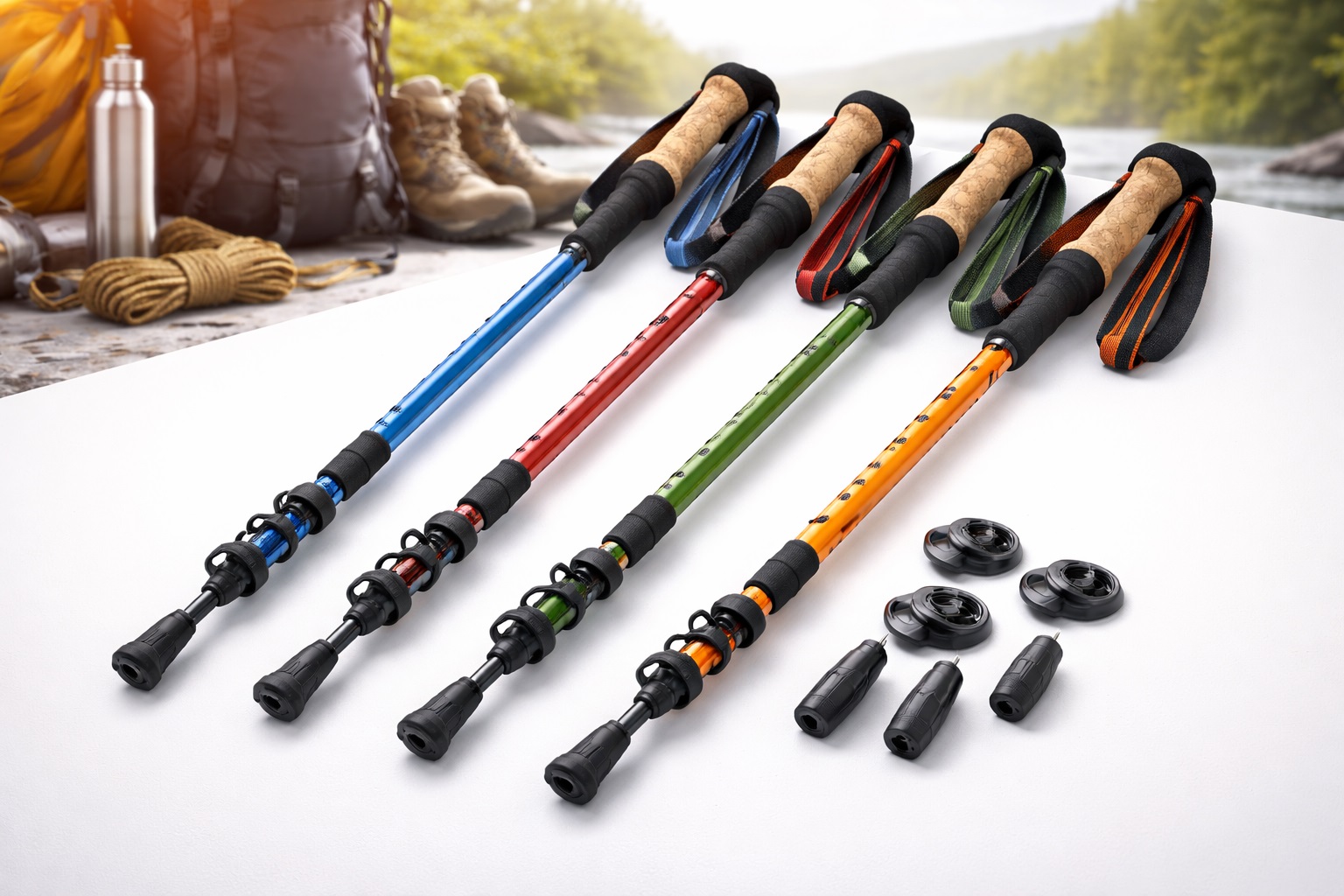
Rubber tip covers work well on pavement or rocky trails, while metal carbide tips grip better on dirt, mud, or snow. Small baskets prevent poles from sinking too deep into soft ground during wetter conditions.
8. Wrist Strap Design and Fit
An adjustable, padded wrist strap helps distribute weight more comfortably and prevents poles from slipping out of a beginner's grip on uneven terrain, which is a common early frustration before proper strap adjustment becomes second nature.
9. Packability for Travel and Storage
Collapsible or foldable poles are easier to pack into a suitcase or attach to a backpack when not in use, which matters if a beginner plans to travel to different trailheads rather than hiking from home consistently throughout the season.
10. Budget Considerations for a First Pair
It rarely makes sense to spend the most money possible on a first pair before knowing whether trekking poles genuinely suit your hiking style. A mid-range or entry-level pair is often the most sensible starting point for most new hikers.
11. Durability and Warranty
A pair backed by a solid warranty offers peace of mind while you are still learning proper care and handling, since accidental damage is more common during the early learning period than later on once habits are established.
12. Learning to Use Poles Correctly on the Trail
Proper technique, such as planting poles slightly ahead of your stride and using them for balance rather than leaning heavily on them, takes a few outings to develop regardless of which pair you choose to start with.
13. When to Upgrade From a Beginner Pair
Once you have a clearer sense of your typical hiking distance, terrain, and climate, upgrading to a pair with more specific features, such as lighter materials or a different grip type, often makes more sense than guessing upfront before you have real experience to draw on.
14. Matching Poles to Your Typical Trail Difficulty
Flat, well-maintained trails place fewer demands on a pole's locking mechanism and shock absorption than steep or rocky terrain, so consider the trails you actually plan to hike rather than the most demanding scenario imaginable when making your first purchase.
15. Trying Before You Buy When Possible
Some outdoor retailers allow customers to test poles in-store or on a short trail before committing, which can be a valuable step for beginners who are unsure which grip style or weight feels right in practice.
Frequently Asked Questions
Do beginners really need trekking poles?
Trekking poles are not strictly required, but many new hikers find they improve balance, reduce strain on the knees during descents, and make longer hikes feel more manageable, especially on uneven terrain or after building fatigue late in a trail.
Is aluminum or carbon fiber better for a first pair?
Aluminum is generally a safer choice for beginners since it tolerates accidental impact better, while carbon fiber offers a lighter feel that some new hikers prefer once they are more careful with their gear and technique.
How do I find the right pole length as a beginner?
Start with your elbow at roughly a ninety-degree angle when the tip touches the ground, then experiment with slightly shorter or longer settings for uphill and downhill sections as you gain experience with how each adjustment feels.
Are twist-lock or lever-lock mechanisms easier for beginners?
Lever-lock mechanisms are generally considered more intuitive for new users, since they provide clear visual and tactile confirmation that the pole is securely locked at the desired length without requiring guesswork.
Can trekking poles help prevent injury on the trail?
Many hikers find that poles reduce strain on knees and joints, particularly during descents, though poles work best alongside proper hiking technique rather than as a substitute for it.
How do I maintain trekking poles as a beginner?
Wipe down poles after muddy or wet hikes, check locking mechanisms periodically for wear, and store them somewhere dry to prevent corrosion or grip degradation over time.
Are cork grips better than foam for new hikers?
Cork tends to wick moisture better and mold somewhat to your hand over time, while foam is lighter and often more affordable. Either works well for beginners depending on personal preference and climate.
Do I need one pole or two as a beginner?
Most hikers use two poles for balanced support, though some prefer a single pole for lighter trails. Starting with a pair gives beginners the most stability while learning proper technique.
How much should a beginner spend on trekking poles?
A reasonable first pair typically falls between $30 and $110, which covers dependable core functionality without the added cost of premium materials a beginner may not yet need.
Are trekking poles worth it for flat, easy trails?
Poles offer less dramatic benefit on flat terrain compared to steep or uneven trails, but many beginners still find them helpful for building rhythm and pace even on gentler routes.
How do I pack trekking poles for travel?
Collapsible poles typically fold down to fit inside a suitcase or attach externally to a backpack, so check the collapsed length against your travel bag before purchasing if portability matters to you.
What tip type should I use on rock versus dirt trails?
Rubber tip covers work well on rock and pavement, while exposed carbide tips grip better on dirt, mud, or loose terrain. Many poles come with swappable tips to handle both situations.
How long does it take to get used to hiking with poles?
Most beginners feel more natural using poles within their first two or three outings, once they get a feel for the rhythm of planting poles in sync with their stride.
Can trekking poles be adjusted for kids or shorter hikers?
Many adjustable poles collapse down small enough to suit shorter adults or older children, though very small children typically need a pole specifically designed for their height.
What is the difference between trekking poles and a hiking staff?
A hiking staff is typically a single, often fixed-length pole, while trekking poles are usually sold in adjustable pairs designed to provide balanced support on both sides of the body.
Do I need to buy hiking boots and poles together as a beginner?
They are separate purchases and do not need to be bought together, though many new hikers find it helpful to get comfortable with proper footwear before adding poles to avoid learning two new skills at once.
Can trekking poles be used for activities other than hiking?
Yes, many hikers also use trekking poles for snowshoeing, trail running, or Nordic walking, and some beginners find that trying poles in a lower-stakes activity first helps build comfort before a full hiking trip.
Should I buy trekking poles as a pair or is one enough to start?
Starting with a pair is generally recommended, since balanced support on both sides of the body is one of the main benefits beginners notice, particularly on uneven or sloped terrain where a single pole offers less stability.
What should I do if my trekking poles feel awkward during my first hike?
Some initial awkwardness is normal and usually improves within the first few outings. Double-check your pole length and grip position first, since an incorrect setting is often the underlying cause of early discomfort rather than the pole itself.
Final Verdict
- Top Pick: REI Co-op Traverse for its intuitive FlickLock adjustment and dependable mid-range value for new hikers.
- Budget Choice: Cascade Mountain Tech Aluminum for its low price and simple, forgiving design for a first pair.
- Premium Choice: Black Diamond Alpine Carbon for beginners ready to invest in lightweight, premium gear from day one.
The best trekking poles for beginners are the ones that make learning proper technique easier rather than adding another obstacle to figure out. Whichever pair you choose from this list, spend your first few hikes focused on finding a comfortable rhythm and the right length adjustment before worrying about more advanced features, since confidence and comfort matter far more than specifications when you are just getting started.
Give yourself permission to make small adjustments as you go, whether that means changing pole length between different sections of a trail or switching grip styles once you notice discomfort. Most beginners settle into a preferred setup within their first several outings, and that early experimentation is a normal, useful part of learning rather than a sign you chose the wrong pair. Once you have a season of hiking under your belt, revisit this guide with a clearer sense of your own preferences before deciding whether an upgrade is worthwhile.