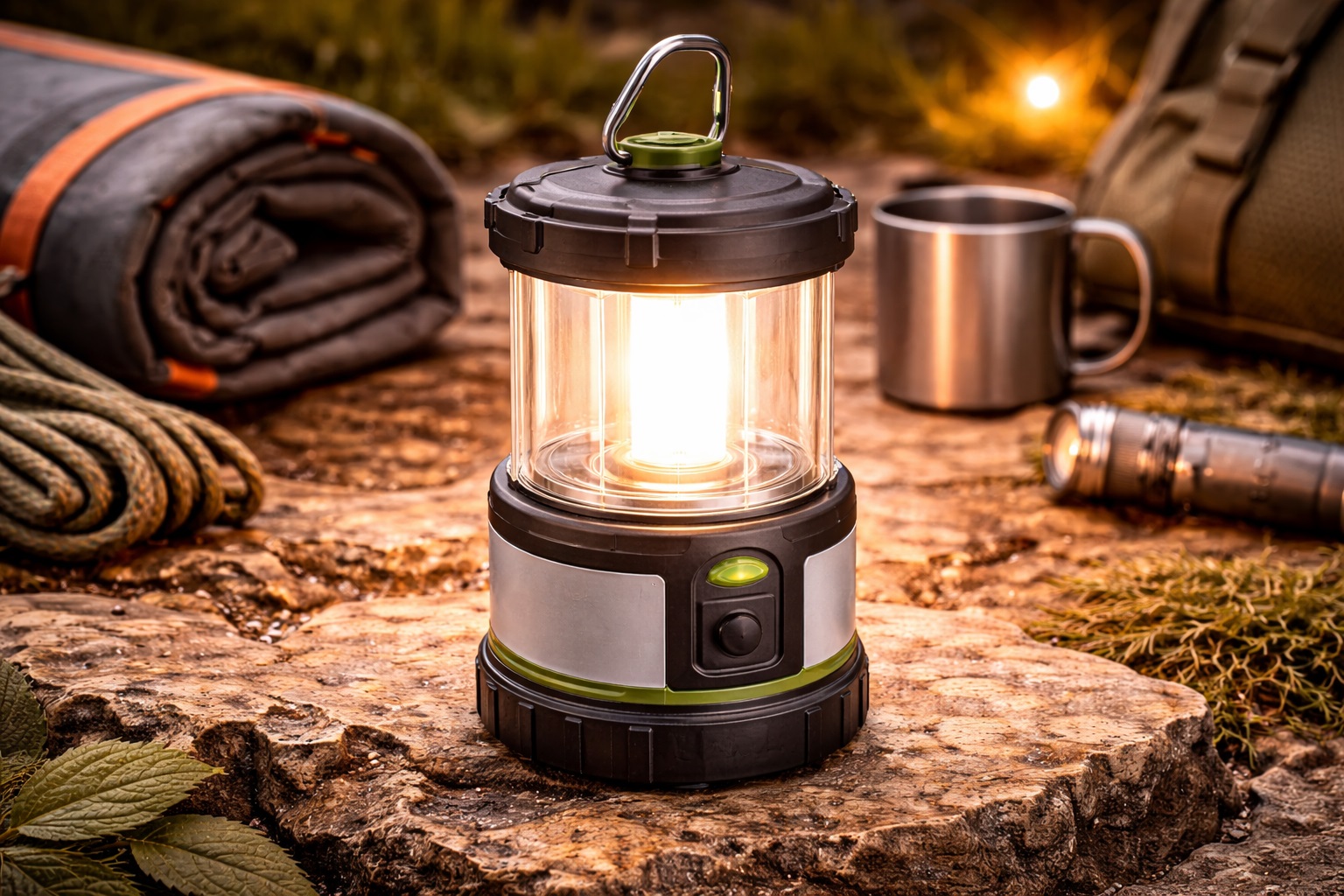
Best Lightweight Camping Lantern in 2026: Top Picks
When every ounce in your pack matters, choosing a camping lantern built around portability rather than bulk makes a real difference on the trail. This guide compares eight camping lanterns commonly considered for lightweight and packable use, weighing their weight, packed size, and brightness against how they hold up for backpackers, bikepackers, and minimalist campers.
Not every lantern here is equally featherweight, and that is by design. A couple of bulkier, more traditional lanterns are included for comparison so you can see clearly what you give up in portability when you choose a brighter, more feature-rich model instead. Seeing that trade-off side by side makes it much easier to decide how much weight you are actually willing to carry for extra brightness or battery life.
Whether you are shaving grams for a thru-hike or simply want a lantern that will not weigh down a family car camping trip, the reviews and buying guide below will help you match your priorities to the right pick.
Keep in mind that packed size often matters as much as weight on its own. A lantern that collapses flat or compresses down small can be easier to fit into a already-full pack than one that is technically lighter but bulkier in shape.
It also helps to think about what you are willing to give up for a lighter load. Ultralight designs sometimes trade away battery capacity, brightness, or extra features like device charging to hit their low weight numbers. None of these trade-offs are automatically bad choices, but they should be conscious ones rather than surprises discovered on the trail.
Top 8 Best camping lantern Picks (Detailed Reviews)
1. MPOWERD Luci Outdoor 2.0 – Best For Ultra-Packable Portability
The MPOWERD Luci Outdoor 2.0 is built around an inflatable, solar-powered design that collapses down almost completely flat when not in use, making it one of the most genuinely packable lanterns available. At around $25, it is also the most affordable option in this lineup, which is a rare combination of low weight, low price, and low packed volume. Backpackers and minimalist campers consistently favor this style of lantern because it takes up almost no space in a pack until you actually need it, and the soft-sided construction means it can be stuffed into odd corners of a pack without worrying about damaging other gear.
- Pros:
- Inflatable design packs down to almost nothing
- Lowest price point in this lineup
- Solar charging means no batteries to carry
- Soft materials reduce risk of damaging other gear in a pack
- Among the lightest lanterns available in any price range
- Cons:
- Light output is modest compared to battery-powered rivals
- Relies on sunlight for charging, which can be inconvenient on multi-day cloudy trips
- Less rugged than rigid-housing lanterns if handled carelessly
Best For: Backpackers and ultralight campers who want the smallest possible packed size without giving up basic lighting function or paying a premium price.
Why We Recommend It: For anyone counting grams and pack space, the Luci Outdoor 2.0's collapsible design and light weight are hard to beat, and the low price makes it an easy addition to any kit without a second thought.
2. Coleman Northstar LED – Best For Car Camping Convenience
The Coleman Northstar LED prioritizes high-power output and a rugged base over portability, making it one of the bulkier lanterns in this lineup at around $80. It is included here as a useful point of comparison for campers deciding how much weight and size they are willing to trade for brighter, more traditional lantern performance. For car camping trips where pack weight is not a concern, its larger size is a non-issue, and the extra bulk buys noticeably brighter, more consistent output across a full evening.
- Pros:
- High-power output suits larger family campsites
- Rugged base built to handle repeated outdoor use
- Trusted, widely available brand
- Cons:
- Bulkier and heavier than the more packable options here
- Not well suited to backpacking or bikepacking trips
Best For: Car campers and families who have room in the vehicle and do not need to prioritize pack weight over raw brightness.
Why We Recommend It: Comparing the Northstar LED against the lighter picks on this list helps illustrate exactly what portability-focused lanterns give up, and what traditional lanterns offer in return for the extra bulk.
3. Black Diamond Apollo – Best For Lightweight Everyday Carry
Black Diamond built the Apollo with climbers and hikers in mind, and it shows in a design that balances 250 lumens of output with a genuinely portable form factor. At roughly $60, it sits in the middle of this lineup on price while remaining light enough to toss into a daypack without much thought. The added power hub for charging small devices is a useful bonus for longer day trips, and Black Diamond's climbing heritage means the build tends to hold up well to being clipped and unclipped from a pack repeatedly.
- Pros:
- Compact enough for daypacks and overnight trips alike
- 250 lumens is plenty for most campsite tasks
- Power hub adds device-charging flexibility on the trail
- Cons:
- Not the single lightest option in this lineup
- Mid-range price compared to the cheapest picks
Best For: Hikers and campers who want a reasonably light, versatile lantern from a trusted outdoor brand without going to ultralight extremes.
Why We Recommend It: The Apollo strikes a practical balance between weight, brightness, and extra functionality that suits campers who do not want to compromise heavily on any one factor over another.
4. BioLite AlpenGlow 500 – Best For Compact Ambient Lighting
BioLite designed the AlpenGlow 500 as a compact, sociable lantern that uses ChromaReal LED technology to produce warm, natural-toned light in a relatively small package. At around $80, it costs more than several lighter options here, but its size-to-ambiance ratio appeals to campers who want a pleasant glow for group gatherings without hauling a bulky lantern. It packs into most backpack side pockets with room to spare, which makes it an easy addition even for campers who are not otherwise trying to minimize weight.
- Pros:
- ChromaReal LED tech produces warmer, natural-looking light
- Compact enough for backpacks and daypacks
- Well suited to social camping settings
- Cons:
- Priced higher than several lighter, more basic alternatives
- Ambient focus means it is less suited to bright task lighting
Best For: Campers who want compact, atmosphere-friendly lighting for evenings spent around a shared table or fire pit without a bulky footprint.
Why We Recommend It: Its relatively small size paired with genuinely pleasant light quality makes it a strong pick for campers who value ambiance without wanting to carry a heavy lantern across a whole trip.
5. Fenix CL30R – Best For Maximum Light in a Small Footprint
Fenix packs a genuinely bright 650-lumen output and micro-USB charging into a lantern that remains reasonably compact for its brightness class. At around $110, it is the priciest lantern in this lineup, but campers who need serious brightness without hauling a full-size lantern will appreciate how much light output it delivers relative to its size. It rewards campers willing to pay for brightness-to-size efficiency, since few competitors match this much output without stepping up to a noticeably larger housing.
- Pros:
- 650-lumen output covers large tent sites despite a compact build
- Micro-USB charging means no disposable batteries
- Well-regarded brand with a long track record in portable lighting
- Compact enough to justify its brightness-to-size ratio
- Cons:
- Costs noticeably more than most lanterns in this roundup
- Not as packable as the true ultralight options here
Best For: Campers who want the brightest light possible without stepping up to a full-size, heavy lantern that eats pack space.
Why We Recommend It: Few lanterns in this lineup deliver this much brightness relative to their size, making the CL30R a smart pick when you refuse to compromise on light output for the sake of weight.
6. Ledlenser ML6 – Best For Compact Premium Optics
Ledlenser's ML6 uses micro-prism technology to deliver glare-free, evenly spread light from a relatively compact housing. At around $100, it is one of the pricier lanterns here, but its refined optical engineering means it does not need to be oversized to perform well. For campers who value light quality over sheer bulk, the ML6 offers a premium experience without excessive weight, proving that German engineering can shrink a design without cutting corners on performance.
- Pros:
- Micro-prism tech reduces glare and hot spots
- Compact housing despite premium optical engineering
- Comfortable for extended close-range use
- Cons:
- Among the more expensive options here
- Not the lightest lantern in this lineup
Best For: Campers who want compact, high-quality light output without settling for a bulky traditional lantern or a cheap, glare-heavy alternative.
Why We Recommend It: The ML6 proves that portability and premium light quality are not mutually exclusive, making it a strong choice for discerning campers who value both factors equally.
7. Goal Zero Lighthouse 600 – Best For Portable Power Backup
The Goal Zero Lighthouse 600 pairs dual-direction lighting with a genuine power bank function in a form factor built for portability. At around $70, it sits in the middle of this lineup on price while offering more device-charging utility than most similarly sized lanterns. Its collapsible handle and moderate size make it easy to clip onto a pack for hiking between camps, and the added charging capability reduces how much separate gear you need to carry on longer trips.
- Pros:
- Dual-direction lighting spreads light evenly around camp
- Genuine power bank function in a portable package
- Collapsible handle for easy attachment to a pack
- Cons:
- Heavier than the true ultralight picks here
- Higher price than pure lighting-only competitors
Best For: Campers who want portable lighting and reliable device charging in a single, pack-friendly unit rather than carrying two separate items.
Why We Recommend It: Combining useful charging capability with a genuinely portable design makes the Lighthouse 600 a practical choice for multi-day trips between resupply points and charging opportunities.
8. Nitecore LR60 – Best For Lightweight Versatility
Nitecore's LR60 brings triple output modes and a built-in battery charger into a lantern that remains light enough for regular trail use. At around $55, it is one of the more affordable options here, making its versatility easy to justify for campers who want flexibility without extra weight. Being able to switch between bright task lighting and dim ambient modes helps stretch battery life on longer trips, which matters more when every extra hour of runtime saves you from packing a spare battery.
- Pros:
- Triple output modes suit different campsite tasks
- Doubles as a battery charger for other devices
- Competitively priced for the features included
- Cons:
- Multiple modes can take a moment to learn
- Not the single lightest option available
Best For: Campers who want lightweight flexibility across a range of campsite lighting needs without paying a premium price for it.
Why We Recommend It: The LR60's balance of low weight, useful modes, and charging capability makes it a smart all-around pick for trail-focused campers who value versatility.
Buying Guide: How to Choose the Best Lightweight Camping Lantern
Choosing a lightweight camping lantern means balancing weight and packed size against brightness, runtime, and features. The considerations below will help you decide exactly how much you are willing to trade for a lighter, more packable design.
1. Know the Actual Weight, Not Just the Category
Lanterns marketed as "lightweight" can still vary by several ounces between models, which matters more than it might seem when multiplied across a full backpacking kit. Compare the actual listed weight rather than assuming every compact-looking lantern weighs the same, since marketing language is far less precise than a printed spec.
2. Consider Packed Size Alongside Weight
A lantern that collapses flat or compresses small can be easier to fit into a full pack than a technically lighter lantern with a rigid, bulky shape. Think about how the lantern will actually sit alongside your other gear, particularly if pack space is already tight on multi-day trips.
3. Match Brightness Expectations to Your Trip Type
Ultralight lanterns often sacrifice some brightness for their small size, which is a reasonable trade-off for solo backpacking but less ideal for family car camping where more light output is useful for group tasks like cooking and cleanup.
4. Decide How Much Battery Life You Actually Need
Smaller lanterns typically carry smaller batteries, meaning shorter runtime on a single charge. If you camp multiple nights between charging opportunities, weigh whether the lightest option will actually last as long as you need it to.
5. Look for Multi-Use Features to Save Overall Pack Weight
A lantern that doubles as a power bank or battery charger can let you leave a separate charging device at home, which may offset its own weight by reducing what else you need to carry in your kit.
6. Check Attachment Options for Hands-Free Portability
A carabiner clip, hanging loop, or collapsible handle makes a lightweight lantern easier to attach to a pack while hiking between camps, rather than requiring dedicated storage space or extra hands to carry it.
7. Weigh Durability Against Ultralight Materials
The lightest materials are not always the most durable. Consider how roughly you tend to handle gear and whether a slightly heavier, more rugged build might actually serve you better over repeated trips and years of use.
8. Consider Solar Options for Multi-Day Trips
Solar-charging lanterns eliminate the need to carry spare batteries, which can meaningfully reduce overall pack weight on trips lasting several days or longer, especially when combined with other solar-charged devices.
9. Compare Price Against Weight Savings
Shaving a few extra ounces often costs disproportionately more as you approach the lightest end of any product category. Decide how much that marginal weight reduction is actually worth to you in dollars before paying a steep premium for minimal savings.
10. Think About Group Size Versus Individual Use
A single ultralight lantern may not provide enough light for a larger group, so solo or duo backpackers can prioritize weight more heavily than campers regularly hosting bigger groups who need to illuminate a wider area.
11. Read Reviews for Real-World Packed Size Comparisons
Product photos do not always convey how a lantern actually compares in size to familiar objects. Buyer reviews often include helpful real-world comparisons that spec sheets cannot capture, including how a lantern actually fits alongside other common gear.
12. Factor In Weather Resistance for Trail Use
Lightweight materials are not always as weather-resistant as bulkier designs, so check for water-resistance ratings if your trips regularly involve exposure to rain or heavy dew, since ultralight construction sometimes sacrifices sealing for weight savings.
13. Buy Based on Your Most Frequent Trip Type
If you rarely backpack and mostly car camp, the portability advantages of an ultralight lantern may matter less than the brighter, more feature-rich options in this lineup, even at a higher weight and larger packed size.
14. Test the Lantern's Fit Before a Big Trip
Before relying on a new lantern for an important trip, do a practice pack-out at home to confirm it fits where you expect and that any hanging or clipping mechanism works the way you anticipated. This small step can save frustration on the trail.
Frequently Asked Questions
Is a premium camping lantern worth it?
Not always. Higher-end models often offer better performance, longer warranties, and more durable materials compared to budget alternatives, but the weight or size savings may not always match the added cost.
How do I maintain my camping lantern?
Keep it clean and dry, and check any collapsible or inflatable components for damage before each trip, since these lightweight designs can be more delicate than traditional rigid lanterns.
How much should a lightweight camping lantern weigh?
Truly lightweight lanterns typically weigh well under half a pound, with some inflatable or minimalist designs weighing just a few ounces. Anything significantly heavier falls into the standard or heavy-duty category instead.
Do lightweight lanterns sacrifice brightness?
Often, yes, though the gap has narrowed as LED technology has improved. Expect somewhat lower peak brightness from the lightest models compared to bulkier, battery-heavy alternatives.
Are inflatable lanterns durable enough for regular backpacking use?
Most inflatable lanterns use puncture-resistant materials designed for outdoor use and hold up well to normal handling, though they should be kept away from sharp objects in a pack.
What is the difference between a lightweight lantern and an ultralight one?
The distinction is not strictly defined, but "ultralight" generally refers to gear at the extreme low end of a weight category, often trading additional features or durability for the lowest possible weight.
Can a lightweight lantern still charge my phone?
Some compact lanterns include a power bank or charging port, though the smallest and lightest models often skip this feature to save weight. Check the specific product's features before assuming this capability is included.
How do I pack a lightweight lantern to avoid damage?
Store it in a padded pocket or protective pouch away from sharp objects like tent stakes or trekking pole tips, especially for inflatable or collapsible designs with more delicate materials.
Is it worth paying more for a lighter lantern?
It depends on your trip type. Backpackers counting every ounce often find the extra cost worthwhile, while car campers with no weight restrictions may prefer a heavier lantern with more brightness or features for the same money.
How long do lightweight lantern batteries typically last?
Battery life varies by brightness setting, but expect shorter runtime from smaller, lighter batteries compared to bulkier lanterns, often ranging from a few hours on high to well over a dozen hours on a low setting.
Can I use a lightweight lantern as my only light source while backpacking?
Many backpackers pair a lightweight lantern with a separate headlamp for hands-free tasks like hiking, using the lantern primarily for camp illumination once they have stopped for the night.
What should I look for in a lightweight lantern's build quality?
Look for reinforced seams on inflatable models, a scratch-resistant lens, and a secure attachment point, since lightweight construction does not have to mean fragile construction if designed well.
Is it better to buy one lightweight lantern or two smaller ones?
For solo trips, one well-chosen lantern is usually enough, but larger groups or families splitting into separate tents sometimes find two smaller, cheaper lanterns more practical than a single larger unit, since it lets everyone have their own light source.
Do lightweight lanterns cost more than standard ones?
Not necessarily. Some of the lightest options, like inflatable solar lanterns, are actually among the cheapest in this category, while premium ultralight materials in other product types can carry a real price premium.
How do I know if a lantern will actually fit in my pack?
Check the listed dimensions for both the packed and expanded size, and compare them against your pack's available space, particularly side pockets or top lid compartments where lanterns are commonly stored.
Do lightweight lanterns run out of battery faster than heavier ones?
Often yes, since smaller lanterns typically house smaller batteries. If runtime is more important to you than weight, comparing the specific battery capacity and estimated hours per charge is more useful than assuming lighter always means shorter-lasting.
Can I attach a lightweight lantern to a tent instead of hanging it inside?
Many compact lanterns include a hook or loop specifically designed for hanging from a tent ceiling loop or a nearby branch, which frees up floor space and spreads light more evenly than setting it on the ground.
Is a lightweight lantern a good choice for emergency kits?
Yes, compact and packable lanterns are popular choices for emergency and car kits precisely because they take up minimal storage space while still providing dependable backup lighting when needed.
What is the lightest type of camping lantern available?
Inflatable, solar-charging lanterns are typically among the lightest options available, since their soft, collapsible materials weigh significantly less than rigid plastic or metal housings used in traditional lanterns.
Should backpackers prioritize weight or brightness when choosing a lantern?
Most experienced backpackers prioritize weight first, since a lantern that never gets carried because it is too heavy provides no value at all. Brightness is usually the second consideration once a lantern's weight fits comfortably into the overall pack plan.
Do lightweight lanterns work well for winter camping?
Cold temperatures can reduce battery performance in any lantern, lightweight or not, so winter campers should expect somewhat shorter runtime and consider keeping batteries warm inside a jacket or sleeping bag when not in use.
Are collapsible lanterns as bright as rigid ones?
Collapsible and inflatable lanterns can still produce useful light, though they often favor ambient, diffused glow over the sharper, more directional brightness of rigid battery-powered lanterns designed for task lighting.
What is a reasonable price to pay for a good lightweight lantern?
Solid lightweight options in this lineup range from about $25 to $110, with the most genuinely packable designs often sitting at the lower end of that range rather than the top, since their simplicity keeps manufacturing costs down.
Can a lightweight lantern handle being run over or stepped on accidentally?
Most are not designed to withstand significant impact, so treating any lightweight lantern with reasonable care, especially inflatable or collapsible designs, will help it last through many seasons of regular use.
Do I need a different lantern for summer versus winter backpacking?
Not necessarily, though cold-weather trips may benefit from a lantern with slightly larger battery capacity to compensate for reduced cold-weather performance, while summer trips can lean more heavily toward the lightest, most minimal options available.
How often should I replace a lightweight camping lantern?
A well-maintained lantern from a reputable brand can last for many years of regular use, with battery capacity typically being the first component to degrade noticeably. Replacing it becomes worthwhile once runtime drops well below what you need for a typical trip.
Final Verdict
- Top Pick: MPOWERD Luci Outdoor 2.0 for the smallest packed size and lowest price in this lineup.
- Budget Choice: Black Diamond Apollo for a reasonably light, versatile option at a mid-range price.
- Premium Choice: Ledlenser ML6 for compact, premium-quality light output.
The right lightweight camping lantern depends heavily on how much weight and packed size you are actually willing to trade for brightness and features. The Luci Outdoor 2.0 remains the clearest choice for anyone counting every ounce, the Black Diamond Apollo offers a sensible middle ground for hikers who still want solid brightness, and the Ledlenser ML6 rewards campers willing to pay more for compact, high-quality optics. Whichever you choose, being honest about your typical trip length and group size will help you avoid overpaying for portability you do not actually need, or underbuying brightness you will miss once you are out on the trail. Matching the lantern to the trip, rather than chasing the lowest weight number on the spec sheet, remains the most reliable way to make this decision.