Best Lightweight Camping Chair in 2026
When every ounce in your pack counts, a camping chair built for backpacking needs to earn its place alongside your tent, sleeping bag, and food. The gap between a dedicated ultralight chair and a standard car-camping chair can be several pounds, which matters enormously once you're carrying that weight on your own back for miles rather than lifting it out of a trunk. At the same time, a chair that's too minimal can leave you sitting inches off the ground with no real back support, which defeats the purpose of bringing one at all.
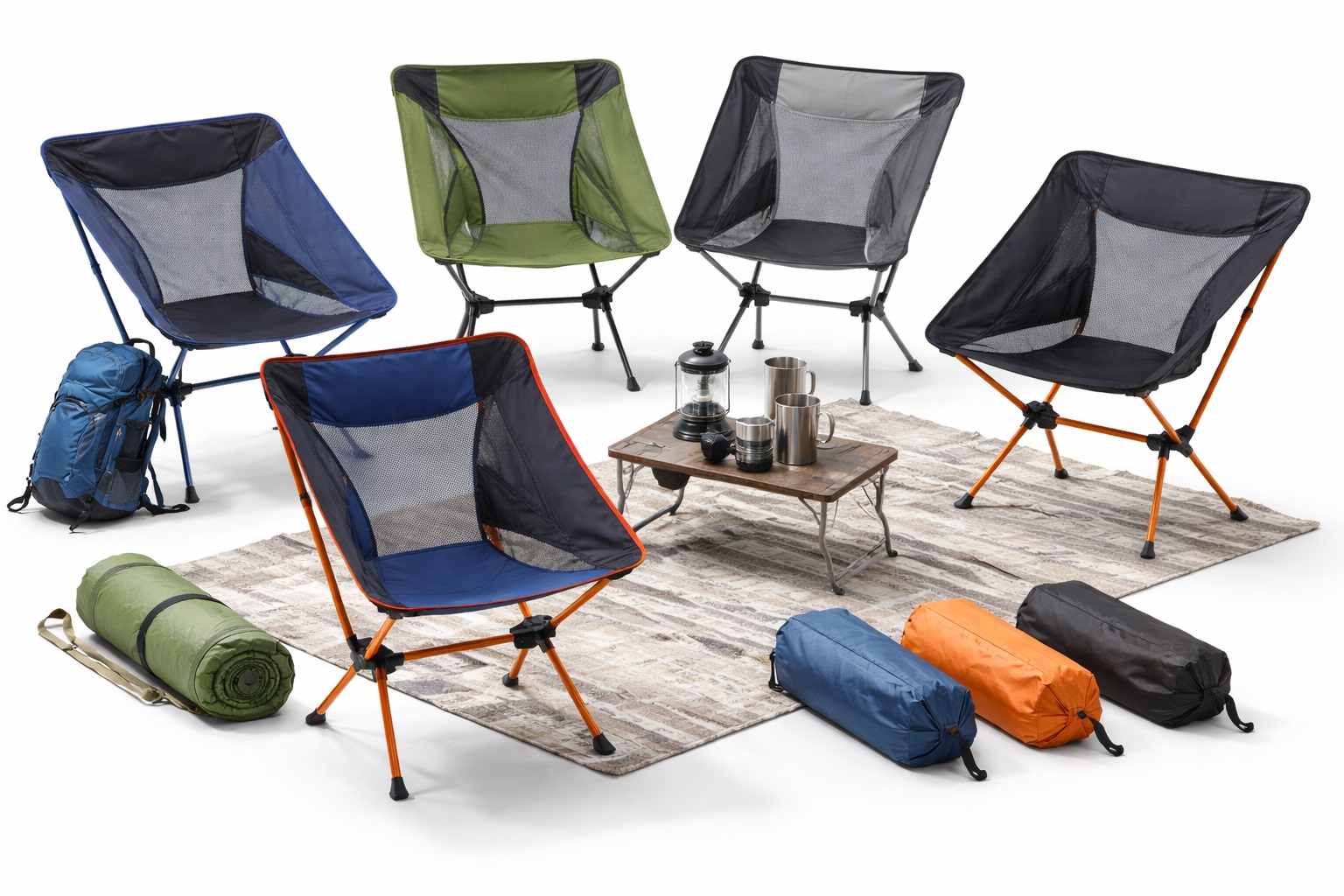
In this guide we compare eight camping chairs that regularly come up in conversations about backpacking and lightweight camp seating, ranked from the most pack-friendly options down to bulkier, heavier designs that are worth knowing about even if they're better suited to car camping. Some of the chairs here were built from the ground up for going on your back; others are more general-purpose designs that we've included for comparison so you can see clearly where the real weight savings start to show up, and what you give up to get them.
Below, each chair is reviewed with weight, packed size, and comfort in mind, followed by a full buying guide covering how frame materials, fabric choices, and seat height affect both pack weight and comfort on the trail. Whether you're outfitting a thru-hike or just want a chair light enough to justify bringing on shorter backpacking trips, the picks below should help you figure out where your own priorities land.
One thing worth keeping in mind as you read through these reviews is that "lightweight" is not a single fixed category. A chair that counts as impressively light next to a family-sized car-camping chair might still feel heavy to someone shaving grams for a week-long thru-hike. Because of that, we've organized the picks below from the most trail-ready options down to bulkier designs that are more honestly suited to a basecamp you drive most of the way to, so you can see clearly where your own trip falls on that spectrum before you commit to a purchase.
Top 8 Best Lightweight Camping Chairs (Detailed Reviews)
1. Helinox Chair Zero – Best For Serious Ultralight Backpacking
At under 1lb, the Helinox Chair Zero is about as light as a genuine camping chair gets, which is exactly why it shows up so often in backpacker gear lists. Its shock-corded aluminum poles snap together quickly and pack down into a bundle barely bigger than a water bottle, and at around $130 it commands a real premium, but that premium buys you a legitimate seat rather than a foam pad or log. For anyone counting grams on a multi-day trip, this is the chair that most consistently earns its place in the pack. Its minimalist design also means there is very little to go wrong mechanically, since there are no rocking bases, reclining hinges, or extra hardware beyond the pole frame and fabric seat itself.
- Pros:
- Under 1lb weight, among the lightest camping chairs available
- Packs down small enough to fit in most backpacks without issue
- Reputable brand built specifically around backpacking-friendly gear
- Cons:
- Higher price relative to its minimal frame and fabric
- Seat sits low and close to the ground
- Less cushioned than heavier, car-camping style chairs
Best For: Backpackers and thru-hikers who count every ounce and are willing to pay a premium per pound saved.
Why We Recommend It: Few chairs on the market get anywhere close to this weight class while still offering real back support, which makes it the clearest choice for anyone who is serious about minimizing pack weight.
2. REI Co-op Flexlite – Best For Balancing Weight and Price
The REI Co-op Flexlite has become something of a benchmark in lightweight camp seating, and at around $100 it delivers most of the packability of pricier ultralight chairs without quite the same premium. Its shock-corded pole design assembles in seconds and folds down into a compact bundle that slides easily into a backpack's side pocket, making it a sensible pick for backpackers who want genuine weight savings without paying flagship prices. Because it comes from one of the most recognizable names in outdoor retail, it also tends to be easy to find replacement parts or warranty support for, which matters more on a chair you plan to rely on for years of trips.
- Pros:
- Shock-corded pole frame sets up and breaks down quickly
- Reputable brand with a long track record in backpacking gear
- More accessible price than the very lightest ultralight options
- Cons:
- Still heavier than the absolute lightest chairs on this list
- Less padded than lounge-style car-camping chairs
- Limited color options
Best For: Backpackers who want meaningful weight savings without stretching all the way into premium ultralight pricing.
Why We Recommend It: It hits a comfortable middle ground between the very lightest chairs and heavier, more affordable options, which makes it an easy recommendation for most backpackers.
3. Big Agnes Skyline – Best For Lightweight Comfort on Longer Trips
The Big Agnes Skyline uses a pre-bent pole frame designed to distribute weight evenly across the seat, and at around $110 it sits in the middle of this lineup on both price and weight. It's a good option for backpackers who hike into their sites but want a bit more back support than the most minimal designs offer, without jumping all the way up to a heavy car-camping chair. The pre-bent poles also mean the seat holds its shape a little better over a multi-night trip than flatter, straight-pole designs sometimes do once they've been folded and unfolded several times.
- Pros:
- Pre-bent pole frame improves comfort and weight distribution
- Reasonably packable for multi-day backpacking trips
- Reputable brand with a strong backcountry track record
- Cons:
- Heavier than the most minimal ultralight chairs
- Higher price than basic budget chairs
- Limited color options
Best For: Backpackers who want noticeably better seat support than minimalist designs without carrying a full car-camping chair.
Why We Recommend It: The pre-bent frame genuinely improves comfort over flatter pole designs, and the weight remains reasonable enough for trips where you're carrying your own gear.
4. Amazon Basics Camp Chair – Best For Occasional Short Hikes on a Budget
At around $25, the Amazon Basics Camp Chair is by far the least expensive option here, though it's also one of the heavier ones, built more with car camping in mind than long-distance backpacking. It's included in this comparison because it's a realistic option for shorter walks to a campsite where a few extra pounds matter less, and because it shows clearly what you save on price when weight isn't your primary concern. For anyone still deciding whether they'll take up backpacking regularly, starting with an affordable chair like this one before investing in ultralight gear is a reasonable way to test the habit first.
- Pros:
- Lowest price point of any chair on this list
- Simple, reliable folding design
- Easy to justify for occasional short-distance trips
- Cons:
- Noticeably heavier than dedicated backpacking chairs
- Bulkier folded size than pole-based designs
- Limited color options
Best For: Budget-conscious campers who only need to carry their chair a short distance and don't want to pay for weight savings they won't use.
Why We Recommend It: For trips that don't involve serious hiking, this chair proves you don't need to spend on ultralight materials to get a comfortable seat at camp.
5. GCI Outdoor Rocker – Best For Basecamp Comfort After a Hike In
The GCI Outdoor Rocker brings a spring-action rocking base to camp seating, priced at around $80, but its rocking mechanism adds weight that makes it a better fit for a basecamp you hike into once and stay at, rather than a chair you move daily between sites. For backpackers who set up at one location for several nights, the extra comfort can be worth carrying in. Because the rocking base is engineered specifically for repeated motion, it also tends to hold up well over a season of regular basecamp trips rather than feeling like an afterthought bolted onto a standard frame.
- Pros:
- Spring-action rocking motion unique among camp chairs
- Reasonable mid-range price for the added feature
- Comfortable for extended sitting at a fixed basecamp
- Cons:
- Heavier than pole-based backpacking chairs
- Bulkier packed size due to the rocking base
- Limited color options
Best For: Backpackers who hike into one basecamp and stay put for multiple nights, where the extra weight is carried in only once.
Why We Recommend It: The rocking base is a genuinely distinctive comfort feature, and for a basecamp trip rather than a daily-move itinerary, the added weight is easier to justify.
6. NEMO Stargaze – Best For a Weekend Basecamp Splurge
The NEMO Stargaze replaces a rigid backrest with a suspended, hammock-style seat that swings and reclines, and at around $250 it's the priciest and heaviest chair in this comparison. It isn't built with backpacking weight in mind, but for a short hike to a weekend basecamp where comfort matters more than ounces, its reclining motion offers a genuinely different experience than any pole-based chair on this list. If a group is splitting the hike in and can divide the carrying between a few people, its extra weight becomes far easier to justify than if one person has to shoulder it alone.
- Pros:
- Signature swinging and reclining motion unmatched by lighter chairs
- Premier build quality from a reputable outdoor brand
- Comfortable enough for long evenings at a fixed camp
- Cons:
- Heaviest and bulkiest chair on this list
- Highest price point among the eight chairs compared here
- Not practical for long-distance or multi-day hiking
Best For: Campers hiking a short distance to a single basecamp who want a genuine comfort upgrade and don't mind the extra weight.
Why We Recommend It: It's included here as the honest heavyweight option: not a backpacking chair by design, but worth knowing about if comfort outweighs pack weight for your particular trip.
7. Kelty Low Loveseat – Best For Short-Distance Shared Basecamp Seating
The Kelty Low Loveseat's two-person bench design, priced around $140, is built for sharing a seat rather than minimizing weight, which makes it one of the bulkier options here. It's a reasonable choice for a short hike in with a partner who wants to sit close together, but its width and weight put it firmly in basecamp territory rather than something you'd want to carry on a long trail. Splitting its weight across two hikers, one carrying the frame and the other the fabric seat, is one practical way some couples make it work for a short approach hike.
- Pros:
- Two-person seating eliminates the need for a second chair
- Premier build quality from a well-known camping brand
- Low profile adds stability for shared use
- Cons:
- Among the heaviest and bulkiest options in this comparison
- Higher price point than single-seat chairs
- Not practical for long hikes with a full pack
Best For: Couples hiking a short distance to a shared basecamp who would rather split one wider chair than each carry their own.
Why We Recommend It: For a short hike in, splitting the weight of one loveseat between two people can work out lighter per person than each carrying an individual chair.
8. Coleman Quad Chair – Best For Car-Adjacent Basecamps
At around $35, the Coleman Quad Chair includes a built-in cooler pouch that adds everyday convenience, but its steel frame and overall bulk make it the least backpacking-friendly chair in this comparison. It's included here mainly as a reference point: a chair built for trunk-to-campsite convenience rather than trail weight, useful if your trip involves only a very short carry from a vehicle. Its cooler pouch is a genuinely nice touch for a vehicle-adjacent basecamp, even if it's the last chair on this list you'd want to actually carry any real distance.
- Pros:
- Built-in cooler pouch adds genuine everyday convenience
- Very affordable price point
- Sturdy, stable frame for basecamp use
- Cons:
- Heaviest, bulkiest frame of any chair on this list
- Not suited to any real hiking distance
- Limited color options
Best For: Trips where the chair travels from a vehicle to a nearby basecamp rather than being carried any real distance on foot.
Why We Recommend It: It's a useful comparison point for showing exactly how much weight and bulk you save by choosing a dedicated backpacking chair instead.
Buying Guide: How to Choose the Best Lightweight Camping Chair
1. Know Your Actual Carry Distance
The single biggest factor in choosing a lightweight chair is how far you'll actually carry it. A short walk from a car to a basecamp has very different weight priorities than a multi-day trail with a fully loaded pack, so start by being honest about your typical trip before comparing specs. Many backpackers overestimate how much they'll value ounce-level savings until they've actually carried a pack for several miles, so it can help to think in terms of your longest realistic trip rather than an occasional exception.
2. Frame Material and Weight Tradeoffs
Aluminum pole frames are the standard for lightweight chairs because they offer strong weight savings without sacrificing much stability. Steel frames, by contrast, are heavier but generally cheaper, which is why most dedicated backpacking chairs use aluminum despite the higher price. Some ultralight designs also use carbon fiber components in specific stress points to shave off a bit more weight, though this typically adds further to the cost.
3. Packed Size vs. Pack Weight
Weight and packed size don't always move together. Some chairs are light but still bulky once folded, which can matter as much as raw weight if your pack is already tight on space. Measuring a chair's folded dimensions against your pack's actual available space, rather than relying on a general sense of "compact," avoids an unpleasant surprise when you try to pack it for the first time.
4. Seat Height and Comfort Tradeoffs
The lightest chairs often sit lower to the ground, which saves weight but can make standing up less comfortable, especially after a long day of hiking. Decide how much comfort you're willing to trade for weight savings, and consider that a slightly taller seat height also tends to make eating meals or working on camp chores from the chair noticeably easier.
5. Fabric Weight and Durability
Lighter fabrics reduce overall weight but may be less resistant to abrasion from rocky or uneven terrain. Ripstop weaves offer a reasonable middle ground between weight savings and everyday durability, and a quick check of the fabric's denier rating in the product description can give you a rough sense of how it will hold up over repeated trips.
6. Weight Capacity Considerations
Ultralight chairs sometimes have lower weight capacities than bulkier designs, since reducing material also reduces the frame's overall load tolerance. Check the rated capacity against your own needs before assuming lighter is always better, especially if you plan to sit in the chair while wearing a loaded pack or bulky winter layers.
7. Setup Speed on the Trail
Shock-corded pole systems generally assemble faster than chairs with loose components, which matters after a long hike when you'd rather sit down quickly than fuss with assembly. This becomes especially noticeable in poor weather, when fumbling with loose poles in the rain or wind is the last thing you want to deal with.
8. Price Per Ounce Saved
The lightest chairs often cost significantly more per ounce than mid-weight options. Decide how much that weight savings is actually worth to you before paying a premium for the very lightest chair available, since the jump from a mid-weight chair to the absolute lightest often costs disproportionately more for each additional ounce saved.
9. Solo Trips vs. Group Basecamps
A shared basecamp with a vehicle nearby has different weight priorities than a solo backpacking trip where every item in your pack has to justify its own weight. Group trips also open up the option of splitting bulkier gear, including chairs, across multiple packs so no single hiker carries the full burden.
10. Packability Into Backpack Compartments
Check whether a chair's packed dimensions actually fit your pack's side pockets or main compartment before buying, since an awkward shape can be just as inconvenient as extra weight. A chair that's technically light but pokes out of your pack or throws off its balance can be more frustrating on the trail than a slightly heavier one that stows away cleanly.
11. Cold Weather and Ground Insulation
Lightweight mesh seats can feel cold in chilly conditions since they don't insulate from the ground the way a padded seat does, which is worth considering for shoulder-season trips. A closed-cell foam sit pad tucked into the seat can help offset this without adding much weight.
12. Balancing Weight With Genuine Comfort
The lightest chair on paper isn't always the best choice if it leaves you uncomfortable enough to skip using it. A chair that's a little heavier but that you'll actually sit in every night often delivers more real value than one that sits unused in your pack because it's simply not comfortable enough.
13. Matching the Chair to Your Trip Type
Multi-day backpacking, weekend basecamp trips, and car-adjacent camping all call for different weight priorities. Match your chair choice to the specific type of trip you take most often rather than buying for a worst-case scenario, and consider owning a second, heavier chair for car camping if your trips genuinely vary that much.
14. Testing Fit and Comfort Before a Big Trip
Setting up a new chair at home or on a short local trip before relying on it during a longer backpacking trip helps you confirm the seat height, packed size, and comfort level actually work for you when it matters most.
Frequently Asked Questions
What counts as a lightweight camping chair?
Generally, chairs under 2 to 3 pounds are considered lightweight and backpacking-friendly, while anything heavier is better suited to car camping or short basecamp hikes. Chairs in the 3 to 5 pound range are sometimes marketed as lightweight too, though serious backpackers usually reserve that label for the lower end of the scale.
Is the Helinox Chair Zero worth the price for casual campers?
For casual car campers who don't carry their gear far, a more affordable, heavier chair usually offers better value, since the weight savings matter most on longer hikes where you're carrying everything yourself.
Do lightweight chairs sacrifice comfort?
Some do, particularly the very lightest models, which tend to sit lower and offer less padding. Mid-weight options like the Big Agnes Skyline aim to balance both, which is worth considering if comfort matters as much to you as pack weight.
How much weight can a lightweight camping chair save versus a standard one?
A dedicated ultralight chair can weigh several pounds less than a standard steel-framed quad chair, which adds up considerably over a multi-day trip.
Are aluminum pole chairs more fragile than steel-framed ones?
Not necessarily fragile, but they can be less tolerant of extreme overloading. Within their rated capacity, quality aluminum pole chairs are generally reliable and durable.
Can I use a lightweight backpacking chair for car camping too?
Yes, most lightweight chairs work fine for car camping as well, though you may miss some comfort features found on heavier, more padded designs.
Is it worth paying extra for a chair with a higher seat?
If getting up and down comfortably matters to you, especially after a long hiking day, a higher seat height can be worth a small weight penalty.
Do lightweight chairs pack down small enough for a backpack side pocket?
Many do, particularly pole-based designs like the Helinox Chair Zero and REI Co-op Flexlite, though it's worth checking specific packed dimensions against your own pack.
Should I choose a lighter chair or a cheaper one?
This depends on your trip type. Frequent backpackers usually benefit more from prioritizing weight, while occasional or car campers often get better value prioritizing price and comfort features instead.
How do I know if a chair is durable despite being lightweight?
Look for aircraft-grade aluminum poles and ripstop fabric, both of which offer solid durability without adding much weight compared to standard materials used in heavier, more basic chairs.
Does a lightweight chair need a groundsheet or additional padding?
Not usually, though some backpackers add a thin sit pad for extra insulation on cold ground, especially with minimal mesh-seat designs used on the very lightest chairs.
How do I care for a lightweight chair's fabric and poles?
Keep the fabric dry before packing it away to avoid mildew, and periodically check the shock cord inside the poles for stretching or fraying, since that's typically the first component to show wear.
Can a lightweight chair handle windy conditions?
Most lightweight chairs handle moderate wind reasonably well, though their lower weight can make them more prone to tipping in strong gusts compared to heavier, more grounded designs.
Is it better to buy one chair for every trip type or a dedicated backpacking chair plus a car-camping chair?
If your trips vary significantly between long backpacking routes and casual car camping, owning two chairs, an ultralight option and a more comfortable heavier one, often ends up more satisfying than compromising on a single chair for everything.
Are two-person chairs ever a good lightweight option?
Only in specific cases, such as splitting the carry weight between two hikers heading to the same basecamp, since per-person weight can work out reasonably even with a heavier shared chair.
What's the best lightweight chair for beginners to backpacking?
The REI Co-op Flexlite is a reasonable starting point, since it balances weight, price, and comfort without requiring the premium investment of the very lightest options.
Final Verdict
- Top Pick: Helinox Chair Zero for the lightest genuine seating option for serious backpackers.
- Budget Choice: Amazon Basics Camp Chair for occasional short hikes where weight matters less.
- Premium Choice: REI Co-op Flexlite for backpackers who want a lasting balance of weight, comfort, and price.
Choosing the right lightweight camping chair comes down to being honest about how far you'll actually carry it. A serious backpacker chasing every ounce of savings will make different tradeoffs than someone who only needs to walk a short distance from a car to a weekend basecamp, and both approaches are perfectly reasonable. Whichever chair you land on, weighing comfort against pack weight before you buy will help you end up with a seat you're actually glad to have carried in. It's also worth revisiting this decision as your own hiking habits evolve; a chair that felt like the right compromise for occasional weekend trips may no longer suit you once you start taking on longer, multi-day routes where every ounce carries more weight, quite literally, than it used to.