Best Lightweight Hiking Boots in 2026
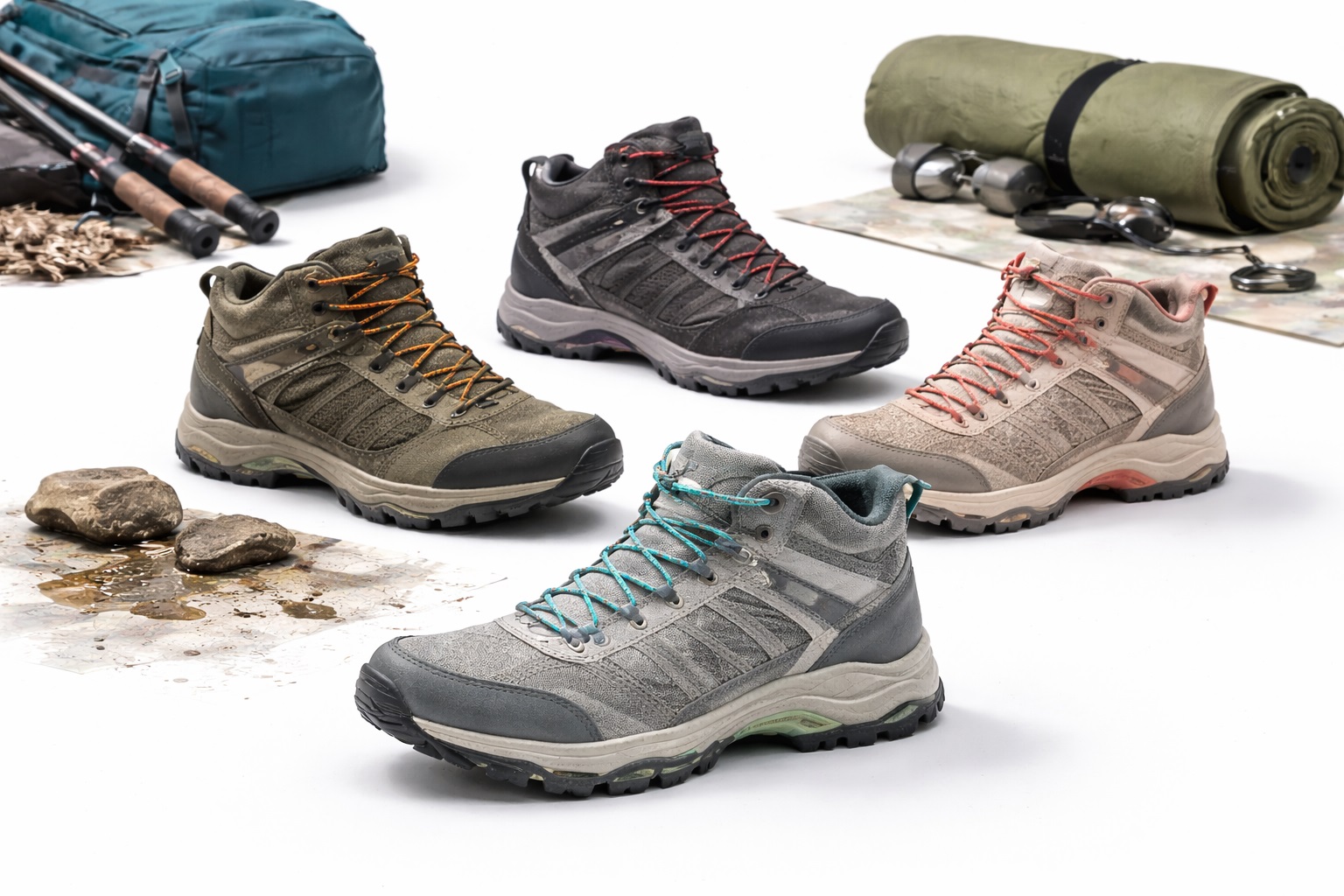
Speed and comfort over long miles depend heavily on how much weight you're carrying on your feet with every step. In 2026, hikers who want to move quickly and cover more ground — whether fastpacking, day hiking at a brisk pace, or simply avoiding the fatigue of a heavy boot — have access to lighter, more agile designs than the traditional stiff leather boots of years past. The right lightweight hiking boot still needs to offer support and traction, just without the extra bulk.
This guide compares eight hiking boots that suit fast-moving hikers, looking at how each one balances weight, cushioning, stability, and price. Some of these boots are true lightweight designs built around modern foam midsoles, while others are more traditional but still hold up well for hikers who prioritize speed and efficient movement over maximum ankle support.
Below you'll find detailed reviews of each model, a practical buying guide covering what actually makes a hiking boot feel lightweight on the trail, and answers to the most common questions hikers ask before choosing a fast-packing boot.
Prices across this lineup range from around $90 to $250, and weight isn't always directly tied to price — some of the more affordable boots here are lighter on the foot than pricier, more structured alternatives. Matching a boot to your pace and mileage matters more than chasing the lowest number on a spec sheet.
It's also worth remembering that "lightweight" is a relative term within hiking footwear rather than an absolute one. A boot considered light compared to a traditional leather mountaineering boot may still feel noticeably heavier than a trail running shoe, so it helps to think in terms of what you're comparing against rather than chasing a single ideal number.
Top 8 Best hiking boots Picks (Detailed Reviews)
1. Hoka Anacapa Mid – Best For Lightweight, Cushioned Fast Packing
Hoka built its reputation on maximalist cushioning for runners, and the Anacapa Mid brings that same philosophy to a hiking boot. Its Late-stage Meta-Rocker geometry is designed to promote a smooth, rolling stride that keeps momentum moving forward, which many fast hikers find reduces the effort of covering long distances. At around $185, it's priced as a premium option, but its lightweight platform relative to traditional leather boots is a major reason fastpackers and thru-hikers have gravitated toward it. The rocker sole also encourages quicker turnover, which some hikers find helps them maintain a brisk pace over mixed terrain without feeling like they're fighting the boot with every step.
- Pros:
- Late-stage Meta-Rocker design supports a fast, efficient stride
- Lightweight build compared to traditional leather hiking boots
- Generous cushioning reduces fatigue on long, fast-paced days
- Modern design appeals to hikers coming from trail running
- Cons:
- Higher price point than traditional boots
- Less structured ankle support than stiffer designs
- Cushioned platform takes some adjustment for hikers used to firmer soles
Best For: Fastpackers and hikers who want a lightweight, cushioned boot that supports a quick, efficient stride over long distances.
Why We Recommend It: The Anacapa Mid earns the top spot on this list because it most directly addresses what fast hikers actually need — reduced weight underfoot and a stride-friendly design — without giving up the ankle coverage of a boot. It's often the first recommendation for hikers transitioning from trail running shoes to something more trail-appropriate. Hikers who have struggled with heavier boots on long descents tend to notice the difference in the first few miles.
2. Salomon Quest 4 Gore-Tex – Best For Stability During Fast, Technical Movement
The Salomon Quest 4 Gore-Tex isn't the lightest boot on this list, but its Descent Control technology is specifically designed to improve stability and confidence when moving quickly over steep, uneven, or technical terrain. At around $230, it's built for hikers who want to move fast without sacrificing the support needed on demanding descents, where speed and stability often work against each other. Its structured chassis and Gore-Tex waterproofing make it a dependable choice for fast-moving hikers who still cover technical ground, and the added ankle structure can be reassuring when moving quickly on loose scree or wet roots.
- Pros:
- Descent Control technology adds stability during fast, technical descents
- Gore-Tex membrane offers dependable waterproofing
- Supportive build suited to aggressive movement on rough terrain
- Reputable brand with strong trail-tested heritage
- Cons:
- Heavier than dedicated lightweight boots
- Higher price point than entry-level options
- Stiffer chassis takes longer to break in
Best For: Hikers who want to move quickly over technical, uneven terrain without sacrificing the stability needed on steep descents.
Why We Recommend It: For hikers whose idea of fast includes technical descents and uneven footing, the Quest 4's stability-focused design offers a safer, more confident version of speed than a purely lightweight boot could provide. Hikers moving quickly on loose or wet descents often value that added margin of control more than a few saved ounces.
3. Timberland White Ledge – Best For Casual Fast Hikers on a Budget
The Timberland White Ledge is a more traditional leather boot, but its accessible price and comfortable break-in make it a reasonable starting point for hikers who want to move at a faster pace without investing in a specialized lightweight design right away. At around $90, it's the most affordable boot on this list, and its full-grain leather upper holds up well to frequent use. It won't feel as nimble as the boots built specifically around lightweight foams, but for hikers building fitness and pace gradually, it's a dependable, low-risk option that still handles moderate trail conditions confidently.
- Pros:
- Affordable entry point for hikers new to faster-paced hiking
- Premium full-grain leather upper is durable over time
- Backed by a well-established, widely trusted brand
- Comfortable for both trail use and casual daily wear
- Cons:
- Heavier than dedicated lightweight boots
- Requires a modest break-in period
- Less nimble feel than foam-based designs
Best For: Budget-conscious hikers who want to build up pace and mileage gradually without investing heavily in a specialized lightweight boot.
Why We Recommend It: The White Ledge's low price and forgiving durability make it a sensible entry point for hikers who aren't ready to commit to a pricier, more specialized lightweight design. It's a reasonable boot to grow into faster hiking with before deciding whether a dedicated lightweight design is worth the upgrade.
4. Merrell Moab 3 – Best For Everyday Fast-Paced Trail Use
The Merrell Moab 3 has built its reputation on being a versatile, comfortable all-arounder, and that versatility extends well to hikers who want to move briskly without a long break-in period. Its Kinetic Fit ADV insole is designed to provide contoured support right out of the box, which matters for hikers who don't want sore feet slowing them down on faster-paced days. Priced at around $120, it remains one of the more balanced options for hikers who want reasonable weight savings without paying a premium price, and its familiar fit makes it an easy boot to trust straight out of the box.
- Pros:
- Kinetic Fit ADV insole provides immediate comfort with no long break-in
- Balanced weight relative to its price point
- Versatile enough for fast day hikes and casual trail use
- One of the most widely recommended hiking boots available
- Cons:
- Not as lightweight as boots built around modern foam platforms
- Traction can wear faster than premium rubber compounds
- Not as specialized as boots built for technical terrain
Best For: Hikers who want a comfortable, reasonably light boot for fast-paced day hikes without a long break-in period.
Why We Recommend It: The Moab 3's immediate comfort and balanced weight make it one of the easiest boots to recommend to hikers who want to move quickly without dealing with a stiff, heavy break-in process. It also remains a sensible middle-ground pick for hikers who aren't sure yet how much they'll prioritize speed over durability.
5. Keen Targhee III – Best For Fast Packing on Long, Multi-Day Routes
The Keen Targhee III's wide toe box is a genuine advantage for hikers moving quickly over long distances, since feet tend to swell and shift more during fast-paced, multi-day efforts. Its Keen.Dry waterproof membrane keeps moisture out without adding excessive weight, and the boot's trail-specific construction holds up well to the repeated impact of a faster hiking pace. At around $165, it sits in the middle of this lineup, reflecting its position as a purpose-built hiking boot rather than a lifestyle crossover, and its roomier fit tends to age well over many long days on trail.
- Pros:
- Roomy toe box accommodates foot swelling during long, fast efforts
- Keen.Dry waterproof membrane without excessive added weight
- Durable, trail-specific construction
- Trusted by long-distance and multi-day hikers
- Cons:
- Not the lightest option on this list
- Wider fit may not suit hikers with narrow feet
- Higher price than entry-level alternatives
Best For: Hikers covering long, multi-day fastpacking routes who need extra room in the toe box during extended days on trail.
Why We Recommend It: For fastpackers logging serious daily mileage, the Targhee III's roomy fit and dependable waterproofing solve a problem that lighter, narrower boots often create over multiple long days. Hikers who have dealt with painful pinch points on long trips often switch to this wider fit permanently.
6. Lowa Renegade GTX – Best For Durable Support During Aggressive Fast Packing
The Lowa Renegade GTX is heavier than the truly lightweight options on this list, but its Vibram Evo sole and Gore-Tex lining are built to withstand the aggressive, repeated impact that comes with fast, loaded movement over rugged terrain. At around $250, it's the most expensive boot here, reflecting its resoleable construction and premium materials. Hikers who move fast but still carry real pack weight often find that the Renegade GTX's durability and support outweigh the extra grams, especially on trips where a single equipment failure would be costly.
- Pros:
- Vibram Evo sole withstands aggressive, repeated impact
- Gore-Tex lining provides long-lasting waterproof protection
- Resoleable design extends the boot's usable lifespan
- Well-regarded for consistent build quality
- Cons:
- Highest price point among the boots reviewed here
- Heavier than dedicated lightweight designs
- Break-in period required before long hikes
Best For: Fast hikers who still carry meaningful pack weight and need durable support that can handle aggressive, repeated impact.
Why We Recommend It: When speed doesn't mean traveling ultralight, the Renegade GTX offers the support and durability that hikers moving fast with a loaded pack actually need. It's the boot we'd steer toward anyone who has previously blown out a lighter pair mid-trip.
7. La Sportiva Nucleo High II – Best For Technical, Fast Movement on Rocky Terrain
La Sportiva's mountaineering background shows in the Nucleo High II, which is built to move quickly and confidently across rocky, technical terrain. Its Nano-Cell technology reinforces high-wear zones while keeping the boot lighter than a traditional leather mountaineering boot, a balance that matters for hikers who want speed without sacrificing protection on rough ground. At around $240, it's one of the pricier options here, aimed at experienced hikers who move fast over demanding terrain where a misstep carries real consequences.
- Pros:
- Nano-Cell technology reinforces durability without excess weight
- Precise, technical fit suited to fast movement on uneven terrain
- Aggressive outsole grips confidently at pace
- Strong reputation from a respected mountaineering brand
- Cons:
- Premium price point compared to most boots on this list
- Narrower fit may not suit every foot shape
- Overbuilt for casual, easy-trail hiking
Best For: Experienced hikers who move quickly over rocky, technical terrain and want a boot built with mountaineering-grade materials.
Why We Recommend It: For hikers whose fast pace regularly meets rough, technical ground, the Nucleo High II's reinforced, lighter-than-expected construction offers a rare combination of speed and protection. It tends to earn the strongest loyalty from hikers who have previously damaged less reinforced boots on sharp rock.
8. Columbia Newton Ridge – Best For Lightweight Grip on Wet, Fast-Paced Trails
The Columbia Newton Ridge's suede leather and mesh construction keeps it lighter than full-leather boots, and its Omni-Grip traction system gives fast-moving hikers confidence on wet or uneven surfaces without slowing down to pick footing carefully. At around $100, it's one of the more affordable options here, making it an easy way to try a lighter-weight boot without a major investment. It won't match the cushioning of foam-based designs, but its lower weight and grippy outsole make it a reasonable choice for brisk day hikes on mixed terrain.
- Pros:
- Omni-Grip traction performs well at a faster hiking pace
- Lightweight build compared to full-leather boots
- Affordable entry point into lighter-weight hiking footwear
- Reputable, widely available outdoor brand
- Cons:
- Less cushioning than foam-based lightweight designs
- Not built for heavy backpacking loads
- Style options are relatively limited
Best For: Hikers who want an affordable, lighter-weight boot with dependable traction for brisk day hikes.
Why We Recommend It: The Newton Ridge's combination of a lighter build and confident wet-traction grip makes it one of the easiest ways to pick up meaningful weight savings without spending a lot. It's a practical first upgrade for hikers moving away from a heavier, more traditional boot.
Buying Guide: How to Choose the Best Lightweight Hiking Boots
Lightweight hiking boots aren't just about a smaller number on a spec sheet. Weight savings interact with cushioning, support, and durability in ways that matter once you're several miles into a fast-paced hike. Here's what to look at before choosing a lighter boot.
1. What "Lightweight" Actually Means in a Hiking Boot
A boot is generally considered lightweight relative to traditional full-leather hiking boots, which are historically heavier due to thicker materials and stiffer construction. Modern lightweight boots achieve lower weight through synthetic materials, foam midsoles, and more minimal support structures, though the definition varies quite a bit between brands. Comparing a boot's listed weight against a few similar models in the same category is more useful than trusting the word "lightweight" on its own.
2. Midsole Foam vs. Traditional EVA and Leather
Newer midsole foams are often lighter and more cushioned than traditional EVA or leather-backed soles, which is part of why modern lightweight boots can feel noticeably different underfoot than boots from a decade ago. The trade-off is that some of these foams compress and lose cushioning faster over long-term use. Hikers who put on significant annual mileage should expect to replace foam-heavy boots somewhat more often than firmer, traditional designs.
3. Weight Per Pair: Why Ounces Add Up
A few ounces of difference per boot may not sound significant, but that weight is lifted with every single step over the course of a hike, and it adds up meaningfully over long distances. This is why even small weight reductions are often marketed heavily by hiking boot brands. Runners have long understood this principle, and it applies just as directly to hikers covering serious daily distances.
4. Ankle Support Trade-Offs at Lower Weights
Lighter boots often achieve their weight savings partly by using less rigid ankle support structures. This can be a reasonable trade-off for hikers with strong, well-conditioned ankles on moderate terrain, but it's a more meaningful consideration for hikers prone to ankle rolls or carrying heavier loads. Strengthening the ankles and lower legs ahead of a fast-hiking trip can also help offset some of this reduced structure.
5. Cushioning and Rocker Geometry
Some lightweight boots use a rocker-shaped sole to encourage a smoother, more efficient stride, reducing the muscular effort needed to roll through each step. This design can take some adjustment for hikers used to flatter, stiffer soles, but many find it worthwhile over long, fast-paced days. Trying a rockered boot on a short walk in the store, rather than relying on standing alone, gives a much better sense of how it will feel on trail.
6. Traction Without Added Bulk
A good lightweight boot still needs a reliable outsole. Manufacturers achieve grip without excess weight through outsole compound choices and lug patterns rather than simply adding more rubber, so it's worth checking how a boot performs on wet or loose surfaces specifically. Reviews that mention specific trail conditions tend to be more useful here than generic star ratings.
7. Breathability and Ventilation
Many lightweight boots use more mesh and synthetic paneling than traditional leather boots, which improves breathability and helps feet stay cooler during fast-paced movement, though this can come at some cost to water resistance and long-term durability. Hikers in consistently wet climates may want to weigh this trade-off carefully before prioritizing ventilation.
8. Fit and Sizing for Faster Movement
A boot that fits loosely can cause blisters more quickly when moving at a faster pace, since more foot movement occurs inside the boot with each stride. Trying boots on with the socks you plan to hike in, and lacing them snugly through the midfoot, helps prevent this. Walking briskly during a fitting, rather than just standing still, gives a more realistic sense of fit.
9. Durability vs. Weight Savings
Lighter materials sometimes wear out faster than heavier, more traditional constructions, particularly outsoles and upper fabrics exposed to abrasive terrain. Frequent fast hikers should weigh how often they'll need to replace a lighter boot against the comfort benefits it provides. Checking whether a boot's outsole or upper is the more likely failure point can help set expectations for its usable lifespan.
10. Matching Boot Weight to Pack Weight
A very light boot paired with a heavy backpacking load can feel unstable, since the boot may not offer enough structure to support the additional weight. Matching boot support to your typical pack weight is often more important than chasing the lowest boot weight possible. A quick test hike with your usual pack weight can reveal stability issues before a longer trip does.
11. Break-In Period for Lighter Designs
Many lightweight boots, particularly those with molded, contoured insoles, require less break-in time than traditional leather boots. This can be a meaningful advantage for hikers who don't have time for multiple short conditioning hikes before a bigger trip. Even so, a short break-in period is still worth doing rather than wearing any new boot for the first time on a long hike.
12. Price vs. Performance for Fast Hikers
Lightweight technology, cushioned foams, and reinforced but minimal uppers tend to add cost. Hikers should weigh how much of a difference reduced weight actually makes for their specific pace and mileage against the added price of premium lightweight designs. Occasional hikers may find that a mid-priced, moderately light boot offers most of the benefit at a fraction of the cost.
13. When a Trail Runner Might Be a Better Choice Than a Boot
For hikers who prioritize speed above all else and hike primarily on maintained trails, a trail running shoe may offer even more weight savings than a lightweight boot, at the cost of ankle coverage and support. Considering whether you truly need boot-level support is worth doing honestly before buying. Some hikers ultimately keep both options on hand and choose between them based on terrain and trip length.
Frequently Asked Questions
Are lightweight hiking boots less durable than heavier boots?
Often, yes, to some degree. Lighter materials and thinner outsoles can wear faster than traditional heavy-duty constructions, though many lightweight boots are still built to hold up well over a reasonable number of miles.
How much weight can a lighter hiking boot actually save?
The difference varies by brand and design, but switching from a traditional leather boot to a modern lightweight design can meaningfully reduce the weight carried with each step, which adds up over long hikes.
Do lightweight hiking boots offer enough ankle support?
For moderate terrain and hikers with strong ankles, most lightweight boots offer adequate support. Hikers with a history of ankle injuries or those carrying heavier loads may still prefer a more structured, supportive boot.
Can I use lightweight hiking boots for backpacking with a full pack?
Some can, but very light boots may feel less stable under a heavier pack. Matching boot support to your typical pack weight is an important part of choosing the right pair.
Are lightweight boots less waterproof than heavier boots?
Not necessarily. Many lightweight boots still include a waterproof membrane, though the more breathable mesh paneling common in lighter designs can sometimes affect long-term water resistance compared to full-leather constructions.
Do lightweight hiking boots need a shorter break-in period?
Generally, yes. Boots built with modern foam midsoles and contoured insoles tend to feel comfortable sooner than traditional stiff leather boots, which often need several short hikes to break in properly.
What's the difference between a lightweight hiking boot and a trail running shoe?
Lightweight hiking boots still provide ankle coverage and more structure than a trail running shoe, which prioritizes minimal weight above all else. Trail runners are often faster but offer less protection on rough or technical terrain.
Will a lighter boot help me hike faster?
Reduced weight can make faster movement feel less tiring over long distances, though pace also depends heavily on fitness, terrain, and pack weight rather than footwear alone.
Are cushioned, rockered boots good for technical terrain?
Cushioned, rocker-soled boots tend to perform best on moderate, maintained trails. On very technical or rocky terrain, a firmer, more stable sole may offer better control.
How do I know if a boot is genuinely lightweight or just marketed that way?
Comparing the actual listed weight per pair across several brands, rather than relying on marketing language alone, is the most reliable way to judge how a boot truly compares to its competitors.
Do lightweight boots wear out faster than traditional boots?
Some components, particularly softer foams and thinner outsoles, may wear faster under heavy use. Frequent hikers should factor a potentially shorter lifespan into the overall value of a lightweight design.
Is it worth paying more for a lighter hiking boot?
For hikers who log significant mileage or move at a brisk pace regularly, the reduced fatigue from a lighter boot can be worth the added cost. Occasional hikers may not notice enough of a difference to justify a premium price.
Can lightweight hiking boots handle rocky or uneven trails?
Many can, particularly those built with reinforced outsoles and technical lug patterns, but hikers regularly facing very rocky or technical terrain may still prefer a more structured, supportive boot over a purely lightweight design.
Final Verdict
- Top Pick: Hoka Anacapa Mid for genuine weight savings paired with cushioned, stride-friendly comfort.
- Budget Choice: Timberland White Ledge for an affordable, dependable option while building up pace and mileage.
- Premium Choice: Lowa Renegade GTX for durable, supportive performance when fast hiking still means carrying real pack weight.
There's no single lightest boot that works for every hiker — the right choice depends on how much support you need, how much weight you're carrying, and how much terrain complexity you expect to face. Hikers who want the clearest weight savings will likely be happiest with the Hoka Anacapa Mid, while those easing into faster-paced hiking may prefer starting with the more affordable Timberland White Ledge. For hikers who move fast but still carry real gear, the Lowa Renegade GTX proves that speed and durability aren't mutually exclusive. Whichever boot you choose, prioritizing a fit and support level that matches your actual hiking style will matter more than chasing the lowest weight number alone.