Best Camping Cooler for Road Trips in 2026
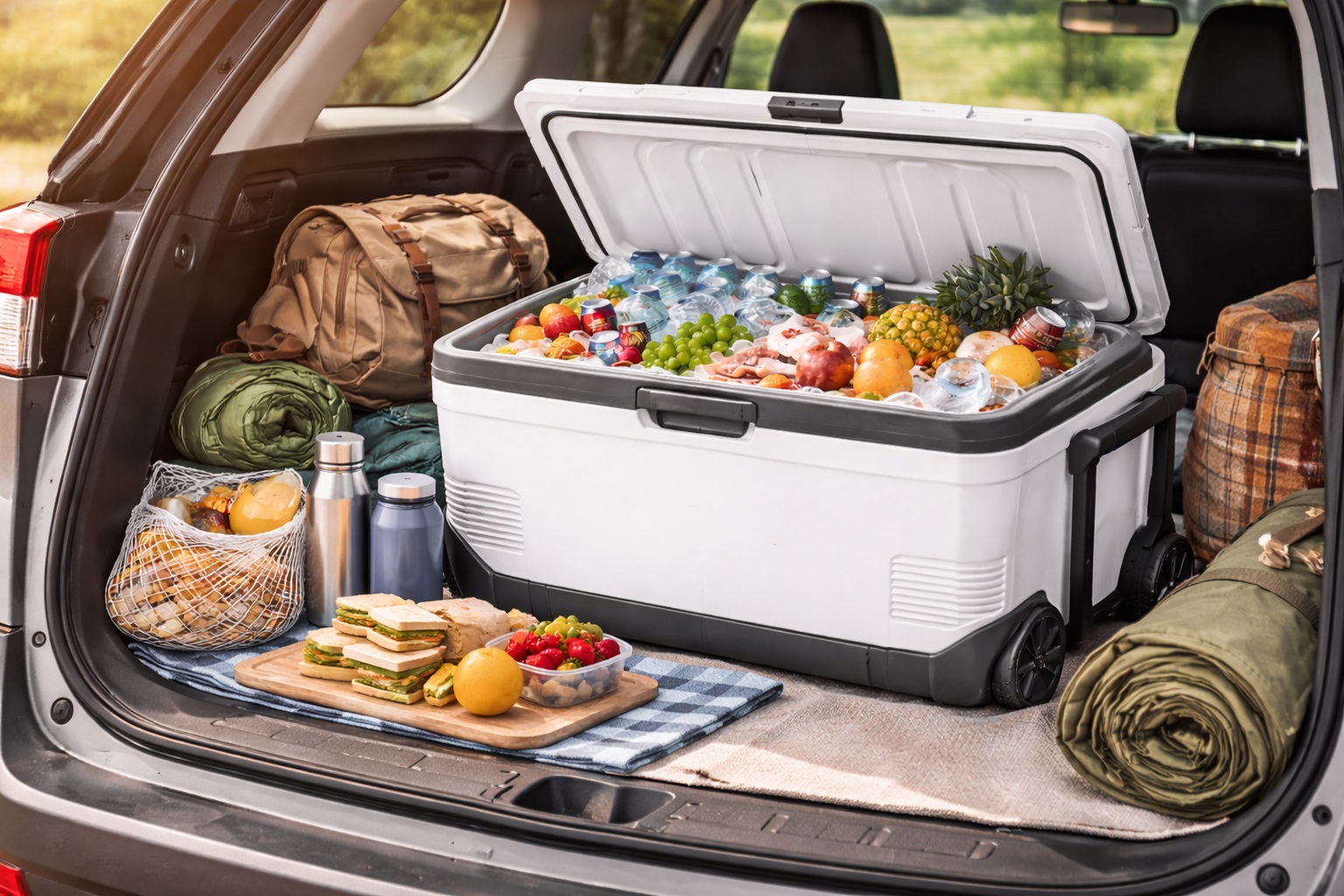
A road trip puts different demands on a camping cooler than a quick backyard barbecue or a short walk from the car to a picnic table. It has to survive hours of vibration and bumps, hold ice across multiple stops and driving days, and fit efficiently into whatever cargo space you have left after packing bags, tents, and everything else a longer trip requires. In 2026, the coolers built to handle that kind of mobility span a wide range of sizes, latch systems, and price points.
This guide reviews eight camping coolers well suited to road trips, focusing on how they hold up to travel, how easily they load and unload, and how well they keep ice through long days on the road. We also look at practical considerations like tie-down security and cargo space efficiency, since a cooler that performs beautifully at the campsite isn't much good if it slides around in the trunk or eats up space you need for other gear.
Whether you're planning a cross-country drive, a series of weekend road trips, or a single long haul to a distant campground, the picks below cover a useful range of capacities and price points. Read on for detailed reviews of each cooler, a complete buying guide focused on road-trip priorities, and answers to common questions about keeping food and drinks cold across the miles.
Before comparing individual models, it's worth thinking honestly about your typical road trip. A single overnight drive with a small cooler of drinks calls for different priorities than a week-long, multi-stop itinerary where the cooler needs to survive daily loading, unloading, and re-icing. Matching the cooler to the actual shape of your trips will serve you better than chasing the single highest-rated option on the market. It also pays to think about how many people typically travel with you, since a cooler sized for a solo driver will feel cramped for a full carload on a shared family trip.
Top 8 Best Camping Cooler Picks (Detailed Reviews)
1. Yeti Tundra 45 – Best For Overall Road-Trip Reliability
The Yeti Tundra 45 combines rotomolded durability with PermaFrost insulation, making it a dependable all-around choice for road trips that involve multiple days on the road. Its rugged, one-piece construction is built to withstand the bumps and vibration of highway travel, and the strong ice retention means fewer stops just to restock ice. At around $325, it's a premium investment, but its reputation for reliability makes it a common choice for serious road-trippers who put real distance on their gear year after year.
- Pros:
- Premier build quality
- PermaFrost insulation for extended ice retention
- Backed by a highly reputable brand
- Rugged, rotomolded construction that handles vibration well
- Cons:
- Highest price point in this roundup
- Limited color options
- Heavier and bulkier than smaller road-trip coolers
Best For: Road-trippers who want one dependable cooler that can handle multi-day travel without worrying about durability or ice retention.
Why We Recommend It: The combination of rugged construction and strong insulation makes this one of the most trusted choices for campers who put real mileage on their gear.
2. Coleman 316 Series – Best For Budget Road Trips
The Coleman 316 Series offers around five days of ice retention at a fraction of the cost of premium rotomolded coolers, making it an accessible option for road-trippers watching their budget. At around $50, it's the most affordable cooler in this roundup, and its lighter weight makes it easier to load and unload at each stop along the way, which adds up over the course of a multi-stop itinerary.
- Pros:
- Premier build quality for the price
- Multi-day ice retention
- Backed by a long-established, reputable brand
- Lightweight and easy to load
- Cons:
- Less rugged than rotomolded competitors
- Limited color options
- Simpler latch system than premium models
Best For: Budget-conscious road-trippers who want dependable ice retention without paying premium prices for a cooler they may not use year-round.
Why We Recommend It: Few coolers offer this level of multi-day performance at such an accessible price, making it a practical choice for occasional road trips.
3. Canyon Coolers Outfitter – Best For Off-Road & Truck Bed Use
The Canyon Coolers Outfitter features recessed latches designed to resist snagging and accidental opening, which is especially valuable for road trips that include rough roads or truck-bed transport. At around $160, it sits comfortably in the mid-range, offering rugged, travel-ready features without reaching the price of the most premium options, which makes it a sensible pick for travelers who take occasional off-pavement detours.
- Pros:
- Premier build quality
- Recessed, snag-resistant latches
- Reputable brand among rugged cooler makers
- Solid mid-range value for frequent travel
- Cons:
- Higher price point than basic coolers
- Limited color options
- Bulkier than compact travel coolers
Best For: Road-trippers who transport their cooler in a truck bed or over rough roads and want latches that stay securely closed.
Why We Recommend It: The recessed latch design solves a genuine problem for off-road and truck-bed transport, holding up well to the vibration and jostling of long drives.
4. Engel Deep Series – Best For Secure, Leak-Free Transport
The Engel Deep Series uses a vacuum-sealed gasket that helps keep the interior sealed against leaks, which is a real advantage when a cooler is riding in a car's cargo area or trunk for hours at a time. At around $280, it's a premium option, and its deep interior adds flexibility for packing taller items alongside standard road-trip snacks and drinks, which can be handy when travel meals don't fit neatly into a shallow cooler.
- Pros:
- Premier build quality
- Vacuum-sealed gasket for leak resistance
- Reputable brand within the hard-cooler market
- Deep interior for varied packing
- Cons:
- Higher price point
- Limited color options
- Bulkier than smaller day-trip coolers
Best For: Road-trippers who want to avoid meltwater leaks inside their vehicle during long drives.
Why We Recommend It: The sealed gasket genuinely reduces the risk of a messy cargo area, which matters more on road trips than almost any other type of outing.
5. Orca 20 Quart – Best For Compact Vehicle Storage
The Orca 20 Quart is compact enough to tuck into a smaller trunk or back seat, making it a practical choice for road trips where cargo space is at a premium. Its whale tail latches keep the lid securely closed even with repeated opening and closing at rest stops. At around $240, it carries a premium price for its size, reflecting the brand's reputation for rugged construction that many travelers trust for years of repeated use.
- Pros:
- Premier build quality
- Secure whale tail latches
- Reputable brand known for rugged construction
- Compact footprint for smaller vehicles
- Cons:
- Higher price point relative to its size
- Limited color options
- Smaller capacity than larger road-trip coolers
Best For: Road-trippers with limited cargo space who still want rugged, reliable performance in a smaller footprint.
Why We Recommend It: The compact size makes this an easy fit for smaller vehicles without sacrificing the secure latching and durability road trips demand.
6. Pelican Elite 30qt – Best For Long-Haul Durability
The Pelican Elite 30qt is backed by a lifetime warranty, reflecting confidence in how well it holds up to years of repeated loading, unloading, and travel. At around $230, it's a premium option built to be a long-term road-trip companion rather than a seasonal purchase, appealing to frequent travelers who want gear that lasts through years of loading docks, rest stops, and gravel campground roads.
- Pros:
- Premier build quality
- Backed by a lifetime warranty
- Reputable brand known for rugged, protective gear
- Solid latch and lid security for travel
- Cons:
- Higher price point
- Limited color options
- Heavier than basic road-trip coolers
Best For: Frequent road-trippers who want a cooler backed by a lifetime warranty for years of dependable long-haul travel.
Why We Recommend It: The warranty coverage reflects genuine confidence in long-term durability, which matters for anyone who puts serious mileage on their gear.
7. RTIC Ultra-Light 52 – Best For Multi-Stop Road Trips
The RTIC Ultra-Light 52 offers a larger capacity built around rotomolded durability, making it well suited to road trips with multiple stops or larger groups traveling together. At around $200, it offers many of the same construction benefits as pricier competitors while remaining more accessible for road-trippers who need extra capacity without the top-tier price, particularly for families traveling with several days of food and drinks.
- Pros:
- Premier build quality
- Rotomolded durability
- Reputable brand competitive with premium coolers
- Larger capacity for multi-stop trips
- Cons:
- Higher price point than basic coolers
- Limited color options
- Heavier and bulkier when full
Best For: Groups taking multi-stop road trips who need enough capacity to restock less frequently along the way.
Why We Recommend It: The rotomolded build holds up well to the repeated handling of a multi-stop itinerary, and the larger capacity reduces how often you need to find ice along the route.
8. Igloo BMX 25 – Best For Lightweight Loading and Unloading
The Igloo BMX 25 pairs heavy-duty, blow-molded construction with a manageable weight, making it easy to load and unload at every stop without straining your back. At around $80, it's one of the more affordable rugged coolers here, offering a practical middle ground between basic budget coolers and heavier rotomolded options for travelers who prioritize convenience over maximum ice retention.
- Pros:
- Premier build quality for the price
- Heavy-duty, blow-molded construction
- Reputable, long-established brand
- Lightweight and easy to carry at each stop
- Cons:
- Higher price point than the most basic coolers
- Limited color options
- Smaller capacity than group-sized coolers
Best For: Solo travelers or couples who value easy loading and unloading over maximum capacity or extended ice retention.
Why We Recommend It: Its manageable weight makes it genuinely easier to live with on a road trip involving frequent stops, without giving up meaningful durability.
Buying Guide: How to Choose the Best Camping Cooler for Road Trips
1. Cooler Size vs. Vehicle Cargo Space
Before choosing a cooler for road trips, measure your vehicle's actual cargo space with other gear already accounted for, since a cooler that seems reasonably sized on paper can quickly dominate a packed trunk. Consider whether the cooler needs to share space with luggage, camping gear, or passengers, and choose a size that leaves enough room for everything else you plan to bring. It can help to do a trial packing session before departure day, so you're not discovering a space conflict for the first time in a parking lot.
2. Handle and Grip Design for Loading/Unloading
Road trips typically involve loading and unloading a cooler more often than a single-destination camping trip, so comfortable, sturdy handles matter more than they might initially seem. Look for handles positioned to allow a balanced carry, especially when the cooler is fully loaded with ice and drinks, since an awkward grip becomes tiring quickly over a multi-stop trip. Rope or webbing handles tend to be more comfortable over repeated use than thin, rigid plastic grips.
3. Wheels vs. No Wheels for Road Trips
Wheeled coolers can be a meaningful convenience if you're regularly hauling a heavy cooler across parking lots or campgrounds, but they add weight and mechanical complexity that isn't necessary for every trip. Consider how far you typically need to carry the cooler from the vehicle and whether the terrain, pavement versus sand or gravel, supports wheeled transport effectively. Large, rugged wheels tend to hold up better across mixed terrain than small, hard plastic casters.
4. Latch Security During Transport
A cooler that rides in a moving vehicle needs latches secure enough to prevent the lid from popping open during sudden stops or rough roads. Recessed or over-center latch designs generally offer more secure closure than simple clip latches, which matters more for road trips than for stationary camping use. Testing a cooler's latches by closing the lid firmly and giving it a shake can give you a rough sense of how securely it will hold during travel.
5. Ice Retention Over Multi-Day Drives
For road trips spanning several days, ice retention becomes a genuine logistical factor, determining how often you need to find a store for restocking. Coolers rated for multi-day ice retention reduce the number of stops needed purely for ice, which can be a meaningful convenience on a tight travel schedule. This matters even more on routes through rural areas where stores selling ice may be few and far between.
6. Tie-Down Points and Anchor Compatibility
If your cooler will ride in a truck bed or open cargo area, tie-down points or compatible anchor systems help keep it secure during transport. A cooler that can shift or slide during sudden braking is both a safety concern and a risk to the cooler's own latches and seals. Even a simple bungee cord anchored to fixed points can meaningfully reduce how much a cooler shifts during a long drive.
7. Stackability and Cargo Organization
On road trips where cargo space is tight, a cooler with a flat, stable top or a shape that stacks well with other gear can make a meaningful difference in how efficiently you pack the vehicle. Rectangular, hard-sided coolers generally stack and organize more predictably than rounded or soft-sided alternatives. A flat lid also doubles as a stable surface for smaller bags or a map during rest stops.
8. Material Toughness for Bumpy Roads
Rotomolded coolers are generally better equipped to handle the vibration and impact of rough roads than lighter blow-molded designs, thanks to their single-piece, thick-walled construction. If your road trips regularly involve unpaved or poorly maintained roads, this added toughness can meaningfully extend the cooler's usable lifespan. Coolers that flex noticeably under light pressure in the store are worth passing over if rough roads are part of your regular travel.
9. Weight When Empty vs. Loaded
A cooler's empty weight only tells part of the story, since a fully loaded cooler with ice and drinks can weigh significantly more. Consider how the cooler will feel when full, particularly if you'll be lifting it in and out of a vehicle repeatedly across a multi-day trip. If two people typically share the lifting, this is less of a concern than if you'll usually be loading it solo.
10. Drainage for Roadside Stops
An accessible, well-designed drain plug makes it easy to empty meltwater at a roadside stop without fully unpacking the cooler. Look for a drain positioned so water flows out completely, avoiding pooling that could seep into other items packed nearby in the vehicle. A drain positioned low on one corner, rather than centered on the bottom, generally empties more completely.
11. Interior Capacity vs. Exterior Footprint
Some coolers are more space-efficient than others, offering more usable interior capacity relative to their exterior dimensions. This matters more for road trips than casual day trips, since every inch of cargo space competes with luggage, tents, and other travel essentials. Comparing interior liters to exterior dimensions across a few models can reveal meaningful differences in space efficiency.
12. Price and Value for Frequent Travelers
Frequent road-trippers may find that a premium, more durable cooler pays for itself over years of repeated travel, while occasional travelers can often get by with a mid-range option. Consider how many road trips you realistically take per year when weighing the upfront cost against long-term durability. A cooler used a handful of times a year rarely justifies the same investment as one that travels every month.
13. Weather Sealing for All-Season Road Trips
If your road trips happen across different seasons, a well-sealed cooler helps maintain consistent performance whether you're managing summer heat or protecting food from unexpected rain during loading and unloading. A tight gasket seal offers benefits beyond ice retention, including keeping moisture and road dust out of the interior. This is especially useful for trips that mix camping stops with more urban travel days, where the cooler faces very different conditions in a short span.
Frequently Asked Questions
What size cooler works best for a multi-day road trip?
For most multi-day road trips, a cooler in the 30 to 50 quart range offers a practical balance of capacity and manageable size, though the right choice depends on group size and how often you'll have access to restock ice. Larger groups or longer trips between stops generally benefit from the higher end of that range. Solo travelers or couples can often comfortably manage with something closer to the smaller end without feeling cramped for space.
How do I secure a cooler in a truck bed or trunk?
Using tie-down straps or a cargo net anchored to secure points in the vehicle helps prevent a cooler from sliding or tipping during transport. Positioning the cooler against a solid barrier, such as the back of a seat or the side of the cargo area, adds an extra layer of stability. Checking the tie-down periodically during long drives ensures it hasn't loosened from repeated vibration.
Do wheeled coolers make sense for road trips?
Wheeled coolers can be genuinely useful if you're regularly hauling a heavy cooler across parking lots, campgrounds, or long distances from the vehicle. For trips where the cooler stays close to the car most of the time, the added weight of a wheeled design may not be worth the trade-off. It's worth testing the wheels on a similar surface to where you'll actually use them before committing to a wheeled model.
How long will ice last during a long drive?
Ice retention during a road trip depends on the cooler's insulation quality, how often it's opened, and whether it's exposed to direct sun inside the vehicle. A well-insulated cooler kept out of direct sunlight can often maintain ice for a full day or more of driving, with premium rotomolded models lasting considerably longer. Parking in shade during stops and limiting lid openings both help stretch that performance further across a long travel day.
Should I pack the cooler before or after loading the vehicle?
It's generally best to pack the cooler with ice and food last, right before departure, to minimize the time it sits closed without fresh cold air circulating. Loading it into the vehicle in a shaded, cool spot rather than direct sun also helps preserve ice longer once the trip begins. If ice is purchased the night before, storing it in a freezer overnight rather than at room temperature keeps it from starting to melt before you've even left.
Can a road-trip cooler double as extra seating at rest stops?
Many hard-sided coolers are built with enough structural strength to support an adult sitting on the lid, which can be a genuinely useful feature at crowded rest areas or scenic overlooks without much seating. Check the manufacturer's load rating if this feature matters to your travel plans, since not every cooler is designed to support that kind of weight safely.
What's the best way to organize food and drinks in a cooler?
Separating drinks from food, using a divider or a secondary smaller cooler for frequently accessed items, helps reduce how often the main cooler needs to be opened. Packing items you'll need first near the top also minimizes digging around and heat loss at each stop. Clear bags or small bins inside the cooler can also make it easier to find what you're looking for quickly.
Are rotomolded coolers worth it for frequent road trips?
For frequent road-trippers, rotomolded coolers generally offer better durability against the vibration and impact of regular travel, along with stronger ice retention over multi-day drives. Occasional road-trippers may find a mid-range blow-molded cooler perfectly adequate for their needs, especially if most of their travel happens on well-maintained highways.
How do I keep a cooler from sliding around while driving?
Tie-down straps, a cargo net, or wedging the cooler securely against other luggage or a vehicle's built-in cargo dividers all help keep it in place during transport. A cooler that shifts around during sudden stops can stress its latches and seals over time, so securing it properly protects the cooler itself as well. A quick check before departure that the cooler can't slide more than a few inches in any direction is a reasonable standard to aim for.
Should I use a separate cooler for drinks vs. food?
Using a separate, smaller cooler for drinks that get accessed frequently can help protect the ice supply in your main food cooler, since drinks coolers tend to be opened far more often during a road trip. This approach is especially useful on longer trips where preserving ice for food safety matters most, since food-related meltwater and spoilage carry more risk than warm drinks.
How often should I re-ice a cooler on a road trip?
Re-icing frequency depends on the cooler's insulation quality and how it's being used, but checking ice levels at least once a day on multi-day trips is a reasonable habit. Topping off ice before it fully melts, rather than waiting until it's completely gone, generally helps maintain better overall cold retention. Planning ice stops around towns you're already passing through can help avoid unnecessary detours.
What's the best way to clean a cooler after a long trip?
Empty and rinse the cooler as soon as possible after your trip ends, then wash the interior with mild soap and warm water before letting it air dry completely with the lid open. Prompt cleaning after a road trip helps prevent odors from setting in after days of use on the road. Leaving the lid propped open for a few hours after cleaning ensures the interior is fully dry before storage.
Is it safe to leave a cooler in a hot car during stops?
While a well-sealed cooler can tolerate short periods in a hot car, extended exposure to high interior vehicle temperatures will accelerate ice melt and can compromise food safety over time. When possible, park in shade or use a reflective sunshade to reduce how much heat builds up around the cooler during stops. Cracking a window slightly can also help reduce overall interior vehicle temperature during shorter breaks.
Final Verdict
- Top Pick: Yeti Tundra 45 for overall excellence.
- Budget Choice: Coleman 316 Series for great value.
- Premium Choice: Engel Deep Series for high-end features.
Road trips place a unique set of demands on a camping cooler, and the models in this roundup each handle those demands in their own way. The Yeti Tundra 45 stands out as the most well-rounded choice for serious road-trippers, combining rugged construction with strong ice retention that holds up across multiple driving days. The Coleman 316 Series proves that dependable performance doesn't require a premium price tag, making it a smart choice for occasional travelers, while the Engel Deep Series offers standout sealing that helps prevent messy leaks inside a packed vehicle. Whichever cooler you choose, think carefully about your cargo space, how often you'll load and unload it, and how many days typically pass between stops, since those practical factors matter just as much as raw ice retention numbers on a spec sheet. A cooler that fits your vehicle, survives your typical road conditions, and matches how often you actually travel will end up serving you far better than one chosen on brand reputation alone. Take the time to weigh these practical details against your budget, and you'll end up with a cooler that quietly does its job trip after trip rather than becoming a recurring source of frustration.