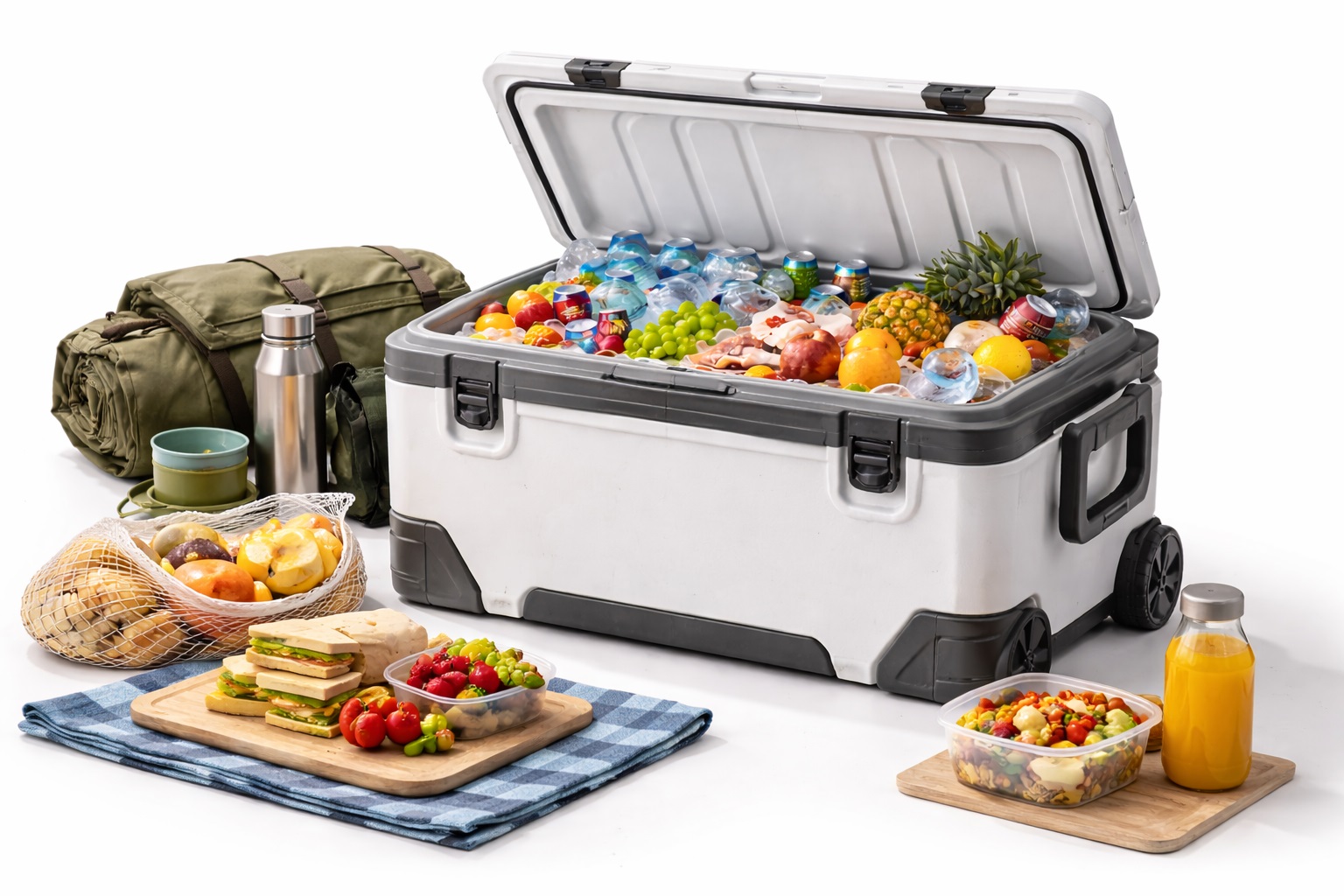
Best Hard-Sided Camping Cooler in 2026
A hard-sided camping cooler is built for campers who want gear that survives years of rough handling, bumpy roads, and repeated loading without cracking, warping, or losing its seal. Unlike soft-sided coolers, hard-sided models rely on rigid plastic construction, from basic blow-molded bodies to premium rotomolded shells, to deliver both structural strength and consistent insulation over the long haul. In 2026, the hard-sided cooler market spans everything from affordable, dependable options to rugged, lifetime-warrantied models built to outlast the vehicles that carry them.
This guide reviews eight hard-sided camping coolers known for their durability, comparing construction methods, latch and hinge quality, and how well each one holds up to years of regular use. We also break down what actually makes a cooler durable, beyond marketing language, so you can evaluate build quality for yourself rather than relying on brand names alone.
Whether you're outfitting a truck for regular off-road trips, looking for a cooler that can double as a camp seat, or simply want gear that won't need replacing every couple of seasons, the picks below cover a useful range of price points built around one shared priority: lasting a long time under real-world abuse. That focus matters because a cooler is rarely used gently; it gets tossed into trunks and truck beds, dragged across gravel, left in the sun, and occasionally used as an impromptu seat, so the coolers that earn a spot on this list are the ones built to shrug off that kind of everyday treatment.
Before comparing individual models, it helps to understand that durability isn't a single feature but the sum of several design choices working together. Wall thickness, hinge design, latch quality, and how the lid seals against the body all contribute to how well a cooler holds up over years of use, and the reviews and buying guide below look at each of these factors individually rather than treating durability as one vague marketing claim. Keep in mind that even the toughest cooler still benefits from reasonable care; avoiding unnecessary drops, keeping gaskets clean, and storing it out of direct sun will help any hard-sided cooler on this list reach the upper end of its expected lifespan.
Top 8 Best Camping Cooler Picks (Detailed Reviews)
1. Pelican Elite 30qt – Best For Rugged, Impact-Resistant Durability
Pelican built its reputation on protective cases designed to survive drops, impacts, and rough handling, and the Elite 30qt cooler carries that same engineering philosophy. Backed by a lifetime warranty, it's designed to be a long-term investment rather than a seasonal purchase, appealing to campers who value proven toughness over the lowest upfront price. At around $230, it sits toward the higher end of this list, but the warranty coverage reflects real confidence in its construction, and many owners report using the same unit for a decade or more without a structural failure.
- Pros:
- Premier build quality
- Backed by a lifetime warranty
- Reputable brand known for rugged, protective gear
- Strong latch and hinge durability
- Cons:
- Higher price point
- Limited color options
- Heavier than basic hard-sided coolers
Best For: Campers who want a cooler built to survive years of rough handling and are willing to pay more upfront for that assurance.
Why We Recommend It: Pelican's background in impact-resistant cases translates directly into a cooler that genuinely feels built to last, backed by a warranty that reflects real confidence in the design.
2. Yeti Tundra 45 – Best For Premium Long-Term Toughness
The Yeti Tundra 45 is widely recognized for its rotomolded, single-piece construction, which gives it exceptional resistance to cracking and structural wear compared to lighter-built alternatives. Its PermaFrost insulation also holds up consistently over years of repeated use, rather than degrading the way thinner insulation sometimes does. At around $325, it's the most expensive cooler in this roundup, positioned squarely as a premium, long-term purchase for campers who would rather pay once than replace a cooler every few seasons.
- Pros:
- Premier build quality
- Rotomolded, single-piece construction
- Backed by a highly reputable brand
- PermaFrost insulation built to last
- Cons:
- Highest price point in this roundup
- Limited color options
- Heavier and bulkier than lighter alternatives
Best For: Campers who want the strongest possible long-term toughness and are willing to pay a premium for proven, rotomolded construction.
Why We Recommend It: Few coolers match this level of structural durability, and Yeti's reputation for rugged, long-lasting gear makes it a benchmark in the hard-sided category.
3. Coleman 316 Series – Best For Budget-Friendly Hard-Sided Use
The Coleman 316 Series proves that hard-sided durability doesn't have to come with a premium price tag. Known for offering around five days of ice retention, it's built with solid, dependable construction that holds up well to regular camping use without the cost of rotomolded competitors. At around $50, it's the most affordable cooler in this roundup, making rugged hard-sided performance accessible to nearly any budget without asking buyers to compromise on the basics of solid construction.
- Pros:
- Premier build quality for the price
- Multi-day ice retention
- Backed by a long-established, reputable brand
- Very approachable price point
- Cons:
- Less rugged than rotomolded competitors
- Limited color options
- Simpler latch system than premium models
Best For: Budget-conscious campers who want dependable hard-sided durability without paying rotomolded prices.
Why We Recommend It: Coleman's decades of cooler-building experience show through in a product that delivers genuine durability at a price nearly anyone can justify.
4. RTIC Ultra-Light 52 – Best For Rotomolded Strength
The RTIC Ultra-Light 52 is built around rotomolded durability, giving it the same single-piece structural advantages as pricier competitors at a more accessible price. At around $200, it offers strong impact resistance and long-term toughness for campers who want rotomolded strength without paying the very top-tier price for it. Its larger capacity also makes it a practical option for groups who need both durability and volume, whether that's a family camping trip or a shared outing among several friends.
- Pros:
- Premier build quality
- Rotomolded durability
- Reputable brand competitive with premium coolers
- Larger capacity for groups
- Cons:
- Higher price point than basic coolers
- Limited color options
- Heavier and bulkier when full
Best For: Campers who want genuine rotomolded toughness and extra capacity without paying premium-brand pricing.
Why We Recommend It: The rotomolded build delivers real structural durability, and the price makes that toughness more accessible than some of the more established premium brands.
5. Canyon Coolers Outfitter – Best For Heavy-Duty Latching
The Canyon Coolers Outfitter stands out for its recessed latches, engineered to resist snagging, breaking, or accidental opening even after years of regular use. This kind of hardware durability matters as much as the body of the cooler itself, since latches are often the first component to fail on lower-quality coolers. At around $160, it offers rugged, durable hardware without reaching the price of the most premium options, striking a sensible middle ground for buyers who want dependable hardware without paying flagship prices.
- Pros:
- Premier build quality
- Recessed, snag-resistant latches
- Reputable brand among rugged cooler makers
- Solid mid-range value
- Cons:
- Higher price point than basic coolers
- Limited color options
- Bulkier than compact coolers
Best For: Campers who want hardware, latches and hinges, built to survive years of regular opening and closing without failure.
Why We Recommend It: Durable hardware is often overlooked compared to body construction, and this cooler's recessed latch design genuinely addresses one of the most common failure points in hard-sided coolers.
6. Engel Deep Series – Best For Sealed, Crush-Resistant Storage
The Engel Deep Series combines a vacuum-sealed gasket with a rugged, deep-body construction designed to resist crushing and structural stress. This kind of sealed durability helps the cooler maintain both its structural integrity and its insulation performance over years of use. At around $280, it's a premium option that competes closely with the other top-tier coolers on this list, particularly for campers who prioritize both sealing and structural strength equally.
- Pros:
- Premier build quality
- Vacuum-sealed gasket for long-term sealing
- Reputable brand within the hard-cooler market
- Deep, crush-resistant body
- Cons:
- Higher price point
- Limited color options
- Bulkier than smaller coolers
Best For: Campers who want a sealed, structurally reinforced cooler that resists both leaks and physical stress over time.
Why We Recommend It: The combination of a vacuum-sealed gasket and reinforced body construction makes this one of the more structurally robust options for long-term, demanding use.
7. Igloo BMX 25 – Best For Everyday Hard-Sided Reliability
The Igloo BMX 25 uses heavy-duty, blow-molded construction to deliver dependable durability at a manageable price and weight. At around $80, it offers a meaningful step up in toughness from entry-level coolers, without the cost or bulk of a full rotomolded design, making it a practical everyday choice for regular camping use where extreme, multi-day toughness isn't the top priority.
- Pros:
- Premier build quality for the price
- Heavy-duty, blow-molded construction
- Reputable, long-established brand
- Lightweight and easy to carry
- Cons:
- Not as rugged as rotomolded flagship coolers
- Limited color options
- Smaller capacity than group-sized coolers
Best For: Everyday campers who want noticeably better durability than a basic cooler without paying rotomolded prices.
Why We Recommend It: It strikes a practical balance between price, weight, and everyday toughness, making it an easy recommendation for regular hard-sided cooler use.
8. Orca 20 Quart – Best For Compact, Bear-Resistant Toughness
The Orca 20 Quart pairs rugged, American-made construction with secure whale tail latches designed to withstand repeated use and resist forceful entry. Its compact size doesn't come at the cost of durability, making it a strong choice for campers who want toughness in a smaller footprint. At around $240, it carries a premium price for its size, reflecting the brand's reputation for rugged build quality that has earned loyalty among campers who prioritize durability over sheer capacity.
- Pros:
- Premier build quality
- Secure, durable whale tail latches
- Reputable brand known for rugged construction
- Compact yet structurally tough
- Cons:
- Higher price point relative to its size
- Limited color options
- Smaller capacity than larger group coolers
Best For: Campers who want serious durability in a smaller, more manageable cooler rather than a large group-sized model.
Why We Recommend It: The combination of compact size and genuinely rugged construction makes this a strong pick for anyone who doesn't want to sacrifice toughness for portability.
Buying Guide: How to Choose the Best Hard-Sided Camping Cooler
1. Rotomolded vs. Injection-Molded Construction
Rotomolded coolers are formed from a single piece of thick plastic with no seams, giving them exceptional structural strength and resistance to cracking compared to injection-molded or blow-molded alternatives that rely on separate seamed pieces. This construction method is the primary reason premium hard-sided coolers command higher prices, since the manufacturing process itself is more time- and material-intensive. For campers deciding between construction types, it helps to think of rotomolding as buying durability up front rather than paying for repairs or early replacement down the line.
2. Wall Thickness and Impact Resistance
Thicker walls generally correlate with better resistance to cracking, denting, and general impact damage over years of use. When comparing coolers, look for published wall thickness specifications where available, since this can be a more reliable indicator of durability than overall weight or price alone. Pressing firmly on a cooler's wall in the store can also give you a rough, hands-on sense of its rigidity before you buy.
3. Hinge and Latch Durability
Hinges and latches are often the first components to fail on a hard-sided cooler, since they experience repeated mechanical stress with every opening and closing. Look for reinforced, rubber-based hinges rather than simple plastic pins, and test latches for solid, confident engagement rather than a loose or flimsy feel. Opening and closing the lid several times in the store can reveal whether a latch feels like it will hold up to years of daily use.
4. UV and Weather Resistance
Prolonged sun exposure can gradually degrade plastic, making it more brittle and prone to cracking over years of outdoor storage or use. Coolers built with UV-resistant materials hold their structural integrity and color better over time than budget plastics not specifically formulated to resist sun damage. Storing a cooler out of direct sunlight when it's not in use is a simple habit that extends the life of even a modestly UV-resistant model.
5. Load-Bearing Capacity (Sitting/Standing on the Cooler)
Many hard-sided coolers are built with enough structural strength to support an adult sitting or standing on the lid, which can be a genuinely useful feature at a crowded campsite without much seating. Check the manufacturer's stated load rating if this kind of dual-purpose use matters to you, since not every cooler is designed for it. A lid that flexes noticeably underfoot is a clear sign that sitting or standing on it isn't a good idea, regardless of what the marketing suggests.
6. Handle and Hardware Quality
Handles endure a lot of stress over a cooler's lifetime, especially when carrying a fully loaded cooler repeatedly. Reinforced, rope-style or rubber-coated handles tend to hold up better over years of use than thin, rigid plastic handles that can crack or snap under sustained weight. Handles mounted with reinforced anchor points into the cooler's body also tend to outlast those attached with simpler, less robust hardware.
7. Corner and Edge Reinforcement
Corners and edges take the brunt of impacts during loading, transport, and general handling, making reinforcement in these areas an important durability factor. Rotomolded coolers generally handle corner impacts better than seamed designs, where corners can be a structural weak point. Rounded, reinforced corners also tend to resist chipping better than sharp, angular designs over years of loading and unloading.
8. Long-Term Insulation Performance
Durability isn't just about the body surviving physical stress; it also includes how well the insulation continues performing after years of use. Lower-quality insulation can degrade or compress over time, gradually reducing ice retention even if the cooler's exterior still looks intact. If you notice ice melting noticeably faster than it used to on a cooler you've owned for years, degraded insulation is a likely culprit.
9. Resistance to Cracking in Cold Weather
Some plastics become more brittle and prone to cracking in freezing temperatures, which matters for campers who use their cooler in cold or winter conditions. Rotomolded coolers generally handle cold-weather durability better than cheaper, thinner-walled alternatives that can become noticeably more fragile in the cold. If shoulder-season or winter camping is part of your routine, this is worth weighing alongside price when comparing construction types.
10. Wildlife-Resistant Certification
Some hard-sided coolers carry official wildlife-resistant certification, meaning they've been tested against determined animal attempts to access the contents. If you camp in areas with active wildlife, a certified cooler offers a meaningful durability advantage beyond everyday use, since it's specifically engineered to withstand forceful attempts at entry. Even outside official certification programs, the design features that support wildlife resistance, strong latches and rigid bodies, generally overlap with the same qualities that make a cooler durable overall.
11. Warranty Coverage as a Durability Indicator
A longer, more comprehensive warranty often reflects genuine manufacturer confidence in a cooler's construction, since companies generally don't offer lifetime coverage on products they expect to fail early. A manufacturer willing to stand behind hinges and latches specifically, not just the outer shell, is usually signaling genuine confidence in the whole product. Compare what's actually covered, since some warranties exclude normal wear on latches or gaskets even while covering structural defects.
12. Weight Trade-Offs for Rugged Builds
The same thick walls and reinforced hardware that make a cooler durable also add weight, which is worth factoring into your decision. If portability matters as much as toughness to you, look for a balance point rather than automatically choosing the heaviest, most rugged option available. Frequent solo carriers, in particular, may find a mid-weight rotomolded cooler more livable than the very largest and toughest models.
13. Price vs. Expected Lifespan
A more expensive, rugged cooler can represent better long-term value than a cheaper one if it lasts significantly longer, especially for campers who use their cooler frequently. Consider the cost per year of expected use rather than just the upfront price when comparing a budget cooler against a premium, durability-focused option. A cooler used every weekend for a decade often ends up cheaper per use than one replaced every couple of years, even if the upfront cost looks steep by comparison.
Frequently Asked Questions
What makes a cooler "hard-sided" versus soft-sided?
Hard-sided coolers use rigid plastic construction, either blow-molded or rotomolded, giving them structural strength and consistent insulation, while soft-sided coolers use flexible, fabric-based materials that are lighter but generally less durable and offer less impact resistance. Hard-sided coolers also tend to hold their shape and seal better over years of repeated use, which contributes to more consistent ice retention over time.
Are rotomolded coolers really more durable?
Yes, rotomolded coolers are formed from a single piece of thick plastic with no seams, which generally makes them more resistant to cracking, denting, and general wear than blow-molded or injection-molded alternatives that rely on assembled parts. This is why rotomolded coolers are often the go-to recommendation for campers who handle their gear roughly or travel over rugged terrain regularly.
Can a hard-sided cooler handle being sat or stood on?
Many hard-sided coolers, particularly rotomolded models, are built with enough structural strength to support an adult's weight on the lid. It's still worth checking the manufacturer's specific load rating, since not every model is rated for this kind of use. Using a cooler this way occasionally at a crowded campsite is one of the more practical everyday benefits of choosing a genuinely rigid, hard-sided design.
How long should a quality hard-sided cooler last?
A well-built, rotomolded hard-sided cooler can often last a decade or more with proper care, while more budget-focused blow-molded coolers may need replacement sooner depending on how heavily they're used. Regular cleaning and gentle handling both help extend a cooler's usable lifespan regardless of construction type. Ten years of moderate seasonal use is a reasonable expectation for a well-cared-for rotomolded cooler, though heavy daily use will naturally shorten that timeline.
Do hard-sided coolers crack in cold weather?
Lower-quality plastics can become more brittle and prone to cracking in freezing temperatures, while rotomolded coolers generally hold up better to cold-weather handling. If you regularly use your cooler in cold conditions, prioritizing rotomolded construction can help avoid this issue. Storing a cooler in a heated space rather than an unheated shed or garage over winter can also reduce cumulative cold-weather stress on the plastic.
What should I look for in cooler hinges and latches?
Look for reinforced, rubber-based hinges rather than simple plastic pins, and latches that engage with firm, confident resistance rather than feeling loose or flimsy. These components experience the most repeated mechanical stress over a cooler's lifetime, so their quality matters significantly for long-term durability. A cooler with an otherwise excellent body but flimsy latches will often disappoint owners well before the main structure shows any wear.
Are wildlife-resistant coolers necessary for camping?
Wildlife-resistant certification isn't necessary for every camper, but it's a meaningful consideration if you frequently camp in areas with active wildlife. Certified coolers have been tested against determined animal attempts to access the contents, offering real peace of mind in those specific situations. Even where certification isn't required by local regulations, the underlying build quality tends to benefit everyday durability as well.
Does a longer warranty mean a more durable cooler?
Generally, yes; manufacturers tend to offer longer warranties when they have genuine confidence in a product's construction. That said, it's worth checking exactly what a warranty covers, since some exclude normal wear on latches or gaskets even while covering structural defects. Reading customer reviews that specifically mention long-term use can also give a more realistic picture than warranty length alone.
How much heavier are rotomolded coolers compared to standard ones?
Rotomolded coolers are typically noticeably heavier than blow-molded coolers of similar capacity, since their thicker, single-piece walls require more material. This added weight is a direct trade-off for the improved durability and insulation performance rotomolded construction provides, so it's worth physically lifting a model in the store if weight is a significant concern for you.
Can I repair a cracked or damaged hard-sided cooler?
Minor cracks in hard-sided coolers can sometimes be repaired with marine-grade epoxy or plastic welding, though results vary depending on the location and severity of the damage. For coolers still under warranty, contacting the manufacturer is generally a better first step than attempting a DIY repair, since a DIY fix can sometimes void remaining coverage.
What's the difference between rotomolded and blow-molded coolers?
Rotomolded coolers are formed from a single piece of plastic through a rotational molding process, resulting in thicker, seamless walls, while blow-molded coolers are made by inflating plastic into a mold, typically resulting in thinner walls and visible seams. Rotomolded construction generally offers better durability and insulation at a higher price point, while blow-molded coolers remain a reasonable choice for lighter, more occasional use.
Are expensive hard-sided coolers worth it for occasional use?
For occasional use, a mid-range blow-molded cooler often provides more than enough durability without the premium cost of rotomolded construction. Frequent campers or those who use their cooler in demanding conditions are more likely to see the long-term value in a premium, rotomolded option. Think honestly about your actual camping frequency before deciding, since infrequent use rarely justifies the top-tier price difference.
How do I extend the lifespan of a hard-sided cooler?
Regularly cleaning and fully drying the cooler after use, storing it out of direct sunlight when not in use, and handling latches and hinges gently rather than forcing them all help extend a hard-sided cooler's usable lifespan. Avoiding unnecessary impacts during loading and transport also reduces wear on the body and hardware over time. Periodically checking and, if needed, replacing a worn gasket is one of the simplest ways to keep an otherwise sound cooler performing like new.
Final Verdict
- Top Pick: Pelican Elite 30qt for overall excellence.
- Budget Choice: Coleman 316 Series for great value.
- Premium Choice: Yeti Tundra 45 for high-end features.
Durability is ultimately what separates a hard-sided cooler that lasts a decade from one that needs replacing every couple of seasons, and the picks in this roundup each demonstrate that toughness in their own way. The Pelican Elite 30qt stands out for its impact-resistant construction and lifetime warranty, making it a strong overall choice for campers who prioritize long-term reliability above all else. The Coleman 316 Series proves that dependable, hard-sided durability doesn't require a premium price tag, while the Yeti Tundra 45 remains a benchmark for rotomolded toughness among campers willing to invest in the best available construction. Whichever cooler you choose, paying attention to wall thickness, hinge quality, and warranty coverage will tell you far more about long-term durability than price or brand name alone. A cooler that survives years of loading, unloading, and outdoor storage without complaint is one of those rare pieces of gear you stop thinking about entirely, which is exactly the point of prioritizing durability in the first place.