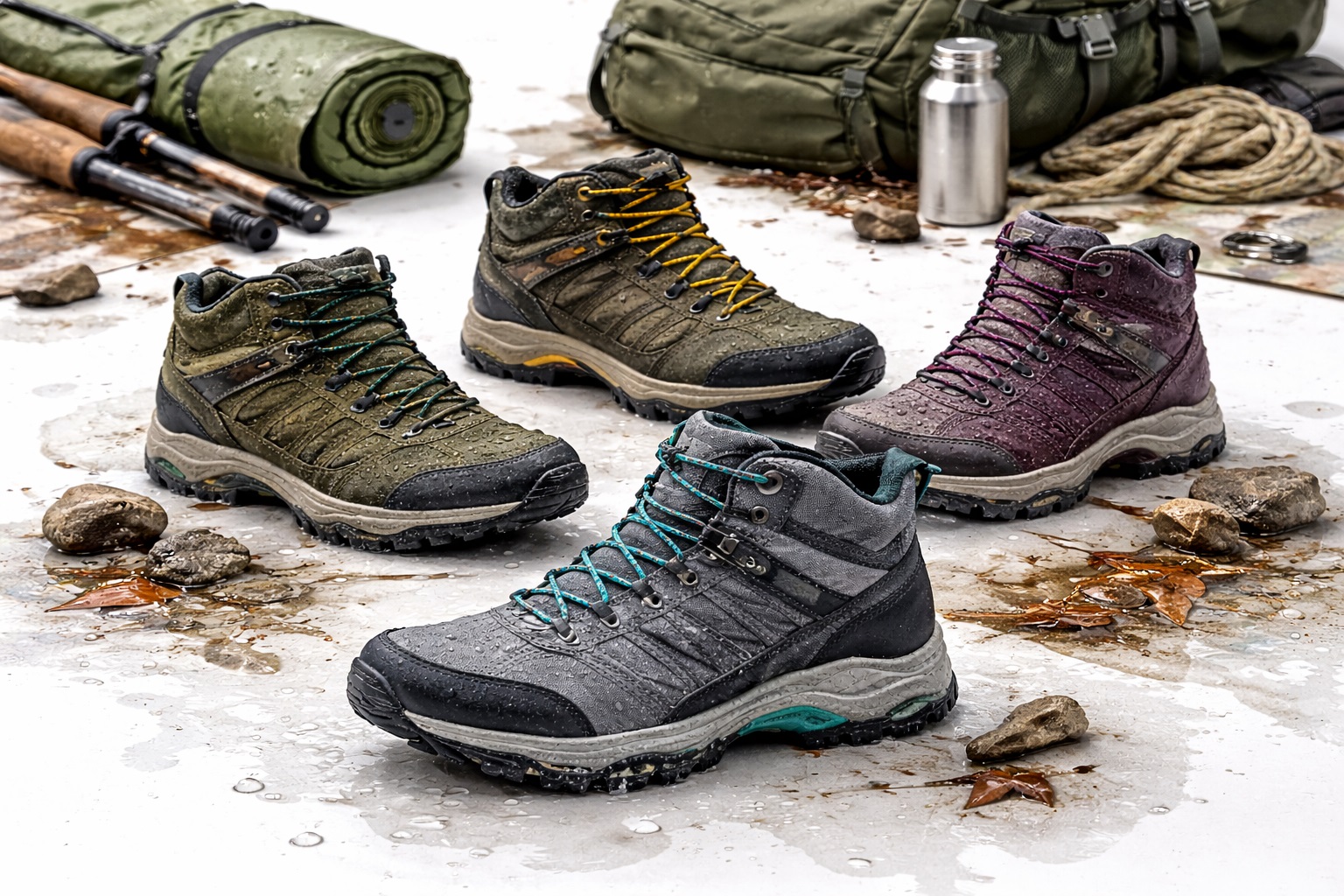
Best Waterproof Hiking Boots in 2026
Wet trails, muddy switchbacks, and unexpected rain showers can turn a great hike into a miserable one if your footwear isn't up to the task. In 2026, hikers have more waterproof boot options than ever, ranging from classic leather designs to modern boots built around dedicated waterproof membranes. Finding the right pair means balancing waterproof protection with breathability, comfort, and long-term durability.
This guide compares eight of the most popular waterproof hiking boots on the market today, looking at the materials, technologies, and price points that separate a boot that merely claims to be waterproof from one that actually keeps your feet dry mile after mile. Whether you're planning a rainy weekend backpacking trip or simply want boots that can handle puddles and morning dew without hesitation, the picks below cover a range of budgets and use cases.
Below you'll find detailed reviews of each model, a practical buying guide covering the factors that matter most when shopping for waterproof footwear, and answers to the questions hikers ask most often before buying.
Across the eight boots featured here, prices range from budget-friendly leather designs under $100 to premium, resoleable boots built for years of heavy trail use. Rather than ranking these boots purely on price, this guide looks at how each one performs specifically in wet conditions — from light rain and morning dew to sustained downpours and stream crossings — so you can match a boot to the kind of wet-weather hiking you actually do.
Top 8 Best hiking boots Picks (Detailed Reviews)
1. Timberland White Ledge – Best For Everyday Waterproof Comfort
The Timberland White Ledge has long been a familiar sight on trailheads, and its continued popularity comes down to a simple formula: a premium full-grain leather upper, a comfortable break-in, and a price that doesn't require a second mortgage. At around $90, it sits at the accessible end of this list while still delivering the kind of rugged construction Timberland is known for. The leather upper sheds light rain and morning dew effectively, and the boot's traditional lace-to-toe design gives hikers a secure, adjustable fit across a wide range of foot shapes. For hikers who split time between local trails and casual errands, its leather construction also ages well, developing a broken-in look without sacrificing structural integrity.
- Pros:
- Premium full-grain leather upper resists everyday moisture
- Sturdy, confidence-inspiring build quality
- Backed by a well-established, widely trusted brand
- Comfortable for both trail use and casual daily wear
- Cons:
- Heavier than many synthetic waterproof alternatives
- Limited color and style options compared to newer releases
- Leather requires a modest break-in period before long hikes
Best For: Hikers who want a dependable, classic-styled waterproof boot for wet-weather day hikes and everyday outdoor use without paying a premium price.
Why We Recommend It: The White Ledge earns its spot because it delivers genuine leather waterproofing and durable construction at one of the lowest price points on this list, making it an easy recommendation for hikers who don't want to overspend on their first serious pair of waterproof boots. It's a boot we'd point beginner and casual hikers toward first, before considering pricier technical options.
2. Columbia Newton Ridge – Best For Budget-Conscious Hikers
The Columbia Newton Ridge pairs a waterproof upper with Columbia's proprietary Omni-Grip traction system, giving it a dependable grip on wet rock and slick trail surfaces. Priced at around $100, it's one of the more approachable options here, and it's frequently chosen by hikers who want solid wet-weather performance without committing to a premium price tag. The suede leather and mesh construction keeps the boot lightweight relative to full-leather designs while the waterproof membrane underneath handles puddles, wet grass, and light stream crossings. Because the upper relies on suede panels rather than solid leather, it also tends to dry out faster after a wet hike, which some hikers find convenient for back-to-back trail days.
- Pros:
- Omni-Grip traction performs well on wet and uneven surfaces
- Lightweight build compared to full-leather boots
- Affordable entry point into waterproof hiking footwear
- Reputable, widely available outdoor brand
- Cons:
- Waterproof membrane can feel warmer on hot-weather hikes
- Style options are relatively limited
- Not designed for heavy backpacking loads
Best For: Hikers who want reliable wet-weather traction and waterproofing on a modest budget, especially for day hikes and moderate trail conditions.
Why We Recommend It: Between its affordable price and the confidence that Omni-Grip traction provides on wet terrain, the Newton Ridge is one of the easiest waterproof boots to recommend to hikers who prioritize value without sacrificing wet-weather performance. It's an especially sensible pick for hikers who are still building out their gear closet.
3. Keen Targhee III – Best For Reliable All-Day Waterproofing
The Keen Targhee III has built a loyal following among hikers who spend entire days on wet, unpredictable trails. Its Keen.Dry waterproof membrane is designed specifically to keep moisture out while still allowing some breathability, and the boot's wide toe box makes it a favorite among hikers who find narrower boots uncomfortable on long descents. At around $165, it sits in the middle of this lineup, reflecting its position as a purpose-built hiking boot rather than a crossover lifestyle shoe. Many multi-day hikers also appreciate that the Targhee III's outsole is designed to handle a mix of wet rock, mud, and loose gravel without feeling unstable underfoot.
- Pros:
- Keen.Dry waterproof membrane built for sustained wet conditions
- Roomy toe box improves comfort on long hikes
- Durable, trail-specific construction
- Trusted by long-distance and multi-day hikers
- Cons:
- Higher price point than entry-level waterproof boots
- Wider fit may not suit hikers with narrow feet
- Break-in period recommended before long trips
Best For: Hikers who need dependable waterproofing on full-day or multi-day hikes and want extra room in the toe box for comfort over long distances.
Why We Recommend It: The Targhee III consistently earns praise for keeping feet dry through extended exposure to wet conditions, making it one of the more trustworthy choices for hikers who can't afford damp feet halfway through a long trail day. Hikers upgrading from a worn-out pair often cite the wider fit as the deciding factor.
4. La Sportiva Nucleo High II – Best For Technical Wet-Terrain Hiking
La Sportiva built its reputation in mountaineering and technical terrain, and the Nucleo High II brings that pedigree to a waterproof hiking boot. Its Nano-Cell technology is designed to reinforce high-wear zones while keeping the overall boot lighter than traditional leather designs. At around $240, it's one of the pricier options on this list, positioned for hikers who tackle rocky, technical, or exposed terrain where wet conditions and rough ground occur together. Its lighter overall weight compared to traditional leather mountaineering boots also makes it a reasonable option for hikers who want technical performance without the bulk of a heavier boot.
- Pros:
- Nano-Cell technology reinforces durability without excess weight
- Precise, technical fit suited to uneven terrain
- Strong reputation from a respected mountaineering brand
- Aggressive outsole grips wet rock confidently
- Cons:
- Premium price point compared to most boots on this list
- Narrower fit may not suit every foot shape
- Overbuilt for casual, easy-trail hiking
Best For: Experienced hikers who tackle technical, rocky, or exposed wet terrain and want a boot built with mountaineering-grade materials.
Why We Recommend It: When wet conditions combine with rough, technical ground, the Nucleo High II's reinforced construction and secure fit make it one of the more capable choices for hikers who need more than basic waterproofing. It's best suited to hikers who already know they need technical performance rather than casual comfort.
5. Hoka Anacapa Mid – Best For Cushioned Comfort in Wet Conditions
Hoka's Anacapa Mid brings the brand's signature maximalist cushioning to waterproof hiking footwear. Its Late-stage Meta-Rocker geometry is designed to encourage a smooth, rolling stride, which many hikers find reduces fatigue on long, wet trail days. Priced at around $185, the Anacapa Mid appeals to hikers who prioritize underfoot comfort as much as they do keeping their feet dry, particularly on hard-packed or mixed-surface trails. Because the cushioning absorbs so much impact, some hikers also find it noticeably easier on the knees and joints during long descents on wet, uneven trails.
- Pros:
- Late-stage Meta-Rocker design supports a smooth, comfortable stride
- Generous cushioning reduces fatigue on long hikes
- Waterproof construction suited to wet, mixed-terrain trails
- Modern, lightweight profile compared to traditional boots
- Cons:
- Cushioned platform may feel less stable on very technical terrain
- Higher price than entry-level competitors
- Rocker geometry takes some adjustment for new wearers
Best For: Hikers who want maximum underfoot cushioning and a smooth ride alongside dependable waterproof protection.
Why We Recommend It: The Anacapa Mid stands out for hikers who value comfort over long miles just as much as staying dry, offering a plush, rocker-assisted ride that few traditional waterproof boots can match. Hikers coming from running shoes often find the transition to this boot more comfortable than a traditional stiff-soled design.
6. Salomon Quest 4 Gore-Tex – Best For All-Day Backpacking in Rain
The Salomon Quest 4 Gore-Tex pairs a trusted Gore-Tex waterproof membrane with Salomon's Descent Control technology, a feature designed to improve stability and control on steep, wet descents. At around $230, it's built for hikers who carry real backpacking loads and need a boot that can handle sustained rain, river crossings, and long descents without letting moisture in. Its supportive ankle collar and structured chassis make it one of the more backpacking-ready options on this list. The boot's reinforced toe cap and rand also add an extra layer of protection against rocks and roots hidden under wet leaves or shallow water.
- Pros:
- Gore-Tex membrane offers dependable, well-established waterproofing
- Descent Control technology adds stability on steep, wet descents
- Supportive build suited to loaded backpacking trips
- Reputable brand with strong trail-tested heritage
- Cons:
- Higher price point than day-hiking-oriented boots
- Stiffer chassis takes longer to break in
- Heavier than minimalist waterproof options
Best For: Backpackers who carry heavier loads over multi-day trips and need reliable waterproofing combined with stability on steep, wet descents.
Why We Recommend It: The combination of Gore-Tex waterproofing and Descent Control technology makes the Quest 4 a strong choice for hikers who need their boots to perform consistently through rain, mud, and demanding descents over multiple days. It remains a dependable choice for anyone who treats their boots as serious backpacking gear rather than casual footwear.
7. Merrell Moab 3 – Best For Versatile All-Around Wet-Weather Use
Few hiking boots have the broad, trusted reputation of the Merrell Moab 3. Its Kinetic Fit ADV insole is designed to provide contoured support straight out of the box, minimizing the break-in period that some leather boots require. Priced at around $120, it strikes a comfortable middle ground between affordability and trail-ready waterproof performance, which is a big part of why it remains one of the most recommended hiking boots on the market. Its familiarity among outdoor retailers also means replacement parts, insoles, and half sizes are usually easy to find compared to less common brands.
- Pros:
- Kinetic Fit ADV insole provides immediate comfort and support
- Balanced price relative to its waterproof performance
- Versatile enough for day hikes, light backpacking, and casual wear
- One of the most widely recommended hiking boots available
- Cons:
- Traction can wear faster than premium rubber compounds
- Not as specialized as boots built for technical terrain
- Limited color options in some sizes
Best For: Hikers who want a versatile, comfortable waterproof boot that performs well across a wide range of trail conditions without a long break-in period.
Why We Recommend It: The Moab 3's blend of immediate comfort, dependable waterproofing, and reasonable pricing explains why it continues to be one of the most popular all-around choices for hikers facing wet or unpredictable conditions. It's often the boot recommended to hikers buying their very first proper pair.
8. Lowa Renegade GTX – Best For Long-Term Durability in Wet Environments
The Lowa Renegade GTX is often cited as one of the most durable waterproof hiking boots available, combining a Gore-Tex lining with a Vibram Evo sole built to handle years of regular use. At around $250, it's the most expensive boot on this list, reflecting its resoleable construction and premium materials. Hikers who put serious mileage on their boots each year often find that the Renegade GTX's longevity offsets its higher upfront cost. Owners of the Renegade GTX also frequently point to its consistent fit across different terrain types as a reason they keep returning to the same model year after year.
- Pros:
- Gore-Tex lining provides long-lasting waterproof protection
- Vibram Evo sole delivers dependable traction over years of use
- Resoleable design extends the boot's usable lifespan
- Well-regarded for consistent build quality
- Cons:
- Highest price point among the boots reviewed here
- Break-in period required before long hikes
- Overkill for occasional, casual hikers
Best For: Frequent hikers who want a long-lasting, resoleable waterproof boot and are willing to pay a premium for durability that pays off over years of use.
Why We Recommend It: For hikers who measure boot value in years rather than months, the Renegade GTX's combination of Gore-Tex waterproofing and a resoleable Vibram sole makes it one of the most durable investments on this list. Buyers who plan to keep and resole the same boot for many seasons tend to be the happiest with this choice.
Buying Guide: How to Choose the Best Waterproof Hiking Boots
Not all "waterproof" hiking boots perform the same way in real-world conditions. The technology, materials, and fit of a boot all play a role in how well it keeps water out and how comfortable it feels over the course of a hike. Here are the factors worth considering before you buy.
1. Waterproof Membranes vs. Water-Resistant Coatings
Boots described as waterproof typically use an internal membrane, such as Gore-Tex or a brand-specific equivalent, that blocks liquid water while allowing some vapor to escape. Water-resistant coatings applied to the outer material, by contrast, only slow down moisture and can wear off over time. Understanding which approach a boot uses helps set realistic expectations for how it will perform in sustained rain versus light drizzle. Checking a manufacturer's specification sheet, rather than relying on marketing language alone, is the most reliable way to confirm which category a boot falls into.
2. Upper Materials: Leather vs. Synthetic vs. Mesh
Full-grain leather uppers tend to offer natural water resistance and durability but require a longer break-in period. Synthetic and mesh uppers are typically lighter and dry faster if they do get wet, but they rely more heavily on an internal membrane for true waterproofing. Neither option is universally better — the right choice depends on how much weight you're willing to carry versus how much durability you want from the upper material. Some hikers keep one pair of each to match different seasons and trip types.
3. Ankle Height and Support
Mid-height and high-cut boots offer more ankle support and help keep water, mud, and debris from splashing in over the collar, which matters most on uneven or wet terrain. Lower-cut hiking shoes are lighter and more flexible but offer less protection from puddles and stream splashes. A stiffer ankle cuff also reduces the chance of rolling an ankle on loose, wet rock.
4. Traction and Outsole Design
Wet rock and muddy trails demand an outsole designed for grip in slippery conditions. Deep, multidirectional lugs and softer rubber compounds generally perform better on wet surfaces, while harder rubber compounds may last longer but sacrifice some grip. Checking the lug pattern before buying can reveal whether a boot is designed more for wet rock or loose dirt and gravel.
5. Breathability Trade-Offs
Waterproof membranes inherently limit airflow compared to non-waterproof mesh boots. This is a reasonable trade-off for wet-weather hiking, but it's worth knowing that waterproof boots can feel warmer on hot, dry days, which is why some hikers keep a separate pair of breathable boots for summer conditions. If you regularly hike in both hot and wet conditions, owning two pairs suited to each scenario may be worth the investment.
6. Break-In Period and Fit
Leather-heavy waterproof boots often need several short hikes to break in fully, while boots with molded, contoured insoles tend to feel comfortable sooner. Trying boots on with the socks you plan to hike in, and walking around on an incline if possible, helps reveal fit issues before you commit to a longer trip. Wearing new boots around the house for short periods before a hike can also help identify pressure points early.
7. Weight and All-Day Comfort
Heavier, more structured boots generally offer more support and durability, while lighter boots reduce fatigue over long distances but may sacrifice some stability on rough terrain. Waterproof membranes typically add a small amount of weight regardless of the boot's overall design. Testing a boot's weight in person, rather than relying on specs alone, gives a better sense of how it will feel after several hours on trail.
8. Sizing and Sock Thickness
Because waterproof boots trap heat and moisture from perspiration more than non-waterproof designs, many hikers size up slightly to accommodate thicker wool or synthetic hiking socks. Trying boots on later in the day, when feet are naturally slightly more swollen, can also help avoid a too-tight fit on the trail. A thin liner sock underneath a thicker hiking sock can also help manage moisture and reduce friction.
9. Terrain Suitability
Some waterproof boots are optimized for maintained, moderate trails, while others are built with reinforced toe caps, rock plates, or aggressive lugs for rocky, technical, or off-trail terrain. Matching the boot to the terrain you actually hike most often will serve you better than chasing the most rugged option available. Reading trail-specific reviews from hikers who use similar terrain can be more useful than general star ratings.
10. Price vs. Long-Term Value
A lower-priced waterproof boot isn't necessarily a worse investment, particularly for occasional hikers. However, frequent hikers who put significant mileage on their footwear each year may find that a more expensive, resoleable boot works out to better value over its lifespan. Setting a realistic annual mileage estimate for yourself can help clarify which end of the price range makes the most financial sense.
11. Maintenance and Re-Waterproofing
Even the best waterproof membrane benefits from periodic care. Cleaning boots after muddy hikes and reapplying a waterproofing treatment to the outer material helps maintain the boot's water-shedding ability as the durable water repellent coating naturally wears down over time. Storing boots somewhere dry and well-ventilated between hikes also helps preserve both the membrane and the outer material.
12. Warranty and Brand Support
Established outdoor brands typically offer warranties covering manufacturing defects, and some offer resoling services that can extend a boot's life well beyond its original sole. Checking a brand's warranty and repair policies before buying can be a useful tiebreaker between similarly priced options. Registering a new pair of boots with the manufacturer, when possible, can simplify warranty claims down the road.
13. Matching Boots to Your Hiking Style
A weekend day hiker, a thru-hiker, and someone who hikes mainly for fitness all have different needs from a waterproof boot. Being honest about how often you'll actually use the boots, and in what conditions, is the most reliable way to avoid overspending on features you won't use or underbuying for trips you actually take. Revisiting this decision every year or two, as your hiking habits evolve, helps ensure your footwear keeps pace with how you actually use it.
Frequently Asked Questions
Are waterproof hiking boots worth buying if I mostly hike in dry weather?
If you rarely encounter wet trails, a non-waterproof boot may offer better breathability. However, waterproof boots still provide useful protection against morning dew, occasional rain, and stream crossings, which is why many hikers choose them as an all-around option regardless of forecast.
What is the difference between Gore-Tex and other waterproof membranes?
Gore-Tex is a well-known, independently branded waterproof membrane used across many hiking boot brands, while other membranes, like Keen.Dry, are proprietary technologies developed in-house. Both approaches aim to block liquid water while allowing some vapor to pass, though performance can vary between specific products.
Can waterproof hiking boots still get wet inside?
Yes. Water can enter over the top of the boot during deep puddles or stream crossings, and internal moisture from sweat can build up over long hikes. Waterproof membranes protect against water intrusion from outside, not moisture generated inside the boot.
How long does waterproofing last on a boot?
The internal membrane itself can last for years with proper care, but the durable water repellent coating on the outer material wears down faster and typically needs to be reapplied every few months of regular use, depending on trail conditions.
Do waterproof boots run hotter than non-waterproof boots?
Generally, yes. The membrane that blocks water also restricts some airflow compared to non-waterproof mesh boots, which is why waterproof boots can feel warmer on hot, dry-weather hikes.
Should I size up for thicker socks with waterproof boots?
Many hikers do size up slightly, since waterproof boots are often worn with thicker socks and tend to run a bit warmer, causing feet to swell more over a long hike. Trying boots on with your intended hiking socks is the best way to confirm proper sizing.
Can I re-waterproof my hiking boots?
Yes. Most leather and synthetic hiking boots can be treated with an aftermarket waterproofing spray or wax to restore water repellency once the factory coating starts to wear off.
Are leather or synthetic waterproof boots better?
Leather boots tend to be more durable and naturally water-resistant but heavier and slower to dry, while synthetic boots are lighter and dry faster but may not last as long under heavy use. The better option depends on your priorities between durability and weight.
How do I break in new waterproof hiking boots?
Wearing new boots on short walks or day hikes before a longer trip allows the materials to soften and mold to your feet, reducing the risk of blisters or discomfort on a multi-day hike.
Do waterproof boots work well for stream crossings?
Waterproof boots can handle shallow splashes and brief submersion well, but deep stream crossings can still let water in over the collar. For frequent deep crossings, many hikers remove their boots or use dedicated water shoes instead.
Is it necessary to buy waterproof boots for day hikes?
It isn't strictly necessary, but waterproof boots add a layer of protection against unexpected rain, morning dew, and muddy trail sections that can otherwise leave feet wet and uncomfortable for the rest of the hike.
How much should I expect to spend on quality waterproof hiking boots?
Quality waterproof hiking boots generally range from around $90 for solid entry-level options to $250 or more for premium, resoleable boots built for frequent, heavy use.
Do waterproof hiking boots need special cleaning?
Regular cleaning with a soft brush and mild soap, followed by air drying away from direct heat, helps preserve both the material and the waterproof coating. Avoiding machine washing or high heat drying protects the membrane from damage.
Final Verdict
- Top Pick: Timberland White Ledge for dependable everyday waterproof comfort at an accessible price.
- Budget Choice: Columbia Newton Ridge for solid wet-weather traction and waterproofing without a high price tag.
- Premium Choice: Lowa Renegade GTX for long-term durability and Gore-Tex waterproofing built to last for years.
There isn't a single "best" waterproof hiking boot for every hiker — the right choice depends on how often you hike, the terrain you typically face, and how much you're willing to invest upfront. Hikers looking for an easy, reliable entry point will likely be happiest with the Timberland White Ledge or Columbia Newton Ridge, while those who log serious annual mileage may find that the Lowa Renegade GTX's durability justifies its higher price over time. Whichever pair you choose, prioritizing genuine waterproof technology and a comfortable fit will matter more than any single spec sheet.