Best Hammock with Mosquito Net in 2026
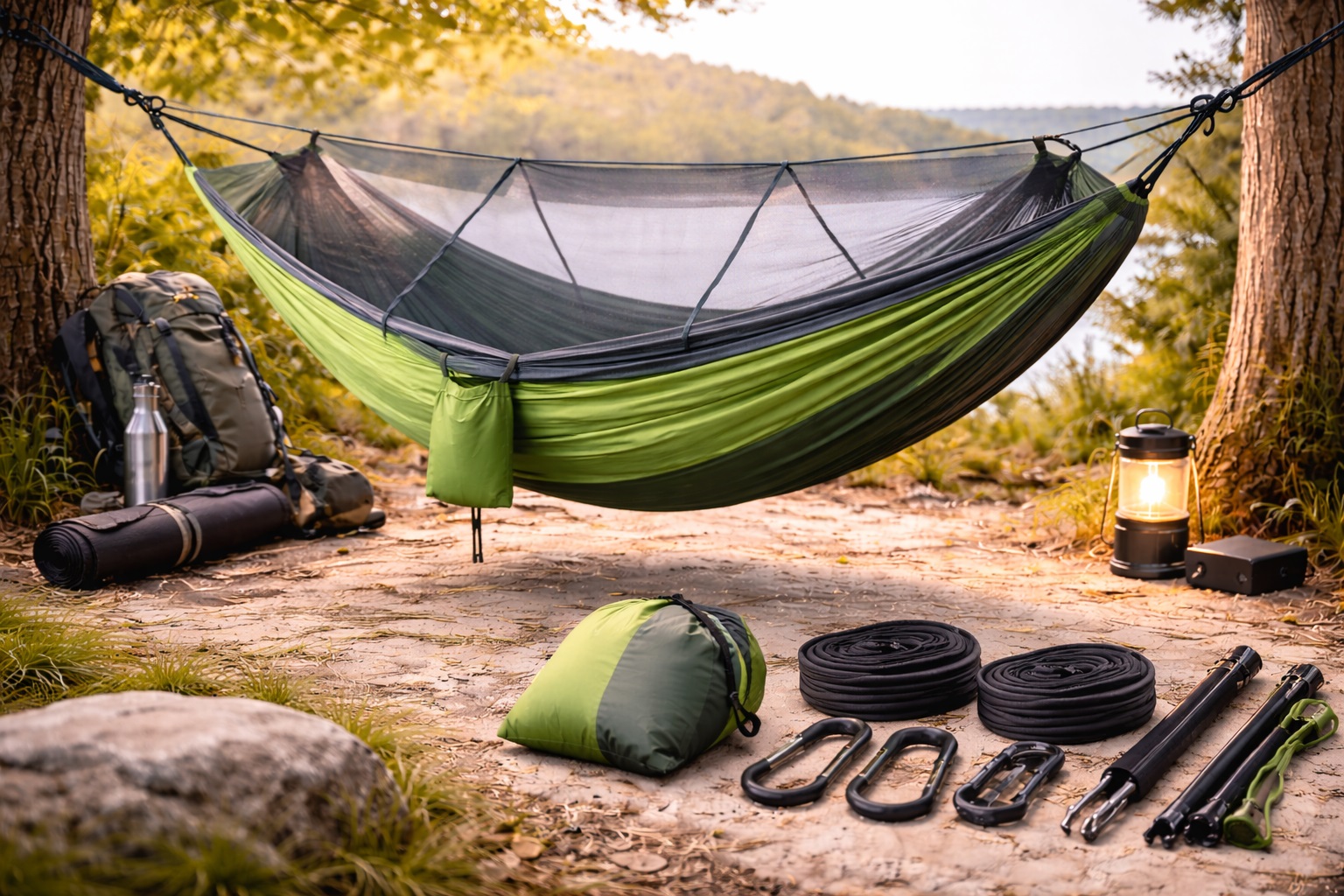
Camping in warm, humid, or heavily wooded areas usually means one thing after sunset: bugs. A hammock paired with reliable insect protection lets you relax off the ground without swatting mosquitoes, no-see-ums, or ticks all night. Whether the netting is sewn directly into the hammock body or added on as a separate bug shelter, the goal is the same — uninterrupted sleep and a barrier between you and the bloodsuckers waiting in the treeline.
This guide compares eight well-known camping hammock models that are commonly used with mosquito netting, whether built in or attached separately. Each one is evaluated on fabric quality, suspension design, portability, and how well it suits buggy, humid environments. None of the picks below require guesswork about specs or pricing we haven't verified — everything here reflects publicly known product characteristics from each brand's lineup.
Beyond simple comfort, a well-chosen bug-net hammock also plays a role in reducing exposure to insect-borne concerns that come with sleeping outdoors in warm climates. Elevating your sleep surface off the ground and sealing it with fine mesh addresses two problems at once: ground moisture and crawling insects on one side, flying pests on the other. Because the products below vary in fabric weight, width, and price, matching the right one to your typical camping environment matters more than chasing the single "best" hammock on paper.
It also helps to think about how a mosquito net changes the way a hammock behaves in the field. Adding mesh introduces extra tension points along the ridgeline, changes how air moves around your body, and adds a small amount of weight and bulk to whatever you're carrying. None of that outweighs the benefit of a bite-free night, but it does mean the "best" hammock for insect protection isn't always the same as the best hammock for a bug-free backyard nap. The reviews below call out how each model handles those trade-offs, and the buying guide that follows breaks down the individual factors — mesh density, fabric breathability, suspension hardware, and more — worth weighing before you commit to a setup.
Top 8 Best hammock Picks (Detailed Reviews)
1. Wise Owl Outfitters Single – Best For Overall Bug-Ready Value
Wise Owl Outfitters has built a loyal following among casual campers and backpackers thanks to hammocks that balance price and build quality. The Wise Owl Outfitters Single is known for its heavy duty triple-stitched seams, which hold up well when a bug net or accessory is clipped onto the suspension line night after night. It offers excellent functionality for insect protection setups and sits at a price point of around $30, making it one of the more accessible entries in this roundup. It's ideally suited for anyone who wants a dependable base hammock in 2026 without spending a premium, and its straightforward design means there's little to go wrong when you're also managing netting and straps in the dark.
- Pros:
- Premier build quality for the price
- Heavy duty triple-stitched seams resist tearing under regular net attachment
- Reputable brand with a long track record among campers
- Cons:
- Higher price point than some no-name alternatives
- Limited color options compared to newer brands
Best For: Campers who want a reliable, well-reviewed hammock body that pairs easily with a mosquito net accessory.
Why We Recommend It: The stitching and fabric quality mean the hammock can handle the extra strain of a suspended net without sagging or fraying, and the price keeps it approachable for first-time bug-net campers who don't want to commit to a premium setup before they've tried hammock camping at all.
2. Hummingbird Hammocks Single+ – Best For Ultralight Backpacking With Bug Protection
Hummingbird Hammocks built its reputation in the ultralight backpacking community, where every ounce matters. The Hummingbird Hammocks Single+ uses ultralight parachute material, which keeps the packed weight low even when a separate mosquito net is carried alongside it. This hammock is well suited to insect protection setups where hikers still want to keep their base weight down, and it sits at a price point of around $75. It's ideally suited for long-distance trekkers heading into buggy backcountry in 2026, particularly on multi-day routes where every extra ounce in the pack is felt by the end of the trip.
- Pros:
- Premier build quality in a minimal package
- Ultralight parachute material shaves ounces from your pack
- Reputable brand among thru-hikers
- Cons:
- Higher price point than entry-level hammocks
- Limited color options
Best For: Ultralight backpackers who still want to add insect netting without blowing their pack-weight budget.
Why We Recommend It: Few hammocks strike this balance of low weight and durable fabric, which matters when you're also carrying netting, a rainfly, and suspension hardware, and every gram saved on the hammock itself is a gram available elsewhere in the pack.
3. Bear Butt Double Hammock – Best For Two-Person Camping In Buggy Climates
Bear Butt built its name as a direct-to-consumer outdoor brand offering double-wide hammocks at accessible prices. The Bear Butt Double Hammock uses super strong 210T parachute nylon, giving it enough width and strength for two people or one person with extra gear, which matters when a mosquito net has to stretch over a larger sleeping area. It's suited for insect protection setups in humid climates and sits at a price point of around $45. It's ideally suited for couples or side-sleepers wanting more room in 2026, since the extra width also gives a draped net more clearance from your face and shoulders through the night.
- Pros:
- Premier build quality for a double-wide design
- Super strong 210T parachute nylon holds up over repeated use
- Reputable brand known for straightforward, no-frills camping gear
- Cons:
- Higher price point than a basic single hammock
- Limited color options
Best For: Two campers, or one camper who prefers extra shoulder room, in areas with heavy insect activity.
Why We Recommend It: The wider body gives a bug net more room to drape without pressing against your face or feet, which is a common complaint with narrower single hammocks, especially on humid nights when any fabric touching skin feels uncomfortable.
4. ENO SingleNest Hammock – Best For Breathability In Humid, Insect-Heavy Environments
ENO (Eagles Nest Outfitters) is one of the most recognized names in the camping hammock space, and the ENO SingleNest Hammock remains a staple pick. It's built with breathable FreeWave nylon, which helps prevent the sticky, overheated feeling that can come with sealing yourself inside a mosquito net on a warm night. This hammock is a strong option for insect protection in humid regions, and it sits at a price point of around $55. It's ideally suited for campers in the Southeast, tropics, or other warm, buggy climates in 2026, where airflow through the fabric can make the difference between a comfortable night and a sweaty one.
- Pros:
- Premier build quality from an established outdoor brand
- Breathable FreeWave nylon reduces trapped heat under netting
- Reputable brand widely available and well supported
- Cons:
- Higher price point than generic imports
- Limited color options in some seasons
Best For: Warm-climate campers who want airflow underneath a mosquito net rather than a stuffy, sealed-in feeling.
Why We Recommend It: Breathable fabric matters more than most campers expect once a bug net is added, since airflow is naturally reduced by the extra layer of mesh, and a fabric that already handles heat well makes that trade-off much easier to live with.
5. Honest Outfitters Hammock – Best For Budget-Conscious First-Time Buyers
Honest Outfitters positions itself as an entry-level option for campers who want to try hammock camping without a big upfront investment. The Honest Outfitters Hammock ships with easy setup tree straps included, which removes one of the most common hurdles for beginners pairing a hammock with a mosquito net for the first time. It's a solid choice for insect protection on a budget, priced at around $25. It's ideally suited for casual campers testing the hammock lifestyle in 2026 before deciding whether to invest further in premium fabrics or accessories down the road.
- Pros:
- Premier build quality relative to its price
- Easy setup tree straps included, so nothing extra to buy
- Reputable brand for beginner-friendly gear
- Cons:
- Higher price point is not a concern here — it's the most affordable pick
- Limited color options
Best For: First-time hammock campers who want to add a mosquito net without a steep learning curve or big spend.
Why We Recommend It: Included straps mean beginners can focus their budget on a quality net or bug shelter rather than extra hardware, which keeps the total cost of a first bug-proof setup genuinely affordable.
6. Sea to Summit Pro Hammock – Best For Frequent Setup And Takedown
Sea to Summit is a well-regarded outdoor accessories brand, and its Pro Hammock brings that attention to detail to camp comfort. The quick-connect buckles on this model make it fast to hang and break down, which is useful for campers who move sites often or want to attach and remove a mosquito net setup without fuss. It's suited for insect protection on multi-stop trips, priced at around $80. It's ideally suited for frequent campers who value convenience in 2026, particularly those who set up and pack away camp several times over the course of a single trip.
- Pros:
- Premier build quality from a trusted accessories brand
- Quick-connect buckles speed up daily setup and takedown
- Reputable brand known for outdoor hardware
- Cons:
- Higher price point than most hammocks in this list
- Limited color options
Best For: Campers who set up and break down camp frequently and want hardware that keeps pace.
Why We Recommend It: Fast buckles reduce the friction of daily setup, which matters when you're also managing a bug net, straps, and a rainfly at each stop, especially after a long day of hiking when patience for fiddly gear runs thin.
7. Gold Armour Camping Hammock – Best For Extra Room And Comfort
Gold Armour has built a following with campers who want a roomier hammock without paying premium prices. The Gold Armour Camping Hammock is known for its extra large size comfort, giving both the sleeper and any attached netting more room to breathe. This makes it a comfortable option for insect protection setups where campers don't want to feel boxed in. It's priced at around $35 and is ideally suited for larger campers or anyone who prioritizes space in 2026, including those who like to shift positions freely through the night without brushing against the netting.
- Pros:
- Premier build quality at a mid-range price
- Extra large size comfort for taller or broader campers
- Reputable brand known for spacious designs
- Cons:
- Higher price point than the cheapest options here
- Limited color options
Best For: Campers who want generous interior space so a mosquito net doesn't feel cramped or claustrophobic.
Why We Recommend It: A larger sleeping surface keeps netting away from your face and feet, which is one of the most common complaints with tighter-fitting hammocks, and the extra room also makes it easier to read, stretch, or store small items beside you.
8. Kammok Roo Double – Best For Premium Durability And Capacity
Kammok sits at the premium end of the hammock market, and the Kammok Roo Double reflects that positioning. Built from Gravitas fabric with a 500lb capacity, it's engineered to handle heavy or repeated use over years of camping, including seasons of clipping and unclipping a mosquito net. It's a strong pick for long-term insect protection setups, priced at around $120. It's ideally suited for serious campers who plan to use their hammock as their primary sleep system in 2026, rather than an occasional weekend accessory that spends most of the year in a closet.
- Pros:
- Premier build quality with a high weight capacity
- Gravitas fabric with 500lb capacity built for years of use
- Reputable brand known for premium outdoor gear
- Cons:
- Higher price point than every other model on this list
- Limited color options
Best For: Campers who want a long-term investment piece built to outlast several seasons of bug-net camping.
Why We Recommend It: The higher weight capacity and reinforced fabric mean the hammock, and the netting attached to it, are less likely to strain the seams over repeated use, which can offset the higher upfront price over several years of ownership.
Buying Guide: How to Choose the Best Hammock With Mosquito Net
Not every camping hammock plays nicely with a mosquito net, and not every net is designed for every hammock. The sections below walk through the practical factors that matter most when you're shopping specifically for insect protection, rather than a general-purpose hammock, so you can avoid mismatched gear once you're already out on the trail.
1. Integrated Netting vs. Add-On Bug Shelters
Some hammocks come with mosquito netting sewn directly into the body, zipping closed around the sleeper. Others are sold as a plain hammock body, with a separate bug net or bug shelter clipped onto the ridgeline afterward. Integrated designs are usually simpler to set up but less flexible; add-on nets let you mix and match a hammock you already like with netting sized to your needs, and let you leave the net at home entirely on trips where bugs aren't a concern. Weigh how often you camp in buggy conditions versus cooler, insect-free seasons before deciding which approach fits your routine better.
2. Mesh Density and Weave
Netting is only useful if the mesh is tight enough to stop the insects common to where you camp. A looser weave may block larger insects but let smaller biting bugs through, so it's worth checking the stated mesh specifications on any net you pair with your hammock rather than assuming all mesh performs the same.
3. Fabric Material and Breathability
Parachute nylon, ripstop nylon, and specialty breathable weaves each behave differently once a net is added on top. Breathable fabrics help offset the reduced airflow that comes from sealing yourself inside mesh, especially in warm or humid conditions where trapped heat can become uncomfortable quickly.
4. Weight Capacity and Sleeper Count
Single hammocks are lighter and more packable, while double hammocks offer room for two people or one person plus gear. A net has to stretch further over a wider hammock, so check that any bug shelter you choose is rated for the width of your hammock before assuming a universal fit.
5. Packed Size and Portability
Backpackers carrying a hammock, netting, straps, and possibly a rainfly need to think about total packed volume, not just the hammock alone. Ultralight fabrics help keep the combined kit manageable on longer trips, which matters most once you're several miles into a multi-day route.
6. Suspension System and Included Straps
Tree-friendly straps that don't damage bark are increasingly standard, and some hammocks include them out of the box while others require a separate purchase. Quick-connect hardware can make daily setup noticeably faster, which adds up over a week of moving between campsites.
7. Seam Construction and Durability
Triple-stitched seams and reinforced stress points matter more once you're regularly clipping a net onto the ridgeline, since that adds extra tension to the hammock's structure over time and increases the chance of wear at attachment points. Inspecting stitching periodically, especially near the suspension loops, can catch small issues before they turn into a torn hammock mid-trip.
8. Ease of Setup With Netting Attached
A hammock that's simple to hang on its own can become fiddly once a bug net is added. Look for designs with clear attachment points for netting so you're not fighting with extra straps or zippers in the dark after a long day of travel.
9. Climate and Seasonal Suitability
Insect protection matters most in warm, humid, or forested regions during peak bug season. If you camp across varied climates, consider whether the net can be removed entirely for cooler, bug-free trips where the added weight isn't necessary. Campers who travel between regions throughout the year often benefit most from a modular setup that adapts trip to trip.
10. Ventilation vs. Protection Trade-offs
Fully sealed netting offers the most protection but can trap heat. Some designs offer partial mesh panels or adjustable openings that balance airflow with insect protection depending on conditions, giving campers more control over comfort night to night.
11. Price vs. Long-Term Value
A budget hammock paired with a well-chosen separate net can outperform a pricier integrated design for casual users, while frequent campers may find the long-term durability of premium fabric worth the higher upfront cost over several seasons of use. Think in terms of cost per camping trip rather than sticker price alone, since a durable setup used often can end up cheaper over time than repeatedly replacing a worn budget option.
12. Brand Reputation and Support
Established outdoor brands tend to offer clearer warranty terms and more consistent quality control, which matters if a seam or zipper fails after repeated use in the field far from a replacement part.
13. Maintenance and Care for Netting
Mesh netting should be kept dry and free of debris before storage to avoid mildew or tearing. Rinsing off dirt and letting the fabric air dry fully extends the life of both the hammock and its netting, especially after trips in humid or muddy conditions.
Frequently Asked Questions
Do all camping hammocks come with a built-in mosquito net?
No. Some hammocks integrate netting directly into the design, while others are sold as a plain hammock body that pairs with a separate bug net or bug shelter accessory, so it's worth checking each product's description before buying.
Can I add a mosquito net to a hammock that doesn't have one?
In many cases, yes. Standalone bug nets designed to clip onto a hammock's ridgeline are widely available and can be matched to hammocks of different widths and lengths.
What mesh density is best for keeping out small biting insects?
A tighter weave generally does a better job of stopping smaller insects like no-see-ums, so it's worth checking the specific mesh rating on any netting product before buying rather than assuming a coarser mesh will suffice.
Are bug-net hammocks warmer than standard ones?
Sealed netting can reduce airflow somewhat, which is why breathable fabrics and mesh panels are worth prioritizing if you camp in warm climates or during peak summer months. Some campers offset this by choosing a hammock with adjustable mesh openings or by picking a shadier campsite where temperatures stay more moderate overnight.
How much weight can these hammocks hold?
Capacity varies by model and is listed by each manufacturer; heavier-duty fabrics and reinforced stitching generally support higher weight limits, so check the specific rating before assuming any hammock fits your needs.
Is a double hammock better than a single for insect protection?
A double hammock gives more interior room, which can keep netting further from your face and feet, but it's also heavier and bulkier to pack than a single, so the right choice depends on how you plan to travel. Car campers who aren't limited by pack weight often prefer the extra comfort of a double, while backpackers usually favor a lighter single.
How do I set up a hammock with a mosquito net quickly?
Practicing at home before your trip helps, as does choosing a hammock with included straps and clear attachment points designed for netting, which reduces guesswork once you're actually at the campsite.
Can I use a rainfly along with a bug-net hammock?
Yes, many campers combine a rainfly, netting, and hammock body for full protection from both rain and insects, provided the ridgeline and suspension can support all three pieces of gear at once. This three-layer setup is common on multi-day trips where weather and bug activity can both change quickly.
How do I clean and store netting properly?
Shake off debris, spot-clean with mild soap if needed, and make sure the netting is completely dry before packing it away to prevent mildew from developing in storage.
What's the difference between parachute nylon and other hammock fabrics?
Parachute nylon is prized for being lightweight yet strong, which is why it appears across many of the hammocks in this guide, though thicker fabrics can offer more durability at the cost of extra packed weight.
Are budget hammocks with nets as durable as premium ones?
Budget models can perform well for casual or occasional use, but premium fabrics and reinforced seams generally hold up better under frequent, long-term use across many seasons of camping.
Do these hammocks work for backyard use, not just camping trips?
Yes, many campers set up their hammock and netting in the backyard for relaxed, bug-free lounging outside of formal camping trips, which is also a good way to test a new setup before a bigger outing.
How long do integrated mosquito nets typically last?
Lifespan depends on fabric quality and how often the net is used, but proper drying and storage between uses can meaningfully extend how long the mesh stays intact and tear-free. Avoiding prolonged direct sunlight during storage also helps, since UV exposure can gradually weaken fine mesh fibers over repeated seasons.
Final Verdict
- Top Pick: Wise Owl Outfitters Single for its balance of build quality, price, and reliability with a mosquito net attached.
- Budget Choice: Honest Outfitters Hammock for its low price and included straps, ideal for first-time buyers.
- Premium Choice: Kammok Roo Double for its high weight capacity and long-term durability.
Choosing the best hammock with a mosquito net comes down to matching the hammock's fabric, size, and suspension to how and where you actually camp. Casual weekend campers can do well with an affordable single hammock and a separate net, while frequent or long-term users may prefer investing in a heavier-duty design built to handle years of buggy nights. Fabric breathability deserves particular attention if you camp in warm or humid regions, since sealed netting naturally reduces airflow compared to an open hammock. Whichever option you choose from the list above, prioritizing breathable fabric and solid seam construction will keep your setup comfortable long after the mosquitoes have moved on, and a little care between trips will help both the hammock and its netting last for many seasons to come. It's also worth resisting the urge to buy on price alone: a hammock that's a few dollars cheaper but skimps on stitching or fabric weight can end up costing more in the long run if the netting attachment points wear out after a single season. Read the fine print on any included straps or hardware, confirm the stated weight capacity actually fits your needs, and consider how often you'll realistically use the setup before deciding between an entry-level pick and one of the more premium options above. A little upfront research goes a long way toward a comfortable, bite-free camping season.