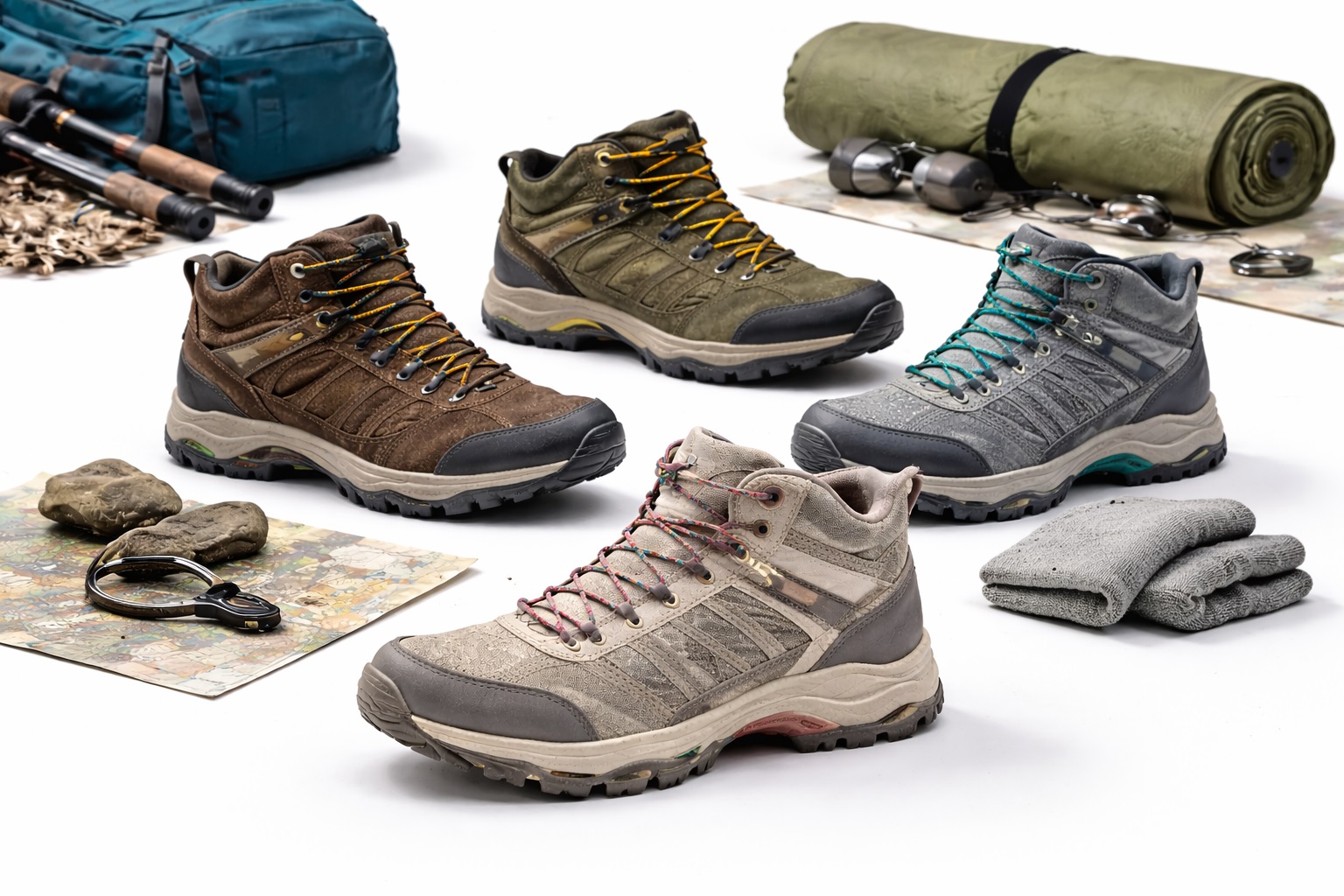
Best Hiking Boots for Beginners in 2026
Starting to hike regularly means facing a wall of gear options, and hiking boots are usually the first big purchase decision new hikers have to make. In 2026, beginners have access to boots designed specifically around comfort, easy break-in, and forgiving fit, alongside more technical options built for hikers who already know they'll be putting in serious miles. Picking the right boot early on can make the difference between a new hobby that feels enjoyable from the first hike and one that starts with sore feet and blisters.
This guide compares eight hiking boots that suit different kinds of first-time buyers, from budget-friendly, easy-to-wear options to more technical boots that make sense for beginners who already know they plan to hike often. Rather than assuming every new hiker wants the same thing, this comparison looks at fit, break-in period, price, and how forgiving each boot is for someone still learning what they like on the trail.
Below you'll find detailed reviews of each model, a practical buying guide covering what actually matters when buying your first pair of hiking boots, and answers to the questions new hikers ask most often before making a purchase.
Not every boot on this list is aimed at the same kind of beginner. Some are simple, low-commitment options meant to get you started without a big investment, while others are more technical boots that make more sense if you already know hiking is going to become a regular habit rather than a one-off activity. There's no single correct starting point, and being honest with yourself about how often you expect to hike over the next year is a more useful guide than trying to predict every future trip in advance.
Top 8 Best hiking boots Picks (Detailed Reviews)
1. Merrell Moab 3 – Best For First-Time Hikers Overall
The Merrell Moab 3 is one of the most commonly recommended hiking boots for beginners, and for good reason. Its Kinetic Fit ADV insole is designed to provide contoured support straight out of the box, which means new hikers don't have to endure weeks of painful break-in before the boot feels comfortable. At around $120, it sits at a reasonable middle price point, offering genuine hiking-boot performance without asking a first-time buyer to spend a premium price before they know how much they'll actually use the boots. Its familiar, forgiving fit is a big reason it remains a default recommendation across outdoor gear guides. Because it's so widely sold, first-time buyers can usually find it in person at outdoor retailers to try on before committing, which matters more for a first pair than for a replacement.
- Pros:
- Kinetic Fit ADV insole provides comfort with minimal break-in
- Reasonable price for genuine hiking-boot performance
- Forgiving fit works well for a wide range of foot shapes
- One of the most widely recommended hiking boots for new hikers
- Cons:
- Traction wears faster than premium rubber compounds
- Not built for technical, advanced terrain
- Limited color options in some sizes
Best For: First-time hikers who want a comfortable, dependable boot that performs well right out of the box without a steep learning curve.
Why We Recommend It: The Moab 3 tops this list for beginners because it removes the most common early frustration — a long, painful break-in period — while still delivering real hiking performance at an approachable price. It's the boot most likely to make someone's first few hikes genuinely enjoyable.
2. La Sportiva Nucleo High II – Best For Beginners Who Want Room to Grow
The La Sportiva Nucleo High II is a more technical boot than most beginners need right away, built around Nano-Cell technology that reinforces high-wear zones while keeping the boot lighter than a traditional mountaineering design. At around $240, it's one of the pricier options on this list, and it's genuinely aimed at hikers who already know they'll be tackling more demanding terrain soon rather than sticking to easy, maintained trails. For a beginner who has already decided hiking will be a serious, long-term pursuit, it offers a boot that won't need replacing as skills and ambitions grow. Beginners considering this option are usually the ones already reading gear reviews closely and planning multi-day trips within their first year or two.
- Pros:
- Nano-Cell technology reinforces durability without excess weight
- Capable of handling more demanding terrain as skills develop
- Strong reputation from a respected mountaineering brand
- Aggressive outsole grips confidently on varied terrain
- Cons:
- Higher price than most beginners need to spend on a first boot
- More technical fit and stiffness than casual trails require
- Overbuilt for easy, maintained-trail hiking
Best For: Beginners who are confident they'll hike often and want a technical boot they can grow into rather than outgrow within a season.
Why We Recommend It: For the rare beginner who already knows hiking will become a serious hobby, the Nucleo High II offers a boot that won't need an early upgrade, even though most new hikers won't need this level of capability on day one.
3. Lowa Renegade GTX – Best For Beginners Who Plan to Hike for Years
The Lowa Renegade GTX is the most expensive boot on this list at around $250, combining a Gore-Tex lining with a Vibram Evo sole built for years of regular use. It's not a typical starter boot, but for beginners who are certain they'll stick with hiking long-term and want to avoid buying a second pair within a year or two, its durability and resoleable construction can make sense as a first investment. New hikers considering this option should be honest with themselves about how often they expect to actually use it. A beginner who already owns a full pack and has multi-day trips booked is a better candidate for this boot than someone still deciding whether hiking will stick as a hobby.
- Pros:
- Gore-Tex lining provides long-lasting waterproof protection
- Vibram Evo sole delivers dependable traction for years
- Resoleable design extends the boot's usable lifespan
- Well-regarded for consistent build quality
- Cons:
- Highest price point among the boots reviewed here
- Break-in period can be frustrating for a first-time boot owner
- Overkill for beginners who hike only occasionally
Best For: Beginners who are confident hiking will become a long-term habit and want to avoid replacing their boots again within a couple of years.
Why We Recommend It: For a specific type of committed beginner, spending more upfront on the Renegade GTX can save money over time, though most first-time buyers will get more practical value from a lower-priced option on this list.
4. Salomon Quest 4 Gore-Tex – Best For New Hikers Starting With Backpacking
Not every beginner starts with simple day hikes — some jump straight into backpacking trips with a loaded pack, and the Salomon Quest 4 Gore-Tex is built with that scenario in mind. Its Descent Control technology is designed to add stability on steep descents, which can be reassuring for a new hiker who isn't yet confident navigating uneven terrain with weight on their back. At around $230, it's a significant investment for a first boot, but it's a reasonable choice for beginners whose first hiking experiences involve real pack weight rather than short, unloaded walks. Beginners planning a guided multi-day trip as their introduction to hiking are a more natural fit for this boot than someone easing in with local day hikes.
- Pros:
- Descent Control technology adds stability for new backpackers
- Gore-Tex membrane offers dependable waterproofing
- Supportive build suited to loaded, multi-day trips
- Reputable brand with strong trail-tested heritage
- Cons:
- Higher price point than most beginners need for day hiking
- Stiffer chassis takes longer to break in
- More boot than casual, occasional hikers typically require
Best For: Beginners whose first hiking experiences will involve backpacking with a loaded pack rather than short, casual day hikes.
Why We Recommend It: For the specific beginner who is starting with backpacking rather than easy day hikes, the Quest 4's added stability and support can genuinely help build confidence on more demanding terrain from the start.
5. Timberland White Ledge – Best For Budget-Friendly First Boots
The Timberland White Ledge is one of the most accessible ways to try hiking boots without a large upfront investment. At around $90, it's the most affordable option on this list, and its premium full-grain leather upper still delivers genuine durability despite the low price. For beginners who aren't sure yet how often they'll actually hike, it offers a low-risk way to get a real hiking boot rather than making do with sneakers or casual shoes on the trail. Its classic look also means it doubles easily as everyday footwear, so the investment doesn't feel wasted even if hiking turns out to be an occasional activity rather than a weekly one.
- Pros:
- Lowest price point among the boots reviewed here
- Premium full-grain leather upper is durable for the price
- Backed by a well-established, widely trusted brand
- Comfortable for both trail use and casual daily wear
- Cons:
- Heavier than more modern lightweight designs
- Requires a modest break-in period before long hikes
- Limited color and style options
Best For: Beginners who want to try a real hiking boot without a large upfront investment while they figure out how often they'll actually use it.
Why We Recommend It: The White Ledge is one of the easiest recommendations for anyone unsure how serious their new hobby will become, offering genuine durability and comfort at a price that doesn't punish a false start.
6. Hoka Anacapa Mid – Best For Beginners Who Want Maximum Comfort
The Hoka Anacapa Mid brings the brand's signature maximalist cushioning to a hiking boot, which can be a welcome relief for beginners whose feet aren't yet conditioned to long days on trail. Its Late-stage Meta-Rocker geometry is designed to encourage a smooth, rolling stride, reducing some of the fatigue that new hikers often feel earlier than experienced ones. Priced at around $185, it's a mid-to-premium option, aimed at beginners who prioritize immediate comfort over a more traditional, rugged boot feel. Beginners coming from running or walking shoes often find this boot feels the most familiar underfoot of anything on this list.
- Pros:
- Late-stage Meta-Rocker design supports a smooth, comfortable stride
- Generous cushioning reduces fatigue for feet new to hiking
- Modern, approachable design for hikers new to the sport
- Waterproof construction suited to a range of trail conditions
- Cons:
- Higher price than entry-level competitors
- Cushioned platform may feel less stable on technical terrain
- Rocker geometry takes some adjustment for new wearers
Best For: New hikers who want maximum underfoot comfort while their feet and legs adjust to regular hiking.
Why We Recommend It: For beginners whose biggest early complaint is sore feet, the Anacapa Mid's plush cushioning can make the difference between dreading the next hike and looking forward to it.
7. Keen Targhee III – Best For Beginners With Wide or Sensitive Feet
The Keen Targhee III's wide toe box makes it a strong option for beginners who have struggled with narrower boots pinching or rubbing during early hikes. Its Keen.Dry waterproof membrane keeps moisture out while still allowing some breathability, and the boot's roomier fit tends to be more forgiving for hikers who aren't yet sure exactly how their feet behave over long distances. At around $165, it's priced above the most basic options but reflects its purpose-built, trail-specific construction. Beginners who have previously given up on hiking boots because of foot pain are often surprised by how much a wider toe box changes their experience.
- Pros:
- Roomy toe box suits beginners with wide or sensitive feet
- Keen.Dry waterproof membrane built for varied conditions
- Durable, trail-specific construction
- Forgiving fit reduces early blister risk
- Cons:
- Higher price point than entry-level waterproof boots
- Wider fit may not suit hikers with narrow feet
- Break-in period recommended before long trips
Best For: Beginners with wide or sensitive feet who have struggled with discomfort in narrower hiking boots.
Why We Recommend It: For new hikers whose early experiences have been marred by pinching or rubbing, the Targhee III's roomier fit can solve a problem that keeps some beginners from sticking with the hobby.
8. Columbia Newton Ridge – Best For Casual, Occasional New Hikers
The Columbia Newton Ridge is well suited to beginners who plan to hike occasionally rather than every weekend. Its Omni-Grip traction system provides dependable grip on moderate trails, and its suede leather and mesh construction keeps the boot lighter and easier to wear than full-leather alternatives. At around $100, it's one of the more affordable options here, making it a reasonable low-commitment choice for hikers who aren't ready to invest heavily before knowing how much they'll actually use the boots. It's a sensible option for someone who hikes mainly on weekend trips with family or friends rather than as a dedicated, frequent pursuit.
- Pros:
- Omni-Grip traction performs well on moderate trails
- Lightweight build compared to full-leather boots
- Affordable entry point into hiking footwear
- Reputable, widely available outdoor brand
- Cons:
- Not designed for heavy backpacking loads
- Style options are relatively limited
- Less structured support than more technical boots
Best For: Beginners who plan to hike occasionally and want an affordable, comfortable boot for moderate trail conditions.
Why We Recommend It: For casual, occasional hikers just getting started, the Newton Ridge offers dependable performance without asking for a large financial commitment before the hobby has proven itself.
Buying Guide: How to Choose the Best Hiking Boots for Beginners
Buying your first pair of hiking boots involves a different set of priorities than shopping for a replacement pair once you know your preferences. Here's what actually matters for new hikers making their first purchase.
1. Boots vs. Trail Shoes: What Beginners Actually Need
Not every beginner needs a full boot. Lower-cut hiking shoes offer more flexibility and less weight, which suits easy, well-maintained trails, while boots provide more ankle support and protection for uneven or longer routes. Thinking honestly about the trails you'll actually start on helps avoid overbuying. Many beginners assume they need the most rugged option available, when a simpler shoe would actually suit their first few outings better.
2. Getting the Right Fit as a First-Time Buyer
A properly fitted hiking boot should leave a small amount of room in the toe box while holding the heel snugly in place. First-time buyers often make the mistake of choosing based on street shoe size alone rather than trying boots on with the socks they'll actually wear hiking. Hiking boot sizing can also differ noticeably from everyday shoe sizing, even within the same brand.
3. Ankle Support: How Much Do New Hikers Need
Mid or high-cut boots offer more ankle support, which can be reassuring for beginners still building confidence on uneven terrain. That said, ankle support isn't strictly necessary for every beginner, particularly those starting on flat, well-maintained trails. As trails get rockier or more uneven, that added ankle support tends to matter more.
4. Break-In Period and Why It Matters More for Beginners
New hikers often don't realize that many boots need a short break-in period before they feel fully comfortable. Wearing new boots around the house or on short walks before a first real hike helps avoid painful surprises on the trail. Skipping this step is one of the most common reasons first hikes end in blisters rather than enthusiasm.
5. Understanding Waterproofing Before You Buy
Waterproof boots add protection against rain and puddles but can feel warmer on hot days. Beginners hiking primarily in dry conditions may not need waterproofing as urgently as those expecting wet trails or unpredictable weather. Checking the typical weather and trail conditions where you plan to hike is a more useful guide than defaulting to waterproof out of habit.
6. Sock Choice for New Hikers
Cotton socks tend to hold moisture and increase blister risk, while wool or synthetic hiking socks wick moisture away from the skin. This is a small detail that makes a noticeable difference for beginners still learning what causes discomfort on the trail. Packing an extra pair of socks on early hikes is a simple habit that prevents a lot of avoidable discomfort.
7. Budget vs. Long-Term Hiking Plans
It's reasonable for beginners to start with a lower-priced boot until they know how often they'll actually hike, rather than investing heavily in a premium pair before the hobby has proven itself. Boots can always be upgraded once your hiking habits become clearer. Treating a first pair as a trial run, rather than a lifetime purchase, takes some of the pressure off the decision.
8. Common Mistakes First-Time Boot Buyers Make
Buying boots a size too small, skipping the break-in period, and choosing based on looks rather than fit are among the most common mistakes beginners make. Taking the time to try boots on properly avoids most of these issues. Asking staff at an outdoor retailer for a fit check costs nothing and often catches problems before they become blisters.
9. Reading Product Descriptions and Marketing Terms
Terms like "waterproof," "breathable," and "lightweight" all have specific meanings that vary between brands. Understanding what these terms actually indicate helps beginners compare boots more accurately rather than relying on marketing language alone. Reading a few independent reviews alongside the product description rounds out the picture further.
10. Trying Boots on the Right Way
Trying boots on later in the day, when feet are naturally slightly more swollen, and walking around on an incline if possible, gives a more realistic sense of fit than a quick standing try-on. Bringing your own hiking socks to the store, rather than relying on thin dress socks, also gives a more accurate fit test.
11. Starting on Easier Trails Before Upgrading
Beginners don't need the most technical boot available to get started. Starting on easier, well-maintained trails with a comfortable, forgiving boot allows new hikers to build skills and confidence before deciding whether a more advanced boot is actually necessary. Rushing into technical gear too early can actually make early hikes harder rather than easier.
12. Caring for Your First Pair of Hiking Boots
Simple habits like cleaning off mud after hikes, allowing boots to air dry away from direct heat, and storing them somewhere dry all extend the life of a first pair of boots without requiring specialized knowledge. These small habits matter more than any specific cleaning product you might buy.
13. When to Consider Upgrading From Your First Boots
Once a beginner has a clearer sense of how often they hike, what terrain they prefer, and what fit issues they've encountered, it becomes much easier to choose a second pair suited to their actual hiking style rather than guessing again. That second purchase is usually far more confident and satisfying than the first one was.
Frequently Asked Questions
Do beginners need hiking boots or can hiking shoes work?
For easy, well-maintained trails, lower-cut hiking shoes can work fine. Boots become more useful as trails get longer, rougher, or more uneven, so the right choice depends on where you plan to start hiking. If you're unsure, starting with a mid-cut boot offers a reasonable middle ground between the two.
How much should a first pair of hiking boots cost?
A solid first pair typically costs between $90 and $150, which is enough to get genuine hiking-boot performance without a large financial commitment before you know how often you'll use them.
How do I know if hiking boots fit correctly?
A well-fitted boot leaves a small amount of room in the toe box, holds the heel snugly without slipping, and doesn't pinch anywhere when you walk. Trying boots on with your intended hiking socks is the best way to confirm fit, and walking on an incline in the store, if one is available, can reveal issues a flat floor won't show.
Do new hikers need waterproof boots right away?
Not necessarily. If you're starting on dry, maintained trails, waterproofing is less urgent. It becomes more valuable once you start hiking in wetter conditions or less predictable weather.
How long does it take to break in new hiking boots?
This varies by boot, but wearing new boots around the house and on a few short walks before a longer hike is a reasonable way to identify comfort issues early, regardless of the specific boot.
What socks should beginners wear with new hiking boots?
Wool or synthetic hiking socks are generally recommended over cotton, since they wick moisture away from the skin and reduce the risk of blisters during longer hikes.
Is ankle support necessary for beginner hikers?
It depends on the terrain. Ankle support is more valuable on uneven or rocky trails, while beginners sticking to flat, maintained paths may not need it as urgently.
Can I hike in running shoes instead of hiking boots?
For very short, easy, flat trails, running shoes can work in a pinch, but they typically lack the traction and support that hiking-specific footwear provides on rougher terrain.
How often should beginners replace their hiking boots?
This depends heavily on how often you hike, but most hiking boots show visible wear in the outsole and support structure after roughly a few hundred miles of regular use. Checking the tread depth periodically is a simple way to judge remaining life.
Should I buy hiking boots online or in person as a beginner?
Trying boots on in person is generally recommended for a first purchase, since fit varies significantly between brands and models in ways that are hard to judge from photos alone.
What's the biggest mistake beginners make buying boots?
Choosing a boot based on appearance or price alone, without properly trying it on with hiking socks, is one of the most common mistakes that leads to discomfort on early hikes.
Do heavier boots mean better quality?
Not necessarily. Weight often reflects the type of materials and support structure used, but modern lightweight boots can offer excellent quality and durability without the extra bulk of traditional designs.
How do I care for hiking boots as a beginner?
Cleaning off dirt and mud after hikes, letting boots air dry away from direct heat, and storing them somewhere dry are simple habits that extend the life of any hiking boot.
Final Verdict
- Top Pick: Merrell Moab 3 for a comfortable, low-commitment break-in and dependable all-around performance.
- Budget Choice: Timberland White Ledge for an accessible way to try real hiking boots without a large upfront investment.
- Premium Choice: Lowa Renegade GTX for beginners who are already certain hiking will become a long-term habit.
Most beginners don't need to spend a lot of money or buy the most technical boot available to get started. The Merrell Moab 3 remains the most sensible starting point for the majority of new hikers thanks to its comfortable, low break-in fit and reasonable price, while the Timberland White Ledge offers an even lower-risk way to try hiking boots for the first time. Only hikers who are already confident they'll stick with the hobby long-term should consider spending more upfront on a boot like the Lowa Renegade GTX. Whichever boot you choose, prioritizing comfort and proper fit over technical features will matter far more in your first season of hiking.