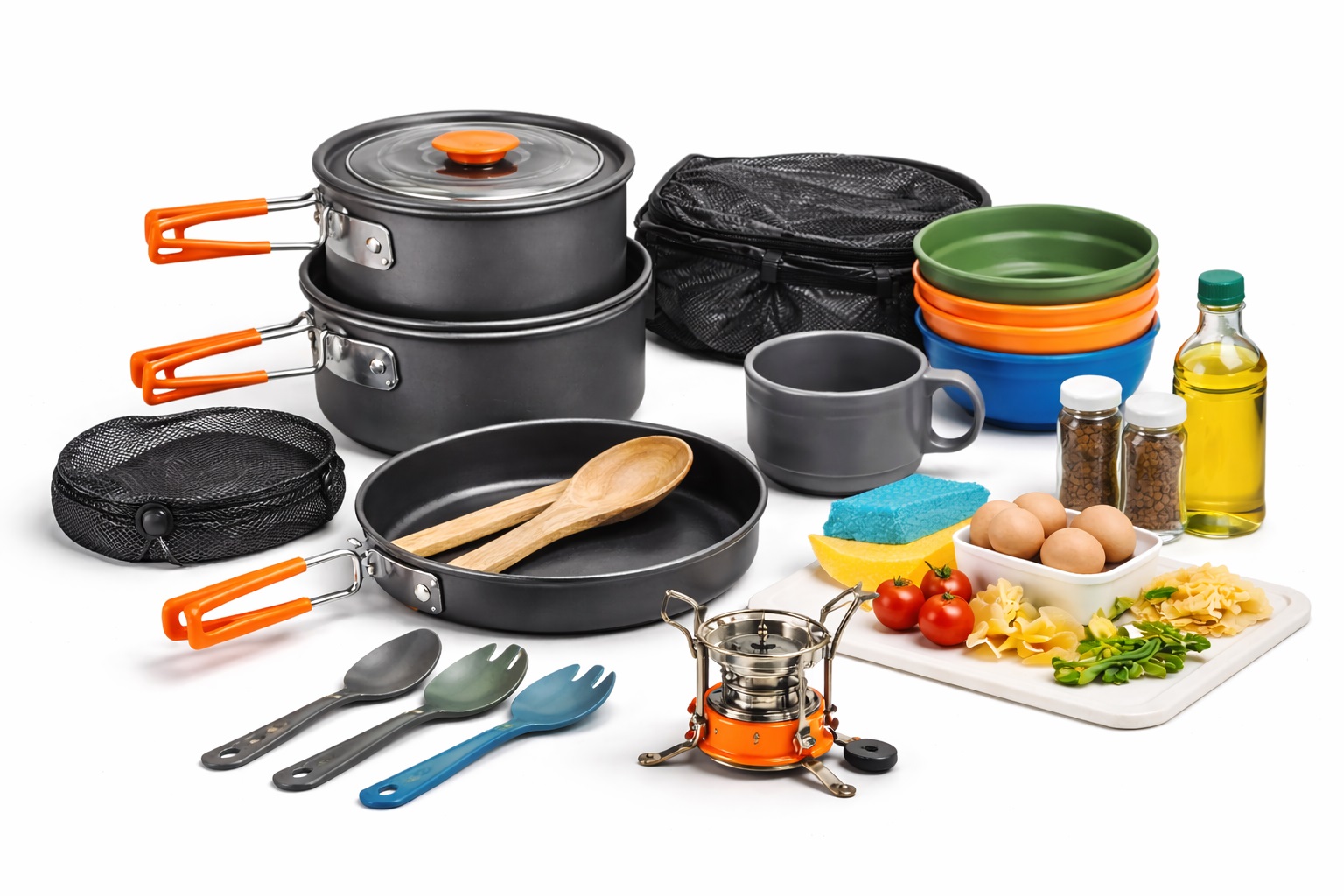
Best Compact Camping Cookware Set in 2026
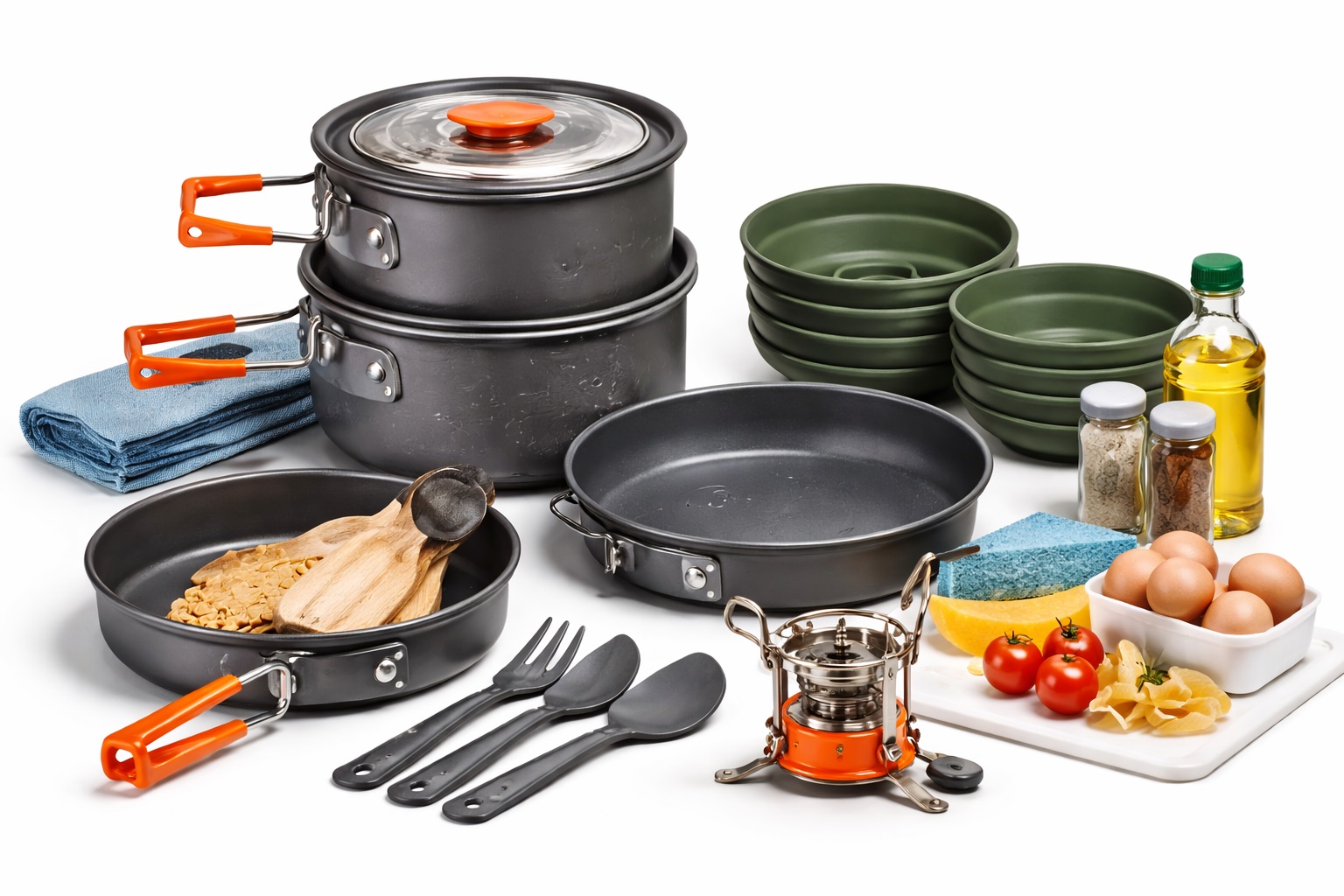
Packing light without giving up a decent hot meal is one of the enduring challenges of outdoor cooking, and it comes down almost entirely to the camping cookware you choose. A set built with space saving in mind nests tightly, straps flat against a pack, and still gives you enough capacity to boil water, simmer a meal, and clean up without hassle. This guide compares the top compact cookware sets on the market, looking at how each one balances footprint, material, and everyday usability.
Whether you are backpacking for a weekend, car camping with the family, or simply want a set that stores neatly in a small kitchen drawer between trips, the right cookware makes meal prep faster and your pack lighter. Below you will find detailed breakdowns of eight widely available sets, followed by a full buying guide and answers to the questions shoppers ask most often before choosing a compact cookware system.
Compact does not have to mean cramped. The sets covered here range from single-pot ultralight kits meant for one hungry hiker to fuller kitchen bundles designed for a group, and each takes a different approach to shrinking its footprint, whether through lightweight titanium, clever nesting geometry, or a collapsible body that folds nearly flat. Reading through how each design trades off weight, capacity, and price will help you match a set to the way you actually camp rather than buying based on marketing alone.
It also helps to think about how your cookware fits into your broader packing system. A pot that nests perfectly with your stove and fuel canister, and slides neatly next to your food bag, saves more real pack space than a slightly lighter pot that rattles around on its own. Keep that whole-system view in mind as you compare the picks below.
Top 8 Best camping cookware Picks (Detailed Reviews)
1. Snow Peak Trek 1400 – Best For Overall Balance
The Snow Peak Trek 1400 pairs a titanium pot with a compact lid-and-handle system that folds flat for storage. Its titanium build keeps the set light while still standing up to years of regular use, which is why it remains a benchmark choice for campers who want one set that does most things well. The pot's proportions are wide enough to cook a real meal in, yet the whole unit still collapses down small enough to disappear into the bottom of a pack alongside a stove and fuel canister.
- Pros:
- Premium titanium construction resists dents and corrosion
- Folding handle and stackable design shrink packed volume
- Backed by a well-established, reputable outdoor brand
- Cons:
- Costs more than aluminum or steel alternatives
- Limited to a single finish and size option
Best For: Backpackers who want a single titanium set that covers boiling, cooking, and packing efficiency without added bulk.
Why We Recommend It: Titanium's strength-to-weight ratio means this set holds its shape trip after trip while remaining one of the lighter options in this lineup, making it a dependable all-rounder for space-conscious travelers who do not want to compromise between weight and durability.
2. MSR Alpine 2 Pot Set – Best For Group Car Camping
MSR's Alpine 2 Pot Set uses hard-anodized aluminum, a material prized for even heat distribution and scratch resistance. The two-pot design nests together with lids doubling as strainers, giving small groups more cooking capacity in a footprint that still fits in a single gear tote. Because the pots share a common diameter, they stack with almost no wasted air space, which is part of why the set still counts as compact despite offering two full-sized cooking vessels.
- Pros:
- Hard-anodized aluminum spreads heat evenly and resists scratching
- Two nesting pots add capacity without doubling the storage space
- Reputable brand with a long track record in cookware
- Cons:
- Priced higher than single-pot compact kits
- Only available in one color scheme
Best For: Small groups or families who need two cooking vessels but still want everything to pack into one compact bundle.
Why We Recommend It: The nested two-pot format is one of the more efficient ways to add real cooking capacity while keeping the whole kit compact enough for a single storage sack, which matters when trunk or pack space is already tight.
3. Toaks Titanium 750ml – Best For Ultralight Solo Trips
The Toaks Titanium 750ml is built around a single ultralight titanium pot sized for one person. It is one of the smallest and lightest options here, designed for hikers who count every gram and want their cookware to disappear into the bottom of a pack. There is no lid latch, folding tripod, or extra hardware to speak of, just a pot, a lid, and a wire handle, which keeps both the weight and the price down.
- Pros:
- Ultralight titanium construction shaves weight from your base pack load
- Compact 750ml size is easy to tuck into small pack pockets
- Simple single-pot design with fewer parts to lose
- Cons:
- Titanium sets typically cost more per liter of capacity than aluminum
- Small capacity is limiting for more than one person
Best For: Solo hikers and minimalist backpackers who prioritize pack weight above all else.
Why We Recommend It: At this size and weight, the Toaks 750ml is about as small as cookware gets while still holding enough water for a solo dehydrated meal or hot drink, making it a favorite among thru-hikers and minimalist campers.
4. GSI Outdoors Pinnacle – Best For Camp Cooking Comfort
The GSI Outdoors Pinnacle brings a nonstick coating and more refined cookware features to the compact category, including an insulated mug and folding utensils that nest inside the main pot. It sits at the premium end of this list, aimed at campers who want convenience alongside a small footprint rather than the barest possible setup. The extra thought that goes into how each piece stacks means the whole kit still travels as a single, tidy bundle despite including more parts than most entries here.
- Pros:
- Teflon coating makes food release and cleanup noticeably easier
- Well-organized nesting system keeps accessories contained
- Reputable brand known for thoughtful camp kitchen design
- Cons:
- The highest price point in this roundup
- Nonstick coatings need gentler utensils and cleaning care
Best For: Campers who value comfort and easy cleanup as much as compact storage.
Why We Recommend It: Few compact sets pack in this many creature comforts, and the nonstick surface alone saves considerable time on cleanup at the end of a trip, which is a real advantage after a long day on the trail.
5. Coleman Aluminum Mess Kit – Best For Budget-Minded Campers
The Coleman Aluminum Mess Kit sticks to a simple, no-frills layout: a pot, a pan, and basic utensils that nest together into a single compact bundle. It is the most affordable set on this list and a common starting point for new campers who are not yet ready to invest in titanium or specialty designs. What it lacks in refinement it makes up for in straightforward usability, since there is little to learn or adjust before your first trip.
- Pros:
- Straightforward, reliable design that is easy to use right out of the box
- Lightweight aluminum construction keeps the kit easy to carry
- Lowest price point of any set in this comparison
- Cons:
- Basic finish compared to titanium or hard-anodized options
- Fewer premium features like nonstick coating or insulated mugs
Best For: First-time campers or budget-conscious buyers who need dependable basics without extra cost.
Why We Recommend It: For the price, this kit still nests into a genuinely compact package, making it a sensible entry point before investing in pricier materials once you know how often you will actually use it.
6. Sea to Summit X-Pot – Best For Maximum Space Savings
The Sea to Summit X-Pot uses a collapsible silicone design that folds down flatter than any rigid pot on this list. When collapsed, it takes up a fraction of the space of traditional cookware, making it the standout choice for anyone whose priority is minimizing packed volume above all else. The silicone walls fold down accordion-style around a rigid base, so the pot goes from a full-size cooking vessel to something closer to the thickness of a dinner plate.
- Pros:
- Collapsible silicone body flattens to a fraction of its usable size
- Reinforced base allows direct use over a flame
- Reputable brand focused on packable outdoor gear
- Cons:
- Priced above rigid aluminum sets of similar capacity
- Silicone body requires more careful handling than metal pots
Best For: Anyone whose top priority is squeezing the smallest possible packed footprint out of their cookware.
Why We Recommend It: No other design in this list collapses as dramatically, making it the clearest choice when packed volume, rather than weight or price, is the deciding factor in your gear selection.
7. Stanley Adventure Camp – Best For Long-Term Durability
The Stanley Adventure Camp set uses stainless steel construction, trading a bit of weight for exceptional toughness. It shrugs off drops, scratches, and rough handling better than lighter materials, which makes it popular with campers who keep gear for many seasons rather than upgrading every year. The straightforward stacking design of the pots and pan still keeps the overall bundle reasonably compact, even though stainless steel is inherently a denser material than titanium or aluminum.
- Pros:
- Stainless steel resists dents, scratches, and long-term wear
- Simple construction with few failure points
- Reputable brand with a long history in rugged outdoor gear
- Cons:
- Heavier than titanium or aluminum equivalents
- Limited color options compared to newer product lines
Best For: Campers who prioritize long-term toughness over shaving every last gram.
Why We Recommend It: Stainless steel's durability means this set can handle years of camp use, car trips, and careless packing without showing much wear, which lowers the odds you will need to replace it any time soon.
8. Odoland Camping Cookware – Best For Complete Kits
The Odoland Camping Cookware set includes ten pieces, pots, pans, plates, and utensils, all nesting into one compact carrying bag. It is designed for campers who want a complete kitchen setup without shopping for pieces separately and then figuring out how to pack them all together. Everything from the largest pot down to the smallest utensil has a designated spot inside the bag, which keeps the whole kit organized between trips.
- Pros:
- Complete 10-piece set covers cooking, eating, and serving needs
- Everything nests into a single compact carry bag
- Good value given the number of included pieces
- Cons:
- Individual pieces are thinner gauge than dedicated single-pot sets
- Limited color and finish options
Best For: Families or groups who want an all-in-one kitchen kit rather than assembling separate pieces.
Why We Recommend It: Few sets pack this many usable components into one compact bag, making it efficient for anyone outfitting a full camp kitchen at once rather than buying pots, pans, and utensils separately.
Buying Guide: How to Choose the Best Compact Camping Cookware
1. Material and Heat Conduction
Titanium, aluminum, and stainless steel each behave differently over a flame. Titanium is light and durable but can heat unevenly, developing hot spots that scorch food if you are not stirring often. Aluminum, especially when hard-anodized, conducts heat quickly and evenly, which makes it more forgiving for actual cooking rather than just boiling water. Stainless steel is the toughest but heaviest of the three, and it also tends to conduct heat less evenly than aluminum.
Your choice should match how often you cook delicate food versus simply boiling water for freeze-dried meals or hot drinks. If you mostly boil water, titanium's minor heat distribution quirks rarely matter. If you plan to simmer sauces or fry food at camp, aluminum's more even heating will likely serve you better.
2. Packed Size and Weight
Compact cookware is judged on two separate metrics: how much it weighs and how small it folds down. A set can be light but bulky, or heavy but tiny when collapsed, so check both figures rather than assuming one implies the other. Manufacturer listings usually include packed dimensions, which are worth comparing directly against your pack's available space.
Weight matters most for anyone hiking long distances with everything on their back, while packed size matters more when storage space, not shoulder fatigue, is the limiting factor, such as when fitting gear into a shared vehicle or a small storage tote at home.
3. Nesting Efficiency
The best compact sets are designed so pots, lids, and accessories stack inside one another with minimal wasted air space. Look for sets explicitly marketed around nesting design rather than ones simply bundled together in a bag with no thought given to how the pieces fit together.
Good nesting design also tends to reduce rattling and noise while hiking, since well-fitted pieces sit snugly against one another instead of clanking around loosely inside a stuff sack.
4. Capacity for Your Group Size
A solo hiker needs far less capacity than a family car camping for a week. Match the total volume of your set to how many people you are regularly cooking for, since oversized cookware defeats the purpose of buying a compact option in the first place.
As a rough guide, a single pot in the 500ml to 900ml range suits one person, while multi-pot sets or larger single vessels in the 1.5 to 2.5 liter range are more appropriate for two to four people sharing meals. If your group size varies from trip to trip, a two-pot nesting set tends to be the more flexible choice, since you can use just the smaller pot solo or both together for a larger group.
5. Coatings and Nonstick Surfaces
Nonstick coatings make cleanup faster and reduce water usage at camp, which matters when you are trying to conserve what you are carrying or minimize your impact at a campsite. But they require gentler utensils and more careful storage to avoid scratches that shorten the coating's effective lifespan.
Decide whether the convenience is worth the added care. For car camping trips where you can pack silicone or wooden utensils and stack cookware carefully, nonstick coatings tend to be a clear win.
6. Handle and Lid Design
Folding or detachable handles reduce packed size significantly compared to fixed handles that stick out and prevent tight stacking. Lids that double as strainers, plates, or measuring guides add function without adding bulk, since they serve more than one purpose for the same amount of packed space.
Check how securely a folding handle locks in place, since a loose or wobbly handle can be an inconvenience, and in some cases a minor safety concern, when lifting a pot full of boiling water.
7. Stove Compatibility
Confirm that your cookware's base works with your stove type, whether that is a canister stove, an integrated system, or an open campfire. Wide, flat bases generally perform better on car-camping stoves with larger burner rings, while narrower pots suit backpacking burners better and are less prone to tipping.
If you use an integrated canister stove system, check whether your cookware's diameter is close enough to the stove's burner for efficient heat transfer, since a mismatch can waste fuel and slow down cooking times.
8. Included Accessories
Some sets include bowls, mugs, or utensils nested inside the main pot, while others are just a pot and lid. Decide whether you want a complete kit or plan to mix and match pieces from different brands based on your own preferences.
Buying a complete kit is usually more convenient and often cheaper than assembling the same components individually, but it can also mean carrying pieces you rarely use, such as an extra bowl or plate on a solo trip.
9. Durability Over Repeated Trips
Consider how the set will hold up to years of packing, unpacking, and rough handling. Thicker-gauge metal and reinforced seams generally last longer, even if they add a small amount of weight compared to the thinnest, lightest options on the market.
If you camp frequently or lend gear to family members, durability tends to matter more than shaving the last few grams, since a set that needs replacing every season ultimately costs more over time.
10. Ease of Cleaning
Look for smooth interior surfaces, wide openings, and removable parts that make scrubbing at a campsite or in a small sink easier. Cookware that is difficult to clean tends to get used less often, since nobody enjoys scraping burnt food out of a narrow pot with limited water.
Wide-mouth pots also dry faster after washing, which reduces the chance of packing away damp cookware that can develop odors or, in rare cases, rust on steel components.
11. Price Versus Long-Term Value
Compact cookware spans a wide price range. Cheaper aluminum kits are a reasonable starting point, while titanium and specialty collapsible designs cost more upfront but often last longer and pack smaller, which can make them a better long-term value for frequent campers.
Think about cost per trip rather than just the sticker price. A pricier set used for a decade may work out cheaper overall than replacing a budget kit every couple of seasons.
12. Matching the Set to Your Trip Style
Ultralight backpacking, car camping, and everyday outdoor use all call for different priorities. Backpackers should weight packed size and weight most heavily, while car campers can prioritize capacity and comfort features since weight is far less of a constraint when driving to a campsite.
If you switch between trip styles, consider owning two sets, an ultralight single-pot kit for long hikes and a fuller set for car camping, rather than trying to force one set to do both jobs well.
13. Brand Reputation and Support
Established outdoor cookware brands tend to offer more consistent quality control and better customer support if a piece is defective or wears out prematurely. Checking a brand's track record is a useful final filter once you have narrowed down material and size.
Reading verified owner reviews, not just marketing copy, can reveal recurring issues like handles loosening over time or coatings wearing unevenly, details that are easy to miss from product photos alone.
Frequently Asked Questions
What is the best material for compact camping cookware?
It depends on your priorities. Titanium offers the best strength-to-weight ratio and resists corrosion well, aluminum conducts heat most evenly and tends to cost less, and stainless steel is the most durable but heaviest option of the three common materials.
Is titanium or aluminum better for camping pots?
Titanium is lighter and more corrosion-resistant, while aluminum is usually cheaper and heats more evenly across the base of the pot. Many backpackers choose titanium for weight savings on long trips, while car campers often prefer aluminum for its cooking performance and lower cost.
How many pieces do I actually need?
A single pot and lid is enough for boiling water and simple one-pot meals, which covers the needs of most solo hikers. Larger groups or campers who want to cook more elaborate meals benefit from multi-piece sets with separate pans and serving pieces.
Can compact camping cookware be used on a home stove?
Many aluminum and stainless steel camping pots work fine on a home stovetop, though ultralight titanium pots are generally designed for camp stoves and open flames rather than daily kitchen use, since their thin walls can warp on some high-output home burners.
How do I clean titanium cookware?
Titanium generally cleans easily with warm water and a soft sponge. Avoid abrasive scrubbers on any nonstick-coated pieces, and dry cookware fully before packing it away to prevent lingering odors or moisture buildup inside a sealed storage bag.
Is nonstick coating safe for camping?
Yes, modern nonstick coatings used in outdoor cookware are considered safe for normal cooking use. Just avoid metal utensils and excessive high heat over an open flame, both of which can shorten the coating's lifespan over repeated trips.
What size pot is best for solo backpacking?
Most solo hikers find a 500ml to 900ml pot sufficient for boiling water and preparing single-serving meals, which is why compact ultralight pots in that range remain some of the most popular options for thru-hikers and weekend backpackers alike.
Do collapsible silicone pots actually work well?
Collapsible pots with reinforced metal bases can be used directly over a flame and offer the smallest packed size of any cookware style, though they require more careful handling and a bit more attention while cooking than rigid metal pots.
How much should I spend on camping cookware?
Reliable aluminum sets start in the budget range and cover most casual camping needs, while titanium and specialty collapsible designs cost more. Choosing based on how often you camp and how much you prioritize weight and packed size is a reasonable way to set a budget.
Can camping cookware go in a dishwasher?
Most manufacturers recommend hand washing camping cookware, especially anodized aluminum and nonstick pieces, since dishwasher detergents and prolonged heat exposure can degrade coatings and finishes over time.
What is the difference between a mess kit and a full cookware set?
A mess kit typically includes a pot, pan, and personal eating utensils for one or two people, while a full cookware set often adds extra pots, bowls, and serving pieces designed for larger groups sharing meals together. Mess kits are generally the more compact and portable option of the two.
How do I store cookware to save space in my pack?
Nest smaller items like mugs, utensils, and spice containers inside your main pot before packing, and choose sets specifically designed with stackable dimensions to minimize wasted space inside your pack or storage bag.
How long does quality camping cookware last?
With reasonable care, titanium and stainless steel cookware can last many years of regular use, while lighter aluminum pieces may show cosmetic wear sooner but remain functional for a long time with proper cleaning and dry storage.
Final Verdict
- Top Pick: Sea to Summit X-Pot for the smallest possible packed footprint.
- Budget Choice: Coleman Aluminum Mess Kit for reliable basics at the lowest price.
- Premium Choice: GSI Outdoors Pinnacle for nonstick convenience and refined camp kitchen features.
There is no single best compact cookware set for every camper, but matching your priorities, whether that is packed size, weight, durability, or comfort, to the strengths of each design above will steer you toward the right choice. The collapsible Sea to Summit X-Pot earns the overall recommendation here for anyone who genuinely needs the smallest possible footprint, while the Coleman kit remains a smart low-cost starting point and the GSI Pinnacle rewards buyers willing to pay more for a noticeably more comfortable cooking experience at camp. Whichever set you land on, prioritize how it nests with the rest of your kitchen gear over any single spec sheet number, since real-world packed volume is what actually determines whether a set earns its place on your next trip.