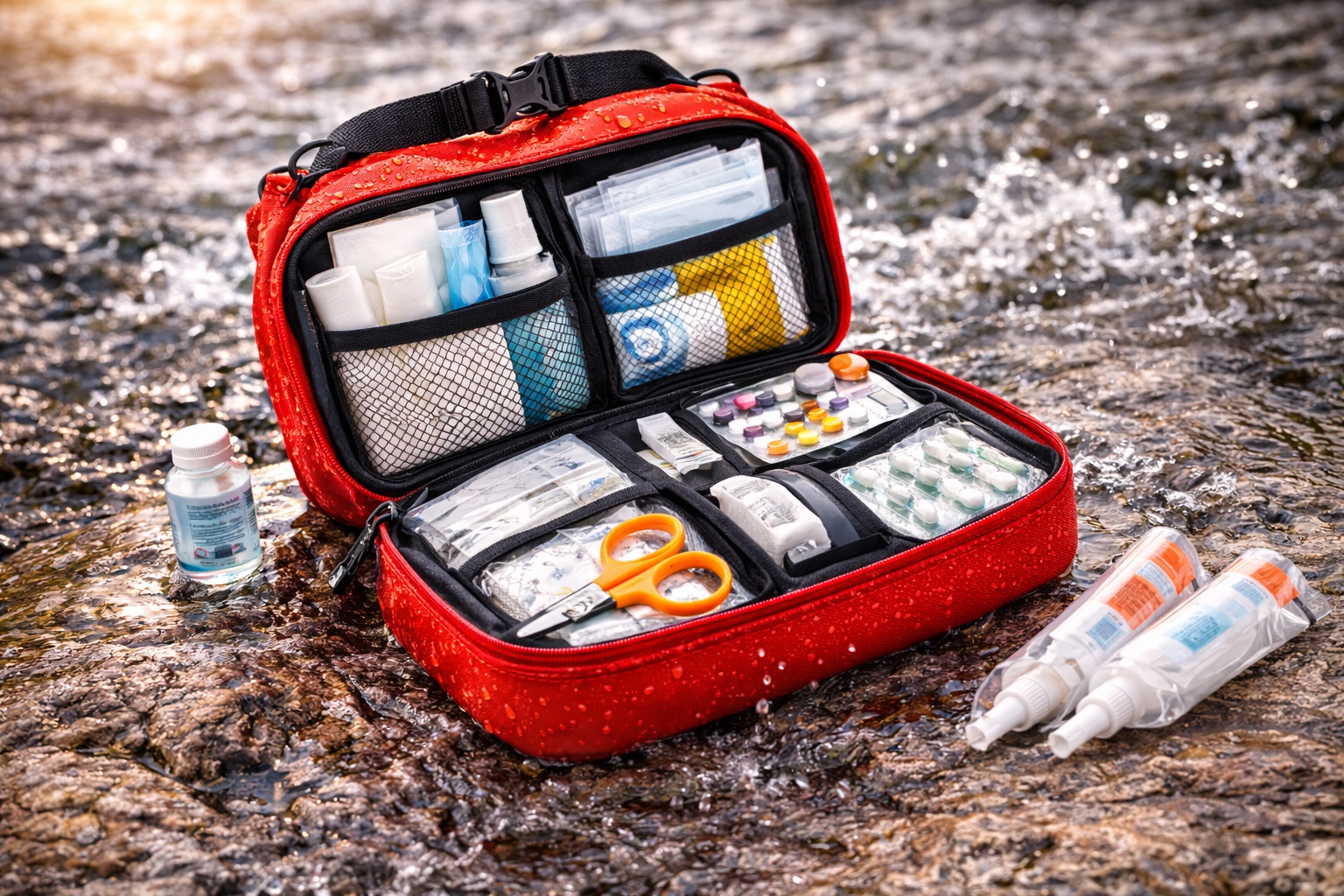
Best Waterproof First Aid Kit in 2026
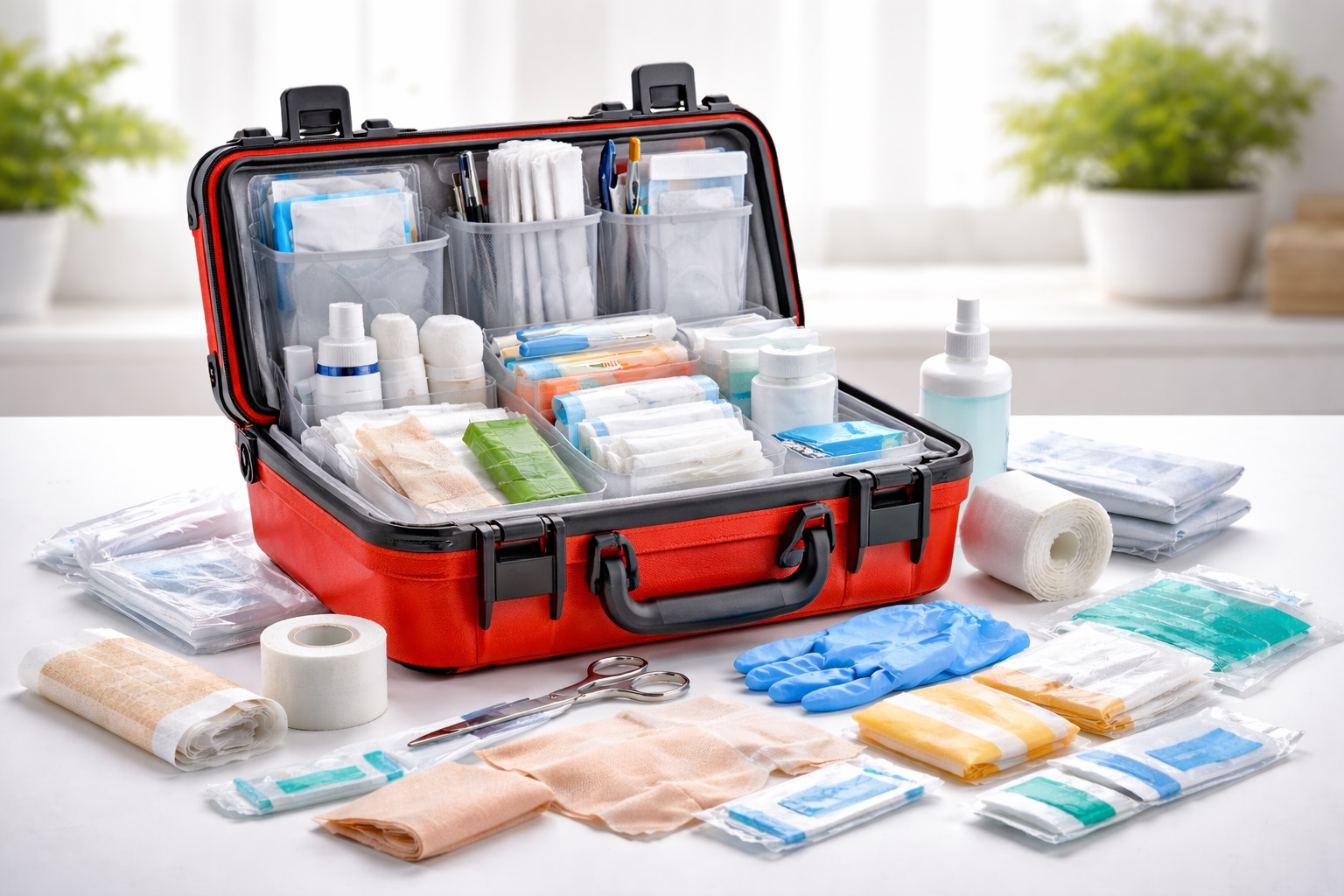
A first aid kit only earns its keep if it still works after it gets rained on, dunked in a cooler, or dropped in a puddle at the trailhead. That is the entire premise behind a waterproof first aid kit: the supplies inside stay dry, sterile, and usable no matter what the outside case has been through. In 2026, more households and outdoor enthusiasts are prioritizing wet-environment protection over generic drugstore kits, because a soggy adhesive bandage or a waterlogged gauze pad is functionally useless right when you need it most.
This guide compares the top waterproof and water-resistant first aid kits on the market, focusing on case construction, seal quality, and how well each one balances protection with practical, everyday usability. Whether you need something for a kayak trip, a job site, a camping bag, or simply a garage that floods every spring, the right kit should keep its contents dry without turning into a bulky, awkward brick you never want to carry.
Not every kit labeled "outdoor" or "rugged" actually resists water in a meaningful way, and the difference between marketing language and real protection usually comes down to the case material, the seal or closure system, and how the manufacturer packages individual items inside. A cardboard box of bandages wrapped in a nylon sleeve is a very different product from a gasketed hard case or a roll-top dry bag, even if both get marketed toward the same outdoor crowd.
Below you will find detailed reviews of eight well-regarded first aid kits, a buying guide that walks through everything worth checking before you buy, and answers to the questions people ask most often about waterproof medical kits. We have grouped the picks by what each one does best, since no single kit dominates every category from price to portability to raw water resistance.
It also helps to think about waterproofing as one layer of a broader durability question rather than an isolated feature. A case that keeps water out but cracks the first time it is dropped is not much more useful than one that stays intact but lets moisture seep in through a poorly sealed zipper. The strongest picks in this category tend to combine a resilient shell or bag material with genuine attention to seams, seals, and closures, and pricing usually reflects how much engineering has gone into solving both problems at once rather than just one of them.
Top 8 Best First Aid Kit Picks (Detailed Reviews)
1. Surviveware Small Kit – Best For Organized Fast Response
The Surviveware Small Kit is built around labeled compartments that let you find exactly what you need in seconds, which matters just as much in a wet environment as a dry one, since fumbling through a disorganized bag while gear gets rained on only makes things worse. The internal pouches keep supplies sorted by category, so bandages, wound care, and trauma items each have their own space. At around $40, it sits in the middle of the pack price-wise, but the labeling system and compact modular layout make it a dependable everyday choice for hikers, commuters, and families who want speed and structure over raw water sealing. In practice, the sectioned interior also makes it easier to spot when supplies are running low, since an empty labeled pocket stands out far more than a jumbled pile of loose bandages at the bottom of a generic pouch. Many owners also appreciate how easy it is to hand the kit to someone else in an emergency, since the labeling removes the need to explain where anything is stored.
- Pros:
- Clearly labeled compartments speed up emergency response
- Compact, well-organized modular layout
- Reputable, widely trusted brand in the outdoor space
- Cons:
- Not fully submersible in the way a dry-bag style kit is
- Limited color and size options
Best For: Hikers and families who want a fast, organized response over maximum waterproofing.
Why We Recommend It: The labeled compartment system reduces fumbling during stressful moments, and the compact build travels well in a pack or car without adding much bulk.
2. General Medi Kit – Best For Rugged Hard-Case Protection
General Medi takes a different approach with a hard-shell exterior designed to shrug off drops, pressure, and splashes. That rigid case protects the contents from being crushed in a trunk or gear bag, and it holds up better against puddles and light rain than a soft nylon pouch would. Priced around $35, the General Medi Kit is a solid mid-range pick for anyone who wants a kit that can be tossed in a truck bed or boat storage compartment without worrying about it caving in. The hard shell also does double duty as a barrier against dust and grit, which matters for job sites and garages just as much as it does for water exposure, since fine debris can work its way into softer cases over time. The rigid exterior also makes it easier to stack alongside other gear boxes without worrying about the case losing its shape.
- Pros:
- Hard case resists crushing and impact damage
- Better splash resistance than soft-sided alternatives
- Reputable brand with consistent build quality
- Cons:
- Hard shell adds some bulk compared to soft kits
- Limited color options
Best For: Boats, trucks, and storage compartments where the kit might get bumped or splashed.
Why We Recommend It: A hard case is one of the simplest ways to keep water and impact damage away from sensitive supplies, and this kit delivers that at a reasonable price.
3. First Aid Only 299 Piece – Best For Comprehensive Supply Coverage
With 299 individual pieces, this kit is built for volume rather than a single specialty feature. That comprehensive supply range means you are far less likely to run out of a specific bandage size or wound care item mid-trip, which is especially useful for wet environments where dressings can get soaked through and need replacing more often than usual. At around $25, it is one of the more affordable options here while still covering a wide range of everyday injuries. For households that go through bandages quickly, whether from active kids, workshop nicks, or general wear and tear, having a deep supply on hand reduces how often you need to restock mid-season. It also makes a practical shared kit for a garage, workshop, or classroom where several people draw from the same supply.
- Pros:
- Comprehensive supply range with hundreds of individual items
- Good value for the number of supplies included
- Reputable brand commonly found in workplace settings
- Cons:
- Case itself is not heavily weatherproofed
- Limited color options
Best For: Anyone who wants backup supplies on hand in case dressings get wet and need replacing.
Why We Recommend It: Volume matters when moisture forces you to burn through more bandages than expected, and this kit gives you plenty of room before you run dry.
4. Everlit Emergency Kit – Best For Tactical & Outdoor Emergencies
Everlit leans into tactical-grade materials, which typically means tougher fabric, reinforced stitching, and hardware built to survive rough outdoor conditions, including rain and mud. This is the most premium option in the lineup at around $50, and the price reflects a kit designed for serious outdoor use rather than a casual glovebox backup. If you spend real time outside in unpredictable weather, the added durability can be worth the investment. The reinforced build also tends to age better than budget alternatives, holding its shape and seal quality even after repeated exposure to sun, moisture, and rough handling over multiple seasons. For buyers who treat their gear as a long-term investment rather than a one-season purchase, that added resilience often justifies the higher upfront cost.
- Pros:
- Tactical-grade materials built for rough outdoor conditions
- Reinforced construction holds up over repeated use
- Reputable brand among outdoor and preparedness communities
- Cons:
- Highest price point in this roundup
- Limited color options
Best For: Serious outdoor use where the kit will regularly face wind, rain, and rough handling.
Why We Recommend It: Tactical-grade construction is the closest thing to future-proofing your kit against the wear that wet, outdoor conditions cause over time.
5. Swiss Safe Kit – Best For FDA-Grade Medical Essentials
Swiss Safe focuses on FDA-approved essentials, meaning the medical-grade items inside meet a recognized standard rather than being generic filler. That matters when you are trusting a kit to handle real injuries, wet environment or not. At around $30, it lands in the middle of the price range and pairs those approved essentials with a straightforward, no-frills case design. For buyers who care more about what is inside the kit than how flashy the case looks, this focus on verified components is arguably the more important factor in a real emergency. That said, pairing it with an aftermarket dry bag is a simple way to add water protection without giving up the verified contents.
- Pros:
- FDA-approved essentials for genuine medical-grade quality
- Balanced, mid-range pricing
- Reputable brand with consistent quality control
- Cons:
- Case is not specifically engineered for submersion
- Limited color options
Best For: Buyers who prioritize verified medical-grade contents over case-level waterproofing.
Why We Recommend It: Knowing exactly what standard your supplies meet gives peace of mind that matters as much as keeping the case dry.
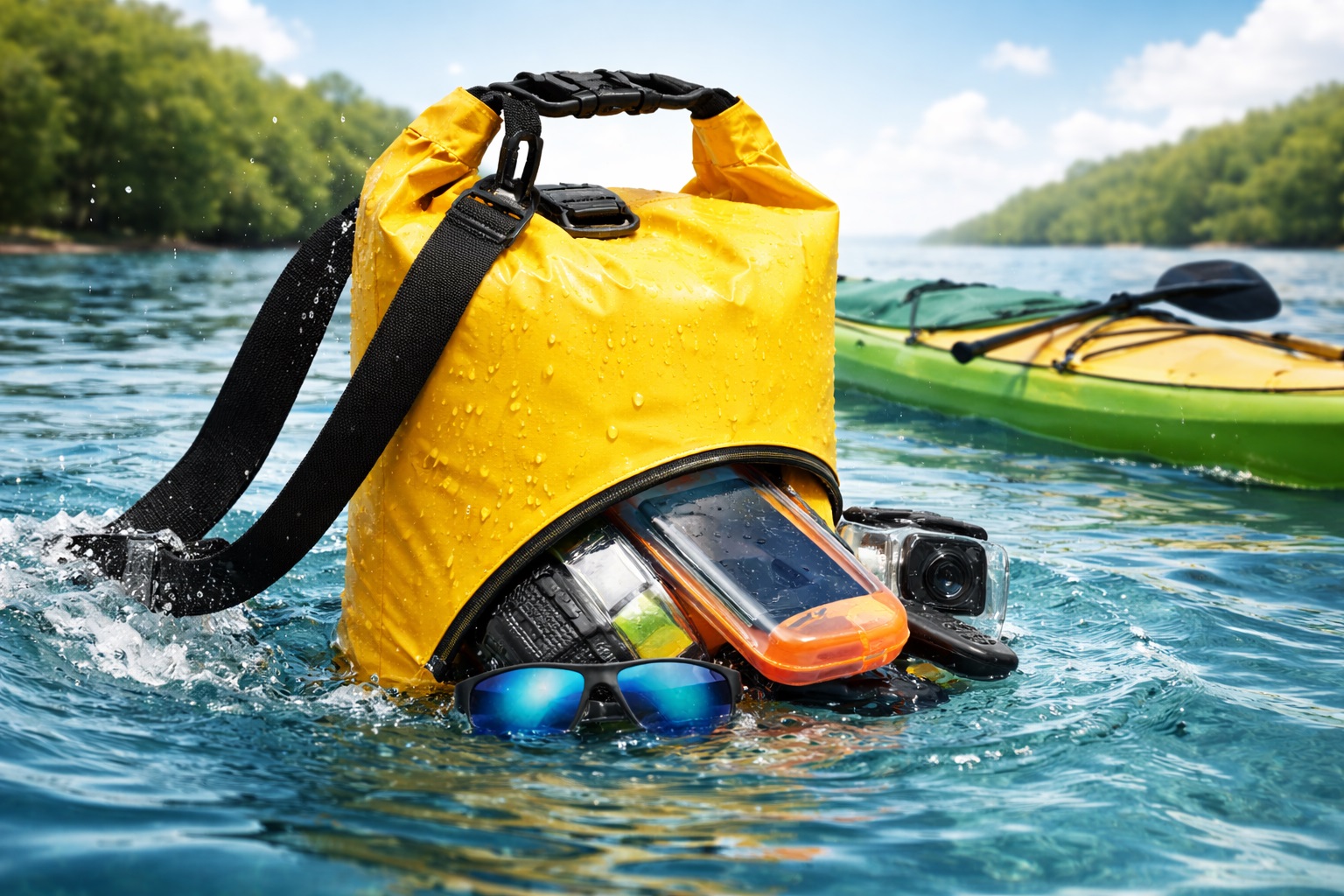
6. Adventure Medical Kits .7 – Best For Wet & Water-Exposed Conditions
This is the most directly relevant pick for anyone specifically shopping for waterproofing, thanks to its watertight bag system. Rather than relying on a hard case alone, the sealed bag design is meant to keep moisture out even during real water exposure, which makes it the standout choice for kayaking, rafting, fishing, or humid climates. At around $30, it is competitively priced for the level of water protection it offers. The soft, flexible bag also compresses down more easily than a hard case, which is a real advantage when packing space is limited on a canoe or a multi-day backpacking trip. It also floats more readily than a solid case, which is a small but reassuring detail if the bag ever ends up in the water rather than just near it.
- Pros:
- Watertight bag system built specifically for wet conditions
- Competitive pricing for the protection level offered
- Reputable brand known for outdoor medical gear
- Cons:
- Bag-style design holds less rigid protection than a hard case
- Limited color options
Best For: Water sports, rafting trips, and humid or rain-heavy climates.
Why We Recommend It: When waterproofing is the actual priority rather than a bonus feature, a purpose-built watertight bag system is hard to beat.
7. Deftget First Aid – Best For Ultra-Portable Everyday Carry
Deftget keeps things simple with a compact, portable nylon case designed to slip into a backpack, glovebox, or bag pocket without adding noticeable weight. At around $20, it is the most budget-friendly kit in this roundup, making it an easy first-aid starter kit or backup unit for a car, office desk, or hiking daypack. Its small footprint means it is easy to keep multiple units on hand, one in the car, one in a backpack, and one at a desk, without the cost adding up the way it would with pricier kits. It is also a sensible gift-sized option for new drivers, students, or anyone setting up a first apartment.
- Pros:
- Compact, lightweight nylon case
- Most affordable option in this lineup
- Reputable brand for entry-level first aid gear
- Cons:
- Nylon case offers limited water resistance on its own
- Limited color options
Best For: Budget-conscious buyers who want a lightweight backup kit for cars, bags, or desks.
Why We Recommend It: It covers the fundamentals at the lowest price point here, which makes it an easy add-on kit even if it is not your primary waterproof solution.
8. Protect Life Kit – Best For Emergency Preparedness Stockpiling
Protect Life is built around a broader emergency preparedness focus, which means it tends to include a wider mix of supplies meant for extended situations rather than just quick cuts and scrapes. At around $22, it is an affordable way to build out a more complete household or vehicle emergency stock, wet-weather scenarios included. That broader focus makes it a sensible companion to a smaller, more portable kit, since it covers the gaps that a compact daily-carry kit is not designed to handle. It is a reasonable starting point for anyone building out a household emergency plan for the first time.
- Pros:
- Broader emergency preparedness focus beyond basic first aid
- Affordable price point
- Reputable brand in the preparedness space
- Cons:
- Not purpose-built for full water submersion
- Limited color options
Best For: Households building a broader emergency stockpile rather than a single-purpose travel kit.
Why We Recommend It: The wider preparedness angle makes it useful well beyond minor injuries, which is valuable when storms or flooding disrupt normal routines.
Buying Guide: How to Choose the Best Waterproof First Aid Kit
Picking the right waterproof first aid kit comes down to more than checking a single "water-resistant" label on the packaging. The sections below cover the practical details that actually determine whether a kit will protect its contents when it matters, and they apply whether you are shopping for a boat bag, a family car, or a backcountry pack. Take your time working through each factor rather than defaulting to the first kit that shows up in a search, since the right choice depends heavily on where and how you actually plan to use it.
1. Understand the Difference Between Water-Resistant and Waterproof
Water-resistant cases can handle light rain or splashes but are not designed for submersion, while genuinely waterproof designs, often using sealed bags or gasketed hard cases, are built to keep moisture out even after being dropped in water. Read product descriptions carefully rather than assuming every "outdoor" kit meets the same standard, since the terms are often used loosely in marketing copy.
2. Check the Case Material and Seal Quality
Hard-shell cases with rubber gaskets and latch closures generally outperform basic zippered nylon pouches in wet conditions. Look for double-stitched seams, water-sealed zippers, or roll-top dry-bag closures if true water resistance is your top priority, and check whether the seal has been tested against a specific depth or duration of exposure.
3. Consider Supply Count and Depth of Contents
A kit with more individual items gives you a buffer when dressings get wet and need to be replaced more frequently than they would in dry conditions. Count how many bandages, gauze pads, and wound closures are included, not just the total item number on the box, since packaging counts can be misleading.
4. Look for Specialty Wound Care Items
Beyond basic bandages, useful kits include burn gel, blister treatment, tweezers, and antiseptic wipes. These specialty items are often the ones you actually reach for in a real outdoor emergency, so check the included item list closely before assuming a kit covers everything you need.
5. Weigh Portability Against Protection
The most heavily waterproofed cases tend to be bulkier and heavier. Decide whether you need something that clips onto a pack for a day hike or a larger kit that stays in a vehicle or boat, since the ideal size differs by use case and there is rarely a single kit that is best at everything.
6. Check for FDA Approval or Recognized Standards
Kits that specify FDA-approved components give you more confidence that the medical supplies inside meet a baseline quality standard rather than being generic, unverified items sourced purely on cost.
7. Review Compartment Organization
Labeled or color-coded compartments help you find the right item quickly, which is especially important in stressful outdoor situations where every second counts and panic can make simple tasks harder than they should be.
8. Factor In Shelf Life and Expiration Dates
Adhesives, ointments, and some medications have expiration dates. A quality kit should list contents clearly enough that you can check and rotate expiring items on a regular schedule instead of discovering they have degraded when you actually need them.
9. Match the Kit to Your Household or Group Size
A kit built for one hiker will run out of supplies fast if it is actually protecting a family of four or a group camping trip. Buy based on how many people the kit realistically needs to cover, and consider supplementing a compact kit with bulk refill supplies rather than assuming a single small pouch will stretch across an entire group outing.
10. Consider Refill and Restock Availability
Brands that sell refill packs for their kits make long-term ownership more practical, since you can replace used or expired items without buying an entirely new kit every time supplies run low.
11. Think About Where the Kit Will Live
A kit stored in a garage, boat, or car trunk faces different humidity and temperature swings than one kept in a closet. Match the case's protection level to where it will actually spend most of its time, since a kit designed for indoor storage may not hold up outdoors.
12. Balance Price Against Long-Term Value
The cheapest kit is not always the best value if it needs frequent replacing, and the most expensive kit is not automatically the right fit if you only need basic coverage. Weigh price against how often you expect to use and restock the kit over its lifetime.
13. Don't Overlook Weight for On-the-Go Use
If the kit is going into a backpack or bike bag, weight adds up quickly. Compact, nylon-cased kits are easier to carry daily, even if they trade off some rigid impact protection compared to bulkier hard-shell alternatives. If you regularly carry the kit on foot, weigh this factor as heavily as case protection itself.
Frequently Asked Questions
Is a waterproof first aid kit really necessary for everyday use?
Not for every household, but if you spend time outdoors, near water, or in a humid climate, a water-resistant or waterproof case meaningfully extends the life of the supplies inside compared to a basic drugstore kit that offers little protection from moisture.
What's the difference between water-resistant and fully waterproof?
Water-resistant kits handle rain and splashes but are not designed to be submerged, while waterproof kits use sealed bags or gasketed cases built to keep contents dry even after full water exposure for an extended period.
How often should I replace items in my first aid kit?
Check contents at least twice a year and replace anything past its expiration date, along with any items that were used, opened, or exposed to moisture, since compromised packaging can affect sterility.
Do first aid kits expire?
Many individual components, including adhesives, ointments, and some medications, have printed expiration dates, even though the outer case itself does not expire and can typically be reused indefinitely.
How many people should one kit cover?
Most compact kits are designed for one to four people for a short outing. Larger households or groups should size up or carry a supplemental supply kit to avoid running short during an emergency.
Is a hard case or a soft nylon case better for wet conditions?
Hard cases with gasketed seals generally resist water and impact better, while soft nylon cases are lighter and more packable but usually offer less protection against submersion or heavy rain exposure.
What items are most commonly missing from basic first aid kits?
Burn gel, blister treatment, tourniquets, and larger trauma dressings are frequently underrepresented in basic drugstore kits compared to purpose-built outdoor or emergency preparedness kits.
Can I refill a first aid kit instead of buying a new one?
Yes, many brands sell refill packs for commonly used items like adhesive bandages, gauze, and antiseptic wipes, which is more cost-effective than replacing the entire kit once it runs low.
What certifications or standards should I look for?
FDA-approved components are a good baseline indicator of medical-grade quality, and some workplace kits also reference OSHA or ANSI compliance guidelines for regulated environments, which can be worth checking if the kit is intended for a job site rather than personal use.
How much should I expect to spend on a quality waterproof kit?
Reasonable options in this category typically range from around $20 for a compact, budget-friendly case to $50 or more for tactical-grade, heavily reinforced kits with premium sealing. Mid-range kits in the $25 to $35 range often deliver the best balance of supply count and case quality for most households.
Where should I store a waterproof first aid kit at home?
A visible, easily accessible spot such as a hallway closet, kitchen cabinet, or garage shelf works well, as long as household members know where to find it quickly during an emergency.
Should I keep separate kits for my car, home, and outdoor bag?
If your budget allows, yes. Different environments expose kits to different levels of moisture, temperature swings, and handling, so dedicated kits reduce wear on any single unit and make sure a kit is always within reach. It also means you are never left without coverage just because one kit is packed away in another bag or vehicle.
What's the best way to organize a kit's contents?
Group similar items together, such as all wound care in one pouch and medications in another, and use labeled compartments where possible so you can find what you need quickly without digging through everything else.
Final Verdict
- Top Pick: Adventure Medical Kits .7 for its purpose-built watertight bag system, which directly addresses the wet-environment focus of this guide.
- Budget Choice: Deftget First Aid for a compact, affordable option that covers the essentials at the lowest price point.
- Premium Choice: Everlit Emergency Kit for tactical-grade materials and reinforced construction built for serious outdoor use.
There is no single kit that wins on every measure, which is exactly why matching the kit to your actual environment matters more than chasing the highest price tag. If water exposure is your main concern, prioritize sealed bag systems or gasketed hard cases over general-purpose kits. If organization and everyday reliability matter more to you than raw water sealing, a labeled, compact kit may serve you better day to day. And whichever kit you choose, remember that even the best case is only as good as the supplies you keep fresh, stocked, and rotated inside it, so build a habit of checking expiration dates alongside checking for wear on the case itself.
For most buyers, a sensible approach is to start with one solid, mid-priced kit that covers the basics well, then add a dedicated waterproof bag or hard case for the specific environment where moisture is the biggest risk, whether that is a boat, a job site, or a rainy-climate commute. Layering protection this way tends to be more cost-effective than searching for a single kit that claims to do everything perfectly, since specialized gear almost always outperforms a generalist option in the one area that matters most to you.