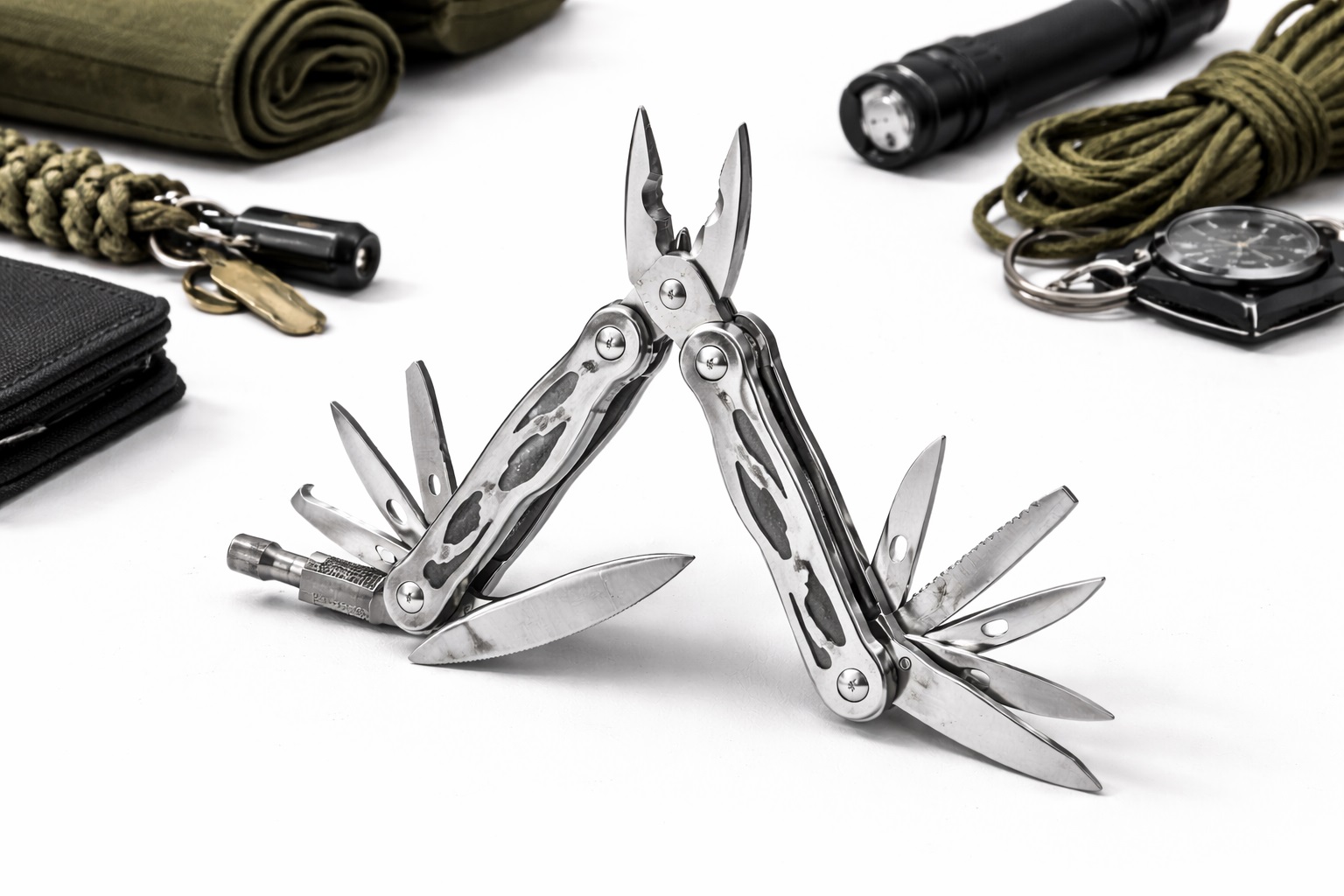
Best Lightweight Multi-tool in 2026
Weight is one of the most overlooked specifications when shopping for a multi-tool, right up until you have carried a heavy one on your belt or in a pocket for a full day. A lightweight multi-tool has to strike a careful balance: shed enough bulk to disappear during normal use, without stripping away the pliers strength, blade quality, or driver function that make the tool worth carrying in the first place. In 2026, the lightweight category ranges from genuinely skeletonized minimalist designs up to full-size tools that manage to stay reasonably trim despite a long feature list.
This guide compares eight widely available multi-tools from Victorinox, Gerber, Leatherman, and SOG, evaluated specifically for portability: how each one feels carried for extended periods, how tool count trades off against bulk, and which designs actually deliver on a lightweight promise rather than just appearing compact on a spec sheet. Not every tool here is a featherweight, and we say so directly where a model's strength lies elsewhere.
It is worth being upfront that the tools reviewed below are not all equally light. Some genuinely prioritize low weight above all else, while others pack in more tools or a heavier driver mechanism and accept a bulkier profile as a trade-off. Below you will find detailed reviews of all eight models with honest weight and bulk context, a buying guide focused specifically on portability, and answers to the questions people ask most often when trying to cut carry weight without sacrificing usefulness.
To set expectations early: the Leatherman Skeletool is built specifically around shedding weight through a skeletonized frame, and it is the standout in this lineup for anyone whose top priority is a light carry. The Gerber Suspension-NXT and SOG PowerPint are also relatively compact and light for what they offer. Tools like the Victorinox Swiss Army Champ, Leatherman Wave Plus, and Gerber Center-Drive trade some of that lightness for a longer tool list or a stronger driver mechanism.
Weight is also not the only factor that determines how portable a tool feels in practice. Folded thickness, handle shape, and whether it ships with a slim sheath or a bulkier case all affect how a tool sits in a pocket or on a belt, sometimes more than the number on the spec sheet suggests. We call out these practical details in each review below rather than relying on weight figures alone.
Top 8 Best Lightweight Multi-tool Picks (Detailed Reviews)
1. Victorinox Swiss Army Champ – Best For Tool Variety Despite Added Bulk
The Swiss Army Champ is not the lightest tool in this lineup, but it deserves credit for how much it packs into a still-compact folding frame. Its 33 tools, screwdrivers, scissors, a magnifier, a saw, and more, mean that for its tool count, it stays impressively pocketable, even if it is thicker than the true minimalist options here. At around $100, it sits mid-pack on price. If you want serious tool variety and are willing to accept a somewhat thicker profile in exchange, it remains one of the more efficient full-featured options for portability.
- Pros:
- 33 tools in a relatively compact folding frame
- Efficient tool-to-bulk ratio for its feature count
- Reputable, well-established brand
- Cons:
- Thicker profile than the true minimalist tools here
- Heavier than dedicated lightweight designs
Best For: Carriers who want the most tool variety possible while still keeping a relatively compact profile.
Why We Recommend It: Few tools pack this many implements into a frame this manageable to carry.
2. Gerber Suspension-NXT – Best For Budget-Friendly Compact Carry
The Suspension-NXT keeps things simple: a genuine one-hand-opening plier mechanism, a reasonable driver bit selection, and a frame that stays compact enough for daily pocket or belt carry. At around $40, it is also the most affordable tool in this lineup, so you are not paying a premium for its relatively trim profile. The spring-loaded pliers snap open with a flick of the wrist, keeping the tool quick to deploy despite its smaller size, and the stainless construction is solid for the price point.
- Pros:
- Compact frame suited to daily carry
- Spring-loaded, one-hand pliers deployment
- Lowest price point in this lineup
- Cons:
- Fewer specialty bits than the pricier models here
- Handle scales feel plainer than the premium tools
Best For: Carriers who want a compact, affordable tool without stripping down to a bare-bones design.
Why We Recommend It: It stays genuinely compact without asking you to pay a premium price for that trait.
3. Victorinox SwissTool Spirit – Best For Comfortable Carry When Weight Isn't Critical
The SwissTool Spirit prioritizes comfort and finish over shaving grams, using an ergonomic stainless steel handle shaped for a comfortable grip during extended use. At around $135, it is one of the pricier tools here, and it is not marketed as a lightweight pick, it is a genuinely solid, moderately sized tool for buyers whose top priority is hand comfort and Swiss-made build quality rather than the lowest possible weight. If portability is your only concern, lighter options exist in this lineup, but few match its comfortable in-hand feel.
- Pros:
- Ergonomic, comfortable stainless steel handle
- Swiss-made build and finish quality
- Clean, snag-free folded profile
- Cons:
- Not the lightest option in this lineup
- Higher price point
Best For: Carriers who prioritize hand comfort over shaving every possible gram.
Why We Recommend It: Its comfort and finish quality are genuinely excellent, even though weight was not its primary design goal.
4. Leatherman Wave Plus – Best For All-Around Utility If You Can Accept More Weight
The Wave Plus is built around breadth of function rather than low weight, and its 17-in-1 tool selection, pliers, wire cutters, saw, scissors, multiple blades, and a full driver set, comes with a correspondingly larger, heavier frame than the minimalist tools in this lineup. At around $120, it costs more than most entry-level options too. If your priority is genuinely low weight, this is not the pick, but if you are willing to accept a bulkier carry in exchange for rarely needing a second tool, its capability is hard to match.
- Pros:
- Broad 17-in-1 tool selection
- Long track record and wide accessory support
- Reputable brand with premier build quality
- Cons:
- One of the heavier, bulkier tools in this lineup
- Two-handed plier opening
Best For: Carriers who value tool breadth over minimizing weight and bulk.
Why We Recommend It: It remains one of the most capable all-purpose tools reviewed here, even though it is not built for portability first.
5. Leatherman Free P4 – Best For One-Handed Access in a Slim Profile
The Free P4 manages to combine a fairly full tool set with a slimmer profile than you might expect, thanks largely to its magnetic opening system, which lets every implement fold flush and be accessed with one hand rather than requiring extra clearance for two-handed opening. At around $150, it is the most expensive tool in this lineup, but for carriers who want both a slim carry and genuine one-hand access to a full toolset, it threads that needle better than most full-featured alternatives.
- Pros:
- Slim, flush-folding profile for its tool count
- Magnetic one-hand access to every tool
- Premier build quality from a reputable brand
- Cons:
- Highest price point in this lineup
- Limited color options
Best For: Carriers who want a slim, full-featured tool with fast one-hand access.
Why We Recommend It: It offers a rare combination of a full toolset and a relatively slim, easy-to-carry profile.
6. Leatherman Skeletool – Best For The Lightest Carry in This Lineup
The Skeletool is purpose-built around low weight, using a minimalist lightweight design with skeletonized handles that strip away everything not essential to its core functions: pliers, wire cutters, a knife blade, a bottle opener, and a bit driver. At around $75, it costs less than the full-featured Wave Plus and Free P4, and the weight savings are the clearest and most deliberate in this entire lineup. For anyone whose primary buying criterion is genuinely minimizing carried weight, this is the strongest candidate reviewed here.
- Pros:
- Skeletonized design delivers the lowest weight in this lineup
- Covers the core functions most people use daily
- Premier build quality from a reputable brand
- Cons:
- Fewer total tools than full-size competitors
- Higher price than the most basic budget option
Best For: Anyone whose top priority is minimizing carried weight without giving up core functionality.
Why We Recommend It: No other tool in this lineup is as deliberately engineered around cutting weight while still covering the essentials.
7. SOG PowerPint – Best For Strong Grip in a Small, Light Frame
The PowerPint pairs a genuinely compact, lightweight frame with SOG's compound leverage technology, which uses a gearing effect in the plier jaws to multiply hand force well beyond what its small size would suggest. At around $50, it is one of the more affordable options here, and its smaller footprint makes it an easy tool to forget you are carrying. The driver bit selection is smaller than the full-size tools, but for carriers who want strong pliers in a light package, it delivers a rare combination.
- Pros:
- Compact, lightweight frame
- Compound leverage pliers add real gripping force
- Affordable price relative to its capability
- Cons:
- Smaller bit selection than full-size rivals
- Limited color options
Best For: Carriers who want strong pliers without the weight of a full-size tool.
Why We Recommend It: It delivers a grip-strength advantage rarely found in such a compact, light package.
8. Gerber Center-Drive – Best For Driver Tasks (The Bulkiest Option Here)
The Center-Drive earns its place in this lineup on function rather than portability. Its full-size driver axis, which keeps standard bits in-line with the handle for real torque, requires a larger frame than the more streamlined tools reviewed here, and it is honestly the bulkiest option in this roundup. At around $110, it sits mid-pack on price. If driving screws with real torque and control is your primary need, the added bulk is a reasonable trade-off, but it is not the pick if minimizing weight is your top priority.
- Pros:
- Full-size, in-line driver axis for real torque
- Premier build quality
- Reputable brand backing
- Cons:
- Bulkiest, heaviest profile in this lineup
- Higher price than entry-level tools
Best For: Carriers who specifically need strong driver performance and can accept a bulkier tool for it.
Why We Recommend It: Its driver performance genuinely justifies the added bulk for anyone who regularly drives screws.
Buying Guide: How to Choose the Best Lightweight Multi-tool
Choosing a lightweight multi-tool means being honest about the trade-off between low weight and tool breadth. A truly minimalist design will always carry fewer implements than a full-size tool, and no amount of clever engineering fully escapes that relationship. The sections below walk through how to weigh that trade-off intelligently.
1. Skeletonized Frames vs. Solid Handles
Tools like the Skeletool cut material from the handle scales themselves to save weight, while full-size tools use solid handle scales that add strength and bulk. Understand which approach a tool takes before assuming a similar-looking design is equally light.
2. Tool Count vs. Actual Weight Savings
Every additional implement adds weight, however small. A tool with fewer, well-chosen implements will almost always be lighter than one with a long feature list, so decide which trade-off matters more to you before comparing weight figures.
3. Material Choices That Affect Weight
Aluminum and skeletonized stainless steel handles weigh less than solid stainless steel, though sometimes at a small cost to rigidity. Check what handle material a lightweight-marketed tool actually uses rather than assuming "compact" automatically means "light."
4. Folded Thickness vs. Overall Weight
A tool can be thin in your pocket but still relatively heavy for its size, or compact in profile but noticeably light. These are related but separate qualities, and it is worth checking both if pocket comfort and low weight both matter to you.
5. One-Hand Opening on Slim Designs
Some slimmer tools, like the Free P4, still manage one-hand opening through mechanisms like magnetic closures, while others sacrifice that convenience to achieve a slim profile. Decide whether one-hand access is worth a slightly bulkier design for your use case.
6. Core Functions to Prioritize When Cutting Weight
If you are trimming down to a lighter tool, prioritize keeping pliers, a knife blade, and one or two driver bits over specialty implements you rarely use. That keeps a lightweight tool genuinely useful rather than just thin.
7. Sheath and Clip Weight
A tool's carry accessory adds its own weight. A slim nylon sheath or pocket clip adds far less bulk than a rigid leather case, which is worth considering if you are optimizing total carried weight rather than just the tool itself.
8. Durability Trade-offs in Lightweight Designs
Skeletonized and slimmed-down tools can be just as durable as full-size ones if the core steel quality is good, but it is worth checking that weight savings come from removed bulk rather than thinner, weaker steel in the load-bearing parts.
9. Ergonomics on Slimmer Handles
A lighter, thinner handle can be less comfortable to grip firmly during a demanding task than a fuller handle. If you expect to use the tool for more than quick fixes, test the grip feel rather than assuming lighter always means better.
10. Brand Warranty and Repairability
Established multi-tool brands typically back their lightweight models with the same warranties as their full-size tools, and replacement parts are often available, which matters if you plan to carry a favorite lightweight tool for years.
11. Price vs. Weight Trade-off
Genuinely lightweight engineering, purpose-built skeletonized frames rather than simply smaller tools, sometimes carries a price premium. Decide how much extra you are willing to pay specifically to shave weight versus buying a naturally smaller, simpler tool.
12. Matching Weight Priorities to Your Carry Method
Weight matters more if a tool sits in a pocket all day than if it is clipped to a belt or stored in a bag. Be honest about how you actually carry a multi-tool before deciding how much weight savings genuinely matters to you.
13. When a Heavier Tool Is Still the Right Choice
If you regularly need a full driver set or a long list of specialty tools, a heavier, bulkier design may simply be the right choice despite the weight trade-off. Portability is one factor among several, not the only one worth optimizing.
14. Testing Weight in Person Before Buying
Listed weights on a spec sheet can be hard to translate into how a tool actually feels in a pocket or clipped to a belt. Handling a tool in person, or at least comparing its listed weight against something familiar you already carry, gives a more realistic sense of comfort than the number alone.
15. Balancing Weight Against Everyday Reliability
The lightest tool available is not worth choosing if it constantly fails at tasks you actually need done. Treat weight as one important factor among several, alongside build quality and core tool selection, rather than the single deciding criterion. A slightly heavier tool that you trust to work every time is ultimately more valuable than the lightest option in the store if it leaves you improvising a fix by hand.
Frequently Asked Questions
Is a lightweight multi-tool as durable as a full-size one?
It can be, provided the weight savings come from a skeletonized frame or fewer implements rather than thinner, weaker steel in the pliers and blade. Check reviews and materials specifically rather than assuming lighter always means less durable.
How do I maintain a lightweight multi-tool?
Keep it clean and dry, and check the pivot points periodically, adding a drop of lubricant if the mechanism feels stiff. Lightweight tools benefit from the same basic maintenance as full-size ones.
Can I bring a lightweight multi-tool on a flight?
Multi-tools with a knife blade generally must go in checked luggage rather than a carry-on, regardless of how light or compact the tool is, under current airport security rules.
What is the difference between a lightweight multi-tool and a pocket knife?
A pocket knife is built primarily around a folding blade, while even a lightweight multi-tool combines pliers, drivers, and other implements alongside a blade, making it more versatile but still generally a bit bulkier than a simple knife.
How many tools do I actually need on a lightweight design?
Most people get the most use out of pliers, a knife blade, and one or two screwdriver bits. A lightweight tool that nails these basics is usually more useful day to day than a heavier one with many rarely used extras.
Are one-hand-opening pliers available on lightweight tools?
Some are, though many true minimalist designs use simpler two-handed opening to save weight and complexity. If one-hand access matters to you, check that feature specifically rather than assuming all lightweight tools include it.
Do lightweight multi-tools rust as easily as full-size ones?
Corrosion resistance depends mainly on the steel used, stainless versus coated carbon steel, rather than the tool's overall weight. A lightweight stainless tool resists rust about as well as a full-size stainless one.
What is the average lifespan of a lightweight multi-tool?
A well-made lightweight tool from an established brand can last many years with reasonable care, similar to a full-size tool, provided the core steel quality is solid.
Should I choose a skeletonized frame or a smaller full frame for low weight?
A purpose-built skeletonized frame typically saves more weight than simply choosing a smaller version of a full-frame design, since the skeletonizing specifically targets non-load-bearing material.
Do lightweight multi-tool brands offer warranties?
Many established brands back their lightweight models with the same warranties as their full-size tools, covering manufacturing defects. It is worth checking the specific terms before you buy.
Is a lighter multi-tool always less capable?
Not necessarily, though there is usually some trade-off in tool count or driver breadth. A well-designed lightweight tool with quality pliers and a good blade can handle most everyday tasks just as well as a heavier one.
Can a lightweight multi-tool replace a full toolkit?
For minor repairs, yes, a good lightweight multi-tool covers cutting, gripping, and basic driving tasks well. For serious mechanical work, a dedicated toolkit remains the more reliable option regardless of the multi-tool's weight.
How do I sharpen the blade on a lightweight multi-tool?
A small sharpening stone or pocket sharpener designed for short blades works well regardless of the tool's overall weight or size. Maintain the existing edge angle and clean the blade afterward.
What should I check on the pliers of a lightweight tool?
Confirm the jaws close flush with no visible gap, since a gap usually means weaker gripping force, a concern that applies to lightweight designs just as much as full-size ones.
Is it better to carry one lightweight tool or a smaller backup as well?
For most people, one well-chosen lightweight tool is simpler to manage than carrying two. A backup only makes sense for remote trips where losing your primary tool would be a real inconvenience.
Does removing tools from a multi-tool actually reduce meaningful weight?
Yes, though the savings vary by design. A frame engineered from the ground up to be skeletonized, like the Skeletool, saves noticeably more weight than a full-size tool that simply omits one or two accessory bits while keeping the same handle scales.
Are titanium multi-tool handles worth it for saving weight?
Titanium is lighter than steel for a given strength level and shows up occasionally on premium lightweight tools, but it typically adds cost. Whether it is worth it depends on how much you value shaving the last few grams versus spending that money elsewhere.
Will a lightweight multi-tool feel flimsy compared to a heavier one?
Not if it is engineered well. A quality lightweight tool removes bulk from non-structural areas while keeping the pliers, blade, and pivot points solid, so it should not feel noticeably weaker in normal use than a heavier design.
How much weight difference actually matters day to day?
Even a couple of ounces can be noticeable over a full day of pocket carry, though the difference matters far less for belt or bag carry. If you are sensitive to pocket weight, prioritizing a lighter design will likely make a real difference to comfort.
Can a lightweight multi-tool still handle demanding outdoor tasks?
Yes, provided the core pliers and blade steel are good quality. Lightweight does not have to mean underpowered, though a tool stripped down to fewer implements may require more improvisation for unusual tasks than a full-size alternative.
Do lightweight multi-tools cost more than full-size ones?
Not always. Some lightweight designs cost less because they include fewer implements, while others carry a premium for specialized lightweight engineering. Compare price against both weight and tool count rather than assuming lighter automatically means cheaper or pricier.
How does a lightweight multi-tool compare to a keychain tool?
A keychain-sized tool is typically even lighter but sacrifices pliers strength and blade size, making it better suited to occasional, light tasks. A lightweight full multi-tool like the Skeletool still delivers real gripping and cutting power in a much smaller package than a full-size design.
Is it worth paying more for a name-brand lightweight tool over a generic one?
Generally, yes, for anyone planning to carry the tool daily for years. Established brands tend to use better steel, tighter tolerances on pivots, and more consistent quality control, which matters more over time on a tool subjected to frequent use.
Does a lightweight multi-tool need a different sheath than a full-size one?
Not strictly, but pairing a slim tool with an oversized case undercuts its portability advantage. Look for a slim nylon sheath or a low-profile pocket clip sized appropriately to the tool if minimizing total carried bulk is your goal.
Final Verdict
- Top Pick: Leatherman Skeletool, the clear standout for anyone prioritizing genuinely low carry weight.
- Runner-Up Light Pick: Gerber Suspension-NXT, a compact, affordable option that stays trim without sacrificing one-hand pliers.
- If You Need More Tools and Can Accept Extra Weight: Victorinox Swiss Army Champ, the most efficient tool-to-bulk ratio among the full-featured options here.
There is a genuine trade-off between low weight and tool breadth, and no single pick in this lineup escapes it entirely. The Leatherman Skeletool comes closest to solving that trade-off cleanly, covering the core functions most people need in a frame built specifically to disappear during daily carry. If you are willing to accept some added bulk in exchange for more tools, the Victorinox Swiss Army Champ and Leatherman Wave Plus both remain strong options, but for portability as the primary goal, the lighter, more focused designs in this lineup are the smarter starting point. Whichever tool you choose, remember that weight is only one part of the equation: a light tool that lacks the pliers strength or blade quality you actually need will end up seeing less use than a slightly heavier one that reliably does the job, so weigh portability against real-world capability rather than optimizing for grams alone.