Best Budget Dumbbells in 2026
Value does not always mean cheapest, and that distinction matters more in the dumbbell category than in almost any other piece of home fitness equipment. When shopping for dumbbells on a budget, the real question is not which pair costs the least, but which option delivers the most usable training for the money you spend, whether that means a fifty-dollar fixed set or a pricier adjustable system that saves you from ever buying weights again. Real value factors in durability, versatility, and how much the equipment will actually get used over the years ahead.
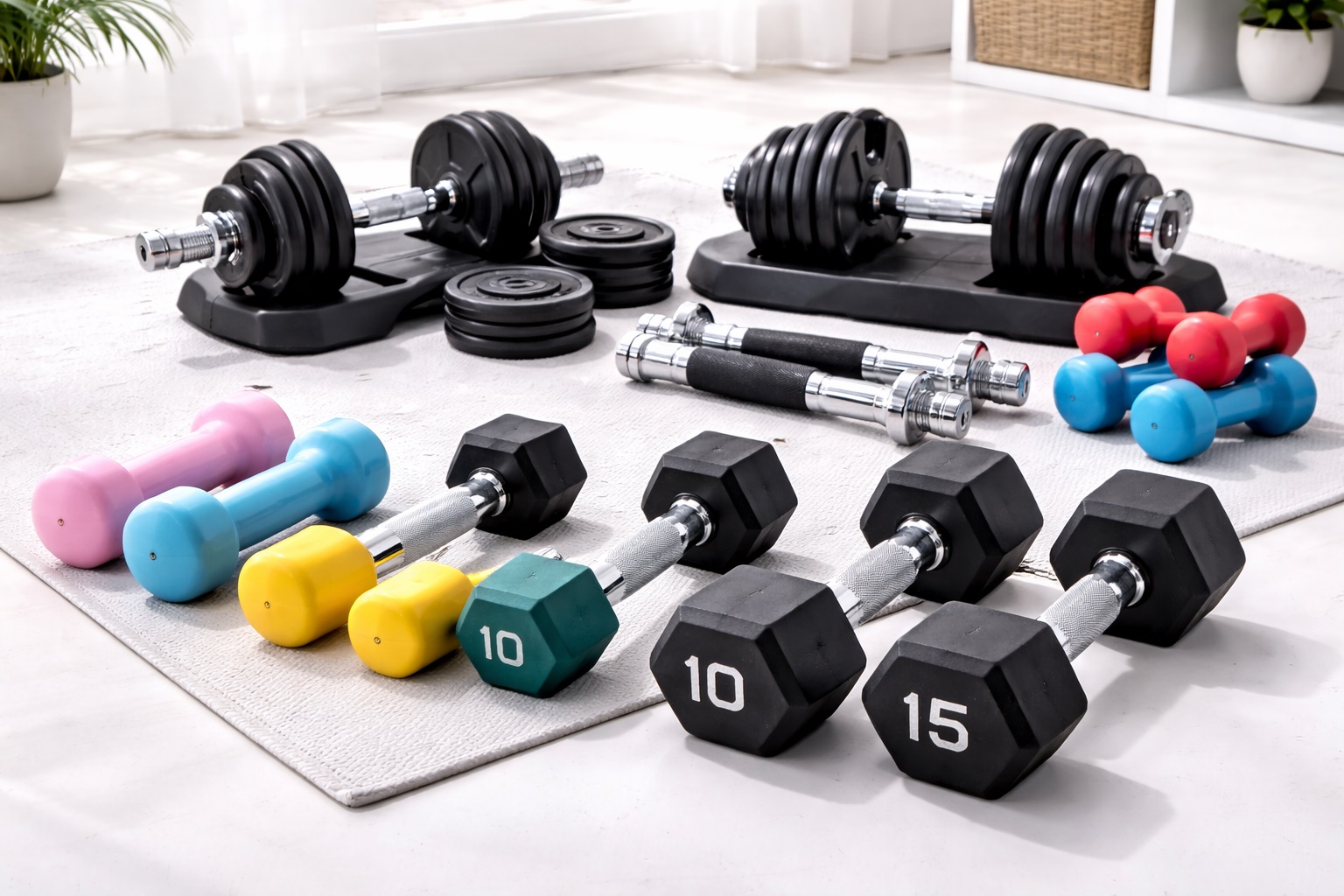
In this guide, we look at eight dumbbell options across a range of price points, from genuinely inexpensive fixed-weight sets to premium adjustable systems that cost more upfront but can replace an entire rack of individual weights. Each one earns its place here for a different value proposition, whether that is raw affordability, long-term cost savings, or simply delivering more capability per dollar spent than the alternatives.
We also break down how to think about dumbbell value beyond the sticker price, including cost per pound, long-term durability, and how adjustable systems can actually save money over time despite a higher initial cost. These observations reflect published specifications and general product positioning rather than identical side-by-side lab testing. By the end, you should be able to judge value for your own specific budget and goals, rather than defaulting to whichever option has the lowest number on the price tag.
Top 8 Best dumbbells Picks (Detailed Reviews)
1. Bowflex SelectTech 552 – Best Long-Term Value Despite the Higher Price
At around $400, the Bowflex SelectTech 552 is the priciest option in this lineup, but its adjustable weight dial replaces what would otherwise be an entire rack of fixed-weight pairs. For anyone who trains consistently over years rather than months, that consolidation can genuinely work out cheaper than the alternative.
- Pros:
- Adjustable weight dial replaces a full rack of dumbbells
- Long-term cost savings for consistent, long-term training
- Well-known, established brand with a strong track record
- Saves significant storage space compared to fixed-weight sets
- Cons:
- Highest upfront price point in this lineup
- Dial mechanism has a distinct feel some users need to adjust to
- Not the best fit for anyone unsure about long-term commitment
Best For: Committed lifters who plan to train for years and want to avoid ever needing to buy additional dumbbell weights down the line.
Why We Recommend It: Value is not only about the lowest price tag, and when you calculate the realistic cost of buying multiple fixed-weight pairs over time, this system's higher upfront cost often evens out or comes out ahead, particularly once you factor in the space and hassle a full rack of fixed weights would otherwise require.
2. Rogue Hex Dumbbells – Best Value for Serious, Durable Home Training
Rogue Fitness brings its heavy duty rubber construction to a straightforward hex dumbbell, priced around $40, offering commercial-gym durability at a price point well within reach for most home exercisers. The value here comes from longevity rather than a rock-bottom price.
- Pros:
- Heavy duty rubber coating resists chipping and cracking
- Commercial-grade durability at a reasonable price point
- Backed by a well-established, trusted fitness brand
- Comfortable, secure grip during a variety of exercises
- Cons:
- Fixed weight means buying additional pairs to progress
- Higher per-pound cost than basic neoprene options
- Takes up more storage space than an adjustable system
Best For: Budget-conscious buyers who still want equipment that will genuinely last, rather than a bargain set that needs replacing within a year.
Why We Recommend It: Real value often comes from durability rather than the lowest sticker price, and this set's construction quality means you are unlikely to need a replacement anytime soon, which keeps the true cost per year of use surprisingly low.
3. Bala Bars – Best Value for Light Toning on a Modest Budget
Bala Bars, priced around $55, are not the cheapest option here, but for their specific niche, light toning and cardio-style training, the ergonomic shape and comfortable grip deliver genuine value for anyone whose goals do not require heavy resistance.
- Pros:
- Ergonomic shape suits high-repetition, lighter-weight training
- Comfortable grip designed for extended workout sessions
- Attractive, modern design that fits well in shared living spaces
- Well suited to toning and mobility-focused budgets
- Cons:
- Higher price point relative to the weight range offered
- Not designed for heavy strength-focused training
- Limited weight range compared to traditional dumbbell sets
Best For: Budget-focused shoppers whose training goals center on toning and light cardio rather than building maximal strength.
Why We Recommend It: Value depends on fit for purpose, and for lighter training styles, this set delivers a more comfortable, purpose-built experience than a generic budget dumbbell would for the same use case, which is where genuine value actually lives.
4. Yes4All Adjustable – Best Overall Budget Value Pick
Yes4All's adjustable set uses cast iron plates, priced around $50 for a base configuration, delivering genuine adjustable versatility at a fraction of the cost of premium dial-based systems. This is arguably the strongest overall value proposition in the entire lineup.
- Pros:
- Cast iron plates provide durable, long-lasting resistance
- Adjustable format at a genuinely budget-friendly price
- Meaningfully more affordable than premium adjustable systems
- Plates can be added incrementally as budget allows
- Cons:
- Manual plate changes take longer than dial-based systems
- Cast iron plates add noticeable weight to store and move
- Requires occasional tightening to keep plates secure
Best For: Budget-conscious buyers who still want real adjustability and versatility rather than settling for a single fixed weight pair.
Why We Recommend It: It captures most of the practical benefit of an adjustable system at a fraction of the premium price, making it one of the smartest value purchases in this entire comparison for anyone comfortable with manual plate changes.
5. CAP Barbell Coated Hex – Best Ultra-Affordable Starter Value
CAP Barbell's Coated Hex dumbbells feature anti-roll heads, priced around $30 per pair at lighter weights, making this one of the most genuinely inexpensive entry points in the entire lineup without sacrificing basic build quality.
- Pros:
- Anti-roll hex heads keep dumbbells in place when set down
- Straightforward, no-assembly design at a low price
- Affordable enough to buy multiple weight pairs over time
- Coated finish protects floors and reduces noise
- Cons:
- Fixed weight means buying additional pairs as you progress
- Can require more storage space than an adjustable set
- Heavier pairs cost meaningfully more than lighter ones
Best For: Shoppers who want the lowest reasonable entry cost into dumbbell training without compromising on basic durability and safety features.
Why We Recommend It: For sheer affordability without cutting corners on the essentials, this set is hard to beat, offering a genuinely low price without feeling like a compromise on the essentials most beginners actually need.
6. NordicTrack Select-A-Weight – Best Value for Tech-Focused Buyers Willing to Spend More
The NordicTrack Select-A-Weight system is voice control capable, priced around $350, and while it is not a budget pick in the traditional sense, buyers who already value connected fitness technology may find the convenience genuinely worth the added cost.
- Pros:
- Voice control capability allows hands-free weight adjustments
- Fits naturally into a broader connected fitness setup
- Space-saving adjustable design similar to other premium systems
- Backed by an established fitness technology brand
- Cons:
- Premium price reflects the added technology features
- Not the strongest choice for strict budget shoppers
- Voice control is a convenience feature rather than a necessity
Best For: Buyers who are willing to spend more specifically because they place real value on hands-free convenience and tech integration.
Why We Recommend It: Value is relative to what you prioritize, and for buyers who genuinely use and appreciate connected fitness features, the added cost here buys a meaningfully different, more convenient training experience day to day.
7. PowerBlock Elite – Best Value for Space-Constrained Long-Term Investment
The PowerBlock Elite uses a compact square design, priced around $300, that consolidates an entire dumbbell rack into one unit. For buyers weighing the cost of equipment against the value of reclaimed space, this represents a different kind of value calculation than price alone.
- Pros:
- Compact square design replaces a full rack of dumbbells
- Scales from beginner-friendly weight up to advanced resistance
- Saves substantial floor and shelf space over time
- Backed by a well-established, reputable brand
- Cons:
- Higher upfront price than fixed-weight starter sets
- Square shape feels different than traditional dumbbells at first
- Not the cheapest option for buyers on a strict budget
Best For: Buyers with limited space who value the equivalent of a full weight rack in a single compact unit enough to justify the higher price.
Why We Recommend It: When you factor in the value of the space it saves alongside the equipment itself, this set represents a different but legitimate kind of long-term value, particularly in a home where every square foot matters.
8. Amazon Basics Neoprene – Best Rock-Bottom Budget Pick
Amazon Basics Neoprene dumbbells feature a non-slip coating, priced around $20, making this the single least expensive option in the entire lineup. For anyone whose primary concern is simply spending as little as possible to get started, this is the clearest choice.
- Pros:
- Non-slip neoprene coating improves grip and comfort
- The lowest price point in this entire comparison
- Soft coating is gentle on floors and furniture
- Bright color-coding makes weight identification simple
- Cons:
- Fixed weight requires buying additional pairs to progress
- Neoprene coating may show wear faster than coated hex options
- Not intended for heavy, advanced strength training
Best For: Shoppers on the tightest possible budget who want to start training with dumbbells today without spending more than necessary.
Why We Recommend It: Sometimes the best value truly is the lowest price, particularly for beginners who are not yet certain they will stick with a routine long enough to justify a bigger investment right away.
Buying Guide: How to Choose the Best dumbbells
Finding genuine value in dumbbells means looking past the price tag alone. Here are the factors that actually determine whether a purchase is a smart one for your budget.
1. Cost Per Pound of Resistance
Comparing the price against the total weight range a set provides gives a clearer picture of value than the sticker price alone, especially when comparing fixed-weight sets against adjustable systems with a wider range.
This calculation often favors adjustable systems for buyers who need a wide resistance range, even though the upfront price looks higher at first glance.
A quick spreadsheet comparing price divided by top usable weight across a few options can make this comparison concrete rather than relying on a general impression of which set seems cheaper.
2. Long-Term Cost of Fixed-Weight Sets
A cheap starter pair is a reasonable first purchase, but factor in the realistic cost of buying additional pairs as you progress, since this can add up to more than an adjustable system over a year or two.
Mapping out your expected progression over the next twelve months can help you see whether starting cheap and buying more later actually saves money compared to one larger purchase upfront.
Many buyers underestimate how quickly they will outgrow a starter weight, so being honest about your likely progress rate leads to a more accurate long-term cost comparison.
3. Durability as a Value Factor
A slightly more expensive set that lasts years is often better value than a cheaper set that needs replacing within months. Durable materials like cast iron and heavy duty rubber tend to justify a modest price premium.
Reading reviews specifically focused on long-term durability, rather than first impressions, helps you judge whether a lower price reflects genuine savings or a hidden long-term cost.
A dumbbell that needs replacing every year is rarely a bargain once you account for the repeated cost, even if each individual purchase looks inexpensive in isolation.
4. Versatility for the Price
A set that supports a wide range of exercises delivers more value than one limited to a narrow use case, even if the narrower option costs slightly less upfront.
Considering how many different exercises and muscle groups a given set can realistically cover helps clarify whether you are getting genuine versatility for your money.
A narrowly focused product can still be great value if it precisely matches your goals, so weigh versatility against your actual planned use rather than treating it as universally important.
5. Storage Costs
Fixed-weight sets that require a dedicated rack add an indirect cost that is easy to overlook, while compact adjustable systems save on both the equipment itself and any additional storage furniture you might otherwise need.
Factoring in the cost of a rack or shelf, if needed, gives a more complete picture of total spending when comparing fixed and adjustable options.
Even a modest storage solution can add twenty to fifty dollars to a fixed-weight setup, a cost that is easy to forget when comparing sticker prices side by side.
6. Resale Value
Well-known, established brands tend to hold resale value better than lesser-known options, which can meaningfully offset the initial cost if you ever decide to upgrade or change your training setup down the line.
Keeping original packaging and documentation, when available, can make a future resale process easier and help you recover more of your initial investment.
Checking local resale listings for similar used equipment before buying new can also give you a realistic sense of how well a given product tends to hold its value over time.
7. Warranty Coverage
A meaningful warranty adds real value to a purchase by protecting you against manufacturing defects or premature wear, which is particularly relevant for adjustable systems with more mechanical components.
Comparing warranty length and coverage terms across brands is a worthwhile step before assuming that a lower price automatically represents the better overall deal.
A shorter warranty is not automatically a red flag for simple fixed-weight products, since there is simply less that can mechanically go wrong compared to an adjustable system.
8. Matching Purchase to Actual Use
The best value purchase is one that matches your actual training habits rather than an aspirational routine you might not stick with, so be realistic about how often and how seriously you plan to train.
Starting with a more modest, budget-friendly option and upgrading later, once your habits are established, is a perfectly reasonable value strategy for many buyers.
An honest assessment of your last few attempts at a fitness routine can be a useful, if humbling, guide for how much to invest in equipment this time around.
9. Bundle & Multi-Pack Savings
Some brands offer discounts when buying multiple weight pairs together, which can improve overall value compared to purchasing each weight increment separately over time.
Checking for bundle pricing before buying individual pairs one at a time can meaningfully reduce the total cost of building out a full fixed-weight collection.
Retailers sometimes offer these bundles seasonally, so timing a larger purchase around a sale event can add further savings on top of the bundle discount itself.
10. Shipping & Additional Costs
Dumbbells are heavy, and shipping costs can meaningfully affect the total price, particularly for larger adjustable systems, so factor in delivery costs when comparing value across different retailers or brands.
Some retailers offer free shipping thresholds that can be worth reaching, especially if you are already planning to purchase accessories like handles or a storage rack.
Local pickup options, where available, can also eliminate shipping costs entirely and are worth checking before finalizing an online order for heavier equipment.
11. Quality of Included Accessories
Some adjustable systems include a stand or storage tray as part of the package, which adds real value compared to systems that require these accessories to be purchased separately.
Checking exactly what is included in the box before comparing prices across products helps ensure you are making an accurate apples-to-apples value comparison.
A product listing that seems more expensive at first glance can sometimes work out cheaper once you account for accessories that a competitor sells separately.
12. Brand Track Record for Reliability
Established brands with a longer track record generally offer more predictable long-term value, since their products have already been tested by a larger number of users over time.
Newer or lesser-known brands can still offer good value, but it is worth reading a broader range of reviews before trusting an unfamiliar name with a significant purchase.
Checking how long a brand has been in the fitness equipment space, and whether it specializes in strength equipment specifically, can offer useful additional context beyond star ratings alone.
13. Total Cost Over Your Training Timeline
The most accurate way to judge value is to estimate your total spending over one, two, or five years of training, rather than focusing only on the initial purchase price.
This longer-term view often changes which option looks like the better deal, particularly when comparing a cheap fixed-weight set against a pricier adjustable system.
Even a rough back-of-envelope calculation over a multi-year timeline is usually enough to reveal which option genuinely represents the smarter long-term investment for your situation.
Frequently Asked Questions
Are cheap dumbbells actually worth buying?
Yes, for many beginners, an affordable set is a perfectly reasonable way to start, provided it offers basic durability and safety features like anti-roll heads or a protective coating.
Is it cheaper in the long run to buy adjustable dumbbells?
Often yes, especially for consistent long-term trainees, since adjustable systems can eliminate the need to purchase multiple fixed-weight pairs as strength improves over time.
What is a reasonable price for a beginner dumbbell set?
Basic fixed-weight starter sets can range from twenty to fifty dollars, offering solid value for someone just beginning a strength training routine.
Do more expensive dumbbells actually perform better?
Not always in terms of pure function, but pricier options often offer better durability, additional features, or space savings that can justify the cost for the right buyer.
How can I tell if a dumbbell set is genuinely good value?
Consider the cost per pound of resistance, expected durability, and how well the set matches your actual training needs rather than focusing on price alone.
Should I buy budget dumbbells now and upgrade later?
This is a reasonable strategy for many people, particularly beginners still determining their long-term commitment to strength training, since it minimizes upfront risk.
Are used dumbbells a good value option?
Used dumbbells can offer excellent value, especially cast iron or coated hex styles, provided you inspect for excessive wear or damage before purchasing.
Do budget dumbbells wear out faster than premium options?
Generally yes, budget options may show wear sooner, though many affordable sets still offer reasonable durability for moderate, regular home use.
Is it worth paying more for anti-roll or coated features?
For most home users, yes, since these features improve safety and protect flooring, which can prevent additional costs or hazards down the line.
How much should I budget for a complete home dumbbell setup?
This varies widely, but a functional setup can range from under one hundred dollars for a basic fixed-weight collection to several hundred dollars for a complete adjustable system.
Can I find good value dumbbells during sales events?
Yes, fitness equipment, including dumbbells, often sees meaningful discounts during major shopping periods, which can be a smart time to make a larger adjustable system purchase you have been considering for a while.
Is buying a full dumbbell set better value than buying pairs individually?
Often yes, since sets frequently offer a better price per pound than purchasing each weight increment separately over time, though this varies by brand and retailer.
How do I avoid overspending on my first dumbbell purchase?
Setting a firm budget beforehand and comparing a few specific options against your actual training plan, rather than browsing broadly, tends to prevent impulse purchases of features you may not need.
Does buying directly from a manufacturer offer better value than a retailer?
It can vary. Manufacturers sometimes offer better warranty support, while retailers may provide more competitive pricing or bundle deals, so comparing both before purchasing is worthwhile.
Are budget dumbbells suitable for advanced lifters on a tight budget?
They can be, particularly adjustable or stackable budget systems that offer a wide enough resistance range, though very advanced lifters may eventually need heavier weights than some budget lines provide.
Should I prioritize price or brand reputation when shopping on a budget?
A balance of both usually serves buyers best. An unfamiliar ultra-cheap brand carries more risk than a slightly pricier option from an established manufacturer with a track record of reliability.
Can I negotiate or find discounts on higher-priced adjustable dumbbell systems?
Prices on premium systems can fluctuate around major sales periods, so watching for seasonal discounts is a practical way to reduce the upfront cost of a more expensive adjustable set.
Final Verdict
- Top Pick: Bowflex SelectTech 552 for overall excellence.
- Budget Choice: Bala Bars for great value.
- Premium Choice: Rogue Hex Dumbbells for high-end features.
Real value in dumbbells rarely means simply choosing the cheapest option on the shelf. The Yes4All Adjustable and CAP Barbell Coated Hex sets offer some of the strongest pure value for money in this lineup, while the Bowflex SelectTech 552 makes a compelling long-term case despite its higher price tag. If your budget is genuinely tight, the Amazon Basics Neoprene set remains a sensible, low-risk starting point. Whichever you choose, thinking beyond the initial price tag toward durability, versatility, and long-term cost will lead to a smarter purchase than chasing the lowest number alone. A little extra planning upfront tends to pay for itself many times over across years of consistent training.