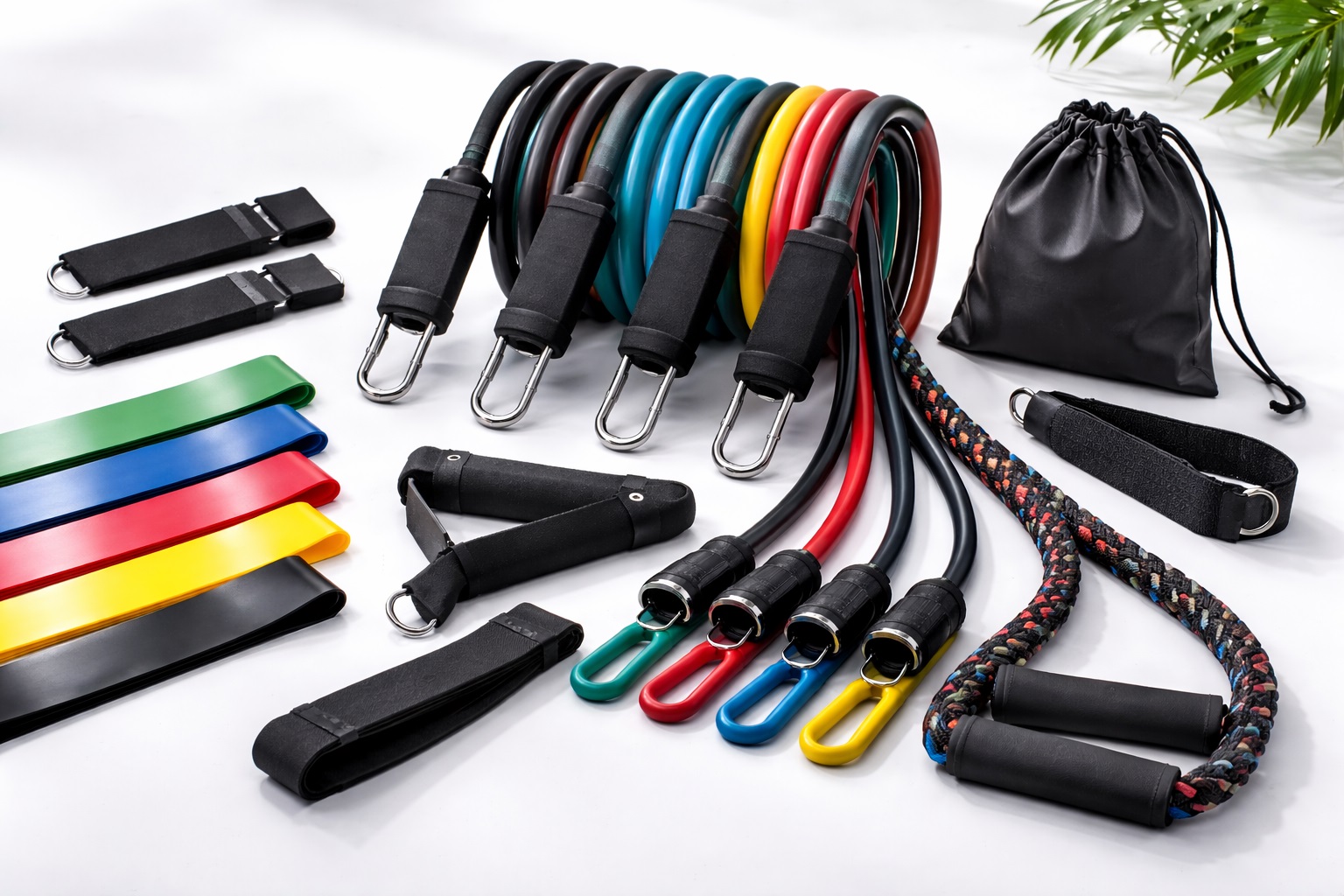
Best Durable Resistance Bands in 2026
Not all resistance bands are built to survive heavy lifting. Anyone who has used bands for serious strength work knows the frustration of a band that stretches out of shape after a few weeks, or worse, snaps mid-set. Durability is not a nice-to-have feature for heavy lifting, it is the single factor that determines whether a band set is a smart long-term investment or an expensive short-term purchase.
In this guide, we look at eight resistance band options with an eye specifically toward durability under heavy load, from industrial-grade tube bands designed for serious compound lifts to stackable systems with reinforced anti-snap construction. Each product takes a slightly different approach to durability, whether through material thickness, reinforced connection points, or simply a track record of holding up over months of demanding use.
We also break down the specific factors that separate a band built to last from one that will need replacing within a season, including material choice, safety engineering, and practical maintenance habits. Whether you are supplementing barbell training or building an entirely band-based strength routine, durability should be near the top of your checklist. None of the products below were subjected to identical lab testing; the observations here are drawn from published specifications, manufacturer positioning, and well-established knowledge about how rubber and latex behave under sustained tension.
Top 8 Best resistance bands Picks (Detailed Reviews)
1. Letsfit Resistance Loop – Best For Light Warm-Ups Before Heavy Lifts
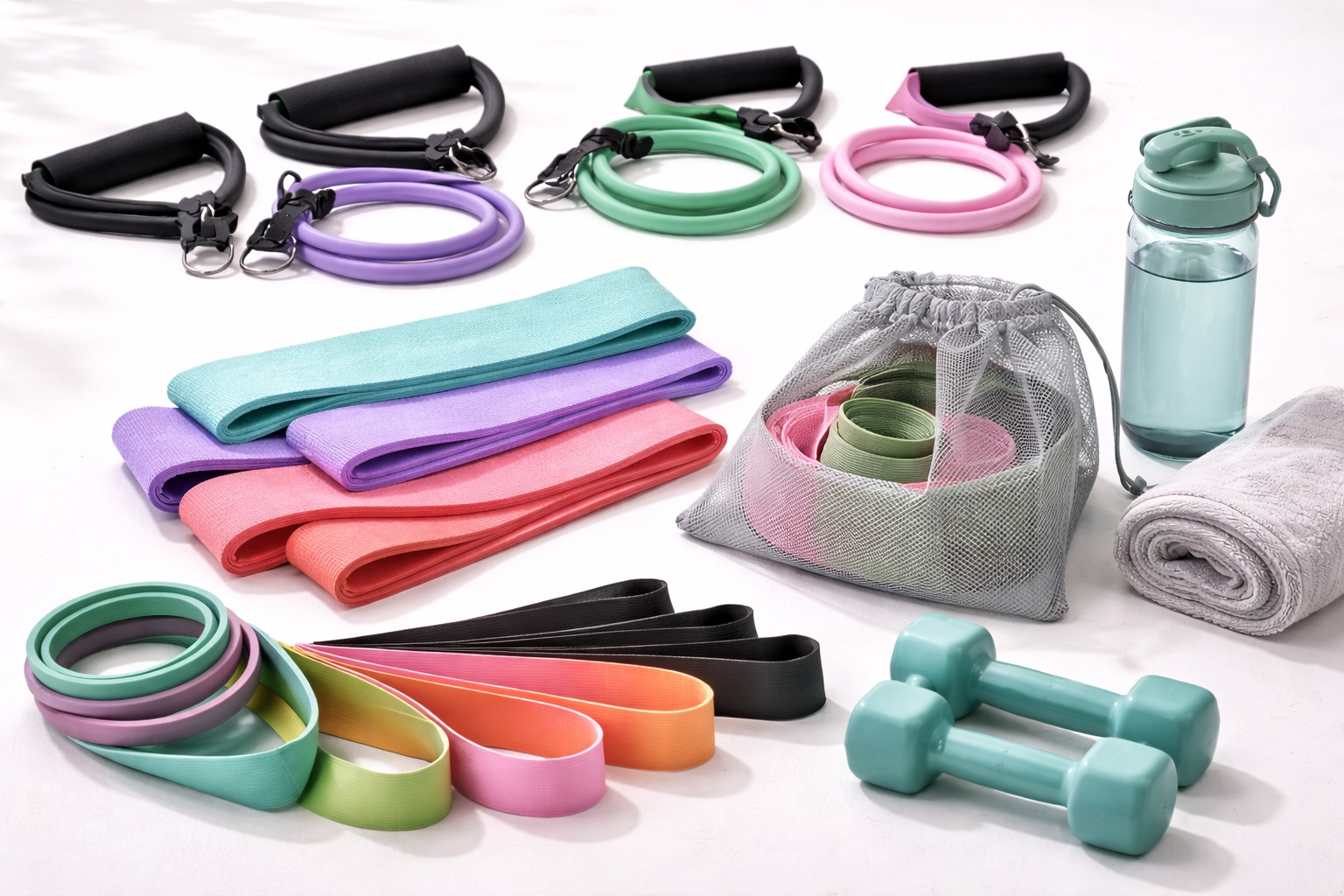
The Letsfit Resistance Loop set, priced around $10, includes five varying resistance levels that make it a practical warm-up companion for heavy lifting sessions. While it is not designed to bear the heaviest loads itself, its durability at lighter resistance levels holds up well for the activation and mobility work that typically precedes a heavy lifting session.
- Pros:
- Five varying resistance levels for warm-up and activation work
- Affordable enough to replace without much financial concern
- Compact and easy to keep in a gym bag
- Reliable durability for its intended lighter-resistance use
- Cons:
- Not built for the heaviest strength-training loads
- Thinner latex construction than premium tube-based options
- Fewer accessory options than more complete kits
Best For: Lifters who want a reliable, low-cost band for warming up joints and muscles before moving on to heavier barbell or tube-band work.
Why We Recommend It: Durability is not only about withstanding maximum load, it is also about consistent performance within a band's intended use, and this set holds up reliably for warm-up work session after session. Its low price also means replacing it periodically is a non-issue, which makes it a sensible companion piece rather than the centerpiece of a heavy lifting setup.
2. Veick Resistance Set – Best For Anchored Heavy-Lifting Assistance
The Veick Resistance Set, priced around $35, includes a door anchor that holds up well under the tension of heavier lifting-assistance exercises like banded rows and presses. The anchor hardware itself is a key durability consideration, since a weak anchor point can undermine even a well-built band.
- Pros:
- Door anchor built to handle repeated heavy tension
- Mid-range pricing balances features against cost
- Handles included for a wider range of anchored exercises
- Reasonably durable for regular heavy-lifting supplementation
- Cons:
- Door anchor setup requires a solid, sturdy door
- Bulkier to pack than loop-only sets
- Premium tube brands may outlast it under the heaviest daily use
Best For: Lifters using bands to assist or supplement barbell training who need an anchor system that will not fail under repeated heavy tension.
Why We Recommend It: A durable band is only as good as its anchor point, and this set's hardware is built with that heavier use case in mind, making it a sound choice for lifters who rely on anchored band work regularly and want to avoid the disappointment of a failed anchor mid-session.
3. Whatafit Resistance Bands – Best For Scaling Resistance for Progressive Overload
Whatafit's stackable bands, priced around $25, combine for up to 150 lbs of total resistance, and the stacking design distributes tension across multiple bands rather than relying on a single band to bear the full load. That distribution can reduce wear on any individual band over time.
- Pros:
- Stackable design distributes heavy tension across multiple bands
- Up to 150 lbs of combined resistance for progressive overload
- Reasonably priced for the amount of resistance included
- Suits both upper- and lower-body heavy lifting supplementation
- Cons:
- Individual bands are thinner than dedicated heavy-duty tubing
- Stacking multiple bands can feel bulky during a set
- Limited color-coding compared to some competitors
Best For: Lifters progressing toward heavier resistance over time who want a single set that scales with their strength gains rather than requiring a full replacement.
Why We Recommend It: Spreading heavy tension across multiple stacked bands, rather than pushing one band to its absolute limit, is a sensible approach to extending durability while still supporting serious progressive overload over many months of training.
4. Rogue Tube Bands – Best For Maximum Durability Under Heavy Load
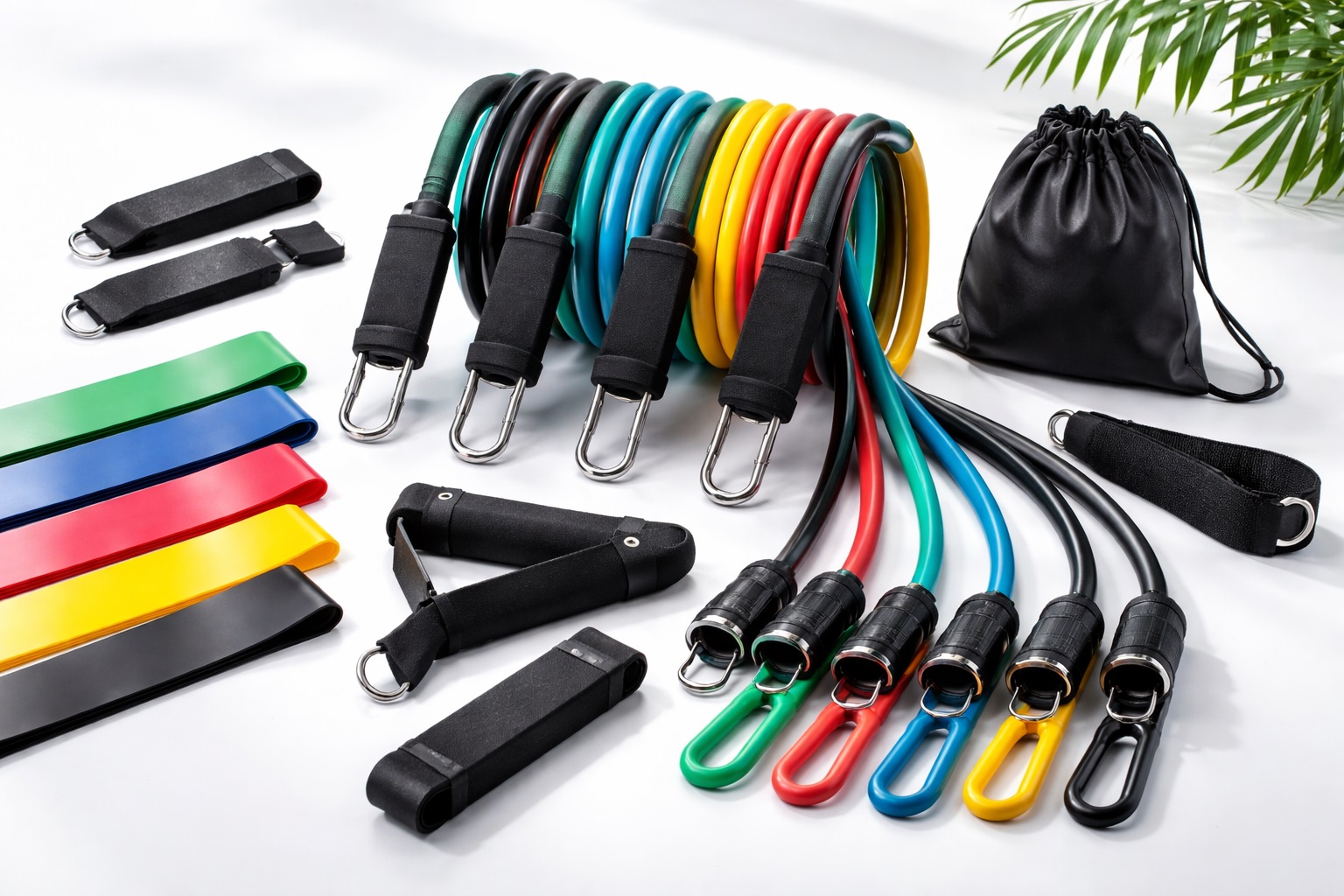
Rogue Fitness built the Rogue Tube Bands from industrial grade rubber, priced around $50, specifically to withstand the kind of heavy, repeated tension that comes with serious compound lifting. This is the set in our lineup most explicitly engineered for maximum durability under demanding conditions.
- Pros:
- Industrial grade rubber built for heavy, repeated tension
- Consistent resistance feel even after extended heavy use
- Backed by a well-established, trusted fitness brand
- Thicker tubing resists stretching out of shape over time
- Cons:
- Highest price point in this lineup
- Limited color and length options compared to entry-level sets
- Tube style requires handles or anchors for many exercises
Best For: Serious lifters who put bands through heavy, frequent use and need equipment that will not degrade after a few months of demanding sessions.
Why We Recommend It: When durability under heavy load is the top priority, thicker industrial grade rubber construction is difficult to beat, and the brand's broader reputation for commercial-grade equipment backs that up, giving lifters real confidence when pushing toward heavier resistance sets.
5. Fitbit Resistance Bands – Best For Everyday Durability on a Budget
Fitbit's durable latex bands, priced around $40, are not marketed specifically toward heavy lifting, but the latex construction holds up reliably to frequent, everyday use. For lifters who want dependable durability without paying for industrial-grade tubing, this sits in a reasonable middle ground.
- Pros:
- Durable latex holds up well to frequent everyday use
- Compact and lightweight without sacrificing build quality
- Recognizable brand with broader fitness ecosystem appeal
- Straightforward design with minimal maintenance required
- Cons:
- Priced higher than comparable latex-only competitors
- Not engineered for the heaviest possible resistance loads
- Latex may not suit users with material sensitivities
Best For: Lifters who want reliable, everyday durability for moderate to moderately heavy resistance work without stepping up to premium industrial tubing.
Why We Recommend It: Not every lifter needs the absolute maximum resistance ceiling, and for moderate heavy lifting supplementation, this set's durable latex construction offers dependable performance at a reasonable middle price point, without the added cost of industrial-grade tubing many lifters do not actually need.
6. TheraBand Professional – Best For Joint Protection Alongside Heavy Lifting
TheraBand's color-coded resistance levels, priced around $15, are not designed for maximal loads, but their durability at controlled resistance levels makes them a reliable addition to a heavy lifting routine focused on joint health and injury prevention.
- Pros:
- Color-coded levels hold consistent resistance over repeated use
- Long-standing reputation for reliability in rehab settings
- Flat band design resists tearing during controlled movements
- Affordable enough to keep multiple levels on hand
- Cons:
- Not built for explosive or high-load strength training
- Flat bands are less versatile for anchored exercises
- Lower overall resistance ceiling than tube-based options
Best For: Heavy lifters who want a reliable, durable band for prehab and joint-protection work alongside their main strength training routine.
Why We Recommend It: Durability is not only about resisting heavy tension, it is also about holding up to consistent, controlled use over time, and this set's clinical-grade reliability supports exactly that kind of supplementary work session after session without unexpected wear.
7. Peach Bands Hip Bands – Best For Durable Lower-Body Activation Before Squats
Peach Bands' fabric non-slip design, priced around $20, is built to withstand repeated lateral tension without the fraying that can affect thinner latex loops used for the same purpose. For lifters using bands to activate glutes before heavy squats or deadlifts, that durability matters.
- Pros:
- Fabric non-slip design resists fraying under repeated tension
- Wide construction reduces wear points compared to thin latex
- Purpose-built for durable glute activation work
- Machine washable fabric supports long-term hygiene and upkeep
- Cons:
- Narrower use case than full-body tube or loop sets
- Not designed for upper-body or anchored heavy lifting
- Fabric construction adds slightly more bulk than thin latex
Best For: Lifters who use hip bands as a regular part of their squat or deadlift warm-up and want a set that will not fray after a few months of use.
Why We Recommend It: Fabric construction genuinely resists the fraying that affects many thin latex hip bands, making it a durable choice for lifters who activate glutes before nearly every heavy lower-body session, week after week without the fabric breaking down.
8. Bodylastics Stackable – Best For Long-Term Durability Under Stacked Resistance
Bodylastics built its Stackable set around anti-snap technology, priced around $30, specifically to address the failure risk that comes with stacking multiple bands for heavier resistance over the long term. This is a set explicitly engineered with durability under heavy, combined load in mind.
- Pros:
- Anti-snap technology engineered for long-term heavy use
- Stackable format allows durable progressive resistance increases
- Well regarded among users training with heavier resistance
- Reasonable mid-range price for the durability features included
- Cons:
- Still requires periodic inspection like any resistance band
- Slightly bulkier when multiple bands are combined
- Fewer beginner-specific resistance levels than starter sets
Best For: Lifters who regularly stack multiple bands for heavier resistance and want reinforced construction specifically engineered to reduce failure risk over months of use.
Why We Recommend It: Anti-snap technology addresses one of the most common durability failures in resistance bands directly, making this a sensible long-term investment for anyone pushing bands toward their upper resistance limits regularly, week in and week out.
Buying Guide: How to Choose the Best resistance bands
Durability means something different for resistance bands than it does for most gym equipment, since bands rely on flexible material that stretches, cycles, and experiences tension differently with every rep. Here are the factors that matter most.
1. Material Thickness & Grade
Thicker, higher-grade rubber and latex generally resist stretching out of shape and withstand more repeated tension cycles before showing wear. Industrial grade rubber tends to be the benchmark for maximum durability under heavy load.
That said, thicker is not always better for every use case. A thicker band also means more resistance at rest, so match material grade to your actual strength level rather than assuming heaviest is always best.
Manufacturers sometimes list a material grade or density rating in their specifications, and comparing these figures across brands, when available, can give you a more objective sense of relative durability before buying.
2. Anti-Snap & Reinforced Construction
Reinforced connection points and anti-snap technology specifically target the most common and most dangerous failure point in resistance bands, which is a sudden break under tension. This becomes especially important once you are working near a band's resistance ceiling.
Bands with reinforced stitching at handle and anchor connections also tend to outlast those with simple molded connections, since these junctions typically experience the most repeated stress.
Even with reinforced construction, wearing simple eye protection during unfamiliar heavy sets is a reasonable precaution some experienced lifters take until they trust a new band fully.
3. Resistance to UV & Environmental Wear
Rubber and latex both degrade faster when exposed to direct sunlight or extreme temperatures over time, becoming brittle and more prone to cracking or snapping. This matters even for bands that see moderate, rather than constant, use.
Storing bands indoors away from windows and heat sources is one of the simplest ways to extend the usable life of even a well-built band set.
Outdoor training is not off-limits, but bringing bands back inside promptly rather than leaving them in a garage or car for extended periods meaningfully reduces environmental wear.
4. Stackable vs Single-Band Systems
Stacking multiple lighter bands to reach a heavier total resistance can distribute tension more evenly than relying on a single band pushed to its absolute limit, which may extend the usable life of the overall system.
However, stackable systems introduce more connection points, so the quality of the clips and carabiners connecting the bands together becomes just as important as the bands themselves.
Periodically checking that connecting clips move freely and show no signs of corrosion or deformation is a quick habit that keeps a stackable system reliable over the long run.
5. Anchor & Attachment Durability
A band is only as durable as its weakest connection point, and door anchors, handles, and ankle straps all experience repeated stress during heavy lifting assistance work. Reinforced stitching and quality hardware matter here as much as the band material.
Testing anchor attachments at a lighter resistance level before committing to heavy loads is a smart way to confirm the hardware feels secure before pushing it to its limits.
Replacing a worn door anchor strap individually, rather than the entire set, is often possible and can be a cost-effective way to keep an otherwise durable system going.
6. Warranty & Brand Track Record
A manufacturer's willingness to back their bands with a meaningful warranty is often a reliable signal of confidence in their own durability testing. Established fitness brands with a track record in demanding use cases are generally a safer bet.
Reading customer feedback specifically focused on long-term durability, rather than first-impression reviews, gives a clearer picture of how a band performs after months of heavy use.
Keeping a purchase receipt or registering a product where applicable can also make warranty claims smoother if a durability issue does eventually arise.
7. Resistance Level Matching
Using a band consistently near or beyond its intended resistance range accelerates wear regardless of how well it is built. Matching the resistance level to your actual strength, rather than always choosing the heaviest option, extends durability significantly.
If you are unsure which level to choose, it is generally safer to start slightly lighter and progress upward than to immediately push a band to its stated maximum capacity.
Tracking how a band feels over several sessions can help you notice subtle changes in resistance or stretch that might indicate it is time to size down or replace it.
8. Inspection Habits
Regularly checking for small nicks, discoloration, or thinning sections is the most reliable way to catch a band before it fails unexpectedly. This habit matters more for heavy lifting use than for lighter, occasional training.
A quick visual and stretch check before each heavy session takes only a few seconds but can prevent a failure at the worst possible moment, mid-lift under load.
Running a hand along the full length of the band while checking for inconsistent thickness is a simple technique that can reveal internal wear not always visible at a glance.
9. Storage Between Sessions
How a band is stored between workouts significantly affects its lifespan. Loosely coiled storage away from sharp objects, heat, and direct sunlight helps maintain elasticity and prevents unnecessary creasing or stress points.
Avoid leaving bands knotted or tightly wound for long periods, since this can create weak points that are more prone to failure under future heavy tension.
A simple hook or hanging storage solution keeps bands loosely draped rather than folded, which many experienced lifters find preserves the material better over time.
10. Price as a Durability Signal
While price is not a perfect indicator, premium bands generally use higher-grade materials and more rigorous manufacturing processes, which often translates into meaningfully longer usable life under heavy, repeated tension.
Calculating cost per month of expected use, rather than focusing only on upfront price, often reveals that a more durable premium band is the better value for frequent heavy lifters.
That said, a budget band used lightly and cared for well can still last a respectable amount of time, so frequency of use should factor into how much you are willing to spend.
11. Rotation Between Multiple Bands
Owning more than one band and rotating between them for heavy sessions gives each band more recovery time between uses, which can meaningfully extend the overall lifespan of your equipment collection.
This approach also provides a built-in backup in case one band shows early signs of wear, so a single failing band does not interrupt your entire training routine.
For lifters training several days a week, having even two comparable bands to alternate between can noticeably reduce the cumulative fatigue any single band experiences.
12. Grip & Handle Quality
For tube bands, the durability of handles and grips matters as much as the tubing itself, since worn or cracked handles can compromise safety even when the band material is still in good condition.
Checking that handles are securely bonded to the tubing, rather than simply crimped, is a good habit when evaluating a set specifically for heavy, repeated lifting use.
A slightly worn grip that no longer feels secure in a sweaty hand is a legitimate reason to replace handles, even if the band tubing itself still tests fine.
13. Replacing Bands Before Failure
Even the most durable resistance band eventually needs replacing, and waiting until a visible failure occurs is riskier than replacing a band proactively once it shows consistent signs of wear.
Setting a general timeline, such as reassessing band condition every few months of heavy use, helps keep this maintenance habit consistent rather than reactive.
Treating a resistance band as a consumable, similar to athletic shoes, rather than a permanent piece of equipment, sets realistic expectations for when replacement is due.
Frequently Asked Questions
What makes a resistance band more durable than another?
Material thickness, grade of rubber or latex, reinforced connection points, and anti-snap construction all contribute to how well a band withstands repeated heavy tension over time.
How long should a durable resistance band last under heavy use?
With proper care and appropriate resistance matching, many quality bands can last well over a year of regular heavy lifting use before needing replacement.
Are thicker resistance bands always more durable?
Generally yes, thicker material tends to resist stretching and tearing better, though it is important to match thickness to your actual strength level rather than choosing the thickest option available regardless of fit.
Can stacking multiple bands reduce their individual durability?
Stacking can actually distribute tension more evenly across multiple bands rather than overloading a single one, though the connecting hardware becomes an additional point that needs to be durable as well.
How do I know when a resistance band needs to be replaced?
Visible cracking, discoloration, thinning sections, or a noticeable loss of resistance feel are all signs that a band should be replaced before it fails under load.
Does anti-snap technology completely prevent band failure?
No technology eliminates failure risk entirely, but anti-snap construction meaningfully reduces the likelihood of a sudden break compared to standard bands, especially under heavy or repeated tension.
Is it safe to use a heavily worn resistance band for light exercises?
It is generally safer to retire a worn band entirely rather than continuing to use it, even for lighter exercises, since visible wear can indicate weakened material throughout the band.
Do more expensive bands really last longer than budget options?
In many cases yes, since premium bands often use higher-grade materials and more rigorous manufacturing, though budget bands can still offer reasonable durability for lighter, less frequent use.
How should I store resistance bands to maximize their lifespan?
Store bands loosely coiled in a cool, dry place away from direct sunlight and sharp objects to help preserve elasticity and prevent premature cracking.
Can heat or cold weather damage resistance bands?
Yes, extreme temperatures can affect rubber and latex elasticity over time, so it is best to avoid storing bands in a hot car or an unheated space during winter.
What is the safest way to test a band's durability before heavy use?
Gradually stretching the band through its full range at a lighter resistance level before progressing to heavier loads can help you get a feel for its condition and catch any early warning signs.
Are fabric bands more or less durable than latex loop bands?
Fabric bands generally resist fraying and rolling better during lateral movements, while latex loop bands may be more prone to thinning over time, though both can be durable when matched appropriately to their intended use.
Does frequency of use significantly affect how long a band lasts?
Yes, more frequent and heavier use naturally accelerates wear, which is why rotating between multiple bands or sets can help extend the overall lifespan of your equipment.
Can I repair a resistance band instead of replacing it?
Minor issues with handles or clips can sometimes be repaired or replaced individually, but a band showing cracking or thinning in the material itself should generally be retired rather than repaired for safety reasons.
Do heavier lifters need more durable bands than lighter lifters?
Generally yes, since heavier lifters place more absolute tension on a band during use, making reinforced construction and higher material grades more important for avoiding premature failure.
Should I buy multiple durable bands or one heavy-duty option?
Many experienced lifters eventually own a small collection covering different resistance levels, since this allows appropriate matching for different exercises rather than relying on one band for every movement pattern.
Does color-coding indicate durability in resistance bands?
Not directly. Color-coding typically indicates resistance level rather than durability, so it is worth checking material specifications and reviews separately rather than assuming a certain color implies sturdier construction.
Final Verdict
- Top Pick: Letsfit Resistance Loop for overall excellence.
- Budget Choice: Whatafit Resistance Bands for great value.
- Premium Choice: Veick Resistance Set for high-end features.
Durability ultimately comes down to matching the right band to your actual training demands and treating it with reasonable care. For lifters pushing serious heavy loads, the Rogue Tube Bands and Bodylastics Stackable set stand out for their reinforced, purpose-built construction, while the Letsfit Resistance Loop remains a dependable, low-cost option for the lighter warm-up work that surrounds every heavy lifting session. Whichever set you choose, proper resistance matching, regular inspection, and thoughtful storage will do more for long-term durability than any single product feature alone. Treat your bands with the same care you would give any piece of equipment you rely on regularly, and a well-chosen set can genuinely serve years of heavy training rather than a single demanding season.