Best Resistance Bands for Weight Loss in 2026
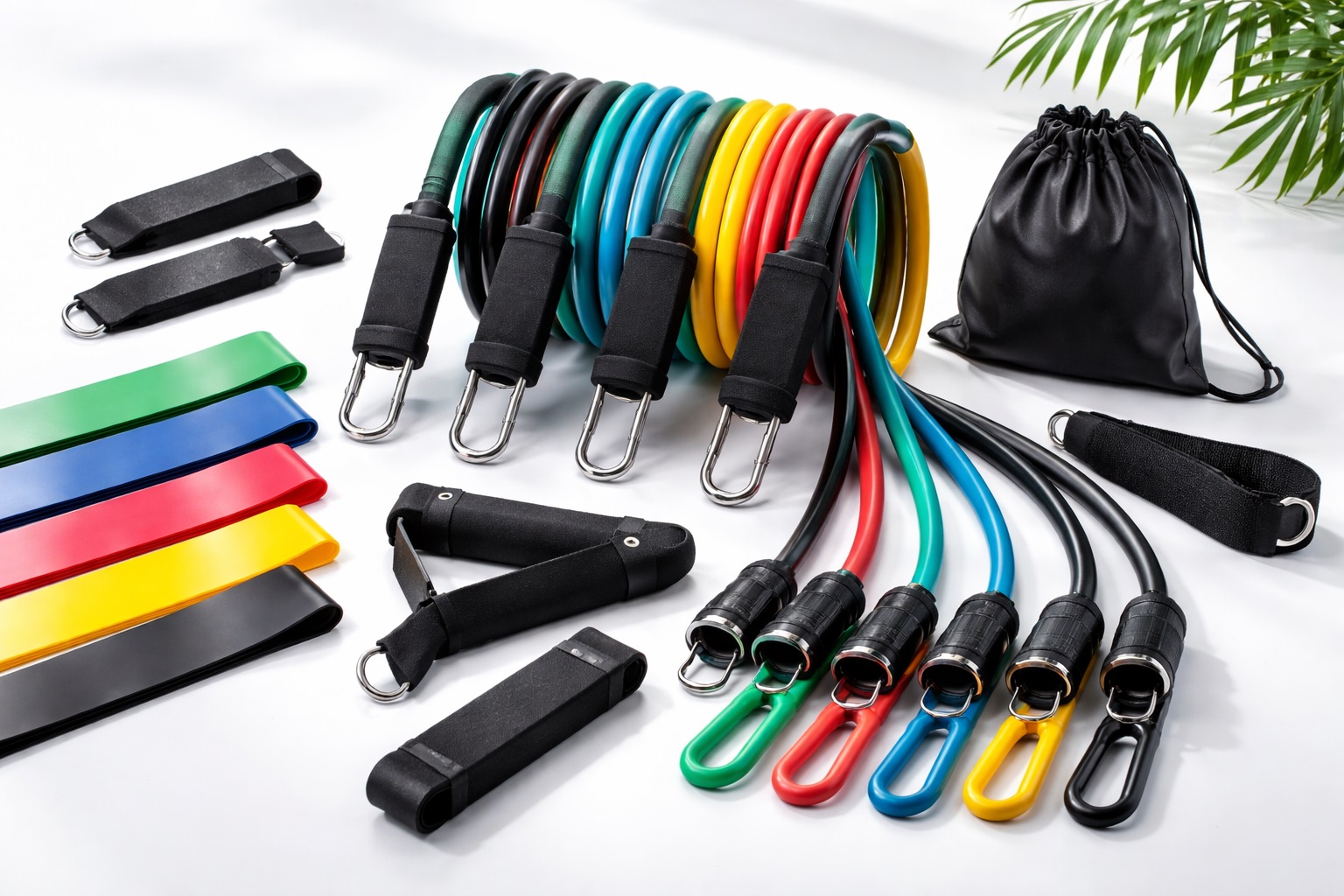
Resistance bands rarely get the credit they deserve as a weight loss tool, largely because people associate them with slow, rehab-style stretching rather than the kind of heart-pumping work that actually supports calorie burn. Used correctly, though, bands are excellent for building cardio-strength circuits, keeping tension constant through squats, presses, and rows, and turning a small living room into a legitimate training space without a single dumbbell in sight.
In this guide, we cover eight resistance band options that are well suited to cardio-driven weight loss routines, from stackable tube systems built for high-intensity intervals to lightweight loops designed for beginners easing into a new habit. Each product brings something different to the table, whether that is a wider resistance range for varied circuit intensities, a compact form factor for quick sessions, or a design built specifically to hold up to fast, repeated movement.
We also break down the practical considerations that matter most when choosing bands for cardio and fat-loss training specifically, since the priorities here differ somewhat from bands chosen purely for strength work or physical therapy. By the end, you should have a clear sense of which option fits your current fitness level and your training environment.
Top 8 Best resistance bands Picks (Detailed Reviews)
1. Bodylastics Stackable – Best For High-Intensity Interval Training
Bodylastics built its Stackable set around anti-snap technology, which becomes especially relevant during fast-paced interval workouts where bands are pulled through quick, repeated reps rather than slow, controlled movements. At around $30, this set is aimed at users who want to layer resistance up or down between rounds without swapping equipment.
- Pros:
- Anti-snap technology suited to fast, repeated interval work
- Stackable format allows quick resistance adjustments between rounds
- Reasonable mid-range price for the safety features included
- Well regarded among users training with heavier resistance
- Cons:
- Slightly bulkier when multiple bands are combined
- Requires a bit of setup time to swap between resistance levels
- Fewer ultra-light options for absolute beginners
Best For: Anyone building HIIT-style circuits at home who wants to move quickly between exercises without worrying about a band failing under fast, repeated tension.
Why We Recommend It: High-intensity interval training puts more sudden stress on equipment than slow strength work, and anti-snap construction is a meaningful safeguard against that kind of repeated, fast-paced use. It is a sensible pick for anyone whose weight loss plan leans heavily on interval-style cardio, since the last thing you want mid-circuit is equipment failure interrupting your pace.
2. Fitbit Resistance Bands – Best For Tracking-Focused Cardio Sessions
Fitbit's resistance bands are built from durable latex and priced around $40, and while the brand is best known for wearables, that ecosystem connection is exactly the appeal for weight loss-focused users who like to log every workout. The bands themselves are straightforward, compact, and easy to fold into a broader tracked fitness routine.
- Pros:
- Durable latex construction holds up to frequent cardio sessions
- Compact and easy to store between workouts
- Pairs naturally with a broader fitness-tracking habit
- Simple design with minimal setup required
- Cons:
- Priced higher than comparable latex-only competitors
- Fewer specialized grip features than dedicated fabric bands
- Latex may not suit users with material sensitivities
Best For: Users who already track workouts closely and want a straightforward band set that fits into that same tracked, data-driven approach to fitness.
Why We Recommend It: For weight loss specifically, consistency and tracking often matter as much as the equipment itself, and a band set from a brand already tied into your broader fitness routine can make that consistency easier to maintain. Small habits like logging a session tend to compound into real results over months of training.
3. Whatafit Resistance Bands – Best For Full-Body Calorie-Burning Circuits
Whatafit's set is built around stackable bands that combine for up to 150 lbs of total resistance, priced at roughly $25. For weight loss circuits that move quickly between upper- and lower-body exercises, that range means one kit can realistically cover an entire full-body session without a second set of equipment.
- Pros:
- Stackable bands scale up to 150 lbs of combined resistance
- One kit covers both upper- and lower-body circuit work
- Reasonably priced for the amount of resistance included
- Flexible enough for varied full-body cardio routines
- Cons:
- Stacking bands mid-circuit can slow down fast-paced sessions
- Individual bands are thinner than dedicated heavy-duty tubing
- Limited color-coding compared to some competitors
Best For: Anyone designing full-body circuit routines who wants a single set of bands capable of handling every exercise in the sequence without switching equipment.
Why We Recommend It: The wide resistance range genuinely supports full-body circuit training, which is one of the more efficient formats for cardio-driven weight loss work at home, since it minimizes downtime between exercises and keeps the heart rate elevated across an entire session.
4. Peach Bands Hip Bands – Best For Low-Impact Cardio & Toning
Peach Bands is built entirely around its fabric non-slip design, priced around $20, and while it is a narrower product than a full-body band set, it fills a specific role well: low-impact lateral and glute-focused cardio work like banded walks and step patterns that keep heart rate elevated without hard joint impact.
- Pros:
- Fabric non-slip design stays in place during lateral cardio movements
- Comfortable, wide construction reduces pinching during longer sessions
- Well suited to low-impact toning routines
- Machine washable for easier upkeep after sweaty sessions
- Cons:
- Narrower use case than full-body band sets
- Not designed for upper-body or anchored cardio exercises
- Fabric construction adds slightly more bulk when packing
Best For: Anyone who prefers low-impact cardio formats like banded walking circuits, where joint stress needs to stay low but the heart rate still needs to climb.
Why We Recommend It: Low-impact cardio remains one of the most sustainable weight loss formats for many people, and a band that stays fixed in place through repeated lateral steps makes that style of training noticeably more effective, especially for anyone easing back into activity after time off.
5. Veick Resistance Set – Best For At-Home Cardio Circuits
The Veick Resistance Set includes a door anchor, priced around $35, which opens up cable-style cardio movements like fast rows and presses that are harder to replicate with loop bands alone. For anyone building a home circuit station, that added versatility is a meaningful upgrade over a basic band set.
- Pros:
- Included door anchor expands available cardio circuit exercises
- Mid-range pricing balances features against cost
- Works well with handles for fast upper-body intervals
- Reasonably durable for regular at-home circuit use
- Cons:
- Door anchor setup adds a short delay before sessions begin
- Bulkier than loop-only sets when traveling
- Premium tube brands may outlast it under very heavy daily use
Best For: Home exercisers who want to build a circuit station that includes anchored, cable-style movements alongside standard band exercises.
Why We Recommend It: The door anchor genuinely expands the exercise library available for circuit-style cardio, which helps keep home workouts varied enough to stay sustainable over the long run, and boredom is one of the most common reasons weight loss routines fall apart.
6. Rogue Tube Bands – Best For Advanced Metabolic Conditioning
Rogue Fitness brings its industrial grade rubber construction to the Rogue Tube Bands, priced around $50. For advanced users building demanding metabolic conditioning circuits, where bands are pulled hard and often under fatigue, the thicker, more resilient tubing here holds up better than lighter alternatives.
- Pros:
- Industrial grade rubber withstands demanding conditioning circuits
- Consistent resistance feel even under fatigue
- Backed by a well-established, trusted fitness brand
- Handles heavier compound-style cardio movements confidently
- Cons:
- Higher price point than most loop-style alternatives
- Limited color and length options
- Tube style requires handles or anchors for many exercises
Best For: Advanced exercisers running demanding metabolic conditioning sessions who need equipment that will not degrade under sustained, high-effort use.
Why We Recommend It: When conditioning work pushes both the user and the equipment to their limits, tubing that maintains its resistance feel session after session becomes a genuinely important factor in staying consistent, and it is a detail advanced trainees notice quickly when equipment starts to degrade.
7. Letsfit Resistance Loop – Best For Beginners Starting a Cardio Routine
The Letsfit Resistance Loop set costs around $10 and includes five varying resistance levels, making it one of the easiest entry points into cardio-focused band training. For someone just starting a weight loss routine, that low barrier to entry matters more than any advanced feature.
- Pros:
- Five varying resistance levels support gradual progress
- Very affordable starting point for new exercisers
- Compact and easy to use in small spaces
- Simple design with no setup required
- Cons:
- Thinner latex construction than premium tube-based options
- Not intended for the heaviest resistance needs
- Fewer accessory options than more complete kits
Best For: First-time exercisers who want an affordable, low-pressure way to start a cardio and toning routine at home before investing in more specialized gear.
Why We Recommend It: Sustainable weight loss habits are built gradually, and a low-cost, five-level set removes the financial hesitation that sometimes keeps beginners from getting started in the first place, letting the focus stay on building a routine rather than researching equipment.
8. TheraBand Professional – Best For Low-Impact, Joint-Friendly Cardio
TheraBand's color-coded resistance levels, priced around $15, are widely recognized in physical therapy and rehab settings, but that same controlled, progressive resistance also suits joint-friendly cardio routines for people managing existing injuries or simply prioritizing low-impact movement patterns.
- Pros:
- Color-coded levels make gradual progression easy to track
- Gentle on joints during controlled cardio movements
- Long-standing reputation in clinical and rehab settings
- Affordable enough to own multiple resistance levels
- Cons:
- Not built for explosive or high-intensity cardio work
- Flat band design is less versatile for anchored circuits
- Lower overall resistance ceiling than tube-based options
Best For: Anyone managing joint sensitivity or recovering from injury who still wants to include resistance-based cardio work in a weight loss routine.
Why We Recommend It: Weight loss routines only work if they are sustainable, and for users who need to protect their joints, TheraBand's controlled, low-impact resistance profile makes consistent training far more realistic than pushing through discomfort with higher-impact alternatives.
Buying Guide: How to Choose the Best resistance bands
Choosing resistance bands for weight loss involves a slightly different set of priorities than choosing bands purely for strength training. Below are the factors worth weighing most carefully.
1. Cardio Versatility
Look for bands that transition easily between exercises, since cardio circuits typically move fast between movements. A set that requires lengthy setup between exercises can interrupt the elevated heart rate that makes circuit training effective for weight loss.
Loop bands in particular tend to shine here, since they can be repositioned in seconds compared to tube bands that may need handles reattached or anchors readjusted between moves.
Practicing a full circuit once with a new band set before timing yourself can also help identify any awkward transitions ahead of time, so you are not troubleshooting mid-workout when your heart rate is already elevated.
2. Material & Durability
Cardio-focused training often means faster, more repeated movements than slow strength work, which puts additional stress on band material. Industrial grade rubber and durable latex tend to hold up best under this kind of repeated, brisk use.
Anti-snap features are particularly relevant for cardio circuits, where fatigue late in a workout can lead to less controlled band handling than in a slower, more deliberate strength session.
Checking seams and connection points periodically is a small habit that catches wear before it becomes a real safety issue, especially once a band has seen several months of frequent circuit training.
3. Resistance Range for Circuit Training
A wide resistance range lets you build one circuit that covers everything from light warm-up movements to more demanding finishers, which is ideal for keeping a weight loss routine varied without needing multiple separate band sets.
Stackable systems are especially useful here, since they let you scale intensity up for compound movements and back down for isolation work within the same session.
Having that flexibility also matters as fitness improves. A circuit that feels demanding in week one should feel noticeably easier by week eight, and a wide resistance range lets you keep progressing within the same set.
4. Portability for Consistency
Weight loss results depend heavily on consistency, and a compact, portable band set removes one of the biggest excuses for skipping a workout, whether you are traveling, short on time, or simply want to train in a different room.
Sets that fold into a small pouch or bag make it realistic to fit in a session during a lunch break or while traveling, which can matter more to long-term consistency than any single feature.
Keeping a set in a car, a desk drawer, or a travel bag removes the friction of needing to plan ahead, which often makes the difference between a missed session and a completed one.
5. Comfort During High-Rep Work
Cardio and fat-loss circuits typically involve more total repetitions than heavy strength work, so comfort against the skin becomes more important. Thin bands that pinch after a few reps become genuinely uncomfortable across a full circuit session.
Wider fabric bands tend to be more forgiving during high-rep lateral and lower-body work, while padded handles help reduce hand fatigue during longer upper-body intervals.
Discomfort is one of the quieter reasons people abandon a new routine, so testing a band briefly before committing to a full circuit can help you catch fit issues early.
6. Anchor Options for Full-Body Circuits
Door anchors and handles allow a band set to cover pressing, pulling, and rowing movements alongside standard loop exercises, which helps build a more complete full-body cardio circuit without additional equipment.
If your circuit plan includes upper-body cardio intervals like fast band rows or presses, confirming anchor compatibility before buying will save you from needing a second purchase later.
A door anchor also opens up standing exercises that more closely mimic cable machine movements, which can add helpful variety to a routine that would otherwise rely mostly on floor-based work.
7. Safety Under Fatigue
Interval-style training often means pushing through fatigue, which is exactly when equipment failures are most likely and most disruptive. Reinforced connection points and anti-snap construction reduce this risk during demanding sessions.
Inspecting bands regularly for small tears or thinning is especially important for cardio use, since the higher rep counts involved accelerate wear compared to slower strength training.
Replacing a band at the first sign of visible wear is a small cost compared to the disruption, or risk, of a failure mid-circuit.
8. Price vs Long-Term Value
Weight loss routines are typically ongoing rather than short-term, so it is worth thinking about how a band set will hold up over months of regular use rather than focusing solely on the upfront price.
A slightly pricier set that survives frequent, high-rep cardio use without degrading often ends up cheaper than repeatedly replacing a budget option that wears out within a few months.
It can help to think in terms of cost per month of active use rather than the purchase price alone, particularly if your routine involves training most days of the week.
9. Low-Impact vs High-Intensity Suitability
Not every band is suited to every training style. Some are built for controlled, joint-friendly movement, while others are designed to withstand fast, high-effort intervals, so match the band to the intensity of your planned routine.
Mixing both styles into a weekly routine is common, and many people benefit from owning at least one lower-impact option alongside a more demanding set.
Alternating intensity across the week also reduces the risk of overuse strain, giving joints and connective tissue time to recover between the more demanding interval sessions.
10. Skin Sensitivity & Latex-Free Options
Frequent, sweaty cardio sessions can make latex sensitivities more noticeable than occasional strength training. Fabric-covered or latex-free bands are widely available and avoid this issue entirely.
Fabric options also tend to handle sweat more comfortably during longer circuit sessions, since the material absorbs moisture rather than becoming slick the way bare latex sometimes can.
If you have never used bands before, testing a small section of latex against your skin briefly can help rule out sensitivity before committing to a full session.
11. Tracking & Progress Monitoring
Some brands connect naturally with broader fitness-tracking habits, which can help keep a weight loss routine accountable. Choosing a set from a brand you already use for tracking can simplify logging workouts consistently.
Even without a connected app, keeping a simple log of resistance levels and circuit times helps show progress over weeks and months, which is often the most motivating factor in sticking with a routine.
Seeing measurable progress, even something as simple as completing a circuit faster than the previous week, tends to reinforce the habit far more effectively than the scale alone.
12. Storage & Setup Space
Bands that require anchors or multiple attachments need a bit more dedicated space to set up efficiently. If you are working with a small apartment or shared space, prioritize sets that pack away quickly between sessions.
A dedicated storage bag or hook near your workout area also makes it more likely you will actually use the bands regularly, rather than leaving them buried in a drawer.
Visibility matters more than people expect. Equipment left out in plain sight tends to get used far more consistently than gear tucked away in a closet.
13. Maintenance for Frequent Use
Cardio-focused routines tend to mean more frequent use than occasional strength sessions, so simple maintenance habits matter more here. Wiping down bands after sweaty sessions and storing them away from direct heat extends their usable life.
Rotating between two sets can also help, giving each one time to fully dry and recover its elasticity between high-frequency training days.
A quick post-workout wipe-down takes less than a minute but meaningfully slows the buildup of sweat and oils that can degrade band material over time.
Frequently Asked Questions
Can resistance bands actually help with weight loss?
Yes, when used in circuit or interval formats that keep your heart rate elevated, resistance bands can support calorie burn similarly to other forms of resistance-based cardio training, especially when paired with consistent overall activity levels.
How often should I use resistance bands for weight loss?
Most circuit-style routines are effective when performed three to five times per week, though consistency over time matters more than any single ideal frequency.
Are resistance bands better than cardio machines for fat loss?
Neither is inherently better; they simply offer different stimuli. Bands combine resistance and movement in a way that can be more time-efficient, while machines like treadmills isolate steady-state cardio more directly.
What resistance level is best for a weight loss circuit?
Lighter to moderate resistance is generally more sustainable for high-rep circuit work, allowing you to maintain pace and form throughout a session rather than slowing down due to excessive fatigue.
Can beginners use resistance bands for cardio right away?
Yes, resistance bands are actually one of the more beginner-friendly cardio tools available, since resistance levels can be scaled down significantly while still keeping the heart rate elevated through continuous movement.
Do I need a full gym setup to use resistance bands effectively?
No, one of the main advantages of resistance bands is that they require minimal space and no additional equipment beyond the bands themselves, making them ideal for home circuits.
How do I keep a resistance band cardio routine interesting?
Rotating between upper-body, lower-body, and full-body circuits, along with varying rep speed and rest intervals, helps keep routines engaging and prevents the plateau that can come from repeating the same sequence too often.
Are fabric bands or tube bands better for cardio circuits?
Fabric bands tend to work best for lower-body lateral and glute-focused cardio work, while tube bands with handles are generally better suited to upper-body pressing and pulling movements within a circuit.
How long before I see results from a resistance band routine?
Results vary by individual and depend heavily on overall diet and activity levels, but many people notice improved endurance and strength within a few weeks of consistent training.
Can resistance bands replace running or other steady-state cardio?
They can serve as an effective alternative or complement, particularly for people who want to combine strength and cardio benefits in the same session rather than dedicating separate time to each.
Is it safe to do resistance band cardio every day?
While bands are lower impact than many cardio formats, muscles still need recovery time. Alternating higher-intensity band sessions with lighter days or rest is generally a more sustainable approach.
What is the best way to combine bands with a weight loss diet plan?
Resistance band training works best as part of a broader plan that includes balanced nutrition, since exercise alone typically supports but does not replace dietary habits in achieving sustained weight loss.
Do I need different bands for cardio versus strength training?
Not necessarily. Many bands work for both purposes, though cardio-focused circuits tend to favor lighter, quick-transition loop bands, while strength-focused sessions often benefit from heavier tube-based options.
Will resistance bands tone my body while helping me lose weight?
Yes, resistance training including bands helps preserve and build lean muscle while you lose fat, which is generally what produces the toned appearance most people associate with visible weight loss results.
How many exercises should a resistance band cardio circuit include?
Most effective circuits include somewhere between six and ten exercises covering upper body, lower body, and core, repeated for multiple rounds with short rest periods to keep the heart rate elevated throughout.
Should I warm up before a resistance band cardio session?
Yes, a brief warm-up with lighter resistance or bodyweight movement helps prepare joints and muscles for the faster-paced work ahead, and it can reduce the risk of strain once you move into heavier resistance levels.
Can resistance bands help target stubborn areas during weight loss?
Bands can strengthen and tone muscles in specific areas, such as the glutes or core, but spot reduction of fat is not generally possible through targeted exercise alone; overall calorie balance drives where fat loss shows up over time.
Final Verdict
- Top Pick: Bodylastics Stackable for overall excellence.
- Budget Choice: Whatafit Resistance Bands for great value.
- Premium Choice: Fitbit Resistance Bands for high-end features.
Weight loss success with resistance bands comes down less to which single product you buy and more to how consistently you use it. The Bodylastics Stackable set offers a strong balance of safety and adjustability for interval-style circuits, while budget-conscious beginners can get started just as effectively with the Whatafit Resistance Bands or Letsfit Resistance Loop. Whichever set you choose, prioritizing comfort, durability, and ease of use will make it far more likely that the bands become a regular part of your routine rather than a piece of equipment gathering dust. Pair any of these picks with a consistent schedule and reasonable expectations, and resistance bands can absolutely earn a permanent place in a sustainable weight loss routine.