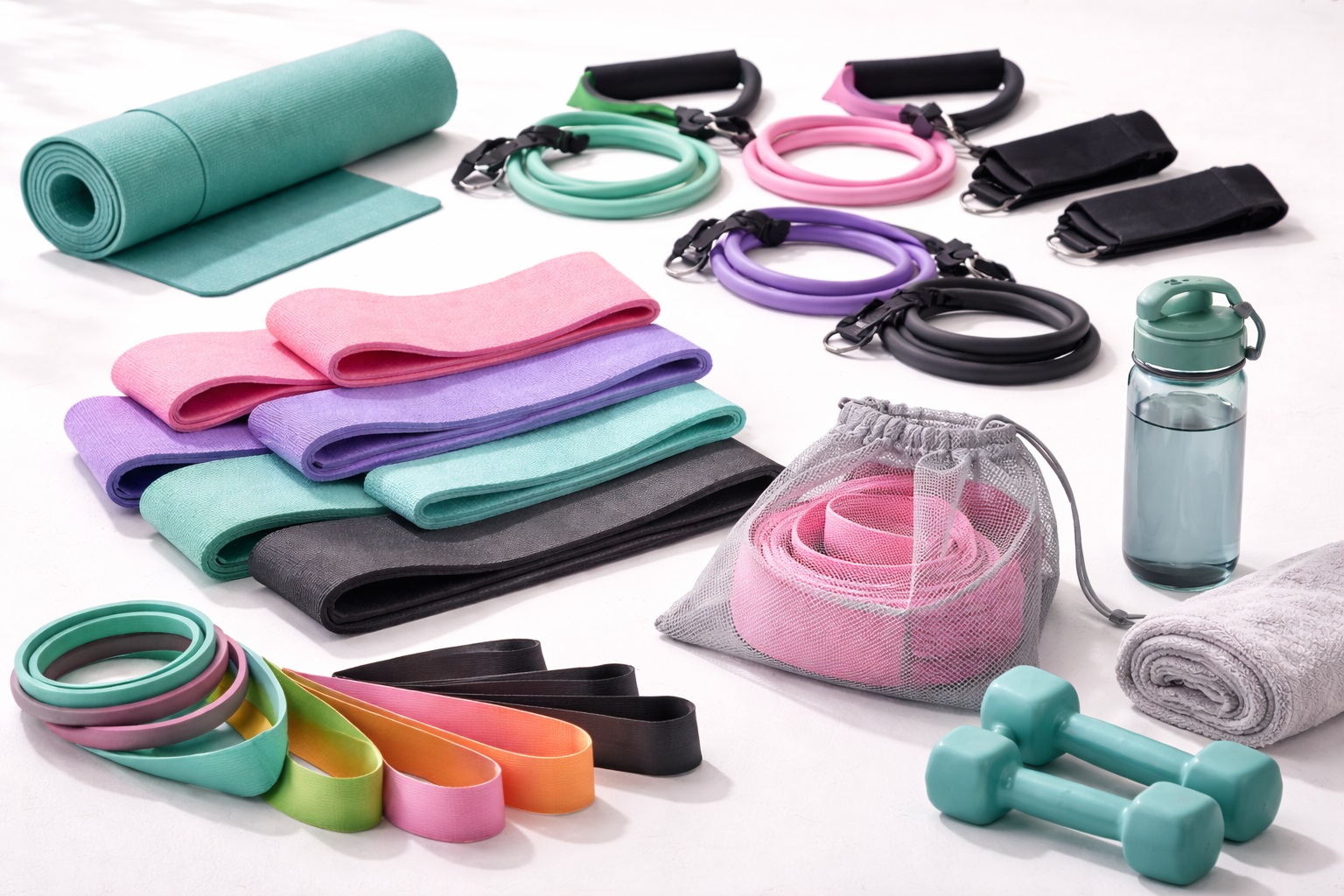
Best Resistance Bands for Home Workouts in 2026
Turning a spare room, a garage corner, or even a living room floor into a real strength training space is easier than ever in 2026, and resistance bands are the piece of equipment doing most of the heavy lifting for people who train at home. They take up almost no space, they scale from light activation work to genuinely challenging strength sessions, and they let you hit muscle groups that dumbbells alone often miss, all without needing to clear out a room for a squat rack.
The hard part is figuring out which bands can actually support a serious home workout routine rather than just a light stretching session. Some sets are built for full-body strength work with handles and anchors, while others are narrower tools meant for warmups or targeted activation. We looked closely at eight popular options, comparing how each is built, what it costs, and which type of home training routine it is really designed for, so you can build a setup that matches how you actually plan to train. It also helps to think about how your training will change over the coming months. A setup that only works for your current fitness level can leave you needing to start over once your strength improves, while a slightly more flexible combination of bands can carry you through several stages of progress without a second purchase.
Below you will find full reviews of each pick, a buying guide covering everything worth considering before you commit to a home strength training setup, and answers to the questions that come up most often once bands become a regular part of your routine. It is also worth remembering that a home setup rarely needs to replicate a commercial gym exactly. The goal is a small collection of bands that together cover pressing, pulling, and lower-body work, so that a full-body strength routine is genuinely possible in whatever space you have available, whether that is a dedicated home gym room or a corner of a bedroom.
It is also worth noting that home strength training with bands tends to work best as an ongoing system rather than a single purchase. Many home lifters start with one or two bands, discover which movements they enjoy and which muscle groups need more attention, and then add a second band type to fill in the gaps. Reading through the eight options below with that mindset can make it easier to see how a combination of two or three sets, rather than a single all-in-one product, often ends up being the most practical long-term setup for a home workout space.
Top 8 Best resistance bands Picks (Detailed Reviews)
1. Bodylastics Stackable – Best For a Complete Home Strength System
The Bodylastics Stackable set is built around the idea that a home strength training setup should be able to grow with you, and its Anti-snap technology is what makes that possible with confidence. At around $30, it lets you stack multiple individual bands onto a single handle, which means squats, rows, presses, and curls can all be progressively overloaded from the same compact system instead of requiring separate pieces of equipment for each exercise. For a home lifter trying to consolidate an entire strength routine into one corner of a room, that kind of modularity is difficult to match with fixed-weight equipment.
- Pros:
- Anti-snap technology supports heavier, more demanding strength work
- Stackable bands allow real progressive overload over time
- Reputable brand widely used in home gym setups
- Cons:
- Higher price than single-loop options
- Requires slightly more setup time than a basic loop band
Best For: Home lifters who want one system that can handle a genuinely full-body strength training routine without buying several separate pieces of equipment.
Why We Recommend It: The combination of stackable resistance and anti-snap construction makes it one of the more versatile options for anyone building strength at home over the long term, especially for lifters who want one system rather than several separate pieces of equipment.
2. Rogue Tube Bands – Best For Heavy, Serious Training
Rogue Fitness has a reputation among serious lifters, and the Tube Bands bring that same gym-grade philosophy home through Industrial grade rubber construction. At around $50, this is the most expensive set in the lineup, aimed squarely at home athletes who want equipment that can handle frequent, demanding strength sessions without wearing out. Anyone who has already outgrown lighter bands elsewhere in this guide is likely to appreciate the extra headroom this set provides.
- Pros:
- Industrial grade rubber built to withstand heavy, repeated use
- Trusted brand among home gym and strength training enthusiasts
- Strong long-term value for frequent training
- Cons:
- Highest price point among the options here
- More band than someone training casually may need
Best For: Home lifters training multiple times a week who want equipment built for consistent, heavy use over a long period of time.
Why We Recommend It: The industrial grade construction is designed to hold up under exactly the kind of frequent, high-effort training a serious home strength routine demands, making it a sound long-term purchase for committed lifters.
3. Fitbit Resistance Bands – Best For Consistent Everyday Use
Fitbit's resistance bands are built around Durable latex that is meant to handle regular, everyday training rather than occasional use. At roughly $40, they suit home lifters who work out several times a week and want a band that delivers the same resistance feel from session to session without breaking down. That consistency matters more than it might seem, since a band that stretches unevenly over time can make it hard to judge whether your strength is actually improving.
- Pros:
- Durable latex construction holds up to frequent training
- Consistent tension from workout to workout
- Recognizable, reputable brand name
- Cons:
- Premium pricing relative to basic loop bands
- Latex may not suit those with sensitivities
Best For: Home lifters who train frequently and want dependable, consistent resistance every session without worrying about early wear.
Why We Recommend It: The durable latex build is well suited to the wear and tear of a regular home strength training schedule, and its consistent feel helps make progress easier to track over time.
4. Peach Bands Hip Bands – Best For Lower-Body Strength Work
Peach Bands Hip Bands are built specifically for lower-body training, with a Fabric non-slip design that keeps the band in place through squats, hip thrusts, and lateral movements. At about $20, they are a focused addition to a home strength setup rather than a full-body replacement, but for glute and hip work specifically, the non-slip fabric is a real advantage. Pairing this set with an upper-body focused band elsewhere in your setup is a simple way to round out a full home strength routine.
- Pros:
- Fabric non-slip design stays put during heavy lower-body sets
- Comfortable against skin during repeated movements
- Effective for targeted glute and hip strength training
- Cons:
- Not designed for upper-body or full-body strength work
- Best paired with other bands for a complete routine
Best For: Home lifters who want to add dedicated lower-body strength and activation work to their routine alongside existing upper-body equipment.
Why We Recommend It: The non-slip fabric construction solves the sliding problem that undermines many lower-body band exercises, making squats and lateral movements feel noticeably more controlled.
5. Whatafit Resistance Bands – Best For Flexible Resistance Combinations
The Whatafit set offers Up to 150 lbs total resistance when bands are combined, giving home lifters a wide range to work with as strength training demands increase. At around $25, it is a mid-priced option that suits people who want to adjust resistance on the fly depending on the exercise and muscle group being trained. Households with more than one person training can also benefit, since lighter and heavier band combinations can be split between different users.
- Pros:
- Up to 150 lbs total resistance supports serious strength work
- Multiple bands allow flexible combinations for different exercises
- Reasonable price for the range of resistance included
- Cons:
- Takes practice to combine bands efficiently
- Basic included accessories compared to premium sets
Best For: Home lifters who want one set flexible enough to cover both lighter and heavier strength exercises across a full training week.
Why We Recommend It: Having up to 150 lbs of combined resistance available means the set can keep pace as your home strength training progresses, reducing the need for a second purchase later on.
6. TheraBand Professional – Best For Controlled Strength and Mobility Work
TheraBand's Professional set uses Color-coded levels to make resistance easy to track, and the flat band format is well suited to controlled, joint-friendly strength work at home. At about $15, it is one of the more affordable ways to add structured resistance training to a home routine, especially for movements that benefit from a smooth, even pull. It is also a practical choice for home lifters easing back into training after an injury or a long break.
- Pros:
- Color-coded levels make tracking training progress simple
- Flat design is gentle on hands and joints
- Trusted brand with roots in rehabilitation and fitness
- Cons:
- Feels different in hand than tube-style bands
- Fewer options for door-anchored strength exercises
Best For: Home lifters who want a controlled, low-impact way to build strength alongside mobility work, especially those returning to training after time off.
Why We Recommend It: The color-coded system makes it easy to track resistance progress as part of a structured home strength training program, particularly for lifters who value control over raw intensity.
7. Veick Resistance Set – Best For Cable-Style Home Training
The Veick Resistance Set comes with a Door anchor included, which turns a doorway into a makeshift cable station for rows, presses, and pulldown-style movements. Priced around $35, it is a strong option for home lifters who want to replicate gym-style strength exercises without needing a rack or dedicated machine. For anyone whose home routine leans heavily on pulling movements, having that anchor point built in from the start is a genuine convenience.
- Pros:
- Door anchor included expands available strength exercises significantly
- Tube-style bands suit both upper and lower body training
- Good substitute for cable-machine style movements at home
- Cons:
- Requires a sturdy door frame for safe anchoring
- Slightly more setup involved than loop-only training
Best For: Home lifters who miss cable-machine exercises and want to recreate that variety without gym equipment or a dedicated rack.
Why We Recommend It: The included door anchor unlocks a much wider range of strength training movements than loop bands alone can offer, closing a common gap in many home setups.
8. Letsfit Resistance Loop – Best For Supplementing a Home Routine
The Letsfit Resistance Loop is a simple, affordable way to add extra resistance to bodyweight strength exercises at home, offering 5 varying resistance levels at a price of around $10. It works well as a supporting piece within a larger home strength training setup rather than the centerpiece of the routine. Its low cost also makes it an easy way to test whether adding banded resistance to an existing bodyweight routine is worth expanding on further.
- Pros:
- Very low price makes it easy to add to an existing setup
- 5 varying resistance levels support progressive training
- Compact and easy to store alongside other equipment
- Cons:
- Limited on its own for a full strength training routine
- Fewer accessories than larger, more complete sets
Best For: Home lifters who already own other strength equipment and want an affordable way to add banded resistance to specific exercises.
Why We Recommend It: Its low cost and range of resistance levels make it an easy, low-risk addition to a broader home training setup, especially for lifters already invested in other equipment.
Buying Guide: How to Choose the Best Resistance Bands for Home Workouts
Building a home strength training setup around resistance bands means thinking about how the equipment fits into a broader routine, not just how a single band feels in isolation. These twelve factors cover what matters most for home training specifically, from how a band fits into an existing weekly split to how well it will hold up once it becomes a regular part of your week rather than an occasional novelty.
1. Match Bands to Your Training Split
If your home routine already includes upper-body, lower-body, and full-body days, choose bands that support each type of session rather than a single narrow tool. A combination of tube bands with handles and dedicated loop bands typically covers the widest range of home strength exercises. Mapping your existing training split against what each band type actually supports is a quick way to spot gaps in a current setup before buying anything new.
2. Prioritize Anchor Points for Upper-Body Work
Rows, presses, and pulldown-style movements all require something to anchor the band against, so a door anchor is one of the most valuable additions to a home strength training kit. Without one, upper-body options are largely limited to pushups and shoulder presses using the band alone. A sturdy door frame is usually all that is needed to make this work safely and reliably session after session.
3. Plan for Progressive Overload
Serious strength training depends on gradually increasing resistance over time, so look for sets that allow you to combine or swap bands as exercises become easier. Stackable systems in particular are built around this kind of long-term progression. Without a way to add resistance, a home routine can plateau quickly once your body adapts to a fixed level of tension.
4. Consider Total Resistance Range
Check how much combined resistance a set can offer, since home lifters with some training experience often need more than a single light band provides. A wider range means fewer gaps as your strength improves across different exercises, and it reduces how often you will need to purchase additional bands down the line.
5. Think About Space and Storage
One of the main reasons people choose bands for home workouts is limited space, so consider how easily a set stores away between sessions. Compact loops and stackable tube systems both pack down small compared to traditional home gym equipment, which matters if your training space also doubles as a living area.
6. Balance Durability Against Frequency of Use
If you plan to train at home several times a week, durability becomes more important than it would for occasional use. Look for reinforced or anti-snap construction if your routine is going to put consistent demand on the bands, since replacing worn-out equipment repeatedly adds up in cost over a year of regular training.
7. Include Lower-Body Specific Tools
General tube bands are useful, but dedicated hip and glute bands with a non-slip design can make lower-body strength work noticeably more effective by staying in place through squats and lateral movements. Many home lifters find that adding one of these specialized bands improves the quality of their lower-body sessions more than upgrading tube bands would.
8. Factor In Comfort for Longer Sessions
Home strength sessions often run longer than a quick warmup, so comfort against the skin matters more over an extended workout. Wider, fabric-style bands tend to hold up better during longer lower-body sets, while thinner bands are usually fine for shorter, more targeted exercises.
9. Decide How Many Resistance Levels You Need
A home strength training routine benefits from having a few distinct resistance levels available, since different exercises and muscle groups require different amounts of tension. Color-coded or clearly labeled bands make managing multiple levels far easier once your collection grows beyond two or three bands.
10. Set a Budget That Matches Your Commitment
Options in this guide range from about $10 to $50, and it makes sense to spend more if you already know home strength training will be a regular, long-term habit rather than a short experiment. If you are still building that habit, starting closer to the lower end of the range is a reasonable way to limit risk.
11. Check What Accessories Are Included
Handles, door anchors, and ankle straps all expand what a set of bands can do for a home routine. Comparing included accessories, not just the bands themselves, gives a clearer picture of real value, since two similarly priced sets can offer very different amounts of usable equipment.
12. Buy From Brands With a Track Record
Because home strength training often involves heavier resistance than casual stretching, build quality and safety matter more. Established, reputable brands tend to offer more consistent quality control across their resistance band lineups, which is worth prioritizing once bands become a regular, load-bearing part of your training.
Frequently Asked Questions
Can resistance bands really build strength at home?
Yes. Bands provide continuous tension through a full range of motion, and combined with progressive overload, they can build meaningful strength for home lifters without needing a full set of dumbbells or machines. Many home routines built entirely around bands can cover pressing, pulling, squatting, and hip-focused movements just as effectively as a small collection of free weights.
How many bands do I need for a complete home workout routine?
Most home lifters do well with three to five bands covering a range of resistance levels, along with a door anchor for upper-body exercises and a dedicated loop band for lower-body work. That combination is usually enough to train every major muscle group without needing additional equipment, though some lifters choose to add a second stackable band later as their strength continues to improve.
Can I combine resistance bands with dumbbells or other home equipment?
Yes, many home lifters use bands alongside other equipment, either to add extra tension to specific exercises or to fill gaps in their routine on days when heavier equipment is not practical. Bands are also useful for warming up joints before switching to heavier free-weight work.
Is a premium resistance bands worth it?
Yes, higher end models often last longer and provide better support or consistency than cheaper alternatives, which matters more for home lifters training several times a week over the long term. For occasional use, a more affordable set is usually a perfectly reasonable choice, and you can always upgrade to a premium option once you have a clearer sense of how often you will actually train.
How do I clean my resistance bands?
Most can be wiped down with a damp cloth or mild soap. Always check the manufacturer's care instructions before using any additional cleaning products on the material, and allow the bands to dry completely before putting them away.
Do I need a door anchor for a home strength routine?
A door anchor significantly expands the range of upper-body exercises available at home, making it one of the more valuable additions for anyone building a full-body strength training routine with bands. Without one, upper-body training is largely limited to pushups and overhead pressing movements.
How often should I train with resistance bands at home?
This depends on your overall routine, but many home lifters train with bands three to five times a week, alternating muscle groups to allow for recovery between sessions. Beginners to a home routine may prefer starting with two or three sessions per week before increasing frequency.
Will resistance bands wear out faster with frequent home use?
Frequent use does accelerate wear over time, which is why durability and material quality matter more for home lifters training several times a week than for occasional users. Inspecting bands regularly for small nicks or thinning spots is a simple way to catch wear before it becomes a problem, and replacing a band at the first sign of damage is always safer than waiting.
Can beginners use the same bands as more experienced home lifters?
Sets with multiple resistance levels work well for both, since a beginner can start on the lightest band while a more experienced lifter uses heavier levels within the same set. This also makes shared household equipment more practical for families or roommates training together in the same space.
What is the benefit of stackable resistance bands for home training?
Stackable systems let you combine multiple bands onto one handle, making it easy to increase resistance gradually without needing to buy an entirely new set as your strength improves. This kind of long-term flexibility is one of the main reasons stackable systems remain popular with home lifters.
Are tube bands or loop bands better for a home strength routine?
Both serve different purposes, and many complete home routines use tube bands with handles for upper-body pressing and pulling movements alongside loop bands for lower-body activation and strength work. Choosing one over the other usually comes down to which muscle groups you want to prioritize first, though most well-rounded home setups end up including both types eventually.
How do I know when to move up to a heavier resistance band?
If you can complete a full set of an exercise with good form and the last few repetitions no longer feel challenging, it is a sign your current band has become too light for that movement. This is the same progression principle used in traditional strength training with free weights, and tracking how a set feels week to week is usually enough to know when it is time to increase resistance.
Final Verdict
- Top Pick: Bodylastics Stackable for overall excellence.
- Budget Choice: Fitbit Resistance Bands for great value.
- Premium Choice: Rogue Tube Bands for high-end features.
Every set in this guide can support a home workout routine, but the best fit depends on how you plan to train. Lifters who want one system to handle an entire strength routine will get the most out of the Bodylastics Stackable set, while those training frequently and looking for long-term durability may prefer the Rogue Tube Bands despite the higher price. If your home routine is more about supplementing existing equipment or targeting specific muscle groups, options like the Peach Bands Hip Bands or the affordable Letsfit Resistance Loop can round out a setup without a major investment. Lifters who miss the variety of a cable machine will likely get the most day-to-day use out of the Veick Resistance Set and its included door anchor, while those wanting a gentler, more controlled option may prefer the TheraBand Professional. Whatever you choose, building a consistent home strength training habit matters more than any single piece of equipment, and the right bands are simply the tool that makes that consistency easier to maintain.