Best Non-Slip Yoga Mat in 2026
There is a specific kind of frustration that comes from mid-pose slippage: one hand starts to slide during a downward dog, a foot inches forward during warrior two, and suddenly your attention is on the floor instead of your breath or your form. Grip is arguably the single most practical feature a yoga mat can offer, because no amount of cushioning or style compensates for a surface that will not hold still under your hands and feet. That is exactly the problem this guide is built to solve.
We evaluated eight yoga mats with a specific focus on how they handle traction, particularly once a session gets physically demanding and sweat becomes part of the equation. Grip is not a single, simple property. It depends on surface texture, material composition, and even how a mat interacts with different skin conditions, from dry hands during a slow morning stretch to damp palms during an intense flow. Some mats rely on aggressive 3D textures, others use closed-cell surfaces that resist moisture absorption, and others lean on natural rubber's inherently tacky feel. Each approach has a different practical outcome, and understanding those differences is the key to actually solving a slipping problem rather than just buying another mat and hoping for the best.
Below, you will find in-depth reviews of eight mats known for their grip performance, a full buying guide breaking down exactly what makes a mat non-slip in practice, and a set of frequently asked questions addressing the most common grip-related concerns. If sliding mid-pose has been derailing your practice, this guide should help you find a mat that finally puts that concern to rest.
It is also worth noting upfront that grip is rarely a problem with a single cause. A mat that felt secure in a cool, dry studio can behave completely differently on a warm afternoon in a home space with less airflow, or after months of accumulated body oils and dust have dulled its surface. Diagnosing whether a slipping issue comes from the mat itself, the flooring underneath it, or simple wear over time can save you from replacing a perfectly good mat unnecessarily, or from sticking with one that genuinely needs to be retired.
Top 8 Best Non-Slip Yoga Mat Picks (Detailed Reviews)
1. Jade Harmony – Best For Natural Rubber Grip
The Jade Harmony leans on its sustainable rubber construction to deliver one of the more distinctly tacky, grippy surfaces in this comparison. Natural rubber has a different feel underfoot than synthetic materials, offering a kind of grab that many long-time practitioners describe as more secure and less dependent on staying completely dry. At around $80, it sits at a reasonable mid-range price for what natural rubber typically costs, and the grip payoff is immediately noticeable from the first few sessions. For practitioners who have struggled with synthetic mats turning slick under sweaty palms, switching to a natural rubber surface like this one often solves the problem outright, and many who make the switch describe it as the single change that finally let them stop thinking about their footing mid-flow.
- Pros:
- Sustainable rubber construction offers naturally tacky grip
- Traction holds up well even as hands and feet perspire
- Reasonable pricing for a natural rubber mat
- Cons:
- New mats can carry a noticeable rubber scent at first
- Slightly heavier than thinner synthetic alternatives
Best For: Practitioners who want the most naturally secure grip available without stepping into ultra-premium pricing.
Why We Recommend It: Natural rubber's inherent tackiness makes it one of the most dependable grip solutions in this entire comparison.
2. Lululemon The Mat 5mm – Best For Grip During Sweaty Sessions
The Lululemon The Mat 5mm is engineered around its 3D texture grip, a surface pattern specifically designed to maintain traction as moisture builds up during a session. Unlike smoother mats that rely mostly on their base material for grip, this textured approach continues performing even once your palms and soles start to perspire, which is often exactly when other mats begin to fail. Priced around $88, it is a strong choice for anyone whose practice regularly pushes into more physically demanding territory, including power yoga, vinyasa flows, or sessions that blend yoga with more general strength and cardio work.
- Pros:
- 3D texture grip specifically engineered for sweat resistance
- Performs consistently through dynamic, fast-paced sequences
- Reputable brand with dependable manufacturing quality
- Cons:
- Premium pricing relative to more basic grip-focused mats
- Textured surface may feel less smooth to some users initially
Best For: Practitioners whose sessions regularly become sweaty or physically intense.
Why We Recommend It: The engineered texture is purpose-built to solve the exact moment when most mats start losing traction.
3. Retrospec Laguna – Best For Budget-Friendly Traction
Proving that reliable grip does not require a large budget, the Retrospec Laguna uses a non-slip texture that performs well above what its roughly $25 price tag might suggest. It avoids the common budget-mat trap of feeling secure only when both the mat and your skin are completely dry, holding its traction reasonably well even as a session picks up intensity. For anyone who assumed a genuinely grippy mat required spending significantly more, this is a useful reminder that is not always the case, and it makes a strong case for testing an affordable option before assuming a pricier mat is the only fix.
- Pros:
- Non-slip texture performs well above its price point
- Very accessible cost for a grip-focused mat
- Straightforward, no-frills construction
- Cons:
- Cushioning is more basic than pricier alternatives
- Grip may fade slightly faster with heavy daily use over time
Best For: Budget-conscious buyers who still refuse to compromise on basic slip resistance.
Why We Recommend It: It challenges the assumption that dependable grip has to come at a premium price.
4. Hugger Mugger Para – Best For Grip With Extra Cushioning
The Hugger Mugger Para combines a dual sided design with enough surface texture to hold its position well during both standing and floor-based work. At around $110, it is the priciest mat in this comparison, but it addresses a specific need: practitioners who want strong traction without sacrificing the cushioning that protects knees and wrists during longer sessions. The combination of grip and padding makes it particularly well suited to slower, more deliberate practices where stability matters as much as comfort, such as restorative sessions, yin yoga, or longer kneeling sequences that put sustained pressure on the joints.
- Pros:
- Dual sided design supports both grip and cushioning
- Stable footing even with the extra padding
- Well suited to longer, more deliberate practice sessions
- Cons:
- Highest price point among these eight picks
- Bulkier profile than thinner grip-focused mats
Best For: Practitioners who want dependable traction without giving up joint-friendly cushioning.
Why We Recommend It: It manages to deliver both grip and comfort at the same time, rather than forcing a choice between the two.
5. Alo Yoga Warrior – Best For Slip-Free Standing Poses
Standing poses put unique demands on grip, since even small amounts of sliding at the base of the foot can throw off balance entirely. The Alo Yoga Warrior addresses this directly with its matte finish slip-free surface, which is specifically designed to hold steady under the concentrated pressure points that standing poses create. At around $100, it pairs this functional grip with a clean, studio-inspired aesthetic that many buyers appreciate, without asking practitioners to trade one for the other the way some purely style-driven mats do.
- Pros:
- Matte finish slip-free surface excels during standing poses
- Studio-quality look and feel
- Consistent build quality from a reputable brand
- Cons:
- Premium pricing similar to other lifestyle-focused mats
- Fewer color options than some budget alternatives
Best For: Practitioners whose routine leans heavily on standing balance poses.
Why We Recommend It: Its slip-free surface is specifically tuned for the pressure points that standing work creates, which is where slipping tends to matter most.
6. Amazon Basics 1/2-Inch – Best For Grip on a Budget
The Amazon Basics 1/2-Inch is best known for its extra thick foam, but that foam also contributes to a reasonably grippy surface, especially compared to thinner, smoother budget alternatives. At around $20, it is the least expensive mat in this comparison, making it a sensible low-risk option for anyone who wants to test whether a thicker, more textured mat solves their slipping issues before spending more. It is also a practical choice for a second mat kept on hand for guests who may not need the same level of specialized grip performance.
- Pros:
- Extra thick foam contributes to a reasonably grippy surface
- Very low price point for a grip-conscious buyer
- Simple, accessible option for beginners
- Cons:
- Grip is not as specialized as mats built specifically for traction
- Thicker foam can reduce stability in some balance poses
Best For: Buyers who want to address grip concerns without a significant upfront investment.
Why We Recommend It: It offers a meaningful step up in traction over the thinnest, smoothest budget mats without asking much of your wallet.
7. Gaiam Premium Print – Best For Casual Non-Slip Practice
For practitioners whose sessions are more casual and less physically intense, the Gaiam Premium Print offers dependable grip through its extra thickness, paired with an approachable price around $30 and a wide range of prints. It is not marketed as a performance-first grip mat, but for everyday, lower-intensity practice, its traction is more than sufficient, and the range of available prints makes it easy to find one that feels personal rather than purely functional.
- Pros:
- Reliable grip for casual, everyday practice
- Affordable price with a wide variety of prints
- Extra thickness adds comfort alongside traction
- Cons:
- Not specifically engineered for high-intensity, sweaty sessions
- Grip may feel less aggressive compared to specialized traction mats
Best For: Casual practitioners who want dependable, everyday grip without a performance-mat price tag.
Why We Recommend It: It covers the grip fundamentals well for lower-intensity sessions at a price that is easy to justify.
8. Manduka PROlite – Best For Long-Term Grip Consistency
Grip that fades over time can be just as frustrating as a mat that never had good traction to begin with. The Manduka PROlite addresses this with its closed-cell surface, which resists the moisture absorption that causes many mats to become slicker and less predictable as they age. At around $95, it is priced for practitioners who want grip performance that holds steady session after session, year after year, rather than gradually degrading. For anyone who has watched a once-reliable mat slowly become unpredictable underfoot, that long-term consistency is worth the higher upfront cost.
- Pros:
- Closed-cell surface resists moisture-related grip degradation over time
- Consistent traction across years of regular use
- Reputable brand with dependable construction
- Cons:
- Premium pricing compared to more basic grip-focused mats
- Limited color and print variety
Best For: Practitioners who want grip performance that will not noticeably decline over years of consistent use.
Why We Recommend It: Its moisture-resistant surface protects against the slow grip degradation that eventually affects many other mats.
Buying Guide: How to Choose the Best Non-Slip Yoga Mat
Grip is influenced by more than a single feature, and understanding the different factors that contribute to it will help you shop more effectively than simply looking for the word “non-slip” on a product label. The sections below cover what actually determines how secure a mat feels underfoot.
1. Surface Texture and Pattern
Textured surfaces, whether raised patterns, embossed grids, or 3D grip designs, physically increase the contact points between skin and mat, which generally improves traction compared to a completely smooth surface, particularly once moisture is involved.
2. Material Composition and Natural Tackiness
Natural rubber tends to offer an inherently tacky feel that many practitioners find more secure than synthetic PVC or TPE, though synthetic materials with specialized textured coatings can close much of that gap in practice.
3. Open-Cell Versus Closed-Cell Surfaces
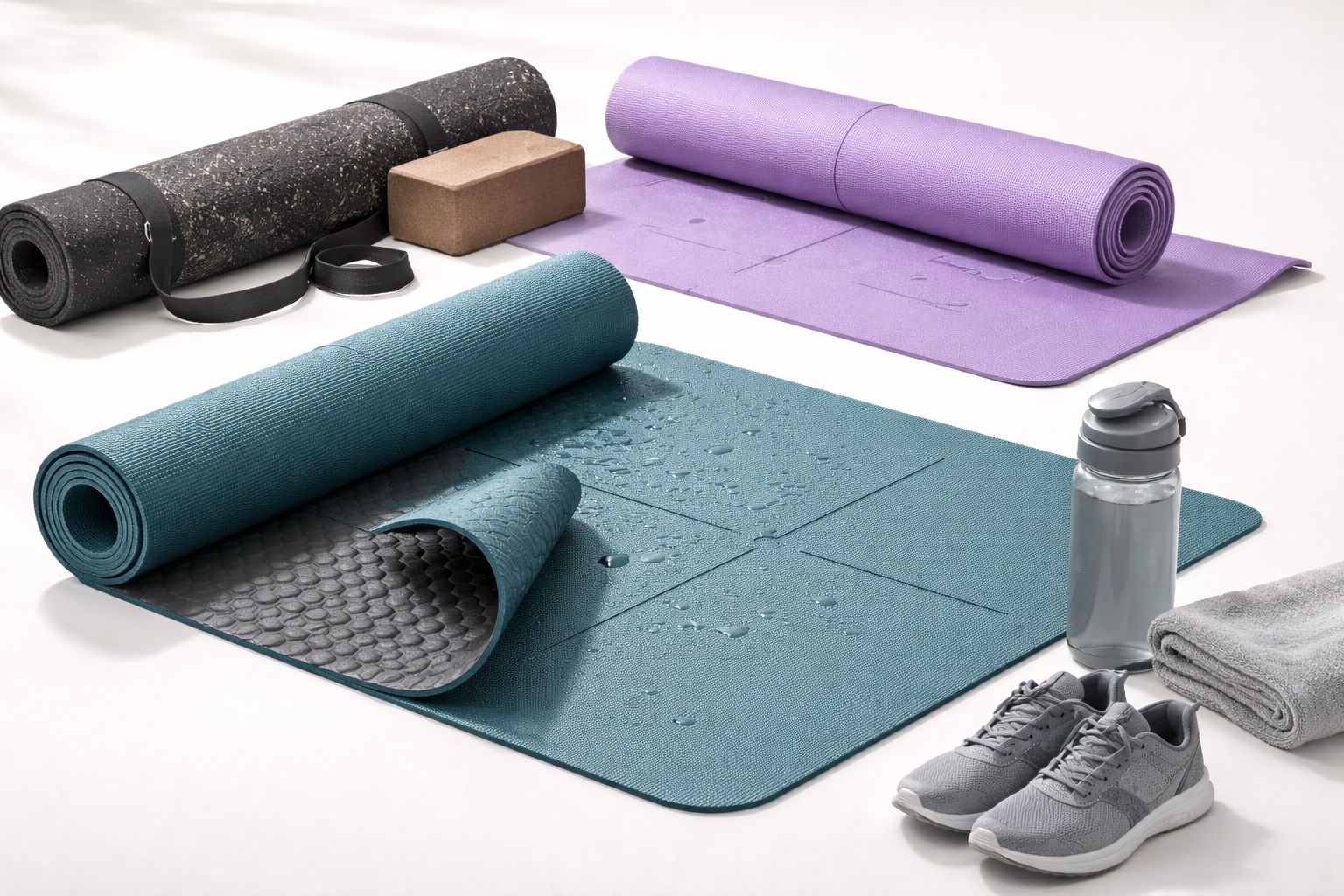
Open-cell surfaces tend to grip well when dry but can become slippery as they absorb sweat, while closed-cell surfaces resist moisture absorption and often maintain more consistent traction throughout a sweaty session, though they may feel slightly less tacky when completely dry.
4. How Grip Changes With Moisture
Some mats perform very differently wet versus dry, and it is worth considering which condition matters most for your practice. If your sessions regularly involve heavy perspiration, prioritizing mats specifically designed to handle moisture is more important than dry-grip performance alone.
5. Grip for Standing Poses Versus Floor Work
Standing poses concentrate pressure on small contact points at the hands and feet, demanding strong localized traction, while floor work distributes weight more broadly. Some mats are optimized more for one than the other, so matching this to your typical practice style matters.
6. Thickness and Its Effect on Stability
Thicker mats can sometimes feel less stable during standing balance poses even if their surface grip is excellent, since the added cushioning introduces slight give underfoot. Consider thickness alongside surface texture rather than in isolation.
7. Breaking In New Mat Grip
Many mats, especially natural rubber ones, ship with a light manufacturing residue that can temporarily reduce grip. A few sessions of use, sometimes combined with a light wipe-down, typically resolves this and reveals the mat's true traction performance.
8. Grip Longevity Over Time
Some mats maintain their traction for years, while others gradually become smoother and slicker as the surface wears down. Materials that resist moisture absorption and general surface degradation tend to hold their grip performance longer.
9. Using a Towel for Extra Grip
For particularly sweaty sessions, a yoga towel placed over the mat can add an extra layer of traction, though this works best when paired with a mat that already offers reasonably good grip on its own rather than as a substitute for one.
10. Floor Surface Compatibility
A mat's underside grip on the floor itself matters as much as its top surface grip for your body. Hardwood, tile, and carpet all interact differently with a mat's base, so it is worth confirming a mat is designed to stay put on your specific flooring type.
11. Cleaning Habits That Preserve Grip
Oils, lotions, and general dust buildup can reduce a mat's traction over time. Regular cleaning with a damp cloth and mild soap helps preserve original grip performance for much longer than an infrequently cleaned mat.
12. Price Versus Grip Performance
While premium mats often deliver excellent engineered grip, several more affordable options in this comparison prove that strong traction does not always require a high price point, particularly for less intense practice styles.
13. Grip Preferences Vary by Practitioner
Some practitioners prefer the slightly tacky, dense feel of natural rubber, while others prefer the more structured, patterned grip of textured synthetic mats. Trying a couple of surface types, when possible, helps identify personal preference rather than relying solely on specifications.
14. Matching Grip Needs to Practice Intensity
A gentle, restorative practice places far less demand on grip than a fast-paced, sweat-heavy flow. Being honest about your typical intensity level helps avoid overpaying for grip features you may not fully need, or underestimating how much traction you actually require.
15. Considering Hand and Skin Sensitivity
Highly textured surfaces can occasionally feel uncomfortable against sensitive skin during extended floor work, so it is worth considering surface texture intensity alongside pure grip performance when making a final choice.
16. Testing Grip at Home Before Committing Long-Term
Where possible, testing a new mat through a few varied sessions, including at least one more intense practice, gives a clearer picture of real-world grip performance than reading specifications alone.
17. Replacing a Mat Once Grip Noticeably Declines
Once a mat's surface has visibly smoothed, thinned, or begun peeling, no amount of cleaning will fully restore its original traction. Recognizing this point and replacing the mat proactively helps avoid injuries caused by unexpected slipping.
18. Grip Differences Between Hands and Feet
Feet tend to grip more securely than hands on most surfaces, since palms produce more sweat and have less natural texture than the soles of the feet. This is worth factoring in for practices with heavy hand-weight poses, like arm balances, where hand grip becomes the limiting factor.
19. Room Temperature and Humidity Effects
Warmer, more humid environments increase perspiration and can make even a well-reviewed mat feel less secure than it would in a cooler, drier room. If you practice in a warm space or during heated sessions, prioritizing moisture-resistant materials becomes especially important.
20. Comparing Grip Claims Across Product Descriptions
Terms like “non-slip,” “sticky,” or “high traction” are used broadly across the market, and they do not always mean the same thing from one brand to another. Paying attention to the specific surface technology described, such as closed-cell construction or 3D texture patterns, gives a more reliable indication of actual grip performance than marketing language alone.
Frequently Asked Questions
What makes a yoga mat genuinely non-slip?
A combination of surface texture, material tackiness, and moisture resistance determines how non-slip a mat truly is, rather than any single feature acting alone.
Why does my current mat get slippery when I sweat?
This usually happens with open-cell surfaces that absorb moisture rather than resisting it, or with smoother mats that rely on a flat surface for grip rather than an engineered texture.
Is natural rubber really grippier than synthetic materials?
Many practitioners find natural rubber's inherent tackiness more secure, though high-quality synthetic mats with specialized textured surfaces can perform comparably well, particularly in dry conditions.
How do I improve grip on a mat that already feels slippery?
Thoroughly cleaning the surface to remove oil and residue buildup can help, and using a yoga towel over the mat is a practical short-term fix while considering a longer-term replacement.
Do textured mats feel uncomfortable during floor poses?
Some heavily textured mats can feel slightly abrasive during extended floor work, so it is worth considering texture intensity alongside grip performance, especially if you spend significant time in seated or kneeling positions.
How long does it take for a new mat's grip to fully break in?
This varies by material, but many mats reach their true grip performance within the first several sessions as manufacturing residue wears off.
Are closed-cell mats better for grip than open-cell mats?
Closed-cell mats generally maintain more consistent grip as sweat builds up, since they resist moisture absorption, while open-cell mats can become slicker once they get wet.
Can I use chalk or grip spray on a yoga mat?
Some practitioners use specialized yoga mat sprays to boost grip, though this is generally more of a supplement to a mat's existing traction rather than a fix for a fundamentally slippery surface.
Does mat thickness affect how secure it feels?
Yes, thicker mats can introduce slight instability during standing balance poses even with excellent surface grip, so thickness and traction should be weighed together rather than separately.
Is a more expensive mat always grippier?
Not necessarily. Several affordable mats in this comparison offer solid traction, particularly for lower-intensity practice, though premium mats often include more specialized engineering for demanding sessions.
How often should I clean my mat to maintain grip?
Regular cleaning, ideally after each sweaty session and periodically with a deeper clean, helps prevent oil and residue buildup that gradually reduces traction over time.
Will a non-slip mat also stay in place on the floor itself?
Most non-slip mats are also designed with a grippy underside to prevent sliding on the floor, though performance can vary slightly depending on your specific flooring type.
What is the best mat surface for hot, sweaty yoga sessions?
Closed-cell surfaces or mats with engineered 3D texture grip tend to perform best under heavy perspiration, since they are specifically designed to resist becoming slick as moisture builds up.
Can grip performance decline permanently over time?
Yes, once a mat's surface has worn smooth or begun peeling, grip typically cannot be fully restored through cleaning alone, which usually signals it is time for a replacement.
Do all yoga mat brands use different grip technology?
Yes, approaches vary significantly, from natural rubber tackiness to engineered synthetic textures, which is why comparing specific surface descriptions matters more than assuming all mats grip the same way.
Is grip more important than cushioning for most practitioners?
For most people, yes, since a lack of grip directly disrupts balance and form, while insufficient cushioning is usually a matter of comfort rather than immediate instability.
Why does grip feel different on hands compared to feet?
Hands tend to sweat more and have less natural surface texture than feet, which is why hand-heavy poses often reveal grip weaknesses that go unnoticed during standing or floor work centered on the feet.
Does room temperature affect how slippery a mat feels?
Yes, warmer and more humid conditions increase perspiration, which can make a mat feel noticeably less secure than it would in a cooler room, even without any change to the mat itself.
Can a slippery mat actually contribute to injury?
Unexpected slipping mid-pose can lead to falls or strain, particularly during standing or balance-focused poses, which is one reason grip is worth prioritizing rather than treating as a minor comfort issue.
Do marketing terms like “non-slip” always mean the same thing?
Not necessarily. Different brands use similar language to describe different underlying technologies, so it is worth looking at the specific surface construction described rather than relying on the label alone.
Should I choose a different mat for hot yoga specifically?
If you regularly practice in heated or humid conditions, prioritizing a mat specifically designed to resist moisture, such as one with a closed-cell surface, will generally serve you better than a mat optimized only for dry-condition grip.
Final Verdict
- Top Pick: Jade Harmony for the most naturally secure, tacky grip in this comparison.
- Budget Choice: Retrospec Laguna for dependable traction at an accessible price.
- Premium Choice: Lululemon The Mat 5mm for engineered grip built specifically for sweaty, dynamic sessions.
Grip is one of those features that is easy to underestimate until you experience a mat that genuinely solves it, and difficult to ignore once you have. The eight mats above each approach traction differently, whether through natural rubber tackiness, engineered texture, or moisture-resistant construction, and identifying which approach matches your typical practice intensity is the most reliable way to finally stop worrying about slipping mid-pose. A secure mat changes the entire feel of a practice, letting you focus fully on breath, alignment, and movement instead of quietly worrying about whether your next transition will hold. Once you find that kind of stability, it becomes obvious how much a slipping surface had been silently working against you all along.