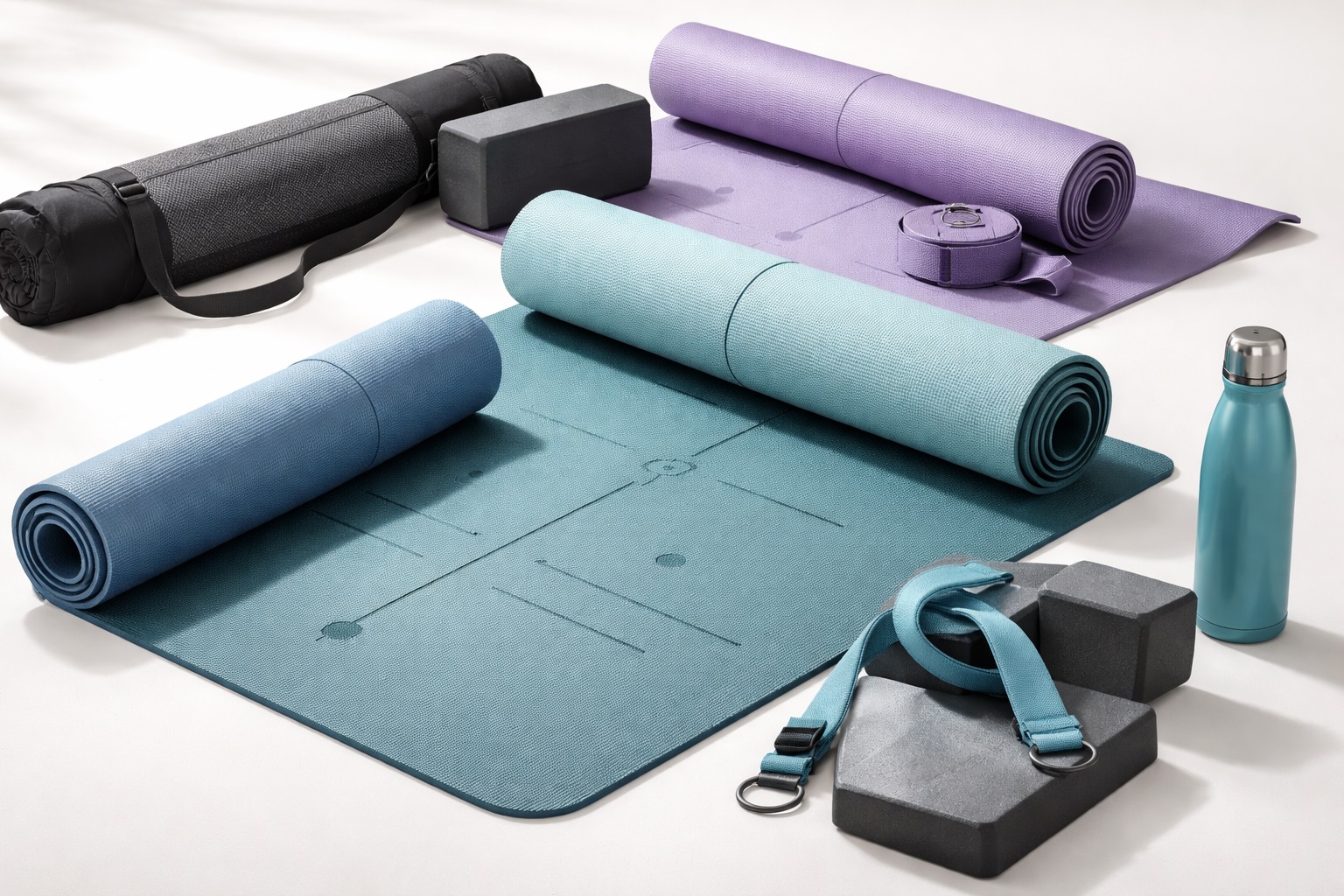
Best Yoga Mat for Home Workouts in 2026
Turning a corner of your living room, bedroom, or garage into a dependable practice space starts with one decision: the mat underneath you. A home workout routine puts different demands on a yoga mat than a studio class does. There is no instructor smoothing wrinkles out of a shared rental mat, no climate-controlled room keeping the floor at a constant temperature, and often less square footage to work with. The mat has to hold its position on tile, laminate, or carpet, absorb the impact of everything from slow vinyasa flows to floor-based strength circuits, and still look presentable when it is rolled out next to the couch.
We have spent time evaluating eight of the most talked-about yoga mats on the market for exactly this scenario: home practice. Each one approaches the job differently. Some prioritize dense cushioning for anyone doing kneeling or seated work on hard floors. Others focus on aggressive texture so the mat stays put during a hot, sweaty flow with no instructor around to remind you about form. A few split the difference, aiming for an all-purpose mat that can handle yoga in the morning and a bodyweight circuit in the evening without missing a beat.
Below, we break down what makes each of these eight mats worth considering, followed by a detailed buying guide that walks through the material science, sizing decisions, and maintenance habits that separate a mat you will use for years from one that ends up balled in a closet after a month. Whether you are outfitting a dedicated home gym corner or just need something reliable to unroll on the living room floor, this guide is built to help you land on the right choice the first time.
It also helps to think about how a home mat gets treated differently than a travel or studio mat. It may sit rolled up against a wall between uses, get walked past by kids or pets, or double as a stretching surface outside of formal practice time. None of that is a problem as long as the mat you choose is built with that kind of everyday, informal use in mind rather than only for the polished conditions of a studio floor.
Top 8 Best Yoga Mat for Home Workouts Picks (Detailed Reviews)
1. Manduka PROlite – Best For Overall Quality and Longevity
The Manduka PROlite has built its reputation over years of steady use in studios and homes alike, and that reputation carries over well into a home workout setting. Its closed-cell surface is the standout feature here, since a closed-cell construction resists moisture absorption rather than letting sweat and oils soak into the material over time. That matters more at home than you might expect, because a mat that lives in a corner of a bedroom or living room does not get the same airflow and rotation that a studio mat sees, so anything that resists buildup and odor retention earns its keep. At roughly $95, it sits toward the upper end of the mats in this comparison, but the trade-off is a mat engineered to hold its shape and density through years of consistent use rather than months. For anyone who has cycled through two or three cheaper mats already and is tired of replacing flattened, peeling gear every few seasons, the PROlite is the kind of purchase that is meant to end that cycle.
- Pros:
- Closed-cell surface resists moisture and sweat buildup over time
- Dense, supportive cushioning that holds up under repeated daily use
- Backed by a well-established brand with a long track record
- Cons:
- Premium pricing compared to other mats built for home use
- Limited color and print options relative to lifestyle-focused competitors
Best For: Home practitioners who want one mat that will still perform well after years of near-daily use.
Why We Recommend It: The closed-cell surface and consistent density make the PROlite a low-maintenance choice for anyone who does not want to think about mat replacement every few months.
2. Amazon Basics 1/2-Inch – Best For Budget-Conscious Beginners
Not everyone starting a home practice wants to commit a large budget before knowing whether the habit will stick, and that is exactly the gap the Amazon Basics 1/2-Inch fills. Its extra thick foam construction gives it noticeably more cushioning underfoot than many entry-level mats, which is a welcome cushion for knees and elbows during floor work. At around $20, it is priced low enough that picking one up feels like a low-risk way to get a home practice started without waiting to research every option on the market. It is also a sensible pick for households wanting a second or third mat on hand for guests or family members joining an occasional home session.
- Pros:
- Extra thick foam provides noticeable cushioning for joints
- Low price point removes the barrier to just getting started
- Simple, no-frills design that works well as a first mat
- Cons:
- Thicker foam can feel less stable for balance-heavy standing poses
- Color and print selection is limited compared to lifestyle brands
Best For: Beginners who want a comfortable, affordable mat to establish a home routine before investing further.
Why We Recommend It: It removes cost as a barrier while still delivering the cushioning that new practitioners often appreciate most during their first months of practice.
3. Lululemon The Mat 5mm – Best For Grip During Sweaty Sessions
Home workouts can get just as intense as anything you would do in a studio, and the Lululemon The Mat 5mm is built with that intensity in mind. Its 3D texture grip is designed to maintain traction even as your hands and feet start to perspire, which is a common failure point for smoother-surfaced mats once a session picks up pace. Priced around $88, it positions itself as a mid-to-premium option built specifically around performance during dynamic movement rather than just static comfort. That focus makes it a natural fit for home practitioners who mix yoga with cardio-style circuits, where a mat needs to hold traction through transitions rather than just static holds.
- Pros:
- 3D texture grip helps maintain traction as hands and feet perspire
- Well-suited to faster-paced or more dynamic home sessions
- Recognizable brand with consistent build quality
- Cons:
- Premium pricing relative to more basic home-use mats
- Limited color variety compared to some lifestyle competitors
Best For: Anyone whose home routine includes fast-paced flows or strength work where sweat becomes a factor.
Why We Recommend It: The texture is purpose-built to keep grip consistent from the first pose to the last, which matters most once a session heats up.
4. Hugger Mugger Para – Best For Extra Cushioning and Joint Support
For home practitioners who spend meaningful time on their knees, hips, or elbows, the Hugger Mugger Para offers a dual sided design that gives extra padding without sacrificing a stable base for standing work. That combination is particularly useful on hard flooring like tile or hardwood, where the floor itself provides no give at all. At around $110, it is the most expensive mat in this roundup, reflecting its focus on comfort and support over minimalism. Practitioners managing sensitive knees or wrists in particular tend to notice the difference this extra padding makes over the course of a longer home session.
- Pros:
- Dual sided design adds meaningful cushioning for joints on hard floors
- Stable underfoot despite the extra padding
- Well suited to slower, more restorative home practices
- Cons:
- Highest price point among the mats in this comparison
- Extra thickness can make it feel less portable than thinner mats
Best For: Practitioners on hard home flooring who prioritize joint comfort during kneeling and seated poses.
Why We Recommend It: The dual sided cushioning directly addresses one of the most common complaints about practicing on unforgiving home flooring.
5. Alo Yoga Warrior – Best For Studio-Style Aesthetics
Not every consideration for a home mat is purely functional; a lot of people practice more consistently when their setup actually looks appealing in their space. The Alo Yoga Warrior brings a matte finish slip-free surface with the kind of clean, studio-inspired look that fits naturally into a home workout corner. At around $100, it leans into the lifestyle side of the category without giving up functional grip in the process. For anyone who works out on camera, shares progress on social media, or simply enjoys a space that feels curated, that combination of form and function carries real value.
- Pros:
- Matte finish slip-free surface performs well during standing poses
- Studio-inspired aesthetic that complements a home workout space
- Reputable brand known for consistent quality control
- Cons:
- Premium pricing similar to other lifestyle-focused mats
- Fewer color options than some competitors in the space
Best For: Home practitioners who want their equipment to feel as intentional as the rest of their space.
Why We Recommend It: It manages to pair a clean, motivating look with grip that holds up during actual practice, rather than sacrificing one for the other.
6. Jade Harmony – Best For Eco-Conscious Practitioners
For anyone building a home routine while also trying to keep an eye on the materials entering their living space, the Jade Harmony stands out for its sustainable rubber construction. Natural rubber mats like this one tend to offer a distinctly grippy, tactile surface that many practitioners prefer over synthetic alternatives, and at around $80 it remains reasonably accessible for a natural-material mat. It is a solid middle ground between budget synthetic options and premium performance mats, and it tends to appeal to practitioners who care as much about what a product is made from as how it performs during a session.
- Pros:
- Sustainable rubber construction appeals to environmentally minded buyers
- Natural material offers a distinctly tactile, grippy surface
- Mid-range pricing relative to other natural rubber mats
- Cons:
- Natural rubber mats can carry a noticeable scent when new
- Not as widely available in as many colors as synthetic competitors
Best For: Buyers who want a natural material mat without stepping into ultra-premium pricing.
Why We Recommend It: It balances sustainable materials with practical grip and a price point that keeps it within reach for most home practice budgets.
7. Gaiam Premium Print – Best For Casual Home Practice
The Gaiam Premium Print keeps things simple: extra thickness for comfort, an approachable price around $30, and a wide range of prints that make it easy to find one that matches your space. It is not trying to be a performance-first mat, and that is fine, because plenty of home practitioners just want something comfortable and pleasant to look at for a casual, consistent routine. It is also an easy mat to recommend to a friend or family member just starting to explore yoga without wanting to overthink the purchase.
- Pros:
- Extra thickness adds comfort for general home use
- Affordable price makes it an easy first purchase
- Wide variety of prints and colors to match personal style
- Cons:
- Not specifically engineered for high-intensity or sweaty sessions
- Thicker profile can reduce stability in balance poses for some users
Best For: Casual home practitioners who prioritize comfort and personal style over performance-tier features.
Why We Recommend It: It delivers comfortable, everyday practicality at a price that makes it easy to recommend as a starting point.
8. Retrospec Laguna – Best For Affordable Everyday Use
Rounding out the list is the Retrospec Laguna, a straightforward mat built around a non-slip texture and a price point of around $25 that makes it one of the most accessible options here. It is a dependable choice for anyone who wants a mat that simply works, without paying for features they may never use in a home setting, making it an easy addition to a home gym corner that is still coming together.
- Pros:
- Non-slip texture provides dependable traction for everyday use
- Very accessible price point for a home practice mat
- Straightforward design without unnecessary extras
- Cons:
- Cushioning is more basic compared to premium alternatives
- Fewer style and color choices than lifestyle-focused brands
Best For: Home practitioners who want reliable everyday performance without a large upfront investment.
Why We Recommend It: It covers the fundamentals of grip and comfort at a price that makes it easy to justify, especially for a first or backup mat.
Buying Guide: How to Choose the Best Yoga Mat for Home Workouts
Picking the right mat for a home practice is less about finding the single “best” mat overall and more about matching a mat's characteristics to how, where, and how often you actually plan to use it. The sections below walk through the factors that matter most once you take the mat out of the studio setting and into your own space.
1. Material and Construction
Yoga mats are generally made from PVC, TPE, natural rubber, or cork-topped blends, and each material behaves differently underfoot. PVC mats tend to be durable and grippy but less eco-friendly, TPE offers a lighter and more biodegradable middle ground, and natural rubber provides excellent tactile grip at the cost of a bit more weight and, sometimes, an initial rubbery scent. Knowing which material you are buying helps set realistic expectations for texture, longevity, and how the mat will feel over repeated home sessions.
2. Thickness and Cushioning
Home floors vary enormously, from plush carpet to unforgiving tile, and mat thickness should respond to that reality. A thinner mat generally offers more stability for standing balance work, while a thicker mat cushions knees and elbows better during floor-based sequences. If your home practice mixes both, a mid-range thickness is usually the most forgiving compromise.
3. Grip and Traction Surface
Texture is what keeps a mat from sliding out from under you mid-pose, particularly once your hands and feet start to perspire. Surfaces range from smooth and closed-cell to heavily textured 3D grip patterns, and the right choice often comes down to how intense your typical home session gets and how much your floor itself contributes to slipping.
4. Size and Dimensions
Standard mats run around 68 to 72 inches long, which works for most practitioners but can feel cramped for taller users. Before buying, it is worth measuring the actual floor space available in your home workout area, since a longer mat needs more clearance for extended poses like downward dog or a full-length plank.
5. Weight and Portability
A mat that lives permanently in one corner of your home can afford to be heavier and denser, but if you plan to roll it up and store it in a closet between sessions, a lighter mat makes that daily routine far less of a chore. Weight and thickness are closely linked, so this factor often trades off directly against cushioning.
6. Texture and Alignment Guides
Some mats include printed alignment lines or grid patterns that help with hand and foot placement, which can be genuinely useful when practicing at home without an instructor correcting your form. If you are newer to yoga or tend to practice alone, this is a small feature that can meaningfully improve consistency over time.
7. Durability and Long-Term Wear
A mat used daily at home will show wear differently than one used a few times a week in a studio rotation. Denser, higher-quality materials generally resist flattening, peeling, and surface degradation longer, which matters if you are trying to avoid replacing your mat every few months.
8. Eco-Friendliness and Sustainable Materials
If sustainability matters to your purchasing decisions, look for mats made from natural rubber, TPE, or other biodegradable materials rather than standard PVC. These options are increasingly common and no longer require a significant compromise on performance compared to synthetic alternatives.
9. Odor and Off-Gassing
New mats, especially those made from natural rubber or certain synthetics, can carry a noticeable smell out of the packaging. This typically fades with airing out and use, but it is worth knowing in advance, particularly if you plan to practice in a smaller or less ventilated home space.
10. Price and Value
Yoga mat pricing in this category ranges from around $20 for basic foam mats to well over $100 for premium performance and cushioning options. Rather than defaulting to the most expensive choice, think about how frequently you will actually use the mat and whether the extra features justify the added cost for your specific routine.
11. Ease of Cleaning and Maintenance
A home mat gets exposed to household dust, pet hair, and everyday foot traffic in addition to sweat from your practice, so easy cleaning matters. Closed-cell surfaces generally wipe clean more easily than open-cell foam, which can absorb moisture and require more careful maintenance to avoid odor buildup.
12. Storage and Carrying Accessories
Even for a home-only mat, having a strap or simple storage solution keeps it from unrolling awkwardly in a closet corner. Consider whether the mat you choose comes with or is compatible with a carrying strap, especially if you plan to occasionally take it outside the home.
13. Matching the Mat to Your Home Practice Style
Ultimately, the best mat for home workouts is the one that fits your specific routine, whether that is slow restorative sessions, fast-paced flows, or a mix of yoga and general strength training on the floor. Reviewing how each mat performs across grip, cushioning, and durability against your typical week is the most reliable way to land on the right pick.
14. Mat Color and Print Considerations
It might seem like a minor detail, but the look of a mat that sits in a shared living space day after day does influence how motivated people feel to actually use it. Solid colors tend to hide dust and light wear better than bright prints, while patterned designs can make a home corner feel more like a dedicated studio space. Neither choice affects performance, so this is one area where personal preference should freely take the lead.
15. Choosing Based on Practice Frequency
How often you plan to use a mat should influence how much you invest in it. Someone practicing daily will get more value out of a durable, higher-density mat that resists flattening over months of repeated use, while someone practicing once or twice a week may find a mid-range or budget mat perfectly sufficient. Being honest about realistic frequency, rather than aspirational frequency, tends to produce the better purchase decision.
Frequently Asked Questions
What thickness yoga mat is best for home workouts?
Most home practitioners do well with a mat in the standard mid-range thickness, which balances joint cushioning with enough stability for standing poses. If your routine leans heavily toward floor work, a slightly thicker mat can add welcome comfort.
How often should I replace my yoga mat?
This depends heavily on frequency of use and material quality, but visible signs like flattened texture, peeling edges, or reduced grip are reliable indicators that it is time for a replacement, regardless of how long you have owned it.
Are thicker mats always more comfortable?
Not necessarily. While extra thickness helps cushion joints, it can also reduce ground feel and stability during balance-focused poses, so the ideal thickness depends on the type of practice you do most often at home.
Is PVC, TPE, or natural rubber better for a home mat?
Each has trade-offs: PVC is durable and affordable, TPE is lighter and more eco-friendly, and natural rubber offers excellent grip with a more organic feel. The right choice depends on your priorities around sustainability, texture, and budget.
How do I stop my yoga mat from sliding on hard floors?
Choosing a mat with a textured, non-slip base designed for hard flooring helps significantly, and keeping both the mat and floor clean of dust also reduces slipping during a home session.
Can I use the same mat for yoga and other home workouts?
Many mats in this category are versatile enough to double as a general exercise mat for bodyweight training or stretching, though very thin or very cushioned mats may feel less ideal depending on the activity.
How much should I expect to spend on a good home yoga mat?
Reasonable options exist across a wide range, from around $20 for a solid entry-level mat to over $100 for premium materials and construction, with most people finding a satisfying option somewhere in the middle.
Do closed-cell mats really resist sweat better?
Yes, closed-cell surfaces are designed to prevent moisture from soaking into the mat material, which helps reduce odor buildup and keeps the surface easier to clean over time compared to open-cell foam.
Are alignment lines on a mat actually useful?
For practitioners working out at home without an instructor, printed alignment guides can be a helpful visual reference for hand and foot placement, particularly for those still building consistent form.
What is the best way to clean a home yoga mat?
A damp cloth with mild soap is generally sufficient for regular cleaning, though it is always worth checking the specific care instructions for your mat's material to avoid damaging the surface.
Do I need a longer mat if I am tall?
If you are above average height, an extended-length mat can prevent your hands or feet from hanging off the edge during full-length poses, which is worth considering before buying a standard-size mat.
Are eco-friendly yoga mats worth the extra cost?
For many buyers, yes, particularly if sustainable materials and reduced environmental impact are priorities alongside performance, since modern eco-friendly mats no longer require a major compromise on grip or durability.
How do I break in a new mat's grip?
Some mats, especially natural rubber ones, improve in grip after the first few uses as a light manufacturing residue wears off. Wiping the surface down after early sessions can help speed up this process.
Should I buy a mat with a strap or bag included?
For a purely home-based mat, a carrying strap is not essential, but it does make storage tidier and prevents the mat from unrolling in a closet. If you ever plan to bring the mat outside the home, a strap or bag becomes far more useful.
Can a home yoga mat double as a mat for kids or family use?
Many home mats are versatile enough for shared or family use, though a slightly more durable, easy-to-clean surface is worth prioritizing if multiple people will be using the same mat regularly.
Final Verdict
- Top Pick: Manduka PROlite for overall build quality and long-term durability.
- Budget Choice: Amazon Basics 1/2-Inch for accessible, cushioned entry into home practice.
- Premium Choice: Hugger Mugger Para for maximum cushioning and joint support.
There is no single mat that is objectively correct for every home workout setup, but the eight options above cover the range of priorities most practitioners care about, from grip and cushioning to price and sustainability. Consider how your typical session unfolds, what your home flooring demands, and how much you are willing to invest, and you should be able to land on a mat that supports your routine for years rather than months. A mat is one of the smaller purchases in a home fitness setup, but it is also one of the most frequently touched, so getting it right pays off every single time you roll it out.