Best Dumbbells for Home Workouts in 2026
Building a home gym around dumbbells is one of the most practical decisions a home exerciser can make. Unlike a treadmill or a squat rack, dumbbells work in almost any room, do not require a permit or a dedicated power outlet, and can cover strength training for every major muscle group with a single, relatively compact investment. The real decision is not whether dumbbells belong in a home gym, but which type fits your available space, budget, and how your training will evolve over time.
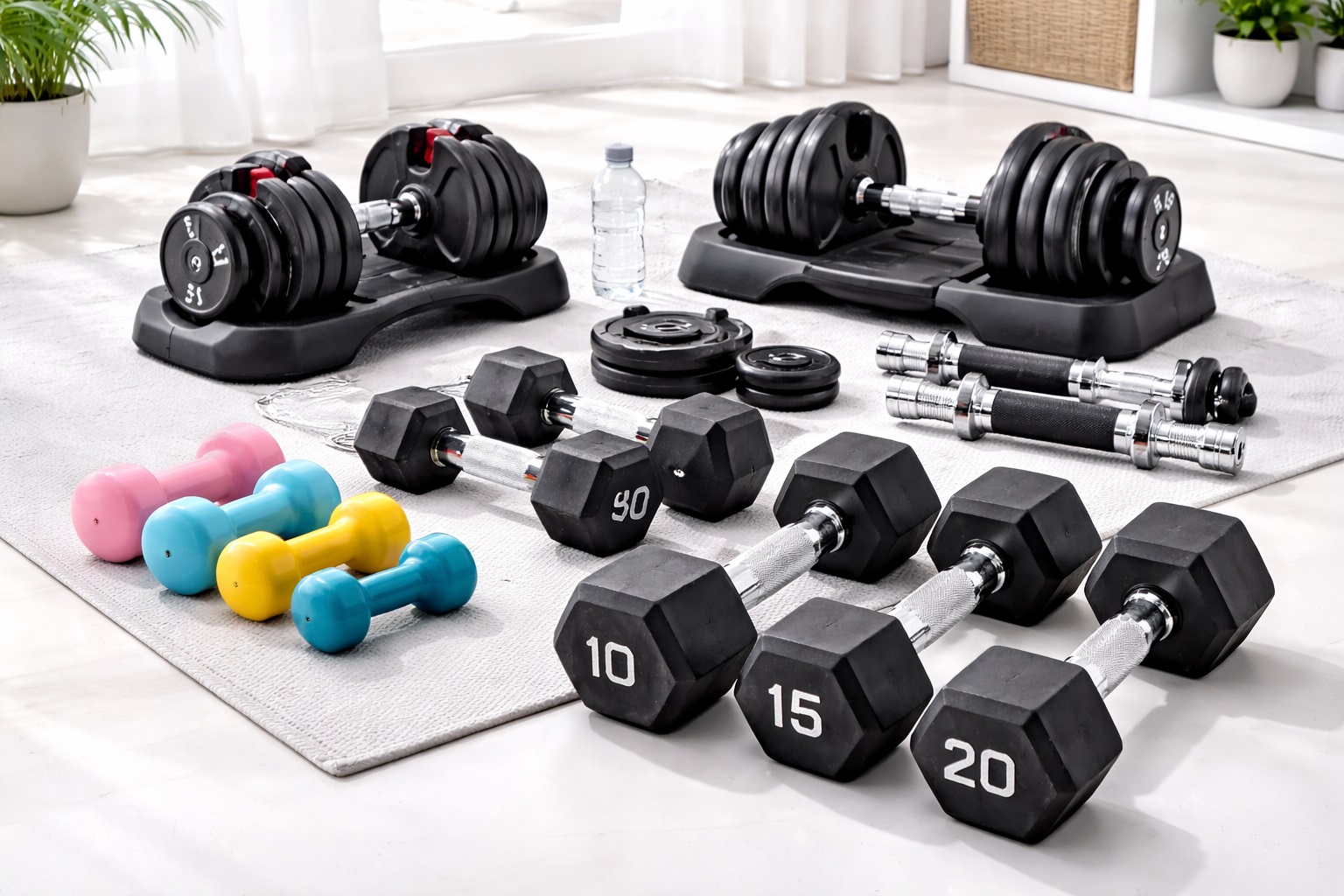
In this guide, we cover eight dumbbell options well suited to home use, ranging from budget-friendly adjustable plate systems to premium dial-based sets that replace an entire wall of weights. Each product solves a slightly different home gym challenge, whether that is minimizing floor space, protecting hardwood or tile flooring, or simply offering enough resistance range to support years of progress without a second purchase.
We also walk through the specific factors that matter most for home use, including noise, floor protection, storage, and versatility across a full-body routine. These observations are based on published specifications and well-established equipment design knowledge rather than identical side-by-side lab testing of every unit. By the end, you should have a clear sense of which set best matches your home training setup.
Top 8 Best dumbbells Picks (Detailed Reviews)
1. Yes4All Adjustable – Best For Building a Complete Home Gym on a Budget
Yes4All's adjustable set uses cast iron plates, priced around $50 for a base configuration, letting home exercisers build a genuinely complete strength training setup without the higher cost of premium dial-based systems. The plates can be added incrementally, which spreads the total cost out as your home gym grows alongside your budget.
- Pros:
- Cast iron plates offer durable, long-term home gym use
- Adjustable format covers a wide range of exercises
- Meaningfully more affordable than premium adjustable systems
- Plates can be purchased incrementally as your budget allows
- Cons:
- Manual plate changes take longer than dial-based systems
- Cast iron plates add noticeable weight to store and move
- Requires occasional tightening to keep plates secure
Best For: Home exercisers building a strength training setup from scratch who want real versatility without paying premium prices for dial-based convenience, making it a sensible foundation to build the rest of a home gym around.
Why We Recommend It: It strikes a genuinely practical balance for a home gym, offering enough adjustability to support real progress while remaining accessible enough for a first serious equipment purchase.
2. NordicTrack Select-A-Weight – Best For Tech-Integrated Home Gyms
The NordicTrack Select-A-Weight system is voice control capable, priced around $350, designed for home exercisers who already use connected fitness equipment and want their dumbbells to fit into that same ecosystem. Being able to adjust weight without bending down mid-circuit is a genuine convenience during fast-paced home workouts.
- Pros:
- Voice control allows hands-free weight adjustments at home
- Fits naturally alongside other connected fitness equipment
- Space-saving adjustable design suits smaller home gym rooms
- Backed by an established fitness technology brand
- Cons:
- Premium price reflects the added technology features
- Voice control is a convenience rather than a necessity
- Requires a stable connection for full smart functionality
Best For: Home exercisers already invested in connected fitness technology who want a seamless, tech-forward experience across their entire home gym setup.
Why We Recommend It: For a home gym built around convenience and technology, hands-free weight changes genuinely streamline circuit-style training in a way manual adjustable systems cannot quite match, especially for anyone already accustomed to voice-controlled smart home devices.
3. Amazon Basics Neoprene – Best For a Simple First Home Gym Purchase
Amazon Basics Neoprene dumbbells feature a non-slip coating, priced around $20, making them an easy, low-risk first purchase for anyone setting up a home workout space for the first time. The soft coating is comfortable to hold and gentle on floors, an important consideration for many home setups.
- Pros:
- Non-slip neoprene coating improves grip and comfort at home
- Very affordable, low-risk entry point for a home gym
- Soft coating protects floors and reduces impact noise
- Bright color-coding makes weight identification simple
- Cons:
- Fixed weight requires buying additional pairs to progress
- Neoprene coating may show wear faster than coated hex options
- Not intended for heavy, advanced strength training
Best For: Anyone setting up their very first home workout corner who wants an affordable, comfortable option without committing to a larger system right away.
Why We Recommend It: The low price and floor-friendly coating make this a sensible starting point for a home gym that may still be evolving, without a large upfront commitment before you know exactly how your home training habits will settle in.
4. Rogue Hex Dumbbells – Best For Serious Home Strength Training
Rogue Fitness brings its heavy duty rubber construction to a straightforward hex dumbbell, priced around $40, aimed at home exercisers who want equipment built to commercial-gym standards in their own space. The rubber coating protects both the dumbbell and your flooring during heavier home strength sessions.
- Pros:
- Heavy duty rubber coating resists chipping and cracking
- Commercial-grade build quality suited to serious home training
- Backed by a well-established, trusted fitness brand
- Comfortable, secure grip during a variety of exercises
- Cons:
- Fixed weight means buying additional pairs to progress
- Higher per-pound cost than basic neoprene options
- Takes up more storage space than an adjustable system
Best For: Home exercisers who want gym-quality dumbbells without any adjustable mechanisms and are building toward a more serious, dedicated home training space.
Why We Recommend It: For a home gym meant to last years rather than months, durable, no-frills construction like this tends to hold up better than lighter, less robust alternatives, especially once your training volume increases over time.
5. PowerBlock Elite – Best For Space-Efficient Home Gym Setups
The PowerBlock Elite uses a compact square design, priced around $300, that lets a single unit replace an entire rack of individual dumbbells. For home gyms carved out of a spare corner, garage, or converted room, that space efficiency is often the deciding factor over a full dumbbell rack.
- Pros:
- Compact square design replaces a full home dumbbell rack
- Scales from light to advanced resistance in one unit
- Saves substantial floor and storage space at home
- Backed by a well-established, reputable brand
- Cons:
- Higher upfront price than fixed-weight starter sets
- Square shape feels different than traditional dumbbells at first
- Adjustment mechanism takes a short learning curve
Best For: Home gyms with limited space where consolidating an entire weight range into one compact unit meaningfully changes how much room the setup requires.
Why We Recommend It: Few home gym upgrades save as much physical space as a well-designed adjustable system, and this one delivers a genuinely wide resistance range in a footprint smaller than a single traditional dumbbell rack, freeing up the rest of the room for other equipment or general use.
6. CAP Barbell Coated Hex – Best For Floor-Friendly Home Workouts
CAP Barbell's Coated Hex dumbbells feature anti-roll heads, priced around $30 per pair at lighter weights, with a coated finish designed to protect home flooring and reduce noise when weights are set down. The hex shape also keeps dumbbells from rolling into furniture or under a couch between sets.
- Pros:
- Anti-roll hex heads keep dumbbells in place at home
- Coated finish protects hardwood and tile flooring
- Straightforward, no-assembly design for quick home setup
- Affordable enough to build a small collection over time
- Cons:
- Fixed weight means buying additional pairs as you progress
- Can require more storage space than an adjustable set
- Heavier pairs cost meaningfully more than lighter ones
Best For: Home exercisers training on hardwood, tile, or other flooring that benefits from a coated, floor-friendly dumbbell option.
Why We Recommend It: Protecting your home's flooring is a genuinely practical concern that gym members never have to think about, and this set addresses it directly with a durable, floor-safe coating that holds up well over repeated use.
7. Bowflex SelectTech 552 – Best For All-In-One Home Gym Versatility
The Bowflex SelectTech 552 offers adjustable weight in a single dial-based unit, priced around $400, effectively replacing an entire rack of dumbbells in a home gym with limited space. For exercisers who want one comprehensive tool that covers a full-body routine, this is one of the more complete options available.
- Pros:
- Adjustable weight dial allows quick changes between exercises
- Replaces a full dumbbell rack in a single compact unit
- Well-known, established brand with a strong track record
- Covers a wide resistance range for a complete home routine
- Cons:
- One of the higher price points in this lineup
- Dial mechanism has a distinct feel some users need to adjust to
- Bulkier per unit than a single fixed-weight dumbbell
Best For: Home gyms where consolidating an entire weight range into two dial-based units meaningfully simplifies both storage and workout logistics.
Why We Recommend It: This is about as close as dumbbells get to a true all-in-one home gym solution, covering a wide resistance range without needing a dedicated rack or shelf, which is a real advantage for anyone short on space.
8. Bala Bars – Best For Home Cardio & Toning Routines
Bala Bars take a different approach with their ergonomic shape, priced around $55, designed for lighter, higher-repetition home workouts like cardio-toning circuits or barre-style routines rather than heavy strength training. Their compact size and attractive design also make them easy to store visibly in a shared living space.
- Pros:
- Ergonomic shape suits high-repetition home cardio routines
- Comfortable grip designed for extended home sessions
- Attractive, modern design that fits well in shared living spaces
- Well suited to lighter home workouts rather than heavy lifting
- Cons:
- Higher price point relative to the weight range offered
- Not designed for heavy strength-focused home training
- Limited weight range compared to traditional dumbbell sets
Best For: Home exercisers whose routines lean toward cardio, toning, and mobility work rather than maximal strength training.
Why We Recommend It: Not every home workout needs to be about heavy lifting, and for lighter, higher-repetition routines, the ergonomic design here genuinely improves the at-home training experience, and the compact size keeps it out of the way when not in use.
Buying Guide: How to Choose the Best dumbbells
Choosing dumbbells specifically for home use involves a few considerations that do not apply as much when training at a commercial gym. Here is what matters most.
1. Floor Protection
Home flooring, whether hardwood, tile, or carpet over concrete, can be damaged by uncoated metal dumbbells set down repeatedly. Coated rubber, urethane, or neoprene finishes help protect your floors from dents and scratches.
A dedicated exercise mat under your workout area adds an extra layer of floor protection regardless of which dumbbell coating you choose, and it also helps define your workout space within a shared room.
Renters in particular may want to prioritize floor protection, since damage to flooring can become a costly issue when it comes time to move out of a rental property.
2. Noise Level
Home workouts often happen near living spaces, bedrooms, or shared walls, so quieter equipment matters more than it would in a commercial gym setting. Coated dumbbells are generally quieter than bare metal when set down.
Adjustable systems with moving parts can occasionally click during weight changes, so if you train early in the morning or late at night, checking reviews for noise complaints is a reasonable precaution.
Placing a thick mat or rubber tile under your training area can further dampen impact noise, which is a worthwhile addition for anyone living in an apartment or a household with shared sleeping schedules.
3. Available Space
Home gyms range from a dedicated room to a corner of a bedroom, and the space you have available should heavily influence whether a fixed-weight rack or a compact adjustable system makes more sense.
Measuring your available space before purchasing larger adjustable units can prevent an awkward surprise when equipment arrives and does not quite fit where you planned to use or store it.
It also helps to consider ceiling height and swing radius for overhead exercises, since a cramped space can limit which movements you can safely perform with a longer dumbbell or bar-style option.
4. Weight Range for a Complete Routine
A home gym benefits from a resistance range wide enough to cover an entire full-body routine without needing separate equipment for upper- and lower-body training, or for different exercises within the same muscle group.
Adjustable or stackable systems tend to serve this need better than a single pair of fixed-weight dumbbells, since they can flex between lighter isolation work and heavier compound movements.
Mapping out a sample weekly routine before buying, covering pressing, pulling, and leg exercises, can help confirm that your chosen weight range will not feel limiting once your program expands.
5. Storage Solutions
A dedicated rack, shelf, or storage tray keeps a home gym organized and prevents dumbbells from becoming a tripping hazard or general clutter in a shared living space.
Vertical storage solutions can be particularly useful in smaller home gyms, making efficient use of wall space that would otherwise go unused.
Keeping dumbbells visibly stored, rather than tucked away in a closet, also tends to encourage more consistent use, since equipment that is out of sight is easier to forget about entirely.
6. Durability for Frequent Use
Home gym equipment often sees more frequent, varied use than commercial gym equipment shared among many members, so durable materials like cast iron, rubber coatings, and reinforced mechanisms matter for long-term reliability.
Checking for any visible seams or weak points before buying helps you avoid a set prone to chipping, cracking, or mechanical failure within the first year of regular home use.
Unlike a commercial gym, home equipment does not benefit from staff maintenance, so choosing genuinely durable materials upfront reduces the chance of dealing with repairs or replacements down the line.
7. Versatility Across Exercises
A truly useful home gym dumbbell set should support a wide variety of exercises, from presses and rows to curls and lunges, without needing supplementary equipment for basic full-body training.
Considering your planned exercise variety before buying helps you choose a weight range and grip style that will not feel limiting once your routine expands beyond the basics.
A versatile set also helps keep a home routine engaging over time, since variety in exercises is often what prevents workouts from feeling repetitive month after month.
8. Budget vs Long-Term Investment
Home gym dumbbells span a wide price range, and it is worth thinking about your budget not just for the initial purchase but for how your equipment needs might grow as your home training routine develops.
Calculating the realistic total cost of fixed-weight pairs you would need over a year or two often reveals that a pricier adjustable system represents better long-term value for frequent home exercisers.
It is also worth comparing the total home gym investment against the ongoing cost of a commercial gym membership, which can help put the upfront price of quality equipment into perspective.
9. Grip Comfort for Longer Sessions
Home workouts often run longer than a quick gym visit, since there is no pressure to share equipment with others, so grip comfort during extended sessions becomes more important than it might at a commercial facility.
Textured or coated grips generally hold up better during sweaty home sessions than bare or smooth metal handles.
Keeping a small towel nearby to dry hands and grips between sets is a simple habit that further improves comfort and control during longer home training sessions.
10. Anti-Roll & Safety Features
Hex-shaped or otherwise non-round dumbbells stay put when set down, reducing the risk of a rolling dumbbell becoming a tripping hazard in a home environment that may also include children, pets, or other family members.
This feature matters especially in multi-purpose rooms where workout equipment shares space with everyday household activity.
Storing dumbbells away from walkways immediately after each session, rather than leaving them out on the floor, is an easy additional safety habit for any home training space.
11. Ease of Setup & Assembly
Some adjustable systems require initial assembly or calibration, so checking product details for setup requirements before purchasing helps you know what to expect when the equipment first arrives at home.
Sets that arrive ready to use out of the box tend to be preferable for home exercisers who want to start training immediately rather than spending time on setup.
Watching an unboxing or setup video before your equipment arrives can also help set realistic expectations about assembly time and any tools that might be required.
12. Compatibility With Your Existing Home Gym
If you already own a bench, rack, or other home gym equipment, consider how new dumbbells will integrate with what you have, particularly in terms of storage and overall space usage.
Planning your home gym as a cohesive system, rather than buying equipment piece by piece without a plan, generally results in a more functional and organized space over time.
Sketching a simple layout of your intended home gym area before buying additional equipment can help you avoid a cramped, disorganized space as your collection grows.
13. Warranty & Long-Term Support
A meaningful warranty provides peace of mind for equipment you plan to use regularly at home for years, particularly for adjustable systems with mechanical components that could eventually need service or replacement parts.
Reading reviews focused specifically on long-term reliability, rather than initial unboxing impressions, gives a more accurate picture of how equipment holds up in real home gym conditions.
Keeping receipts and registering products where applicable makes any future warranty claim considerably smoother if an issue does eventually come up after months of regular home use.
Frequently Asked Questions
What is the best type of dumbbell for a small home gym?
Compact adjustable systems generally work best for small home gyms, since they consolidate an entire weight range into one or two units rather than requiring a full rack of fixed-weight pairs.
Will dumbbells damage my hardwood floors?
Uncoated metal dumbbells can potentially damage hardwood or tile if dropped, but coated rubber or neoprene options combined with an exercise mat significantly reduce this risk.
How much weight do I need for a home dumbbell gym?
This depends on your fitness level and goals, but a range covering light warm-up weights through moderately challenging resistance is generally sufficient for most home strength training routines.
Are adjustable dumbbells worth the extra cost for home use?
For many home exercisers, yes, since adjustable systems save both space and the long-term cost of buying multiple fixed-weight pairs as strength improves over time.
How noisy are dumbbells during a home workout?
Coated dumbbells are generally quiet when handled carefully, though setting weights down forcefully on hard flooring can still create noticeable noise regardless of the coating used.
Can I build a full workout routine using only dumbbells at home?
Yes, dumbbells can effectively target every major muscle group, and combined with bodyweight exercises, they can form the basis of a complete home strength training routine.
How do I store dumbbells in a small apartment?
A small rack, storage tray, or dedicated shelf keeps dumbbells organized in limited space, and compact adjustable systems require significantly less storage than a full set of fixed-weight pairs.
Do I need a workout bench for home dumbbell training?
A bench expands your exercise options but is not strictly necessary, since many effective dumbbell exercises can be performed standing or using the floor for support.
What is the most versatile dumbbell option for a home gym?
Adjustable systems generally offer the most versatility for a home gym, since they can cover a wide resistance range for many different exercises within a single, space-efficient unit.
How do I choose between a dial-based and plate-based adjustable system?
Dial-based systems offer faster weight changes and a premium feel, while plate-based systems are typically more affordable and still effective, though changing weights takes a bit more time.
Can dumbbells alone replace a home gym membership?
For many people, a well-chosen dumbbell set combined with bodyweight training can effectively replace a gym membership for strength training purposes, though preferences vary based on individual goals.
How often should home gym equipment be inspected for wear?
Checking equipment periodically, especially adjustable systems with mechanical parts, helps catch any developing issues before they affect safety or performance during a workout.
Is it better to buy dumbbells in a set or individually?
A set is often more cost-effective and ensures you have a usable weight range from the start, while buying individually allows more control but can take longer to build a complete collection.
Can I keep dumbbells in a garage or unheated space?
Coated dumbbells generally tolerate moderate temperature swings reasonably well, though extreme heat or cold over long periods can affect coatings and, for adjustable systems, internal mechanisms over time.
What is a reasonable home gym dumbbell budget for most people?
A functional starting setup can range from around fifty dollars for a basic adjustable pair to several hundred dollars for a premium dial-based system, depending on how much resistance range and convenience you prioritize.
Do I need matching dumbbells, or can I mix brands at home?
There is no requirement to match brands. Many home gyms combine different dumbbell types over time, such as an adjustable pair for heavier lifts alongside lighter fixed-weight dumbbells for specific exercises.
Final Verdict
- Top Pick: Yes4All Adjustable for overall excellence.
- Budget Choice: Amazon Basics Neoprene for great value.
- Premium Choice: NordicTrack Select-A-Weight for high-end features.
The right home gym dumbbell setup depends heavily on your available space and how your training will evolve. The Yes4All Adjustable set offers strong all-around value for most home gyms, while the Amazon Basics Neoprene set remains an easy, low-cost way to get started if you are still deciding how serious your home training will become. For those ready to invest in a premium, space-saving solution, the NordicTrack Select-A-Weight or Bowflex SelectTech 552 deliver genuine long-term convenience. Whatever you choose, thoughtful planning around space, noise, and versatility will make your home gym a place you actually want to train consistently. A well-planned setup, even a modest one, tends to get used far more often than an ambitious one that never quite comes together.