Best Jump Rope for Home Workouts in 2026
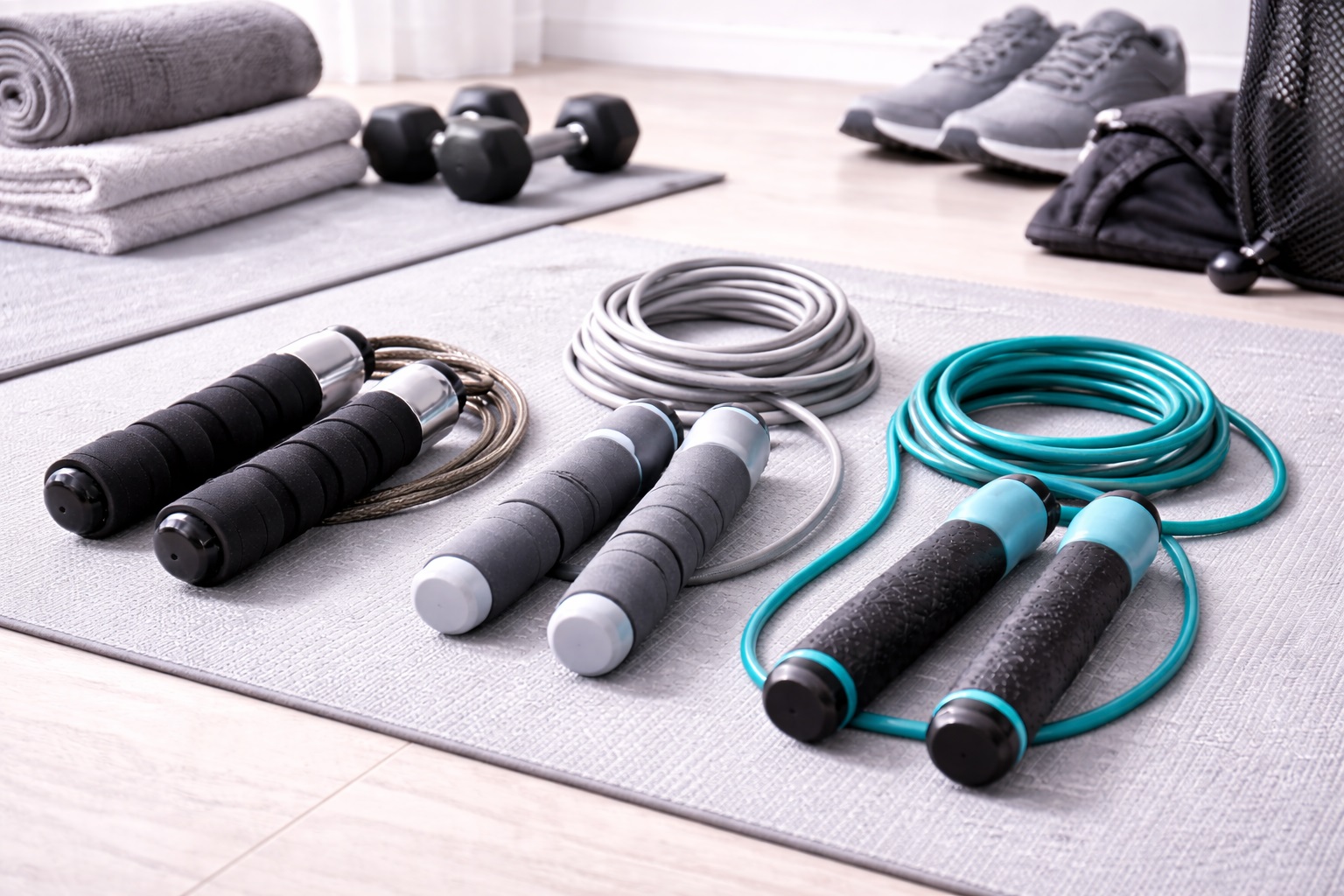
A jump rope might be the single most efficient piece of home cardio equipment you can own. It takes up almost no space, costs a fraction of what a treadmill or bike does, and delivers a demanding full-body workout in a fraction of the time. For anyone training in a living room, garage, or small apartment, that combination is hard to beat.
The catch is that not every rope is well suited to indoor, at-home use. Some cords are too loud against hard flooring, some require more overhead clearance than a typical ceiling allows, and some are built for outdoor surfaces rather than the more controlled environment of a home gym corner. Choosing a rope that fits your actual space matters just as much as choosing one that fits your fitness goals.
Home workouts also tend to be self-directed, without a coach adjusting your form in real time, so a rope that rotates predictably and gives you clear feedback on your reps can make a noticeable difference in how effective your sessions feel. The right rope essentially becomes a training partner that keeps you honest about pace and consistency.
Cost is another practical factor for home training. A jump rope is already one of the most affordable ways to build a serious cardio habit, and the models below span a wide enough price range that you can start small and reinvest later if the habit sticks. There is no reason to spend more upfront than your current routine actually calls for.
Below, we compare eight jump ropes that consistently perform well for home training, followed by a full buying guide and answers to the questions people ask most before building a home cardio routine around jump rope.
Top 8 Best jump rope Picks (Detailed Reviews)
1. Amazon Basics Standard – Best For an Affordable Home Starter Rope
The Amazon Basics Standard is a sensible entry point for home training thanks to its adjustable vinyl cord and a price around $8 that makes it easy to just get started without overthinking the decision. For a home gym corner where you are still figuring out how jump rope fits into your broader routine, low-cost simplicity is a real advantage.
Vinyl cords like this one tend to be quieter against carpet and rubber flooring than beaded or weighted ropes, which is a practical plus for anyone training in a shared living space or an apartment where noise matters.
- Pros:
- Very affordable way to add cardio equipment to a home gym
- Adjustable vinyl cord fits a range of ceiling heights and users
- Relatively quiet rotation compared to heavier cord types
- Cons:
- Basic cord may not hold up as long as premium materials
- Lacks tracking features some home users want for motivation
Best For: Home gyms on a budget that want a simple, quiet rope to start a jump rope habit.
Why We Recommend It: It removes cost as a reason to delay starting a home cardio routine.
2. XYLsports Jump Rope – Best For Comfortable Daily Home Sessions
The XYLsports Jump Rope's comfortable foam grip makes a noticeable difference for anyone planning to use their rope several times a week at home. Priced around $15, it is an easy upgrade from the most basic ropes without pushing into premium territory.
Daily or near-daily home sessions put more cumulative strain on your hands than occasional use, so a softer, more ergonomic handle helps reduce fatigue over a full workout and across a full training week.
- Pros:
- Foam grip stays comfortable through frequent home sessions
- Reasonably priced for the comfort upgrade it offers
- Simple design that requires no setup or calibration
- Cons:
- Foam may compress or wear with heavy daily use over time
- No built-in tracking for people who like logging home workouts
Best For: Home users who plan to jump rope several times a week and want comfortable, fatigue-reducing handles.
Why We Recommend It: Comfort matters more once a rope becomes a regular part of your weekly routine rather than an occasional workout.
3. EliteSRS Boxer Rope – Best For High-Rep Home Cardio
The EliteSRS Boxer Rope's PVC cord durability makes it well suited to the kind of high-rep, high-volume cardio sessions common in home HIIT and circuit-style routines. At roughly $25, it costs more than the most basic ropes but is built to handle sustained daily use.
Home HIIT routines often mix jump rope intervals with bodyweight exercises, and a durable cord that will not degrade quickly under repeated fast rotations is a worthwhile investment for anyone building a consistent circuit-training habit at home.
- Pros:
- Durable PVC cord holds up to frequent, high-volume use
- Proven design suited to interval-style training
- Reasonable price for the durability it offers
- Cons:
- PVC cord feels stiffer than lighter cable alternatives
- Slightly heavier than dedicated speed ropes
Best For: Home HIIT and circuit training routines that put a rope through frequent, demanding sessions.
Why We Recommend It: Its durability means it can keep up with an ambitious home workout schedule without needing frequent replacement.
4. Tangram Smart Rope – Best For Tracking Home Workout Progress
The Tangram Smart Rope's LED jump count display is particularly useful at home, where you do not have a coach or class instructor keeping count for you. At around $80, it costs considerably more than basic ropes, but the built-in feedback replaces the need for a separate app or manual counting.
For home workouts especially, where motivation has to come from within rather than a group class atmosphere, having a visible, automatic rep count can help turn a solo session into something that feels more like a structured, trackable workout.
- Pros:
- Automatic rep tracking is ideal for solo home training
- Helps quantify progress across home workout sessions
- Removes the need for separate counting apps or devices
- Cons:
- Highest price point among the ropes on this list
- Added electronics are unnecessary if you prefer simplicity
Best For: Home users who want structured, trackable data from every solo cardio session.
Why We Recommend It: Built-in tracking makes it easier to stay accountable to a home routine without a coach or class setting the pace.
5. DEGOL Skipping Rope – Best For Smooth Indoor Practice
The DEGOL Skipping Rope's tangle-free ball bearings make it a strong fit for the more confined, controlled environment of home training, where you likely will not have the space to work out a tangled cord mid-session. At about $10, it remains budget-friendly.
Smooth, predictable rotation also means fewer accidental hits against nearby furniture or walls, which is a small but real consideration when your training space is a living room or a converted garage rather than an open gym floor.
- Pros:
- Ball bearings keep rotation smooth and tangle-free indoors
- Predictable path helps avoid catching on nearby furniture
- Affordable price for the mechanical upgrade it offers
- Cons:
- Bearings can wear out with years of heavy use
- Basic handle design compared to premium ropes
Best For: Home training spaces with limited room where smooth, predictable rotation matters most.
Why We Recommend It: Fewer tangles and snags mean fewer interruptions during a home cardio session.
6. WOD Nation Speed Rope – Best For Fast-Paced Home HIIT
The WOD Nation Speed Rope's patent-pending four-bearing system supports the fast, sustained rotations that home HIIT and interval workouts often demand. At around $20, it is reasonably priced for hardware built to hold up to frequent high-speed use.
Home interval training frequently calls for short, intense bursts of rope work between other exercises, and a rope that can spin quickly and consistently without extra effort from your wrists helps you get more out of each short interval.
- Pros:
- Four-bearing system supports fast, demanding home intervals
- Reasonably priced for its more advanced hardware
- Well suited to circuit and HIIT-style home routines
- Cons:
- Faster rotation has a slightly steeper learning curve
- Thinner cable is less forgiving on missed swings than thicker cords
Best For: Home HIIT routines that rely on short, high-intensity jump rope intervals.
Why We Recommend It: Its speed-focused hardware helps you pack more effective work into short home workout intervals.
7. RX Smart Gear Original – Best For a Customized Home Setup
The RX Smart Gear Original's customizable length lets you fine-tune the rope to your specific ceiling height and body proportions, which is especially useful in home spaces with lower clearance than a commercial gym. At around $45, it is priced toward the upper range.
Home training areas vary widely in available overhead space, and a rope you can adjust precisely helps you avoid the common home-workout problem of a rope clipping a ceiling fan or light fixture on a taller jump.
- Pros:
- Customizable length adapts to different home ceiling heights
- Trusted name within functional fitness training communities
- Consistent build quality suited to regular home use
- Cons:
- Priced higher than the most basic home-use ropes
- Adjustment process takes a small amount of setup time
Best For: Home gyms with limited or unusual ceiling clearance that need a precisely adjustable rope.
Why We Recommend It: Precise length control helps you avoid ceiling clearance issues that are common in home training spaces.
8. Crossrope Get Lean – Best For Adding Intensity to Home Routines
The Crossrope Get Lean's weighted rope system is designed to add resistance to a home cardio session without needing extra equipment like dumbbells or resistance bands. At around $100, it is the most expensive option here, reflecting its interchangeable weighted cable design.
For home workouts where space for additional equipment is limited, a weighted rope system offers a way to increase training intensity using a tool you already own, rather than adding more gear to a small training area.
- Pros:
- Weighted cables add intensity without extra home gym equipment
- Interchangeable system offers flexibility across workout types
- Well suited to home users looking to progress past basic ropes
- Cons:
- Highest price point among the ropes on this list
- Heavier cord requires more overhead clearance to swing safely
Best For: Home gyms that want to add training intensity without expanding their equipment footprint.
Why We Recommend It: It packs a resistance-training element into a piece of equipment that already fits a small home space.
Buying Guide: How to Choose the Best Jump Rope
A jump rope that works well in a commercial gym is not automatically the best choice for a home training space. The sections below cover what matters most when your workout happens in a living room, garage, or spare bedroom.
1. Ceiling Clearance
Home spaces often have lower ceilings, fans, or light fixtures than a gym, so check your available overhead clearance and consider an adjustable-length rope that lets you shorten your setup if needed.
2. Flooring Considerations
Hardwood, tile, and concrete are harder on joints than gym flooring, so a rubber mat underfoot is worth considering, and a rope with a rotation style suited to indoor surfaces will feel more natural.
3. Noise Level
Beaded or weighted ropes tend to be louder against hard flooring, which matters if you live in an apartment or share walls with neighbors. Smooth cable or vinyl cords are generally quieter options.
4. Cord Material and Weight
Lighter cords are easier to control in a confined space, while heavier or weighted cords add training intensity but require more room and caution to swing safely indoors.
5. Handle Comfort for Frequent Use
Home routines often mean more frequent sessions than an occasional gym visit, so a comfortable, well-cushioned handle pays off over weeks of regular training.
6. Bearing Systems for Smooth Rotation
Quality bearings reduce tangling and wrist strain, which is especially helpful in a smaller space where you do not have room to untangle a knotted cord mid-session.
7. Adjustability for Multiple Users
If more than one person in your household plans to use the rope, an easily adjustable length makes it practical to share between different heights.
8. Tracking Features for Solo Training
Without a trainer or class counting reps for you, a rope with a built-in counter or compatible app can help you stay accountable to your home workout goals.
9. Durability for Regular Home Use
If you plan to train at home several times a week, a more durable cord will hold up better over months of consistent use than the most minimal budget options.
10. Storage and Space Efficiency
Most jump ropes coil down small, but ropes with bulkier electronic handles take up slightly more storage room than a simple length of cord.
11. Price Versus Frequency of Use
If jump rope is going to be a core part of your home routine, investing a bit more in durability and comfort tends to pay off compared to buying the cheapest option available.
12. Compatibility With HIIT and Circuit Training
Home HIIT routines often mix short jump rope intervals with bodyweight exercises, so a rope built for fast, repeated rotations fits that training style particularly well.
13. Safety Around Home Obstacles
Furniture, lamps, and wall décor are common home-workout hazards, so clearing adequate space around you before starting a session helps prevent accidental collisions.
14. Warm-Up and Cool-Down Use
A jump rope also works well as a short warm-up or cool-down between strength sets, making it a versatile addition to a home routine beyond dedicated cardio days.
15. Building Consistency at Home
Without a scheduled class to show up for, consistency at home depends on removing friction, so a rope that is quick to grab and comfortable to use makes it more likely you will actually pick it up regularly.
16. Combining Jump Rope With Other Home Equipment
Jump rope pairs naturally with resistance bands, dumbbells, or bodyweight circuits, letting you build a complete home workout without needing a treadmill or large cardio machine.
17. Tracking Progress Over Time
Whether through a smart rope's built-in counter or a simple notes app, tracking session length or rep counts over weeks helps you see tangible progress in a home routine.
18. Setting Realistic Home Workout Goals
Short, consistent sessions several times a week tend to produce better long-term results than occasional long sessions, especially when building a new home cardio habit.
19. Ventilation and Training Environment
Jump rope raises your heart rate quickly, so training in a room with decent airflow or a window cracked open makes home sessions considerably more comfortable, particularly during longer interval workouts.
20. Replacing Worn Components
Some higher-end ropes sell replacement cords separately, which is worth checking before you buy if you expect years of regular home use, since it can extend the life of a rope you already like without replacing the handles.
21. Matching the Rope to Your Household
If multiple family members will use the same rope, look for a design that is quick to adjust and durable enough to handle different skill levels and jumping styles without extra wear.
22. When a Simple Rope Is Enough
Not every home routine needs a rope with tracking, weighting, or specialized bearings. If your goal is simply consistent cardio a few times a week, a basic, comfortable rope is often all you truly need.
23. Seasonal Adjustments to a Home Routine
Some home gyms shift between indoor and outdoor training depending on the season, and a rope that performs reliably in both settings, without being overly delicate, offers more flexibility than one built strictly for a single environment.
Frequently Asked Questions
Is jump rope a good replacement for cardio machines at home?
For many people, yes. A jump rope delivers an intense cardio workout in a small footprint, making it a practical alternative to a treadmill or bike for home training spaces.
How much space do I need to jump rope indoors?
You generally need enough overhead clearance for the rope's arc and a few feet of open floor space around you, free of furniture and low-hanging fixtures.
Will jumping rope damage my flooring?
Jumping in supportive shoes on a stable surface is generally fine, though a rubber exercise mat can help protect both your floor and your joints during frequent sessions.
How long should a home jump rope workout be?
Many home routines use short intervals of one to three minutes of jumping mixed with rest or other exercises, totaling ten to twenty minutes for an effective session.
Can I jump rope every day at home?
Many people jump rope daily without issue, though it is worth listening to your joints and building up volume gradually, especially in the first few weeks.
What is the quietest type of jump rope for apartments?
Smooth vinyl or PVC cords tend to be quieter against flooring than beaded or weighted ropes, which is worth prioritizing if noise is a concern.
Do I need a mat to jump rope at home?
A rubber mat is not strictly required but can reduce noise and cushion impact, which is helpful for both your joints and your downstairs neighbors.
Can jump rope replace a full home cardio machine setup?
For many people, a jump rope alone can deliver an effective cardio stimulus, though some prefer combining it with other equipment for variety over time.
What ceiling height do I need to jump rope indoors?
Most standard ceiling heights are sufficient for jump rope, but if you have unusually low ceilings or ceiling fans, an adjustable-length rope helps you avoid clipping fixtures.
Is it safe to jump rope on carpet?
Carpet can work, though a firmer, more even surface generally provides better footing and rope rotation than thick, uneven carpet padding.
How do I fit jump rope into a home strength training routine?
Many people use short jump rope intervals as a warm-up, between strength sets, or as a finisher at the end of a workout to add a cardio component.
Can two people share the same jump rope at home?
Yes, especially with an adjustable-length rope, though each person may need to reset the length to match their own height for the best rotation.
What is the best jump rope for small home gyms?
A rope with adjustable length and a compact, tangle-resistant design tends to work best in smaller home training spaces with limited clearance.
Do smart ropes need Wi-Fi or Bluetooth to work at home?
Some smart ropes use Bluetooth to sync with a companion app, while others display counts directly on the handle without needing any connection at all.
How do I know if my home jump rope routine is working?
Tracking total session time, rep counts, or how many consecutive jumps you can complete without missing are all simple ways to measure progress over weeks.
Is it normal to hit furniture or walls when starting out at home?
It happens occasionally with a new routine, which is why clearing extra space around your jumping area is worth doing before your first few sessions.
Can jump rope help me avoid buying a treadmill?
For many home gym owners, a jump rope covers a similar cardio need at a fraction of the price and space of a treadmill, though personal preference plays a role.
What time of day is best for a home jump rope workout?
There is no single best time; morning sessions can help wake you up, while evening sessions can serve as a stress-relieving cap to the day. Consistency matters more than the specific hour you choose.
Can I watch TV or listen to music while jumping rope at home?
Music with a steady beat can help maintain rhythm, though watching TV closely may be distracting since jump rope requires ongoing attention to footwork and rope timing.
Do I need a wrist strap or gloves for home jump rope training?
Most people do not need extra accessories for jump rope, though those with sweaty palms may prefer a rope with a textured or foam grip for added control.
How much does a quality home jump rope typically cost?
Effective home jump ropes span a wide range, from around eight dollars for a basic adjustable model to around one hundred dollars for weighted, interchangeable systems with added features.
Can beginners use the same rope as more advanced home users?
Many adjustable ropes work well for a wide range of skill levels, though dedicated speed ropes are generally better suited to more advanced users working on faster footwork.
Is it worth buying a smart rope just for home use?
If you are motivated by tracking data and seeing measurable progress, a smart rope can add real value to a home routine, though it is not a requirement for an effective workout.
How do I keep my home jump rope routine from getting boring?
Varying interval length, mixing in different footwork patterns, or pairing jump rope with strength circuits are all simple ways to keep a home routine feeling fresh over time.
Should I warm up before jumping rope at home?
A brief warm-up of light movement or dynamic stretching before jumping rope helps prepare your calves, ankles, and shoulders for the repetitive impact and rotation involved.
Can jump rope be part of a strength-focused home program, not just cardio?
Yes, many home strength programs use short jump rope bursts between sets as active recovery, which keeps the heart rate elevated without adding significant extra training time.
What is the biggest mistake people make setting up a home jump rope routine?
Overcomplicating the setup is common. Many people spend more time researching features than actually training, when a simple, comfortable rope used consistently will outperform an elaborate setup that gets used only occasionally.
Final Verdict
- Top Pick: Tangram Smart Rope for overall excellence.
- Budget Choice: Amazon Basics Standard for great value.
- Premium Choice: Crossrope Get Lean for high-end features.
For most home training setups, the right jump rope is the one that fits comfortably into your available space and your weekly routine without requiring you to think too hard about it. A quiet, adjustable, tangle-resistant rope will serve most home gyms well, and features like rep tracking or added resistance are worth considering once you know jump rope has earned a permanent place in your training schedule. Start simple, stay consistent, and let your home routine guide any future upgrades.
It is also worth revisiting your rope choice every few months as your home routine evolves. Someone who started with a basic rope purely to test the habit may find, after a couple of months of consistent training, that a smart rope's tracking or a weighted rope's added resistance genuinely improves their motivation and results. There is no downside to upgrading once you know exactly what your home training style calls for, and the eight ropes above cover nearly every stage of that progression.