Best Resistance Bands for Beginners in 2026
Starting a strength routine without a gym membership is one of the smartest fitness decisions you can make in 2026, and resistance bands remain the simplest way to build a home starter kit that actually gets used. Unlike a rack of dumbbells or a bulky machine, a set of bands rolls up into a drawer, costs a fraction of comparable equipment, and still lets you train every major muscle group with real, progressive tension.
The challenge for anyone new to resistance training is sorting through dozens of near-identical looking bands to find the ones that actually fit a beginner's needs: predictable resistance levels, comfortable material against the skin, and a design that will not snap or slip mid-set. We compared eight of the most popular options on the market today, looking closely at how each one is built, what it costs, and who it suits best, so you can buy once and start training with confidence instead of guessing.
Below you will find detailed breakdowns of each pick, a buying guide that walks through exactly what to look for as a first-time buyer, and answers to the questions beginners ask most often before their first order arrives. One thing worth keeping in mind as you read through these reviews is that there is no single "best" band for every beginner. Someone easing into fitness after months away from any structured routine has different priorities than someone who has lifted weights before and simply wants a portable alternative for travel days, and the right starter kit reflects that difference rather than a one-size-fits-all recommendation.
Top 8 Best resistance bands Picks (Detailed Reviews)
1. Letsfit Resistance Loop – Best For First-Time Users
The Letsfit Resistance Loop is one of the most approachable entry points into band training, and at around $10 it removes almost all the risk from trying the format for the first time. The set is built around 5 varying resistance levels, which means a beginner can start on the lightest loop for mobility work and warmups, then progress to a heavier loop as squats, glute bridges, and banded walks start to feel easy. That kind of built-in progression is exactly what a starter kit should offer, since it lets one purchase grow with you for months rather than being outgrown after a few weeks. Because the entry cost is so low, it is also a sensible choice for anyone who simply wants to test whether band training fits their routine before committing to a larger or more expensive system.
- Pros:
- Very low price point makes it an easy first purchase
- 5 varying resistance levels support gradual progression
- Compact loops are easy to pack for travel or a gym bag
- Cons:
- Latex loops may feel less premium than tube-style bands
- Fewer accessories included compared to full sets
Best For: Beginners who want a low-commitment way to test resistance training before investing in a larger set.
Why We Recommend It: The combination of an accessible price and five distinct resistance levels gives new lifters room to grow without needing to buy a second set right away.
2. Peach Bands Hip Bands – Best For Glute Activation Warmups
Peach Bands built its Hip Bands specifically around lower-body activation work, and the standout detail is the Fabric non-slip design, which keeps the band anchored above the knees or around the ankles instead of rolling during squats and lateral walks. At roughly $20, this set fits comfortably into a beginner's starter kit as a dedicated warmup tool rather than a replacement for a full resistance system. For anyone who has ever felt a band creep down mid-set, the fabric construction alone can make the difference between a warmup that actually feels productive and one that becomes a constant distraction.
- Pros:
- Fabric non-slip design stays in place during dynamic movement
- Comfortable against skin compared to thin latex loops
- Great introduction to activation-style warmup routines
- Cons:
- Not designed for heavy upper-body or full-body exercises
- Higher price than basic latex loops for a narrower use case
Best For: Beginners who want to build the habit of warming up the hips and glutes before squats, lunges, or a walk.
Why We Recommend It: The non-slip fabric construction solves the most common early frustration with loop bands, which is them sliding down during movement.
3. Veick Resistance Set – Best For Door-Anchored Full-Body Workouts
The Veick Resistance Set takes a different approach from loop bands by including a Door anchor included in the package, which opens up rows, presses, and cable-style movements that loops simply cannot replicate. Priced around $35, it sits in the middle of this lineup and gives beginners a way to simulate gym-style pulling and pressing motions from a home doorway. For anyone who misses the variety of a cable machine, having the anchor included from day one saves the trouble of sourcing one separately.
- Pros:
- Door anchor included expands the range of possible exercises
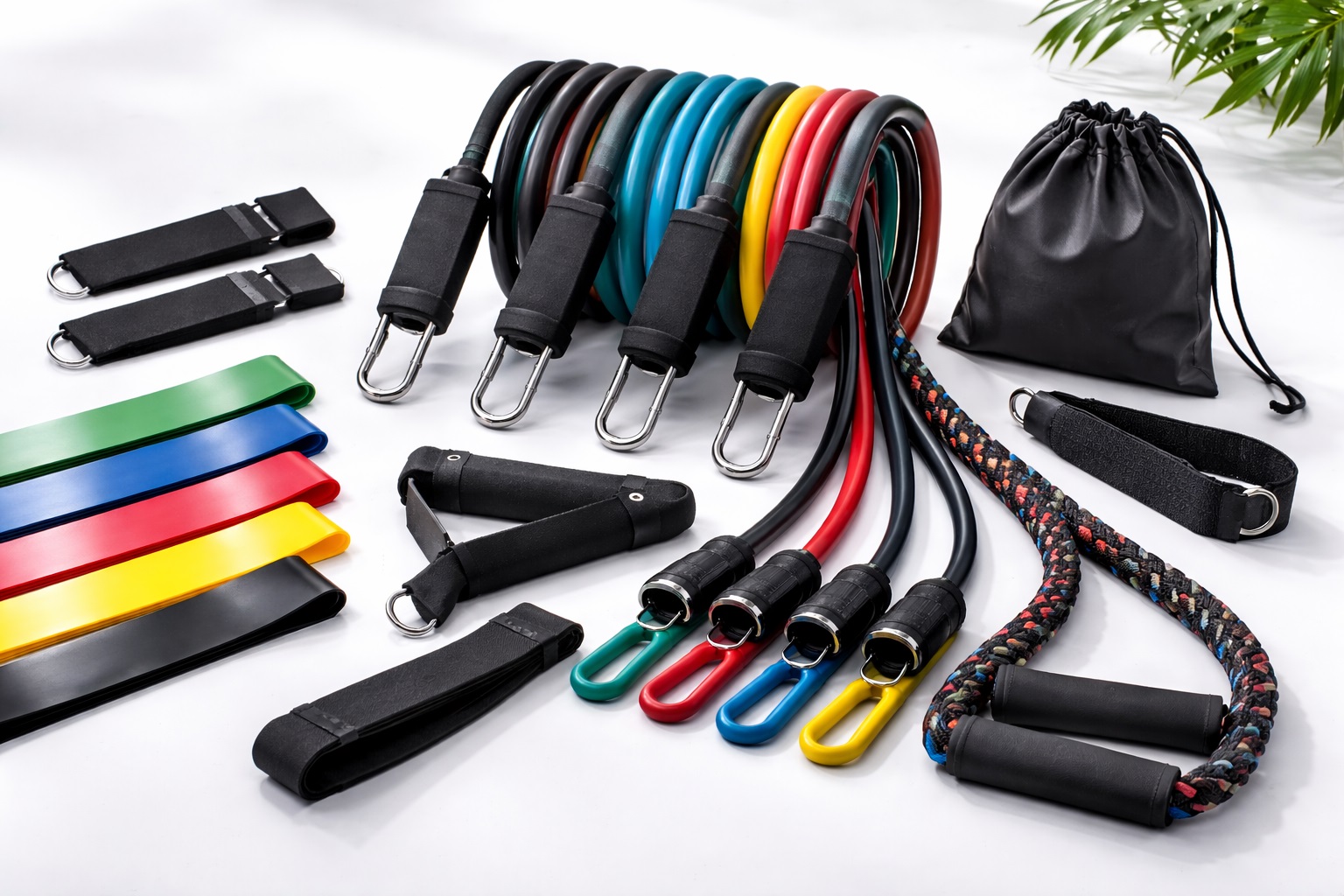
- Tube-style bands suit both upper and lower body training
- Works well for beginners transitioning from bodyweight-only routines
- Cons:
- Takes a little longer to set up than a simple loop band
- Door anchor placement needs a sturdy, well-fitted door frame
Best For: Beginners who want to mimic cable-machine movements like rows and chest presses at home.
Why We Recommend It: Including the door anchor removes one of the biggest early hurdles for anyone trying to build a genuinely full-body band routine.
4. Bodylastics Stackable – Best For Building a Long-Term Kit
Bodylastics has built a reputation on its stackable tube system, and the Stackable set here leans on Anti-snap technology to give beginners peace of mind while they get comfortable with heavier tension. At around $30, it costs a bit more than a basic loop set, but the ability to combine multiple bands onto one handle means a beginner is buying a system that can keep pace with them as strength improves. This stackable approach also means storage stays simple, since a handful of individual bands and one set of handles can replace an entire small rack of fixed-weight equipment.
- Pros:
- Anti-snap technology adds a layer of safety for new users
- Stackable design allows resistance to increase over time
- Reputable brand with a long track record in band training
- Cons:
- Higher upfront cost than single-loop starter options
- More components to keep track of and store
Best For: Beginners who plan to stick with band training long enough to need increasing resistance.
Why We Recommend It: The anti-snap build quality is particularly reassuring for anyone new to tube bands who is still learning proper form and tension control.
5. TheraBand Professional – Best For Learning Proper Form
TheraBand is a name most people recognize from physical therapy clinics, and the Professional set brings that same approachable design home through Color-coded levels. At about $15, it is one of the more affordable options here, and the color system makes it simple for a beginner to know exactly which band they are using and when it is time to size up. Its clinical roots also make it a familiar, low-intimidation option for anyone easing back into movement after time away from regular exercise.
- Pros:
- Color-coded levels remove the guesswork around resistance strength
- Flat band design is gentle on the hands and joints while learning form
- Trusted, long-standing brand in rehabilitation and fitness settings
- Cons:
- Flat bands can feel different in the hand than tube-style bands
- Fewer attachment options for door-anchored exercises
Best For: Beginners who want a gentle, easy-to-understand introduction to resistance training.
Why We Recommend It: The color-coded system takes the confusion out of choosing the right resistance, which is one of the biggest early obstacles for first-time buyers.
6. Whatafit Resistance Bands – Best For Testing Multiple Resistance Levels
The Whatafit set is built for beginners who are not yet sure how much resistance they will need, offering Up to 150 lbs total when bands are combined. At around $25, it is a mid-priced option that gives a new lifter room to experiment with light, moderate, and challenging resistance within a single purchase. That range of adjustability is particularly useful for households where more than one person will be sharing the same set of bands.
- Pros:
- Up to 150 lbs total resistance covers a wide range of exercises
- Multiple individual bands allow flexible combinations
- Reasonable price for the number of resistance options included
- Cons:
- Combining bands correctly takes a little practice at first
- Included accessories are basic compared to premium sets
Best For: Beginners who want one set that covers everything from light warmups to more demanding strength work.
Why We Recommend It: Having up to 150 lbs of combined resistance available means a beginner is unlikely to outgrow this set quickly.
7. Fitbit Resistance Bands – Best For Everyday Durability
Fitbit's entry into resistance bands focuses on straightforward, dependable construction, built around Durable latex that holds up to regular use. At roughly $40, it is one of the pricier picks in this lineup, positioned for beginners who would rather pay a little more upfront for a band that is built to last through frequent home workouts. If you already track your training through a fitness ecosystem, sticking with a familiar brand name can also make the whole routine feel more cohesive.
- Pros:
- Durable latex construction resists wear from frequent use
- Recognizable, reputable brand name behind the product
- Consistent resistance feel from workout to workout
- Cons:
- Premium pricing relative to other beginner-friendly options
- Latex material may not suit those with latex sensitivities
Best For: Beginners who work out several times a week and want a band that can keep up with that frequency.
Why We Recommend It: The durable latex build means this set is less likely to need early replacement, which offsets some of the higher initial cost over time.
8. Rogue Tube Bands – Best For Serious Long-Term Investment
Rogue Fitness built its reputation on gym-grade equipment, and the Tube Bands bring that same philosophy to resistance training with Industrial grade rubber construction. At around $50, this is the most expensive option in the lineup, aimed at beginners who already know they want to commit to strength training long-term and would rather buy a durable set once. For someone who has already decided that resistance training will be a permanent part of their routine, treating this as a one-time investment can make more sense than repeatedly replacing cheaper bands.
- Pros:
- Industrial grade rubber built to handle heavy, repeated use
- Reputable brand known for gym-quality equipment
- Strong long-term value for committed beginners
- Cons:
- Highest price point among the options in this guide
- May be more band than a casual beginner initially needs
Best For: Beginners who are confident they will stick with resistance training and want equipment that will not need replacing.
Why We Recommend It: The industrial grade rubber construction is built to outlast typical beginner bands, making it a smart buy for anyone planning to train consistently.
Buying Guide: How to Choose the Best Resistance Bands for Beginners
Picking the right resistance bands as a beginner comes down to a handful of practical factors rather than chasing the flashiest set on the shelf. The following twelve considerations cover what actually matters when you are ordering your first starter kit.
1. Understand the Different Band Types
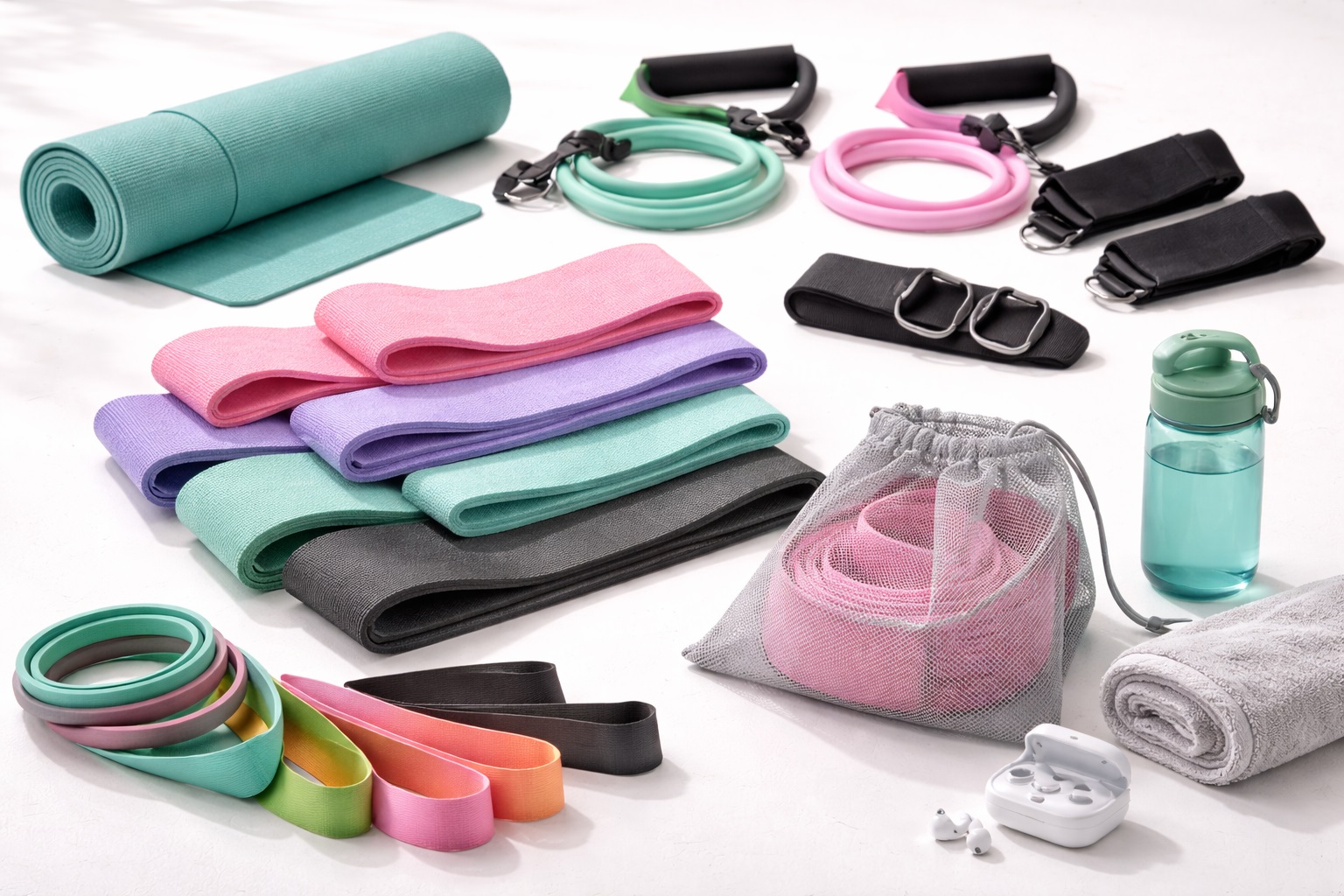
Resistance bands generally fall into a few categories: flat bands, loop bands, and tube bands with handles. Flat bands are gentle and versatile for stretching and light strength work, loop bands excel at lower-body activation, and tube bands with handles are best for gym-style pulling and pressing movements. Knowing which category matches your goals will narrow your search considerably before you even start comparing individual products. Many beginners eventually end up owning more than one type, since a set of loops for the lower body and a set of tubes for the upper body cover almost every common exercise without overlapping.
2. Start With a Manageable Resistance Range
As a beginner, it is tempting to buy the heaviest bands available, but starting too heavy makes it difficult to learn proper form. Look for a starter kit that includes multiple resistance levels so you can begin light and progress naturally as your strength and confidence improve. Rushing to a heavier band before your technique is solid is one of the most common ways beginners end up frustrated or sore in the first few weeks.
3. Check the Material Quality
The material a band is made from affects both comfort and longevity. Latex and rubber bands are common because they offer good elasticity and durability, but the quality of that material varies between brands. Reading how a band is described, including any anti-snap or reinforced construction, gives you a sense of how well it will hold up over time. If you have a latex sensitivity, it is also worth checking the product description before buying, since some sets are made from alternative synthetic materials.
4. Think About Anchor Points
Some bands are designed to be used purely with your own bodyweight, such as loop bands around the legs, while others include a door anchor that lets you simulate cable machine exercises. If you want a wider variety of upper-body movements like rows and presses, prioritize a set that includes an anchor point. Without one, you will be limited mostly to exercises that use your own body as the resistance point, such as banded pushups or squats.
5. Consider Comfort Against the Skin
Beginners often underestimate how much comfort matters during a workout. Thin, narrow bands can dig into skin during certain exercises, while wider fabric-style bands tend to feel more comfortable during lower-body activation work. If you plan to use bands frequently, comfort should weigh heavily in your decision, since a band that pinches or rolls uncomfortably is far less likely to get used consistently over time.
6. Look for Color-Coded or Clearly Labeled Resistance Levels
One of the more frustrating parts of starting out with resistance bands is losing track of which band offers which resistance level. Sets that use clear color-coding or labeling make it much easier to stay organized and to know exactly when you are ready to progress to the next level. This small detail matters more than it seems, especially once you own more than two or three bands that otherwise look nearly identical.
7. Decide Between a Single Band and a Full Set
A single loop band is enough to get started, but a full set with multiple resistance levels offers more flexibility as you learn which exercises you enjoy and which muscle groups you want to prioritize. If your budget allows, a complete starter kit is generally a better long-term value than buying single bands one at a time, since sets are typically priced more efficiently than individual replacements.
8. Factor In Portability
One of the biggest advantages of resistance bands over traditional gym equipment is how easy they are to transport. If you travel often or want to work out at a park, in a hotel room, or at a friend's house, prioritize bands that pack down small and come with a simple storage bag or pouch. This portability is often the deciding factor for beginners who found gym memberships hard to stick with simply because of the added friction of getting there.
9. Set a Realistic Budget
The options in this guide range from around $10 to $50, and price generally reflects the number of resistance levels, included accessories, and build quality. Beginners do not need to spend at the top of that range to get real value, but it is worth deciding upfront how much you are comfortable investing in your starter kit. A modest budget of $20 to $30 typically covers a well-rounded set with room to grow.
10. Read the Fine Print on Included Accessories
Some sets include extras like door anchors, ankle straps, or carrying bags, while others include only the bands themselves. These accessories can significantly change how many exercises you can perform, so compare what is actually included rather than assuming all sets are equivalent. Two products at a similar price point can offer very different value once you account for what actually arrives in the box.
11. Prioritize Brand Reputation for Safety
Because bands rely on stretched material under tension, build quality directly affects safety. Choosing a reputable, established brand reduces the risk of a band failing unexpectedly during a workout, which matters even more for beginners who are still learning how much tension is appropriate. Established brands also tend to publish clearer usage and care instructions, which is helpful when you are still learning the basics.
12. Match the Kit to Your Actual Goals
Finally, think honestly about what you want to use resistance bands for. A beginner focused on lower-body activation before runs or squats has different needs than one trying to replace a full upper-body gym routine. Matching your starter kit to your real goals, rather than the most popular option online, will lead to a purchase you actually use week after week instead of one that ends up in a drawer after a few sessions.
Frequently Asked Questions
Are resistance bands actually effective for beginners?
Yes. Resistance bands provide continuous tension throughout a movement, which challenges muscles differently than free weights and can be an effective way to build strength, especially when you are just starting out and still learning proper form. Many beginners also find bands easier on the joints than jumping straight into heavy free weights, since the tension builds gradually rather than loading the body all at once.
How many resistance bands does a beginner really need?
Most beginners do well starting with a set that includes two or three resistance levels. This allows you to use lighter bands for warmups or upper-body work and heavier bands for larger muscle groups like the legs and glutes, and you can always add another resistance level later as specific exercises start to feel too easy.
Can resistance bands replace a gym membership?
Resistance bands can replace a significant portion of a gym routine, particularly for beginners focused on general strength and conditioning, though very advanced lifters chasing maximal strength may eventually want to supplement with additional equipment. For most people just starting out, however, a well-chosen starter kit covers the vast majority of useful exercises.
Do resistance bands lose their elasticity over time?
Like any elastic material, bands can gradually lose some tension with heavy, repeated use, which is why build quality and material durability matter when choosing a set meant to last. Storing bands properly and avoiding overstretching beyond their intended range also helps extend their usable lifespan.
What is the difference between loop bands and tube bands?
Loop bands are closed circles typically used around the legs or arms for activation and bodyweight-style exercises, while tube bands usually include handles and are better suited to gym-style pulling and pressing movements, especially when paired with a door anchor. Many beginners eventually use both types together as their routine expands.
Is a premium resistance bands worth it?
Yes, higher end models often last longer and provide better support or consistency than cheaper alternatives, particularly for beginners who plan to train several times a week over the long term. That said, a budget set is more than adequate for someone who is still deciding whether band training is a good long-term fit.
How do I clean my resistance bands?
Most can be wiped down with a damp cloth or mild soap. Always check the manufacturer's care instructions before using any additional cleaning products on the material, and let bands air dry fully before storing them away.
Where should I store my resistance bands?
Keep bands somewhere cool, dry, and out of direct sunlight, since prolonged heat and UV exposure can degrade latex and rubber materials faster than normal use would. A drawer, a gym bag, or the included storage pouch are all reasonable options as long as the bands are not left stretched or knotted between uses.
Do I need a door anchor as a beginner?
Not necessarily. A door anchor expands the range of upper-body exercises you can perform, but many effective beginner routines can be built entirely around loop bands and bodyweight movements. It becomes more valuable once you want to add rows, presses, or lat pulldown-style movements to your routine.
How do I know which resistance level to start with?
Start with the lightest band in your set and pay attention to how the last few repetitions of an exercise feel. If you can comfortably complete a full set without your form breaking down, it is a sign you are ready to move up to the next resistance level.
Can resistance bands help with injury recovery or mobility work?
Many rehabilitation programs use light resistance bands for mobility and activation work, which is part of why brands with clinical roots, such as TheraBand, are popular choices for gentle, controlled movement. Even outside of formal rehab, light bands are a common tool for warming up joints before a heavier workout.
What should a complete beginner starter kit include?
At minimum, look for a set with a few different resistance levels and a simple storage pouch. A door anchor and handles are useful additions if you want to expand into more gym-style exercises down the line, and clear labeling on each band makes the whole system easier to manage from the very first workout.
Final Verdict
- Top Pick: Letsfit Resistance Loop for overall excellence.
- Budget Choice: Veick Resistance Set for great value.
- Premium Choice: Peach Bands Hip Bands for high-end features.
Any of the eight resistance bands covered here can serve as a solid starting point for a beginner, but the right choice ultimately comes down to how you plan to train. If you want the lowest-risk way to try band training, the Letsfit Resistance Loop is hard to beat, while beginners who know they want a full-body, gym-style routine at home will get more long-term mileage out of a set with a door anchor or stackable design. Those focused purely on lower-body warmups may prefer the targeted design of the Peach Bands Hip Bands, while anyone planning to train several times a week for years to come may find the higher-priced, heavy-duty options worth the extra upfront cost. Whichever starter kit you choose, focus on starting light, learning proper form, and letting your resistance level grow naturally as your strength improves.