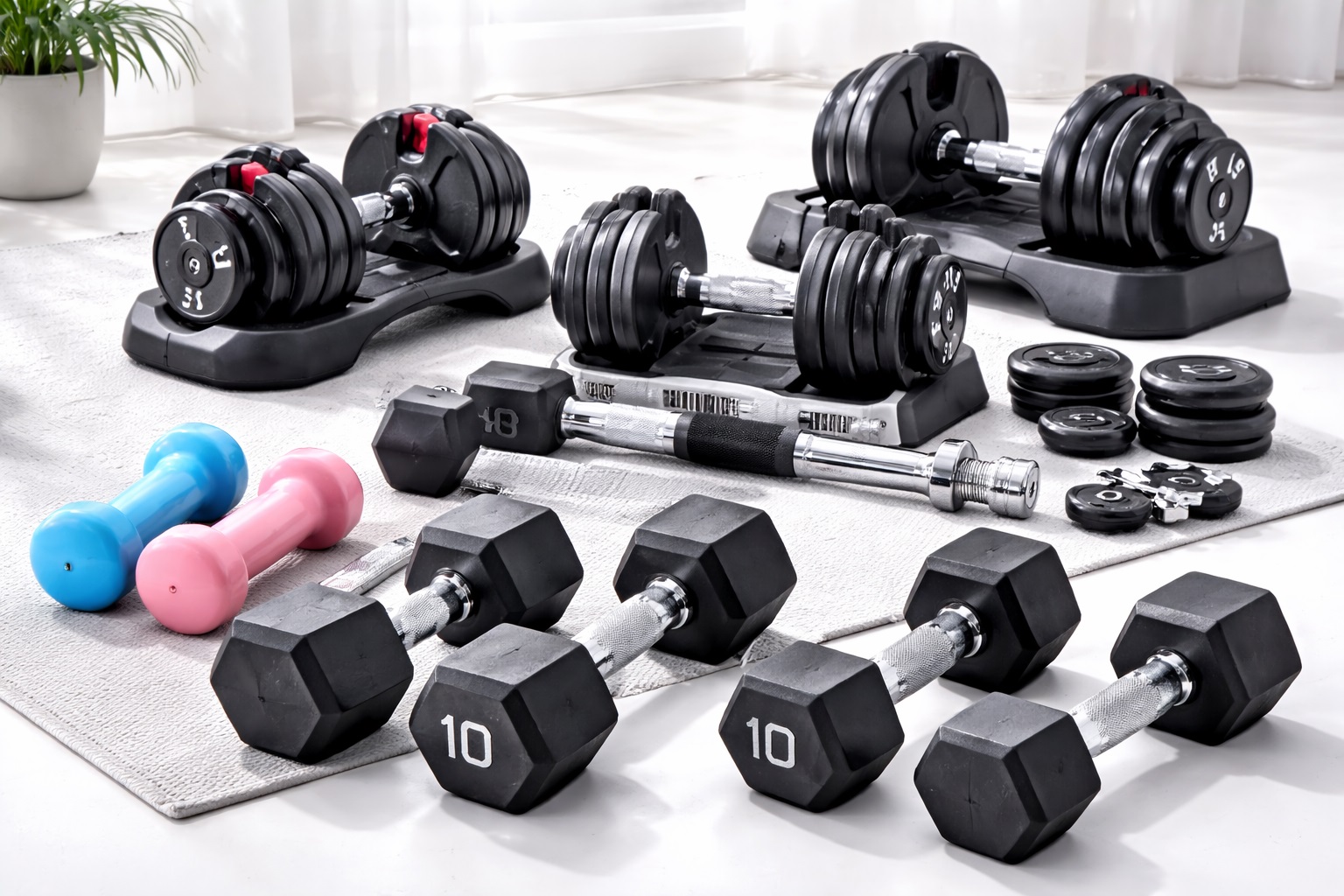
Best Dumbbells for Beginners in 2026
Starting a strength training routine can feel more complicated than it needs to be, and dumbbells are usually the simplest place to begin. Unlike barbells or machines, dumbbells require almost no setup knowledge, work every major muscle group, and take up relatively little space compared to a full home gym. The challenge for beginners is not whether to use dumbbells, but which type actually fits their budget, space, and long-term training goals.
In this guide, we cover eight dumbbell options that suit different beginner scenarios, from simple fixed-weight hex dumbbells that cost less than a gym membership to adjustable systems that replace an entire rack of weights in a single compact unit. Each option takes a different approach to solving the core beginner dilemma: how to get enough resistance variety to keep progressing without overspending or overcrowding a small home gym.
We also walk through the practical factors that matter most when choosing dumbbells as a beginner, including grip comfort, weight increments, storage space, and how to think about long-term value as your strength improves. By the end, you should have a clear sense of which type of dumbbell setup makes the most sense for where you are starting from. These recommendations are based on published specifications, brand positioning, and well-established knowledge of dumbbell design rather than identical side-by-side lab testing of every unit.
Top 8 Best dumbbells Picks (Detailed Reviews)
1. PowerBlock Elite – Best For Space-Saving Adjustable Training
The PowerBlock Elite uses a compact square design that lets a single unit replace an entire rack of individual dumbbells, priced around $300. For beginners who anticipate their strength growing quickly and want to avoid buying new weights every few months, this adjustable system is built to scale with you from very light resistance up to a serious training load.
- Pros:
- Compact square design replaces a full rack of dumbbells
- Scales from beginner-friendly weight up to advanced resistance
- Saves substantial floor and shelf space over time
- Backed by a well-established, reputable brand
- Cons:
- Higher upfront price than fixed-weight starter sets
- Square shape feels different than traditional dumbbells at first
- Adjustment mechanism takes a short learning curve
Best For: Beginners who expect to progress quickly and want one long-term dumbbell solution instead of repeatedly buying heavier fixed-weight sets over time.
Why We Recommend It: The upfront cost is real, but it replaces what would otherwise be several individual dumbbell purchases as strength improves, and the compact footprint is a genuine advantage for anyone without a dedicated workout room, especially once you account for the shelf space several individual dumbbell pairs would otherwise require.
2. CAP Barbell Coated Hex – Best For Budget-Friendly Fixed-Weight Starters
CAP Barbell's Coated Hex dumbbells feature anti-roll heads, priced around $30 per pair at lighter weights, making them one of the most accessible entry points for beginners who simply want to start lifting without navigating adjustable mechanisms. The hex shape is a small but genuinely useful detail, since it keeps the dumbbells from rolling away when set down.
- Pros:
- Anti-roll hex heads keep dumbbells in place when set down
- Straightforward, no-assembly design ideal for first-time buyers
- Affordable enough to buy multiple weight pairs over time
- Coated finish protects floors and reduces noise
- Cons:
- Fixed weight means buying additional pairs as you progress
- Can require more storage space than an adjustable set
- Heavier pairs cost meaningfully more than lighter ones
Best For: Absolute beginners who want the simplest possible introduction to dumbbell training without the added complexity or cost of an adjustable system.
Why We Recommend It: There is something to be said for simplicity when you are just starting out, and fixed-weight hex dumbbells remove any learning curve so you can focus entirely on form and consistency, without any mechanism or setting to think about between exercises.
3. Bala Bars – Best For Light Toning & Cardio-Style Workouts
Bala Bars take a different approach with their ergonomic shape, priced around $55, designed less for heavy strength training and more for lighter, higher-repetition workouts like cardio-toning routines, barre-style classes, or Pilates-adjacent training. The bar shape offers a different grip experience than traditional round or hex dumbbells.
- Pros:
- Ergonomic shape suits high-repetition, lighter-weight training
- Comfortable grip designed for extended workout sessions
- Attractive, modern design that fits well in shared living spaces
- Well suited to beginners easing into movement rather than heavy lifting
- Cons:
- Higher price point relative to the weight range offered
- Not designed for heavy strength-focused training
- Limited weight range compared to traditional dumbbell sets
Best For: Beginners whose fitness goals lean toward toning, mobility, and cardio-based strength work rather than building maximal strength.
Why We Recommend It: Not every beginner is aiming for heavy lifting, and for those prioritizing movement quality and light resistance work, the ergonomic design here genuinely improves the workout experience, especially over longer sessions where a bulky grip would otherwise become tiring.
4. Bowflex SelectTech 552 – Best For Long-Term Progressive Overload
The Bowflex SelectTech 552 offers adjustable weight in a single dial-based unit, priced around $400, letting users shift between multiple weight levels almost instantly. For beginners committed to a long-term strength journey, this kind of adjustability supports progressive overload without needing to purchase new equipment every time you outgrow your current weights.
- Pros:
- Adjustable weight dial allows quick changes between exercises
- Supports long-term progression without buying new dumbbells
- Well-known, established brand with a strong track record
- Saves significant space compared to a full dumbbell rack
- Cons:
- One of the higher price points in this lineup
- Dial mechanism has a distinct feel some beginners need to adjust to
- Bulkier per unit than a single fixed-weight dumbbell
Best For: Beginners who are confident they will stick with strength training long-term and want one investment that grows alongside their increasing strength.
Why We Recommend It: This is a system built for the beginner who becomes an intermediate and then advanced lifter, without ever needing to replace the core equipment along the way, which can save meaningful money over several years of consistent training.
5. Amazon Basics Neoprene – Best For Absolute Beginners on a Tight Budget
Amazon Basics Neoprene dumbbells feature a non-slip coating, priced around $20, making them one of the most affordable and approachable options for someone testing the waters with strength training for the very first time. The soft coating is comfortable to hold and forgiving if a dumbbell is accidentally set down harder than intended.
- Pros:
- Non-slip neoprene coating improves grip and comfort
- Very affordable, low-risk entry point for new lifters
- Soft coating is gentle on floors and furniture
- Bright color-coding makes weight identification simple
- Cons:
- Fixed weight requires buying additional pairs to progress
- Neoprene coating may show wear faster than coated hex options
- Not intended for heavy, advanced strength training
Best For: First-time exercisers who want to try dumbbell training without a significant financial commitment before deciding whether to invest further.
Why We Recommend It: The low price and comfortable grip make this an easy, low-pressure way to build a new habit, which matters more for long-term success than any single performance feature, and the color-coding makes tracking your own progress simple from the very first week.
6. Yes4All Adjustable – Best For Affordable Adjustable Strength Building
Yes4All's adjustable set uses cast iron plates, priced around $50 for a base configuration, offering a middle ground between fixed-weight simplicity and full adjustable convenience. Beginners can start light and add plates as strength improves, all without the higher price tag of dial-based adjustable systems.
- Pros:
- Cast iron plates provide durable, long-lasting resistance
- Adjustable format allows gradual weight increases over time
- Meaningfully more affordable than dial-based adjustable systems
- Plates can be added incrementally as budget allows
- Cons:
- Manual plate changes take longer than dial adjustment
- Cast iron plates add noticeable weight to the overall system
- Requires occasional tightening to keep plates secure
Best For: Budget-conscious beginners who want the flexibility of an adjustable system without paying a premium for instant dial-based weight changes.
Why We Recommend It: It offers a genuinely practical middle path, adjustable enough to support real progression, but priced closer to what many beginners are comfortable spending on their first serious weight set, without feeling like an entry-level compromise.
7. NordicTrack Select-A-Weight – Best For Tech-Connected Beginners
The NordicTrack Select-A-Weight system is voice control capable, priced around $350, appealing to beginners who already use connected fitness apps or equipment and want their dumbbells to fit into that same tech-forward ecosystem. Adjusting weight without bending down to manually swap plates can be a genuinely convenient feature mid-workout.
- Pros:
- Voice control capability allows hands-free weight adjustments
- Fits naturally into a broader connected fitness setup
- Space-saving adjustable design similar to other premium systems
- Backed by an established fitness technology brand
- Cons:
- Premium price reflects the added technology features
- Voice control is a convenience feature rather than a necessity
- Beginners may not need this level of tech integration initially
Best For: Beginners already invested in connected fitness technology who want their strength training equipment to match that same tech-forward experience.
Why We Recommend It: For the right user, the voice-controlled adjustment genuinely streamlines circuit-style workouts, though it is a convenience upgrade rather than something most beginners strictly need on day one of their training journey.
8. Rogue Hex Dumbbells – Best For Simple, No-Frills Durability
Rogue Fitness brings its heavy duty rubber construction to a straightforward hex dumbbell, priced around $40, aimed at beginners who want equipment built to commercial-gym standards without any adjustable mechanisms or added technology. It is a simple, durable option that will not need replacing as strength improves within a given weight range.
- Pros:
- Heavy duty rubber coating resists chipping and cracking
- Straightforward hex design with no mechanisms to maintain
- Backed by a well-established, trusted fitness brand
- Comfortable, secure grip during a variety of exercises
- Cons:
- Fixed weight means buying additional pairs to progress
- Higher per-pound cost than basic neoprene options
- Takes up more storage space than an adjustable system
Best For: Beginners who want simple, reliable, gym-quality dumbbells without any adjustable mechanisms and are comfortable buying additional pairs as they progress.
Why We Recommend It: Sometimes simplicity is the best feature, and this set delivers genuinely durable construction without asking beginners to learn or maintain any adjustable hardware, which makes it an easy, low-maintenance recommendation for a first serious dumbbell purchase.
Buying Guide: How to Choose the Best dumbbells
Choosing your first set of dumbbells involves balancing budget, space, and how quickly you expect to progress. Here are the factors that matter most for beginners specifically.
1. Fixed Weight vs Adjustable Systems
Fixed-weight dumbbells are simpler and often cheaper per pair, but require buying additional sets as you get stronger. Adjustable systems cost more upfront but consolidate your entire weight range into one or two compact units.
For beginners unsure how quickly they will progress, a modest adjustable set often provides the best balance, letting you start light while leaving room to grow without a second purchase.
It can help to think about your realistic timeline for progress. Someone planning to train consistently for years benefits more from adjustable equipment than someone still deciding whether strength training will become a lasting habit.
2. Grip Comfort & Material
Coated, textured, or neoprene grips tend to be more comfortable for beginners than bare metal, particularly during longer or higher-repetition sets where hand fatigue can become a limiting factor before the target muscles are fully worked.
Testing grip comfort in person, when possible, is worthwhile, since personal preference varies more with dumbbell grip texture than with almost any other equipment feature.
Sweaty hands can make smooth or bare metal grips more likely to slip, so beginners prone to sweating heavily during workouts may want to prioritize textured or coated options specifically.
3. Weight Increments
Smaller weight increments allow smoother progression, which matters more for beginners than it might seem, since jumping too much in resistance at once can stall progress or lead to poor form.
Adjustable systems with fine increments, typically two and a half or five pound steps, tend to support more sustainable long-term progression than sets with large jumps between available weights.
Checking the specific increment options before buying an adjustable system is worth the extra few minutes, since not all systems offer the same level of granularity between weight settings.
4. Storage Space
Fixed-weight dumbbells require a rack or shelf space that grows as your collection expands, while adjustable systems consolidate storage into a much smaller footprint, which matters significantly for apartment or shared-space living.
Even a small dedicated storage spot, like a corner shelf or under-bed space, helps keep dumbbells organized and easy to access consistently rather than becoming clutter.
Measuring your available storage space before purchasing, especially for larger adjustable units, can prevent an awkward surprise when the equipment arrives and does not quite fit where you planned.
5. Durability & Coating
Rubber, urethane, or neoprene coatings protect both the dumbbell and your floors, while also reducing noise when weights are set down. Cast iron and steel cores underneath these coatings generally offer strong long-term durability.
Checking for any visible seams or weak points in the coating before buying can help you avoid a set prone to chipping or peeling within the first year of regular use.
Setting dumbbells down gently rather than dropping them, even with a durable coating, helps preserve both the equipment and your flooring over the long term.
6. Anti-Roll Design
Hex-shaped or otherwise non-round dumbbells stay put when set down, which is a small but genuinely useful safety feature, particularly in a home environment where a rolling dumbbell could become a tripping hazard.
This feature matters most for floor-based exercises where dumbbells are frequently picked up and set down between movements or reps.
Households with children or pets may find anti-roll designs especially worthwhile, since a stationary dumbbell is far less likely to end up somewhere unexpected between workouts.
7. Price vs Long-Term Value
A cheaper fixed-weight starter set is a reasonable first purchase, but factor in the cost of buying additional pairs as you progress, since this can eventually exceed the upfront cost of an adjustable system.
Thinking a year or two ahead, rather than only considering your current strength level, often reveals which option actually represents better long-term value for your specific situation.
It can also help to add up the realistic total cost of the fixed-weight pairs you would likely need over your first year, then compare that sum directly against an adjustable system's price.
8. Ease of Use for Beginners
Simpler equipment reduces the learning curve when you are just starting out, so weigh the convenience of adjustable systems against the straightforward, no-assembly nature of fixed-weight dumbbells.
If technology or adjustment mechanisms feel intimidating at first, there is nothing wrong with starting simple and upgrading to an adjustable system once you are more comfortable with the basics.
Most adjustable systems include clear instructions and video guides, so the learning curve is usually shorter than beginners initially expect once they have used the equipment a handful of times.
9. Noise Level
Coated dumbbells set down on hard flooring are generally quieter than uncoated metal, which matters for apartment living or households with shared walls and floors below.
A rubber floor mat under your workout area can further reduce noise and protect flooring regardless of which dumbbell coating you choose.
Adjustable systems with internal moving parts can occasionally click during weight changes, so if noise is a major concern, checking reviews for specific noise complaints is a reasonable extra step.
10. Brand Reputation & Warranty
Established fitness equipment brands typically offer better quality control and warranty support, which provides peace of mind for a piece of equipment you may use for years.
Reading reviews focused specifically on long-term durability, rather than initial impressions, helps confirm whether a brand's reputation holds up under sustained, regular use.
A longer warranty period, particularly for adjustable systems with mechanical parts, is generally a positive sign that the manufacturer expects the product to perform reliably over an extended period.
11. Weight Range for Your Starting Point
Beginners often benefit from a lighter starting weight range than they expect, focusing on form before adding significant resistance, so consider a set or system that starts comfortably light.
It is generally easier to add weight gradually than to start too heavy and risk poor form or unnecessary strain in the early weeks of a new routine.
Different exercises also call for different weight ranges, so a system offering a wide overall range tends to serve beginners better than one narrowly focused on a single use case.
12. Set Design: Pairs vs Single Adjustable Units
Some beginners prefer a matched pair of dumbbells for symmetrical training, while single adjustable units paired together offer more flexibility but require purchasing two units for a complete adjustable pair.
Confirming whether a product is sold individually or as a pair before purchasing can prevent an unexpected additional cost once you are ready to check out.
Reading the full product listing carefully, including any fine print about single-unit versus pair pricing, avoids the common surprise of receiving only one dumbbell when two were expected.
13. Maintenance Requirements
Fixed-weight dumbbells require essentially no maintenance, while adjustable systems with moving parts benefit from occasional checks to ensure mechanisms remain secure and function smoothly over time.
Wiping down grips after sweaty sessions and storing equipment away from moisture helps extend the usable life of any dumbbell set, adjustable or fixed.
Periodically confirming that adjustment dials or pins move freely, rather than waiting for a problem to appear mid-workout, is a simple habit that keeps adjustable systems reliable for years.
Frequently Asked Questions
What weight dumbbells should a beginner start with?
Many beginners start somewhere between five and fifteen pounds depending on the exercise and their existing strength level, prioritizing good form over heavier weight in the first several weeks.
Are adjustable dumbbells better than fixed-weight sets for beginners?
Both can work well. Adjustable sets offer long-term value and space savings, while fixed-weight sets are simpler and often cheaper as an initial purchase for someone just getting started.
How many dumbbells do I need as a beginner?
A single pair covering a comfortable starting weight range is enough to begin, and many effective beginner routines can be built around just one or two weight levels.
Can dumbbells alone provide a full-body workout?
Yes, dumbbells can target every major muscle group effectively, especially when combined with bodyweight exercises, making them a genuinely complete solution for beginner strength training.
How often should a beginner train with dumbbells?
Most beginners see good results training two to four times per week, allowing adequate recovery time between sessions targeting the same muscle groups.
Do I need a bench to use dumbbells effectively?
A bench expands the range of available exercises but is not strictly necessary for beginners, since many effective dumbbell exercises can be performed standing or on the floor.
How do I know when to increase my dumbbell weight?
If you can complete all planned repetitions with good form and only mild fatigue by the final rep, it is generally a good time to progress to a heavier weight.
Are adjustable dumbbells safe for beginners to use?
Yes, provided the adjustment mechanism is fully secured before each use. Following the manufacturer's instructions for locking in a weight setting helps avoid any accidental shifts during exercises.
What is the difference between hex and round dumbbells?
Hex dumbbells have flat sides that prevent rolling when set down, while round dumbbells can roll away if not placed carefully, making hex shapes generally more practical for home use.
Can beginners build muscle with lighter dumbbells?
Yes, especially when combined with higher repetitions and proper progressive overload over time. Muscle growth depends more on consistent, appropriately challenging training than on starting with heavy weight.
Is it worth buying a more expensive adjustable dumbbell system as a first purchase?
If you are confident you will stick with strength training long-term, an adjustable system can be a smart first purchase that avoids the need to buy additional weights later.
How much space do I need to store a beginner dumbbell set?
A small shelf or corner of a closet is generally sufficient for a beginner-sized set, especially with an adjustable system that consolidates multiple weights into one compact unit.
Can dumbbells replace a full home gym for a beginner?
For many beginners, yes. A well-chosen dumbbell set combined with bodyweight exercises can cover most strength training needs without requiring a larger, more expensive home gym setup.
Should beginners buy dumbbells online or try them in a store first?
Trying dumbbells in person, when possible, helps you gauge grip comfort and overall feel, though online purchases are perfectly reasonable if you have a clear sense of your preferred weight range and grip style already.
What is a reasonable budget for a beginner's first dumbbell set?
A basic fixed-weight starter set can cost as little as twenty to fifty dollars, while a more complete adjustable system typically runs several hundred dollars depending on the weight range and features included.
Do beginners need different dumbbells for different exercises?
Not necessarily at first. A single moderate weight range can cover most beginner exercises, though as you advance, you may find that certain movements like presses call for a heavier weight than others like curls.
Is it normal for beginners to feel sore after starting dumbbell training?
Yes, mild soreness in the days following a new routine is common and generally expected as muscles adapt to new demands, though sharp or persistent pain is a sign to reassess your form or resistance level.
Final Verdict
- Top Pick: PowerBlock Elite for overall excellence.
- Budget Choice: Bala Bars for great value.
- Premium Choice: CAP Barbell Coated Hex for high-end features.
There is no universally correct dumbbell choice for every beginner, but there is a right choice for your specific situation. If you expect to progress steadily and want to avoid future purchases, the PowerBlock Elite or Bowflex SelectTech 552 offer genuine long-term value despite the higher upfront cost. If you would rather start simple and inexpensive, the CAP Barbell Coated Hex or Amazon Basics Neoprene sets remove any barrier to getting started today. Whichever you choose, consistency will matter far more to your results than which specific brand of dumbbell sits on your shelf. Pick equipment that fits comfortably into your budget and living space, and let regular practice do the rest of the work over the months ahead.