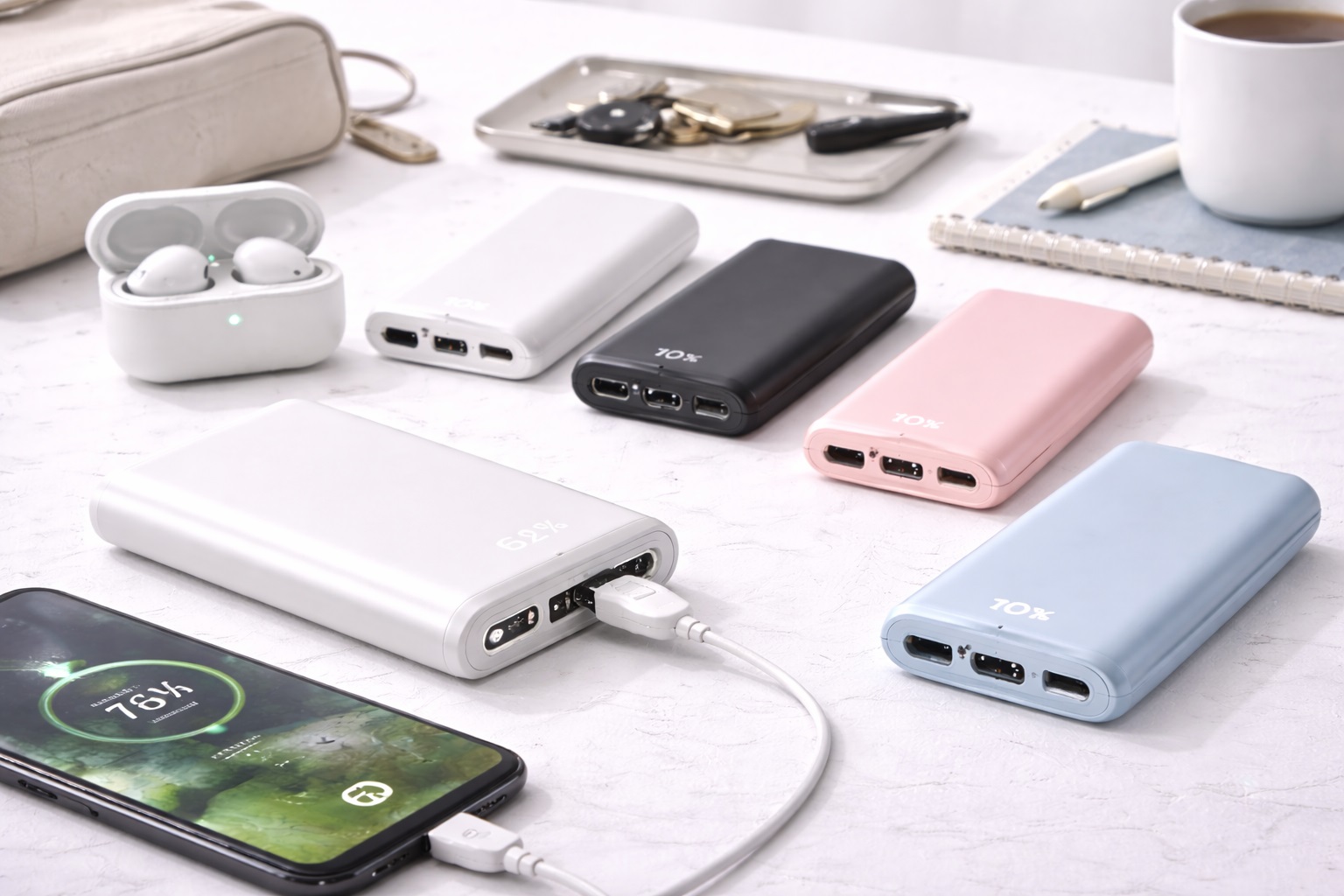
Best Power Banks for Beginners: Simple, Safe & Easy to Use
Buying your first power bank sounds simple until you actually start comparing options. Product listings are filled with mAh figures, wattage ratings, charging protocol names, and port configurations that mean very little if you've never owned one before. For a first-time buyer, the real question isn't which power bank has the most impressive spec sheet — it's which one you can pull out of a bag, plug in, and use correctly without needing to research anything beforehand.
This guide is built specifically for that first-time buyer. Every category below prioritizes straightforward, foolproof operation over maximizing any single spec, because a power bank that confuses its owner or gets used incorrectly provides less real value than a simpler one that's used confidently and correctly every time. Safety also gets extra attention here, since a first-time buyer is less likely to already know what safety certifications or protections to look for.
Below you'll find a comparison table, six picks organized around the specific things that make a power bank genuinely beginner-friendly, a buying guide walking through what to check before your first purchase, and answers to the questions first-time buyers ask most often.
| Category | Standout Strength | Best For |
|---|---|---|
| Beginner 10,000mAh power bank | Straightforward, widely useful capacity | First-time buyers wanting one reliable size |
| Simple display power bank | Clear, easy-to-read charge status | Buyers confused by vague LED indicators |
| Safety-certified beginner bank | Verified safety protections | Cautious first-time buyers |
| Easy-to-use compact bank | Simple, single-button operation | Buyers who want zero learning curve |
| Budget beginner power bank | Low-cost way to try the category | Buyers unsure if they'll use one regularly |
| Power bank with built-in cable | No separate cable to lose or forget | Buyers who want maximum simplicity |
It's also worth giving yourself permission to ask what might feel like an obvious question before buying, since there's no such thing as a silly question when it comes to a product category you've genuinely never owned before. Store employees, product Q&A sections, and even a quick search for a specific term you don't recognize are all reasonable ways to fill in a gap in knowledge, and doing so before your purchase is far more useful than discovering a misunderstanding after the power bank has already arrived.
Top 6 Power Banks for Beginners (Detailed Reviews)
1. Beginner 10,000mAh Power Bank – Best Overall Starting Point
For a first purchase, 10,000mAh has become something of a standard reference point, delivering roughly two to three phone charges without becoming so large or expensive that it feels like an intimidating investment. This capacity strikes a practical balance: enough to genuinely solve the problem of a dead battery during a normal day, without the added bulk, price, or unnecessary complexity of higher-capacity options aimed at heavier users.
For someone who has never owned a power bank before and isn't yet sure how often they'll actually use one, this capacity avoids both common first-purchase mistakes — buying something too small to be genuinely useful, or overspending on capacity that goes unused. It's a sensible, low-regret starting point that most first-time buyers can grow into rather than out of.
- Pros:
- Widely useful capacity that covers most everyday first-time needs
- Avoids the complexity and cost of higher-capacity specialized options
- Reasonable, low-regret choice for someone new to the category
- Cons:
- May be undersized for buyers with unusually heavy daily charging needs
- Doesn't include specialized features some more experienced users seek out
Best For: First-time buyers who want one reliable, widely useful power bank without needing to think too hard about the decision.
Why We Recommend It: This capacity has become a sensible default specifically because it covers the vast majority of first-time use cases without asking a new buyer to make a series of complicated trade-off decisions upfront.
2. Simple Display Power Bank – Best for Clear Charge Status
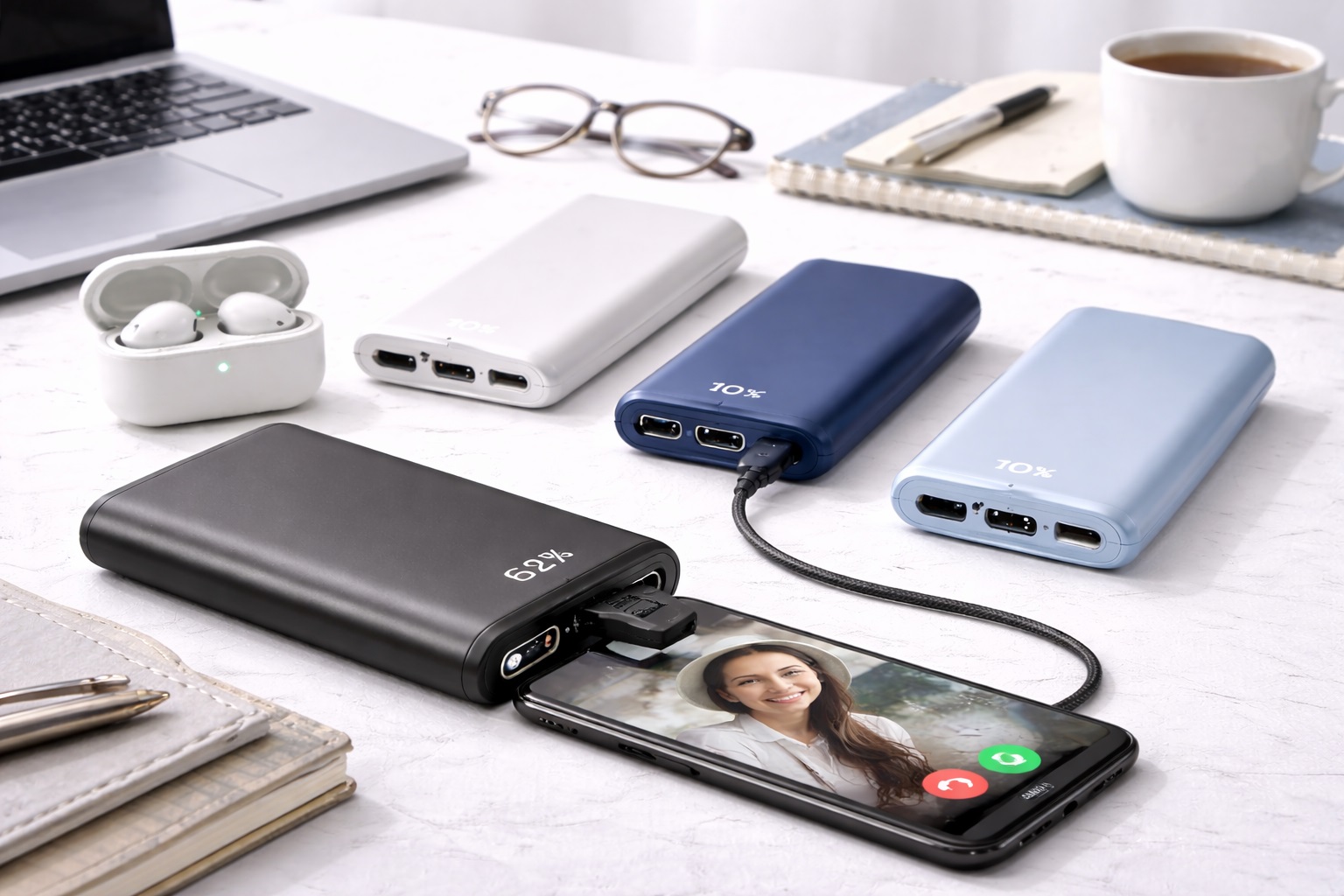
One of the more common frustrations for first-time power bank owners is not knowing how much charge remains, since many models use a vague row of small LED dots that require memorizing a chart to interpret correctly. This category solves that specific problem with either a clear numeric percentage display or a simple, unambiguous indicator that removes the guesswork.
Knowing exactly how much charge is left, both in the power bank and being delivered to a connected device, removes one of the more common sources of confusion for someone new to the category. It also helps build good charging habits early on, since a clear display makes it obvious when the bank itself needs recharging, rather than discovering it's empty at the worst possible moment.
- Pros:
- Clear, easy-to-interpret charge status without needing to memorize an LED code
- Reduces confusion about remaining capacity for both the bank and connected devices
- Helps build good charging habits from the very first use
- Cons:
- Slightly higher price than the most basic LED-only indicator models
- Display feature itself doesn't affect actual charging performance
Best For: First-time buyers who want to always know exactly how much charge remains without guesswork.
Why We Recommend It: Confusion about remaining charge is one of the most common early frustrations for new power bank owners, and this category removes that friction directly and simply.
3. Safety-Certified Beginner Power Bank – Best for Peace of Mind
For a first-time buyer who isn't yet familiar with what to look for in a battery product, this category prioritizes verified safety certifications and clearly documented protections against overcharging, short circuits, and overheating. It's aimed specifically at cautious buyers who want extra reassurance before trusting a new, unfamiliar product category.
While every category in this guide should meet basic safety standards, this one makes safety credentials the headline feature rather than an assumed baseline, with clear documentation and certification marks that a first-time buyer can verify without needing prior technical knowledge. This transparency is particularly valuable for anyone who has heard cautionary stories about poorly made battery products and wants extra confidence before their first purchase.
- Pros:
- Clearly documented, verifiable safety certifications
- Extra reassurance for buyers unfamiliar with battery product safety standards
- Reduces anxiety around a first purchase in an unfamiliar product category
- Cons:
- May carry a modest price premium over otherwise similar options
- Safety certification alone doesn't guarantee superior charging performance
Best For: Cautious first-time buyers who want clear, verifiable safety credentials before trusting a new product category.
Why We Recommend It: For someone new to power banks, verified safety credentials provide a concrete, checkable reason for confidence that doesn't require any prior technical knowledge to evaluate.
4. Easy-to-Use Compact Power Bank – Best for Zero Learning Curve
This category minimizes buttons, settings, and modes down to the simplest possible operation — typically just plugging in a cable to start charging, with a single button for checking remaining charge. It's aimed at buyers who want to use a power bank correctly on the very first try without reading an instruction manual.
The compact size also plays into this simplicity, since a smaller, single-purpose device naturally has fewer features to potentially confuse a new user. For someone whose main hesitation about buying a power bank is worry about using it incorrectly, this straightforward design removes that barrier almost entirely.
- Pros:
- Minimal buttons and settings reduce the chance of user error
- Compact size keeps the design naturally simple
- Usable correctly on the first try without instructions
- Cons:
- Limited advanced features for buyers who later want more control
- Simplicity sometimes comes with a modest reduction in total capacity
Best For: Buyers who want the absolute simplest possible power bank experience with no learning curve.
Why We Recommend It: For a genuinely first-time buyer, removing every unnecessary decision point and feature reduces the chance of confusion or misuse, making this category the most foolproof option in the comparison.
5. Budget Beginner Power Bank – Best Low-Risk First Purchase
For buyers who aren't yet sure whether they'll actually use a power bank regularly, this category offers a low-cost way to try the category out without a significant financial commitment. It covers the basics reliably without the added cost of premium features a first-time buyer may not yet know whether they'll value.
This is a sensible approach for anyone buying a power bank somewhat reluctantly — perhaps at a family member's suggestion, or after one too many low-battery moments — rather than out of genuine enthusiasm for the category. If it turns out to become a regularly used part of your daily routine, upgrading to a more feature-rich option later is always an option once you know what you actually value.
- Pros:
- Low financial commitment for trying the category for the first time
- Covers core charging needs without unnecessary added cost
- Sensible option for buyers uncertain about regular future use
- Cons:
- Fewer conveniences than pricier, more feature-rich beginner options
- May need replacing sooner if usage turns out to be more frequent than expected
Best For: Buyers testing whether a power bank will genuinely fit into their routine before investing further.
Why We Recommend It: It removes the pressure of a significant financial commitment for a first-time buyer who isn't yet certain how often they'll actually use a power bank.
6. Power Bank With a Built-In Cable – Best for Maximum Simplicity
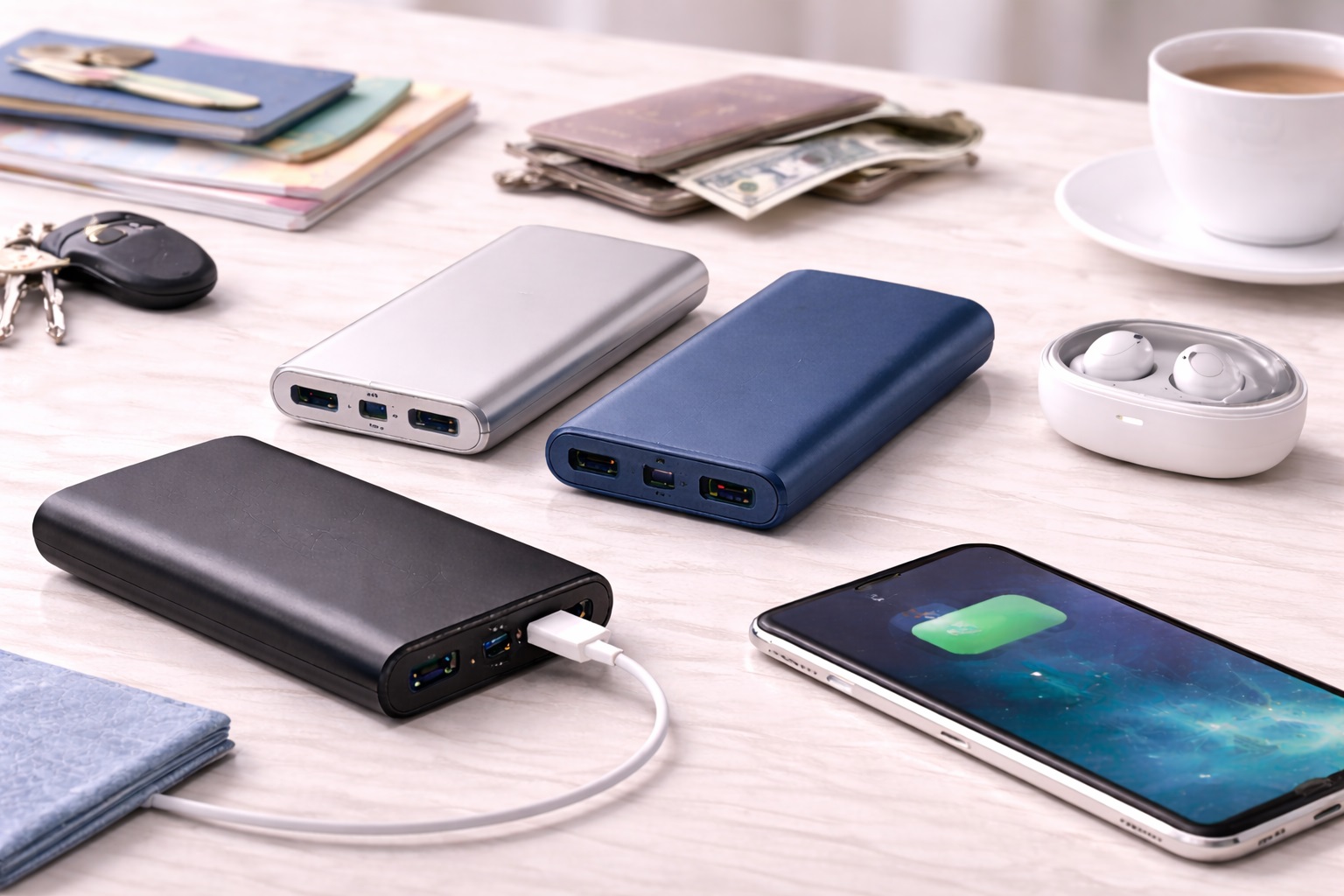
This category integrates a charging cable directly into the power bank itself, eliminating the single most common point of confusion and inconvenience for new users: needing to remember and carry a separate compatible cable. It's a small design choice that removes a surprisingly common first-time frustration.
For a beginner, forgetting a cable renders an otherwise perfectly good power bank completely useless in the moment it's needed most. By building the cable in, this category guarantees the power bank is always ready to use the moment it's needed, without any additional accessory to track down or forget at home.
- Pros:
- No separate cable required, reducing the risk of being caught without one
- Simplifies the entire charging setup down to a single object
- Particularly convenient for forgetful or first-time users
- Cons:
- Built-in cable may not support every device's specific connector type
- A damaged built-in cable is harder to simply swap out than a detachable one
Best For: Buyers who specifically want to eliminate the risk of forgetting a compatible charging cable.
Why We Recommend It: For a first-time buyer especially, removing the need to separately track a compatible cable solves a genuinely common and avoidable source of frustration.
Buying Guide: How to Choose the Best Power Bank for Beginners
Before making your first purchase, consider these factors, each aimed specifically at making the experience as straightforward and error-free as possible.
1. Intuitive LED or Display Charge Indicator
A clear, easy-to-read charge indicator removes one of the most common sources of first-time confusion. Look specifically for a numeric percentage display or clearly labeled LED system rather than a vague row of unlabeled dots that requires memorizing a chart. Some product listings and manuals include a photo of the actual indicator lights, which is worth checking before buying if the description alone doesn't make clear how the system works.
2. Plug-and-Play, No-Setup Operation
A good beginner power bank should work correctly the moment you plug it in, without requiring an app, a firmware update, or a specific sequence of button presses. Confirm this specifically in reviews, since some models with advanced features assume a level of familiarity a first-time buyer won't yet have. Reviews that specifically mention how quickly a new user figured out the basic operation, without needing to consult a manual, are a particularly useful signal for this category.
3. Verified Safety Certifications
Since a first-time buyer likely isn't yet familiar with battery safety standards, prioritize models that clearly document relevant safety certifications rather than assuming safety by default. This is worth checking regardless of which other features matter most to you. A quick search for the specific certification names alongside the term "meaning" can help a new buyer quickly understand what protections they actually represent, without needing deep technical background.
4. Compatible Charging Cable Included
Confirm the power bank includes a cable compatible with your specific devices, or has a built-in cable, rather than assuming you already own the right one. This avoids the common first-purchase surprise of an otherwise perfect power bank you can't actually use immediately. It's a small detail that experienced buyers take for granted but that genuinely trips up first-time purchasers, especially if their phone uses a less common connector type.
5. Size Appropriate for Daily Pocket or Bag Carry
A power bank that's inconvenient to carry daily won't get used consistently, which defeats its entire purpose for a new owner still building the habit of bringing it along. Prioritize a size and weight that realistically fits your actual daily routine over maximizing capacity. Picture the specific bag or pocket it will actually live in day to day, and check the power bank's physical dimensions against that space rather than relying on capacity numbers alone.
6. Price Appropriate for a First Purchase
Avoid overspending on premium features before you know which ones you'll actually value regularly. A moderate, sensible first purchase lets you learn your real preferences before investing further in a more specialized option. Think of your first power bank as a way to learn what you actually value in the category, rather than as a single decision you need to get perfectly right on the first attempt.
7. Brand Reliability for a Trustworthy First Experience
An established brand with consistent quality control reduces the chance that your very first power bank experience is a frustrating one due to an early defect. This matters more for a first-time buyer who doesn't yet have a frame of reference for what "normal" performance looks like. Without prior experience to compare against, a new owner might mistake a defective unit for typical performance across the entire category, which is exactly the kind of confusion an established, reliable brand helps avoid.
8. Clear Warranty and Support Terms
A straightforward warranty process matters more for a first-time buyer who may not know how to troubleshoot an issue independently. Check that support documentation is clear and accessible before you actually need it. A brand with a clearly written, easy-to-find FAQ page or setup guide is generally a good sign that they've considered first-time users specifically, rather than assuming every customer already understands the product category.
9. User Reviews From Other First-Time Buyers
Reviews specifically mentioning ease of use for a first-time owner are more relevant here than reviews focused on advanced features or maximum performance. Look for language describing the setup and first-use experience specifically.
10. Basic Compatibility With Your Devices
Confirm the power bank works with your specific phone or device without needing an adapter, since managing extra accessories adds unnecessary complexity for a first-time user. Simpler compatibility reduces early frustration considerably.
11. Number of Ports Kept Simple
For a first power bank, a single port is often less confusing than multiple ports with different specifications and capabilities. Additional ports can be worth learning about later, once you're comfortable with the basics.
12. Realistic Expectations for What a Power Bank Can Do
A power bank recharges devices; it doesn't replace regular charging habits entirely, and understanding this basic expectation upfront avoids disappointment. Setting a realistic mental model from the start makes the entire experience more satisfying.
13. Understanding What "mAh" Actually Means Before You Shop
For a first-time buyer, the mAh figure printed on nearly every power bank listing can feel like an arbitrary number without context. In simple terms, it represents the battery's total energy storage capacity, and a higher number generally means more total charge available, though not all of it reaches a connected device due to normal conversion losses. Knowing roughly what a typical phone battery capacity looks like, and that a 10,000mAh bank generally delivers a few full phone charges rather than a single specific guaranteed number, helps make sense of the spec sheet without needing a technical background.
14. What to Do During the First Week of Ownership
Spend the first few days simply using the power bank normally rather than researching every possible feature upfront. Notice how quickly it drains during typical use, how the charge indicator behaves as it depletes, and how long a full recharge actually takes in practice. This hands-on experience teaches you far more about your actual needs and the product's real behavior than reading additional spec sheets, and it puts you in a much better position to know what to look for if you ever upgrade to a more advanced model.
Frequently Asked Questions
What size power bank should a beginner buy first?
A 10,000mAh capacity is a sensible, widely useful starting point for most first-time buyers, covering typical daily needs without unnecessary bulk or cost. You can always consider a higher-capacity option later once you understand your actual usage pattern. There's no real downside to starting modestly, since a first power bank is as much about learning your own habits as it is about the specific device itself.
How do I know if a power bank is fully charged?
Most models use an LED indicator or display that shows charging status, with a solid green light or a completed percentage typically indicating a full charge. Check the specific model's manual or product page for exactly how it signals a complete charge, since indicators vary between brands. Keeping the manual or a photo of the indicator legend somewhere easy to find during your first few uses can save some early confusion.
Is it normal for a power bank to feel warm while charging?
Mild warmth during charging is generally normal, but noticeably hot or an unusual smell is not and should prompt you to stop using the device immediately. This is one of the reasons safety certifications matter, since they typically include protections against excessive heat buildup. If you ever notice anything beyond mild warmth, unplug the device, move it away from flammable materials, and stop using it rather than assuming it will resolve on its own.
Do I need to fully charge a power bank before first use?
Many manufacturers recommend a full initial charge, though modern lithium batteries are generally more forgiving than older battery technologies about this. Checking the specific manufacturer's instructions for your model is the safest approach.
Can I use my phone while it's charging from a power bank?
Yes, this is normal and safe with most power banks, though charging speed may be slightly slower while the phone is actively in use. This is a common and expected trade-off rather than a sign of a problem.
What's the most common mistake first-time power bank buyers make?
Buying based on the highest available capacity number without considering size, weight, or how it will actually be carried daily is a common early mistake. A power bank that's too bulky to carry consistently provides less real value than a smaller one that's actually used regularly. New buyers are often surprised at just how rarely a large, high-capacity bank gets carried compared to a smaller one that fits easily into an existing daily bag or pocket.
How long does it take to fully charge a power bank?
This varies by capacity and the charger used, but many beginner-friendly models take several hours for a full charge from empty. Checking the specific charging time listed for a model helps set realistic expectations before your first use.
Do I need a special charger to charge my power bank?
Most power banks can be charged with a standard USB charger you likely already own, though charging speed depends on the charger's output. Using a higher-wattage charger, if supported, can meaningfully reduce charging time.
Is it safe to leave a power bank in a hot car?
No, extreme heat is genuinely harmful to lithium battery products and should be avoided regardless of the specific model's safety certifications. This is a general precaution worth following with any battery-powered device, not a concern unique to any single product.
How do I know when it's time to replace my power bank?
A noticeable decline in how many charges it delivers compared to when it was new, or visible physical damage like swelling, are clear signs it's time for a replacement. Any noticeable swelling specifically should prompt immediate discontinued use as a safety precaution. Dispose of a swollen or damaged battery product through a proper battery recycling program rather than a regular trash bin, since damaged lithium batteries carry a genuine fire risk if handled carelessly.
Can I bring my first power bank on a flight?
Generally yes, within your airline's specific watt-hour limits, and typically only in carry-on luggage rather than checked bags. Checking your airline's specific policy before your first trip with it avoids any surprises at the airport.
Is it worth buying a more advanced power bank right away instead of a beginner-focused one?
Not necessarily. Starting with a simpler, more foolproof option lets you learn your actual preferences and usage patterns before investing in specialized features you may or may not end up valuing.
13. Is it normal to feel unsure about which button does what at first?
Yes, this is a completely normal part of using any new device for the first time, and beginner-focused power banks are specifically designed to minimize this confusion with as few controls as possible. Most models only have a single button, typically used to check remaining charge or wake the display, so there's rarely much to actually get wrong.
14. Do I need to learn about charging protocols like fast charging to use a power bank correctly?
No, a power bank will charge your device correctly even if you don't understand the specific protocol names involved. Faster charging simply happens automatically when both the power bank and your device support a shared standard; if they don't match, charging still works, just at a more standard speed.
Final Verdict
- Best Overall Starting Point: Beginner 10,000mAh power banks cover most first-time needs without unnecessary complexity.
- Best for Clear Charge Status: Simple display power banks remove the guesswork around remaining capacity.
- Best for Peace of Mind: Safety-certified beginner banks offer verifiable reassurance for cautious first-time buyers.
- Best for Zero Learning Curve: Easy-to-use compact banks are foolproof from the very first use.
The best power bank for a beginner isn't necessarily the one with the most features or highest capacity — it's the one that gets used correctly and consistently without confusion. A slightly less powerful option that's simple enough to become a genuine daily habit provides more real value than an impressive-looking one that ends up forgotten in a drawer because it felt complicated or intimidating to use. Simplicity, in this specific category, isn't a compromise for a beginner — it's the feature that actually determines whether the product gets used at all.
Once you've spent some time with your first power bank and learned your actual habits — how often you need it, which features you genuinely use, and what capacity really covers your typical day — you'll be in a much better position to choose a more specialized option for your next purchase, if you decide you want one. There's no need to make every decision perfectly on the first try; the goal of a beginner-focused pick is simply to get you comfortable with the category without unnecessary friction. Give yourself permission to treat this first purchase as a learning experience rather than a final decision, and trust that the small amount of extra knowledge you gain from actually using it will make every future power bank purchase considerably easier.