Best Power Banks Under $100: Flagship Charging Without the Price
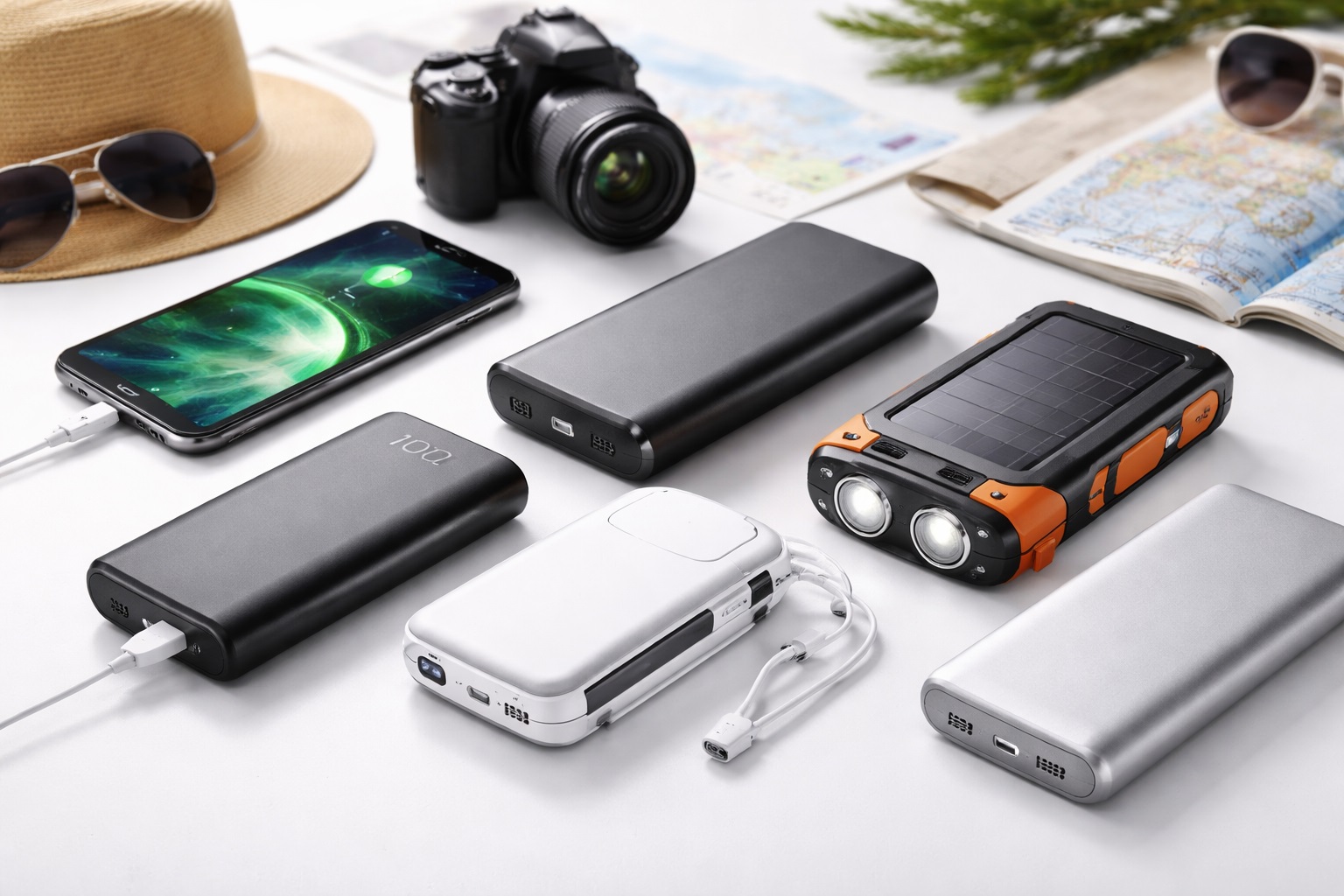
Power bank technology has advanced quickly, and the under-$100 segment has been one of the biggest beneficiaries. Fast charging protocols, large lithium-polymer cells, and multi-port designs that used to be reserved for premium models now show up regularly at this price point. The result is a genuinely competitive market where a careful buyer can get near-flagship charging performance without paying flagship prices, provided they know which specific category actually matches their charging habits.
The challenge with this price bracket is that "power bank" covers an enormous range of use cases. Someone who needs to top off a phone once during a long day has very different requirements than someone charging a laptop, a phone, and a pair of earbuds simultaneously on a multi-day trip. This guide breaks the category down by those specific needs, rather than presenting a single generic ranking that assumes everyone is shopping for the same thing.
Below you'll find a comparison table, six picks organized around distinct charging needs within this price bracket, a buying guide covering the specs and features that actually matter, and answers to the questions buyers ask most often before purchasing a power bank in this range.
It's also worth thinking about how your charging habits might change over time rather than optimizing purely for today's routine. A buyer who mostly needs quick phone top-ups now might find themselves needing to charge a tablet or a pair of wireless earbuds alongside their phone within a year, at which point port count and total output start to matter more than they initially seemed to. Building in a little headroom above your exact current needs, without overspending on capability you'll never use, is a reasonable way to future-proof this kind of purchase.
| Category | Standout Strength | Best For |
|---|---|---|
| Large capacity under $50 | High mAh capacity per dollar | Multi-day trips and heavy daily use |
| Fast charge bank under $60 | Rapid input and output charging speed | Quick top-ups on a busy schedule |
| Multi-port bank under $80 | Simultaneous multi-device charging | Charging several devices at once |
| Laptop-compatible bank under $100 | High-wattage USB-C PD output | Charging laptops and larger devices |
| Wireless charging bank | Cable-free convenience | Buyers who prefer wireless charging |
| Budget 20000mAh bank | Balanced capacity and price | General everyday backup power |
Top 6 Power Banks Under $100 (Detailed Reviews)
1. Large-Capacity Power Bank Under $50 – Best for Extended Trips
This category maximizes mAh capacity relative to price, aimed at buyers who need to charge multiple devices multiple times without access to an outlet for an extended period. It typically trades some portability and charging speed for sheer capacity, making it the natural choice for multi-day travel, camping, or emergency preparedness situations where recharging opportunities are unpredictable.
Because these units carry more energy, they also tend to be physically larger and heavier than other categories in this comparison, which is a fair trade-off for buyers who genuinely need the extra runtime. For someone whose primary complaint with power banks has been running out of charge before the trip or the day is over, capacity is the metric that matters most, and this category leads on that specific point.
- Pros:
- High capacity relative to price, ideal for extended time away from outlets
- Can typically recharge a phone multiple times on a single charge
- Well suited to travel, camping, or emergency backup situations
- Cons:
- Larger and heavier than more compact, lower-capacity alternatives
- Recharging the power bank itself takes longer given the larger cell
Best For: Travelers and buyers who need maximum charging capacity for multi-day trips or unpredictable access to power.
Why We Recommend It: When the core problem is running out of charge before the day or trip ends, no other feature matters as much as raw capacity, and this category delivers the most of it per dollar spent.
2. Fast-Charging Power Bank Under $60 – Best for Quick Top-Ups
Rather than maximizing total capacity, this category prioritizes charging speed in both directions — how quickly the power bank itself recharges, and how quickly it can top off a connected device. For buyers whose charging needs are more about quick top-ups between meetings or errands than an all-day power reserve, speed matters more than total capacity.
Modern fast-charging protocols mean a device can go from low battery to a meaningful charge in a short window, which fits naturally into brief pauses during a busy day. The trade-off is that these units often carry somewhat less total capacity than the large-capacity category, since engineering resources go toward charging speed rather than maximizing the cell size.
- Pros:
- Rapid charging speed for both recharging the bank and charging devices
- Well suited to short top-ups during a busy day rather than all-day use
- Modern fast-charging protocol support for compatible devices
- Cons:
- Typically carries less total capacity than dedicated high-capacity models
- Fast charging benefits depend on your specific device supporting the same protocol
Best For: Buyers who need quick, efficient top-ups during busy days rather than sustained all-day power reserves.
Why We Recommend It: For the common scenario of needing a meaningful charge in a short window rather than a full battery over a long stretch, charging speed delivers more practical value than raw capacity.
3. Multi-Port Power Bank Under $80 – Best for Charging Multiple Devices
This category is built around simultaneous charging — multiple output ports capable of delivering meaningful power to more than one device at the same time, without one device's charging speed dragging down the other. It's aimed at buyers juggling a phone, a tablet, and wireless earbuds, or households sharing a single power bank across several devices.
The engineering challenge here is managing power distribution intelligently across ports so that charging multiple devices doesn't drastically slow down each individual connection. Better implementations in this category handle that balancing act well, while lesser ones simply split total output evenly regardless of what's plugged in, leading to noticeably slower charging when multiple devices are connected at once.
- Pros:
- Multiple ports allow genuinely simultaneous charging of several devices
- Reduces the need for multiple power banks in shared or family settings
- Convenient for buyers who carry several devices needing charging throughout the day
- Cons:
- Charging speed per device can drop when multiple ports are used simultaneously
- Power distribution quality varies noticeably between different models
Best For: Buyers who regularly need to charge more than one device at the same time from a single power bank.
Why We Recommend It: For anyone managing multiple devices daily, this category solves a genuinely common friction point that single-port power banks force you to work around by charging devices one at a time.
4. Laptop-Compatible Power Bank Under $100 – Best for High-Wattage Devices
Charging a laptop requires meaningfully more power than a phone, and this category is built around USB-C Power Delivery output high enough to handle that demand. Sitting near the top of the price bracket, it's aimed at buyers who want a single power bank capable of covering laptops, tablets, and phones rather than carrying a separate charger for larger devices.
The higher wattage output also benefits fast-charging phones and tablets, since a bank capable of powering a laptop typically has ample headroom for smaller devices as well. The trade-off is a higher price and generally larger size compared to phone-only power banks, since supporting laptop-level output requires larger internal components.
- Pros:
- Sufficient output wattage to meaningfully charge laptops, not just phones
- Single power bank covers a wider range of device types
- Higher wattage also benefits fast charging on smaller devices
- Cons:
- Priced at the top of the under-$100 range
- Larger and heavier to accommodate the higher-capacity cell needed for laptop charging
Best For: Buyers who need a single power bank capable of charging a laptop in addition to phones and other smaller devices.
Why We Recommend It: For anyone who travels or works away from an outlet with a laptop, this category removes the need to carry a separate charger, consolidating multiple charging needs into one device.
5. Wireless Charging Power Bank – Best for Cable-Free Convenience
This category adds a wireless charging pad directly to the power bank, letting compatible devices charge simply by resting on the surface rather than requiring a cable connection. It's a convenience-focused option, appealing to buyers who prefer to minimize cable clutter or who frequently misplace charging cables.
Wireless charging is generally less power-efficient than a direct cable connection, meaning it typically charges more slowly and draws down the power bank's own reserve faster for the same amount of charge delivered. Buyers choosing this category are trading some efficiency for genuine day-to-day convenience, which is a reasonable trade-off for casual, non-urgent charging situations.
- Pros:
- No cable required for compatible devices, reducing daily hassle
- Convenient for quick, casual top-ups at a desk or nightstand
- Reduces the risk of a misplaced or forgotten charging cable
- Cons:
- Slower charging speed and lower efficiency compared to wired charging
- Only works with wireless-charging-compatible devices
Best For: Buyers who prioritize convenience and cable-free charging over maximum speed or efficiency.
Why We Recommend It: For casual, everyday charging where speed isn't critical, the convenience of simply setting a device down to charge outweighs the modest efficiency loss for many buyers.
6. Budget 20,000mAh Power Bank – Best Overall Balance
Sitting near the middle of both the capacity and price spectrum within this comparison, a 20,000mAh power bank represents a practical middle ground for buyers who want meaningful capacity — typically enough for several phone charges — without the size, weight, or price of the largest capacity options.
This category tends to be the safest default recommendation for buyers who don't have a specific specialized need pulling them toward one of the other categories, since it balances capacity, price, and portability reasonably well across most common use cases.
- Pros:
- Solid capacity for several phone charges without excessive bulk
- Balanced price point relative to the capacity delivered
- Reasonable default choice for buyers without a specialized need
- Cons:
- Doesn't lead in any single specialized category like speed or laptop charging
- Buyers with specific extreme needs may be better served by a specialized option
Best For: Buyers who want a solid, well-rounded power bank without a specific extreme requirement like laptop charging or maximum capacity.
Why We Recommend It: When a buyer isn't sure exactly which specialized feature matters most, this balanced, moderately priced capacity tier offers a safer default than a power bank tuned heavily toward one specific use case.
Buying Guide: How to Choose the Best Power Bank Under $100
Before making a purchase decision, consider these factors, since power banks in this price range vary considerably in which specifications they prioritize.
1. mAh Capacity Relative to Price
Higher capacity generally means more charges before you need to recharge the bank itself, but it also usually means a larger, heavier device. Weigh your actual need for extended runtime against the convenience of a smaller, lighter unit, since more capacity than you'll use is simply extra weight to carry. Also account for the fact that usable capacity is always somewhat lower than the advertised mAh figure, due to energy loss in voltage conversion, so a bank rated for exactly your minimum need may fall slightly short in practice.
2. Maximum Output Wattage
Output wattage determines what devices a power bank can meaningfully charge — a bank rated for basic phone charging won't power a laptop effectively, regardless of its total capacity. Check the specific wattage rating against your most demanding device before assuming a high-capacity bank covers all your charging needs. It's a common and understandable mistake to assume that a large, expensive power bank must also be a powerful one, when in practice capacity and output wattage are two separate specifications that don't necessarily scale together.
3. Charging Speed, Both Input and Output
Input speed determines how quickly you can recharge the power bank itself, which matters if you frequently need it topped up on short notice. Output speed determines how quickly it charges your devices, and the two specifications are often listed separately, so check both rather than assuming one implies the other. A power bank that charges devices quickly but takes many hours to recharge itself overnight can still leave you waiting longer than expected before your next trip, so both directions deserve equal attention when comparing specs.
4. Number and Type of Ports
More ports allow more simultaneous charging, but check the specific output each port can deliver individually and when used together, since combined output is often lower than the sum of each port's maximum rating. USB-C ports generally support faster charging protocols than older USB-A ports. If you regularly charge more than two devices at once, look specifically for reviews or specifications describing combined maximum output across all ports simultaneously, since this figure is more useful than any single port's individual maximum rating.
5. Physical Size and Weight
A power bank that's inconvenient to carry daily won't get used consistently, regardless of its specifications. Balance capacity and features against how the unit will actually fit into your bag, pocket, or daily carry routine before prioritizing raw capacity above all else. A power bank that stays home in a drawer because it's too bulky to carry provides zero practical value, regardless of how impressive its capacity rating looked on the product page.
6. Price Relative to Your Actual Charging Habits
Consider how you actually use a power bank day to day, then weigh the price of specialized features like laptop charging or wireless convenience against how often you'd genuinely use them, rather than paying for capability that would mostly go unused.
7. Brand Reliability for Battery Products Specifically
Battery safety and long-term cell health depend heavily on manufacturing quality, making brand reputation more important here than for many other electronics categories. Established brands with a track record specifically in portable battery products are worth prioritizing over unfamiliar names competing purely on price. Battery cell quality is harder for a casual buyer to evaluate directly than something like screen quality or build material, which makes a manufacturer's track record a more important signal here than in many other electronics categories.
8. Warranty and Safety Certifications
Look for relevant safety certifications and a clear warranty, since battery products carry higher stakes than typical electronics if something goes wrong. A manufacturer confident in their battery cell quality typically backs that confidence with a meaningful warranty period. Certifications from recognized safety testing organizations are a useful, quick way to filter out less reputable manufacturers without needing to research each brand's history in depth.
9. User Reviews Focused on Long-Term Battery Health
A power bank's real test is how well it holds a charge after a year or more of regular use, not just its performance out of the box. Prioritize reviews specifically discussing capacity retention over time rather than only initial impressions. A pattern of complaints about noticeably reduced capacity after a year of ownership is a stronger warning sign than a single isolated report, so look for that pattern across multiple independent reviews.
10. Compatibility With Your Specific Devices
Confirm that the power bank's charging protocols and connector types match your actual devices, since a mismatch can mean significantly slower charging even if the bank's specifications look impressive on paper. This is particularly relevant for buyers with a mix of device brands at home, since different manufacturers sometimes favor different fast-charging standards despite the shared USB-C connector shape.
11. Airline Travel Restrictions
If you plan to fly with a power bank, check its watt-hour rating against airline carry-on restrictions, since most airlines cap the capacity allowed in carry-on luggage. This is worth confirming before choosing a high-capacity option specifically for travel.
12. Pass-Through Charging Capability
Pass-through charging lets you charge a connected device while the power bank itself is plugged into an outlet, which is convenient for overnight charging setups. Not every model supports this cleanly, so check specifically if this feature matters to your routine.
13. Cell Chemistry and Charge Cycle Longevity
Most power banks in this range use either standard lithium-ion or lithium-polymer cells, and the difference mainly shows up in long-term charge cycle life rather than day-to-day performance. Lithium-polymer cells are often slightly more resistant to swelling over time and tend to hold a stable capacity through more repeated charge cycles, which matters if you plan on using the power bank daily for a year or more rather than occasionally. Checking whether a listing specifies cell chemistry, rather than assuming all internal cells are equivalent, is a useful extra data point when two otherwise similar models are priced closely together.
14. Indicator Accuracy for Remaining Charge
A power bank's LED or percentage display is only useful if it reflects the actual remaining charge reasonably accurately, and cheaper units sometimes show a rough estimate that jumps unpredictably rather than counting down smoothly. This matters most for buyers who rely on the display to decide whether they have enough charge left for a specific task. Reviews mentioning display accuracy specifically, rather than general satisfaction, are the most useful signal here, since an inaccurate display can lead to an unpleasant surprise right when you're counting on remaining capacity.
Frequently Asked Questions
What mAh capacity do I actually need for daily use?
For most users, enough to fully recharge a phone one to two times covers typical daily needs, which usually falls in a moderate capacity range. Heavier daily use, multiple devices, or extended travel justifies a higher capacity. Rather than guessing, track how many times you actually needed a recharge over a typical week before your last power bank ran out, and use that real number to guide your next purchase.
Does a higher mAh rating always mean more usable charges?
Not exactly, since some energy is lost in the conversion process between the power bank's cell and your device. Actual usable capacity is typically somewhat lower than the advertised mAh rating, which is worth keeping in mind when comparing numbers. A general rule of thumb is to expect somewhere around 60 to 70 percent of the advertised capacity to actually reach your device, so buying with a small buffer above your minimum need is a sensible approach.
Can a power bank under $100 really charge a laptop?
Some can, specifically those rated for high enough USB-C Power Delivery wattage. Check the specific output rating against your laptop's charging requirements before assuming any USB-C power bank will work. Many laptops need significantly more wattage than a phone to charge at a reasonable rate, and some may only trickle-charge or fail to charge at all from an underpowered bank.
Is wireless charging worth the trade-off in speed?
For casual, non-urgent charging, many buyers find the convenience worthwhile despite the slower speed. If charging speed is a priority, a wired connection remains the more efficient choice.
How long do power banks typically last before needing replacement?
Battery cells generally degrade gradually, and many power banks retain meaningful capacity for two to three years of regular use before a noticeable decline. Reviews discussing long-term ownership are the most reliable way to gauge this for a specific model.
What's the most common complaint about power banks in this price range?
Overstated capacity claims and slower-than-expected charging when multiple ports are used simultaneously are among the most frequent complaints. Reading reviews that test these claims specifically helps set realistic expectations. Independent third-party testing, when available, tends to be more reliable than the manufacturer's own marketing figures, since manufacturers naturally test under ideal conditions that don't always reflect everyday use.
Can I bring a power bank on a flight?
Generally yes, within airline-specific watt-hour limits, and typically only in carry-on luggage rather than checked bags. Check your specific airline's policy before traveling, since limits and rules can vary. It's also worth checking the destination country's regulations if you're traveling internationally, since a power bank allowed on your outbound flight isn't automatically guaranteed clearance on every connecting or return leg.
Is it safe to leave a power bank charging overnight?
Most modern power banks include safety circuitry to prevent overcharging, making overnight charging generally safe with a reputable model. Checking for relevant safety certifications adds an extra layer of confidence. That said, it's still good practice to avoid charging unattended overnight on soft furniture like a bed or couch, simply as a general precaution with any battery-powered device rather than a specific concern about a particular model.
Do multi-port power banks really charge devices at full speed simultaneously?
This varies significantly between models. Better-engineered options manage power distribution intelligently, while lower-quality ones can noticeably slow down charging when multiple devices are connected at once, so check reviews specifically addressing simultaneous use.
Is a more expensive power bank in this range always a better investment?
Not necessarily. The extra cost often reflects specialized capability like laptop charging or wireless convenience, which is only worth paying for if you'll actually use those specific features regularly.
How do I know if a power bank is compatible with my phone's fast charging?
Check that the power bank supports the same fast-charging protocol your phone uses, since mismatched protocols default to slower standard charging speeds regardless of the power bank's rated output.
Can I return a power bank if it doesn't perform as advertised?
Most retailers offer a standard return window, typically 15 to 30 days. Testing actual charging speed and capacity against advertised figures early within that window is a sensible way to confirm performance before it expires.
12. Does using a power bank while it's also charging affect performance?
Yes, pass-through charging — using the power bank to charge a device while the bank itself is plugged into an outlet — typically generates more heat and can be slightly less efficient than charging in either direction separately. Not every model handles this gracefully, so if you plan to rely on this feature regularly, checking specifically for pass-through support and any related heat warnings in reviews is worthwhile before assuming every power bank supports it equally well.
13. Can extreme temperatures damage a power bank?
Yes, both very high and very low temperatures can affect battery performance and, in extreme or prolonged cases, safety. Avoid leaving a power bank in a hot car, direct sunlight for extended periods, or freezing conditions, since lithium-based cells are sensitive to temperature extremes in ways that can reduce both capacity and lifespan over time.
Final Verdict
- Best for Extended Trips: Large-capacity power banks under $50 deliver maximum runtime per dollar.
- Best for Quick Top-Ups: Fast-charging power banks under $60 prioritize speed over total capacity.
- Best for Multiple Devices: Multi-port power banks under $80 handle simultaneous charging well.
- Best Overall Balance: Budget 20,000mAh power banks offer a safe, well-rounded default choice.
The best power bank under $100 depends on identifying your actual charging pattern rather than chasing the highest capacity number or the longest feature list. A buyer who mostly needs quick top-ups during a busy day has different priorities than one preparing for a week-long trip with no reliable access to outlets, even though both might reasonably shop in this same price bracket. Taking a few minutes to honestly map your typical charging pattern over a normal week, rather than assuming the highest-capacity or most expensive option is automatically the safest bet, will point you toward the category that actually fits your life.
It's also worth reassessing your needs periodically, since battery technology and charging protocols continue to improve at this price point. A power bank that felt like a genuine upgrade a few years ago may now be outperformed by a newer model at the same price, so checking current options every couple of years, especially before major travel, is a reasonable habit rather than an unnecessary expense.