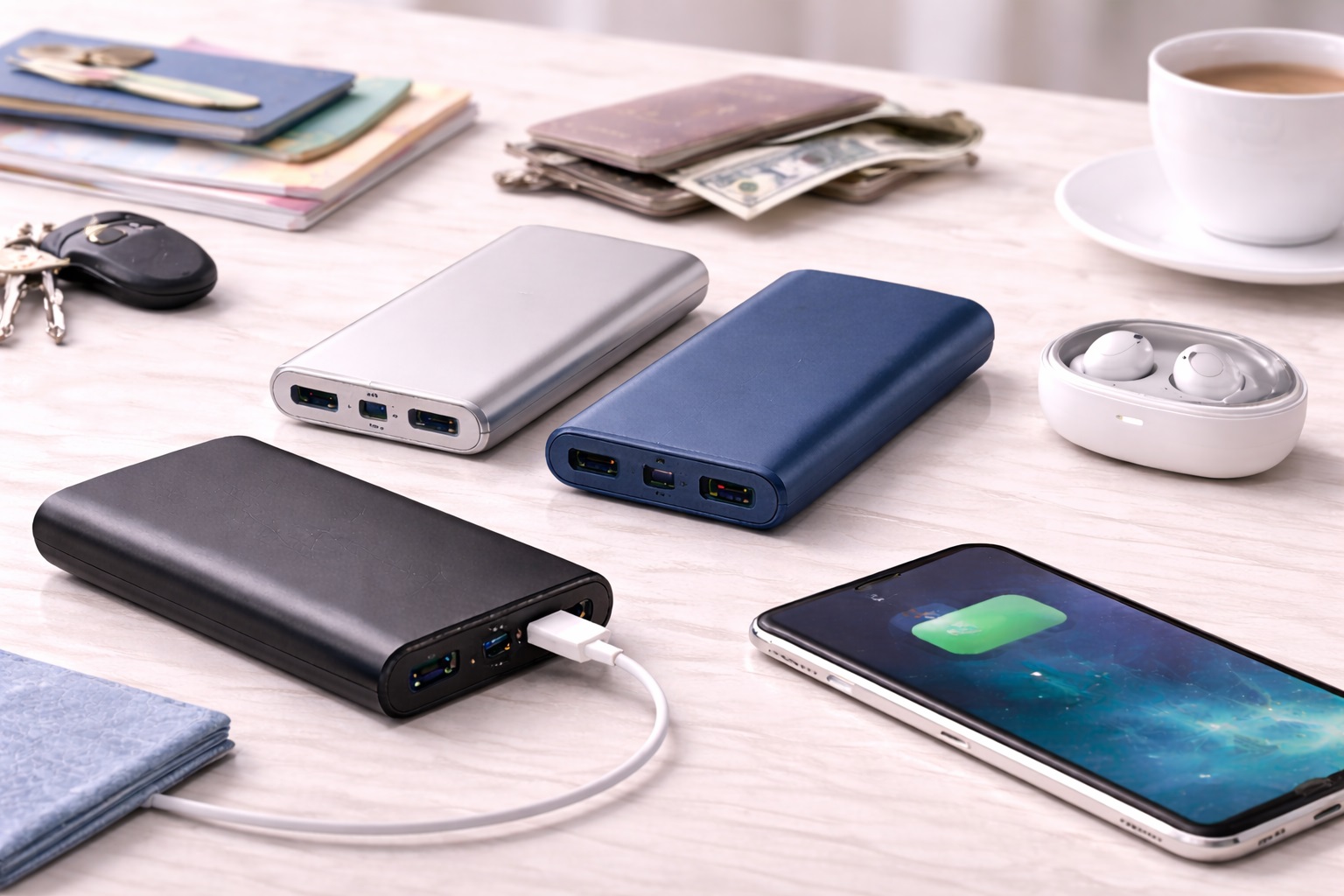
Best Budget Power Banks: Dependable Charging for Less
A tight budget doesn't have to mean an unreliable power bank. The lower end of the market genuinely does include a mix of solid, honestly-specified products alongside a smaller number of poorly made ones, and the practical challenge for a budget-focused buyer isn't finding something cheap — it's telling the two apart before money changes hands. Price alone rarely tells you which category a given listing falls into, since two nearly identically priced banks can sit on opposite sides of that line depending on details that never show up in the headline listing photo.
This guide is built around that distinction, since treating every low-priced listing as equally risky — or equally safe — leads to either overspending out of unnecessary caution or, worse, an actual bad purchase. Rather than simply ranking budget power banks by price, it focuses on the handful of details — certification, honest capacity claims, seller reputation — that reliably separate a genuinely dependable low-cost bank from one that looks similar on the surface but fails within months. None of these checks require spending more money, only a bit more attention before checkout, which is genuinely good news for anyone shopping with a fixed, limited amount to spend.
Below you'll find a side-by-side comparison, detailed reviews of the models that consistently perform well at a low price, a buying guide covering every factor worth checking before you order, and answers to the questions budget-focused buyers ask most often. Treat the certification check in particular as the one item on this list you should never skip regardless of how limited your budget is.
Top 5 Budget Power Banks (Detailed Reviews)
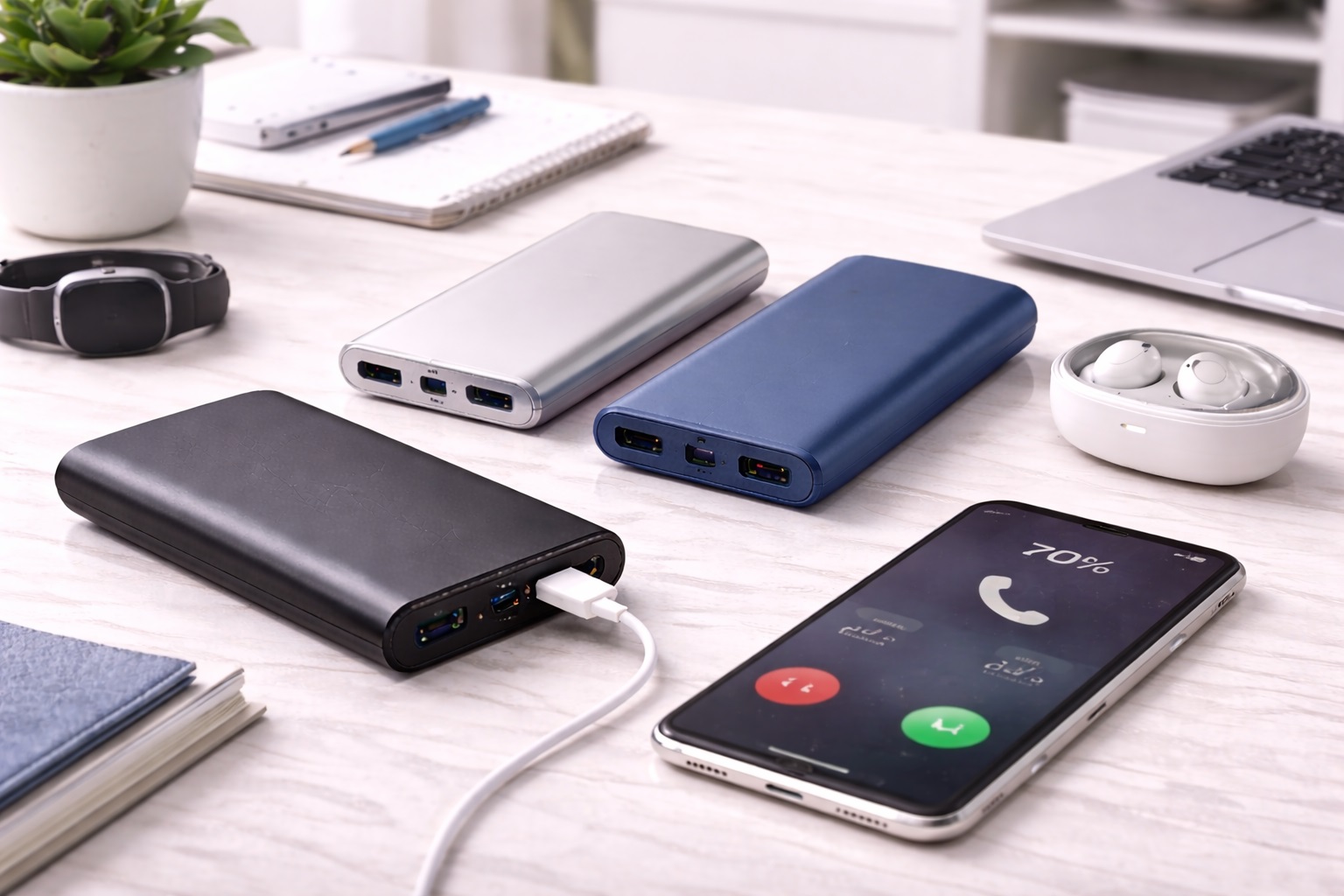
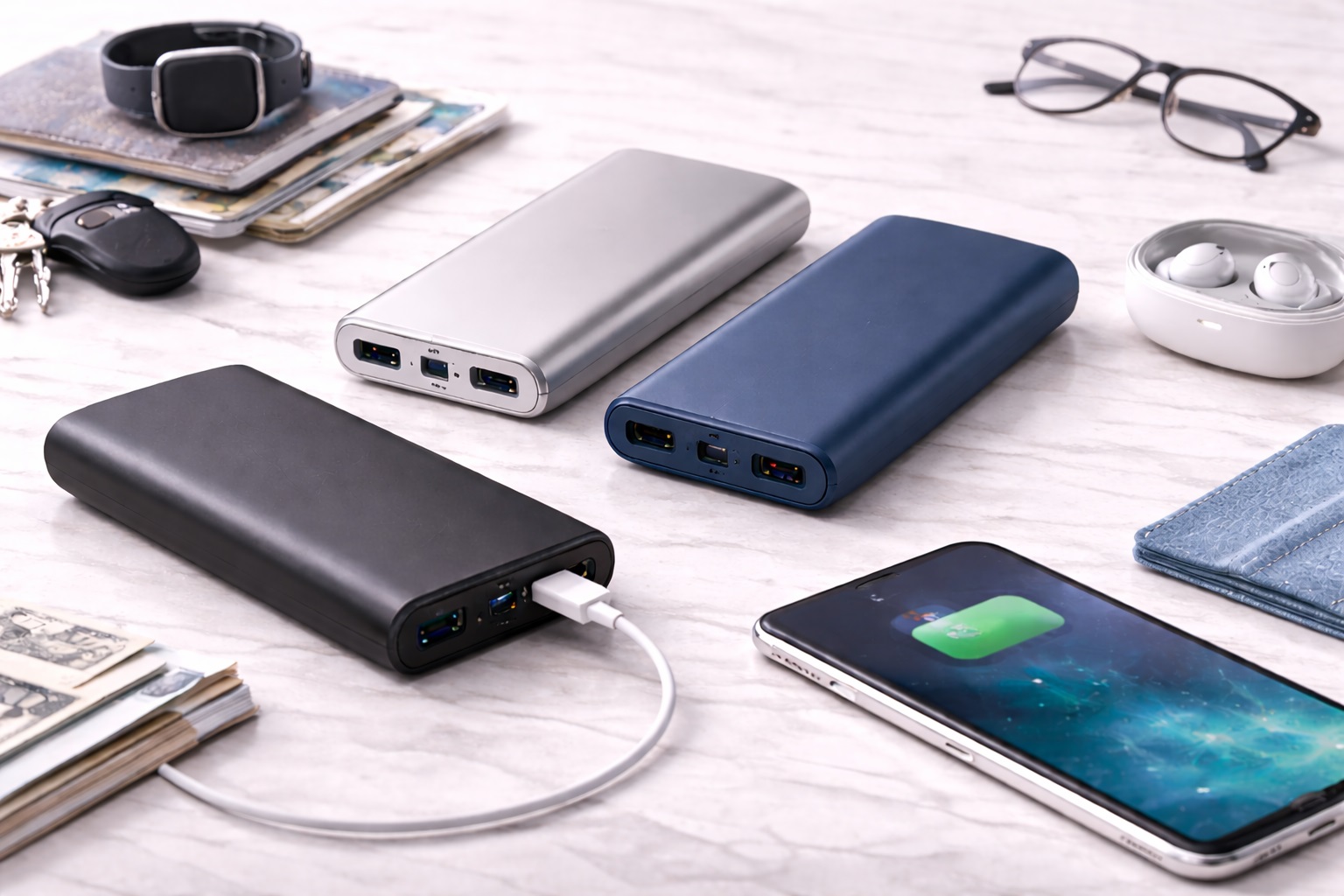
1. 10,000mAh Slim Fast-Charge Power Bank – Best Overall Budget Value
A 10,000mAh slim power bank delivers two to three full smartphone charges and typically represents the strongest overall value in the budget category, since it's large enough to matter for daily use without pushing into the higher price tiers that come with 20,000mAh-plus capacity. USB-C Power Delivery in the 18W–30W range is now common even at low price points, so a genuine budget buyer doesn't have to sacrifice fast charging to stay within a tight budget. A handful of years ago, fast charging at this price point was rare enough to be a genuine selling point; today it's close to the expected baseline, which is a meaningful shift in the buyer's favor.
- Pros:
- Two to three full phone charges per cycle at a genuinely low price
- USB-C PD fast charging available even in budget-tier listings
- Slim enough for a jacket pocket or small bag
- Strong overall value for typical daily charging needs
- Cons:
- Not enough capacity for laptop charging
- Some budget listings inflate this capacity beyond what cells can actually deliver
Best For: Buyers who want dependable daily charging without paying for capacity or features beyond typical everyday needs.
Why We Recommend It: This capacity tier delivers the most real-world usefulness per dollar spent, provided the specific listing checks out on certification and seller reputation, both of which take only a couple of minutes to confirm before adding an item to your cart. This capacity tier has become genuinely competitive over the past couple of years, with enough manufacturers fighting for the same customers that quality has crept upward even as prices have stayed roughly flat.
2. 5,000mAh Ultra-Slim Power Bank – Best Rock-Bottom Price Point
A 5,000mAh ultra-slim power bank provides one full smartphone charge at the lowest typical price point in the category, making it the easiest entry into power bank ownership for buyers working with a genuinely minimal budget. USB-C input allows a reasonably quick overnight recharge despite the low price, and the small size means there's little material cost driving the price up in the first place. It's about as close as this category gets to a truly no-frills, no-risk purchase for someone who simply wants basic backup charging without any extra spending.
- Pros:
- The lowest typical price point in the entire category
- One full phone charge — sufficient for light or backup use
- Fast USB-C input for overnight recharging
- Minimal financial risk for a first budget purchase
- Cons:
- Only one full phone charge, not enough for heavy daily use
- Not suitable for tablets or laptops
Best For: Buyers with the tightest possible budget who need basic backup charging rather than an all-day solution.
Why We Recommend It: At the very bottom of the price range, this size still reliably delivers what it promises — one full phone charge — without the inflated capacity claims that plague some larger cheap listings, since there's simply less room in a small cell to exaggerate the numbers convincingly.
3. 20,000mAh Value-Tier Power Bank – Best Capacity Stretch on a Budget
A 20,000mAh power bank from a value-focused brand can now be found at prices that were unusual for this capacity just a few years ago, delivering four to six full smartphone charges without requiring a premium-brand budget. Some models even include basic USB-C Power Delivery, extending genuine value further down the price range than the category's reputation might suggest. Buyers who haven't shopped this category in a few years are often surprised by how much capacity and speed is now available at prices that once bought a fraction of that performance.
- Pros:
- Four to six full smartphone charges at a value-tier price
- Some models include USB-C PD fast charging despite the low cost
- Strong capacity-per-dollar for buyers who genuinely need multi-day charging
- Multiple ports common even at this price point
- Cons:
- Heavier and bulkier than smaller budget options, typically 400–500g
- Build quality varies more at this price point than at higher tiers
Best For: Buyers who need genuine multi-day capacity but don't want to pay premium-brand pricing to get it.
Why We Recommend It: This capacity used to require a much higher budget; its availability at value-tier pricing is one of the clearer improvements in the category over the past few years, driven mostly by increased competition among manufacturers rather than any single company cutting corners to hit a lower price.
4. Power Bank with Built-In Cable – Best Value Bundle
A power bank with an integrated charging cable avoids the added cost of buying a separate quality cable, which can otherwise eat meaningfully into a tight budget. These banks typically sit in the 5,000–10,000mAh range and prioritize an all-in-one solution over maximum capacity, which suits a buyer trying to get the most complete charging setup for the least total spend. Buying the bank and cable as one bundled unit is nearly always cheaper than sourcing a decent replacement cable separately after the fact.
- Pros:
- No separate cable purchase needed, saving real money on a budget
- Reduces total accessories to buy and manage
- Compact and simple to use
- Often includes more than one connector type
- Cons:
- Built-in cable can't be replaced individually if damaged
- Capacity is typically modest compared to dedicated high-capacity banks
Best For: Buyers trying to get a complete charging solution — bank and cable together — for the lowest total cost.
Why We Recommend It: Bundling a usable cable into the unit avoids a hidden cost that often gets overlooked when comparing bank prices alone, since a decent replacement cable purchased separately can add a meaningful percentage back onto an otherwise cheap purchase.
5. Certified Basic Power Bank – Best Safety-First Budget Pick
A no-frills power bank from a smaller but verifiably certified manufacturer strips away extras like displays and wireless charging pads to focus spending entirely on a safe, functional cell and certified circuitry. For a genuinely budget-conscious buyer, prioritizing certification over features is the single most important decision in this category, and this style of bank makes that trade-off explicit rather than burying it in marketing. There's something refreshingly honest about a product that doesn't try to compete on flashy extras it can't actually afford to include at the price.
- Pros:
- Spending goes toward safety and core function rather than extras
- Genuinely low price with verifiable certification
- Simple, no-frills design with fewer points of failure
- Straightforward to evaluate — what you see is what you get
- Cons:
- No display beyond basic LED indicators
- Fewer ports than feature-rich alternatives at a similar price
Best For: Buyers who want to prioritize safety and reliability above every other consideration on a limited budget.
Why We Recommend It: When budget is the binding constraint, spending it on certified safety rather than displays or wireless pads is the more responsible allocation of limited funds, and it's the choice that ages best once the novelty of any extra feature wears off after the first few weeks.
Buying Guide: How to Choose the Best Budget Power Bank
Use these factors to separate genuinely dependable budget power banks from listings that only look like good deals. A budget shopper who reads these twelve points before comparing prices ends up better informed than most buyers at any price point, simply because the discipline of checking rather than assuming pays off regardless of how much you're spending. None of these checks cost extra money — they just require reading past the headline price and capacity number. Working through all twelve before checkout takes a few minutes and consistently prevents the single most common budget-shopping mistake: picking the cheapest listing with the biggest advertised number without confirming anything behind it.
1. Capacity and Actual Output
Stated capacity in mAh is measured at 3.7V battery voltage, but output happens at 5V through USB, so real-world usable capacity is typically 60–70% of the number printed on the box. This gap matters more at the budget end of the market, where a small number of listings state capacity figures the actual cells can't fully support, so a bank from a seller with verifiable reviews is a safer bet than the cheapest unbranded listing with the highest claimed number. Two listings priced within a dollar of each other can differ by a full charge cycle in real-world performance depending entirely on cell quality that never appears anywhere in the product description.
2. Safety Certifications (The Most Important Budget Check)
Look for CE, FCC, or UL certification markings on the bank and its packaging, confirming the product passed basic electrical safety testing. This is the single most important check for a budget purchase specifically, since the danger in this category comes almost entirely from uncertified banks cutting corners to hit an unusually low price, not from the price itself. A quick search of the certification number printed on the label, when one is listed, confirms whether it's genuine rather than simply printed without backing.
3. Charging Speed: Input and Output
Output speed determines how quickly your device charges; input speed determines how quickly the bank recharges. USB-C Power Delivery at 18W or higher is increasingly available even in budget listings, so don't assume a low price automatically means slow charging — check the listed wattage directly rather than guessing from the price tag. Manufacturers competing hard for budget-conscious buyers have pushed fast-charging chipsets down into their cheapest lineups over the past couple of years, which is a genuine win for anyone shopping strictly on price.
4. Seller and Listing Reputation
At the budget end of the market, the seller matters as much as the product specification. A listing with hundreds of verified reviews mentioning real-world charge counts is far more trustworthy than an identical-looking listing with only a handful of unverified reviews, even at the same price. A listing with a thin review history isn't automatically bad, but it does mean you're taking on more of the verification work yourself before trusting it.
5. Port Selection and Cable Compatibility
USB-A remains useful for older cables; USB-C has become standard for current phones and many laptops. A budget bank offering both port types covers more scenarios without necessarily costing more, so check the exact port configuration rather than assuming a cheaper bank has fewer useful ports. Some of the best-value budget listings actually match or exceed the port selection of pricier competitors, simply because the manufacturer is competing hardest on total feature count within a tight price band.
6. Recharge Time for the Bank
A 20,000mAh bank charging at 18W input can take six to eight hours to fully recharge, while a 10,000mAh bank typically takes three to four hours. Faster input speed, where available even at budget pricing, shortens this wait — check this figure rather than assuming all budget banks recharge equally slowly. A faster-recharging budget bank can be more practically useful day to day than a slightly cheaper one that takes twice as long to top up.
7. Pass-Through Charging
Pass-through charging lets a bank charge a connected device while it is itself being recharged from a wall outlet. Not every budget bank supports this safely, so check the specification explicitly rather than assuming it's included — it's a genuinely useful feature that doesn't necessarily require a higher price to find. Without it, a single available outlet forces an awkward choice between charging the bank or charging a device, which is exactly the kind of daily friction pass-through support removes.
8. Weight and Portability
Higher capacity always means more physical weight regardless of price. A 20,000mAh bank weighs roughly 400–500g, a 10,000mAh slim bank around 200–250g, and a 5,000mAh ultra-slim model under 130g. Weigh this trade-off against how you'll actually carry the bank, since a heavier bank that gets left at home defeats the purpose of the purchase regardless of how little it cost. The cheapest bank you own does no good sitting in a drawer.
9. Display and Status Indication
Basic LED indicators show remaining charge in rough 25% increments, which is adequate for most budget use. A numeric percentage display, increasingly common even in budget-priced models, gives a clearer read on exactly how much charge remains without necessarily adding much to the price. If a listing doesn't specify the display type, it's a reasonable assumption that it uses the more basic LED-dot style rather than a numeric readout.
10. Heat Management
Fast charging generates heat, and quality designs dissipate it through metal housings or internal thermal management. A bank that becomes uncomfortably hot during normal use is operating beyond its intended thermal margin — this is one area where genuinely cheap, uncertified banks tend to cut corners compared to a reputable budget brand. A bank that stays cool through a full fast-charge cycle is a solid sign of decent internal engineering no matter what it cost.
11. Battery Chemistry and Cycle Life
Most modern power banks use lithium-polymer cells, which handle repeated charging better over time than older battery types. Cycle life — typically several hundred full charges before capacity noticeably degrades — is rarely advertised prominently at the budget end, but a bank with meaningfully more rated cycles is worth a slightly higher price within a tight budget, since it extends how long the purchase keeps paying off. Two budget banks priced identically today can end up costing very different amounts per year of actual use once cycle life is factored in.
12. Avoiding False-Capacity and Counterfeit Listings
A small number of budget listings state mAh figures well beyond what the internal cells can physically support, banking on the fact that most buyers won't test actual charge counts closely. Checking verified reviews that mention specific real-world charge counts, rather than trusting the printed number alone, is the most reliable defense against this kind of inflated claim. A single glowing review from a brand-new account with no other purchase history is worth discounting almost entirely when weighing this kind of evidence.
Frequently Asked Questions
1. Are budget power banks safe to use?
Yes, provided the specific bank carries genuine CE, FCC, or UL certification. Safety risk in this category comes from unverified sellers cutting corners, not from the price bracket itself — a certified budget bank from a known seller is just as safe as a pricier alternative. It's worth treating the certification check as a non-negotiable step rather than an optional nicety, since it's the one factor most directly tied to physical safety.
2. How much capacity can I realistically get on a tight budget?
A genuinely tight budget still typically covers a 5,000–10,000mAh bank with basic fast charging from a reputable value brand. Stretching slightly further often reaches 20,000mAh from a value-focused manufacturer, though build quality and certification should be checked more carefully at that combination of high capacity and low price, since that particular combination is where corner-cutting is most likely to show up if it's going to happen at all.
3. How do I know when to replace my power bank?
Replace it once it no longer holds the charge it used to, typically noticeable after two to three years of regular use. If the bank runs unusually hot, develops a swollen shape, or stops charging altogether, replace it immediately for safety — a budget bank is inexpensive enough that replacing it at the first warning sign is always the sensible call.
4. Why do some cheap power banks fail so quickly?
Failure usually traces back to lower-quality cells, missing safety certification, or both. A budget bank from a reputable brand with proper certification typically lasts just as long as a pricier alternative — the failures that give budget banks a poor reputation tend to come from uncertified, unbranded listings specifically, which unfairly colors perceptions of the entire budget category based on its worst-performing corner.
5. Is it worth paying slightly more within a budget category for a known brand?
Often yes, if the price difference is modest. A known brand typically offers more consistent certification, quality control, and customer support, which reduces the risk of a genuinely bad purchase for a relatively small additional cost. Think of that modest premium as insurance against the small chance of a defective unit rather than as money spent on marketing alone.
6. Can a budget power bank still charge a laptop?
Some value-tier 20,000mAh banks now include 45W or higher USB-C Power Delivery, which can charge a laptop, though this combination is less common at the very bottom of the price range. Check the specific wattage rating before assuming any budget bank can handle laptop charging, since connecting a mismatched bank to a laptop typically results in no charging at all rather than a slow trickle charge.
7. Is the most expensive power bank always better than a budget option?
Not necessarily. Price reflects features and brand reputation, but many budget options from certified, reputable manufacturers perform very close to pricier alternatives for everyday charging needs. Match the product to your actual use case rather than assuming price alone guarantees performance, since the correlation between price and real-world reliability is genuinely weaker in this category than shoppers often expect.
8. How long should a quality budget power bank last?
A well-built budget power bank from a reputable manufacturer typically lasts two to five years with reasonable care, similar to pricier alternatives. Warranty length is a useful indicator of manufacturer confidence even at a lower price point, and a one-year warranty is a reasonable baseline to expect from a legitimate budget-tier manufacturer.
9. Can I return a budget power bank if it doesn't suit me?
Most retailers offer a fifteen- to thirty-day return window regardless of price. Test the bank under normal conditions during that period, since budget listings are exactly where a defect is most likely to show up early, so using the return window as a genuine testing period rather than a formality is worth the small extra effort.
10. What should I prioritize when buying a budget power bank?
Prioritize safety certification first, then genuine reviewed capacity, then charging speed. Extras like displays and wireless charging are worth considering only after those three fundamentals are confirmed for a specific listing, in that exact order, since each one builds on the last rather than standing alone.
11. Does brand name matter for budget power banks?
More than in most categories. A recognized value brand typically carries certification, consistent quality control, and support that an unknown seller may not, which matters more at the budget end where the risk of a bad purchase is higher. That said, several newer value-focused brands have built solid reputations of their own, so brand recognition is a helpful signal rather than the only one worth checking.
12. How can I avoid counterfeit or falsely advertised budget power banks?
Stick to sellers with a substantial history of verified reviews, check for listed certification numbers, and be skeptical of capacity claims that seem unusually high for the price. A pattern of reviews describing fewer charges than advertised is the clearest warning sign to watch for, and it's worth reading a handful of the most recent reviews specifically, since seller practices on a given listing can change over time.
Final Verdict
- Best Overall Budget Value: 10,000mAh Slim Fast-Charge Power Bank — the strongest real-world value per dollar spent.
- Best Rock-Bottom Price Point: 5,000mAh Ultra-Slim Power Bank — minimal financial risk for a first budget purchase.
- Best Capacity Stretch on a Budget: 20,000mAh Value-Tier Power Bank — multi-day capacity without premium-brand pricing.
- Best Value Bundle: Power Bank with Built-In Cable — a complete charging setup for the lowest total spend.
- Best Safety-First Budget Pick: Certified Basic Power Bank — spending directed entirely at safety and core function.
A tight budget rules out very little in this category as long as certification and seller reputation are checked before checkout. Use the comparisons and buying guide above to separate genuinely dependable low-cost options from listings that only look like a bargain, and you'll end up with a bank that performs reliably regardless of what you paid for it. A tight budget is a real constraint, but it's rarely the reason a power bank purchase goes wrong — the reason is almost always skipping the small handful of checks that separate the dependable listings from the risky ones.